/ Story: Ekkarach Laksanasamrit / English version: Bob Pitakwong /
/ Photographs: Sungwan Phratep /
The hot and humid climate in Thailand is inevitable. But where there’s a will there’s always a way. This energy efficient home clearly illustrates that. The old house belonging to Assoc. Prof. Tonkao Panin Ph.D., of the Faculty of Architecture, Silpakorn University was lovingly restored to its former glory. The result is a place of residence that’s very pleasant, airy and well-lighted.
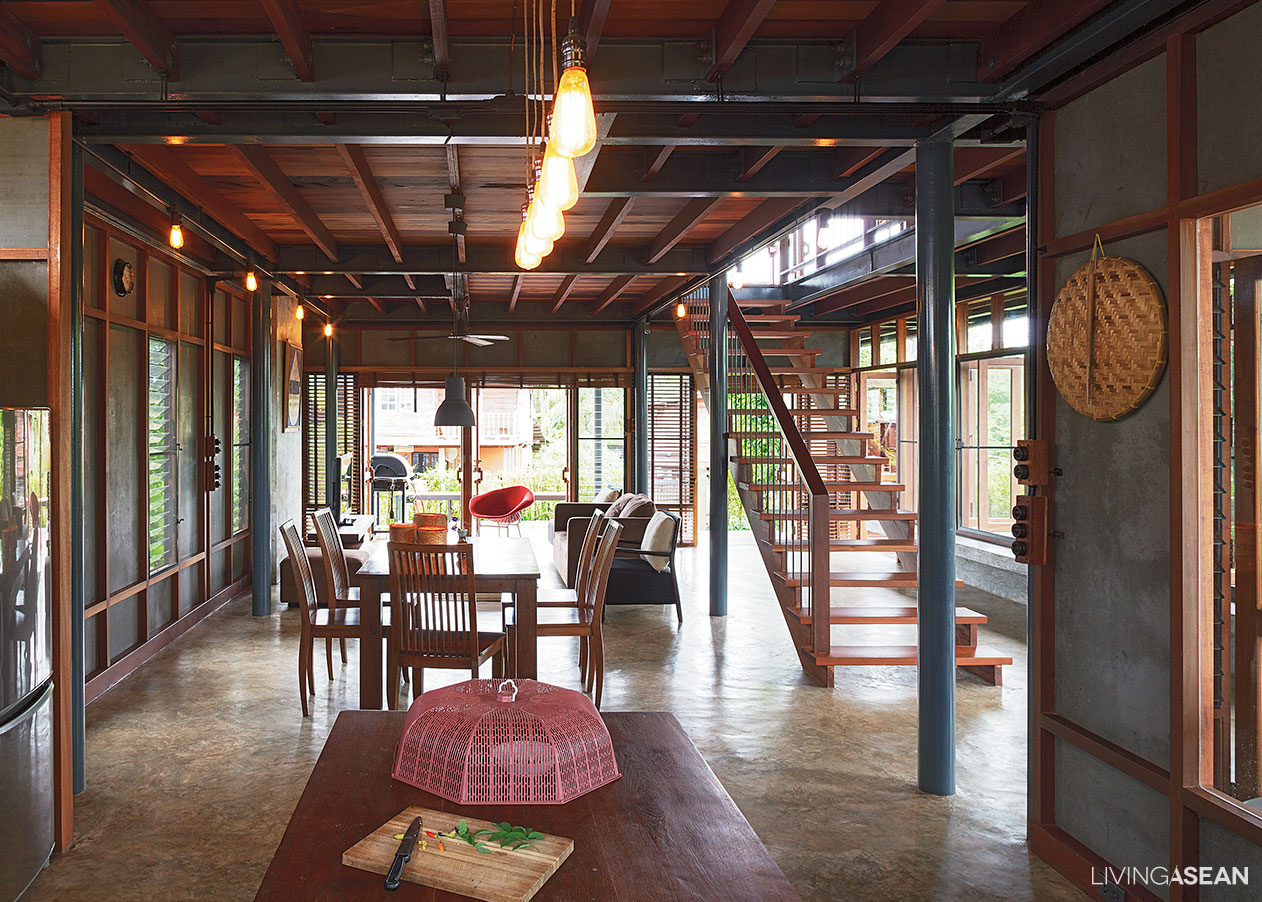
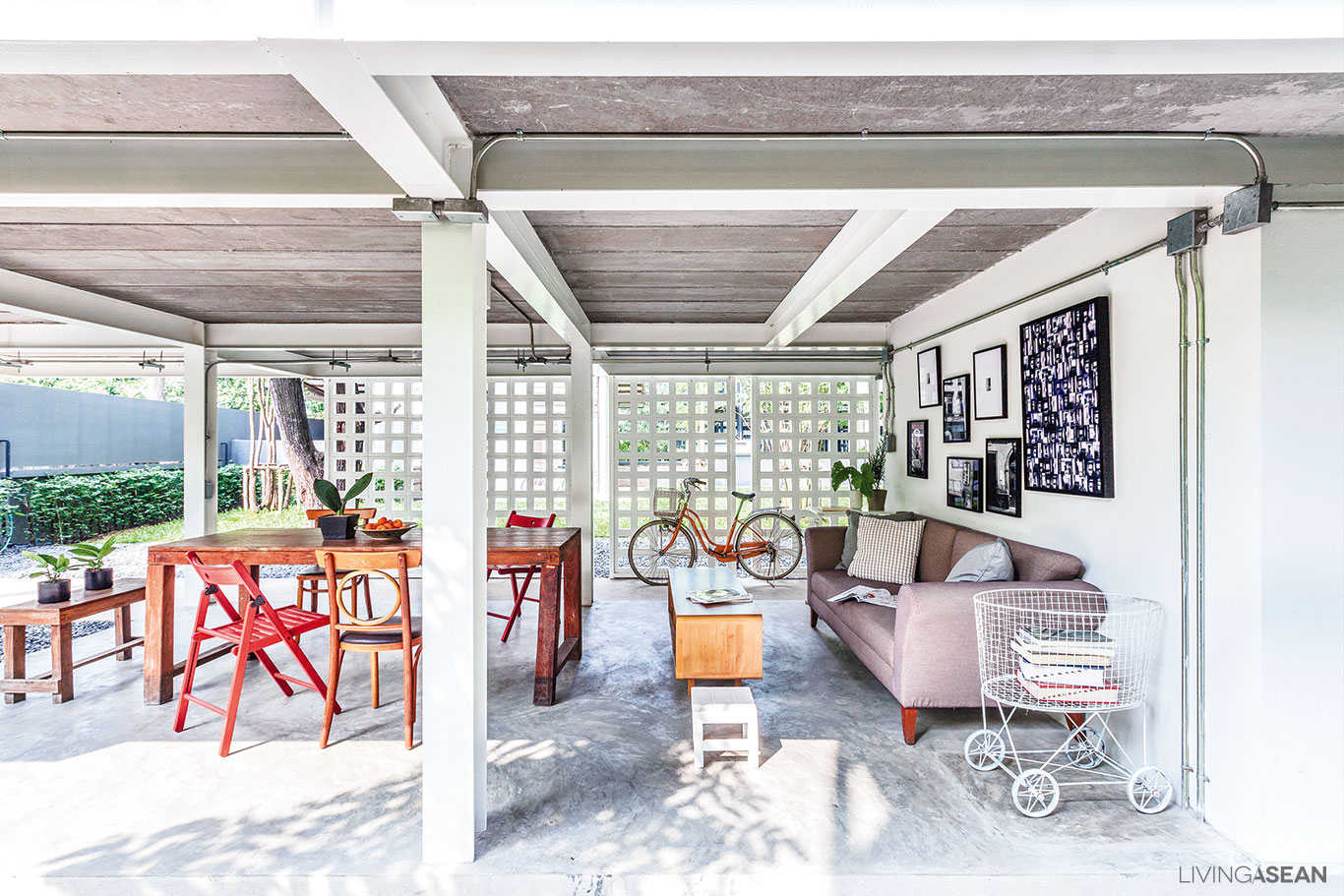
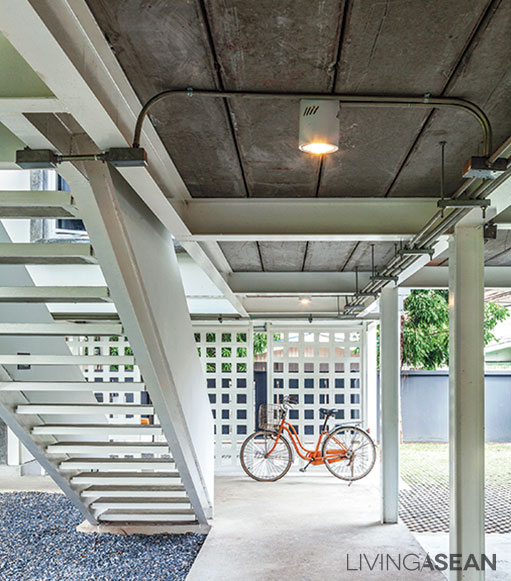
The house floor consists of prefab concrete slabs raised on a solid framework of steel. The lower floor right underneath it is covered with concrete in glossy finishes.
Located on the bank of a canal, the property faced a long-term problem. Flooding tended to happen often. This eventually necessitated a complete teardown to make room for a new home.
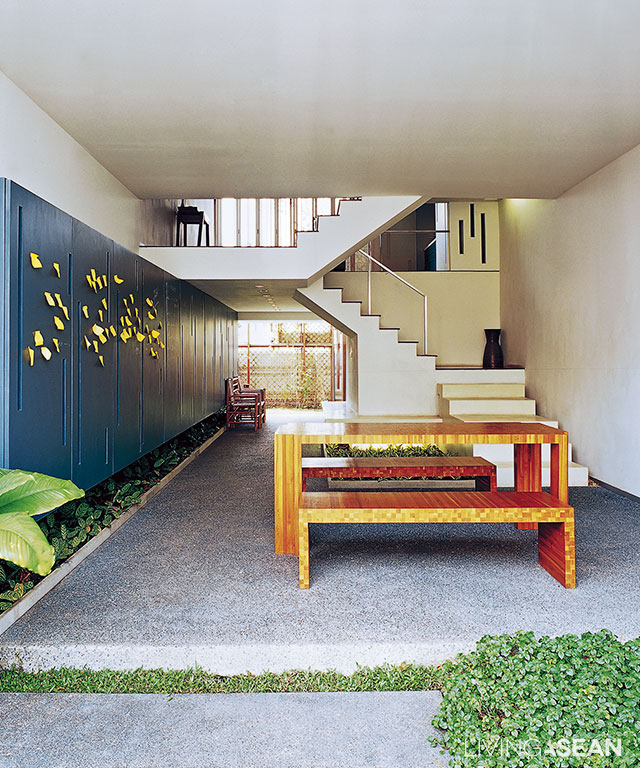
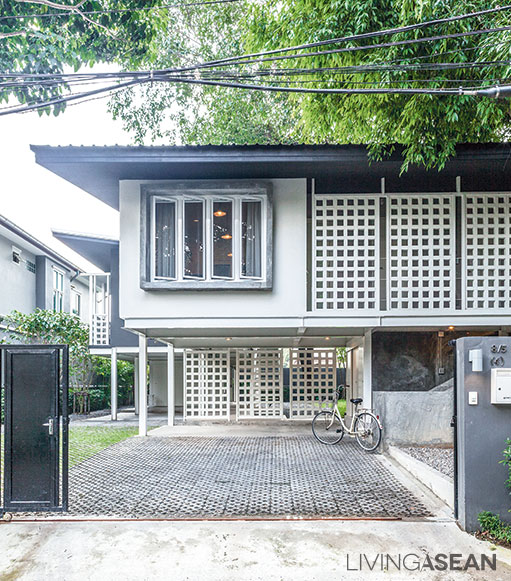
A short driveway covered in concrete pavers leads to the car park beneath the house.Well-thought-out design leaves plenty of room for air circulation, a nice way to create a comfortable home.
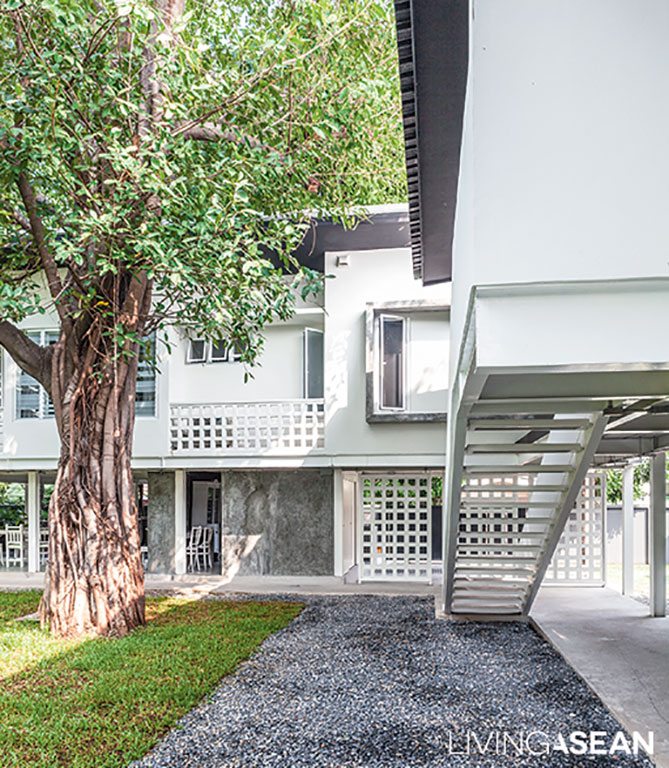
“We had full-grown trees on the land, which we intended to keep. So, the architects designed the building around them. Due to some limitations, parts of the old home remained intact. The space where the trees are standing now has since transformed into an atrium,” Tonkao said.
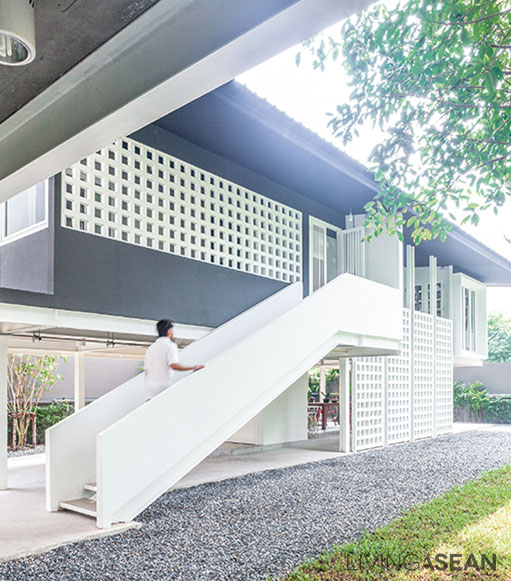
The staircase leading to the second floor has simple looking handrails that match the style of the house.Semi-outdoor passageways increase exposure to the sun and the wind.
“I want a home that’s open and airy – a house that breathes, so to speak. The new design calls for a system of wide corridors and ample spaces underneath it. The low land is now filled up to bring it to street level and create semi-outdoor multipurpose room.”
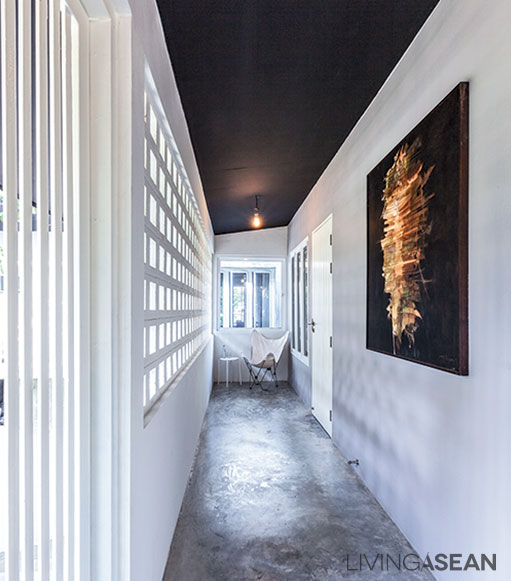
The energy-savvy double-wall corridor connects all interior spaces.
Tonkao chose steel for the main structure because it reduced construction time and enables a flexible construction schedule.
The two-story, L-shaped home splits into two wings located on either side of the warm and pleasant center courtyard. The canopy of tall trees keeps the entire living spaces cool and comfortable all day long.
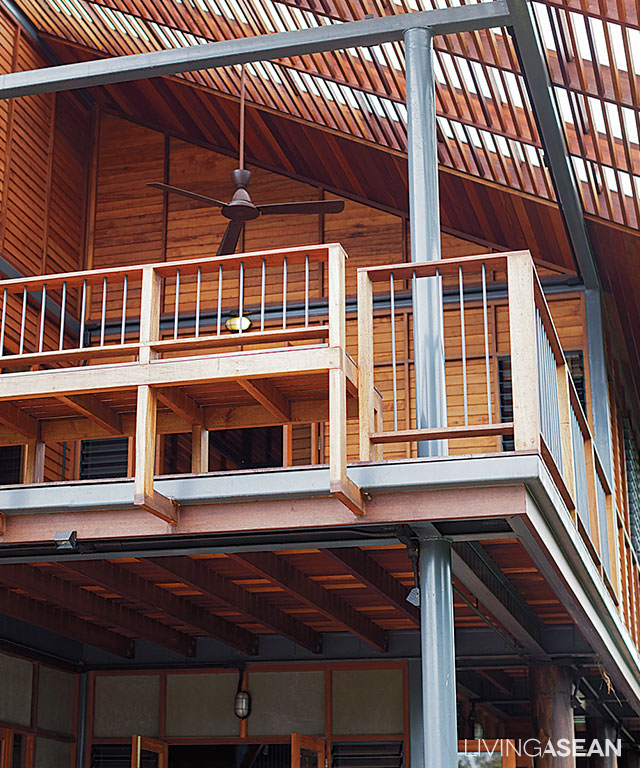
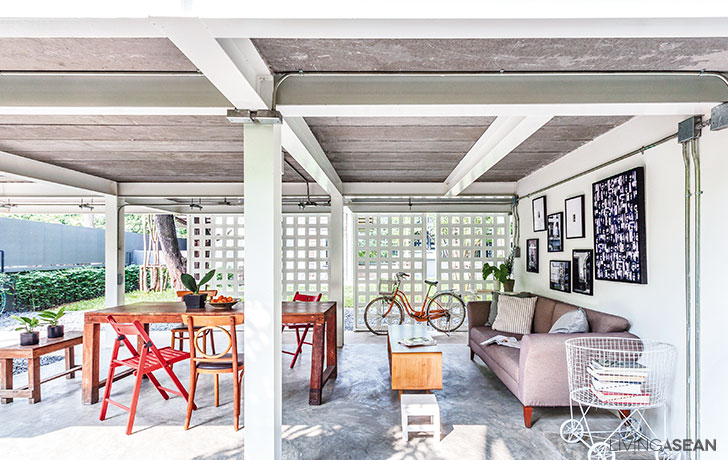
For indoor thermal comfort, the exterior walls are made of hollow bricks to block the sun while allowing the wind to pass through. Plus, long eaves overhanging the outside walls protect the home from heat waves, while house-on-stilts design improves ventilation.
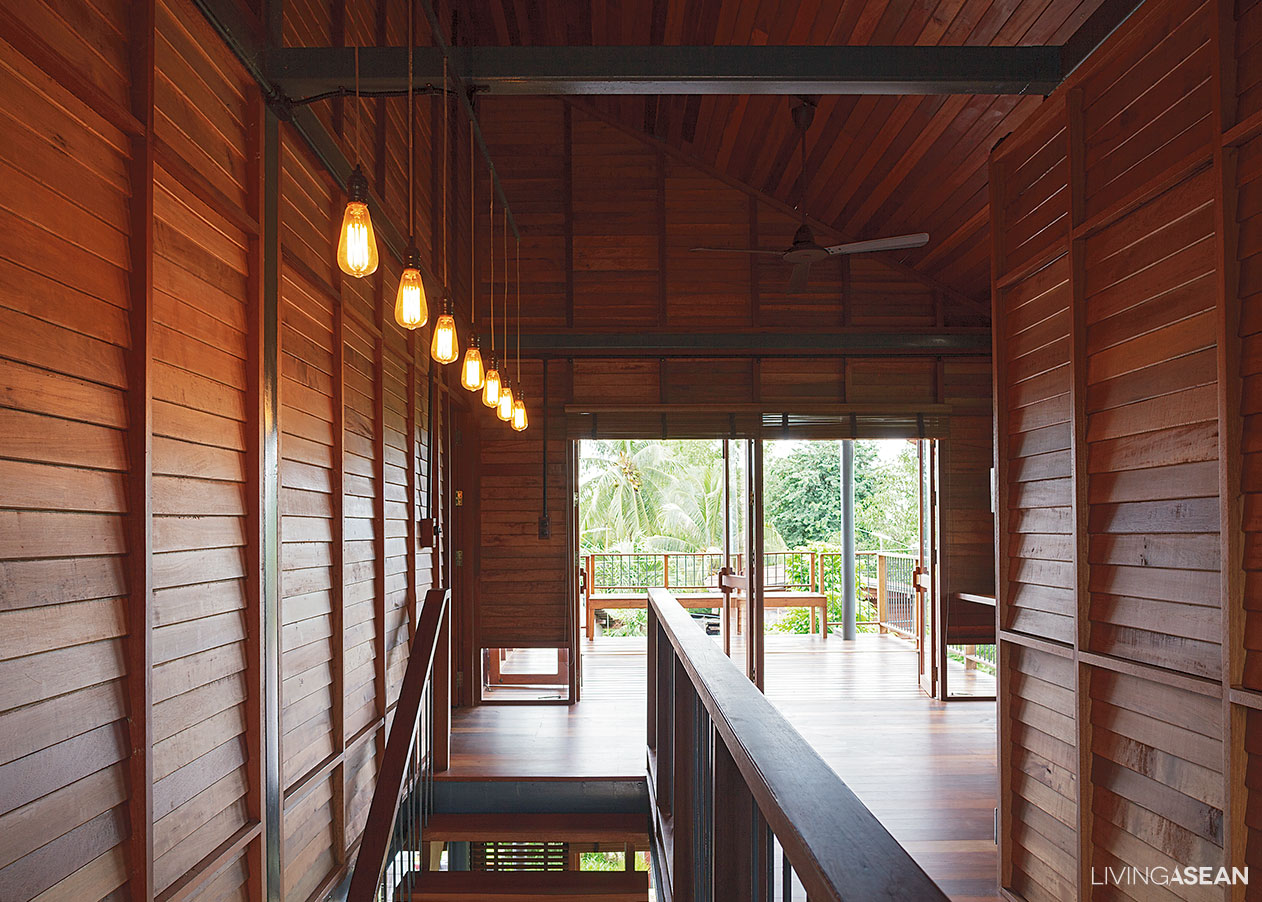
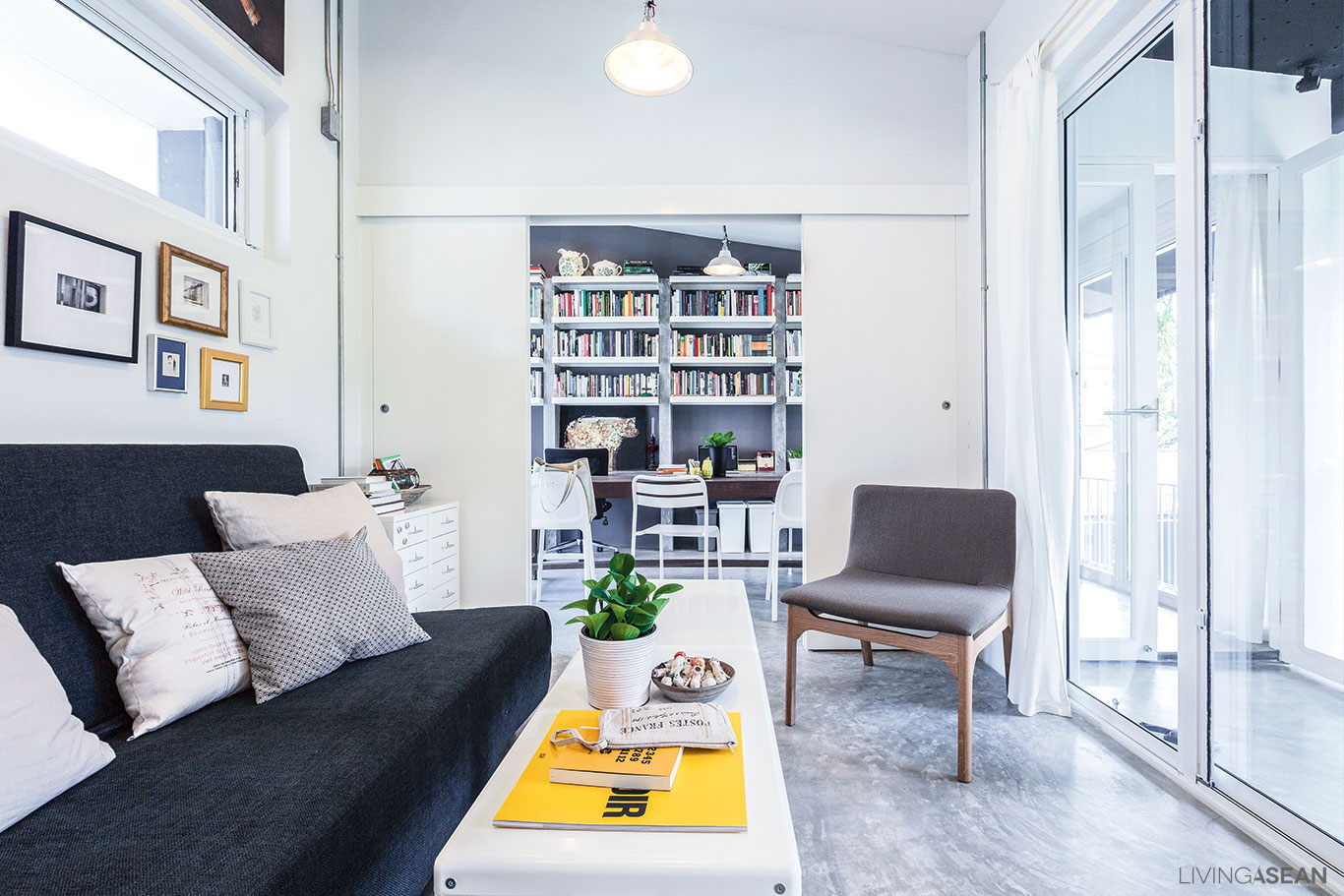
A sliding door separates the home office and sitting area on the second floor. The two rooms become one when the door is opened.
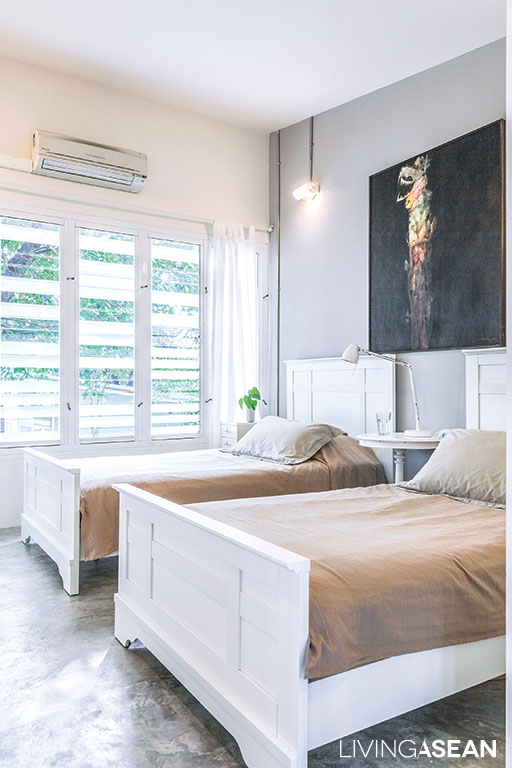
“We sleep soundly in a compact bedroom. A wide corridor helps when we walk pass each other. Semi-outdoor walkways enable us to keep abreast of current weather conditions and we don’t need air-conditioning,” said Tonkao apparently content with the design.
All things considered, it’s an energy efficient home, one that embraces natural light, increases airflow and makes daily living not only comfortable, but also enriching.
Louvered windows are ideal for increased air circulation. Clear glass alternates with translucent panels add curb appeal.[Left] An array of tall windows maximizes natural light, makes the home seem more inviting and accentuates the vertical design. / [Right] An all-white bathroom next to the bedroom is handy for everyday use and easy to keep clean.
Architect: Assoc.Prof.Tonkao Panin, Ph.D., and Tanakarn Mokkhasmita of Research Studio Panin (www.researchstudiopanin.com)
/ Story: Supachart Boontang / English version: Peter Montalbano /
/ Photographs: Sitthisak Namkham /
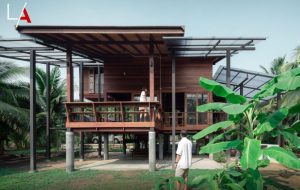
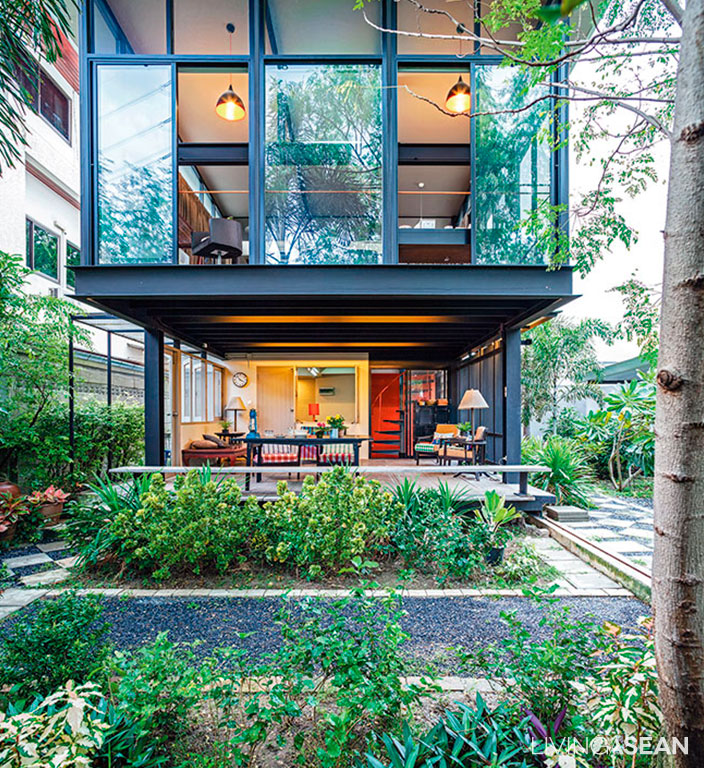
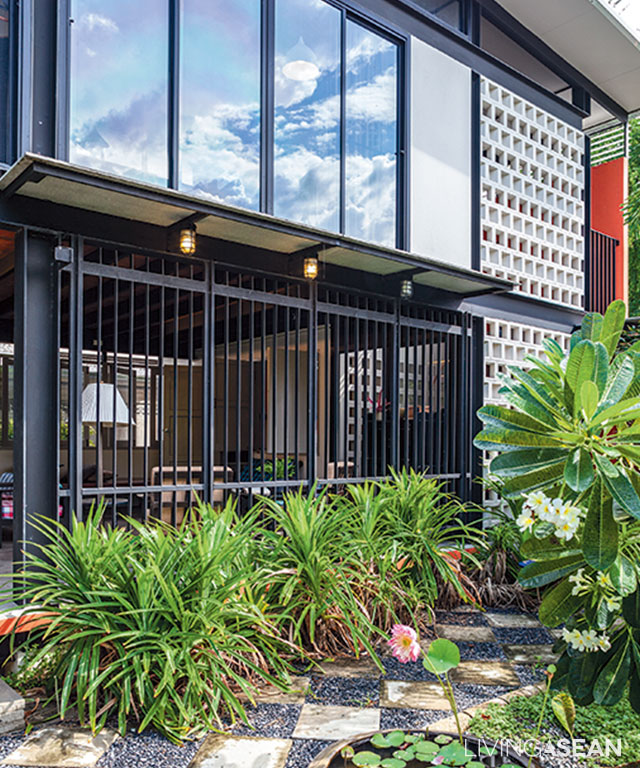
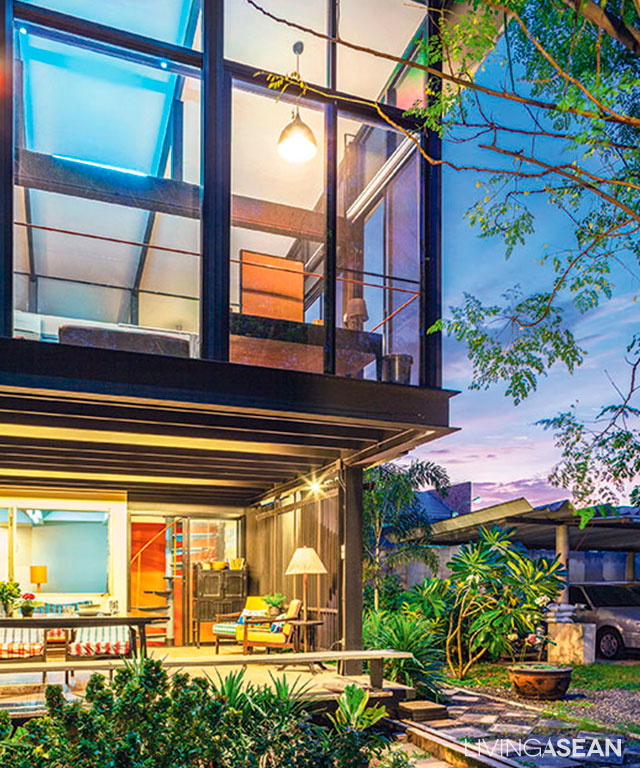
The design of this modern steel house fosters a harmonious relationship between man and mother nature. What presents itself as a chic, cubic steel structure draws its inspiration from traditional homes in the neighborhood and the lifestyles characteristic of the people in a locality.
The materials selected for this house are primarily recycled. The use of steel structures enables rapid construction, aligning seamlessly with the Dry Process approach.
For the most part, the house is made of recycled building materials adapted to suit a new use. Among them is the steel structural framing that reduces building time and noise pollution on the job site, making it suitable for dry construction.
The homeowner, Thitiwoot Chaisawataree, who is an architect and professor of architecture at Kasetsart University, shared the following with us:
“My parents wanted to transform the storage building at the back of their house into a relaxation room for hosting friends and relatives. The renovation plan involved dismantling and repurposing parts of the old structures that were no longer needed.
“The plan also emphasized adapting materials from past projects for use in a different purpose. They included hollow cement blocks, glazed tiles, electrical switches and outlets, paint, cast iron decorations, spiral staircases and steel rod fencing. And as the result of all this, a bright and airy modern steel home was created.”
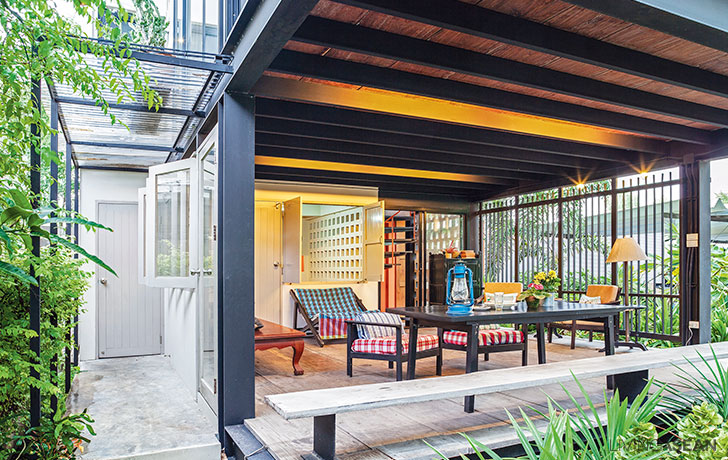
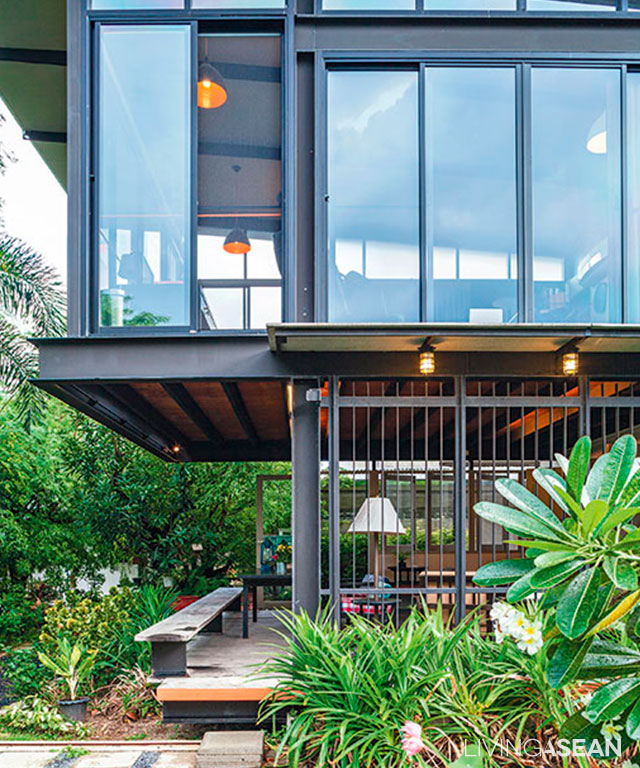
The area beneath the house is spacious and well-ventilated. A long wood bench securely mounted on H-shaped steel framing is a perfect addition to the entrance of the building.
To lower humidity and enhance air circulation in the home, the floor was elevated to a plinth height above the natural ground level. Hardwood flooring materials were scarce. It was fortunate that the homeowner had purchased these materials and stored them for eight years prior.
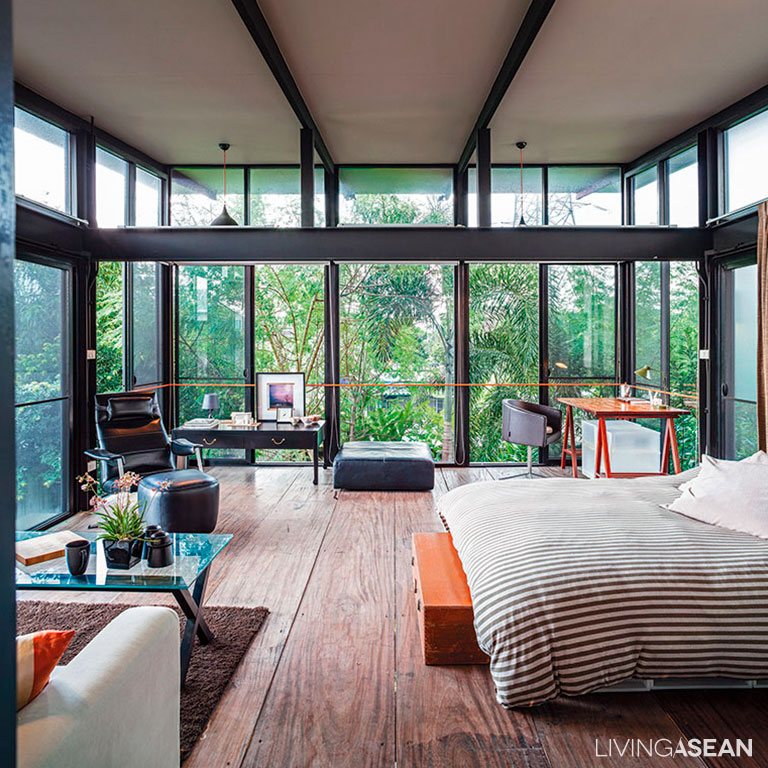
They included wood planks 20 inches wide, 2 inches thick and 5 meters long that were used to build hardwood flooring. The design stipulated that none should be cut. One advantage of reclaimed timber is its low humidity content and reduced vulnerability to insect infestations.
Lightweight building materials were chosen since the renovated home rests on the original, long-standing foundation. The foundation sits on older pilings, which are shorter and have a limited weight-bearing capacity.The master bedroom boasts a variety of features, ranging from a workspace and sitting area to a cozy nook for relaxation.
The newly renovated home, spanning approximately 100 sq. m., is spread over two floors. The ground floor encompasses the primary open-plan living area. The second floor, which can be reached through a staircase outside the first-floor corridor, houses a bedroom, sitting room, workspace, and bathroom.
The architect, reflecting on his project, said: “Despite the ceilings being lower than usual at around 2.30 meters, the sitting area feels spacious. It draws inspiration from traditional Thai-style homes which prioritize creating living spaces in harmony with the environment, rather than emphasizing decorative elements.
“With this in mind, even a box-shaped house can be adapted to incorporate such design principles.”
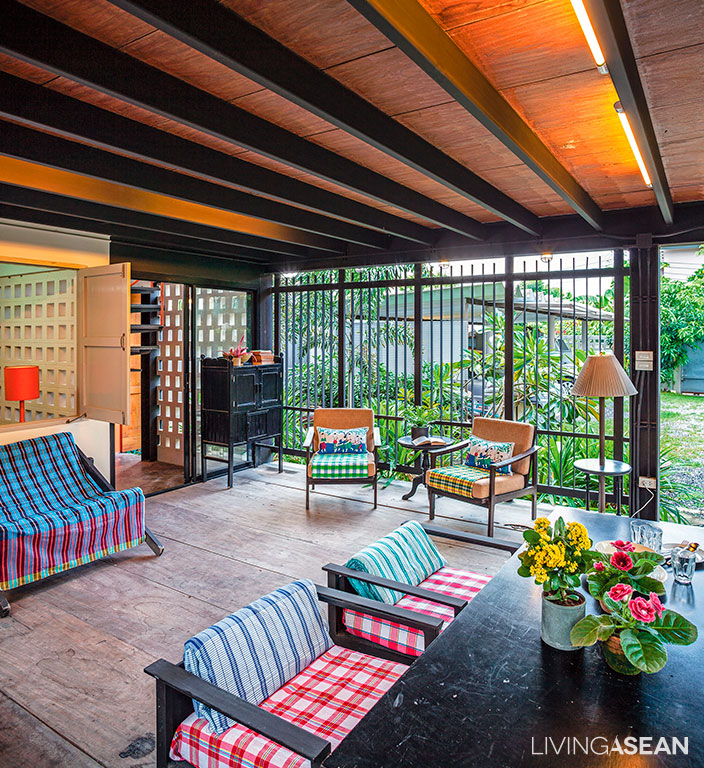
Reclaimed wood planks find a new use as flooring materials on the first level. The use of movable furniture allows for future updates to meet the changing needs for space.
Speaking of the current trend in urban design, the homeowner wrapped up his perspective about this modern steel house very nicely.
“I’ve observed that today, we often face challenges in integrating the environment seamlessly into our home design. We’ve distanced ourselves so much from nature and, consequently, become more reliant on energy for various necessities, such as air conditioning and insulation.
“It seems we’re prioritizing the aesthetics of our home’s exterior over a design that naturally shields us from environmental factors. Over time, when we realize that the house doesn’t meet our needs, we consider expanding our living spaces. Ill-conceived designs can sometimes result in aesthetically displeasing outcomes.”
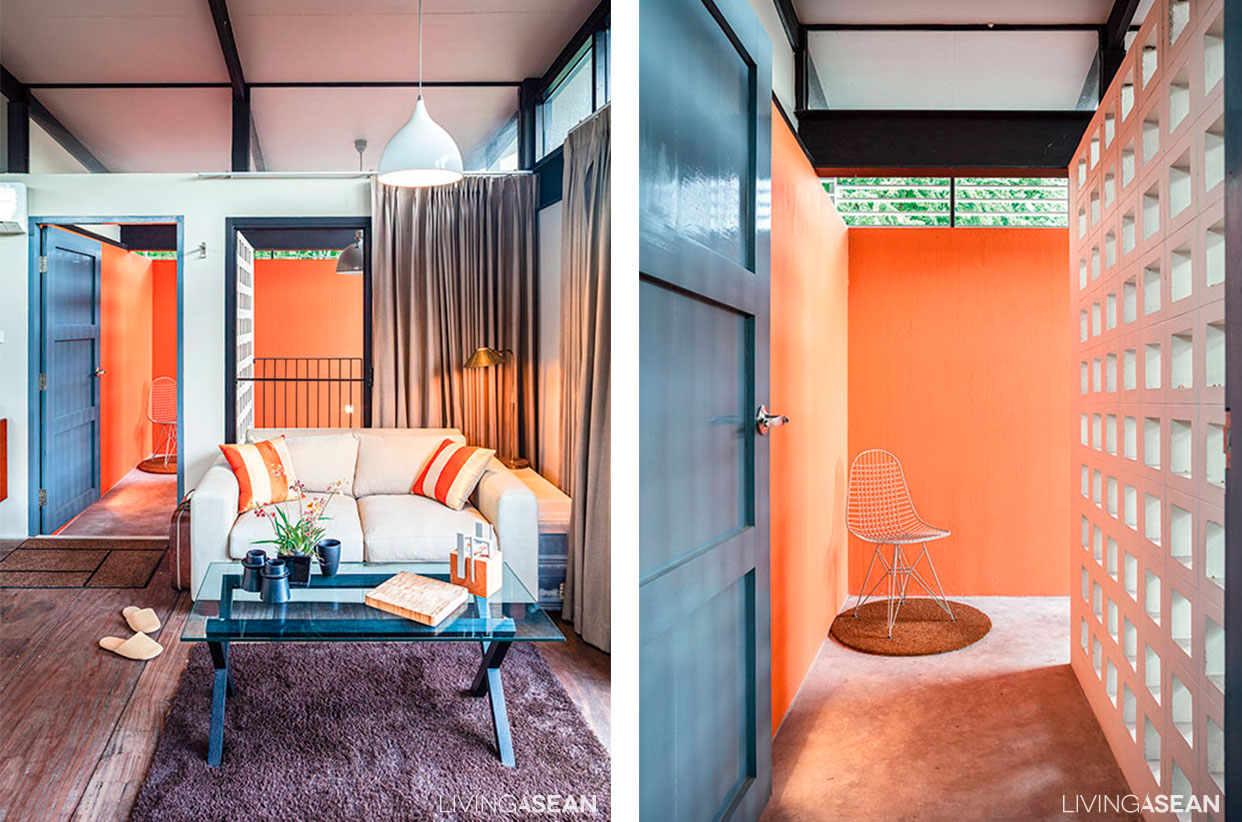
[Left] The contrast of orange with black enlivens the interior living spaces. / [Right] A perforated cement block wall promotes effective air circulation.
“Specifically for the Thai lifestyle, a comfortable home is one that’s tailored to the needs of its residents. Even better if the functional spaces are adaptable, allowing for potential future expansions.
“Simultaneously, the Tropical hot and humid climate of Thailand should be a primary consideration in home design. Comfortable interiors stem from design that harmoniously coexist with nature. Well-conceived floor plans ensure optimal air circulation and offer protection from the elements. It’s advisable to steer clear of materials that retain excessive heat.”
Like sunshine after rain, the interior spaces evoke memories of traditional Thai houses from days gone by.
/ Story: Samutcha Viraporn / English version: Bob Pitakwong /
/ Photographs: Rithirong Chanthongsuk /
Despite being located in a vibrant prime location, this home-cum-art gallery in Yangon is a fascinating place with a serene atmosphere and qualities that delight and please the senses. Architecturally speaking, it’s a nexus of ideas from different styles, places, and times.
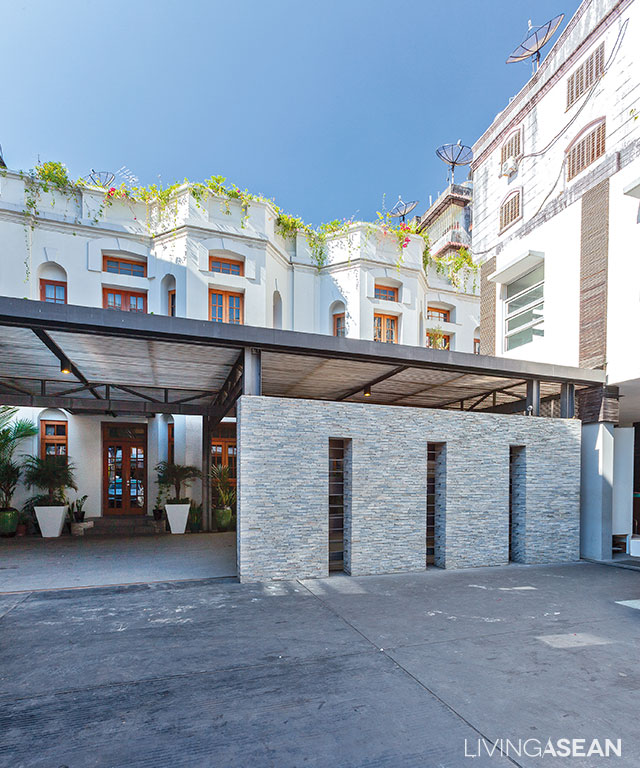
The white mansion mixes and matches the visual elements of Contemporary and Colonial styles of architecture. Plus, it puts an innovative spin on traditions of years gone by, resulting in charm, good looks that tell the story of ongoing change in modern-day Yangon.
The calm and peaceful place is a short distance away from a busy market on Nawaday Road. Min Han, the homeowner, is on hand to give a warm welcome and show us around the premises.
The three-story home has many interesting features that apparently blend well together creating a building that works as a cohesive whole. Take for example the Modern-style wing that stands in perfect harmony with the nearby Colonial-style mansion. It’s a new addition to the original structure that’s zealously preserved.
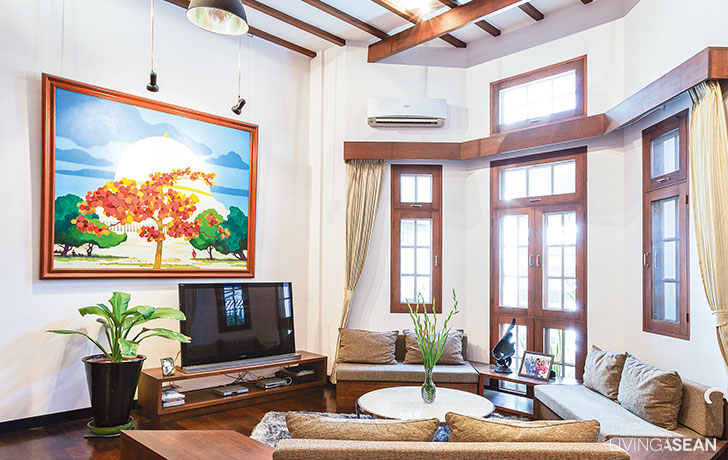
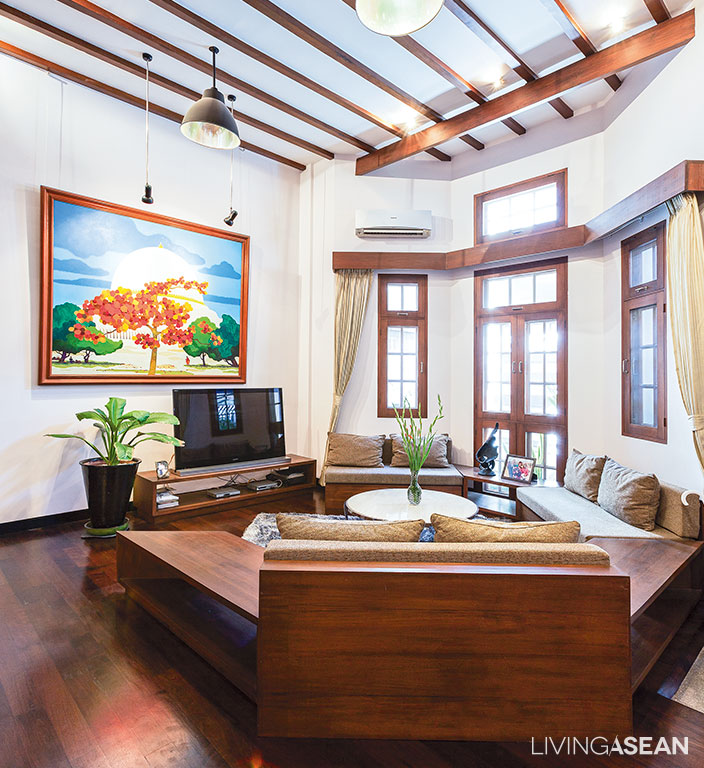
A vivid color painting and wood furniture in dark brown dominate the hallway on the first floor. Unique elements of design including large bay windows are preserved in every part of the Contemporary style wing.
Other than that, the floors have since been improved and refinished, while room dividers are remade to create a light and airy atmosphere on the inside. In front of the house stands a two-story family business building, where traditional Burmese snacks and light meals are sold, including Yuzana Pickled Tea Leaves.
Nearby, a fence beautifully crafted of stone masonry separates a parking space upfront from outside and protects the family home from the noise and hubbub of the big city.
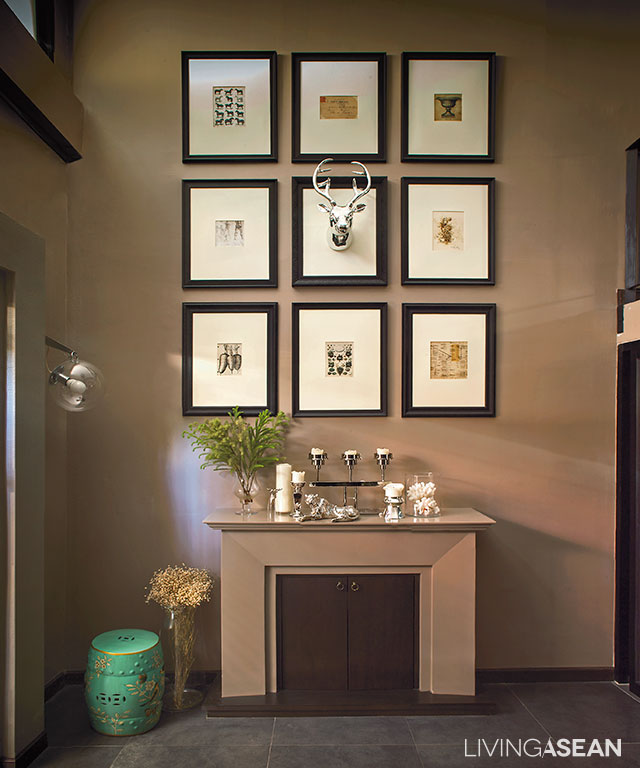
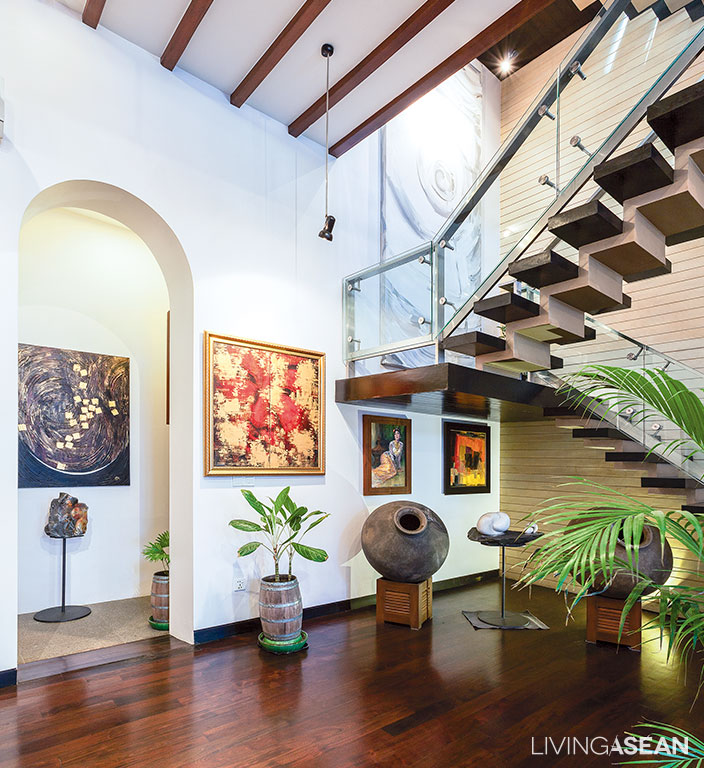
The stairway under a high ceiling is bedecked with paintings and sculptures evoking fond memories of a private art gallery.
“In fact, I am not much of an artist. But I like collecting works of art, especially those of U Maung Maung Hla Myint, who is nationally renowned for his bright color paintings. Vivid color paintings make the space feel more lively,” said Min Han.
The upstairs living room bedecked with bright color paintings is illuminated by a skylight above the stairway.
To create a sense of spaciousness, the architects put in a steel staircase with glass railings at the center of the house plan, resulting in unobstructed views of the whole interior. In general, the room is comfortable, airy and well-lighted, thanks to skylights above the stairway leading to the third floor. Together, they make the furnishings and other decorative details more noticeable.
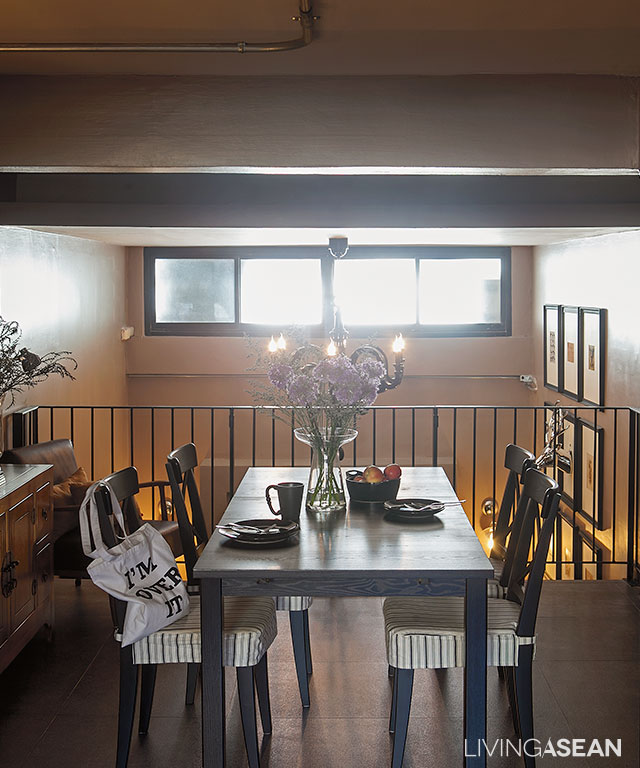
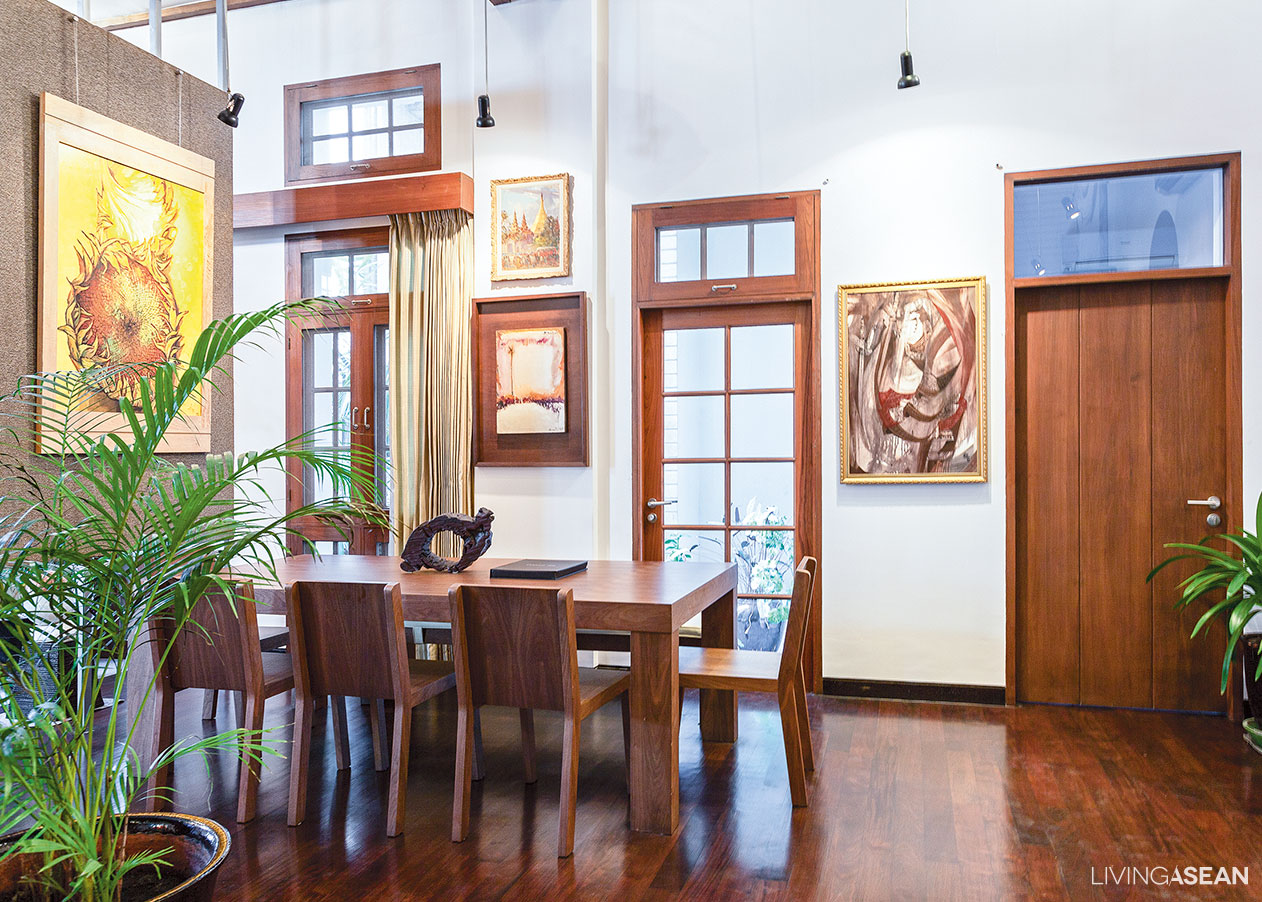
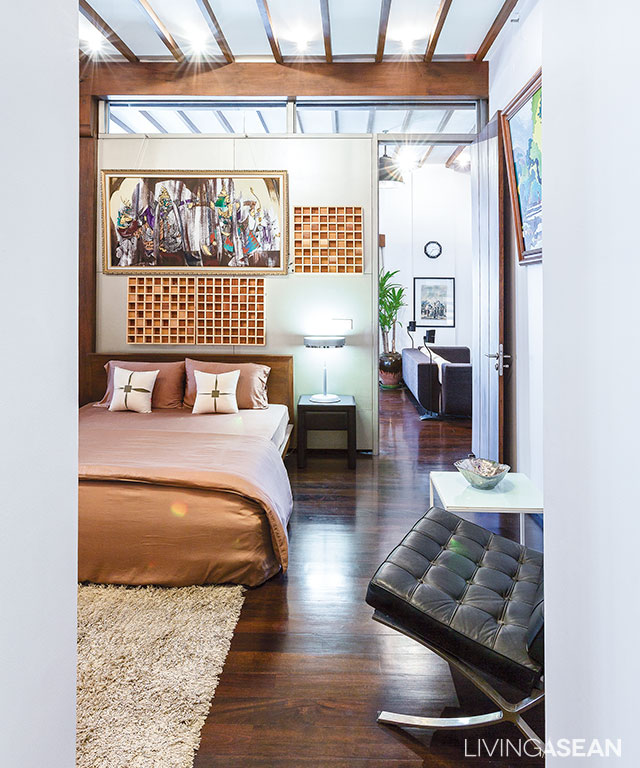
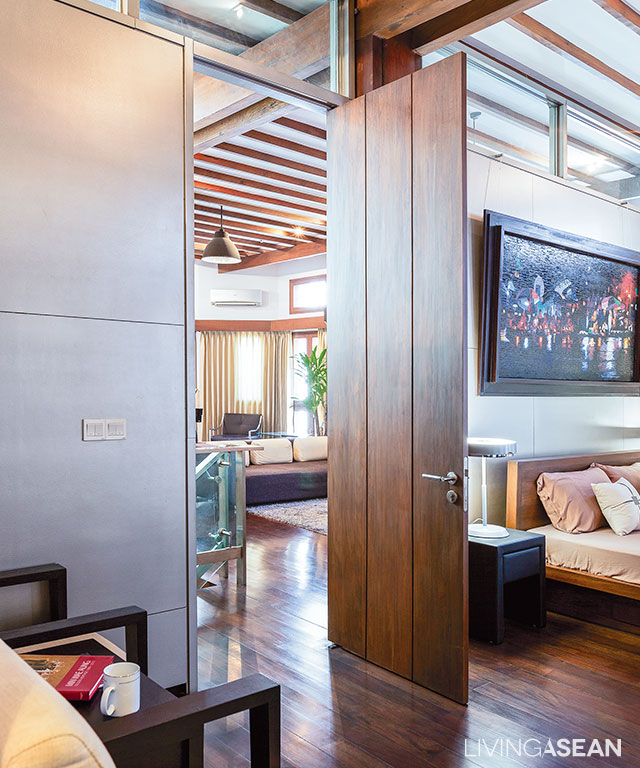
The dining room of this home-cum-art gallery is adorned with beautiful works of art from the owner’s private collections.The bedroom’s white interior contrasts with dark brown colors of wood beams, posts, and ceiling joists.The interior living spaces are well-lit thanks to transom windows set above the top edge of the wall and the doorway.
For a neat appearance, the system of electrical wiring and lighting is arranged in a tidy way pretty much in the same fashion as that of a typical art gallery. There are spotlights on the installations, which makes the interior spaces look very well organized. As a private gallery, the hallway also doubles as a rendezvous point for friends and relatives coming by for a visit.
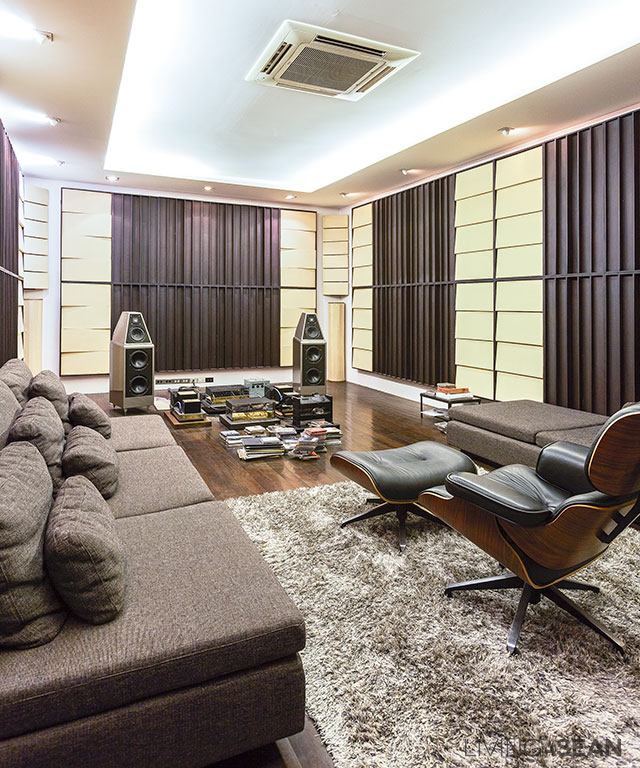
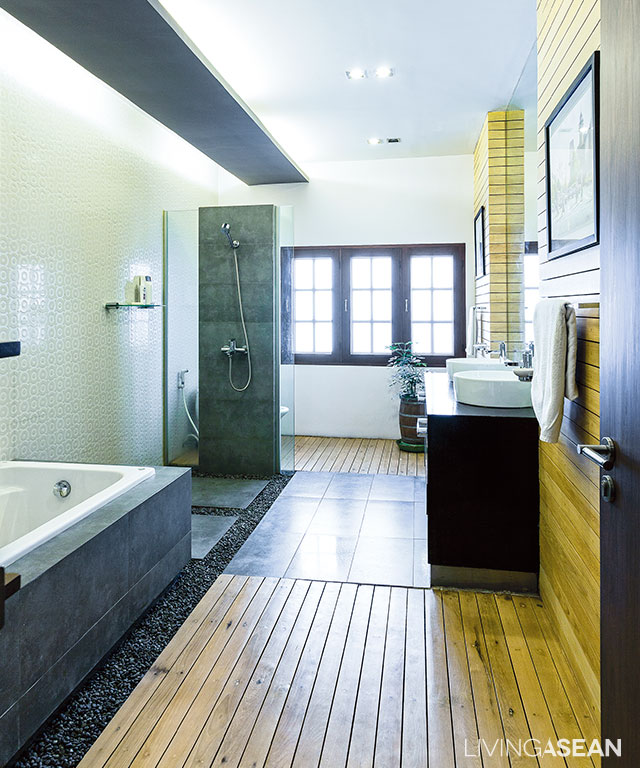
A spacious sound studio in the back confirms that a music lover lives here.The shower room is plain and simple. Attention to detail is reflected in the use of different materials separating dry and wet areas.
The homeowner not only paid attention to detail but also actively participated in making design decisions every step of the way, resulting in perfect visual harmony from beginning to end. All told, it’s a delightfully warm home and an art gallery combined into one cohesive whole. And it conveys a great deal about the homeowner’s love of art and a taste for something different.
[Left] The upright structural support is crafted of wood posts. Where appropriate, all sharp edges are removed. / [Right] To create a light and airy feel in the interior, the stairway is built on a steel frame with glass railings. There are no risers between the treads for good ventilation.
/ Story: Ekkarach Laksanasamrith / English version: Peter Montalbano /
/ Photographs: Soopakorn Srisakul /
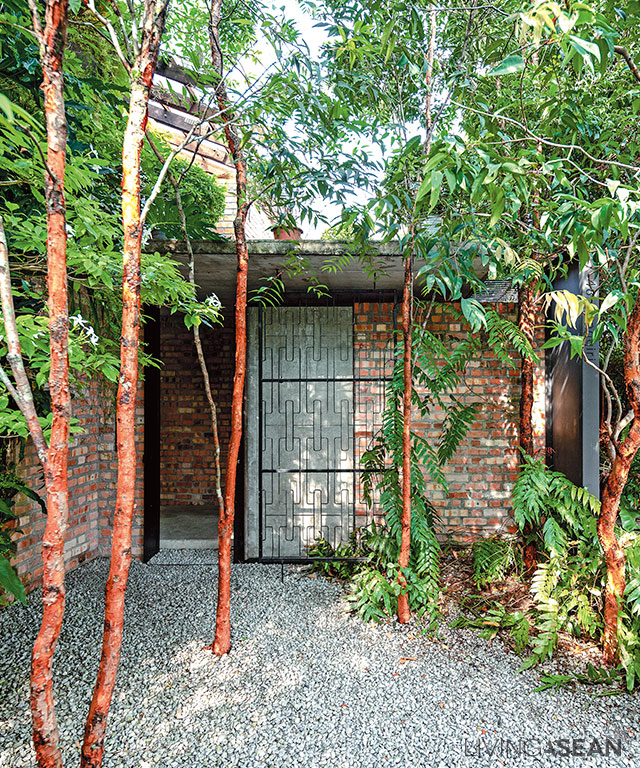
There are ways to bring the outdoors in and enjoy the benefits of nature without ever leaving your home. Likewise, a concrete house in Malaysia named Sekeping Tenggiri has embarked on the journey to establish a sanctuary for the mind.
The building has been lovingly restored using steel structures. Leveraging steel technologies offers a fast and convenient alternative in construction.
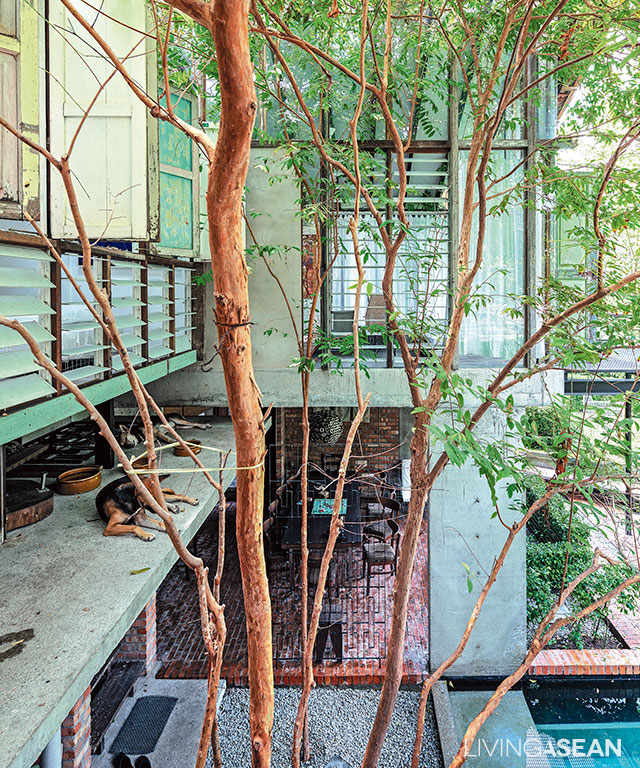
Located in Jalan Tenggiri, a district of Malaysia’s capital Kuala Lumpur, the house graces a modest plot of land. Nonetheless, the homeowner adeptly integrates a plethora of natural features into the design for a look that blends seamlessly with the environment.
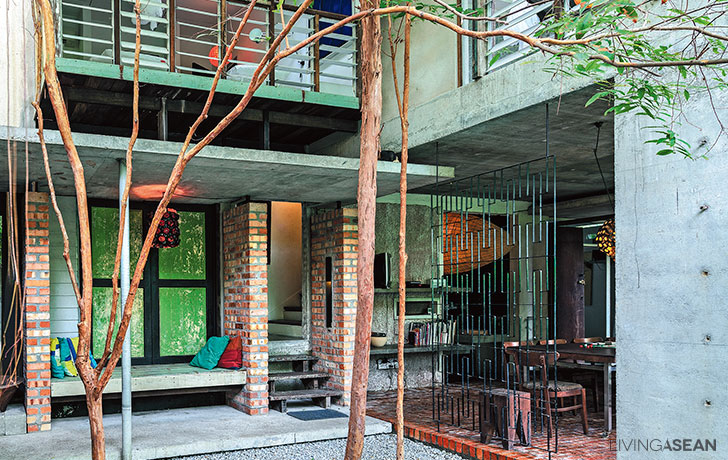
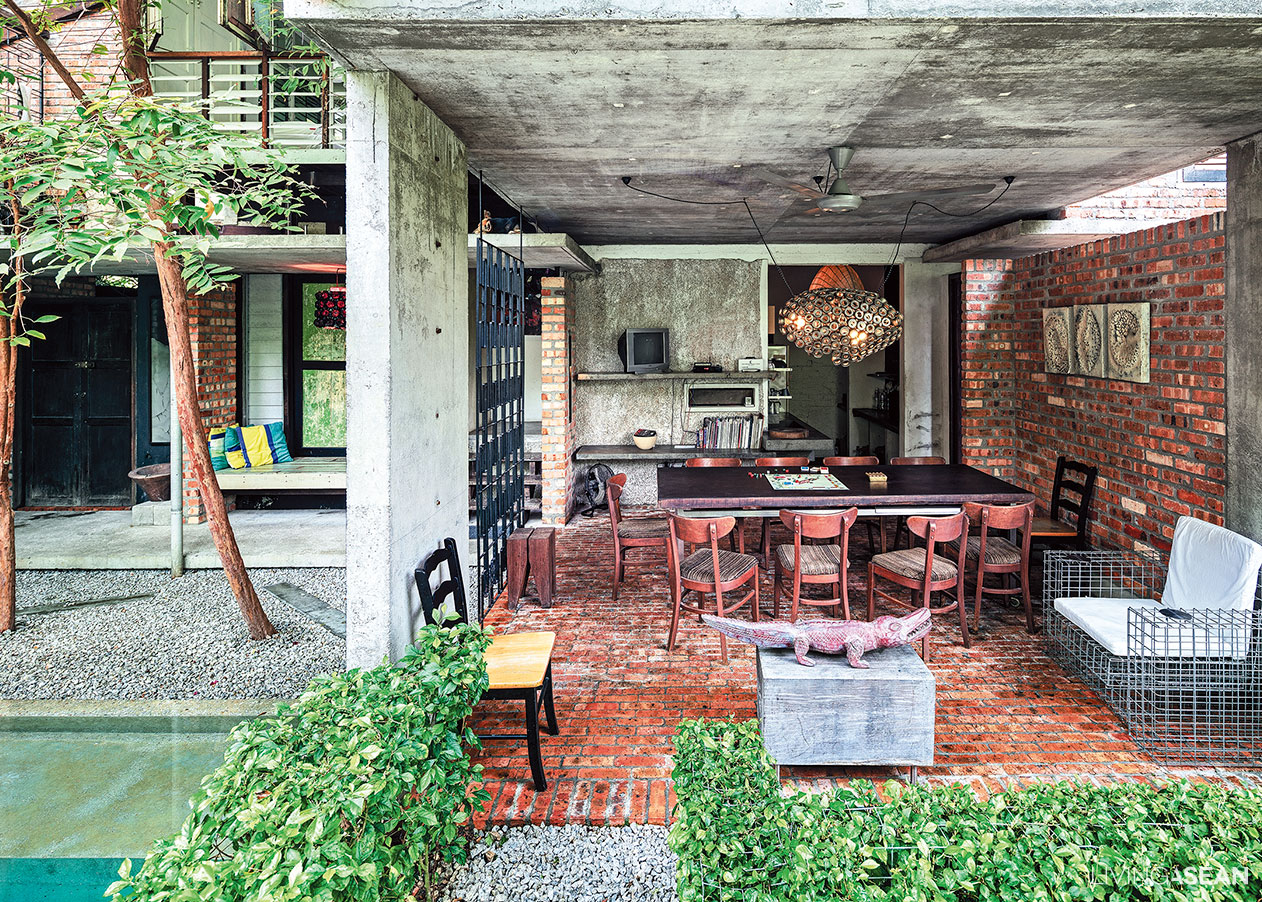
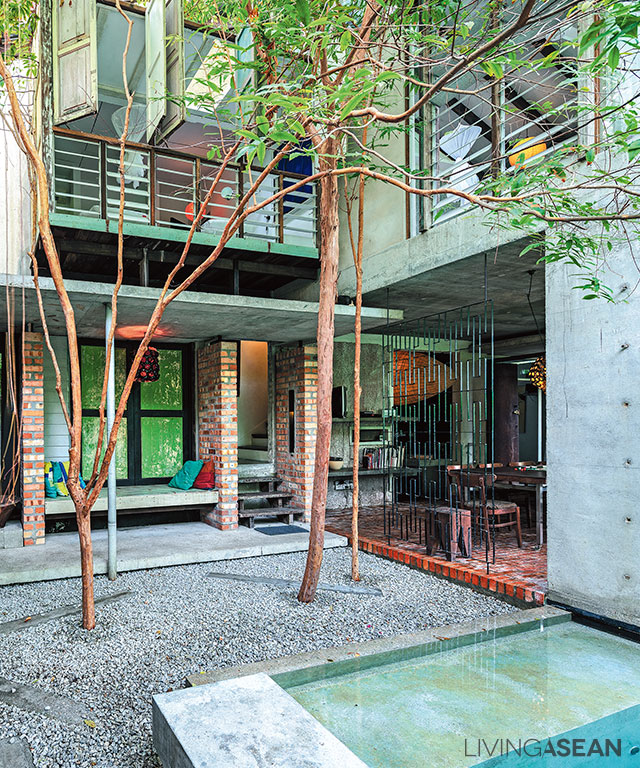
Plants and natural light work harmoniously to soften the stark surfaces of building materials, creating a warm and well-lit ambiance.
The house belongs to Ng Sek San, who is the founder of Seksan Design, a landscaping and architecture firm in Kuala Lumpur. He told us that the house was a renovation of two adjacent homes skillfully transformed with a clean sweep.
Ng is also an art collector, which is evident in one side of the house dedicated to an enviable art collection that’s open to the public with no admission charge.
For visual continuity, the architect makes use of the same building materials on both the exteriors and interiors.
The two-story home boasts a comprehensive range of functional spaces, including an ample sitting room, dining room and kitchen, complemented by a refreshing swimming pool and seven bedrooms.
An experienced landscape architect, Ng started out with a modest garden while working on this house. Over time, he progressed to larger projects, smoothly integrating exterior and interior spaces so that they become a whole. To him, a garden is a room, and his exterior design spaces resemble extensions of the interiors.
The ground floor showcases a dining room seamlessly connecting to the swimming pool and the garden at the far end. The canopy of tall trees ensures a constant flow of cool breezes throughout the day.Both the floorboards and concrete roofs maintain a thickness of 10 centimeters in general. Where appropriate, they are reduced to 7 centimeters. Meanwhile, strategic gaps ranging from 5 to 10 centimeters exist between the ceiling and the top edge of the wall to facilitate effective ventilation.
An exemplary illustration of Modern Tropical style, Sekeping Tenggiri is designed to mitigate heat and prevent moisture-related issues. Long overhangs and awnings provide protection against scorching sunlight, while exposed roof sections and plain floors contribute to a clean and simple aesthetic.
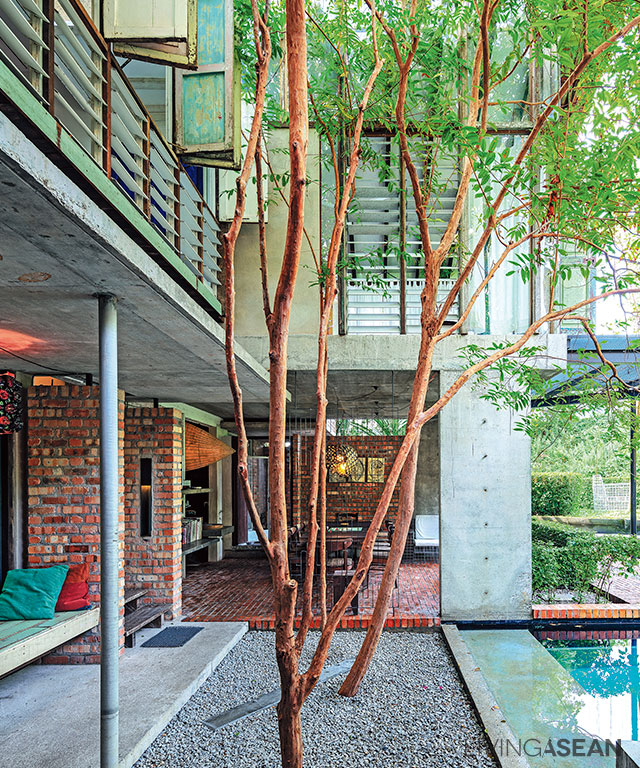
Materials such as concrete masonry, bricks, wood, and steel were utilized, with the main structure being steel-reinforced concrete. The thoughtful incorporation of nature into the living space is evident in details like raising the floorboards 40 centimeters from the concrete floors, promoting air circulation that naturally cools the upstairs bedrooms.
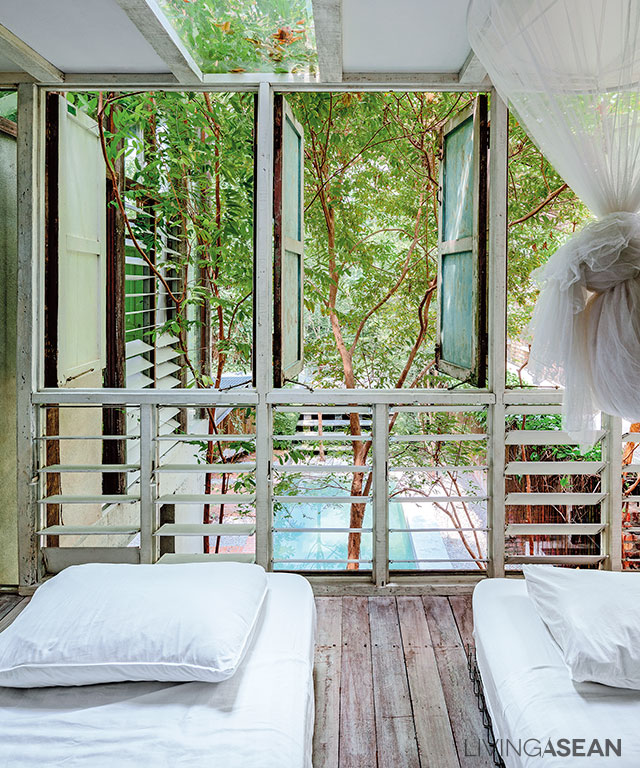
Opaque walls are replaced by glass louvre windows that usher in light, creating airy interiors. Transparent materials in parts of the roof facilitate ample sunlight, particularly over the swimming pool.
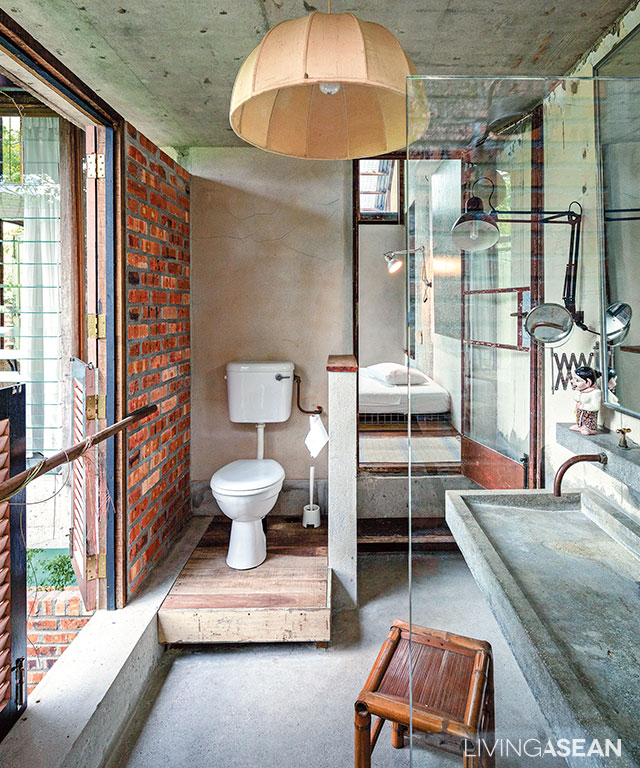
The master bedroom on the second floor exudes simplicity and raw elegance. Exposed brick walls, unrefined concrete floors, and expansive windows spanning from one corner to the other seamlessly integrate with the natural surroundings, ensuring visual continuity.Who says the space underneath the window must be an opaque wall? That’s not the case here. Louvre windows are utilized to improve air circulation.A raised floorboard accommodates new plumbing in the bathroom. The dry section showcases a diverse range of materials, while the wet section opts for easy-care products like tiles—a smart choice for practicality.
As has been demonstrated, Sekeping Tenggiri features numerous passageways that facilitate air movement. They include the spaces between wooden floorboards and along the corridors, plus openings in exterior walls. These design elements not only enhance ventilation, but also contribute to the house’s uncluttered and incredibly relaxed appearance.
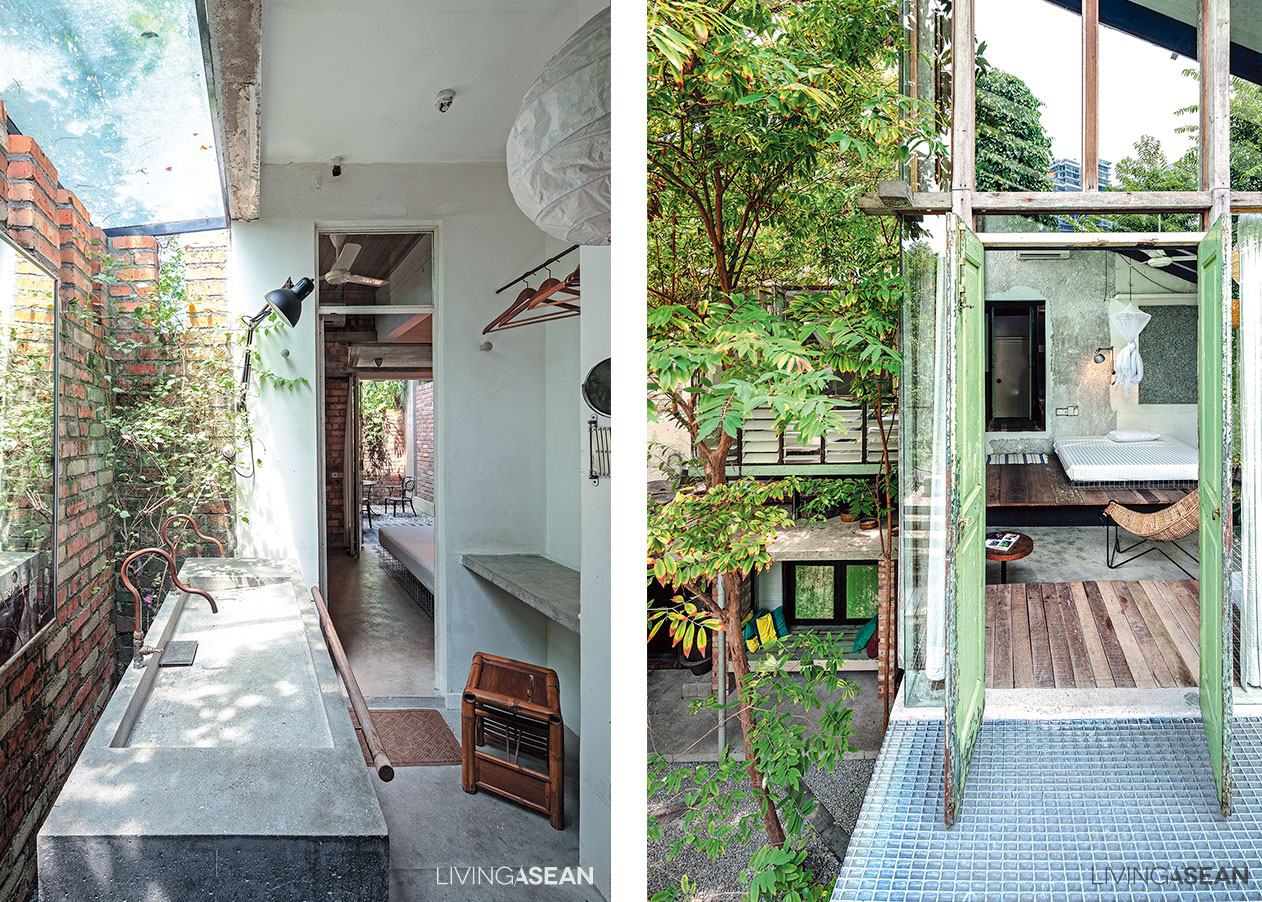
[Left] Skylights above the bathroom foster the flourishing of indoor plants. / [Right] The integration of the house with the surrounding vegetation creates a harmonious blend. Undoubtedly, the use of natural building materials contributes to comfortable living conditions.
/ Story: Warapsorn Akkhaneeyut / English version: Bob Pitakwong /
/ Photographs: Sitthisak Namkham /
Terraced houses are ubiquitous throughout Singapore, many of which are well preserved to showcase the country’s rich architectural heritage and history of British Colonial rule. Many of them have changed to better serve commercial and residential needs of the modern world. This handsome terraced house is no exception.
Part of the top floor becomes a small sky garden.
This terraced house belongs to Alan Barr and Phaswan Promphat, both of whom interior designers.
Alan has had experience living in big cities, such as New York, before the job sent him across the globe to settle in Singapore nine years ago. He didn’t arrive empty-handed, but with furniture and other prized possessions.
Over time Alan transformed the old townhouse into a trendy residential unit, incorporating a touch of New York in the prevailing climatic conditions of Singapore.
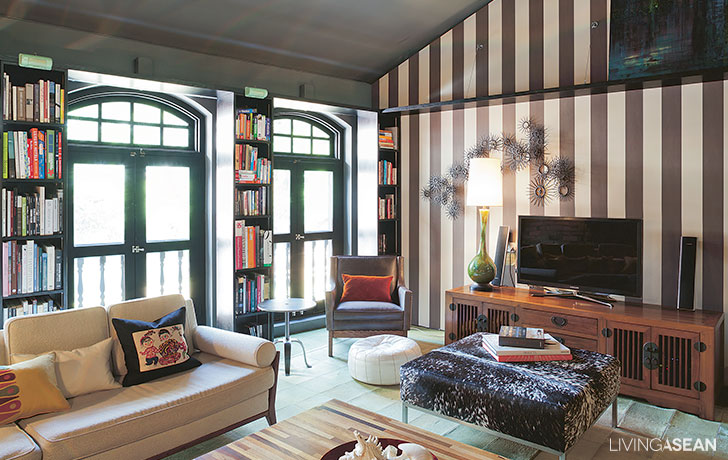
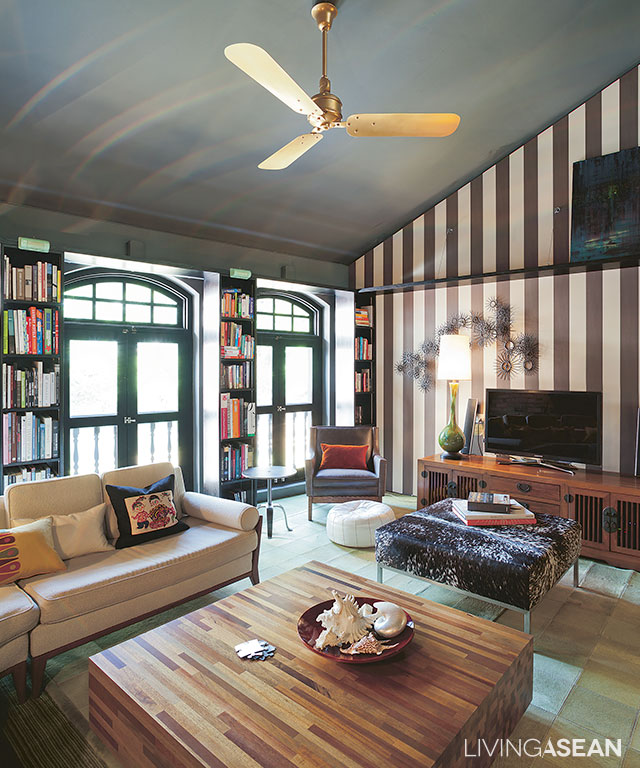
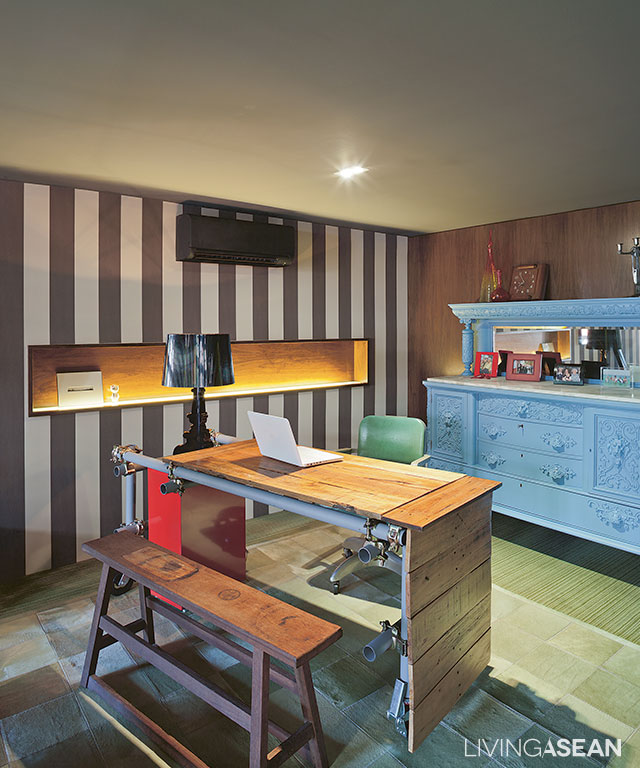
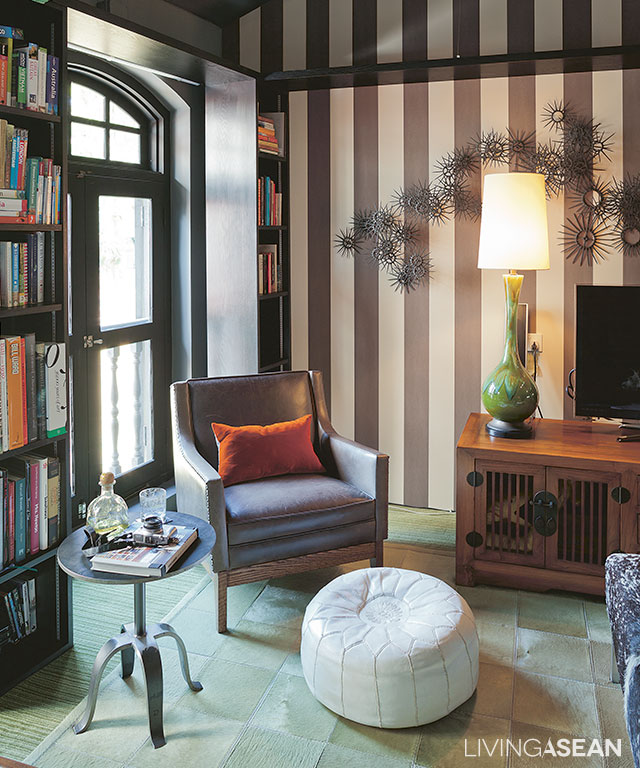
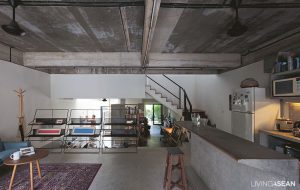
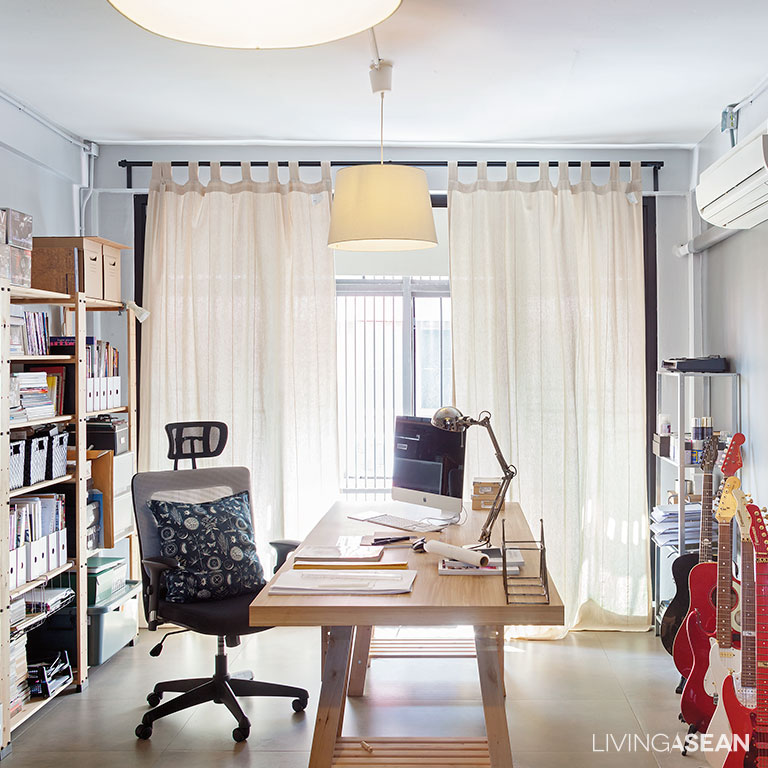
The spaces between Colonial-style arch windows are filled with bookshelves that stand tall from floor to ceiling.Part of the living room is remodeled into a workplace. The table is custom-made from discarded materials.
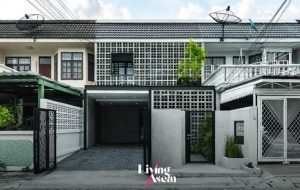
The home has a narrow front façade, but the narrow width is compensated by depth, a design feature typical of Sino-Portuguese architecture.
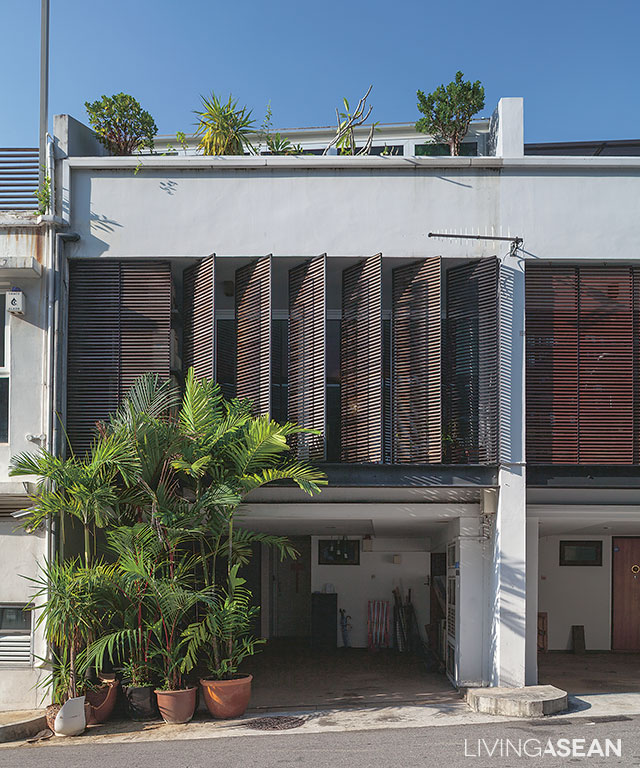
The front part has since been remade to accommodate lattice awnings from floor to ceilings. They serve as privacy curtains while shielding the interior from direct sunlight without limiting air circulation.
From the outside in, it looks like any two-story home. Step in, and you will find it is actually a three-story design.
The ground floor now serves as a carport and storage facility. A set of stairs takes us to the second floor, which is the living room and kitchen with a spacious dining area.
The home office is here, too. From the living room, there is another set of stairs leading to the bedroom on the third floor.
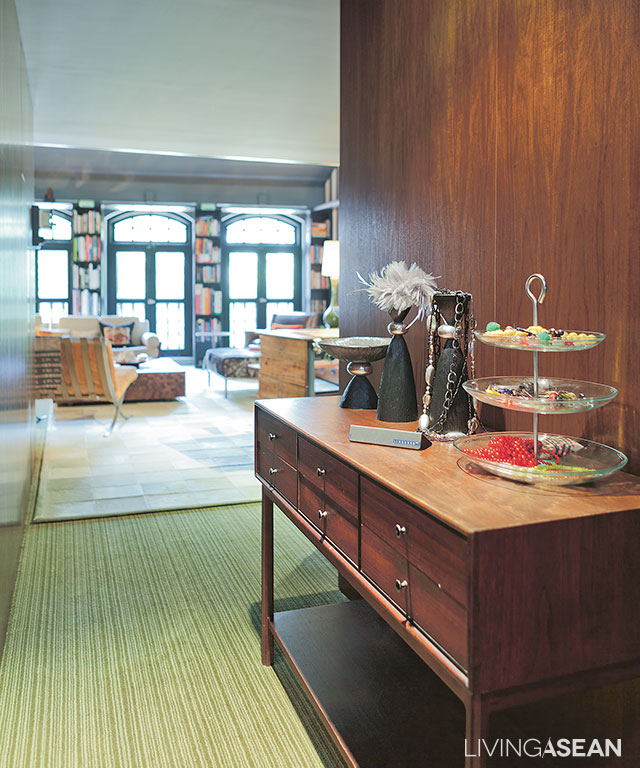
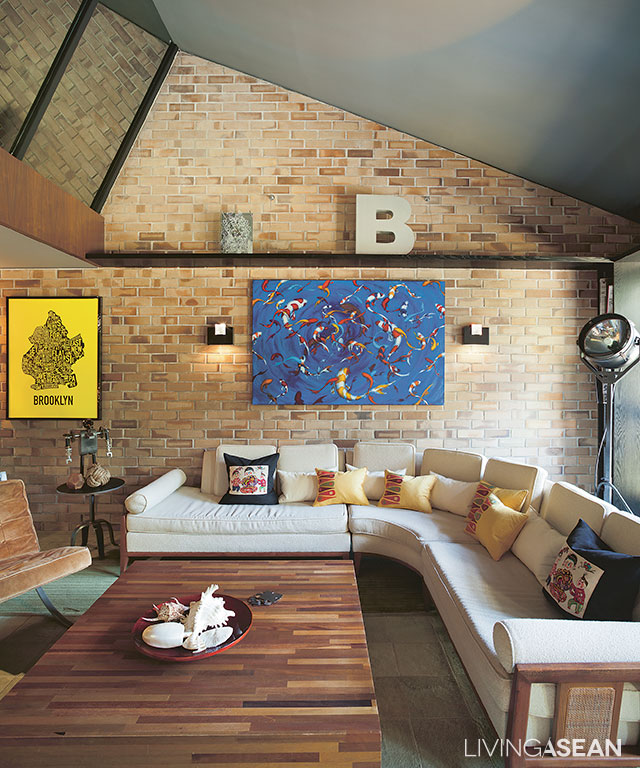
An armchair and a round coffee table adorn the relaxed living room in chocolate and cream tones.Antique-inspired décor items line the hallway leading to a relaxed living space in the rear of the building. A room with a corner sofa and a large coffee table has enough space to entertain a circle of friends. The backsplash is covered in ceramic tiles made to look like bricks.[left] The living room floor is covered in a patchwork of carpets crafted of donkey hide that is soft to the touch. [right] A niche under the staircase has enough room for a mini-bar.
Alan said, “This home used to be a design studio. The interior was just about right. It looked like a home, but it was not.
“At the time, it was an office and it had no kitchen. So when we got it, we had to put in one. I like the layout of this home very much. I divide it into two simple zones – general, and privacy.
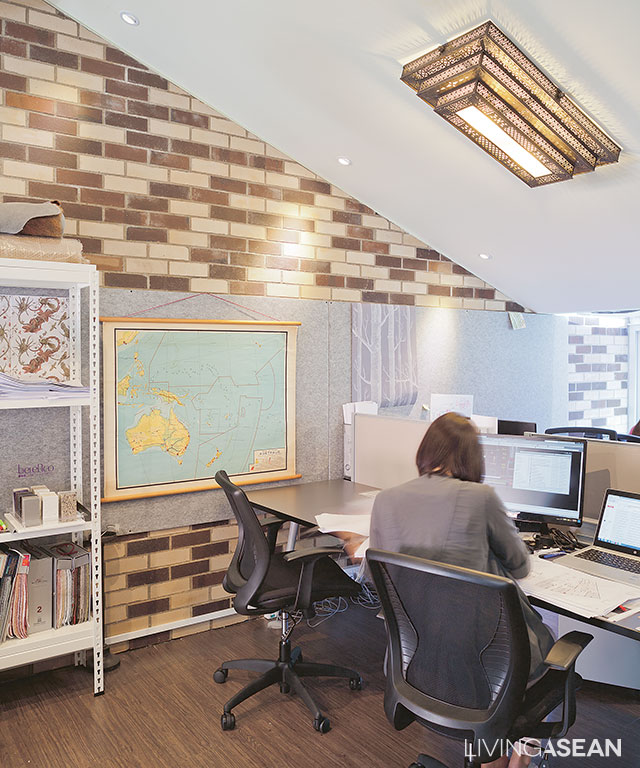
“The top floor is served by two separate sets of stairs. The attic has since become an office. Space is divided to store decorative works on one side and use as a workstation on the other.”
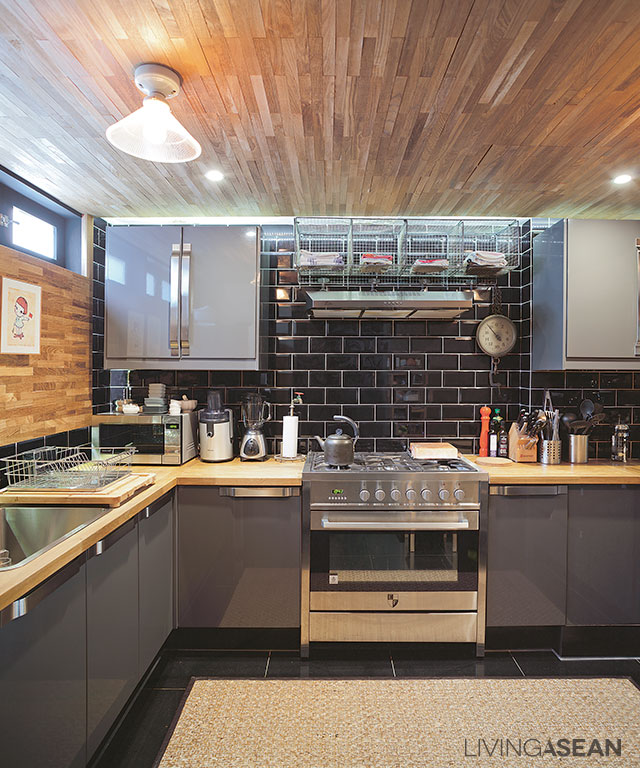
Set in gray and black tones, the kitchen comes fully equipped with stainless steel fixtures. Dark colored backsplash adds a nostalgic vibe to the atmosphere. The stairway leads to the snug bedroom on one side of the upper floor.The staff’s office is located on the opposite side of the upper floor to ensure the residential area is not disturbed.
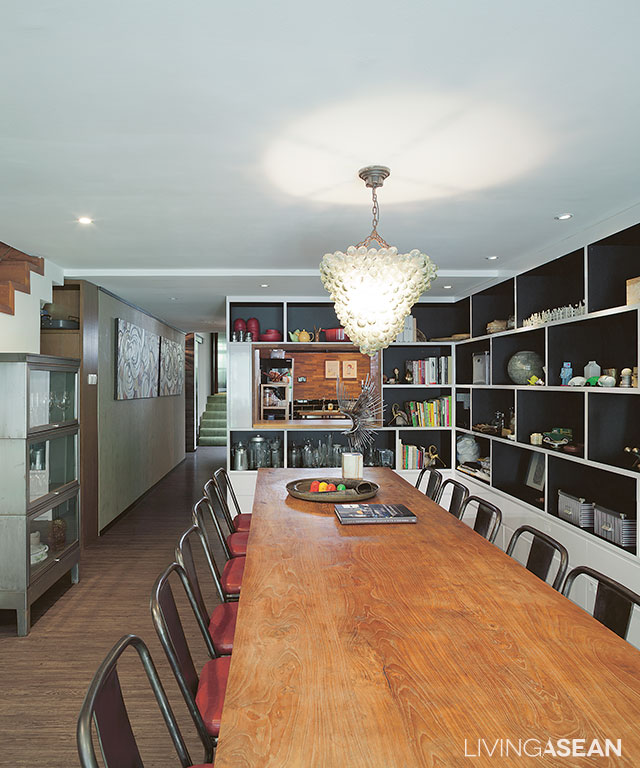
“The second-floor dining room serves multiple purposes, from eating and entertaining customers, to meetings and project presentations,” he continued.
“Personally, I don’t like an office hemmed in by glass walls supported by steel or other metal frames. Offices in much of Singapore are like that.
“I want a different kind of workplace, in which to impress the customers with different experiences. Most of them like it here, whether it is furniture or decorative items that we have on hand.”
The conference table and chairs are placed closer to the wall, lined with storage shelves.
As a whole, the interior spaces are neatly designed and well-appointed.
Décor items from various places are placed in perfect harmony with one another. As he puts it, good furnishings don’t always have to be expensive if you know how.
Alan has given this old terraced house a chic modern makeover with a hint of interest and personality.
Here are some smart storage ideas to give your home unique character and make a shining statement about your style.
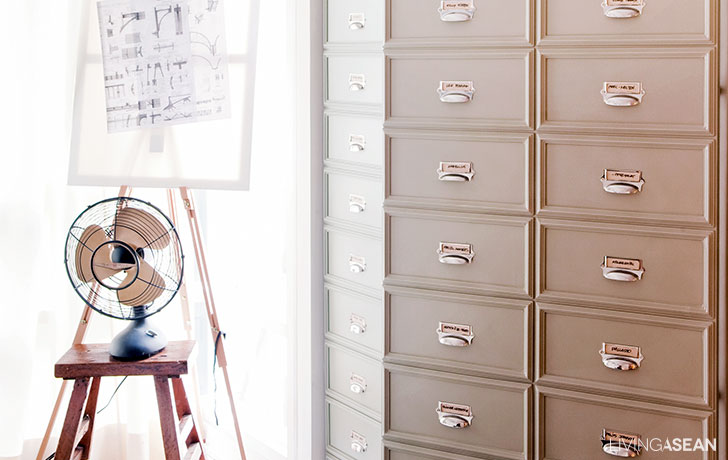
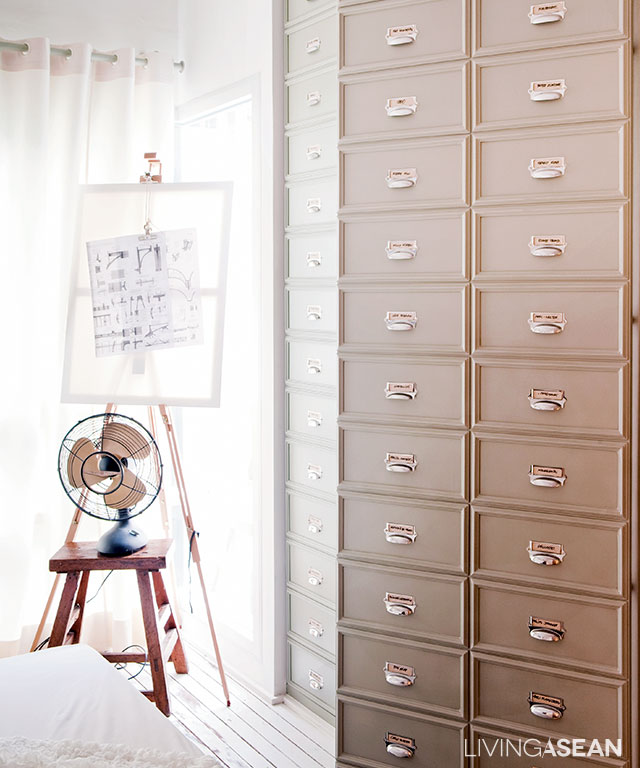
An idea for small rooms: A built-in cabinet in which clothes, shoes, bags, and books may be stored. You can make this kind of smart, easy-to-use closet in the Chinese medicine cupboard style. Label the drawers clearly for easy access. Wall cabinets add beautiful patterns and dimensions to your living spaces. They inspire you with a vision of freedom to create attractive walls.
Location: Preeyawat Temchavala’s home
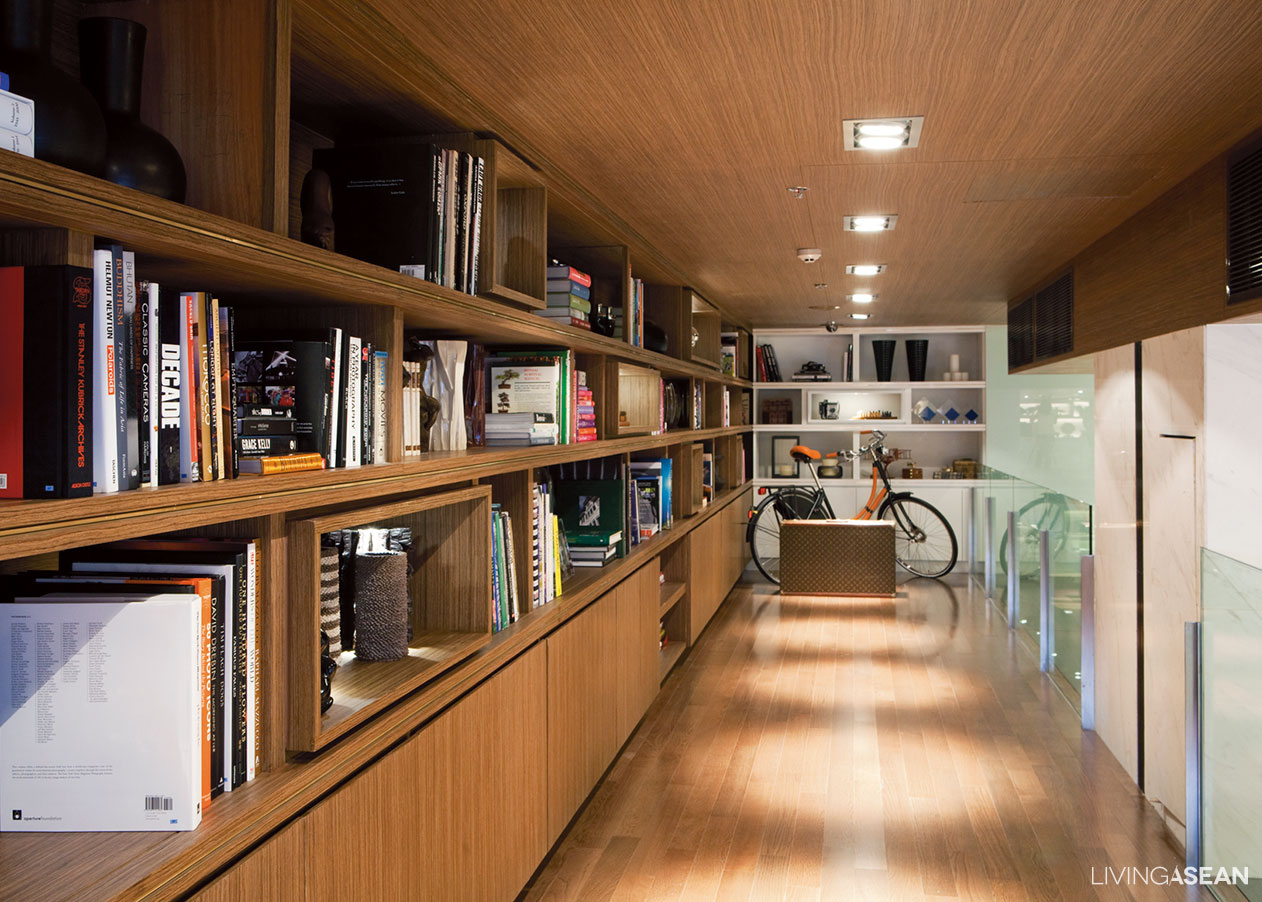
You can take your wall out of its humdrum existence by putting in exciting arrays of built-in closets and display spaces. Line them up along the corridor. Full-insert sliding doors, which fits completely in the openings, are ideal for the lower cabinets since they don’t get in the way. The upper cabinets may consist of open compartments made of plywood or MDF wood. It’s a good idea to incorporate electric lights in the design. Lights add interest and dimensions to rows of built-in shelving along the corridor. Recessed lighting fixtures behind the cabinets can be set at intervals that run parallel to downlights from the ceiling. They can hide behind veneer wood paneling in the same color as that on the ceiling.
Location: 3rd Floor, Sansiri lounge, Siam Paragon
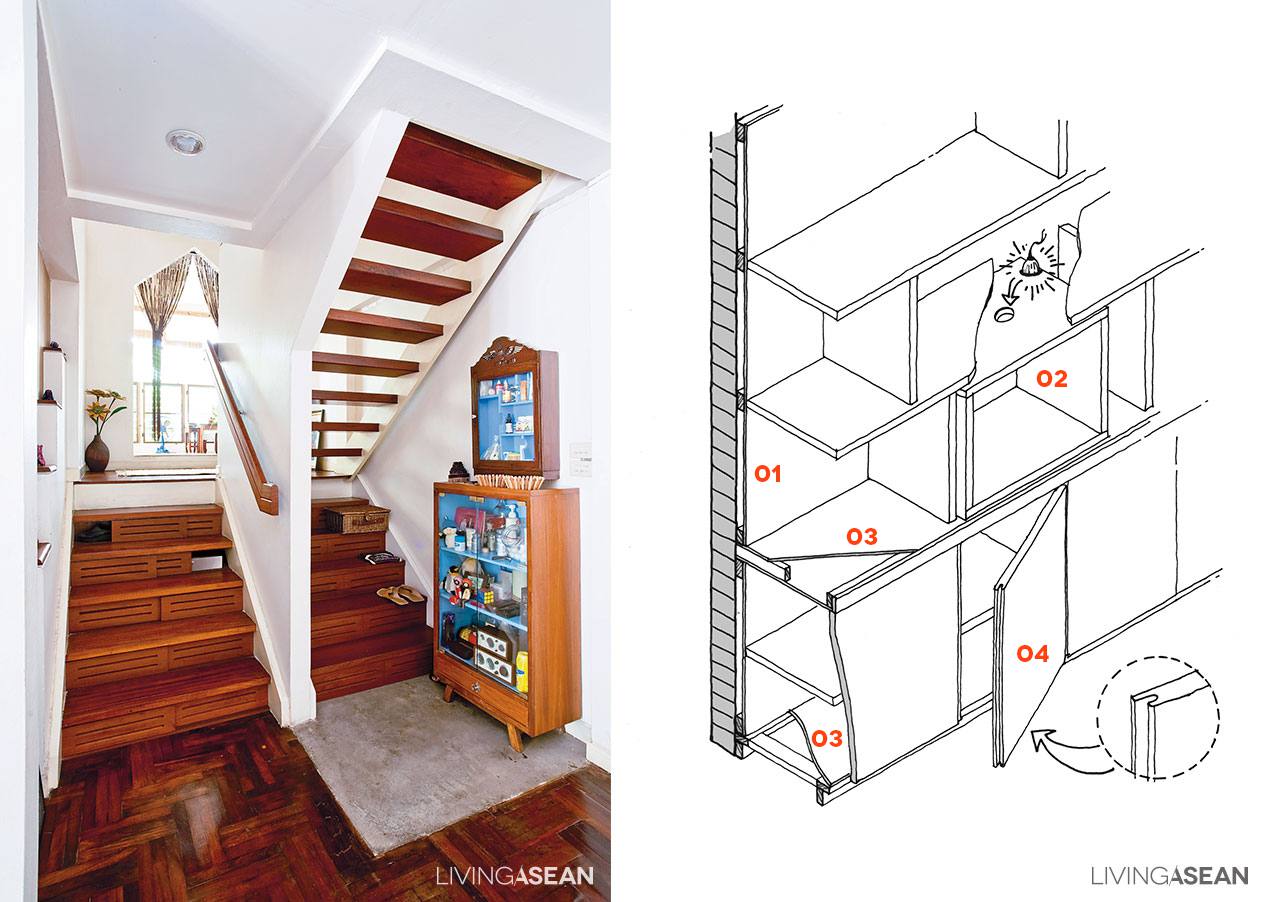
Left: Stair risers and treads make for creative shoe storage. Turn each riser space into a shoe box and cover it with sliding cabinet doors made of plywood or MDF wood. 10-mm-thick wood panels should suffice. Sliding doors are ideal because they don’t get in the way. Make a couple of slits in the door for good ventilation. Now we’ve got an incredibly clever way to store shoes.
Right:
01 The rear and both sides of the cabinet made of plywood or veneer wood
02 Attach wooden boxes with LED or Halogen light fixtures about 5 cm in diameter. Install wiring at the rear.
03 Hardwood frame with plywood or veneer wood cover
04 The door panel with a recess cut into it so as to join the parts together
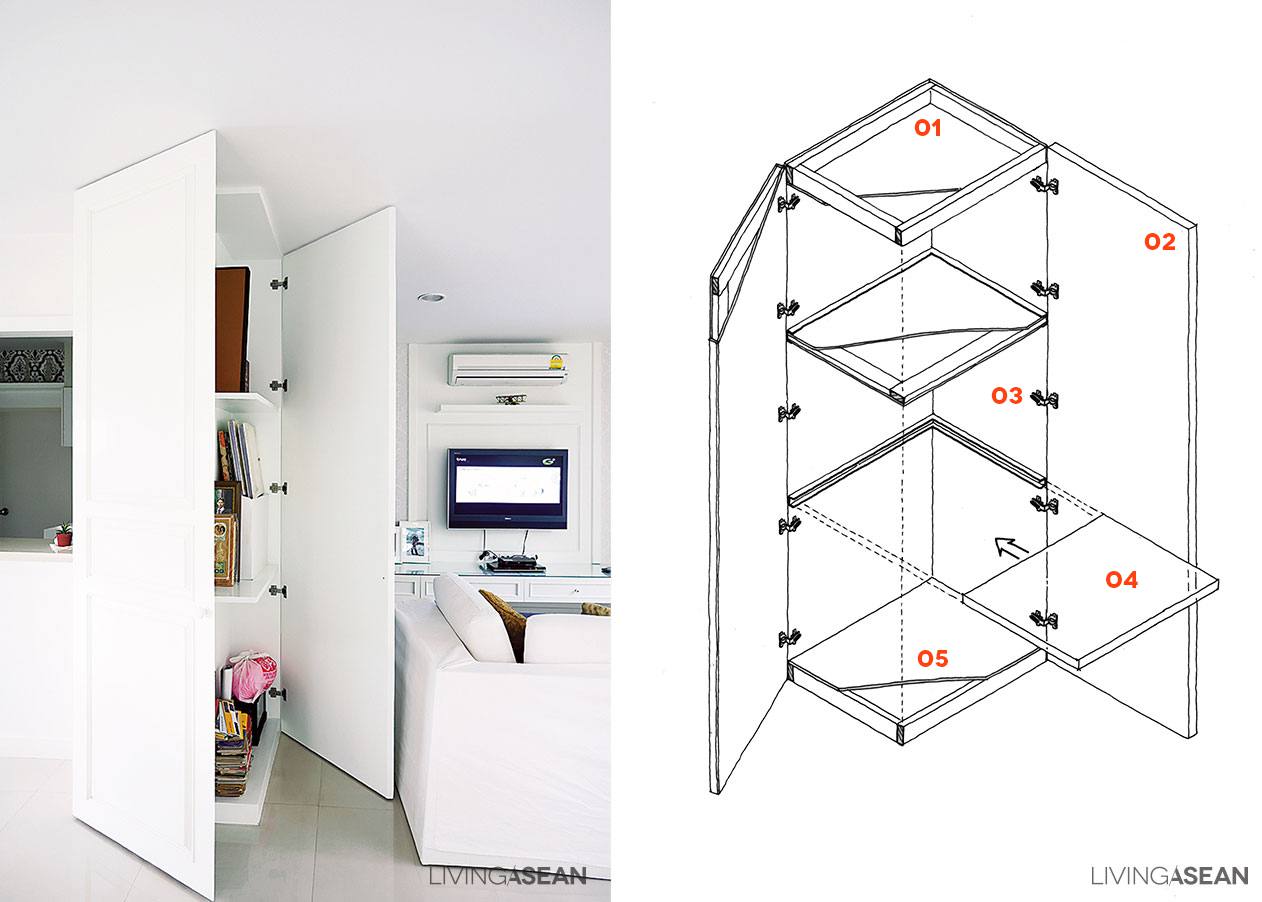
01 Hardwood cabinet
02 Cabinet shells made of white MDF wood
03 Permanent U-shaped stainless steel brackets to hold the shelf in place
04 White MDF wood shelves 24 mm thick
05 Hardwood frame covered with white MDF wood
Looks can be deceiving. What looks like a 40-by-50 cm pillar supporting the building is in fact a vertical storage space that stands tall from floor to ceiling. This creative storage can open on two sides for accessibility and convenience.
Location: Kasijsin Suwattanapim’s home
Hallway walls are perfect for putting in a full array of built-in closets. The semi-outdoor area is a convenient place for storing shoes, gardening tools, toolboxes for the handyman … you name it. Black-laminated cabinet doors make post-it notes highly visible. But if you prefer magnets like the kind used on the refrigerator, we recommend installing a magnetic board on the back of the laminated panel.
Location: Assist. Professor Singh Intrachooto’s home
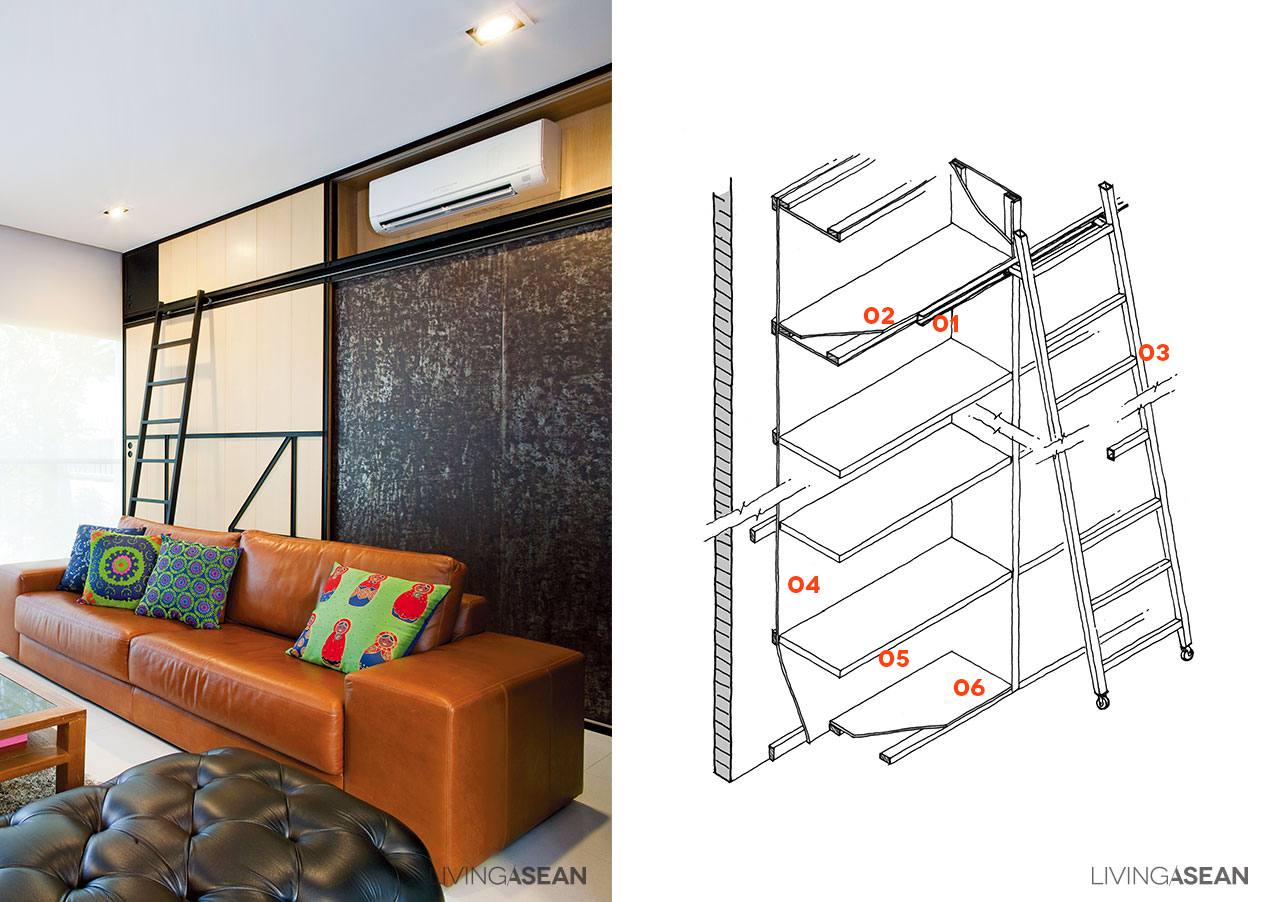
01 Black U-shape rail upon which a rolling library ladder rests.
02 Hardwood panels 30 mm wide, U-shaped steel rail painted matte black
03 Steel rolling library ladder painted matte black
04-05 The rear and the sides of the hardwood cabinet made of ash-plywood in natural colors
06 Hardwood frame covered with ash-plywood in natural tones.
An airy, high-ceilinged room is ideal for putting in a row of overhead shelves equipped with a rolling library ladder for easy access. The cabinet depth can be anything from 25 to 30 cm to create enough space for books and equipment. Add different textures to the wall to give the area a distinctive style.
Location: Areeya and Pilan Spanond’s home
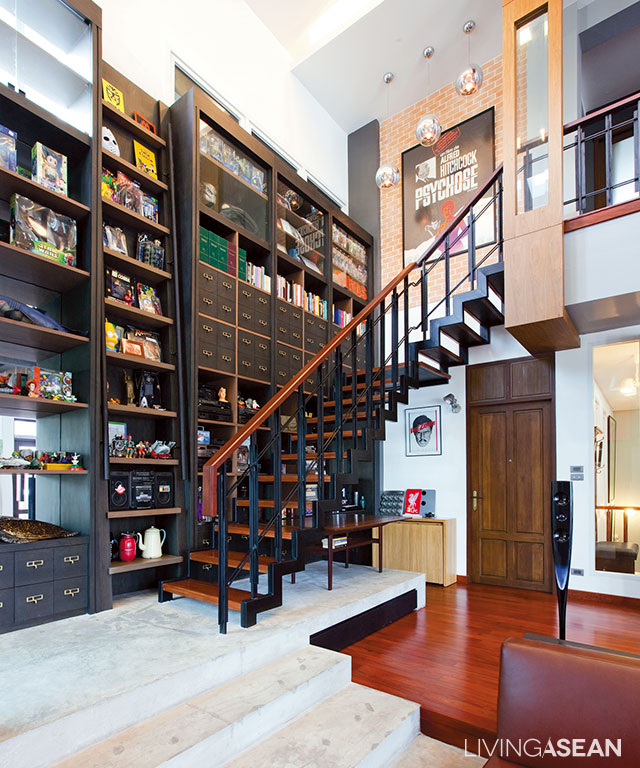
You can create even more storage spaces buy turning hallway walls into bookshelves. By positioning the stairs 40 cm away from the wall, you have got a bookshelf that stands tall from floor to ceiling covering the entire length of the room. Where appropriate, put in some glass doors so that you can access the top shelves from both front and back sides. This is just one clever hack to put yours walls to work.
Location: Wonlopsiri’s Home Family
01 Outer frame
02 Hardwood frame covered with MDF plywood in gray
03 Furry carpet is held in place by Velcro tapes commonly found at stationery stores
04 Hardwood frame topped with plywood panel 18-20 mm thick
05 Hardwood drawers (30 x 30 x 45 cm) covered with gray MDF plywood
Nothing goes to waste. The space under the loft bed can transform into a commode containing concealed chambers used for storage. The commode can be as high as 45 cm from the floor to give ample spaces for storing miscellaneous items.
Location: Nu Nimsomboon and Klaiduean Sukhahoot’s home
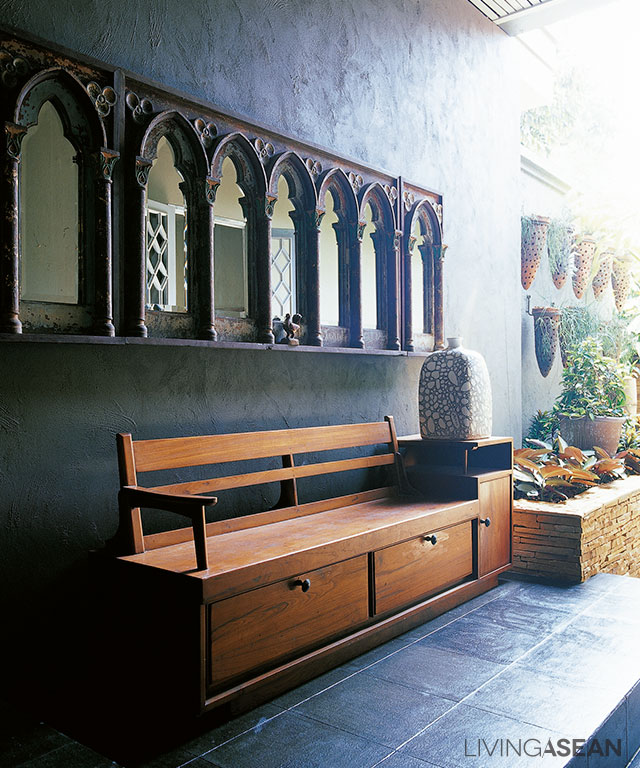
Even a mundane bench can turn into useful, multipurpose storage in the courtyard. The space under it can be remodeled to shelter your shoes, hand tools, gardening tools and all from bad weather or danger. It’s a good idea to divide the underneath space into two parts and put in a couple of drawers with easy handles. The drawers can be made of plywood or MDF wood about 10 mm thick for durability.
/ Story: Wuthikorn Sut / English version: Bob Pitakwong /
/ Photographs: Soopakorn Srisakul /
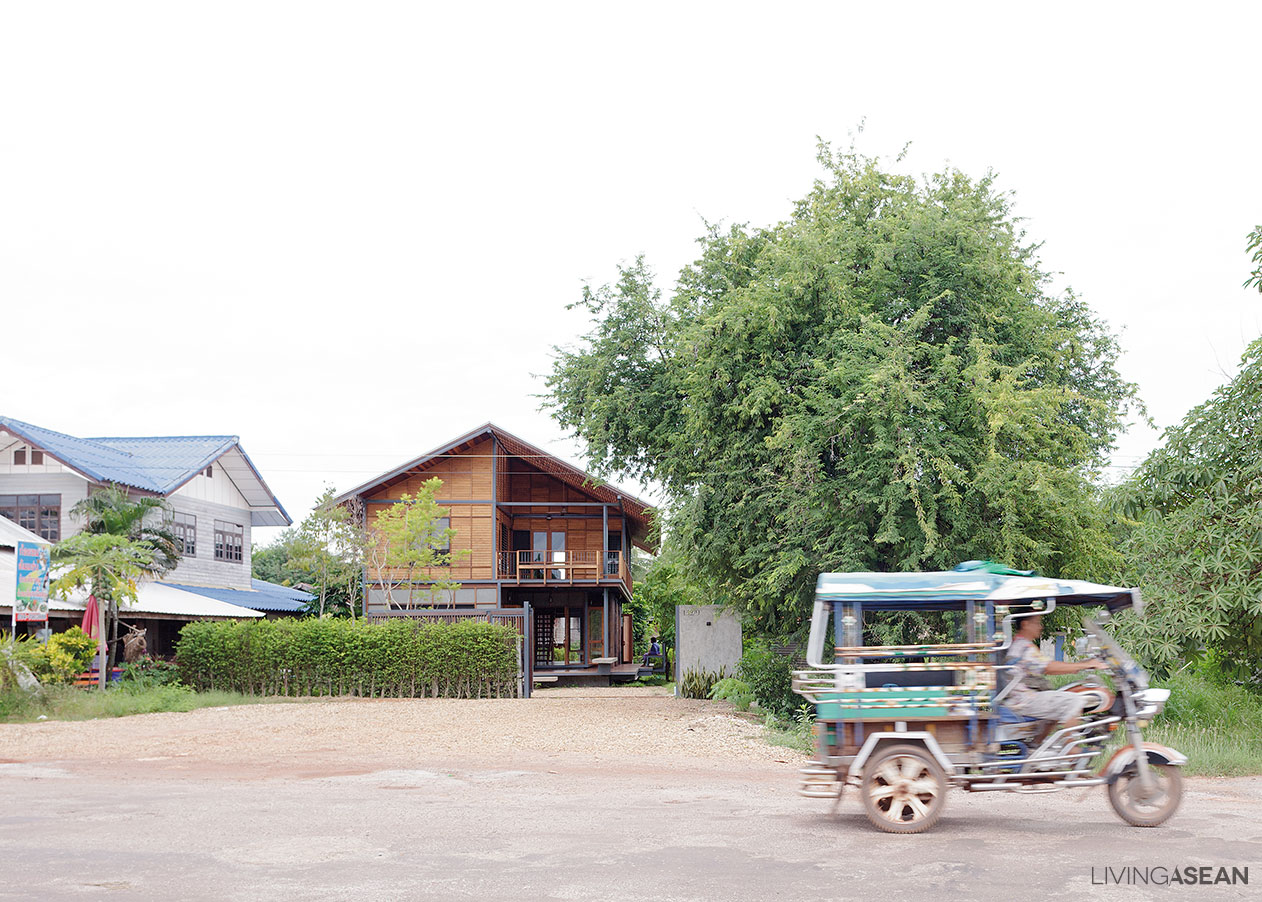
“We want a Thai-Isan style home, the kind that not only embraces vernacular design typical of the Northeast but also fits in well with the social and cultural environment,” said homeowner Pierre Vermeir when asked about his traditional-style country home in Udon Thani’s Baan Dung District. Having lived in Thailand for a long time now, Pierre is quite at home with the Thai way of life. He is also passionate about the warmth and hospitality indigenous to the region.
The new house that’s warm and full of character sits on land that has been the family home of Nittaya Pansamdang, Pierre’s better half. When the home they’ve lived in needed repairs, the couple thought it wise to go for a complete teardown to make room for a new one. And that’s where Kanika Ratanapridakul, of Spacetime Architects, came into play and turned ideas into a reality.
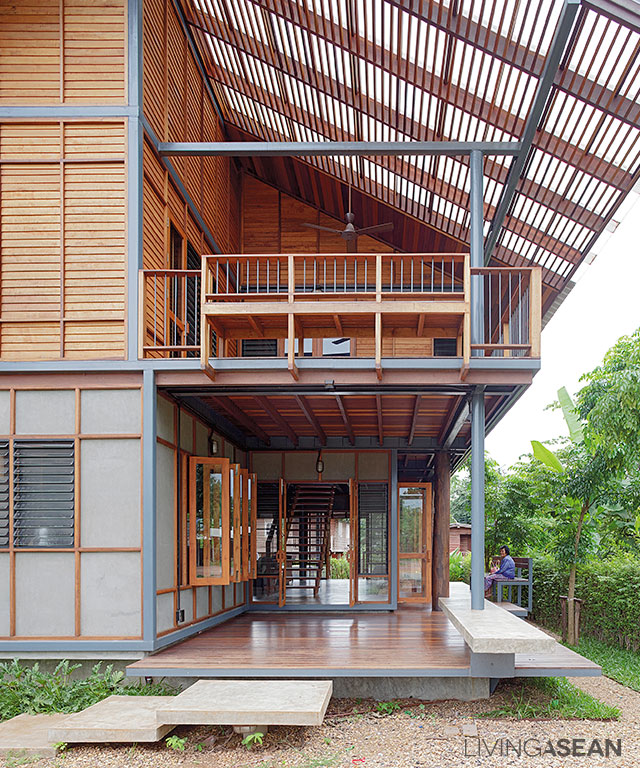
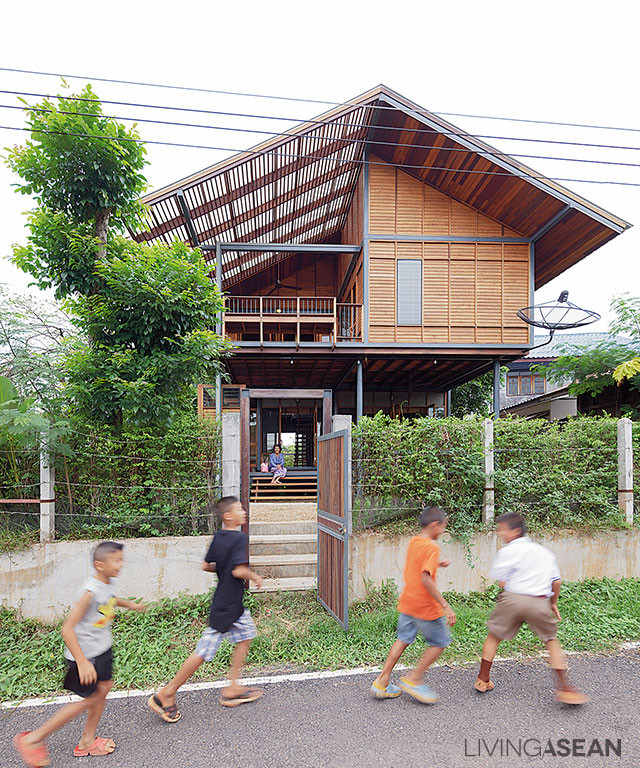
A proper plinth height protects the house floor from direct contact with moisture, while the front porch offers plenty of room for family hanging out together. Plus, there’s the quality of being positive in attitude. Friendly neighbors shout out greetings as they pass by in the late afternoon.
“Pierre wanted a Thai-style house, a wooden one that’s comfortable to live in and not too big. He made that clear from the get-go,”Kanika said.
“As I got around to working on it in earnest, it became clear that the country home was for me as well. It was more suited to my character than other types of design. So it made communication easy because we ended up pursuing the same line of thought.”
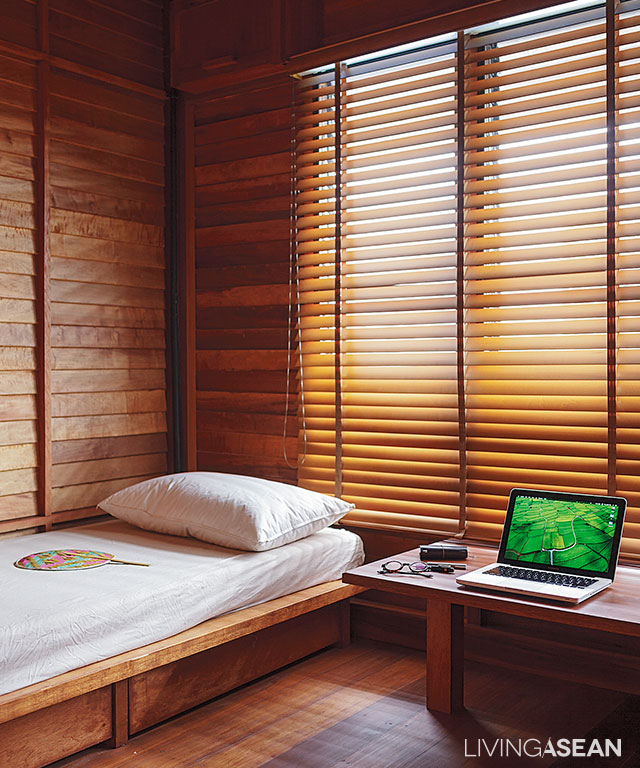
A low-profile platform bed is in keeping with the culture in which sitting on the floor is the norm, a polite way that has had pride of place in society since ancient times.
The first floor raised at plinth height boasts an airy hallway reminiscent of the unique ground-level living space of a house perched high on sturdy poles. The exterior walls are crafted of timber in clapboard patterns alternating with glass louvre windows and fiber cement boards. The three types of building supplies were the materials of choice for their simple, clean appearance.
“The house is built strong using ordinary building supplies and methods no different from others in the community,” said Kanika. “It’s the coming together of the right materials, the skills, and well-planned design on a budget, resulting in the perfect form, color and texture that merge into countryside vernacular.”
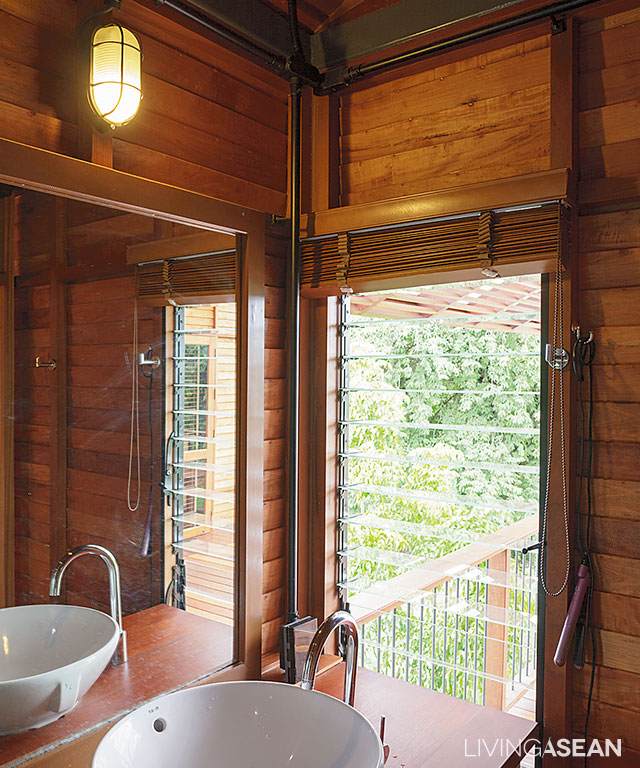
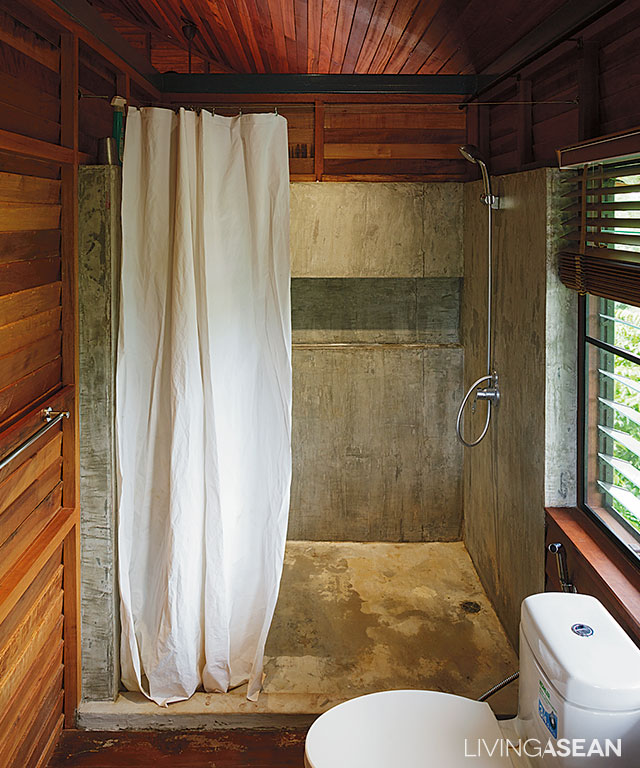
A louver window with glass slats operated by a hand crank opens to let light and fresh outdoor air into the upstairs washroom.The shower room is made of wood and concrete with smooth finishes. Polished concrete surfaces protect against humidity and seepage, while louvre windows, aka jalousie windows, improve ventilation.
Pierre is obviously pleased with the result. The beautiful country home in Udon Thani stands in peaceful harmony with the rural landscape. To ensure there is no obstruction of view, the boundary fence formed by densely growing bushes and shrubs is kept at the right height.
Taking everything into account, the house plan is truly a breath of fresh air. Upstairs, balconies with deck bench seating in the front and back look out over the surrounding countryside. Downstairs, simple clean decks and patio ideas enhance the garden view and offer visual continuity connecting the home with others in the community.
The front façade, especially, overlooks an outdoor area where children from within the neighborhood run and play.
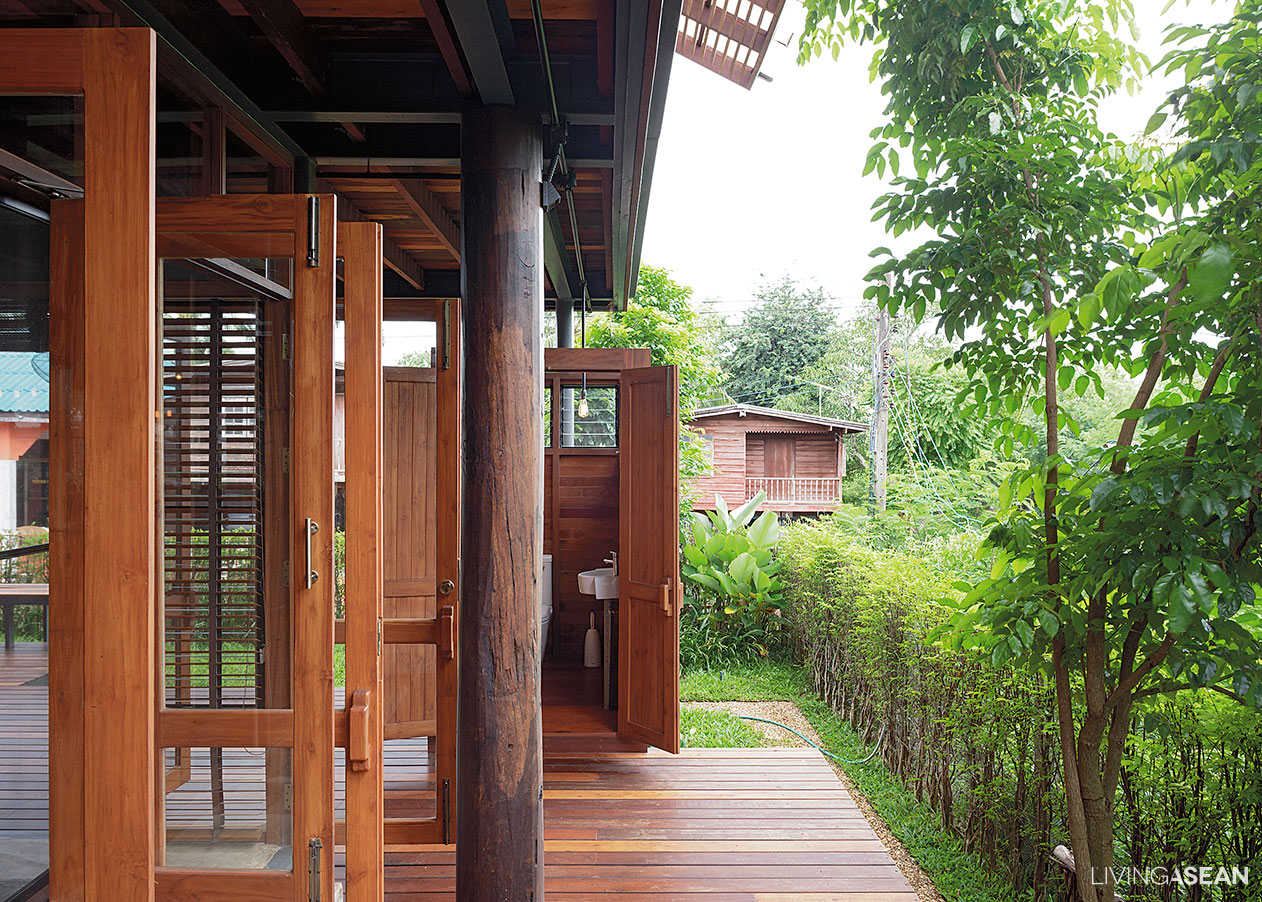
Upstairs floorboards extending outward keep the sun off downstairs living spaces and surrounding wood patio. Characteristic of vernacular design, a small washroom at the far end provides added convenience to semi-outdoor living.Relaxing on the backyard patio while children are having fun exploring the neighborhood.
From a design perspective, the home represents a juncture where vernacular and contemporary styles are married. The house main frame is built of H-shaped steel beams for strength and durability, while the layout, build quality and visual elements are quintessentially Northeastern Thai, aka Thai-Isan.
On top of its pleasantness, the house is created for easy, comfortable living, physically and mentally.
Asked how he finds living out in the country, Pierre says: “It’s not the same. Imagine living in Bangkok and then making a trip to visit family in Udon. Life would have been different.
“Compare that with having a home in Udon and commuting to work in Bangkok from time to time. The latter makes sense. It is comforting to know there is a country home awaiting your return, one that is peaceful, away from the hustle and bustle of the city.”
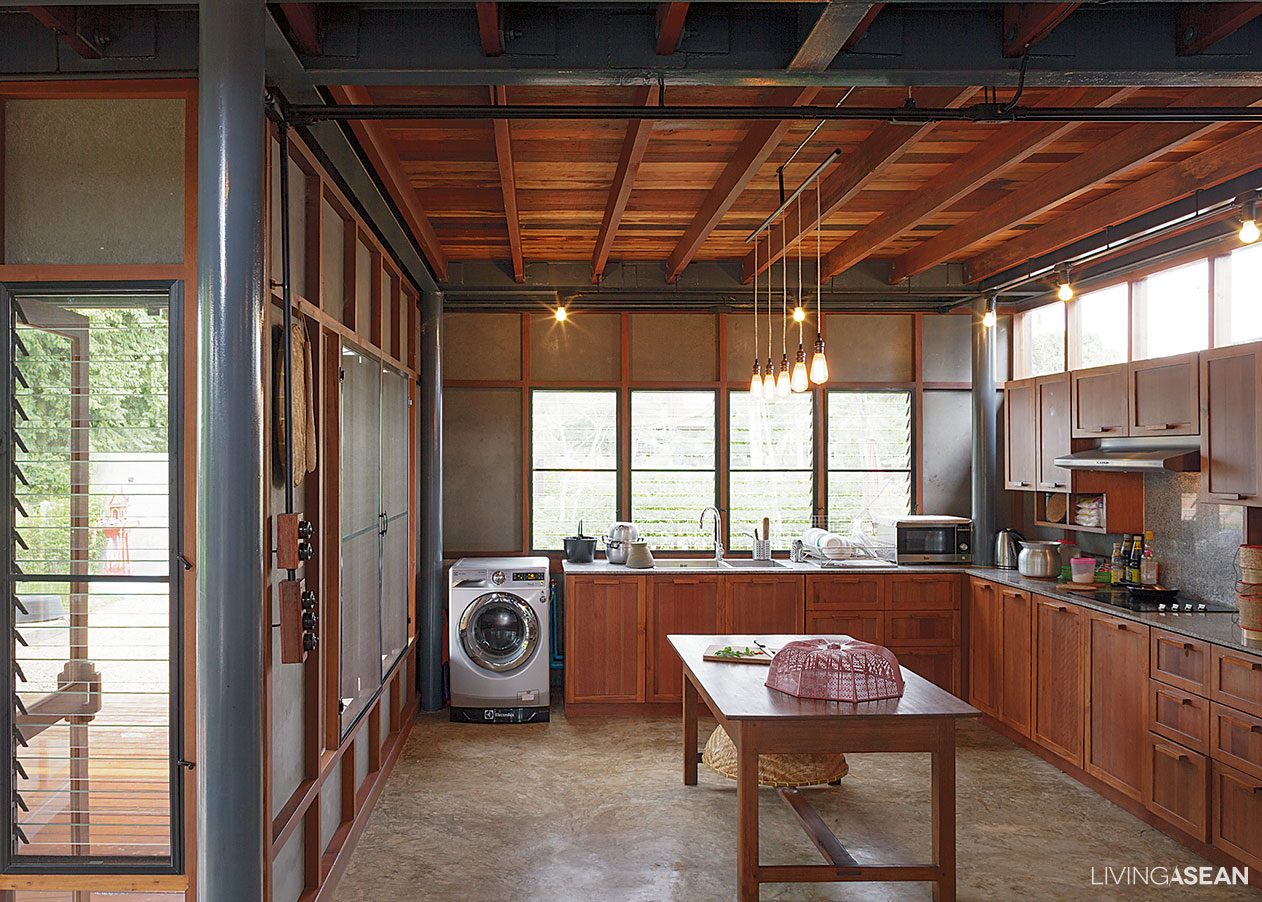
Typical of Thai-style homes in earlier times, an open concept floor plan results in the living room, dining room and kitchen fusing together forming a united whole.
“I want a simple country lifestyle. After all, life isn’t about just me alone. It is about reaching out and interacting with others in the community. And that is what makes Thai-Isan culture unique and warm. There is a touch of country in the lifestyle, and I find that delightfully charming and attractive.”
The kitchen comes fully equipped to handle all kinds of cooking big or small. Louvre windows allow good ventilation making clouds of smoke and odors fast dissipate.
Pierre now commutes a few times monthly between Bangkok and his new home. In future, he intends to live permanently in Udon Thani. Here, life just gets more fun hopping on a motorbike ride to a nearby market and back.
He enjoys cooking and inviting friends over for dinner. Occasionally he entertains visitors from overseas. Speaking of which, it seems a new trend is fast rising as more people are looking forward to living “life in the slow lane.” To Pierre, that’s life.
Light and airy interiors are the hallmarks of vernacular architecture of Isan, or Northeastern Thailand. Here, several key features work together as engine that drives natural ventilation keeping the house cool and comfortable. They include high ceilings, no risers between the treads of a stair, large wall openings, and unobstructed balcony spaces and railings.
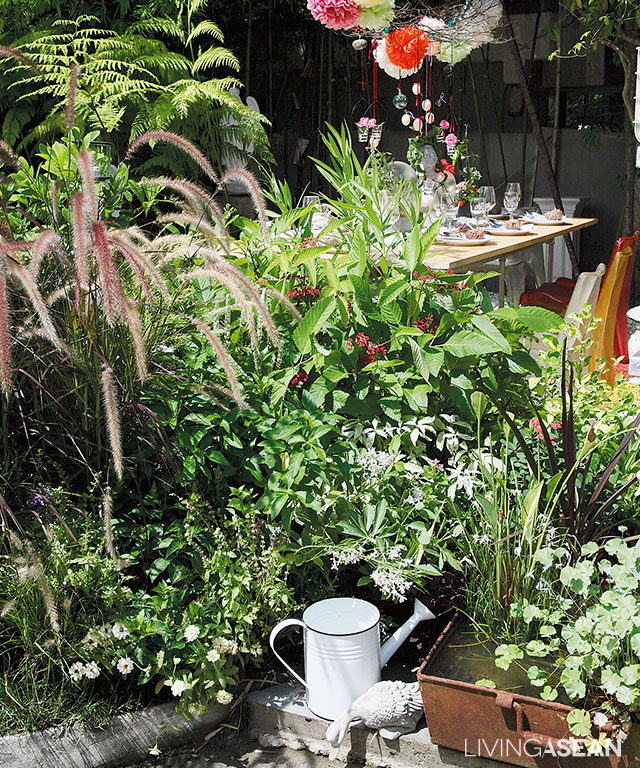
The gardening ideas of colorful flowers welcome guests to the garden of Thanawat Suwinai Phreusabenja of Inmindhamlet community on Soi Ari 3. Located inside is the gardening shop Mc&Ami, where people love to look into the glass-partitioned display area at where butterflies are attracted to the scents of flowers. The Living ASEAN team itself became interested and came to investigate.
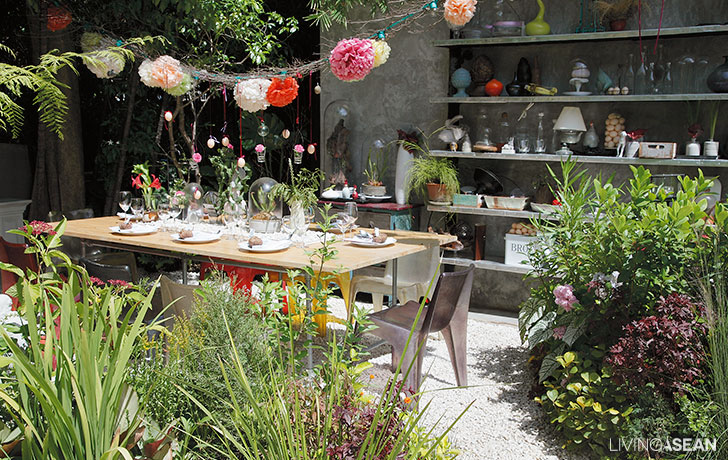
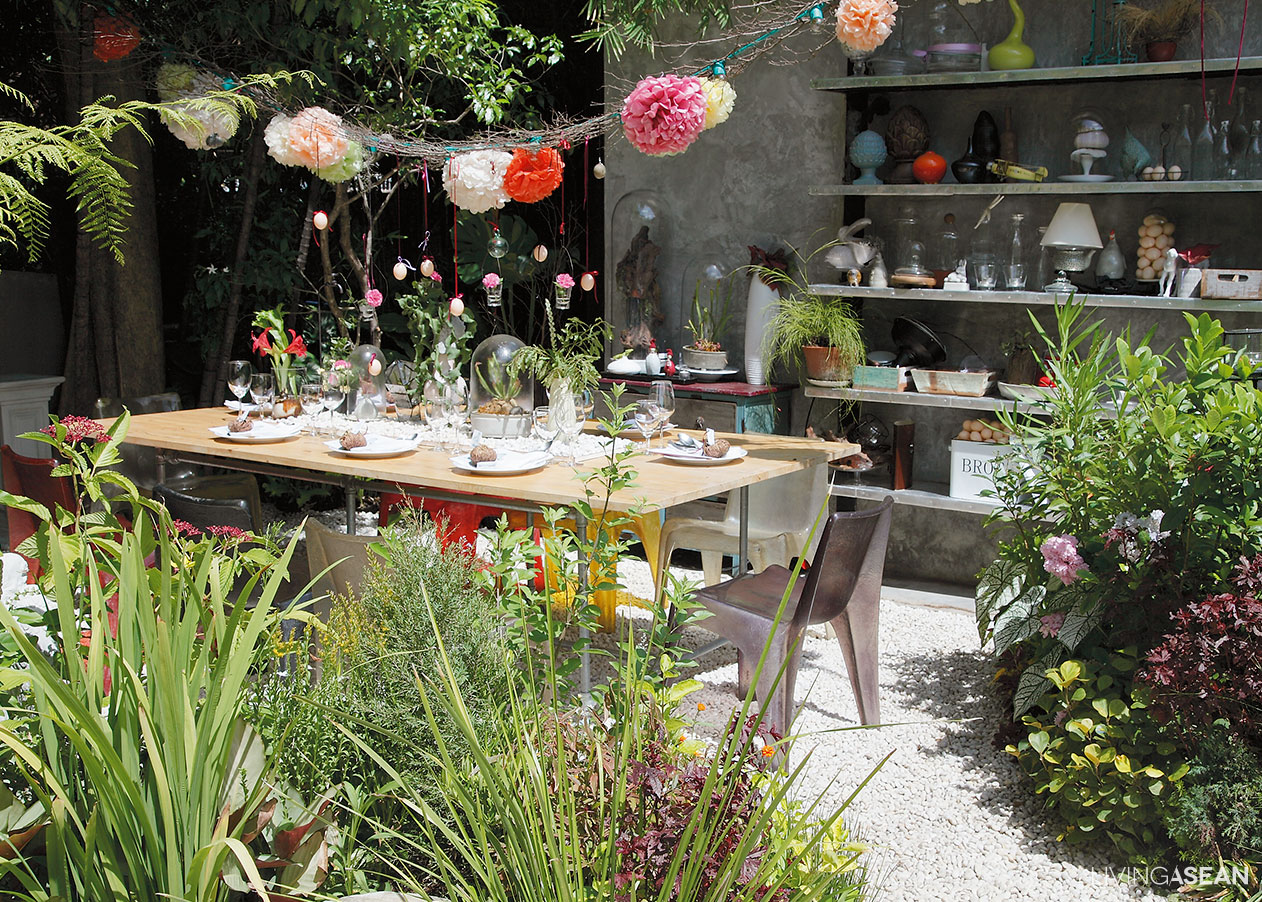
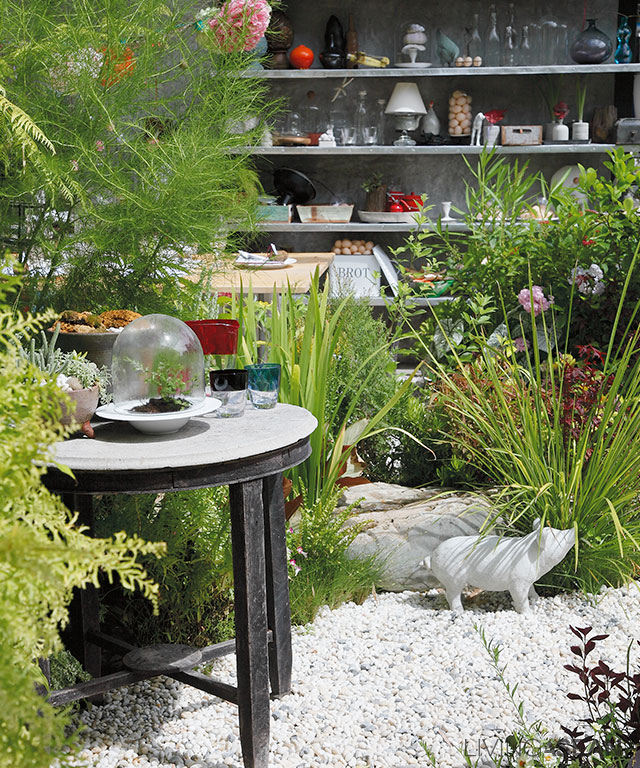
The table décor creates a bright, lively party atmosphere.The dining table creates an intimate and uniquely festive atmosphere as surrounding garden ornaments and “showroom” shelves serve as a backdrop.
We arrived at twilight, as Thanawat was setting up the dining table in the garden to welcome us, amid vibrant colors of flowers in the garden and on the table. Asked about the decor, he said,
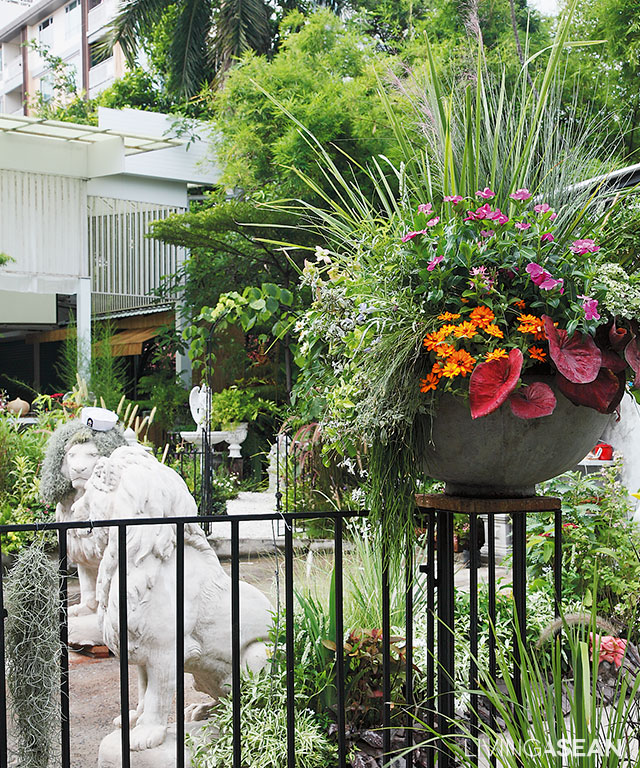
Combination flower planters beautify the entrance. Thanawat got the inspiration from seeing flower vases set at different levels, tall leafy plants at the top descending down to small flowers.
“I got the idea from a respected teacher;she gave me a book about Claude Monet’s garden. She expressed her wish that I could find that sort of happiness in the rest of my own life. Thinking about that made me try to set my garden in Monet’s natural and beautiful style, and what you see here comes from that.”
Thanawat Suwinai Phreusabenja, gardener and distributor of Mc & Ami gardening equipment, also the owner of Inmindhamlet Community Mall.
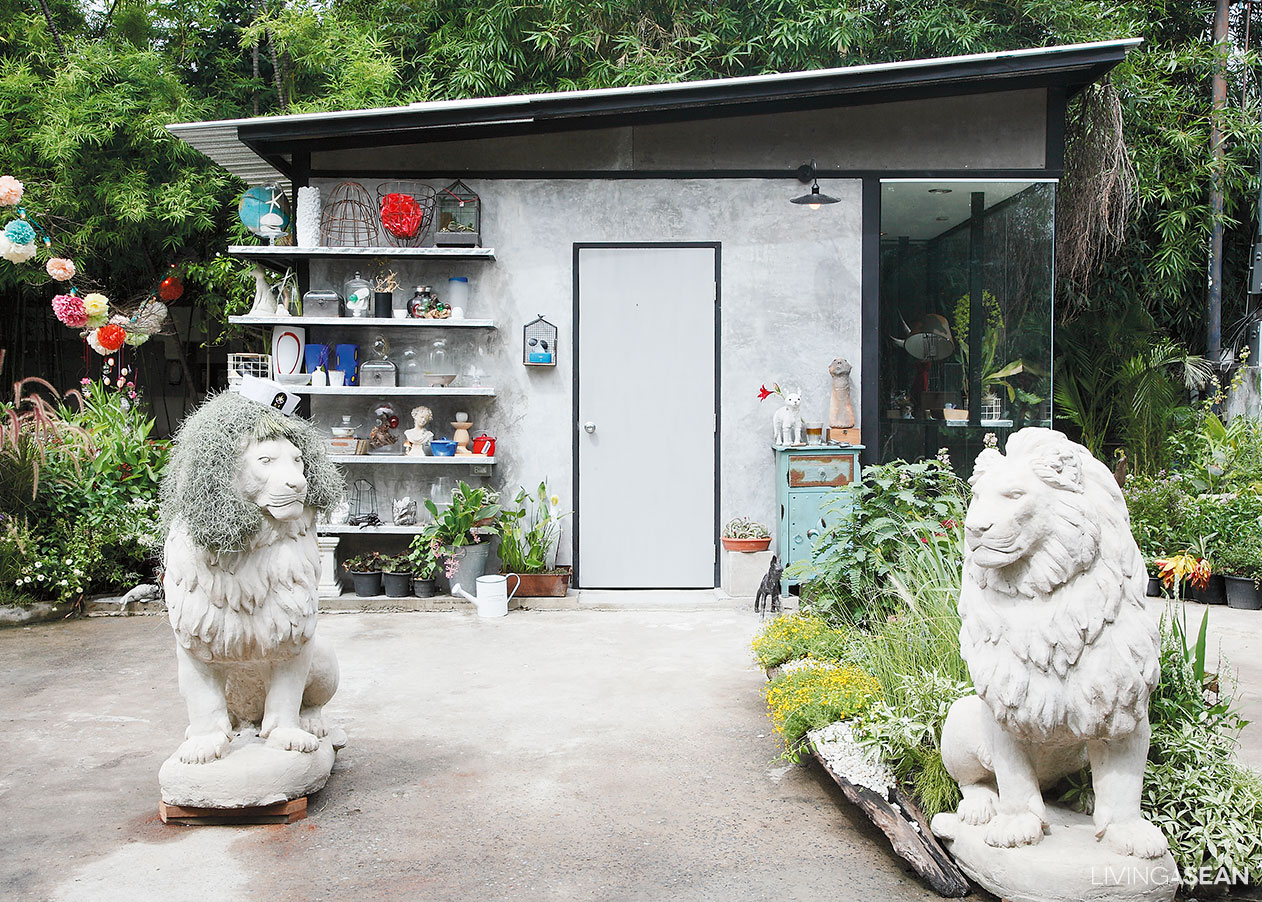
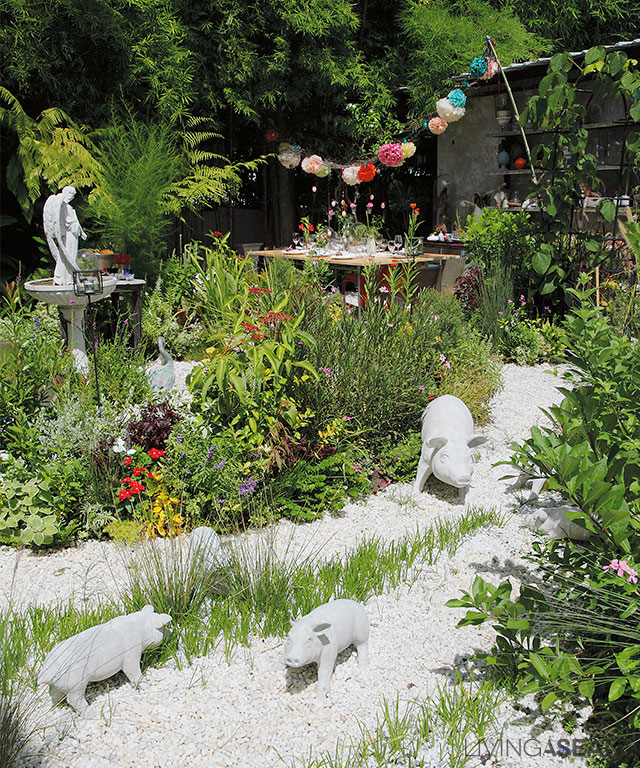
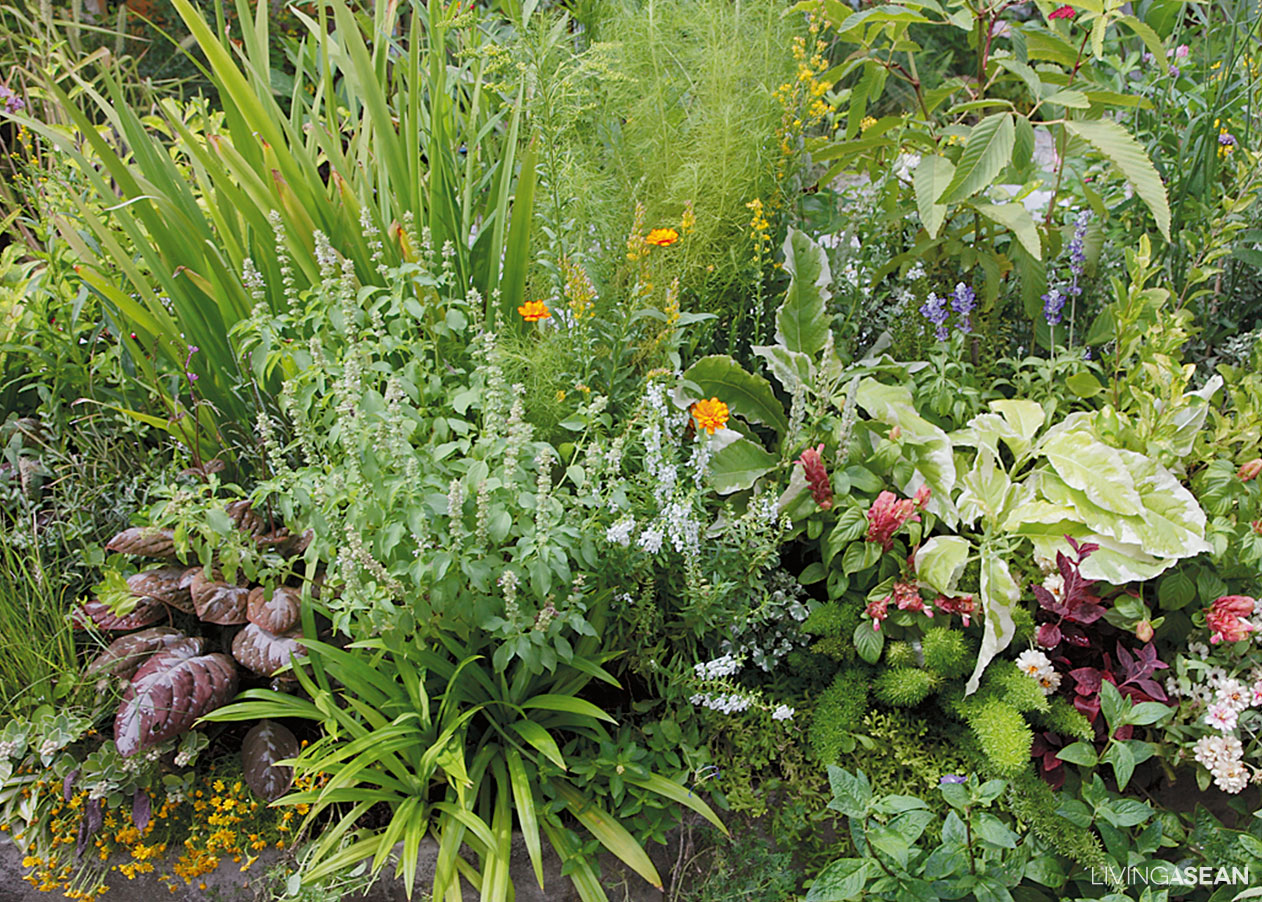
After dinner, we walked around the garden, which is overflowing with decorative ideas. Thanawat himself designed the creative little cement doll family of pigs,lion statues using Spanish moss for a mane and ducks carrying egg sacks in their mouths. With unique choices and placement both flowers and decorative plants are mixed in with tropical rainforest varieties. Inclusions exotics and unusual kitchen vegetables which are all in vigorous growth.
A pair of decorative lion sculptures: one displays an imaginative use of Spanish moss as the lion’s mane.
“My concept is to just sow seeds and let the plants grow by themselves as best they can. The beauty is in non-native plants trying to make their way and naturally adapt in a strange place, with a different kind of beauty than before, in leaves, branches, and colors. But when planting we do have to consider whether a plant can coexist with the others. Is it shade-tolerant? Can it survive with a vine growing over it?”
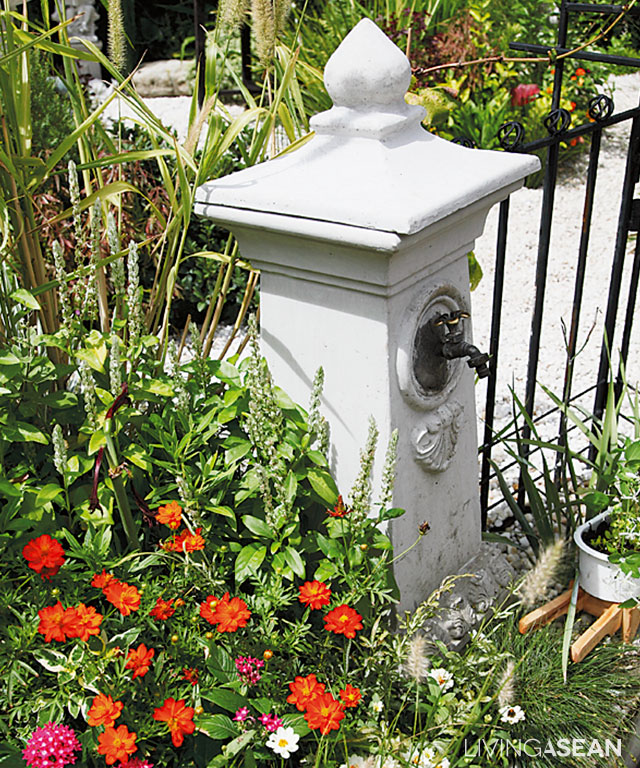
Entryway post with a faucet for watering flowers. Functional and attractive, too.
Another minor miracle is that all this grows in what used to be a parking lot, which Thanawat covered in topsoil and gradually planted over.
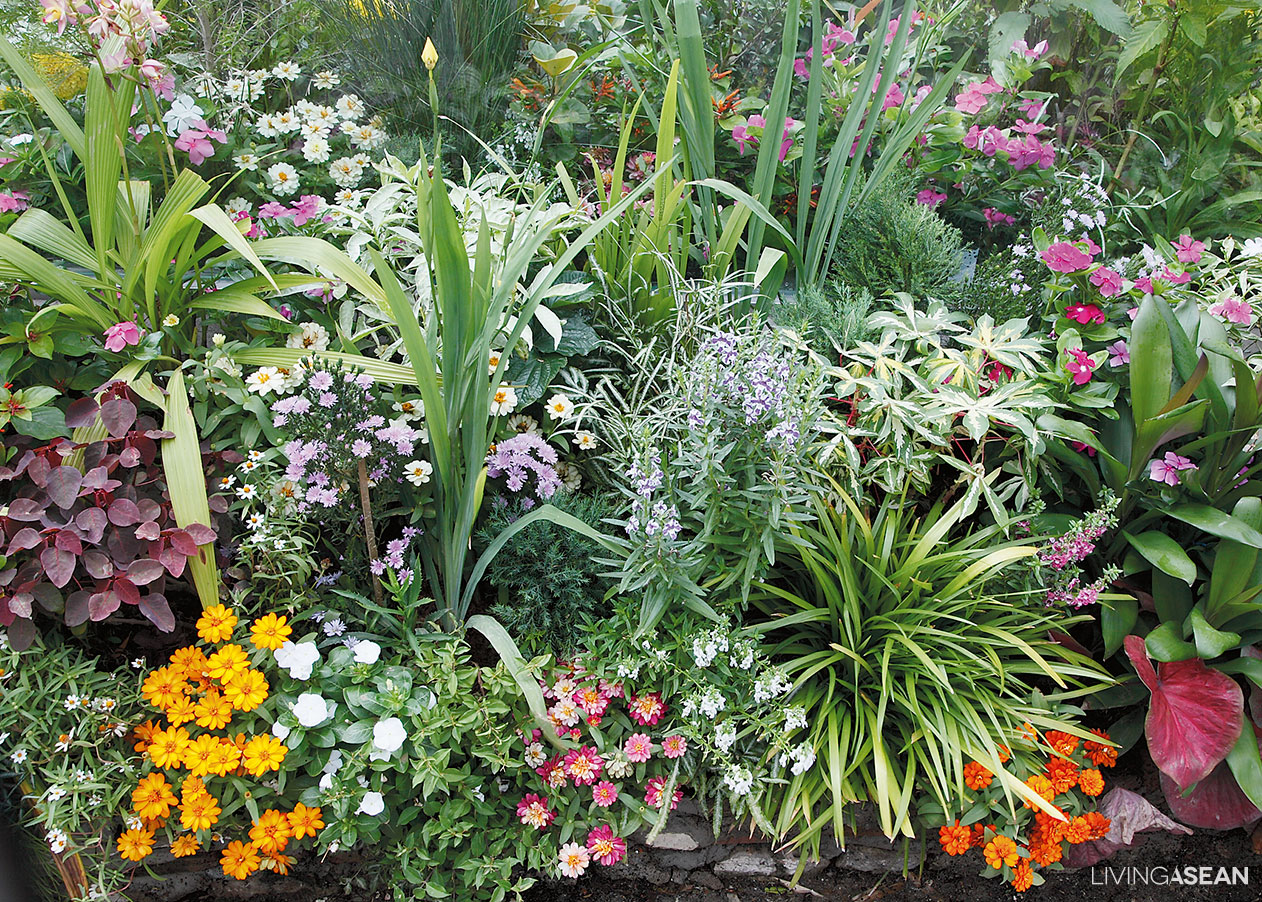
Small shrubs with flowering plants below. Rising above is a mix of leafy plants, broad and point-formed, creating a filled-out appearance.
“The fun is in the challenge. We have a hard concrete yard. You would think that we cannot plant. Think again. Just have a concept and a passion, and a garden is created from Shallow root systems, a single level of soil, good for bamboo, ferns, flowering plants, bushes, and kitchen vegetables. We found added benefits from things we can plant and grow slowly, and that will flower for a long time, so we aren’t constantly cutting things back.”
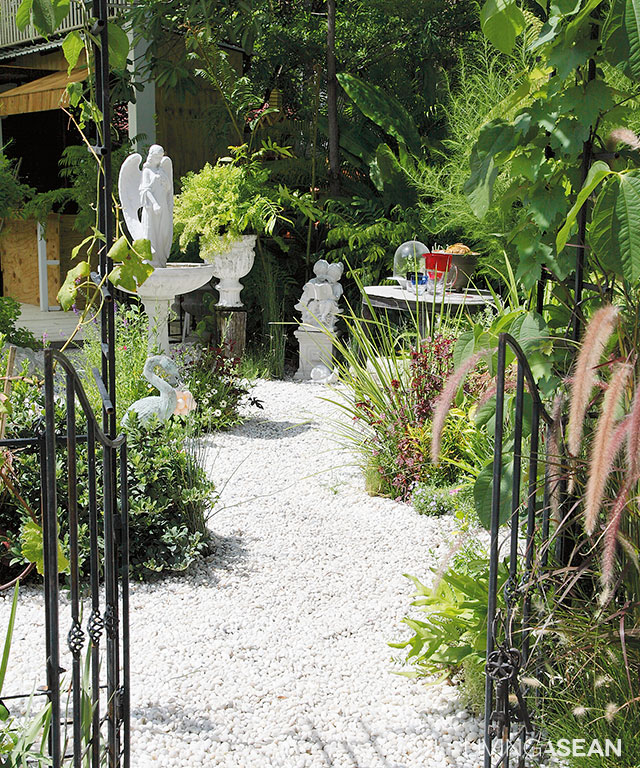
A gate through the iron fence into the garden, where a white gravel path contrasts nicely with greenery and ornamentation.
We also have odd blossoming schedules and odd shapes that grow and nourish beauty. Adapt and don’t accept failure because the hard cement doesn’t fight back, but this is still a formula for success.
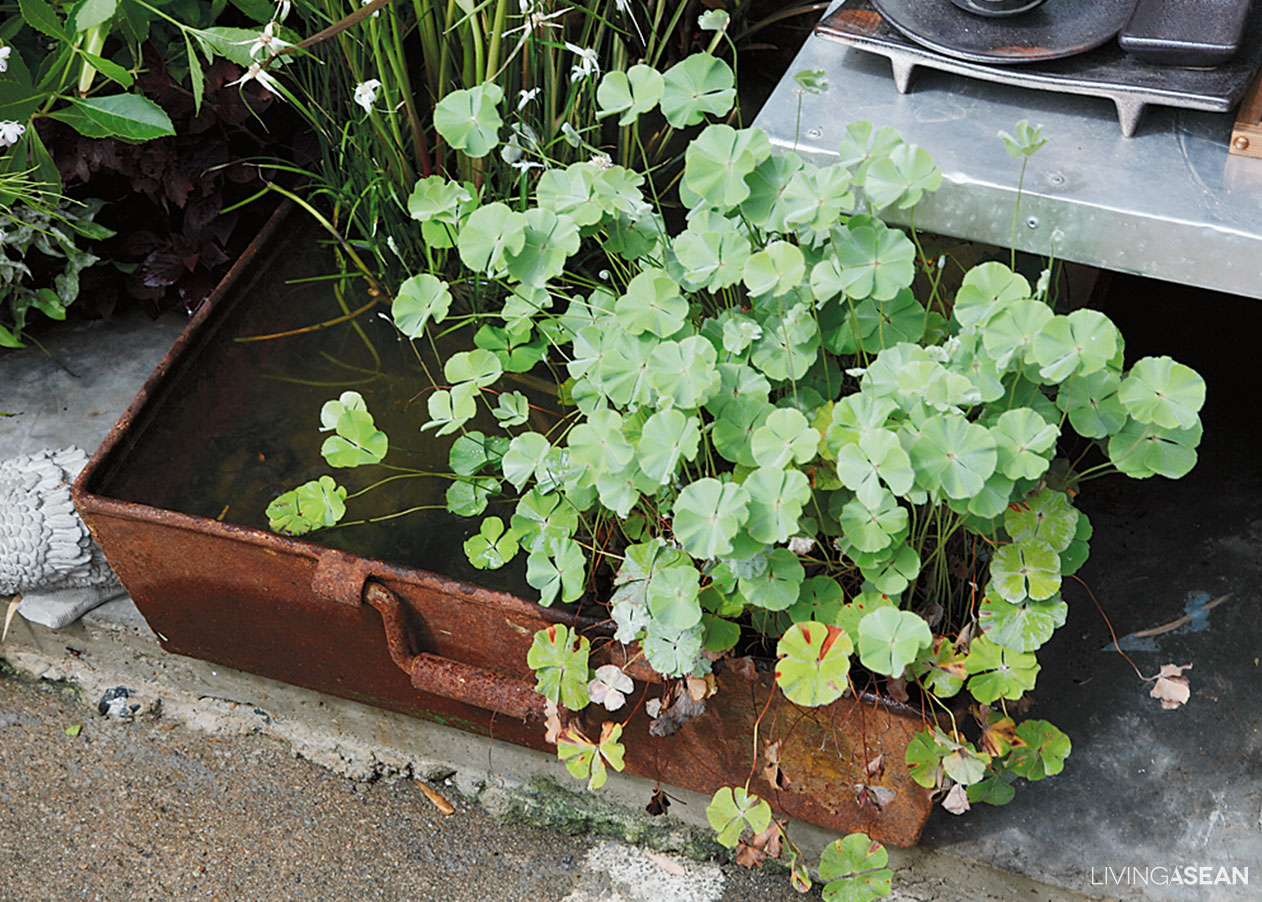
Besides flowers, there are kitchen spices like basil and pandanus palm that add color and beauty.Small steel planter boxes trap rainwater. Semanggi and star grass add a chic look.
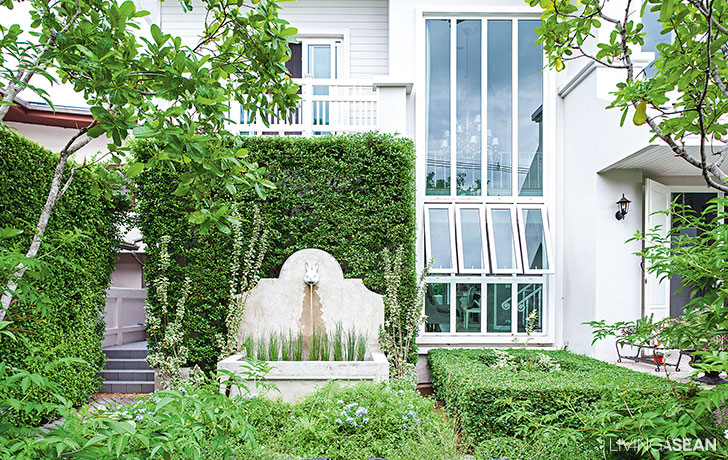
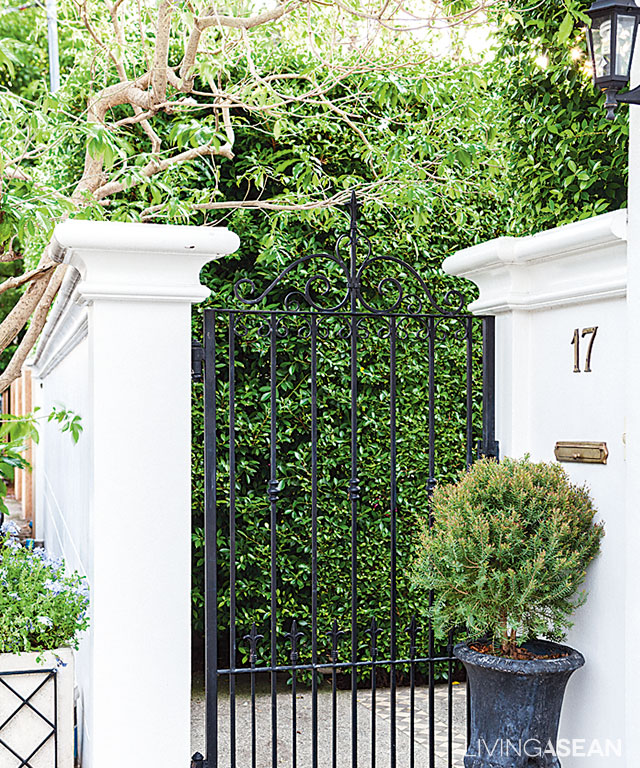
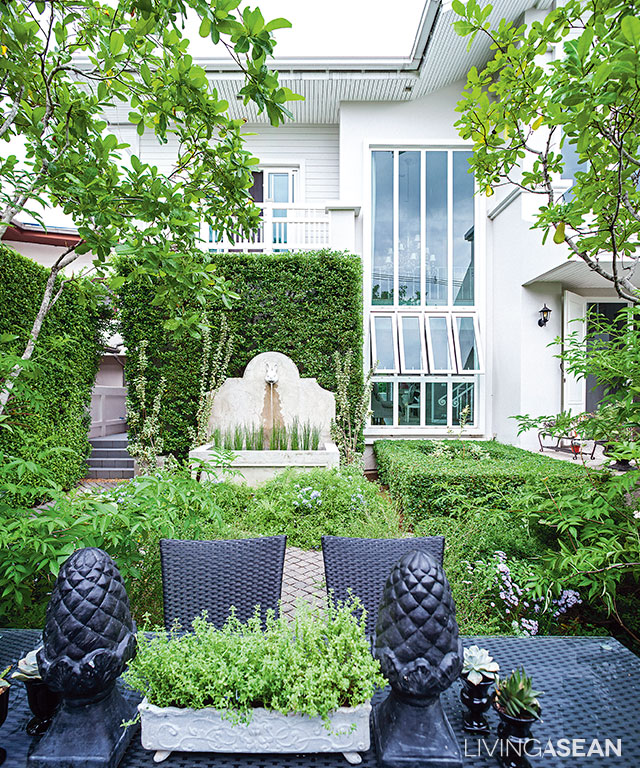
Little joy with a cool lush green small garden in front of a pretty white house protected in front by a hedge of English banyan. Sukanda and Chaiyanon Mimarayat were inspired to create this beautiful place by the book cover of Small Garden from Baanlaesuan Publishing.
/// Thailand ///
Story : Warapsorn Akkhaneeyut /// Photos : Sitthisak Namkham /// Landscape : Little Tree
Seeking out the garden designer, Siriwit Riubamrung of Little Tree, they had to wait two and a half years to enlist his help. “When we first went to Little Tree the Designer needed to see the actual site, but the big floods came and we couldn’t continue for another year. Then prices were higher, so we had to wait even longer.”
In the meantime Sukanda redecorated, the space adding on a small cottage in a mixed French country and vintage style and a relaxation room with a porch, walkway, and lawn, all while waiting for the garden to arrive.
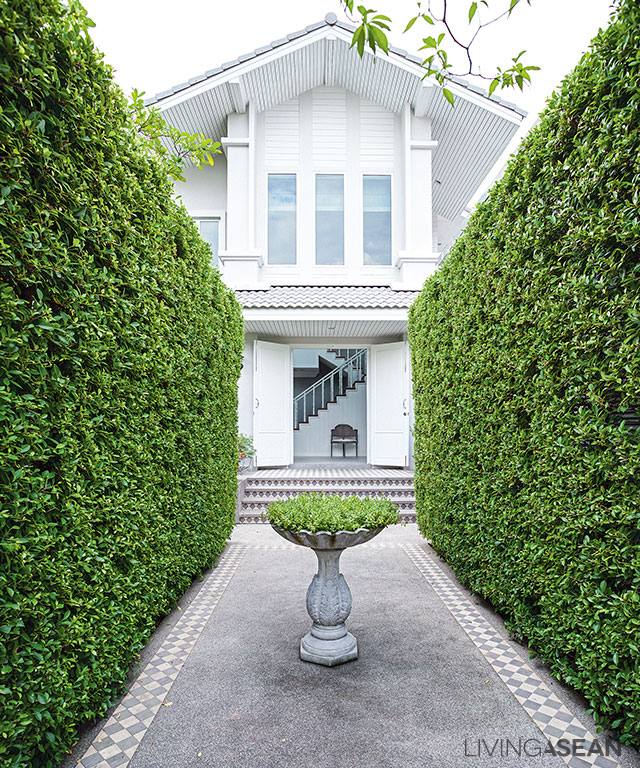
English banyan line two sides of the walkway entering the houseInside the little gate is a comfortable space to sit, but the tall hedge keeps it private.
“Our old place was a townhouse with retro façade, not like this at all. Then we started getting out more, and thought about copying the look of restaurants and coffee shops we liked, such as Agalico, which Little Tree designed. We gave Siriwit a free hand because we liked his concepts, but of course he discussed everything with us in advance. He made adaptations from the original work plan such as increasing the height of the hedge barrier in front for more privacy.”
A checkerboard tile pattern fronts the house, and cobblestones set diagonally on the washed sand walkway
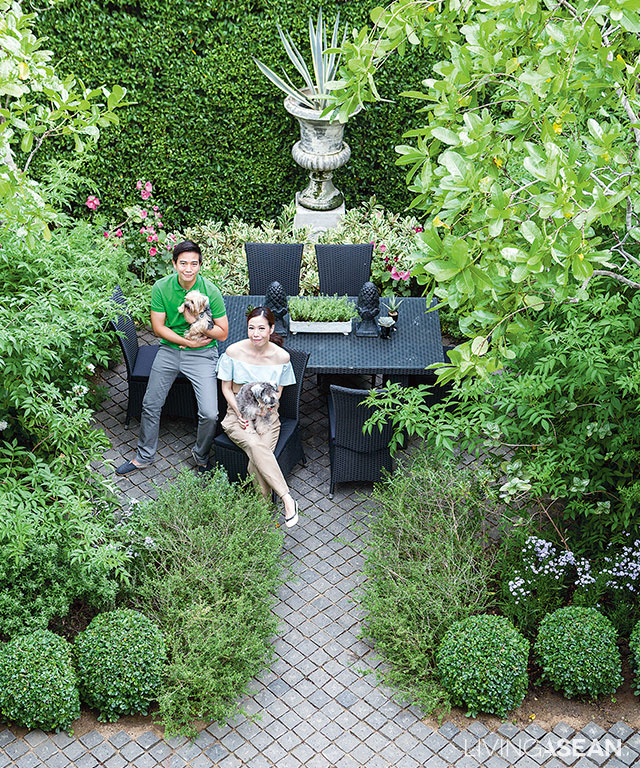
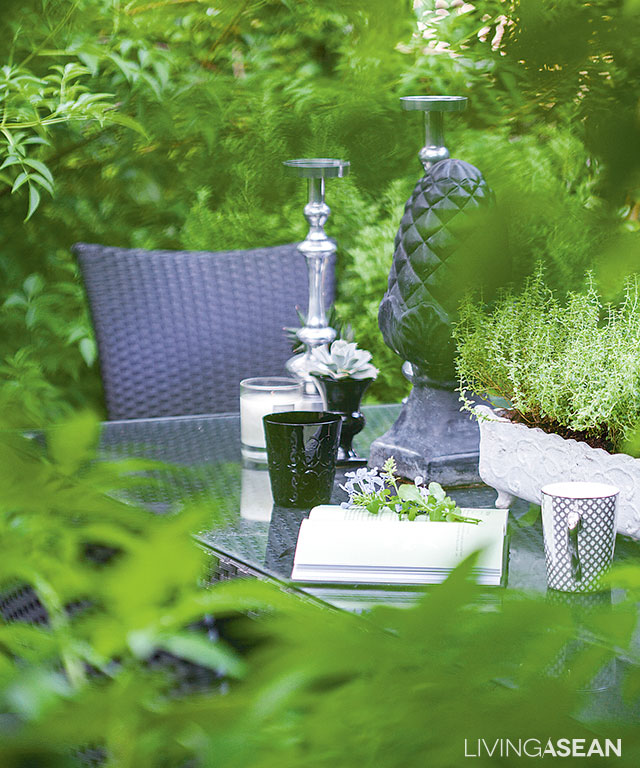
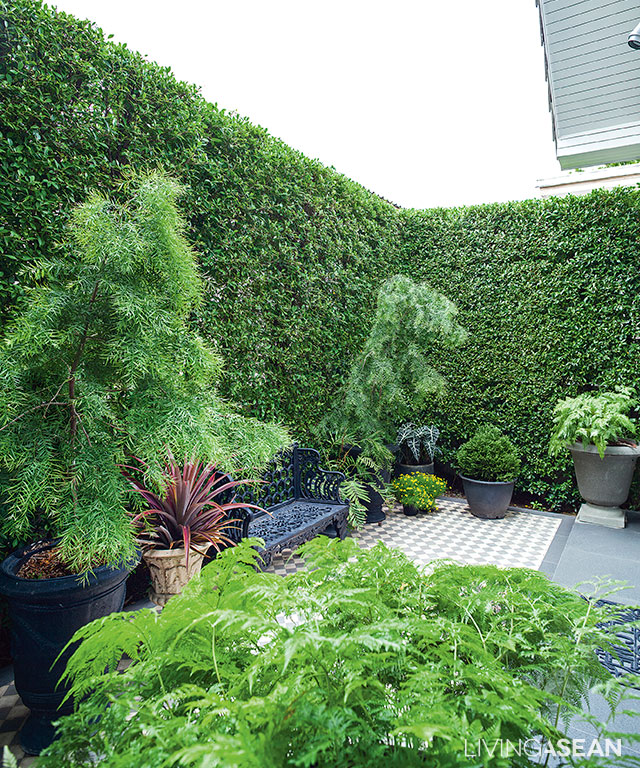
Inside the garden is a very private enclosed space, with a chic black lawn table on top of cobblestones set in diagonal lines, fragrant yellow gardenias, and bright flowers scattered here and there for a relaxing, casual mood.
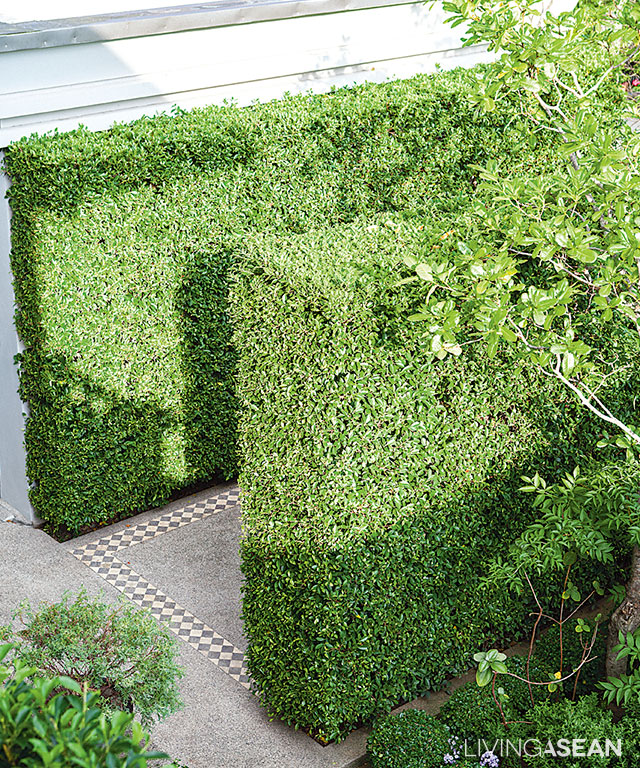
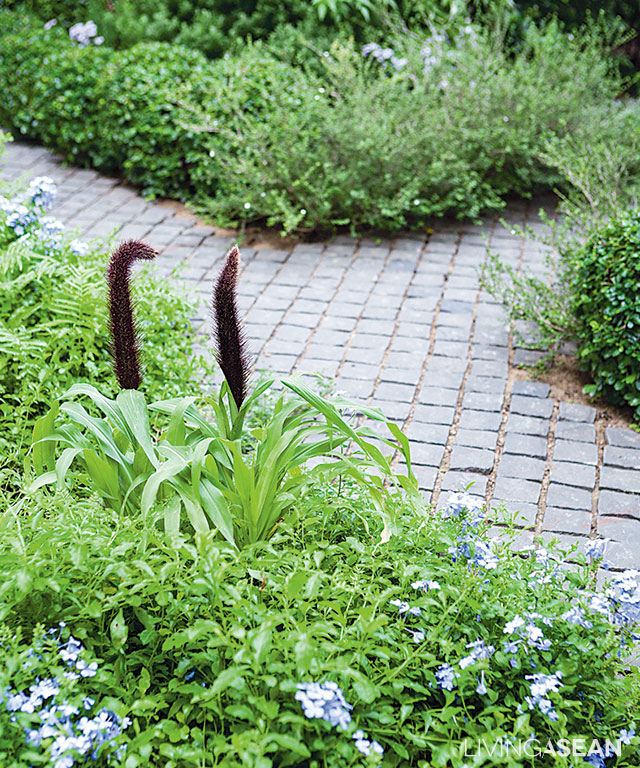
These gorgeous rectangular English banyan hedges took 2 years to reach their 2-meter heightNear the pond, detail-textured cape plumbago encroaches on the walkway, with knot root foxtail adding a striking look.
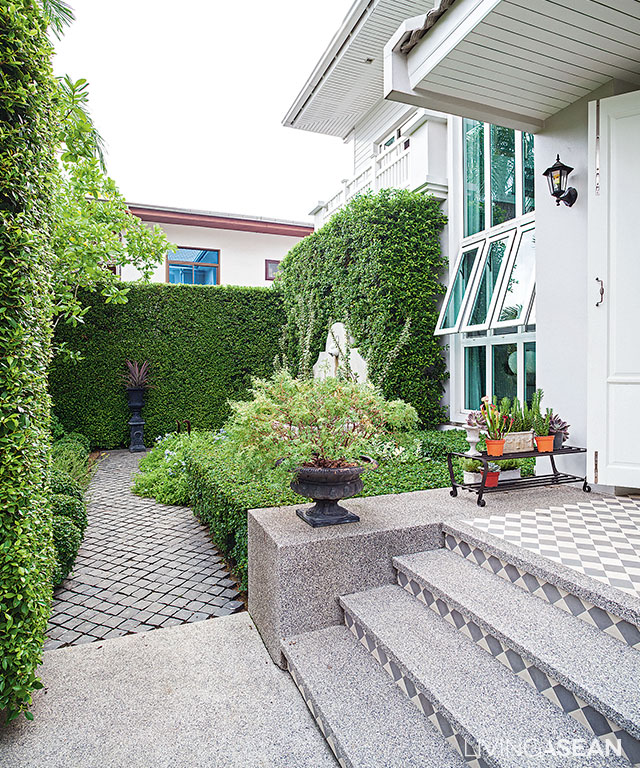
Siriwit helps with color coordination as well as prices and brands. In the mix of plants he inserted Fukien tea and English banyan hedges trimmed into geometric shapes to relieve harshness so the garden looks orderly, but not too formal. He adds, “I played with shapes and forms, the diamond-shaped walkway and yard with checkerboard lines of tile in the front. The central court is trapezoidal, so I took away the unevenness with two lines of banyan plants.
Hedge plants mixed in with free-form: semi-formal, easy maintenance; trim hedges every 2-3 weeks, or once a month if strapped for time.
“We used medium-sized plants with beautiful forms placed symmetrically. Golden gardenias. Leafy plants with different shades: neons, silvers, spotted coralberry, evergreen spindle, lime. Put in a pond with a cute rabbit-head fountain.”
View from the lawn table into the house takes in a precise organization of plants and decorative components
A beautiful verdant garden with a vintage feel. A place to walk in and relax with a cup of your favorite coffee. Peaceful, relaxing.Once you’re here, where else would you want to go?
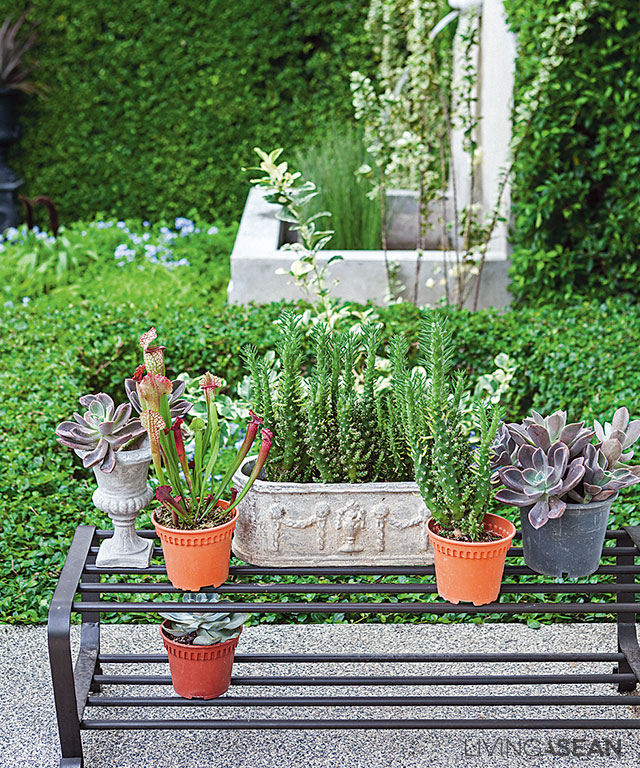
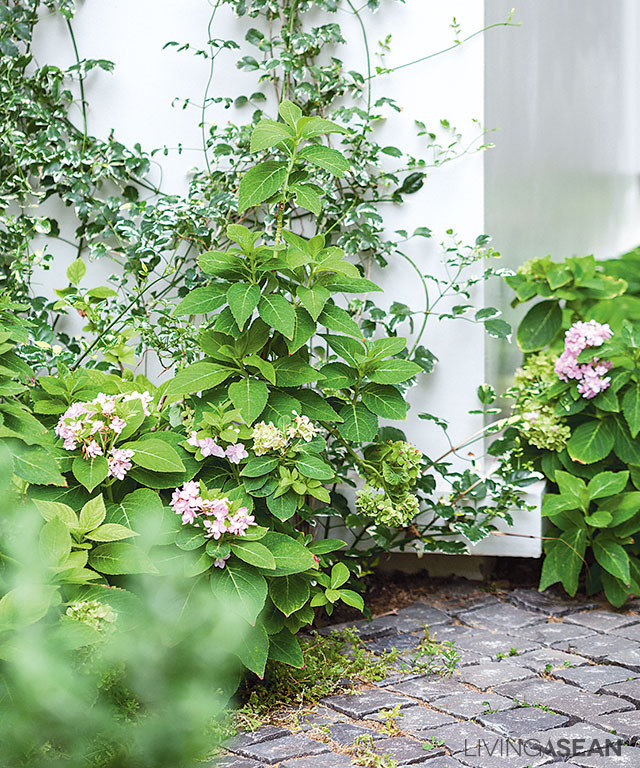
By the owners’ design, attractive flowerpots adorn a shoe-placement shelf.Between the house and relaxation room the indirect light calls for shade-tolerant plants like the dwarf neon hydrangea along the path.Pink-flowered hydrangea contrasts with vines of spotted jasmine climbing the house.
A good home renovation could turn even a decade-old townhouse into a unique house reflecting the owner’s taste and personality.
/// Thailand ///
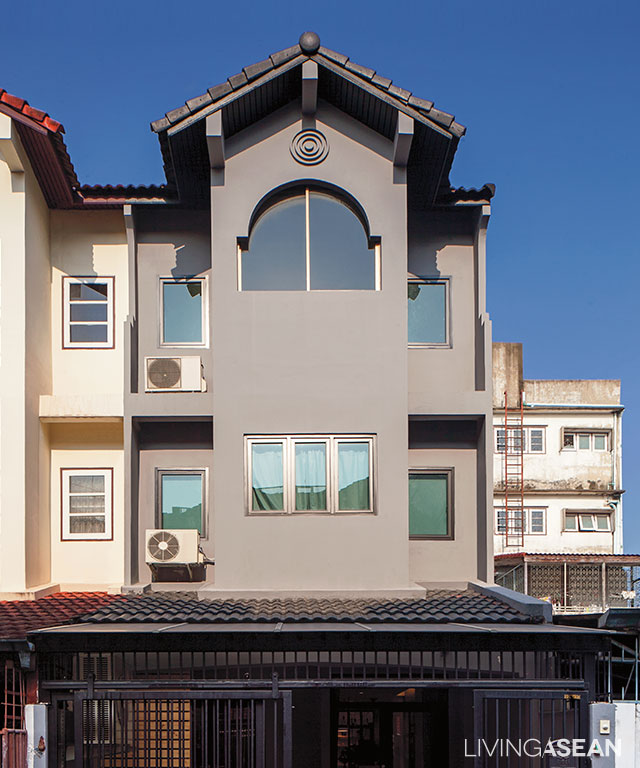
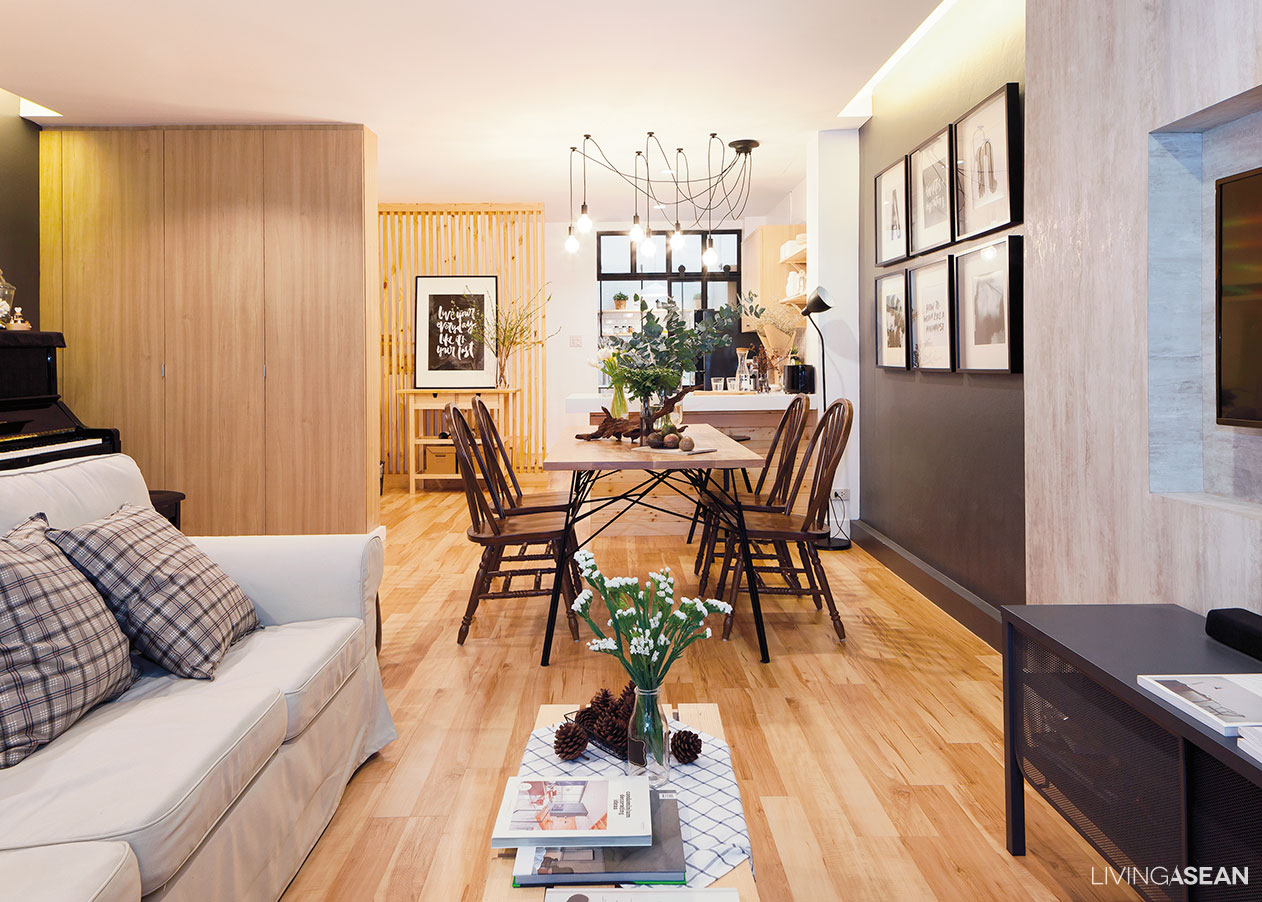
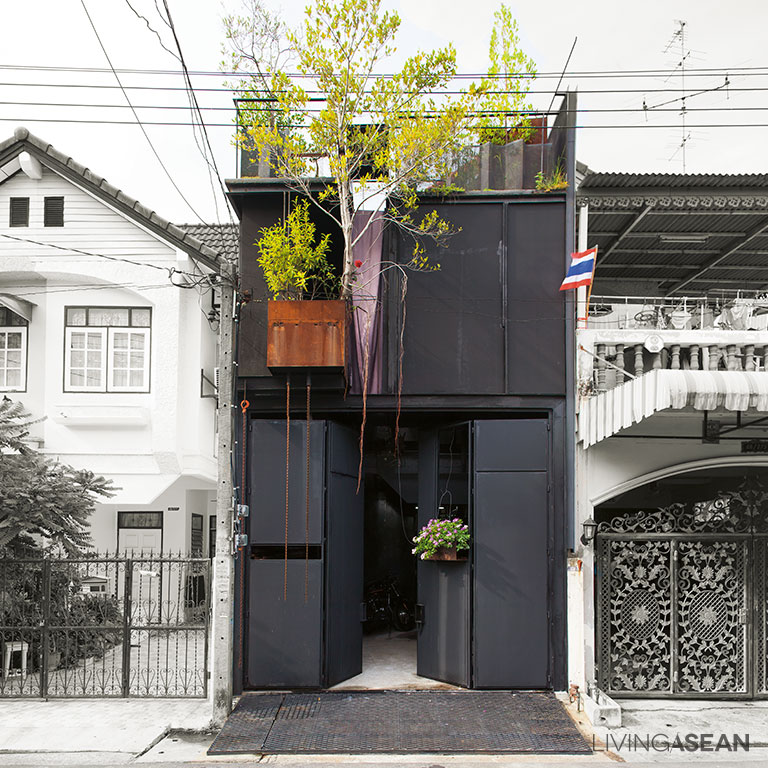
Renovate the 30-year-old and 3-storey townhouse to the warm industrial home. With its gray and simple exteriors contrasting from the iron gate and black roof, and interior open floor plan, you can do different kinds of hobbies within this area. This stylish design can give you the warm cafe atmosphere, yet harmonize the bold style with the white brick wall.
Design-Decorate: Kirin Chaichana
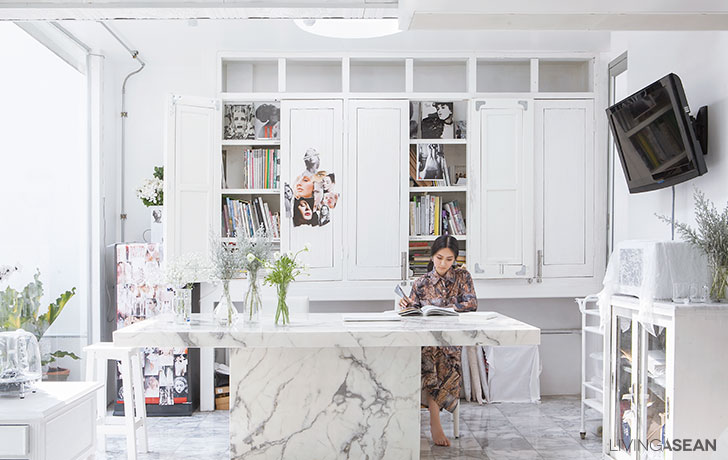
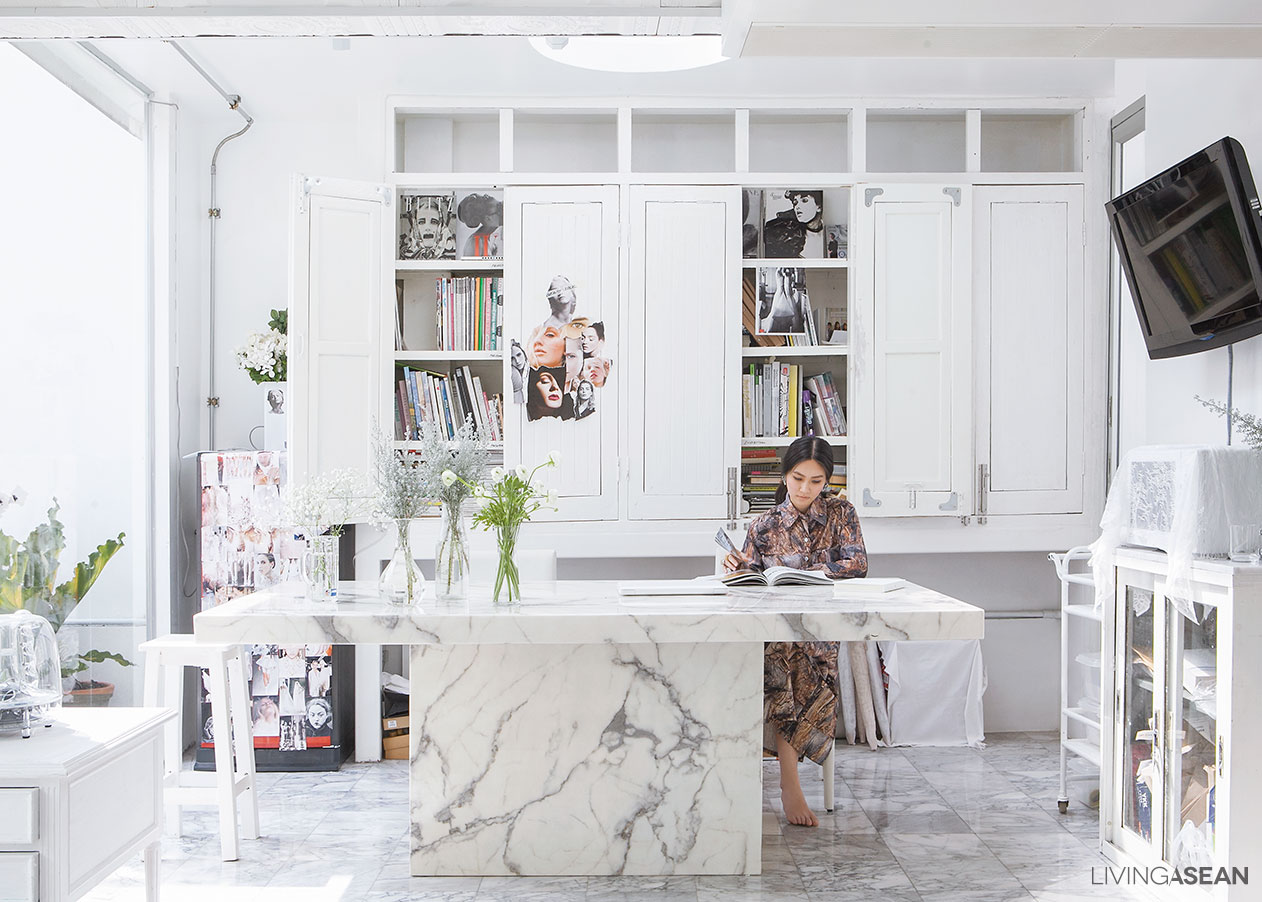
A 70-year-old unique stunning home is replaced by a simple and modern home structure with a touch of period wooden home style. With its shiny white marbles over the ground floor, it can give a simple and modern look and feel. While the studio is designed to enhance the vintage style by extending the terrace on the upstairs, installing delicate-line curve steels, reflecting the vintage touch amongst the modern-style.
Design: Thita Kamonnetsawat and Pongsak Kobrattanasuk
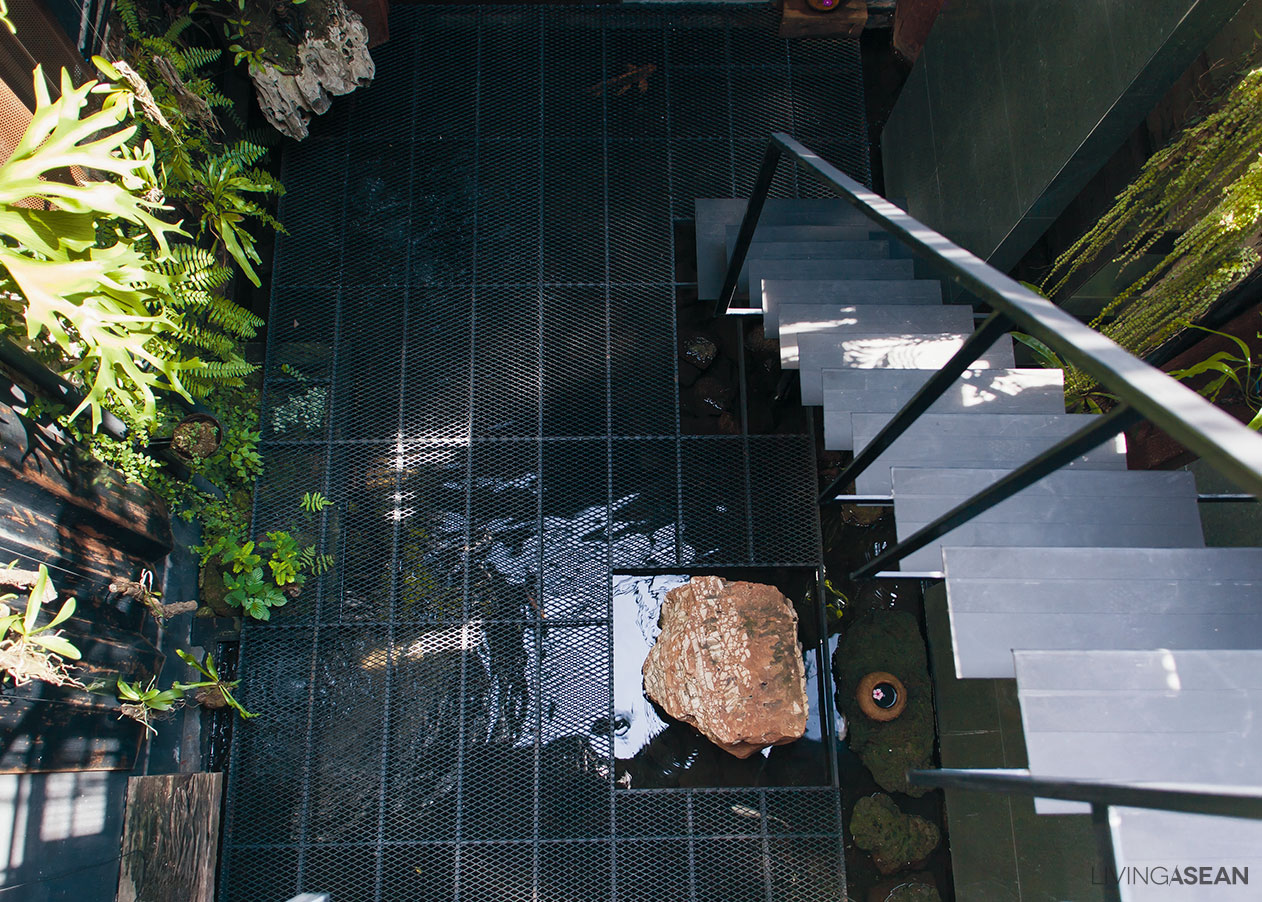
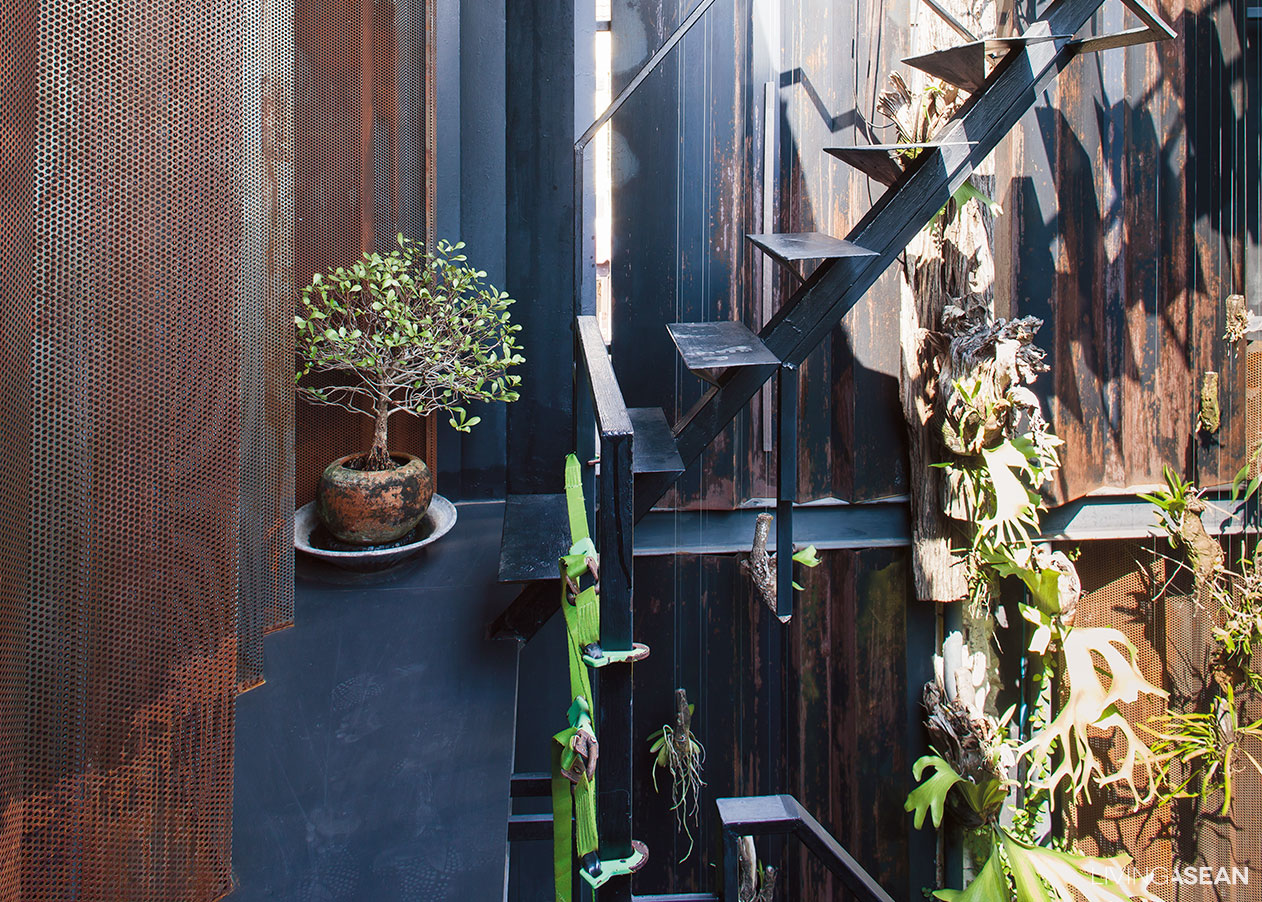
Two townhouses were added by steel structure to the front yard without removing the previous building’s structure. It’s easy to use steel as the main material since it can be easily installed. Insert some trees to the structure to add a soft touch to the bold line. Connect these two houses with the center courtyard with the iron bridge, while decorating the interior with the gray-black color so that it will suit with the house.
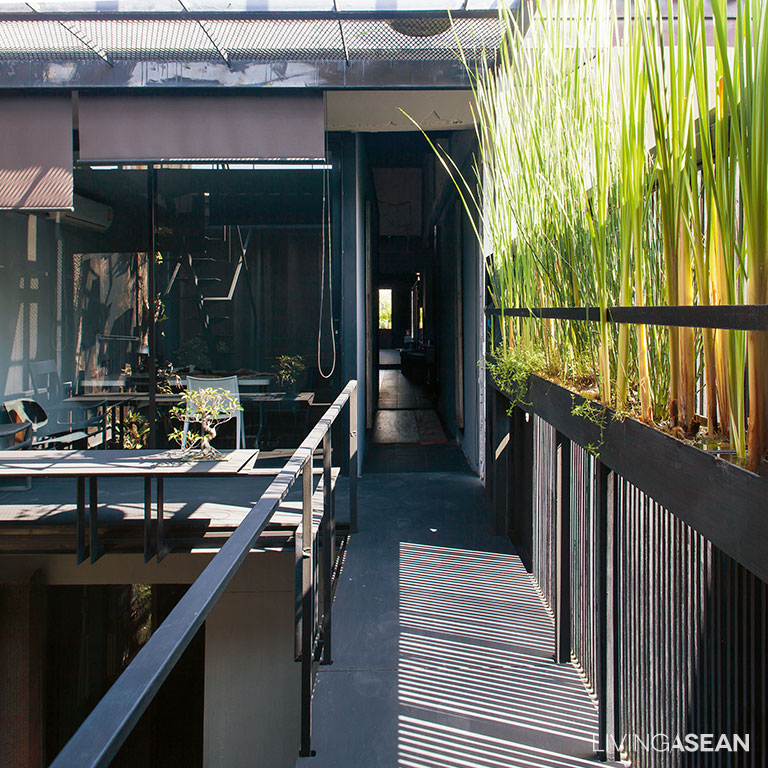
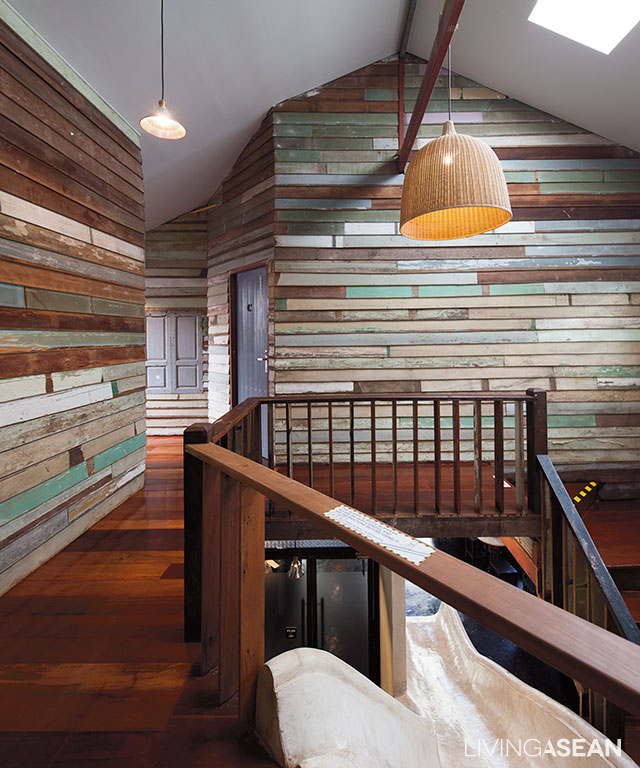
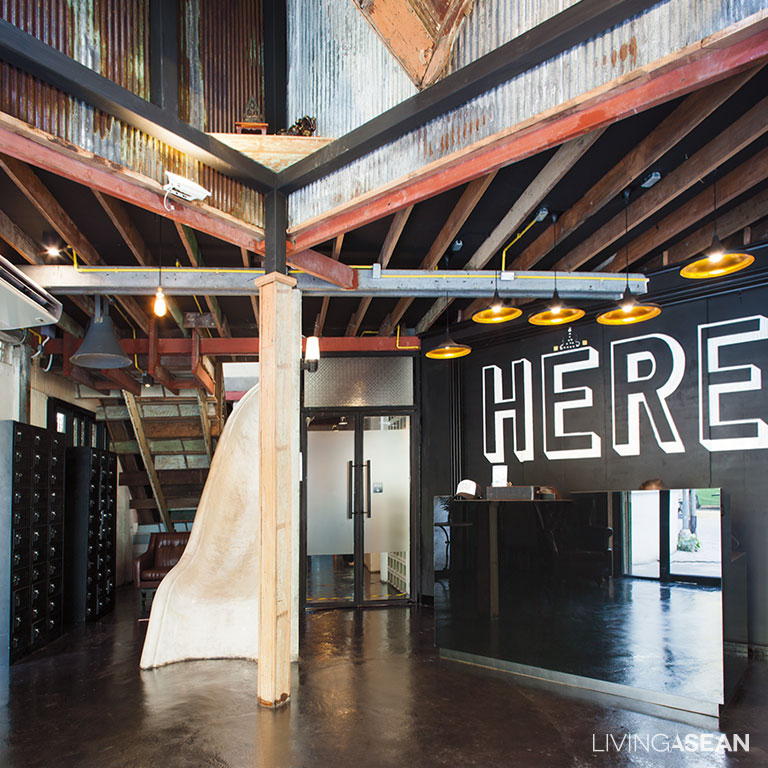
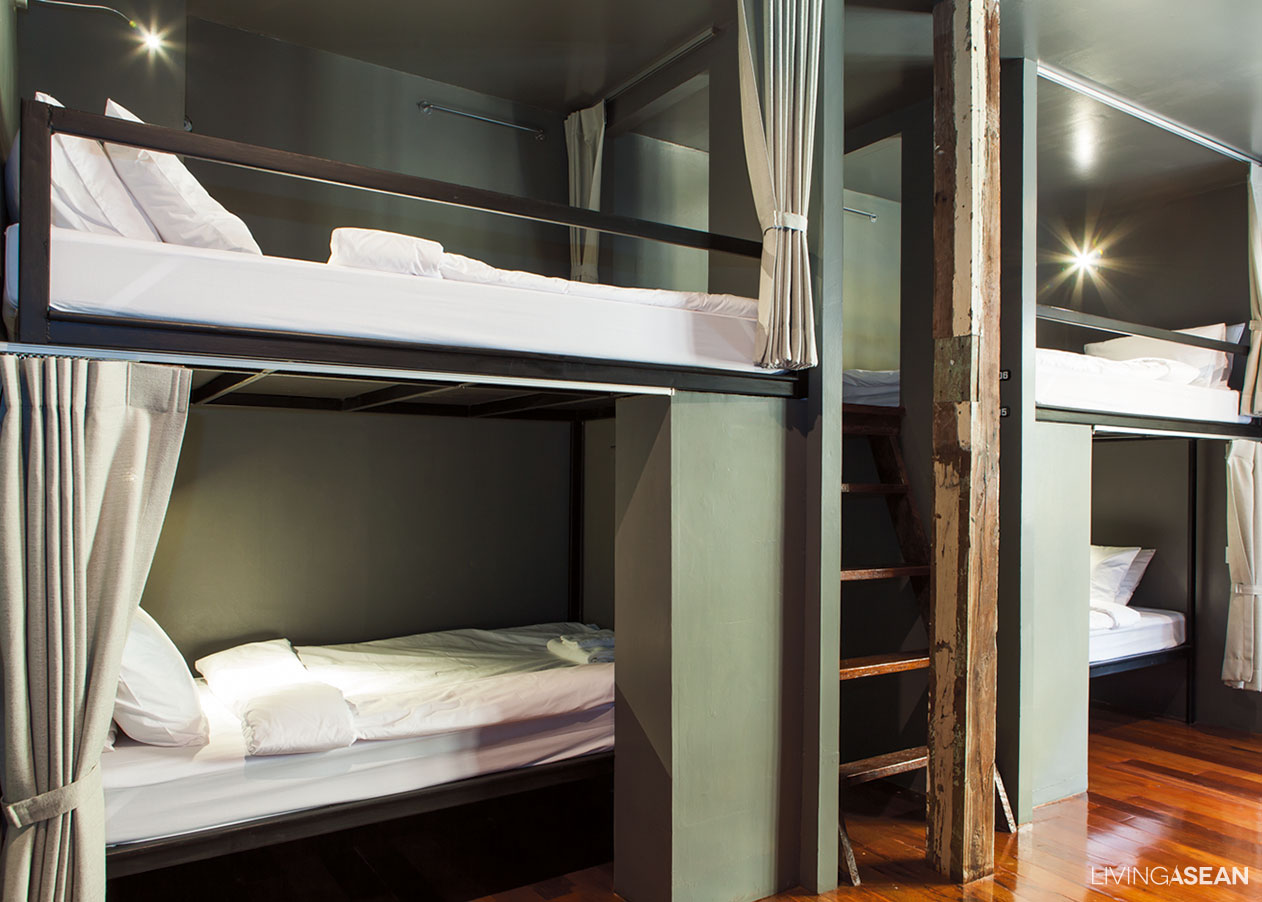
Outside of the commercial buildings near Ratchanaddaram temple is still being preserved its main structure but renovated all interior design by combining the old wood with steel structure and laying with red bricks. This renovation will enhance an industrial-contemporary style hostel with decorative cozy rooms.
Design-Decorate: Arx Architects Co.,Ltd.
link: http://www.arxonline.nl/index.php/nl/
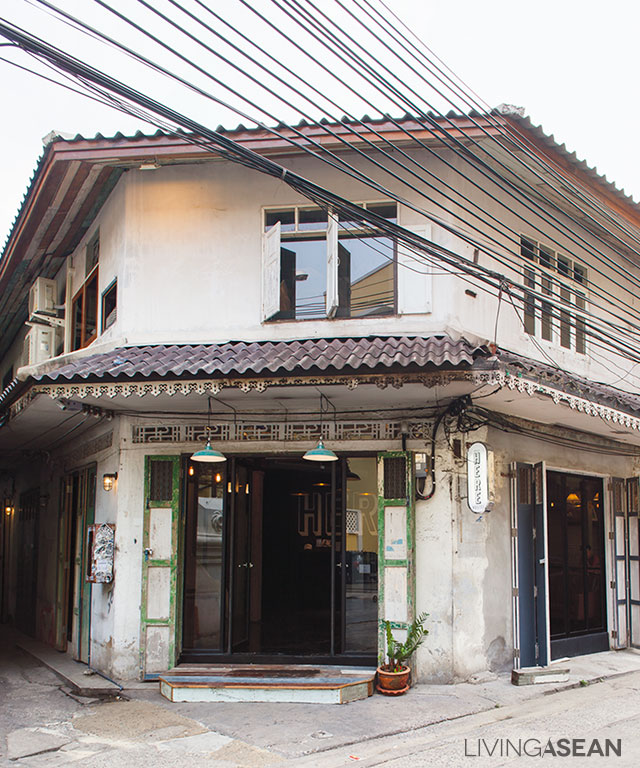
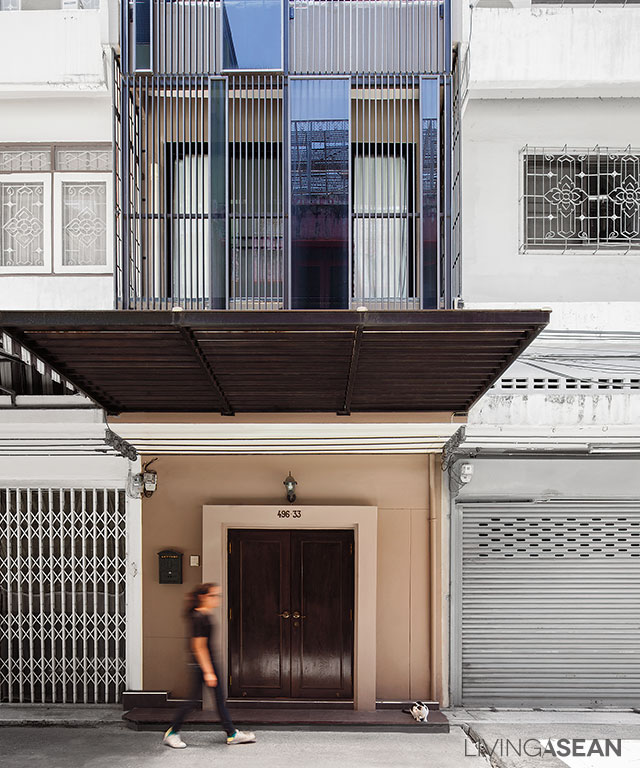
You can renovate all the old commercial buildings by installing aluminum lath parted with modern plexiglass and combining with the little touch of classic elements. The gray-brown palette will help create a warm and cozy atmosphere in the tiny renovated townhouse.
Design: Kirin Chaichana and Nitcharat Chaisagnuanjirakul
Marketing/Advertising Cookies – used to remember and process the relevance to your website visit in order to personalize contents shown including optimization of commercial advertising placements. For instances, we use this type of cookies to display commercial advertisements related to user’s attributes and interests as well as to limit how many times should a user see repeated advertisement in order to optimize and measure marketing activities. อ่านเพิ่มเติม


![[Left] An array of tall windows maximizes natural light, makes the home seem more inviting and accentuates the vertical design. / [Right] An all-white bathroom next to the bedroom is handy for everyday use and easy to keep clean.](https://livingasean.com/wp-content/uploads/2016/09/b.jpg)
 บ้านโมเดิร์นวิถีไทย ออกแบบเพื่อรับการเปลี่ยนแปลง


![[Left] The upright structural support is crafted of wood posts. Where appropriate, all sharp edges are removed. / [Right] To create a light and airy feel in the interior, the stairway is built on a steel frame with glass railings. There are no risers between the treads for good ventilation.](http://livingasean.com/wp-content/uploads/2016/09/4-10.jpg)