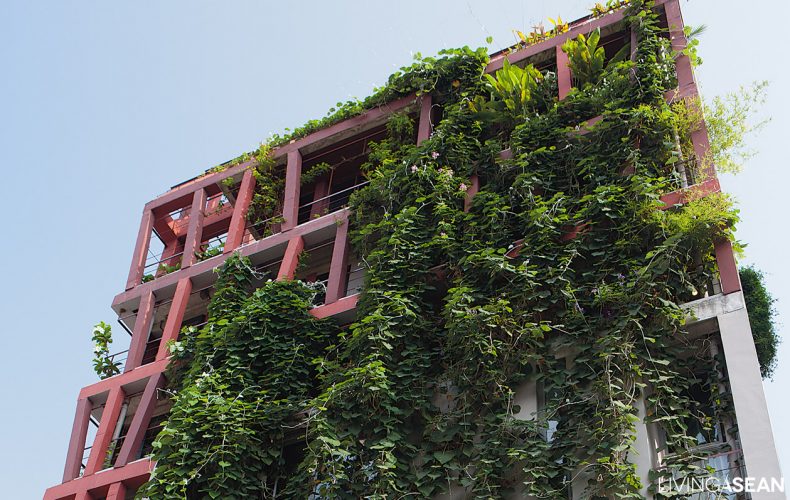
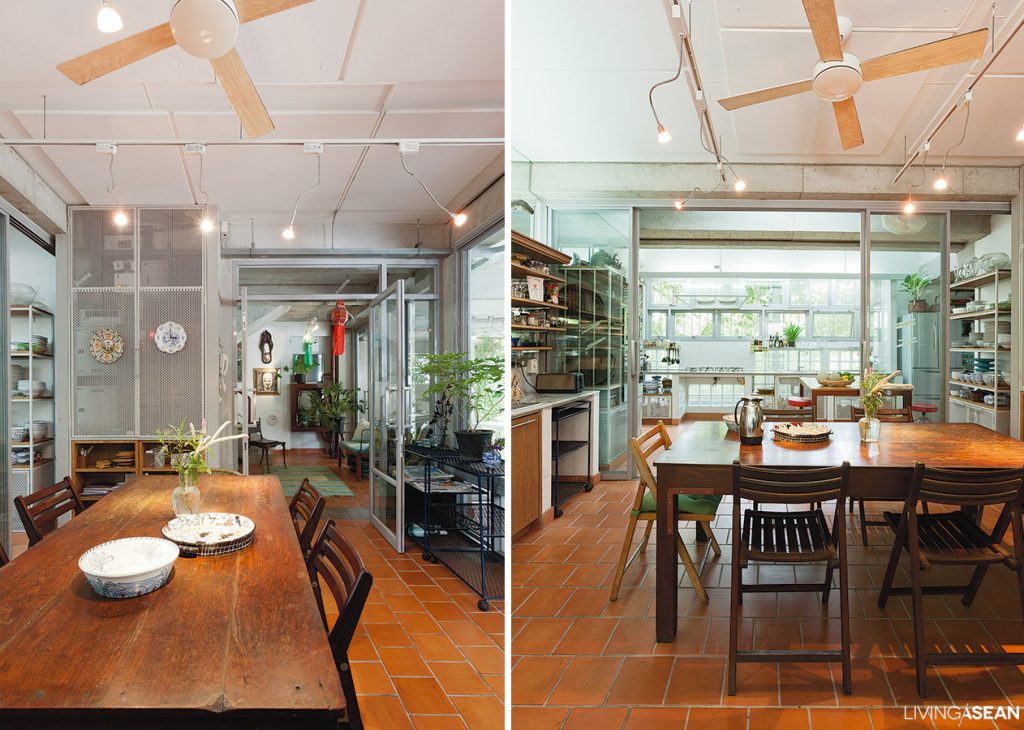
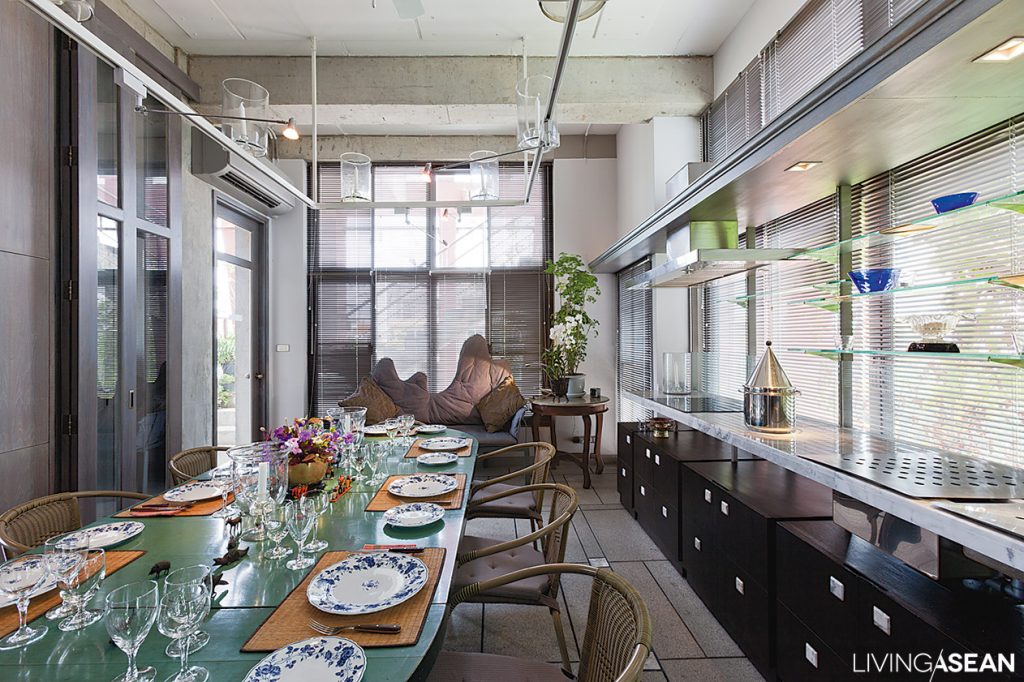
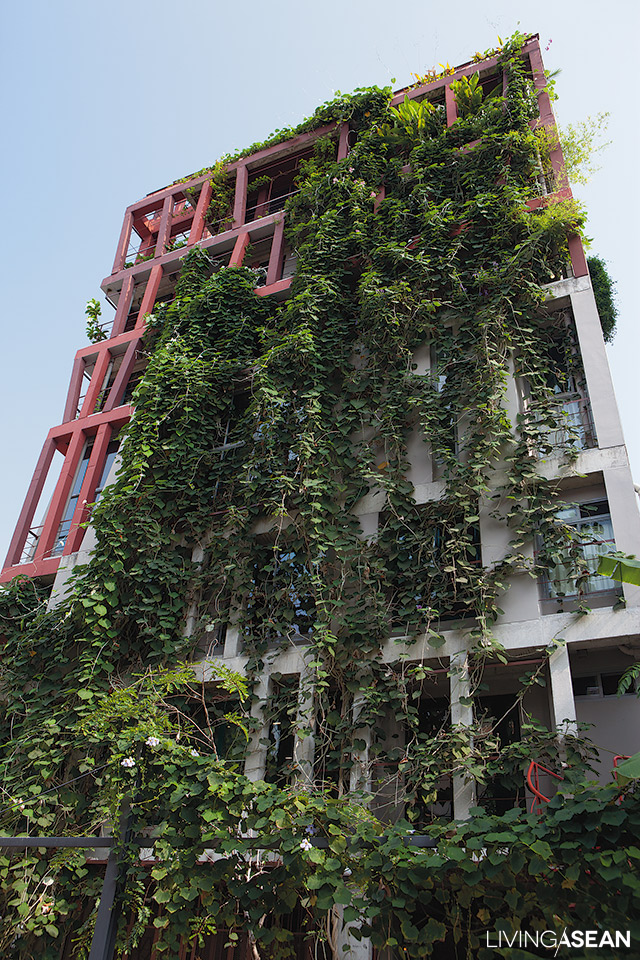
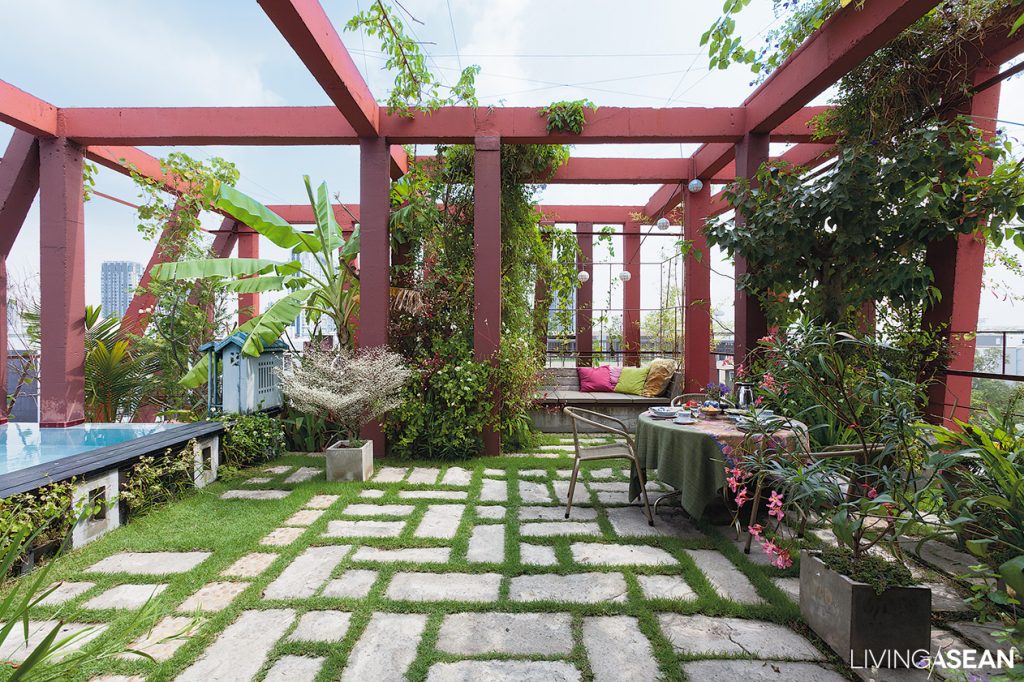
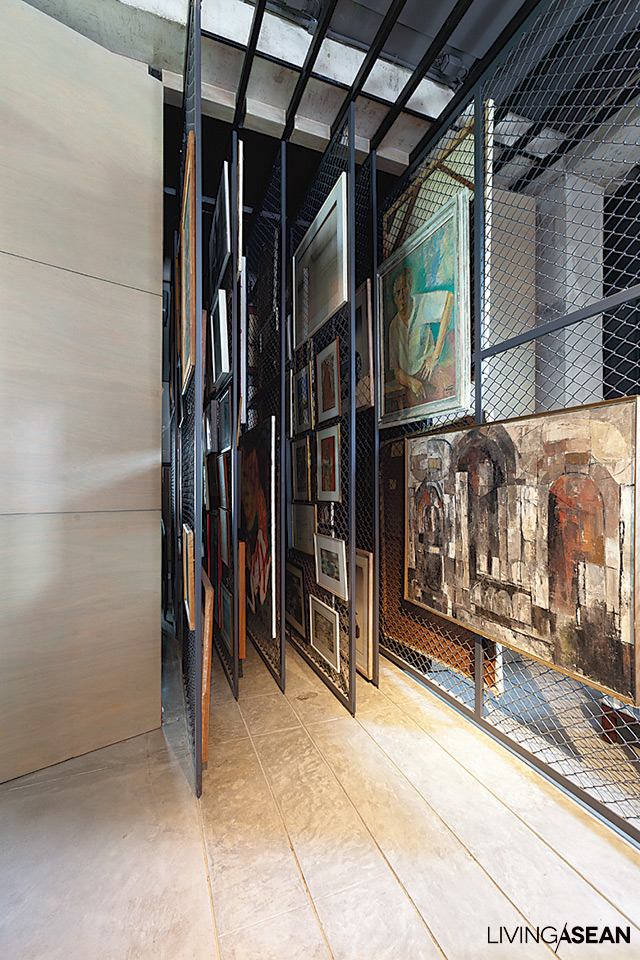
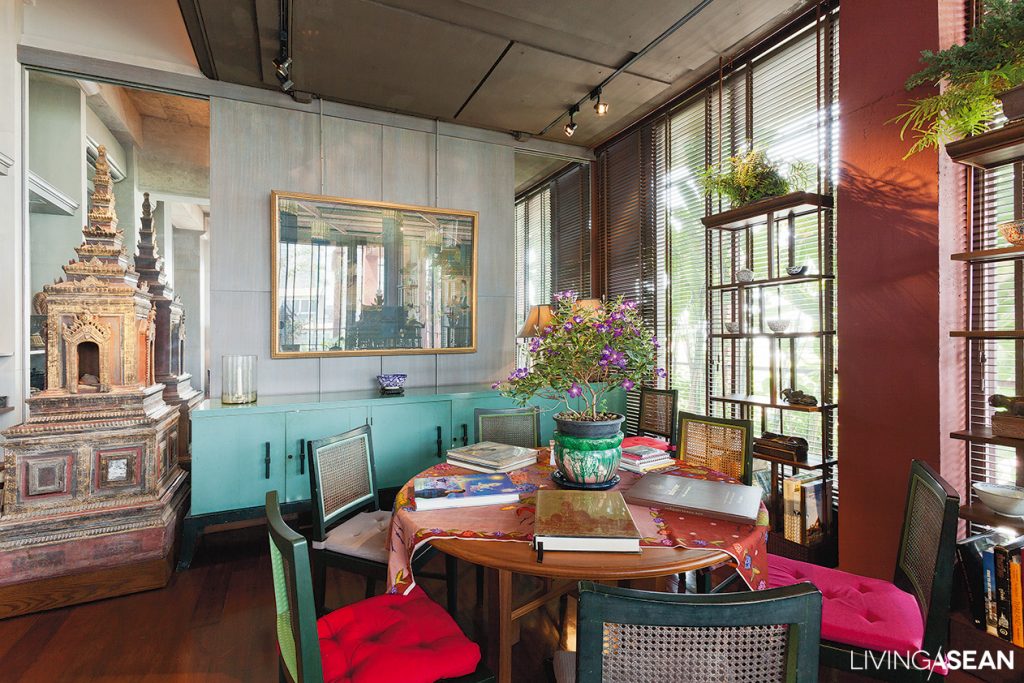
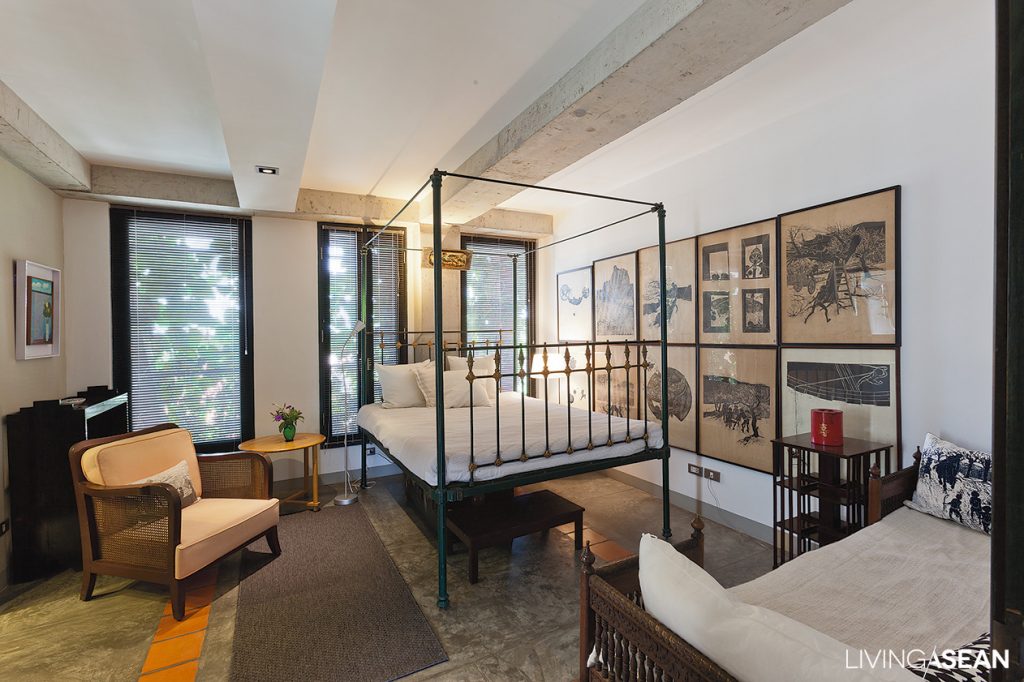
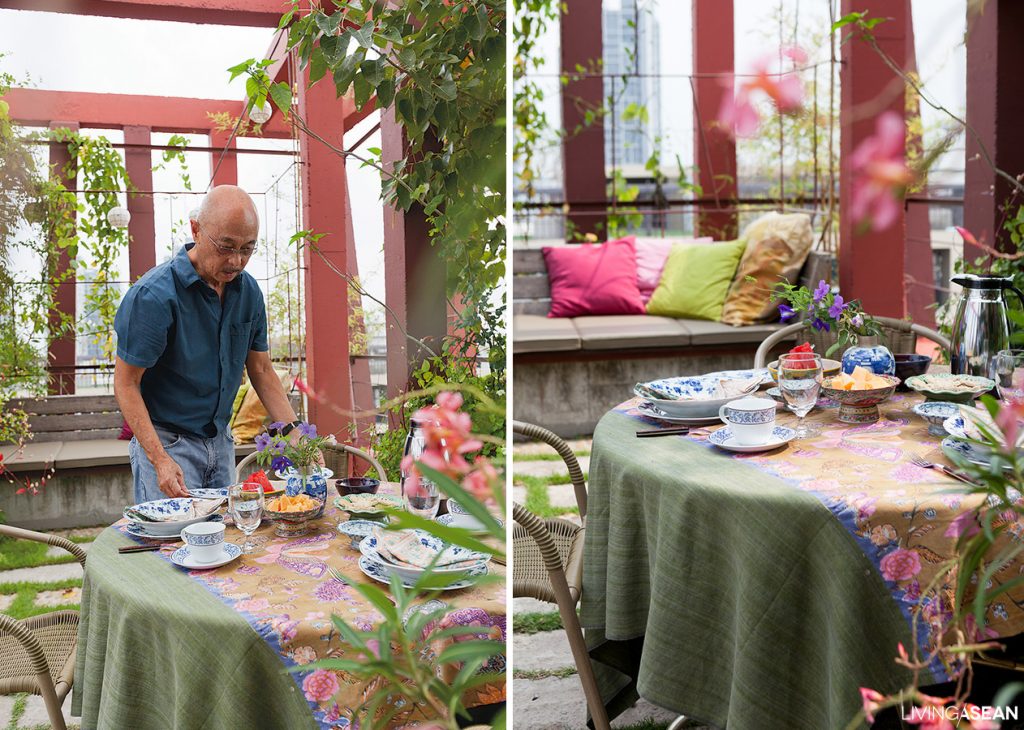
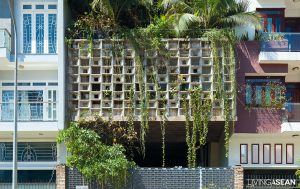
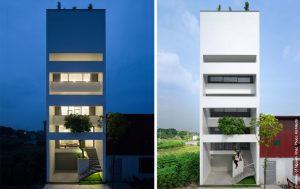
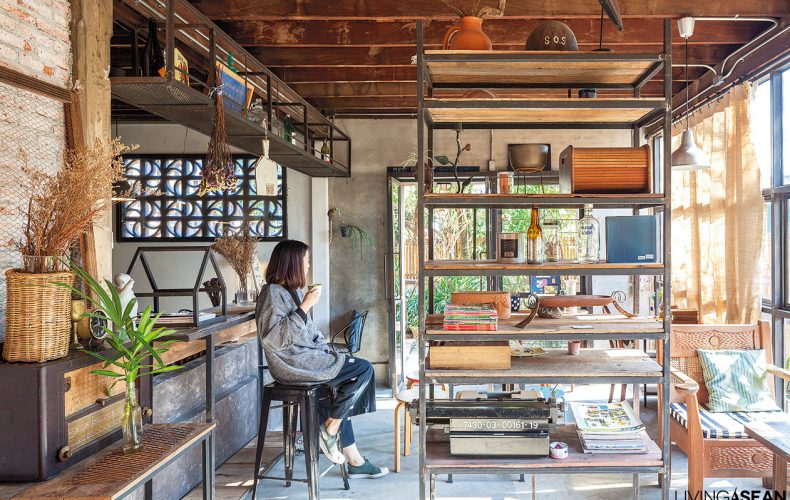
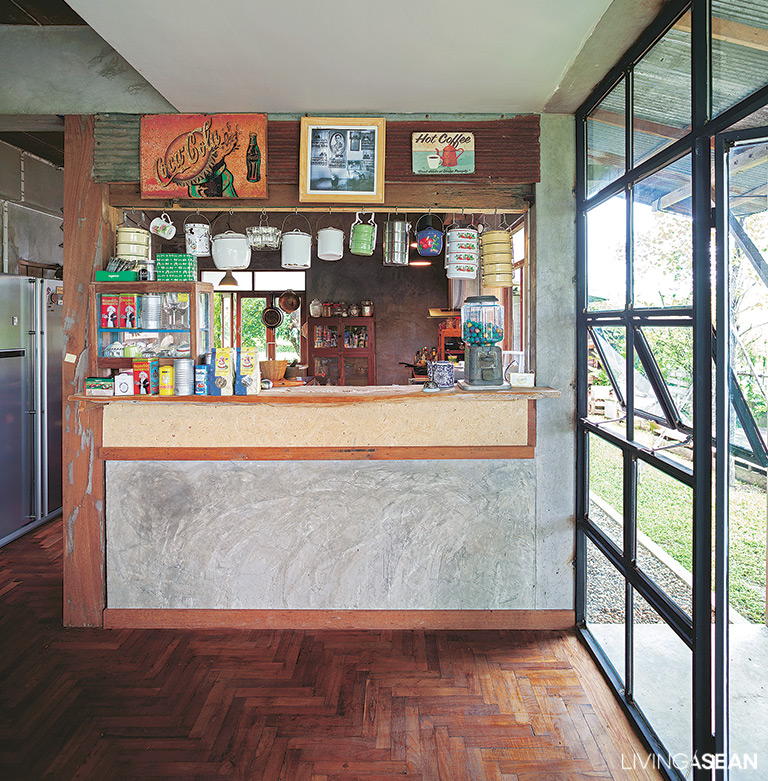
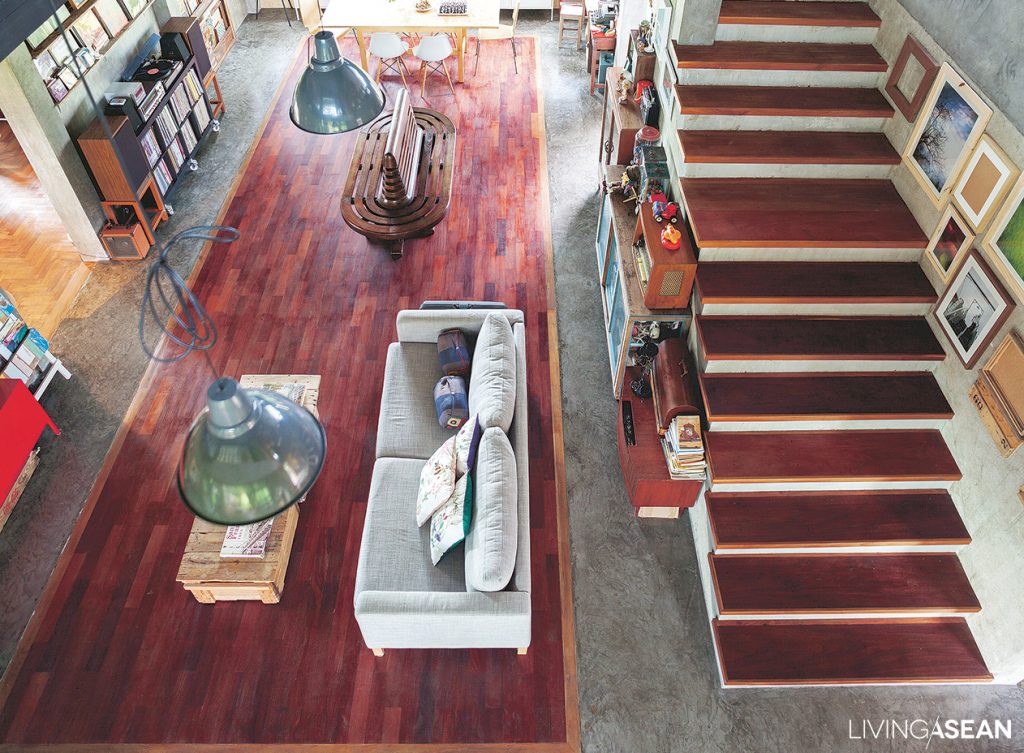
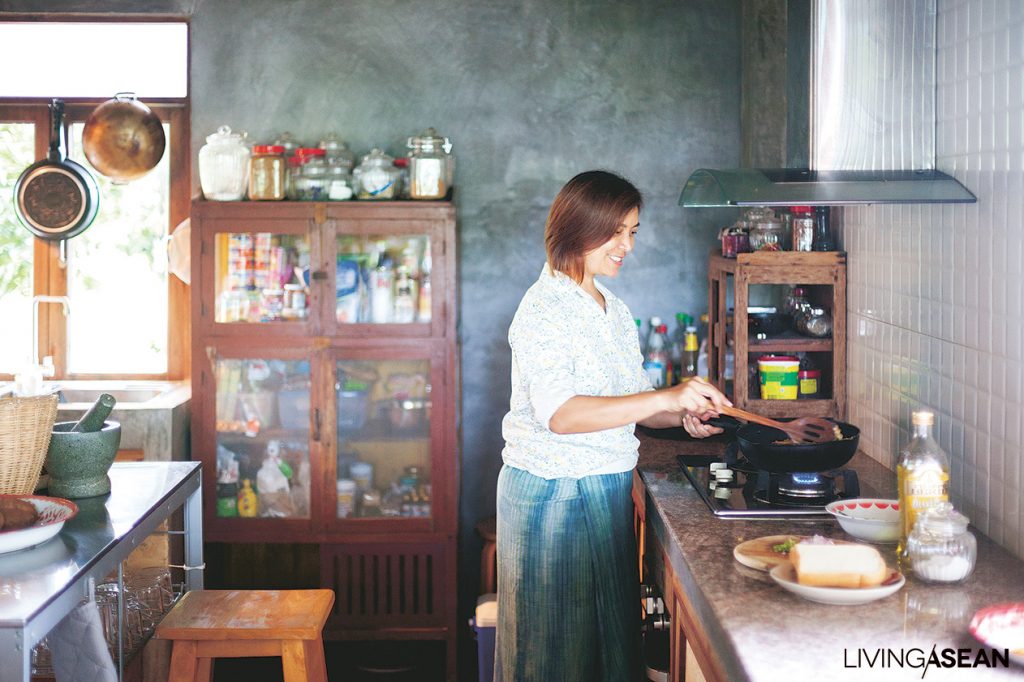
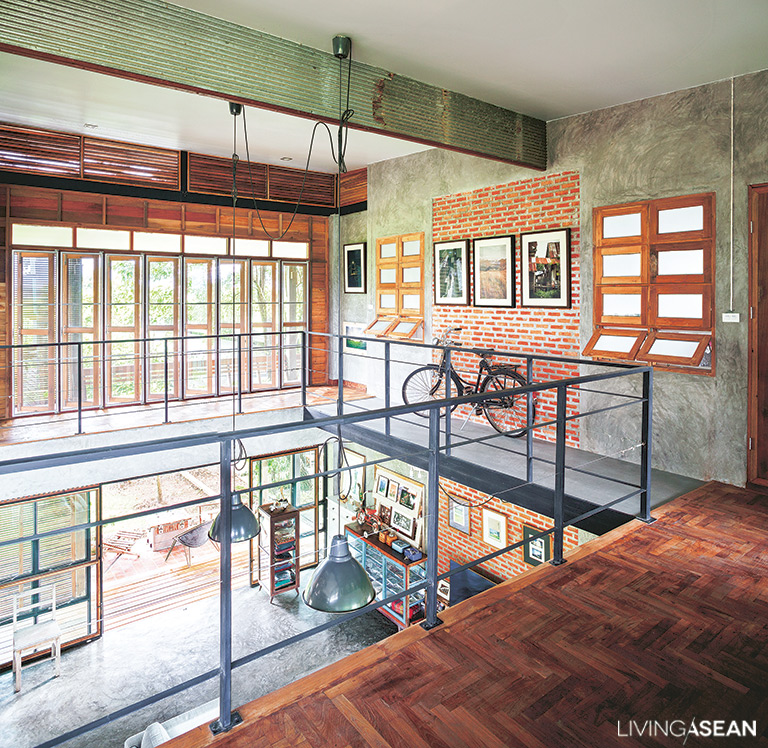
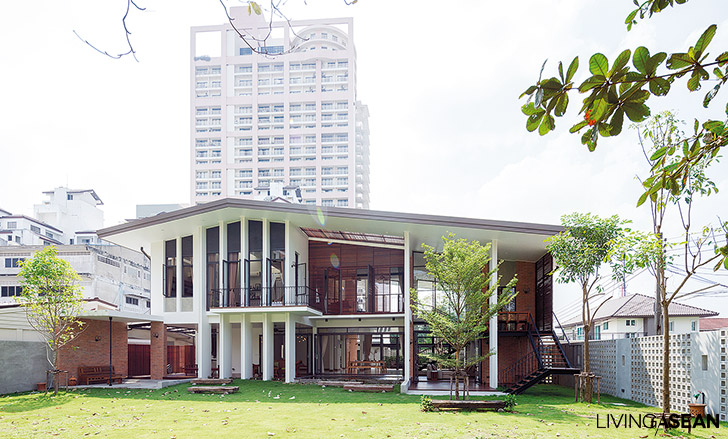
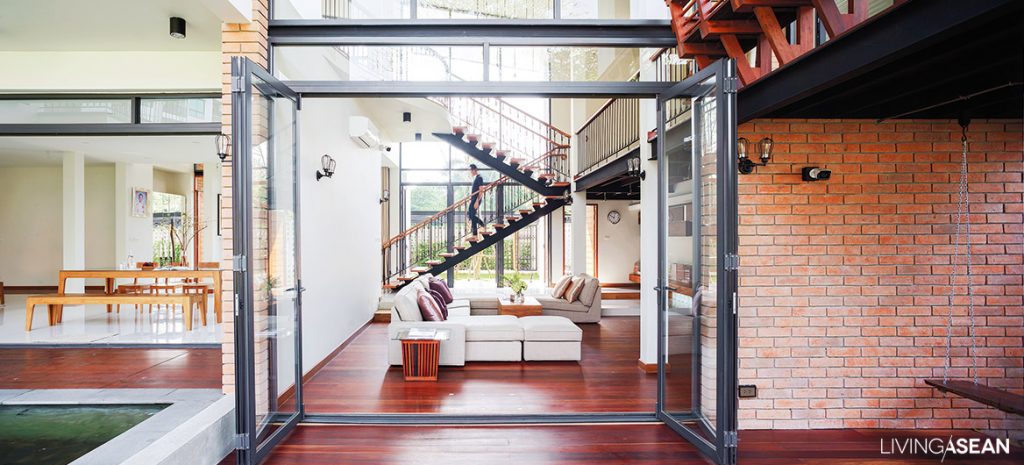
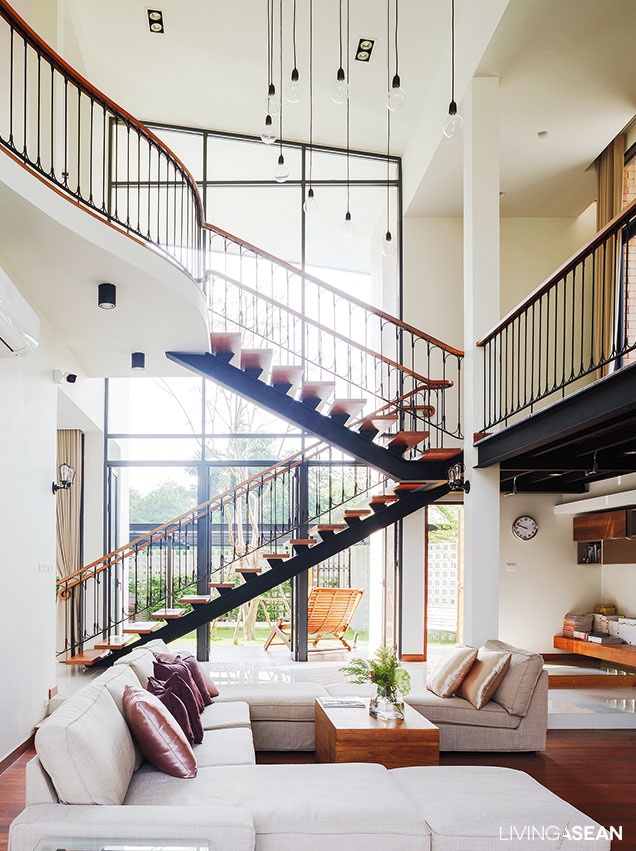
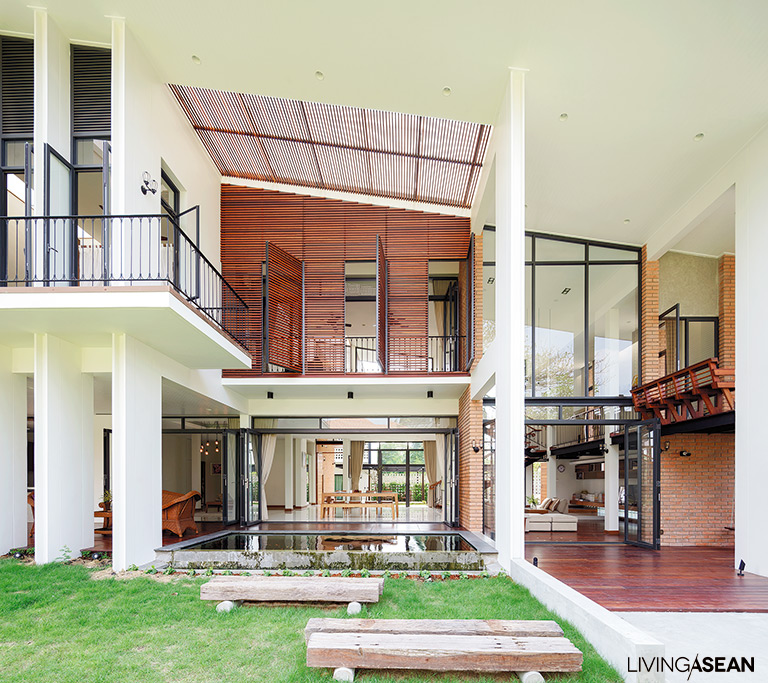
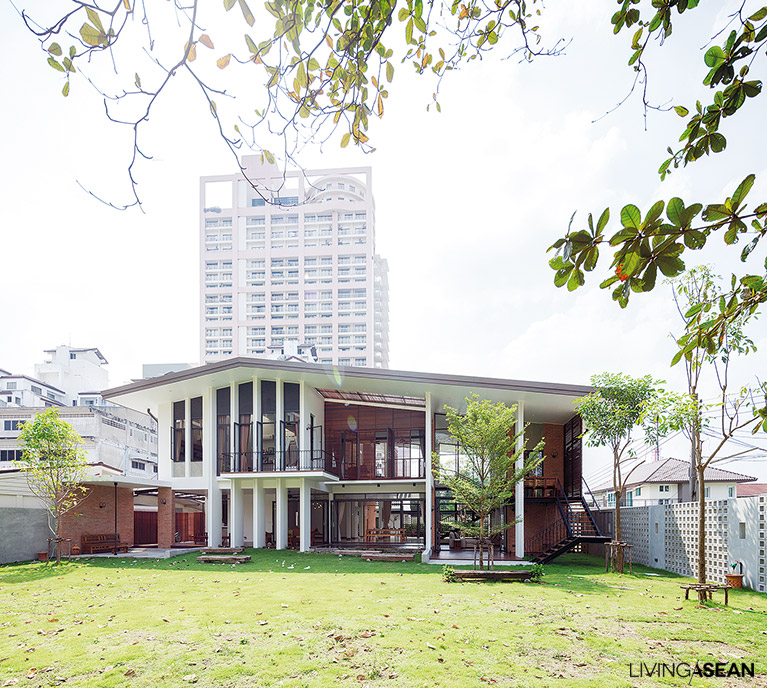
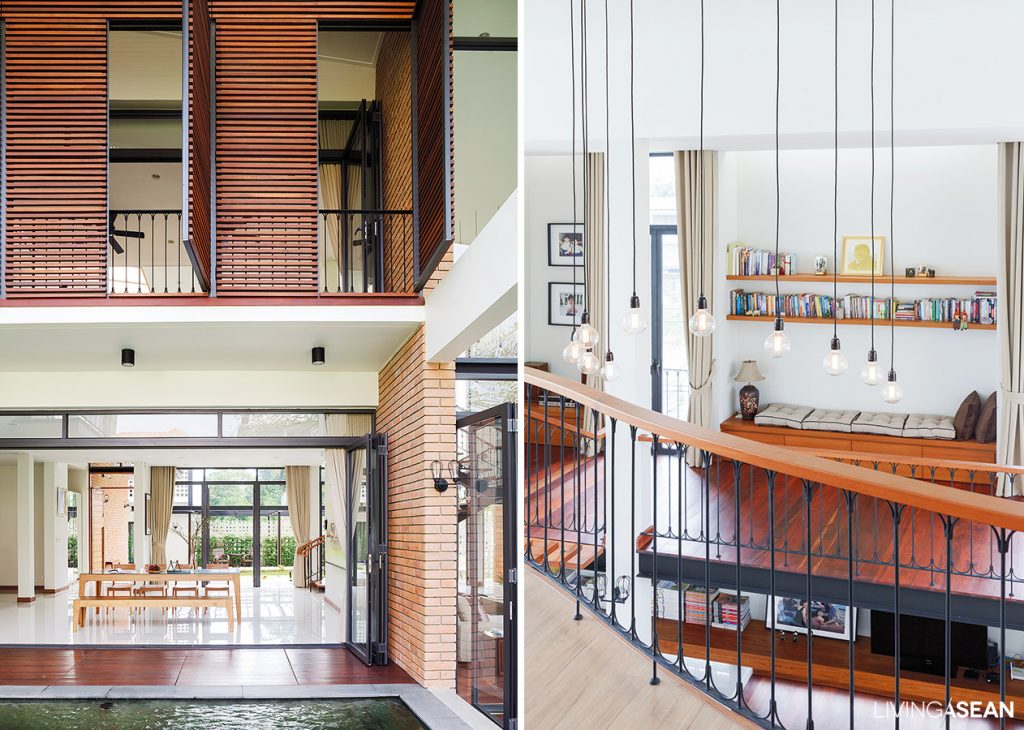
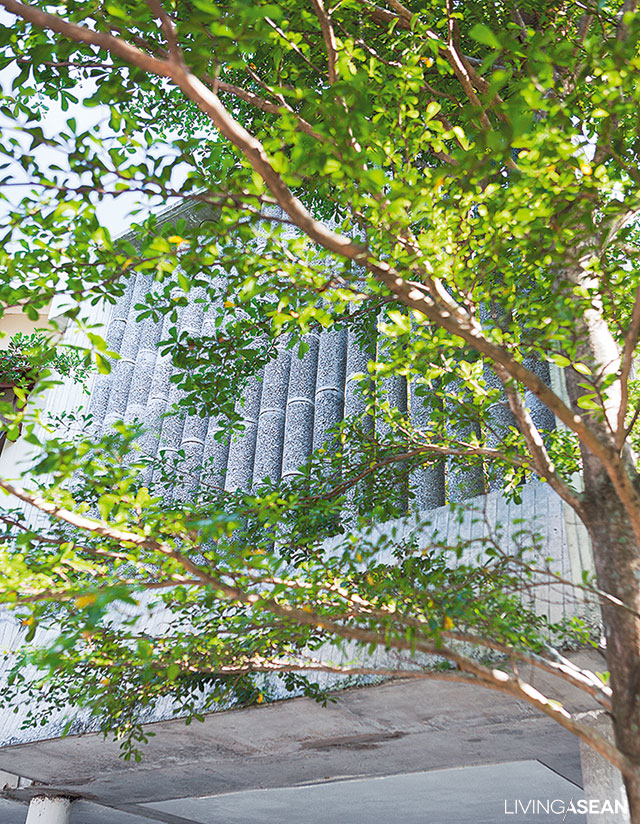
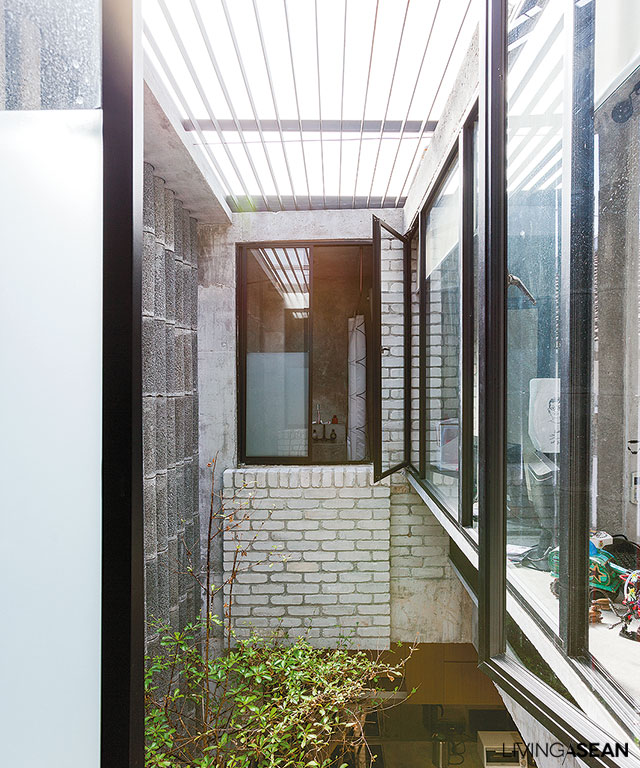
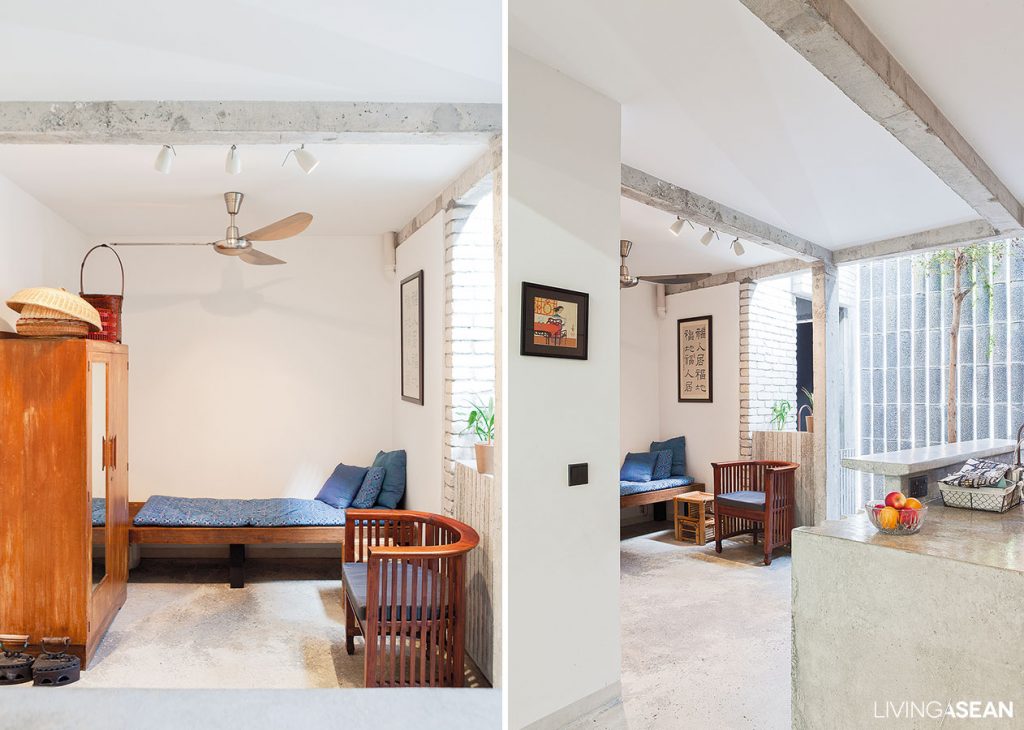
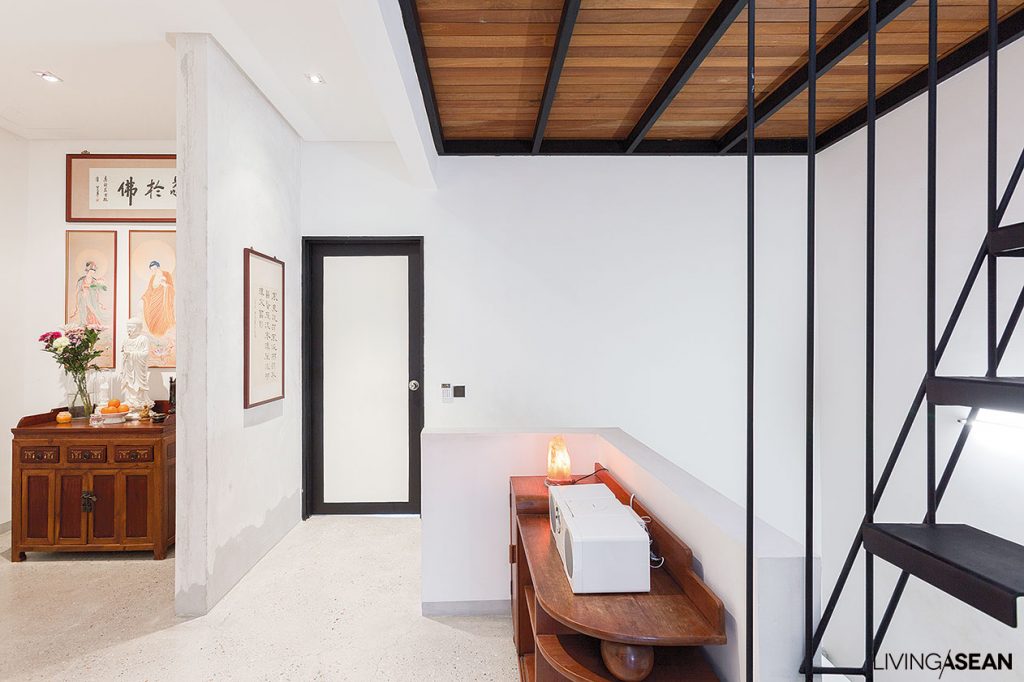
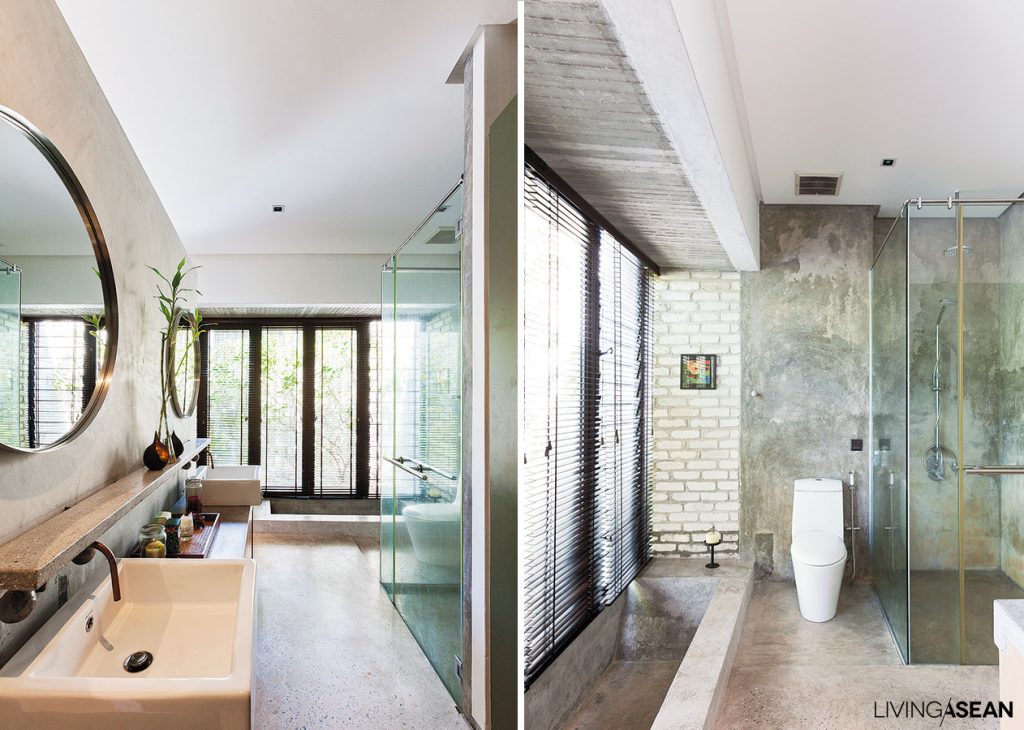
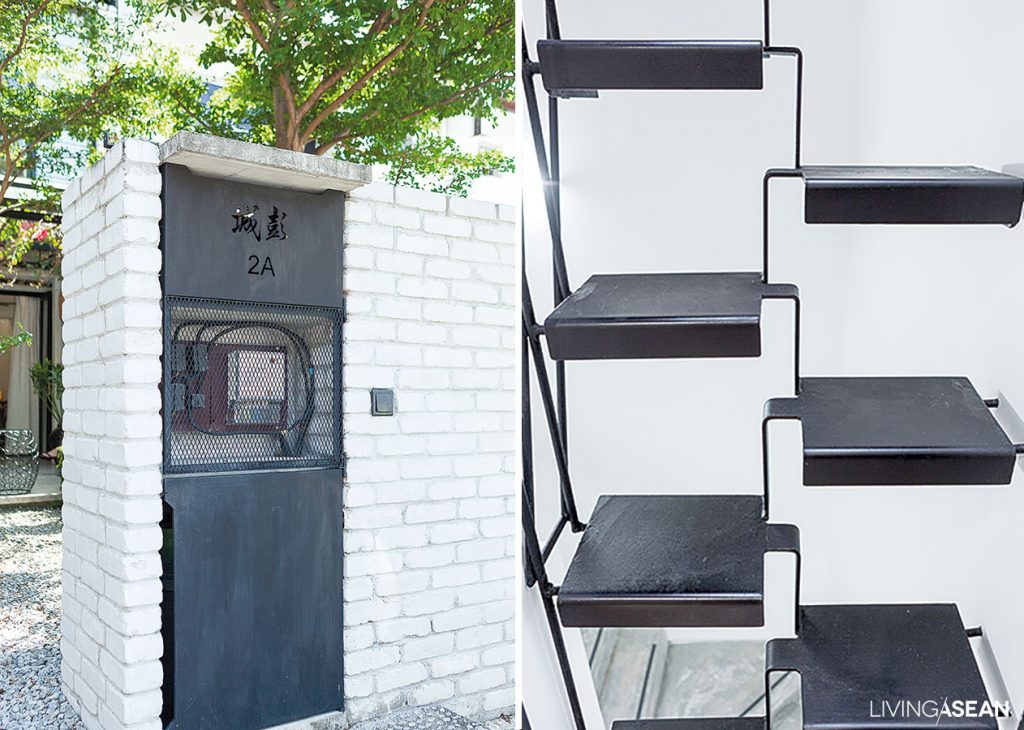
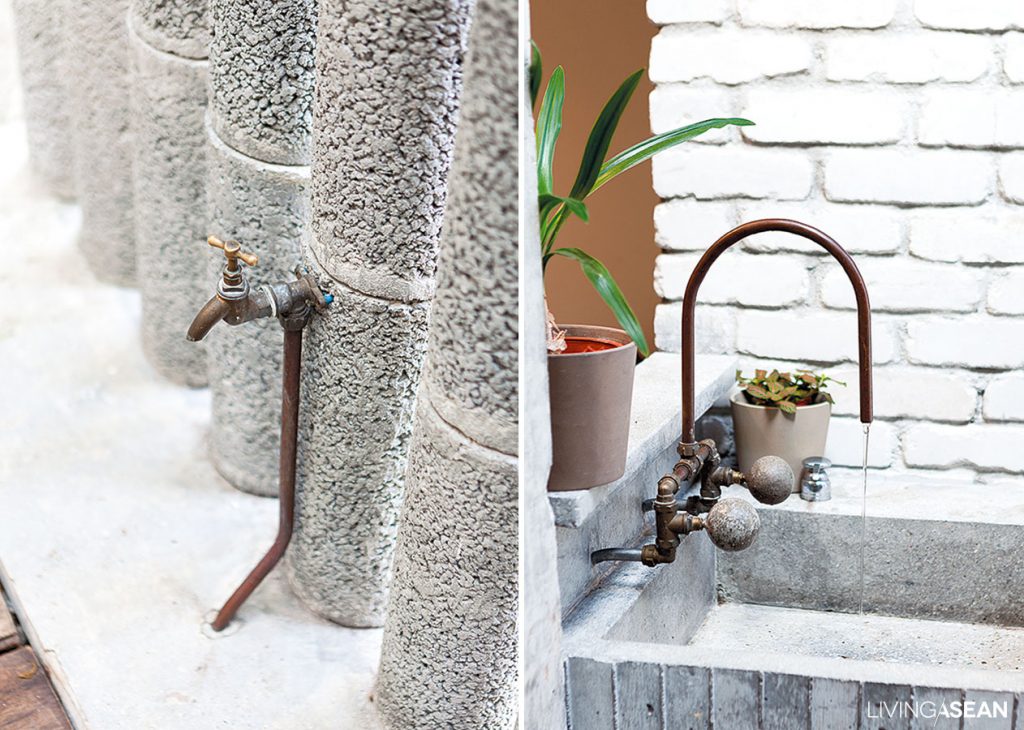
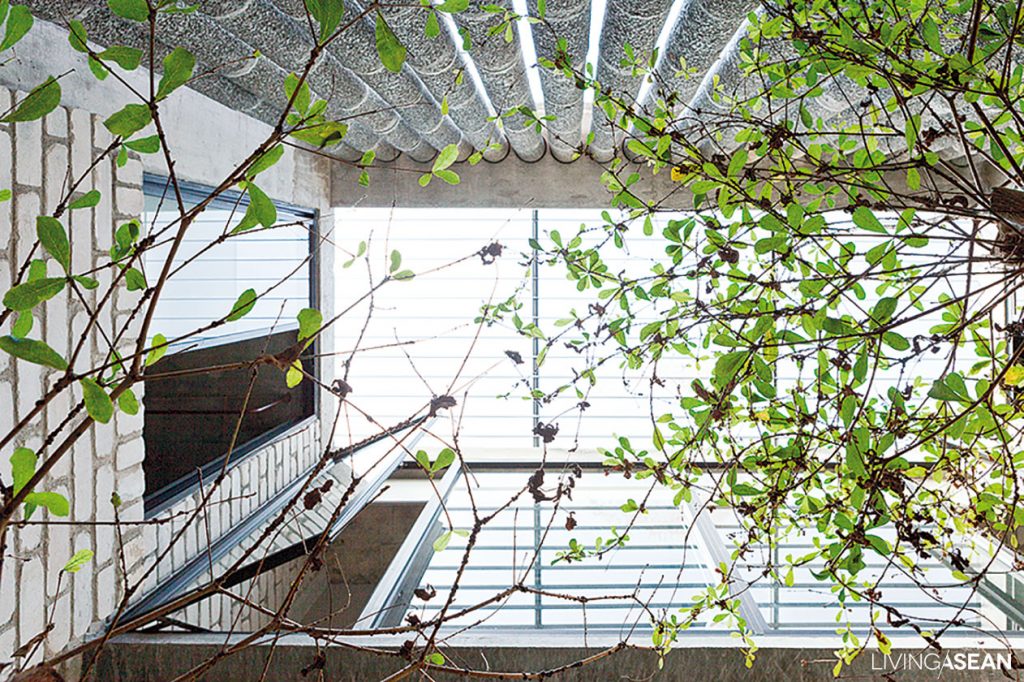
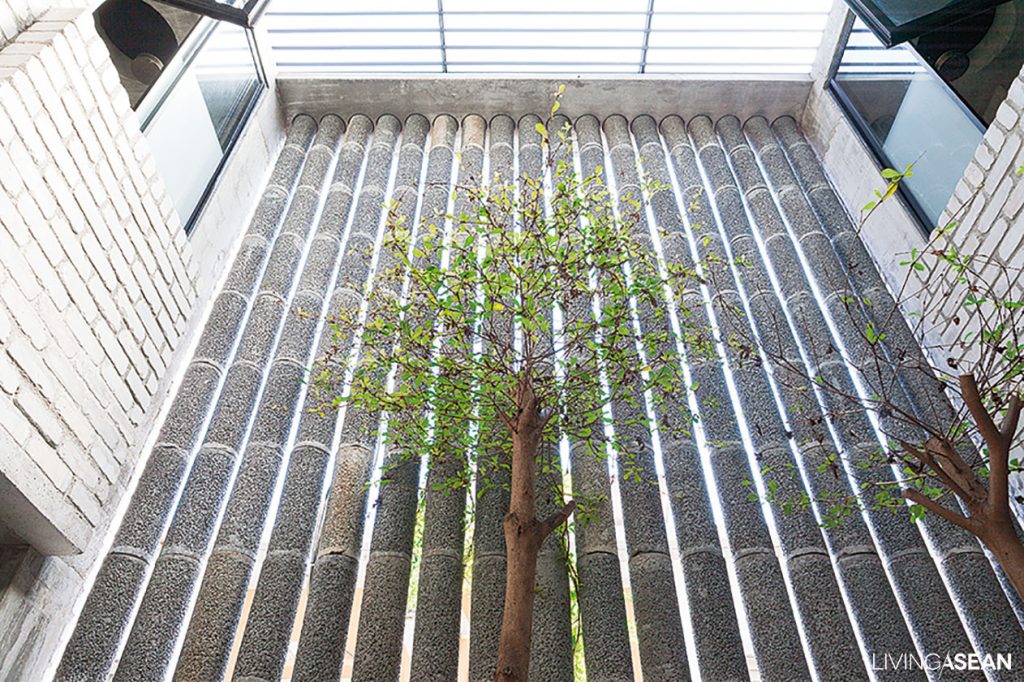
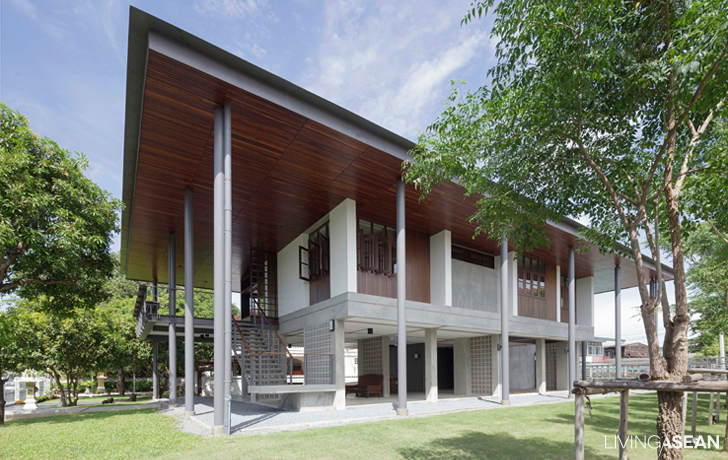
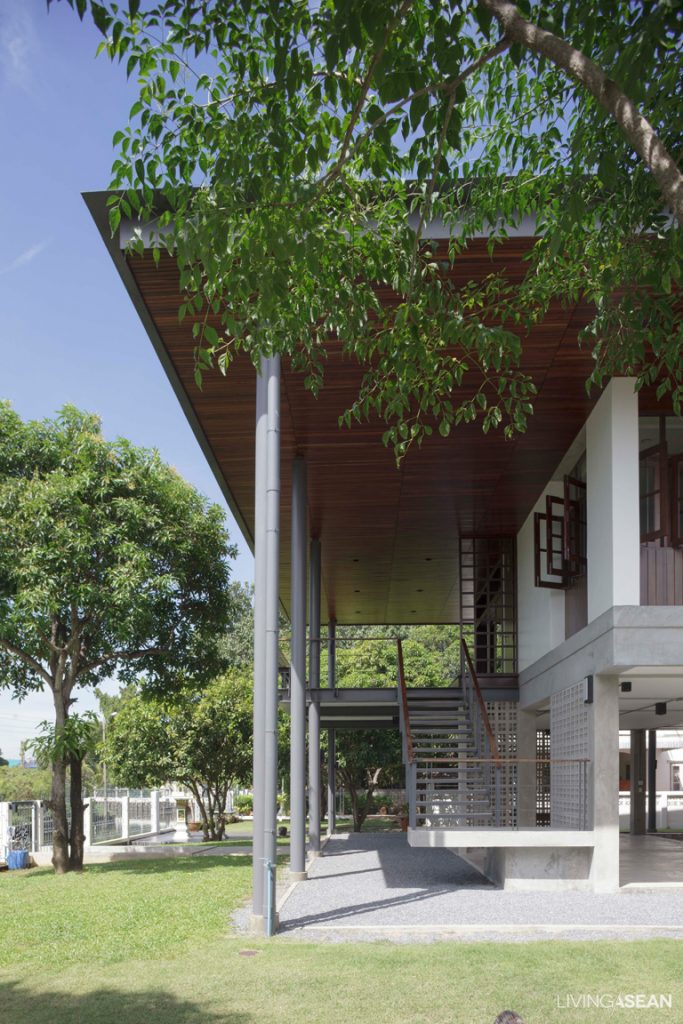
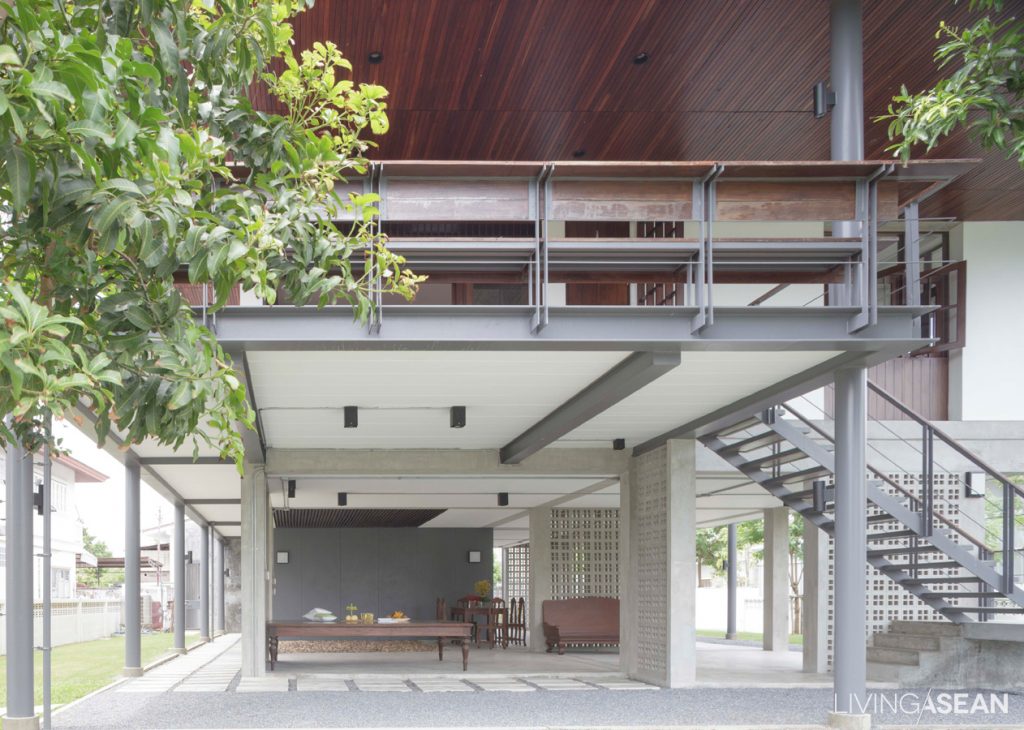
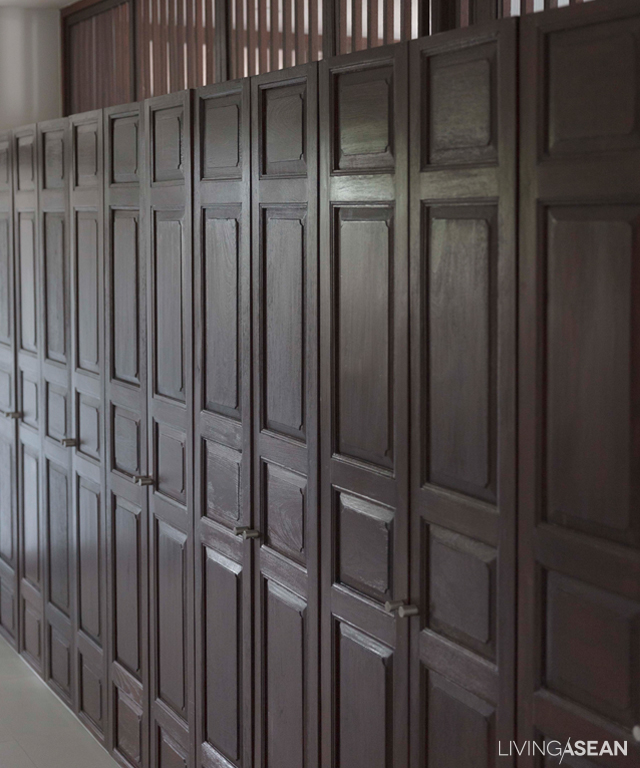
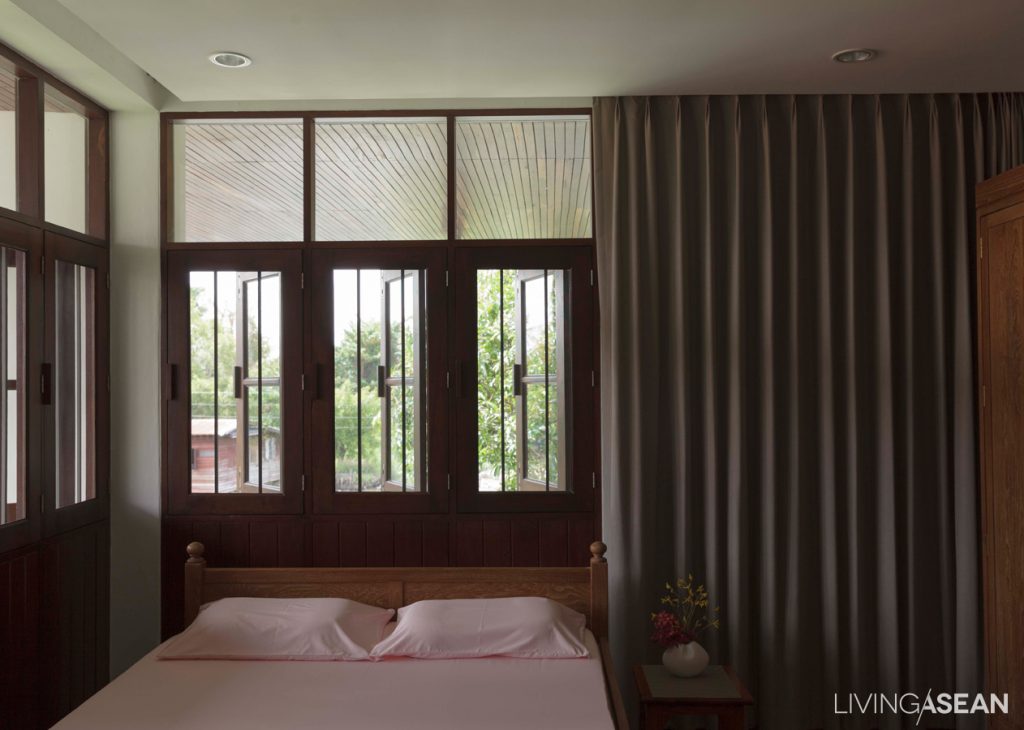
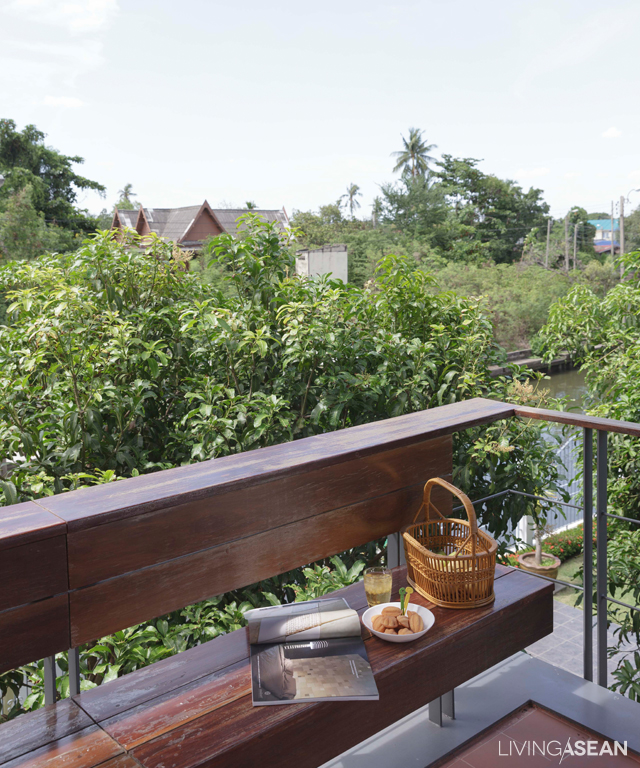
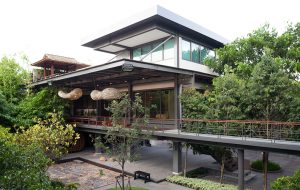
This 7-storey concrete house, blanketed with a refreshing green façade, has angles everywhere, with one especially remarkable section dominated by slanting red posts and beams.
Chatrawichai Phromthattawethi, interior decorator and owner of the company “Pro Space,” lived in a two-storey building for 15 years before finding it too small and building a new place on a nearby property. On that limited space he built upwards rather than out, in fact seven storeys up.
“Designing, we weren’t thinking primarily about style, but utility. The space was narrow, so we built tall.
“Then with a 4-storey townhouse next door we figured an ordinary building would seem too cramped, so we made the building structure visible: posts, beams and deep spaces into open walls creating dimensions of light and shade, adding panache with one section of oddly slanting posts painted red, set off with flowers here and there.”
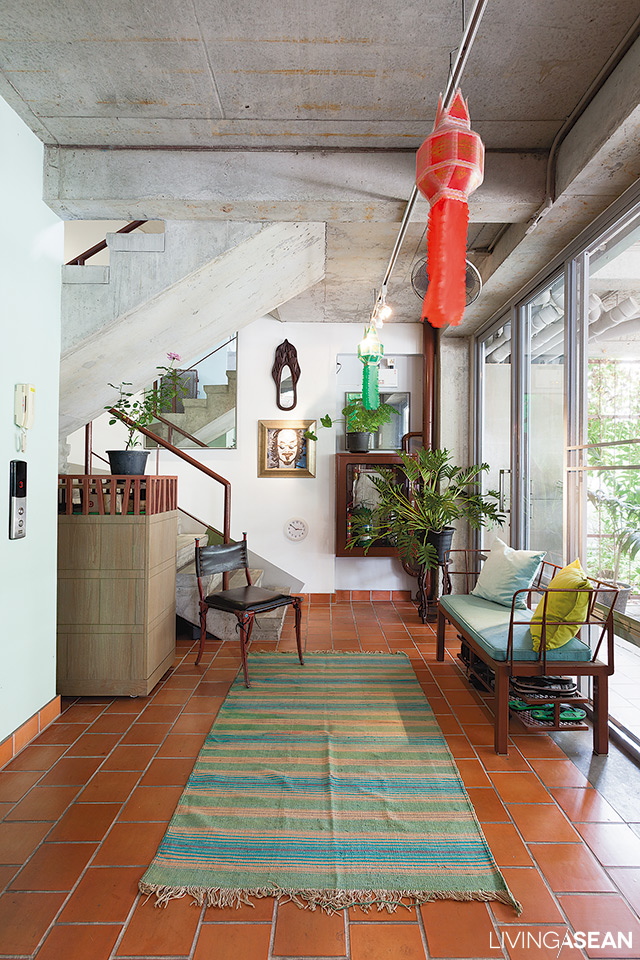
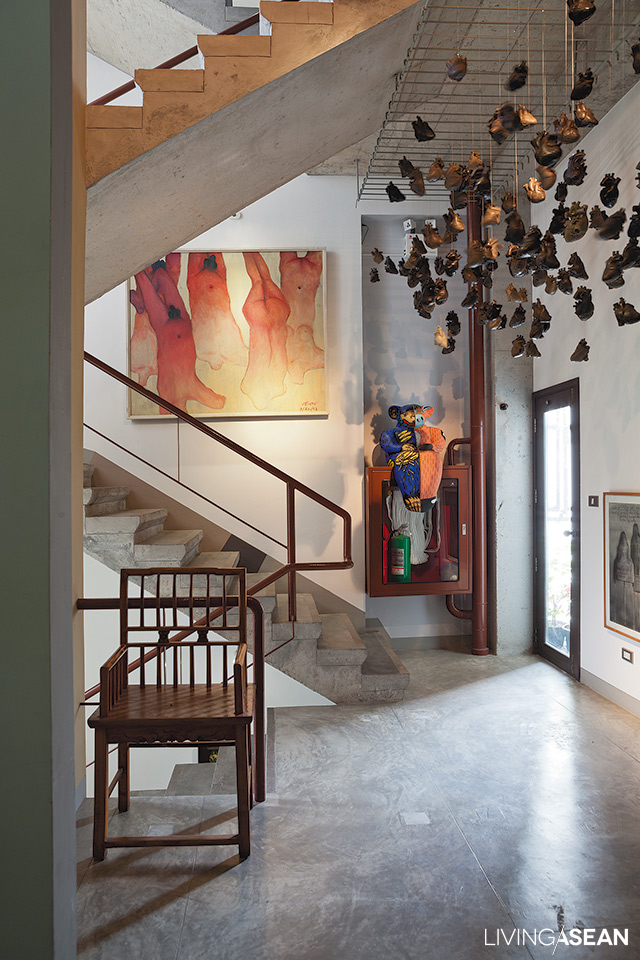
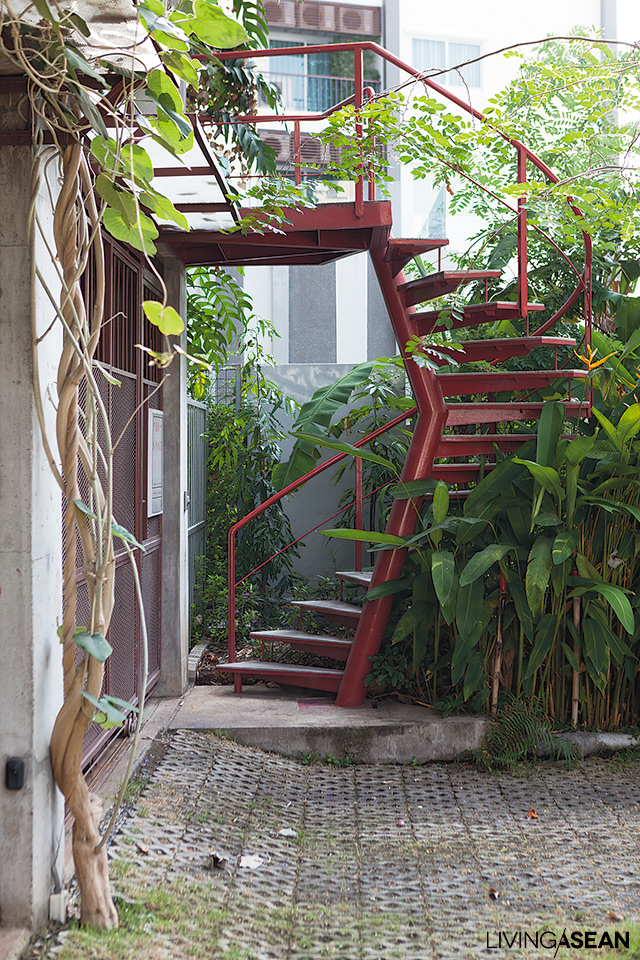
Angular concrete building animated by the refreshing green of a quick-growing ivy.Spiral stair where people can come into the office on business without entering the house.Roof deck: garden spot with swimming pool, an outdoor living room.
Even closed in next to a small street, Chatrawichai’s design still provides nearly 1,000 square meters of usable space.
“Depending on use, each floor has a different height.
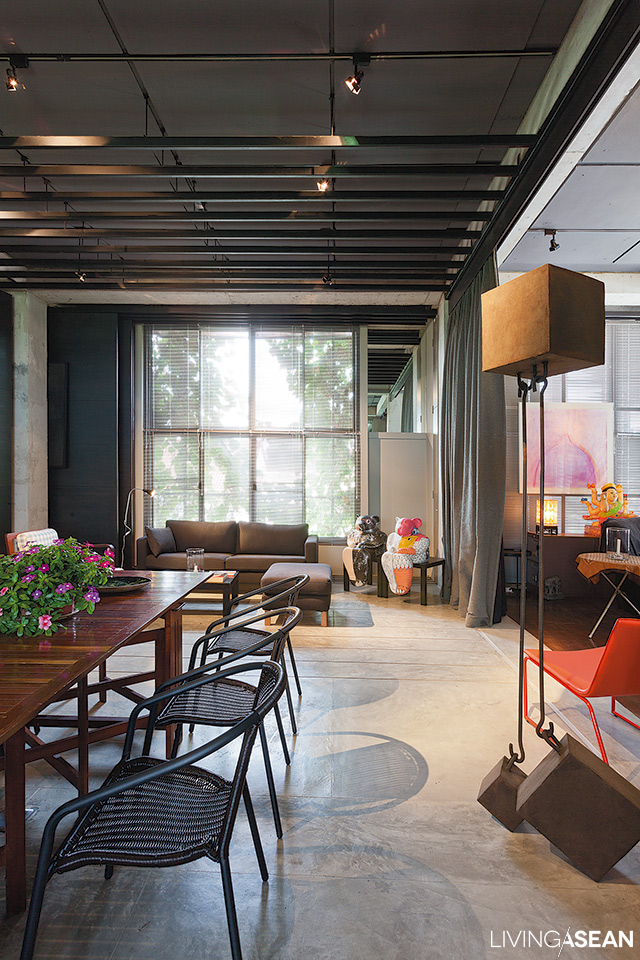
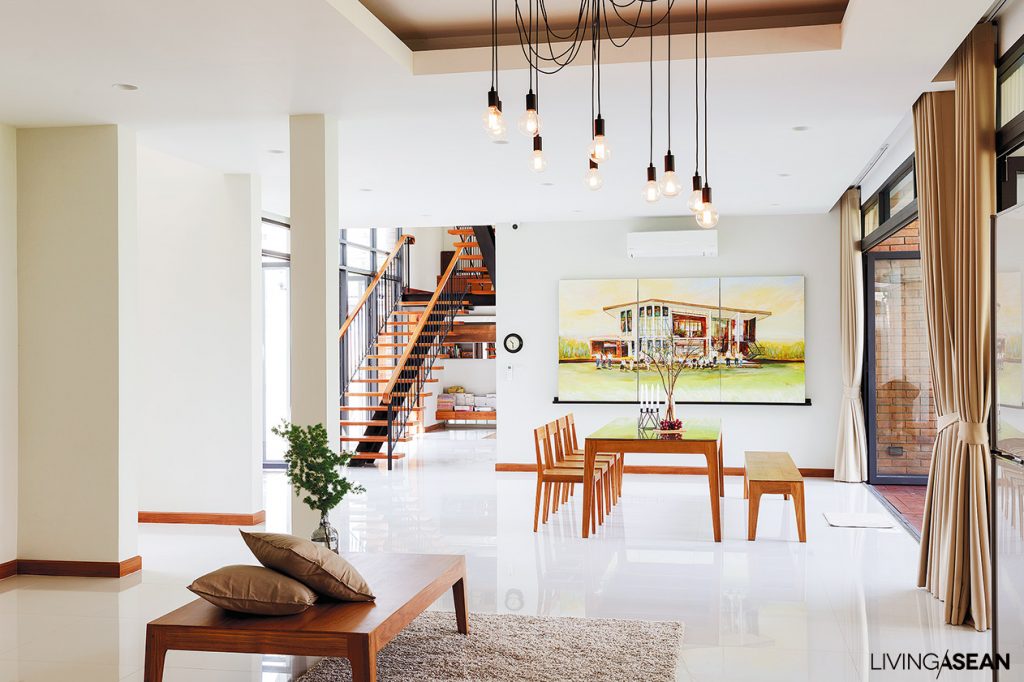
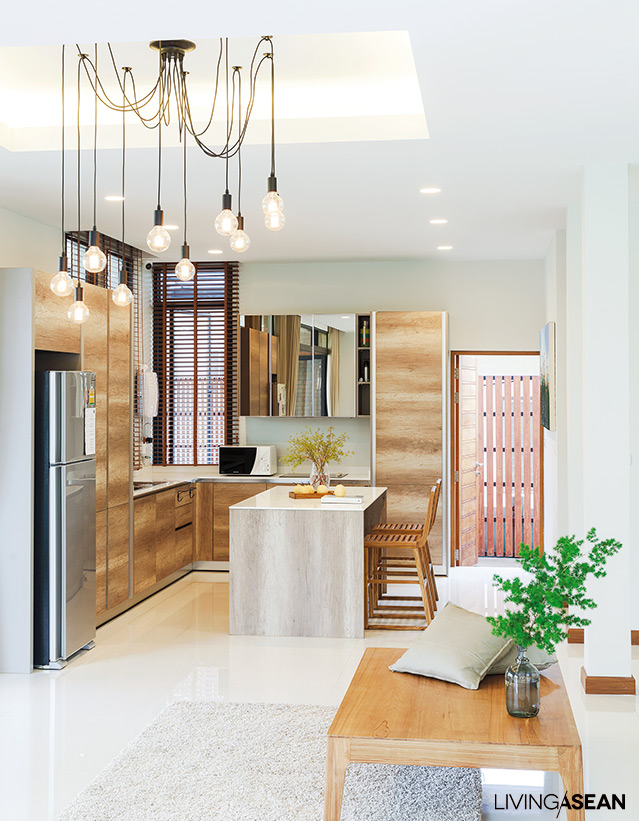
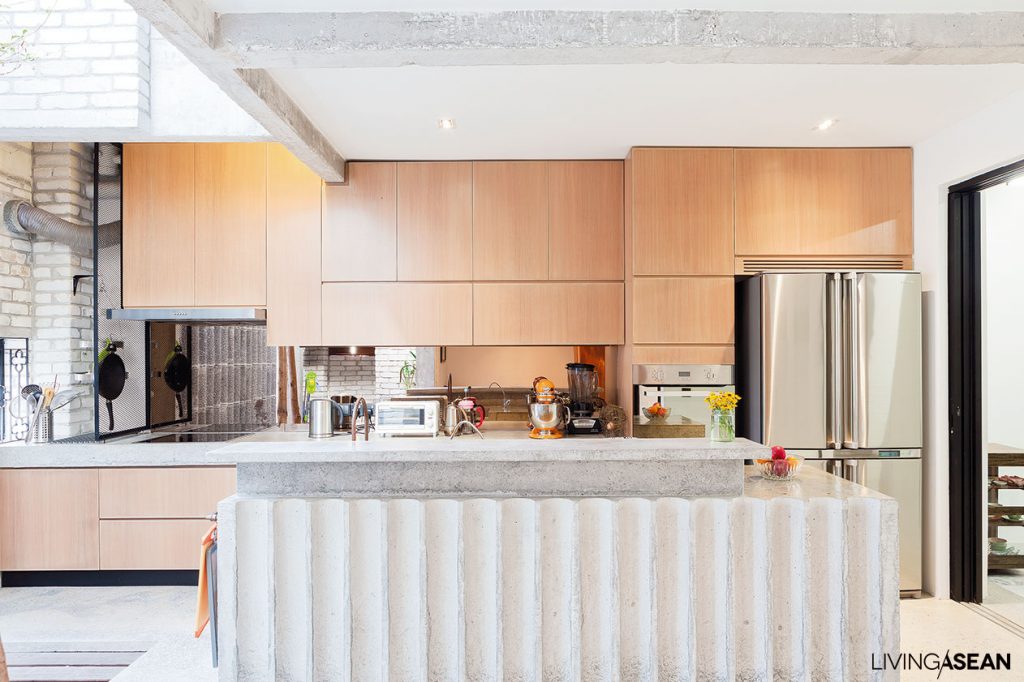
“The ground floor, with garage and kitchen, is moderately tall. The second floor is an office, and the third holds the butler & maid’s room, all normal height. We use the fourth floor for entertaining, so it’s spacious, with a higher ceiling than the others.
“The fifth floor has a guest bedroom and storage space, the sixth is my bedroom, and the seventh floor holds a living room and dining room set at different levels according to usage; the living room has a higher ceiling. On the roof is a deck, swimming pool, and garden.”
Chatrawichai agrees that this is an unusual design for him, with its red exterior posts at odd angles and interior ceilings displaying working utility systems, plus use of unusual materials such as metallic structural highlights in certain spots, creating a much different residential feeling than before and incidentally requiring a lot of detailed work during construction.
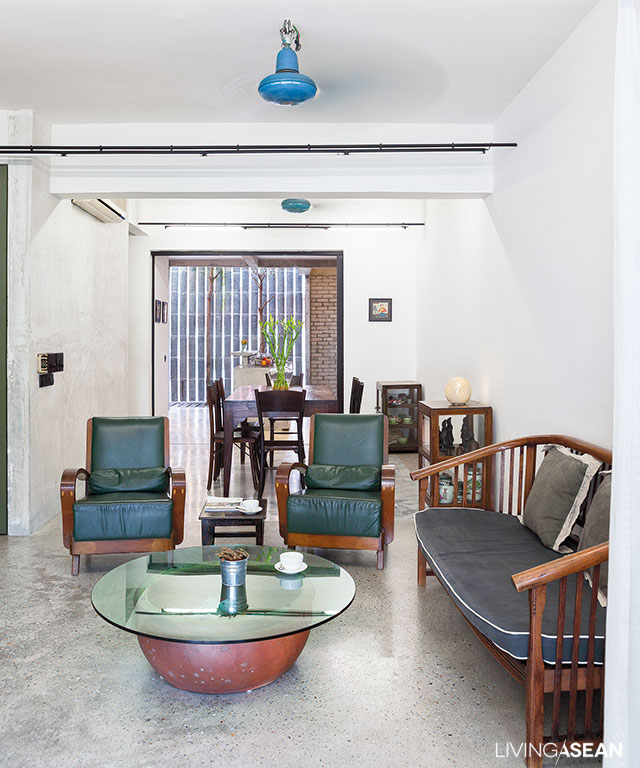
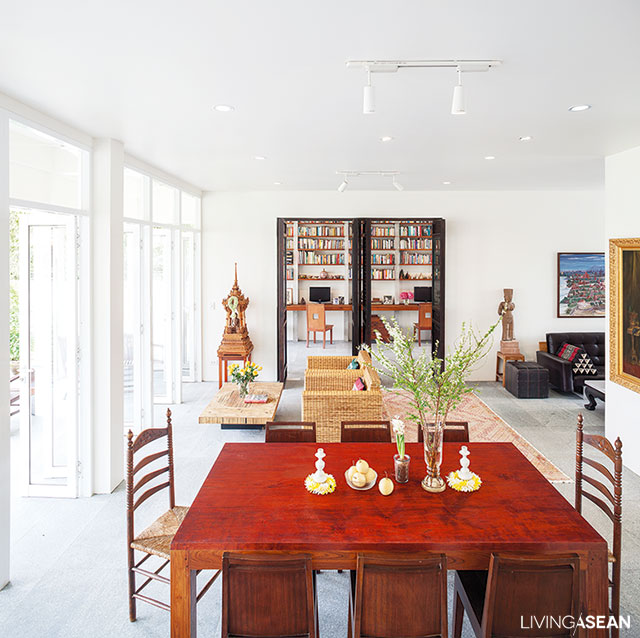
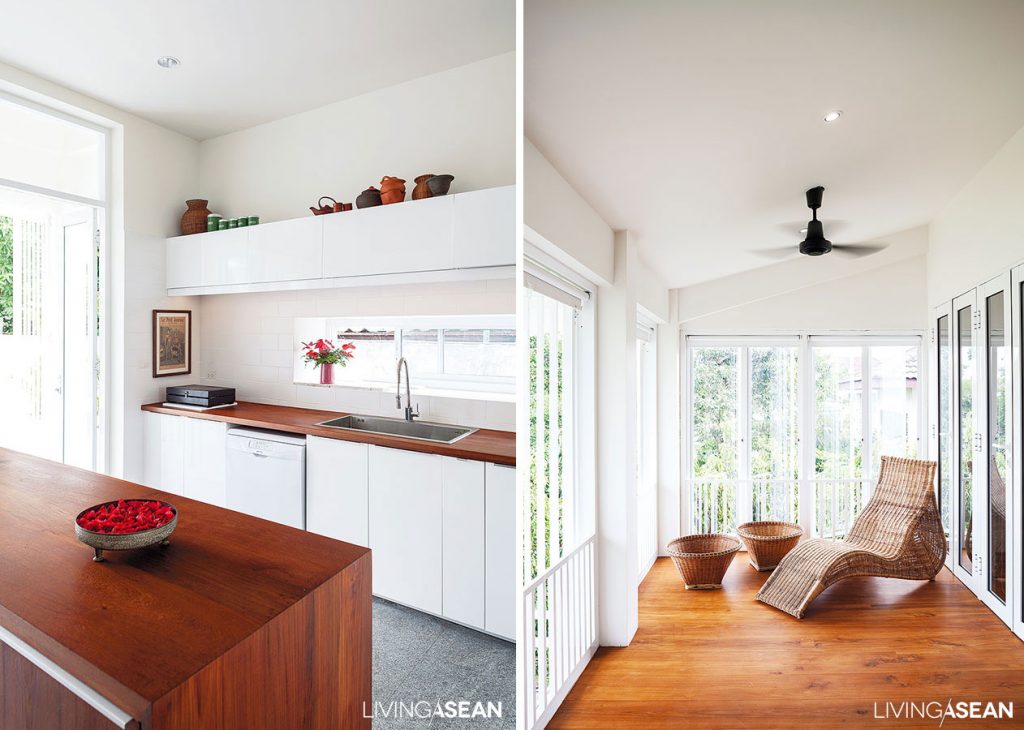
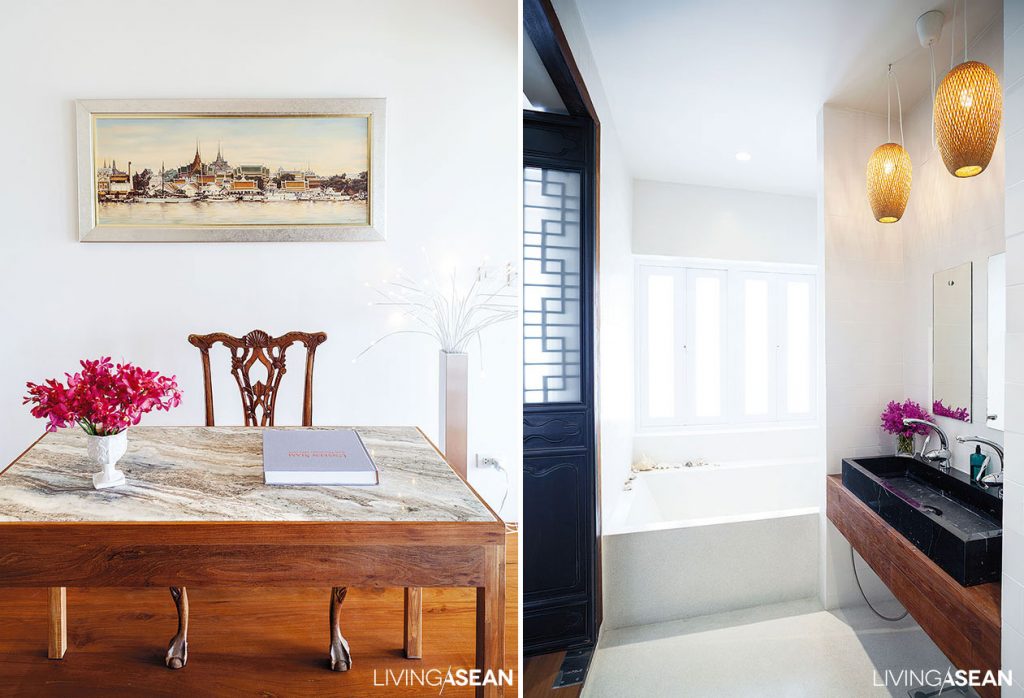
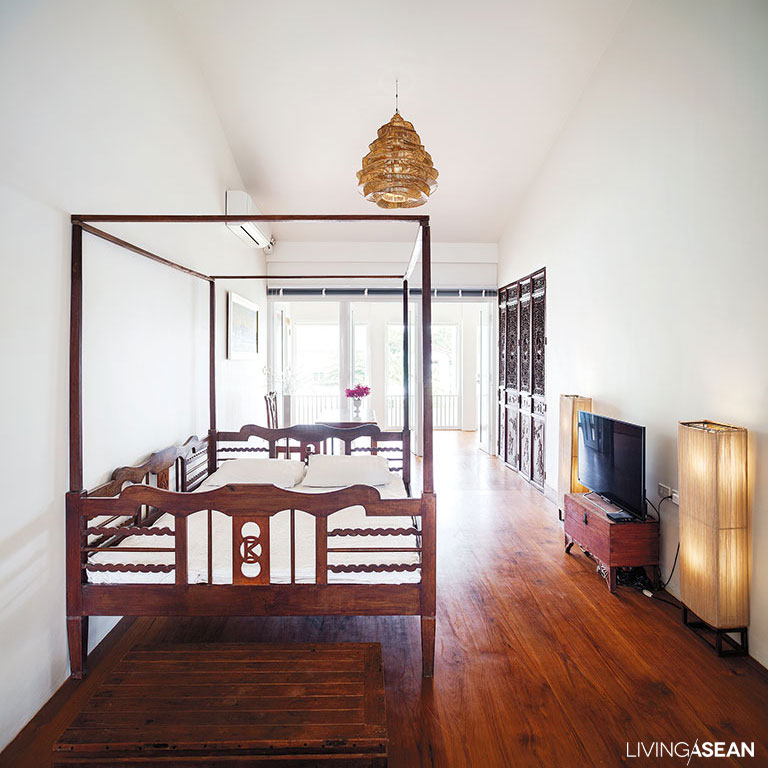
For the interior, furniture and décor mostly come from the old house, a mix of many styles – modern, classic, and antique – matched with exceptional taste because the colors were chosen in advance, primarily framed in a context of gray and black.
Colorful ornaments such as cloth or bright pictures hung on the wall add vitality.
“Coming from a two-storey house, at first living here took some getting used to. It was a tall building with the green façade, but definitely no condo; how to live in such a place? In the end, though, we found it wasn’t all that different,” Chatrawichai adds.
Design: Pro Space Co.,Ltd. by Chatvichai Phromthattadhevi
/ Story: Wuthikorn Sut / English version: Bob Pitakwong /
/ Photographs: Tanakitt Khum-on /
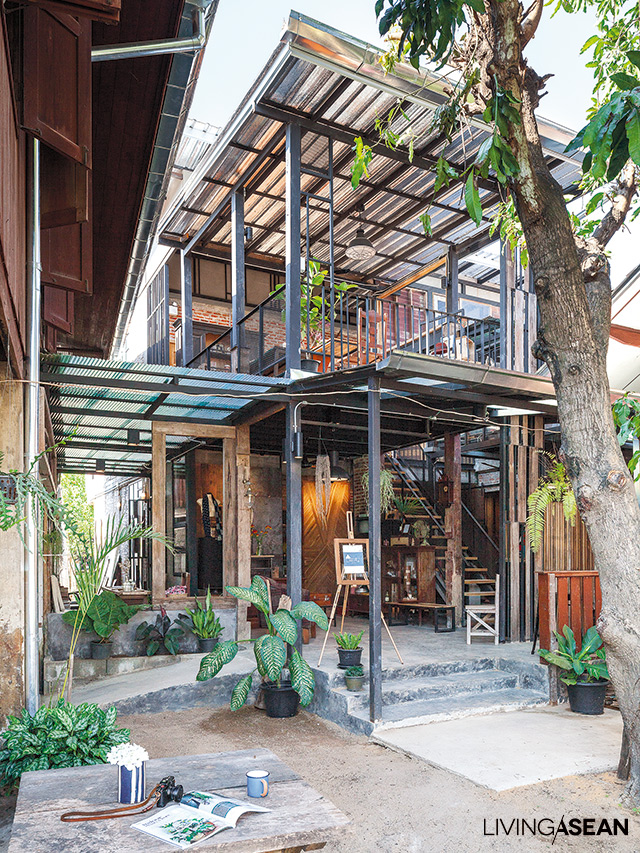
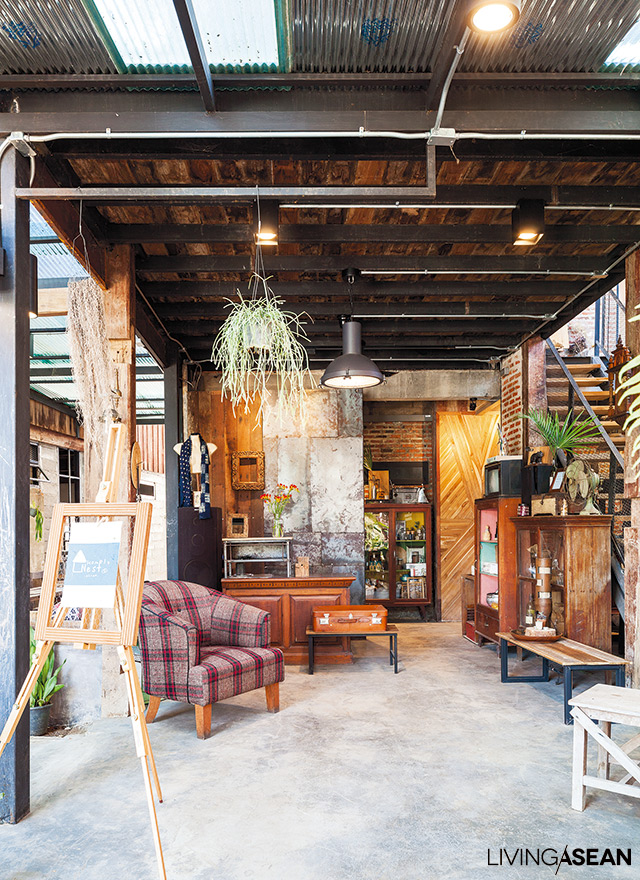
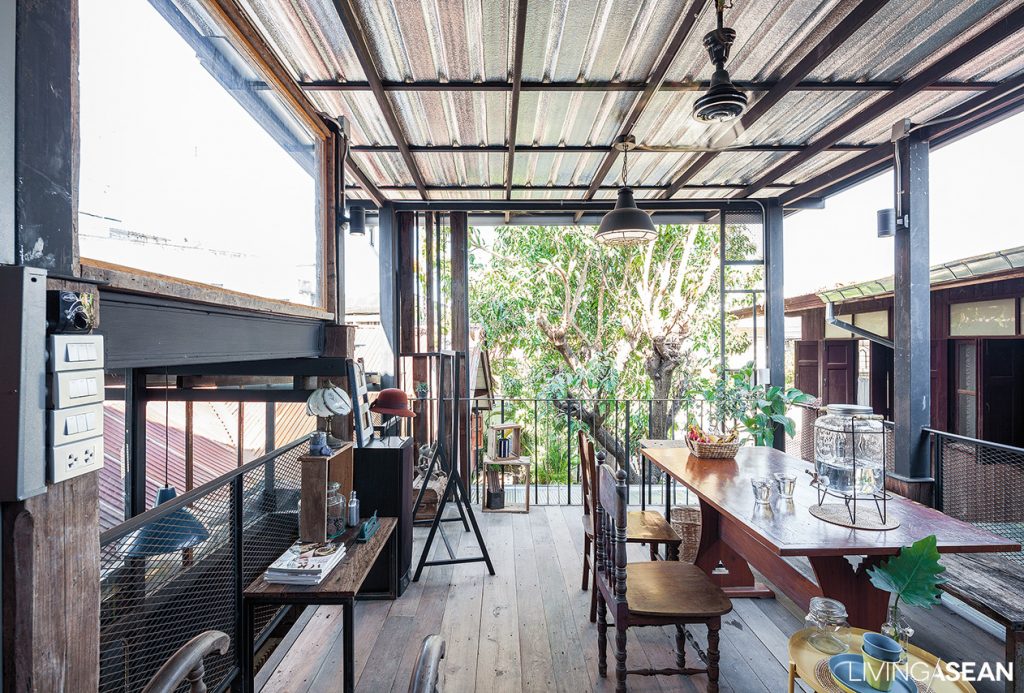
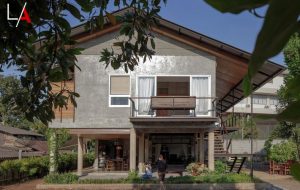
This newly built snug steel home comes with “tai thun,” the lower open space, that allows cool air to pass through. Woodwork and a contemporary steel frame add remarkable touches to what now includes a coffee shop, clothing store, and family homestay.
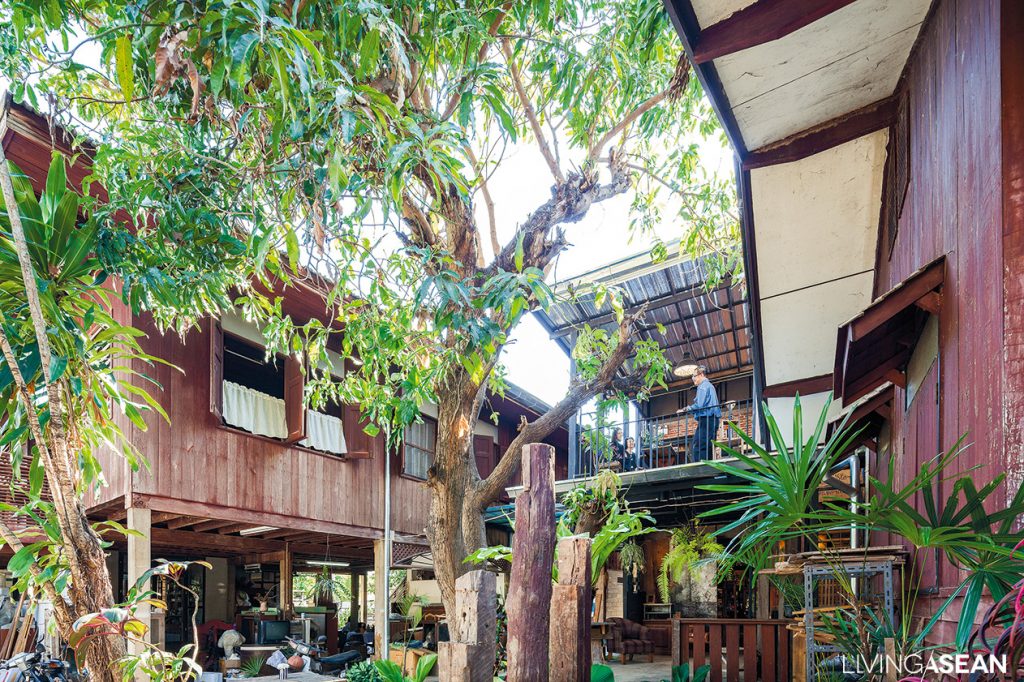
The steel house is built between the two aged wooden homes.
Originally there were two old homes on the property before the new steel structure was built in the in-between space: one belonged to the grandmother, the other to her son, Kriangkrai Phithayapreechakul. It was a small house built on a raised foundation in 1986.
The plan was to connect the old homes to the new steel structure that contains a coffee shop, a clothing store, and a homestay.
The homestay lobby.
“We had already moved out, and were living in the central business district of Phrae,” said Kriangkrai.
“At that time,” added his wife Sasithon Chai-uphatham, “we were planning to live and do business there. But Mom (the grandmother) got sick, so we decided to come back.
“Our daughter, Kik or Kansiri Phithayapreechakul, was about to graduate, so we figured we could do our batik work right here at home. And we would be happier living together.”
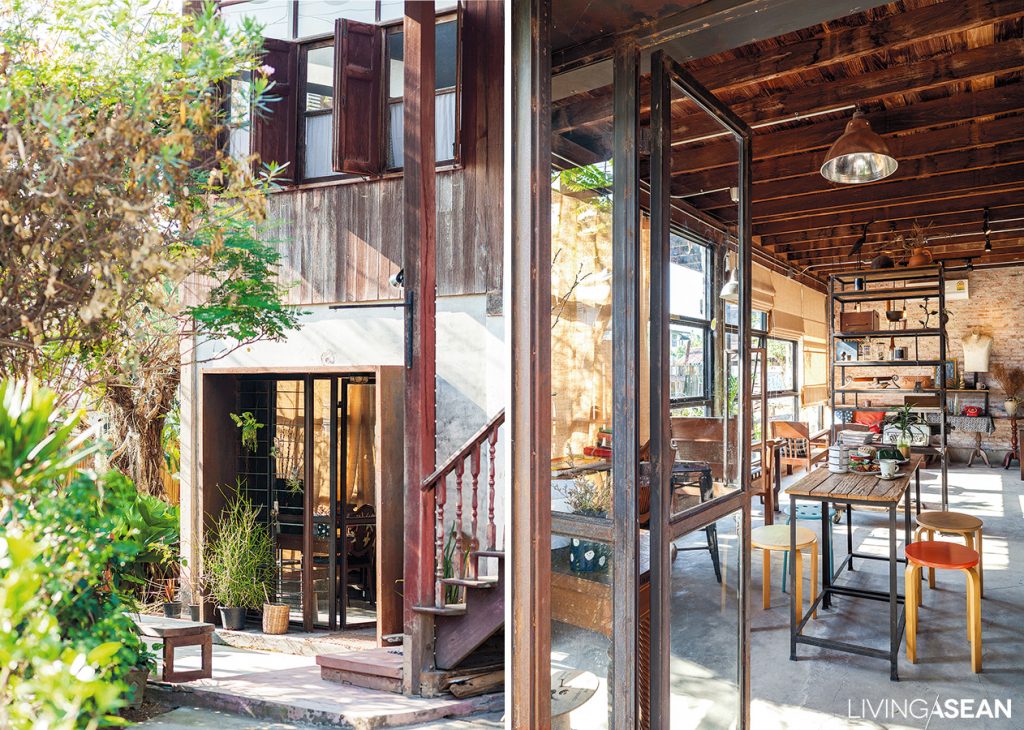
[Left] The existing home on one side is the grandmother’s house with “tai thun” space. It has since become the guesthouse’s living room. / [Right] The lobby-cum-dining room of the homestay.
A shade tree in the yard keeps the front porch cool during the daytime hours.
Sasithon’s batik brand, “Thai Thaw”, is akin to “Roketsuzome”, a traditional Japanese wax-resist textile dyeing technique. Coming back to set up the family business is one reason her daughter Kik decided to go study fabric design. That’s the reason for building this intimate steel home in the middle.
“We started the building five years ago,” said Kik. “It took a year to finish it, and then we added a coffee shop and clothing store fronting the street, connecting into the old houses.”
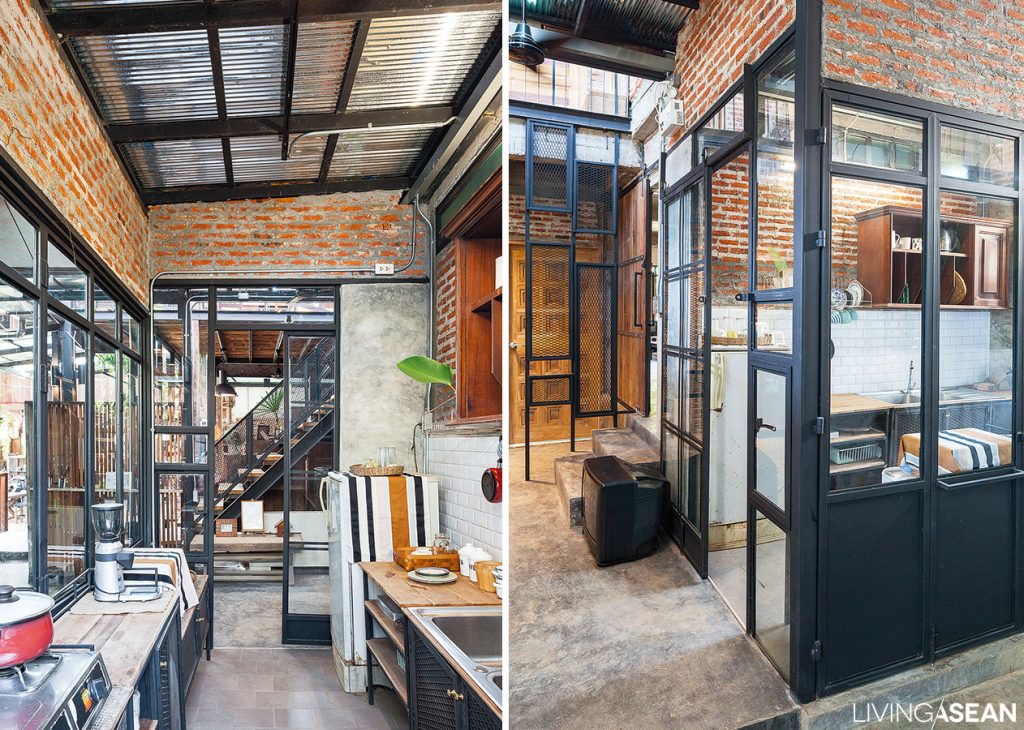
[Left] A loft-style kitchen shows original flooring surfaces. / [Right] The kitchen steel-framed siding is glazed using clear glass designed to save space.
With a clothing store on one side, they created a homestay on the other. The homeowners also adapted downstairs space for use as family room.
“At first we didn’t plan on opening a homestay. But we had some friends coming over to visit a lot, and they liked being around this area,” added Kik.
“Later, when we decided to give lessons in batik making, the house became a guesthouse to accommodate workshop participants.”
The living room of the homestay is on the ground floor.
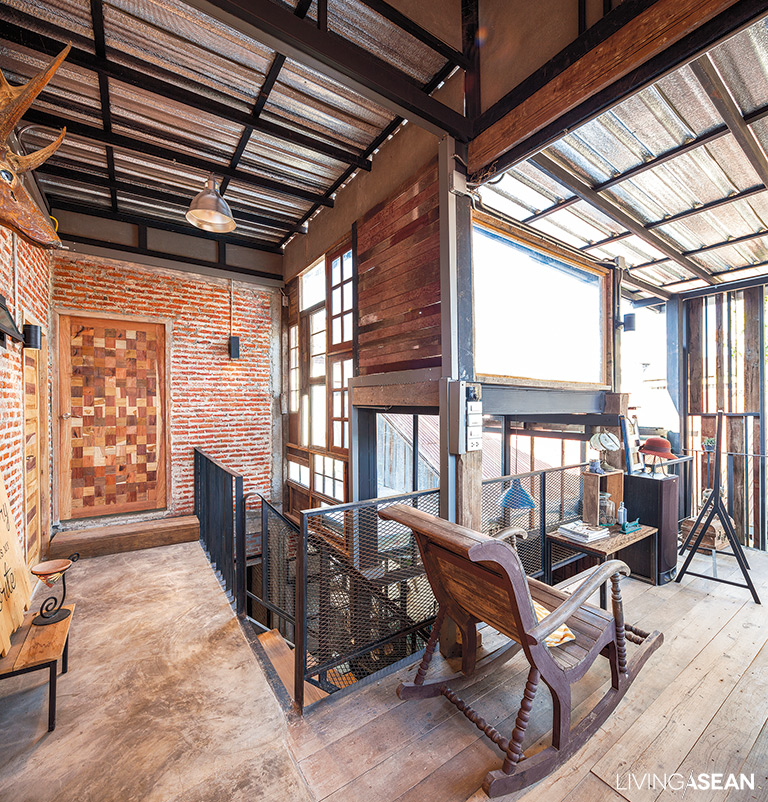
The new building features a mix of concrete, steel structure and reclaimed timber. Upstairs, the floor is made of recycled tongue-in-groove hardwood boards. It reaches all the way to connect with the grandmother’s house.
The “tai thun” or lower open space inside Grandma’s house now serves a new purpose as the homestay living room. The homeowners kept the space as it was because they wanted to preserve the character of the old house and, at the same time, made certain that it blended with the new steel home.
The homestay’s guestroom ambiance.
Outside, a large mango tree was preserved for shade, relating to the space left between the three structures for good airflow. Décors are mostly from family collections.
“We worked slowly, concentrating on details, for beauty and best use of space,” said Kriangkrai.
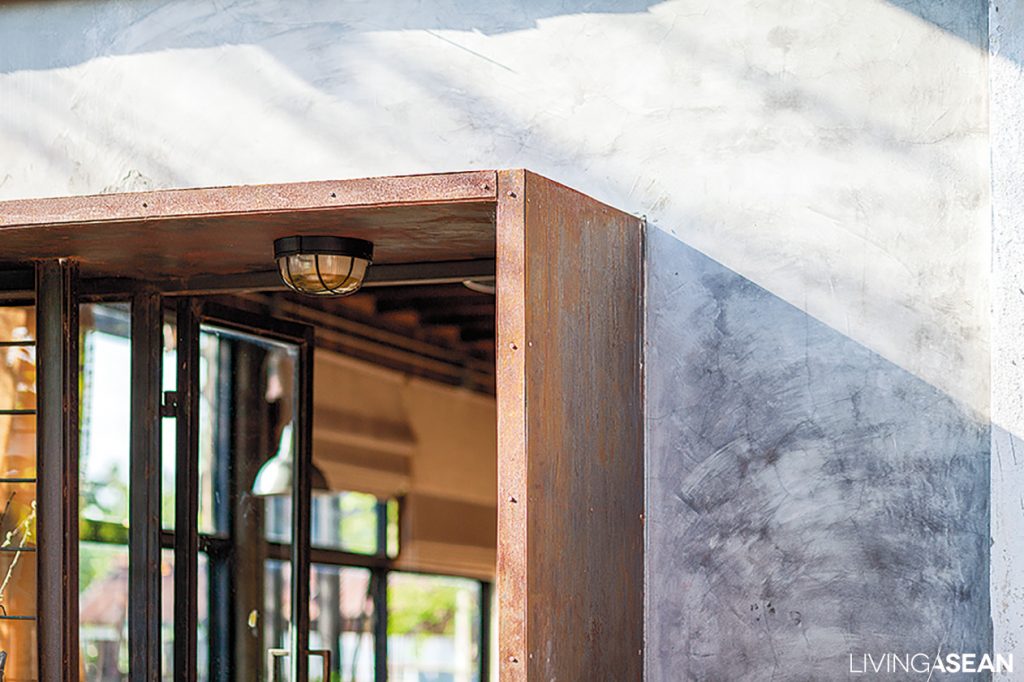
“I let the builders work in the ways they were best at, and they brought out the charm of the original materials, blending them into a whole. In some places the steel was allowed to rust, complementing marks on the old wood as well as bare concrete and brick surfaces.”
The imprints of time work indeed with the new design making this steel home something really chic and special.
/ Story: Wuthikorn Suthiapa / English version: Bob Pitakwong /
/ Photographs: Tanakitt Khum-on /
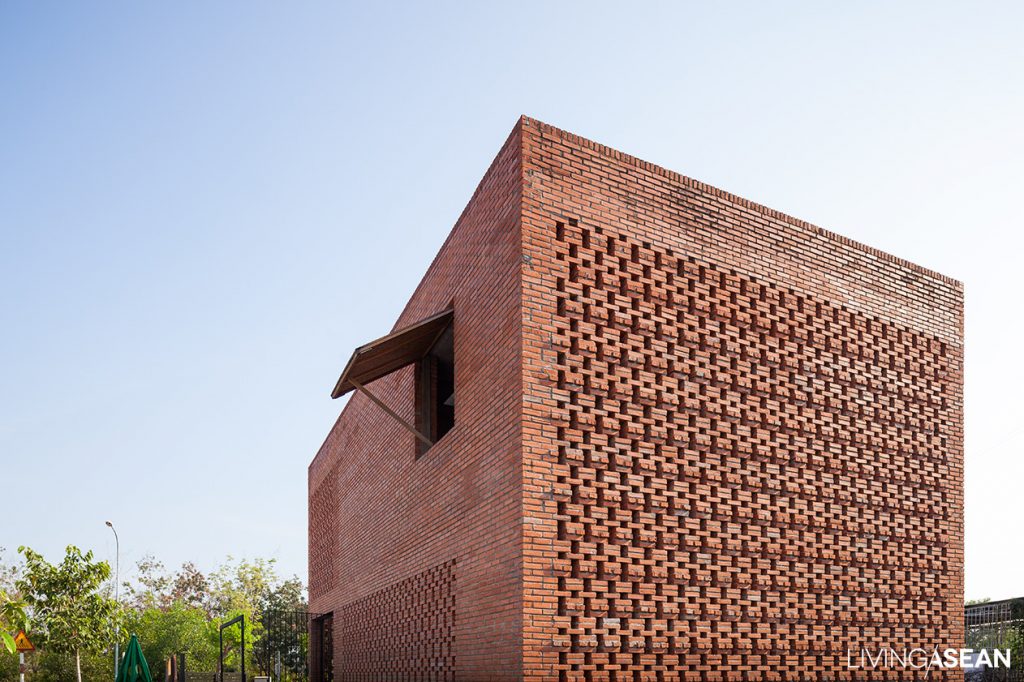
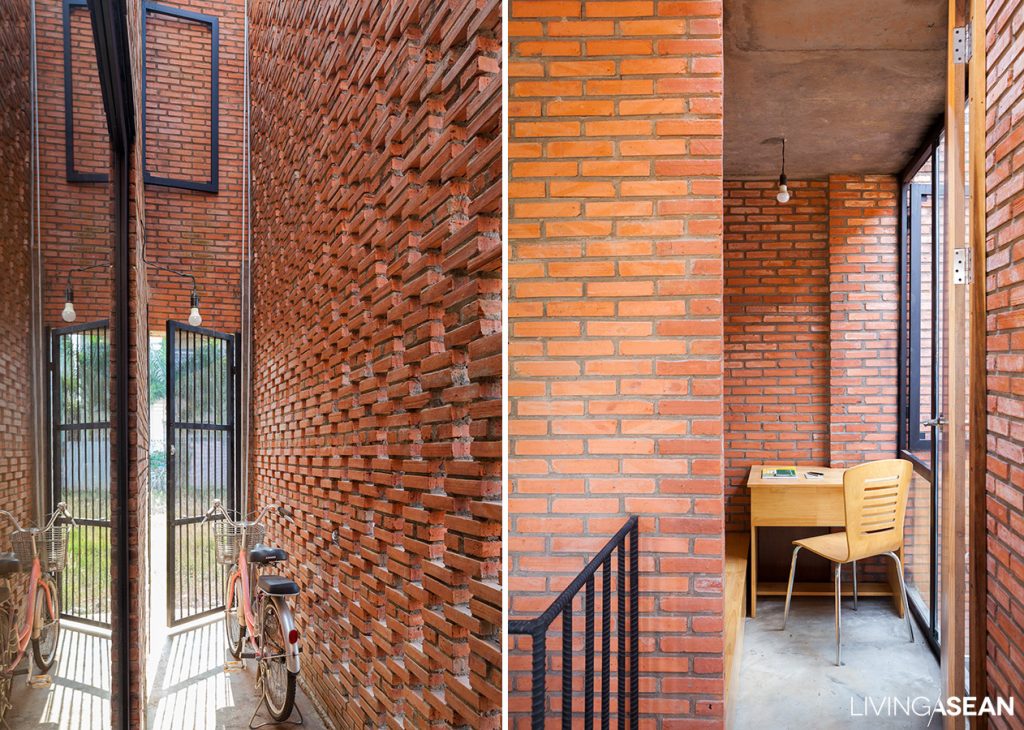
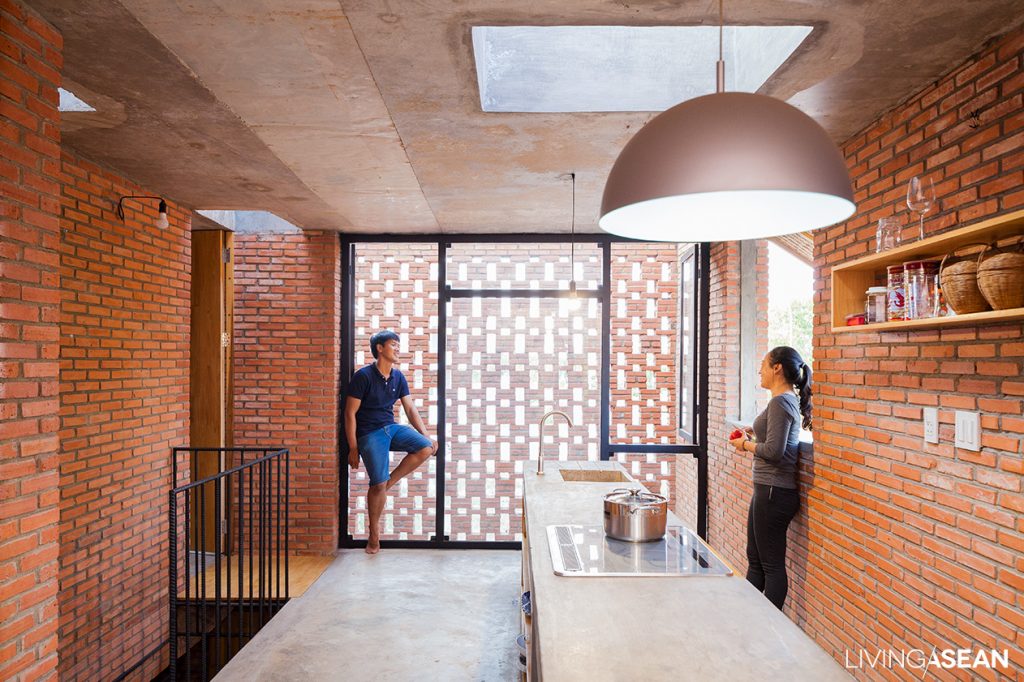
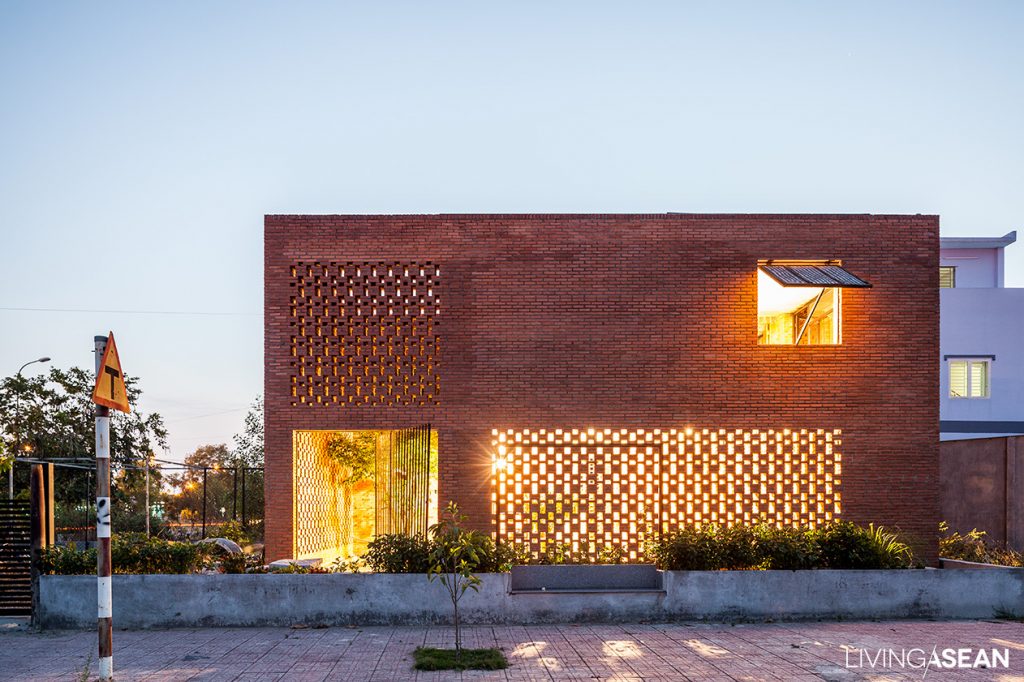
This rectangular brick home in Ho Chi Minh City is designed for a “hot and humid” climate. It’s open to natural light with cool air currents constantly streaming in and out through the brick walls. The homeowners Mr. Tung Do and Mrs. Lien Dinh are newlyweds who wanted a small house with straightforward design for pleasant living. They have found the home of their dreams.
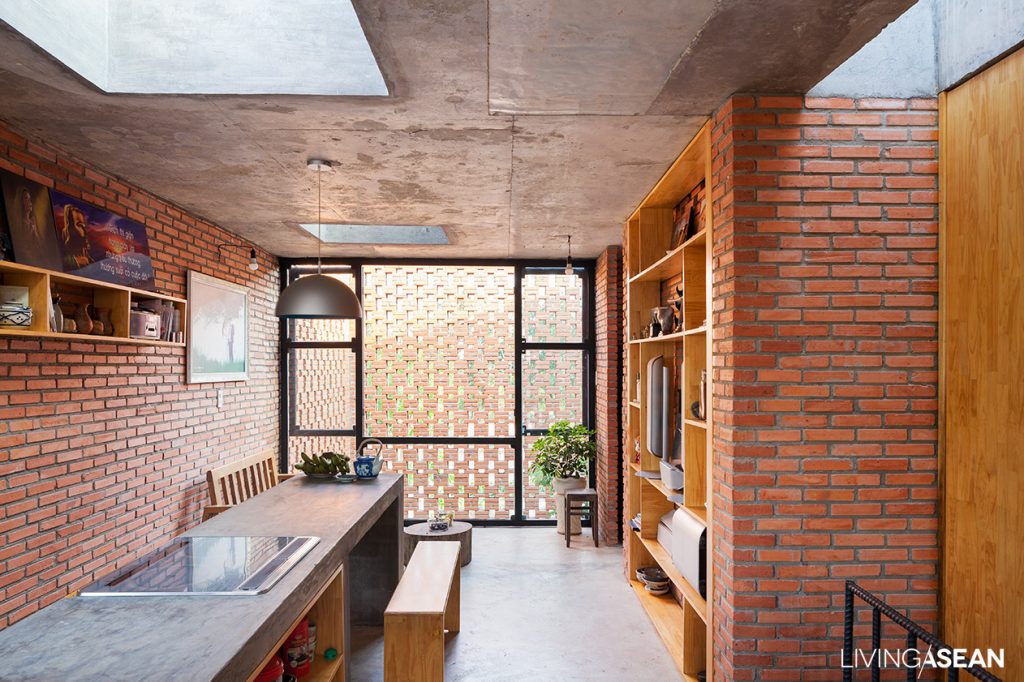
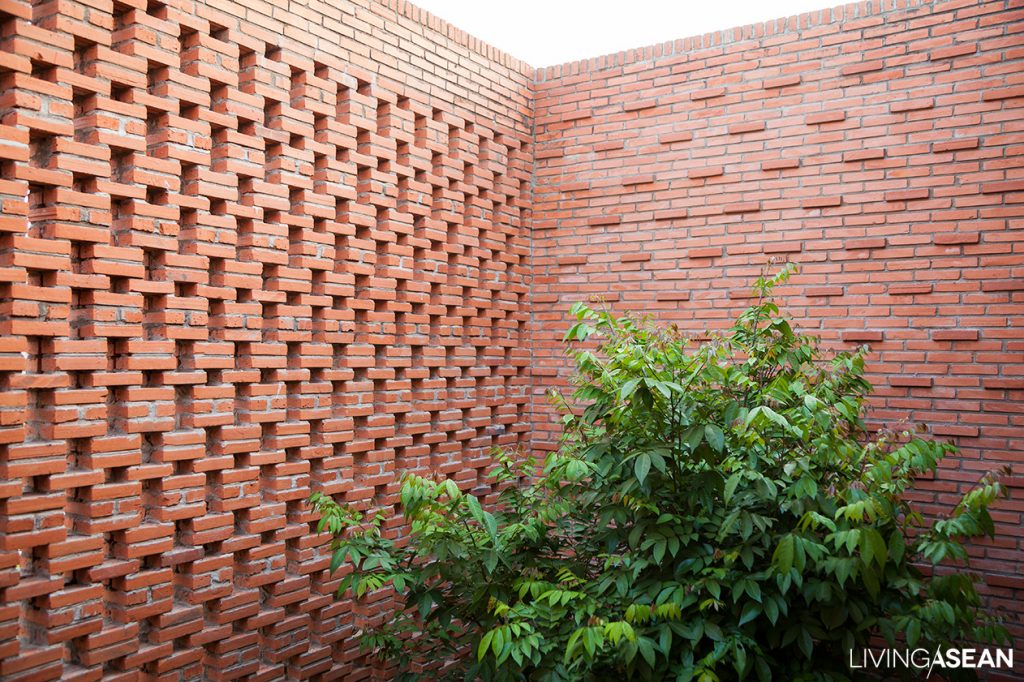
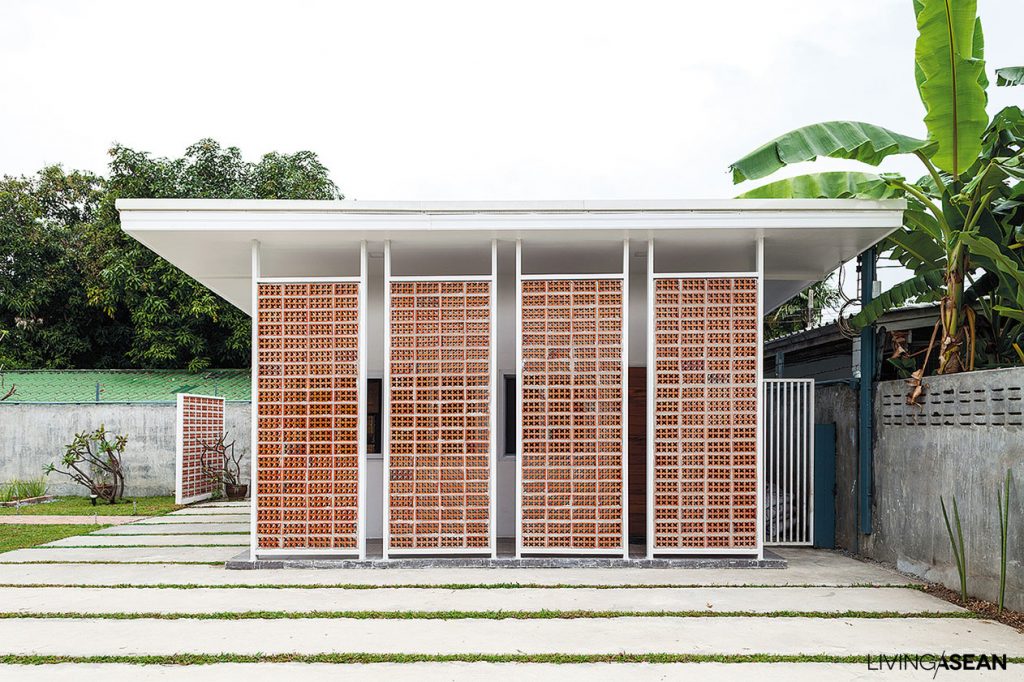
Brick doesn’t retain heat, but insulates against it, and its porosity helps retain early morning moisture which evaporates to cool at midday.Work corner next to the food preparation section is screened off for privacy.
The owner had seen Tropical Space’s “Termitary House,” which won, among others, a 2016 Brick Award, and admired its form and design so much that – even with their limited budget – they engaged the Company to design and build their own home.
Ms. Tran Thi Ngu Ngon and Mr. Nguyen Hai Long of Tropical Space said:
“We want to build living spaces that connect people with nature, natural spaces that are easy to understand. The beauty of nature can reach deep into a person’s spirit to improve life in ways they would not have imagined before.”
Mr. Nguyen tells us he grew up in a house of brick and never forgot his childhood vision of sunbeams flowing through open spaces between bricks to throw patterns of light and shadow on the light dust in the air, and how beautiful it was.
Little phenomena such as this connect people with their surroundings, and support the choice of brick as a building material.
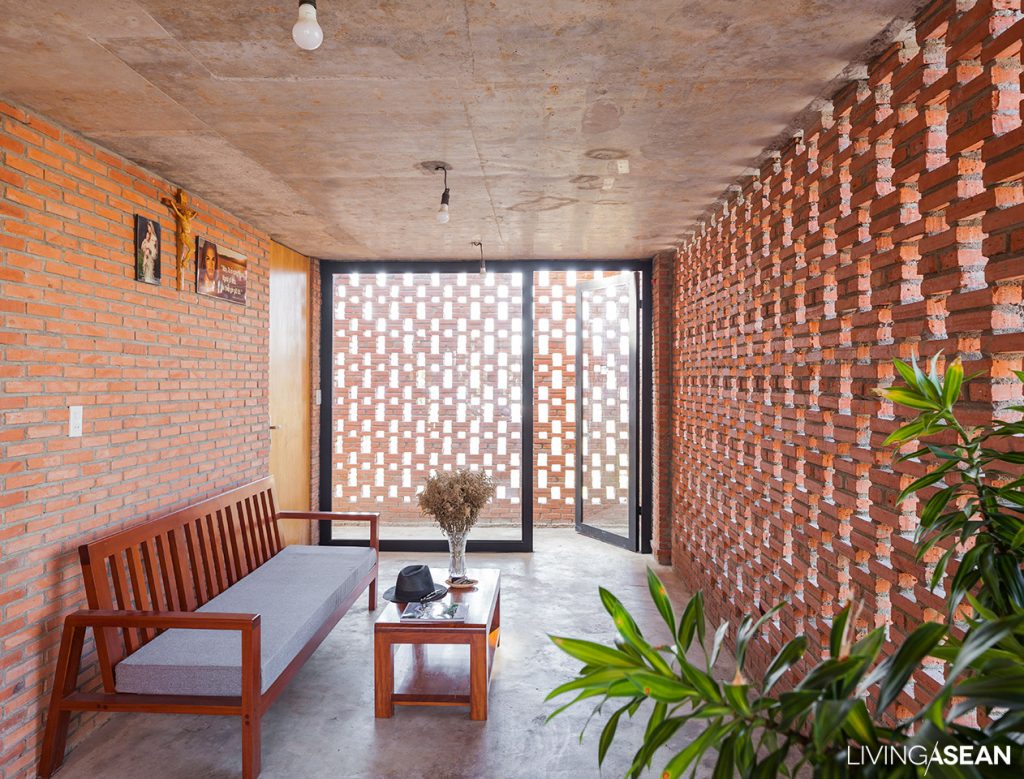
The brick wall both gives privacy and provides channels for air and light to pass through.
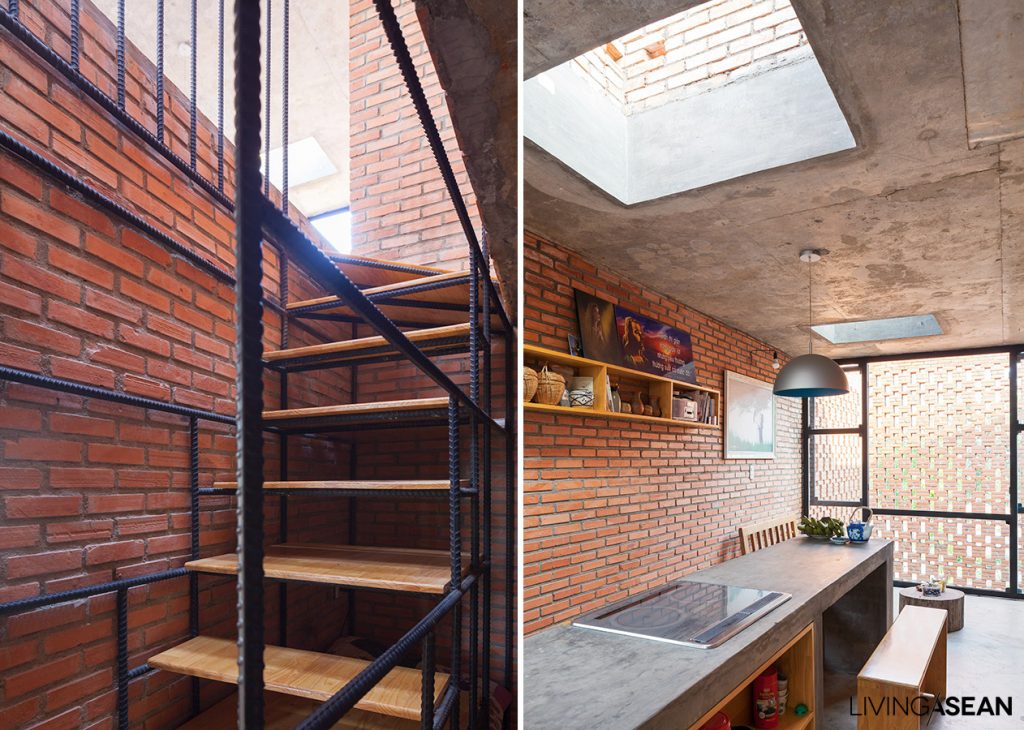
Stair frame of rebar saves space and adds structural definition.
Most of Tropical Space’s design work makes use of brick, partly because the form has a certain beauty, but deeper than that, brick is an inherently Vietnamese material, indigenous to the area.
The designer pays attention to its true characteristics and searches out new ways of using and arranging it, creating channels for wind and light and taking advantage of its moisture-retaining quality.
Seen from outside, the home is a rectangular block that itself resembles one humongous brick. It faces north because of sun, wind, and rain directions, and without being too hot it gets good light all day long.
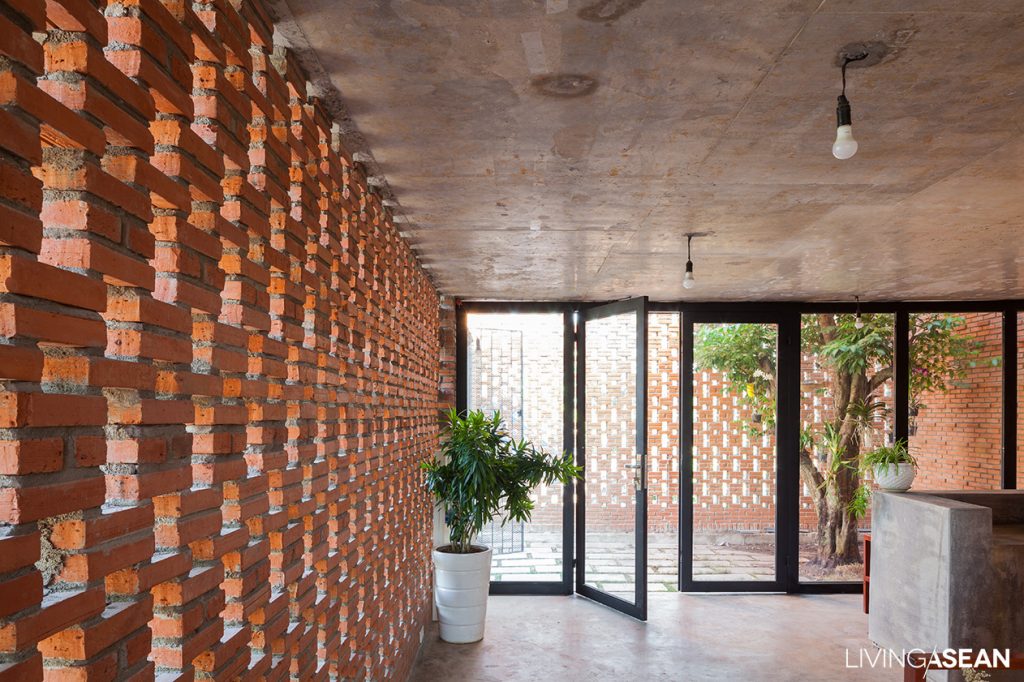
The ground floor living room features a wall of bricks alternating with open spaces, lighting and cooling at the same time during the day.
Outside, a little distance from the house to the east and west are walls that keep sunlight from directly hitting it, instead reflecting light through the perforated brick wall and into every inside area.
These outside walls also create channels that guide the wind in and out. Trees are planted there, too, which cool the house with their shade.
The house may look a bit severe, but in this tropical climate its architecture aligns beautifully with nature to provide an amazingly comfortable residence built on a moderate budget.
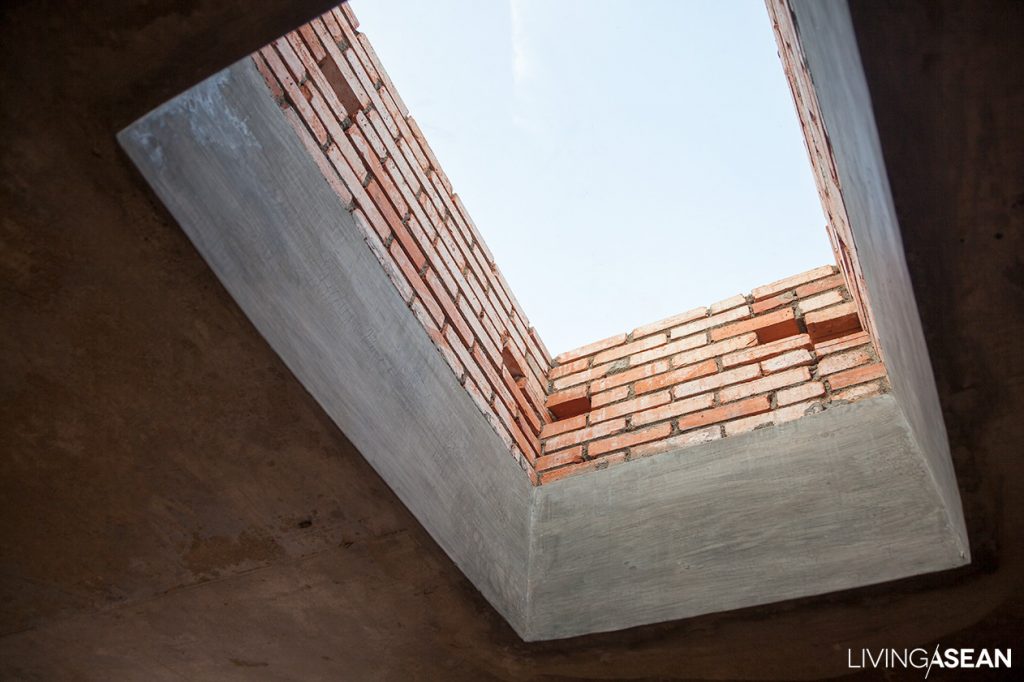
Openings above and on the sides for natural light to enter during the day.
Architect: Tropical Space by Ms.Tran Thi Ngu Ngon and Mr.Nguyen Hai Long
/ Story: Patsiri Chotpongsun / English version: Bob Pitakwong /
/ Photographs: Sitthisak Namkham /
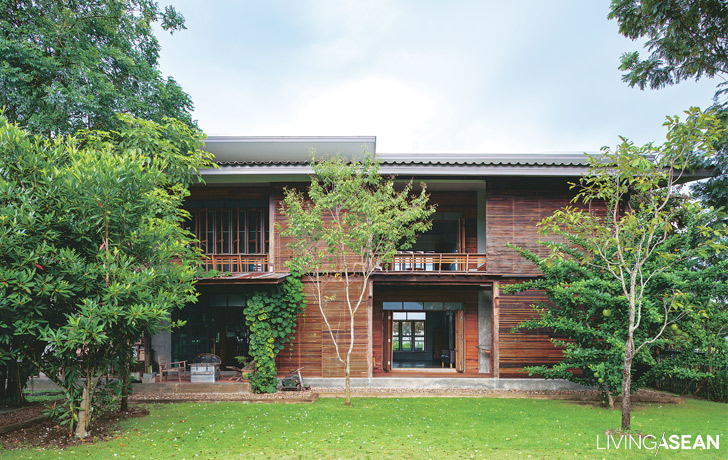
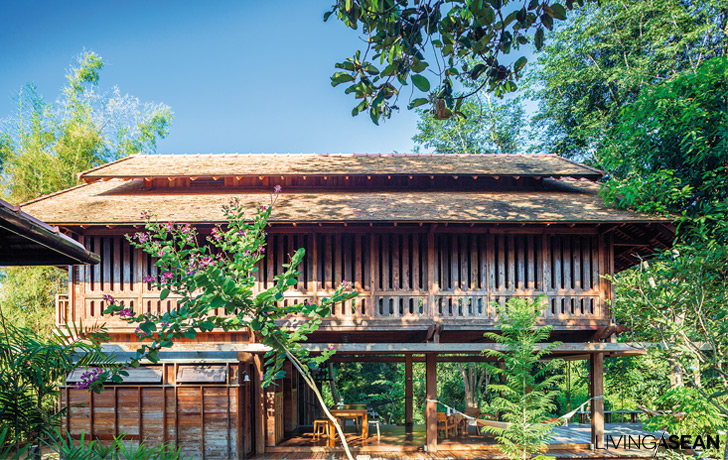
Turning left into a side street opposite Chiang Mai’s Mae Rim district bureau, rice fields on both sides of the road have matured and only just begun to bear fruit. In the middle of it, all emerged a two-storey wooden house with vintage Thai-style appeal. It stood hemmed in by tall trees and lush green lawns. This two-storey wooden house showcases a mix of concrete and timber, its wide façade looking out on a fabulous panorama of mountains and paddy fields.
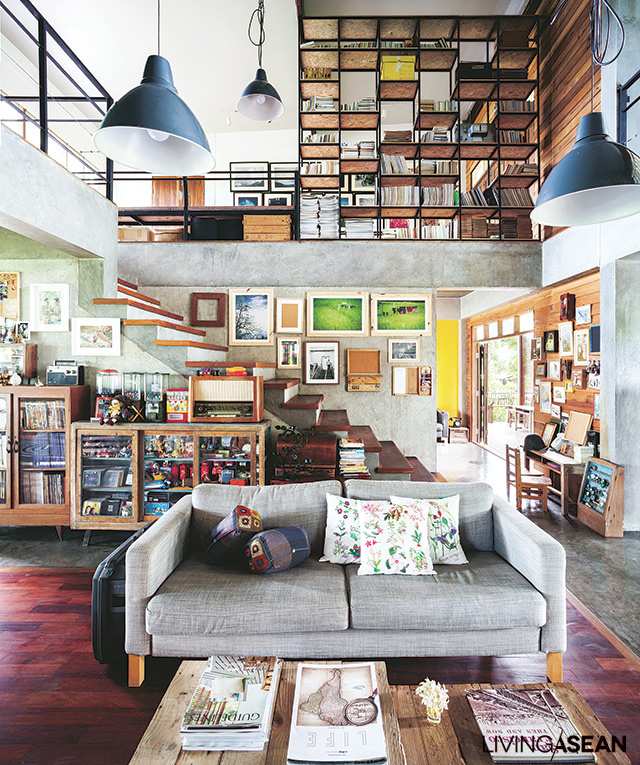
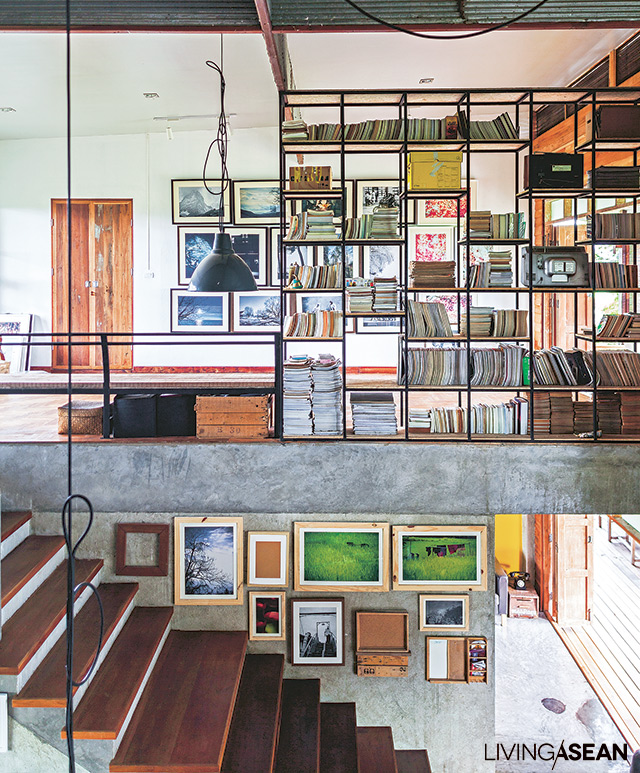
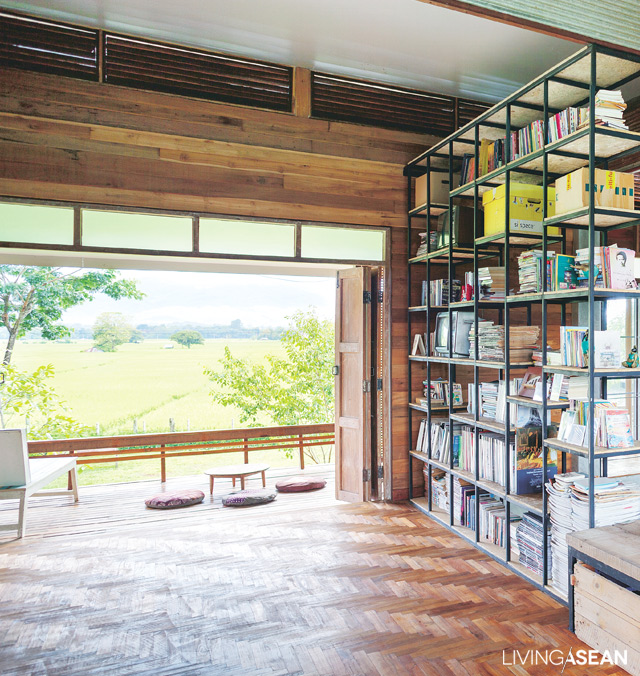
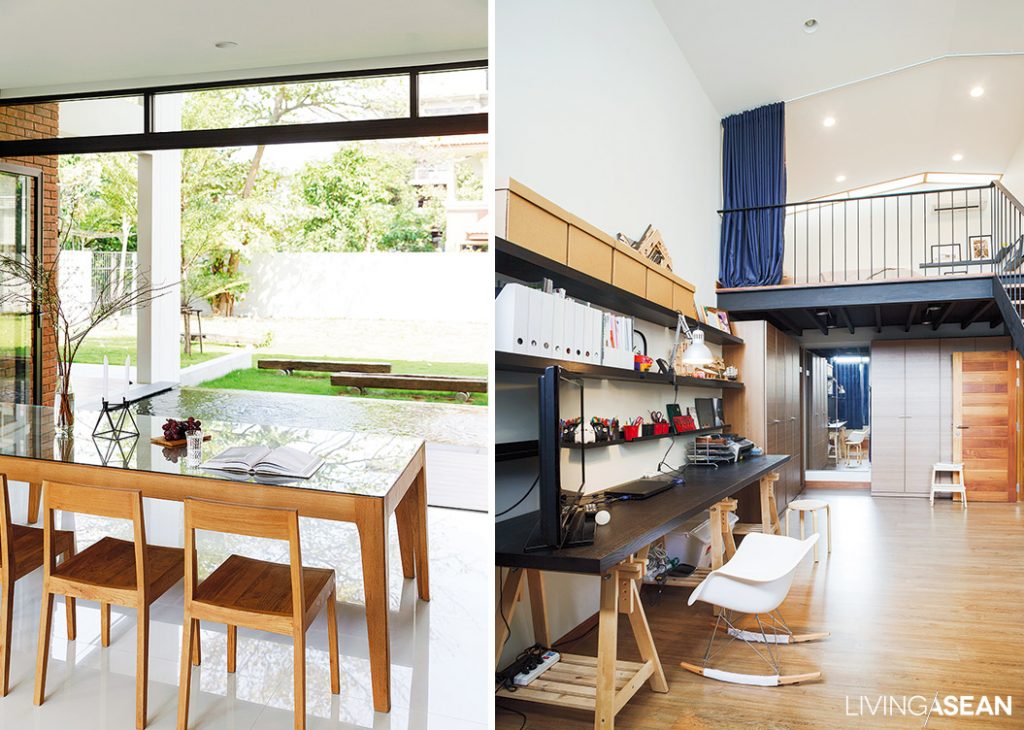
Open-back bookshelves contribute to an airy interior made for lounging, reading, and viewing pictures in the gallery.
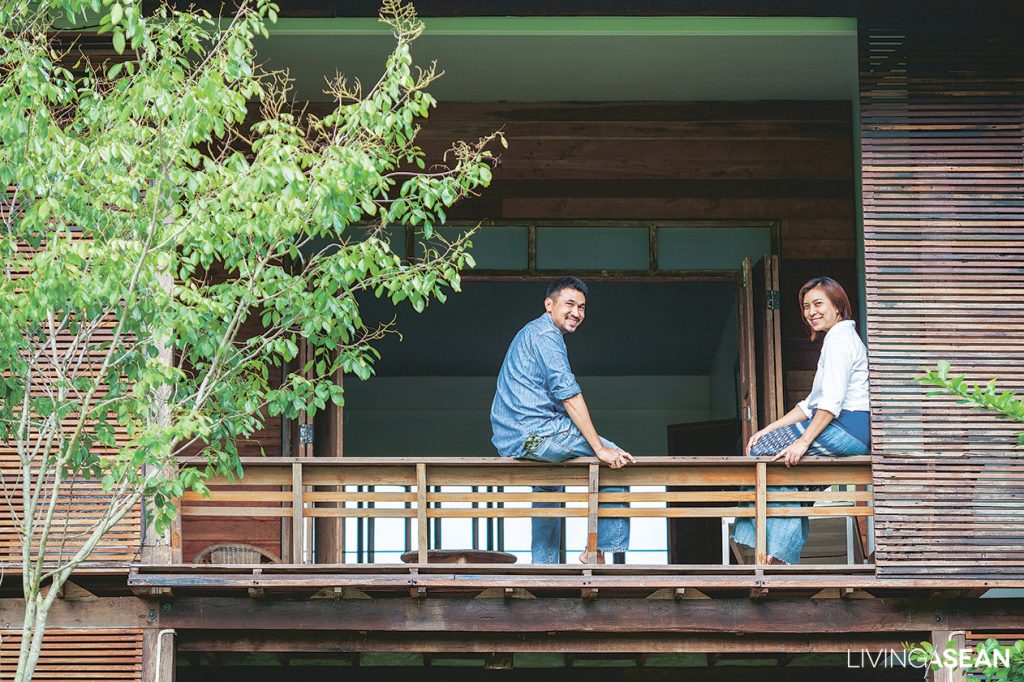
Anchan, the housedog, gave a welcome bark, followed by greetings from the mustached host, “Tom” Apichai Wangtragul. He introduced us to his better half, “Saa” Narawan Rajchasee Wangtragul, AKA the heart of the house. The Retro look of her Thai-style sarong matched the atmosphere of the home named “Good Old Days.”
“Back in Lampang we had a small coffee shop offering snacks and selling guitars. It was very warm there, so we started looking for a new home in good weather. We found one on Google, not far from where we wanted to build our first home in Chiang Mai. One day that piece of land was up for sale, and we were lucky to have bought it,” Saa said.
Tom was teaching draftsmanship courses in Lampang, when they met, and the rest is history.
In Chiangmai, he designed the new wooden house after first setting up a model to determine effects of different building orientations at various times of day. He kept track of amounts of sun and natural air circulation and used the information to aid in the design.
The result was a home that fit in well with its natural surroundings and weather conditions.
As he puts it, “The home facing west gets a full dose of afternoon sun. The glare can be felt, no doubt, but the trade-off is worth it.
Panoramic sunsets can be seen every day.” To solve the problem, he has put in moveable latticework, which reduces the sun’s harsh glare.
The kitchen counter boasts naked concrete finishes similar to those found in coffee shops.
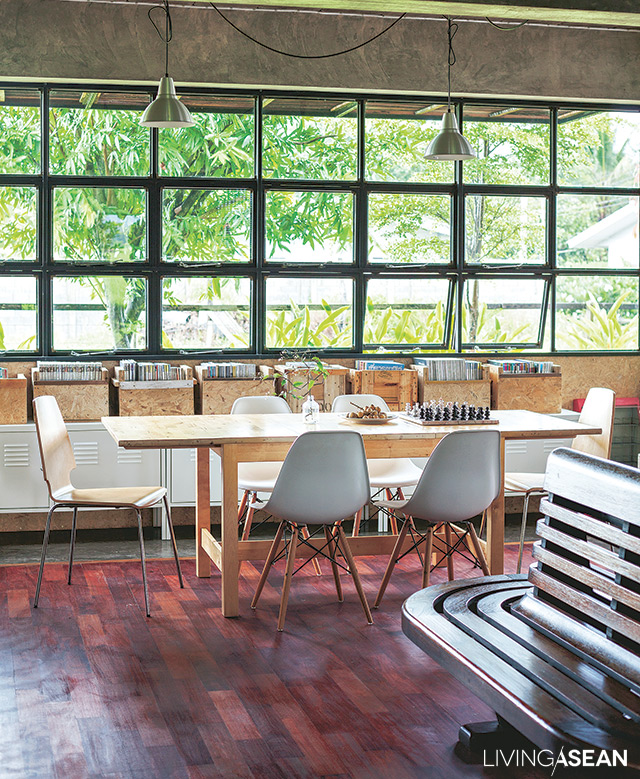
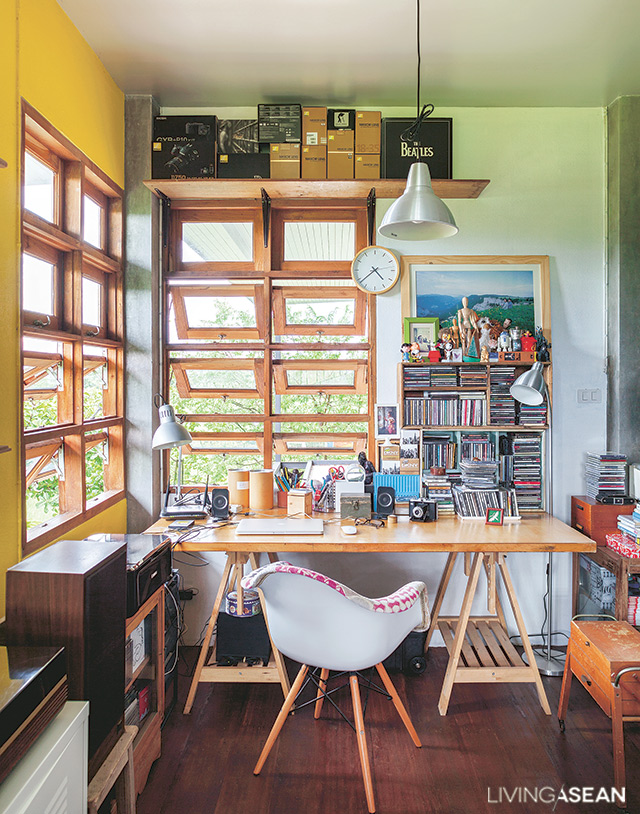
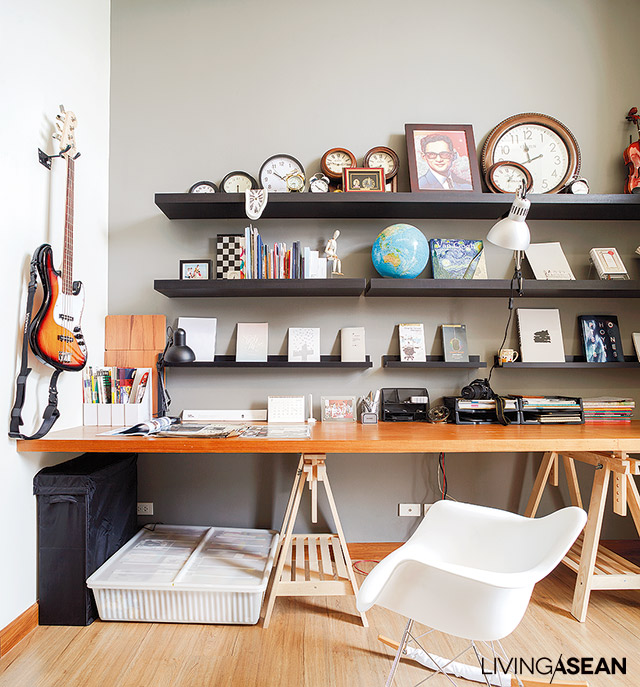
A draftsman’s desk sits by the window that opens to take in cool breezes and views of the surrounding landscape.
“I grew up in a wooden house on the water’s edge. I told him I wanted one with a shed roof made of corrugated sheets just like old times,” Saa recalled.
“Tom said that could not be done. So we built our new home using metal sheet roofing instead. I wanted doors with plantation shutters and places to showcase collectibles that we have cherished for a long time.”
Tom made sure his loved one got what she wanted. He searched and found reclaimed timber in Sanpatong and paired them with old wood imported from Lampang.
The timber supplies included Burma padauk wood, ironwood, and teak. The couple sought blessings for peace and prosperity before every piece was put to good use.
Apart from carpentry details, Tom is passionate about modern style with an emphasis on naked concrete finishes. Together they make the building feel light.
The interior living spaces are light and naturally ventilated, thanks to plenty of openings on all sides. Each function area is clearly defined with floating furniture for easy updates.
This design concept applies to the sofa in the living room and the dining table by the rear windows. The kitchen comes fully equipped, as their house becomes a home-stay destination.
The couple does everything in-house from selecting natural ingredients to preparing indigenous meals. It is attention to details and good health practice that keep customers coming back.
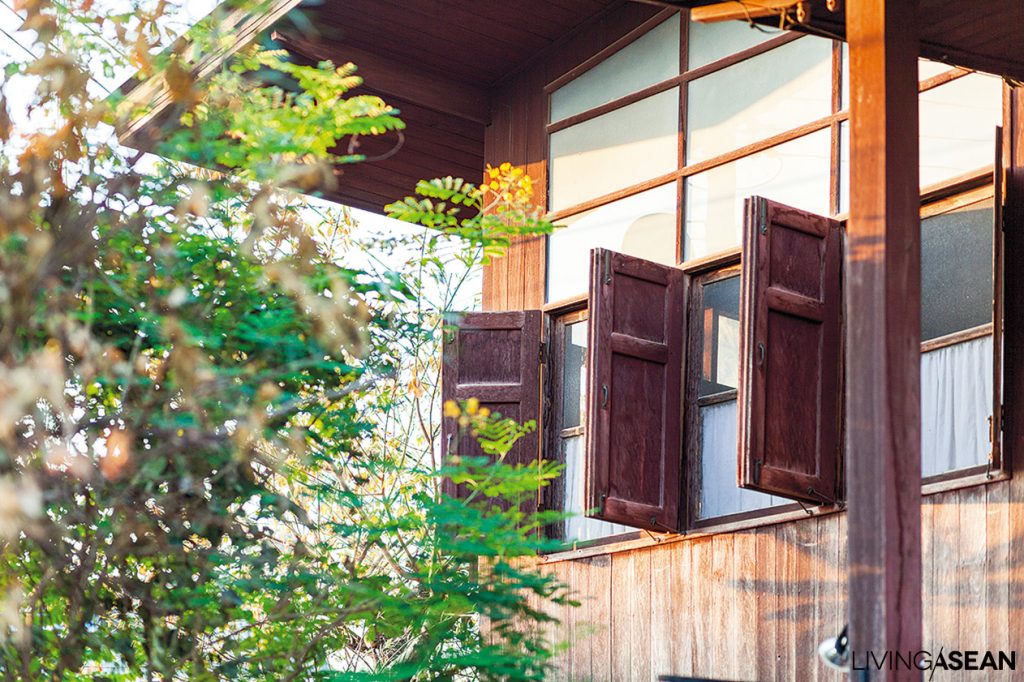
Tom’s hobby projects have been the source of many décor items.Triple-shutter design : In the Northern region, the window with three shutters in a row is generally preferred for cost effectiveness. The ingenious design needs only one latch to lock all three windows.
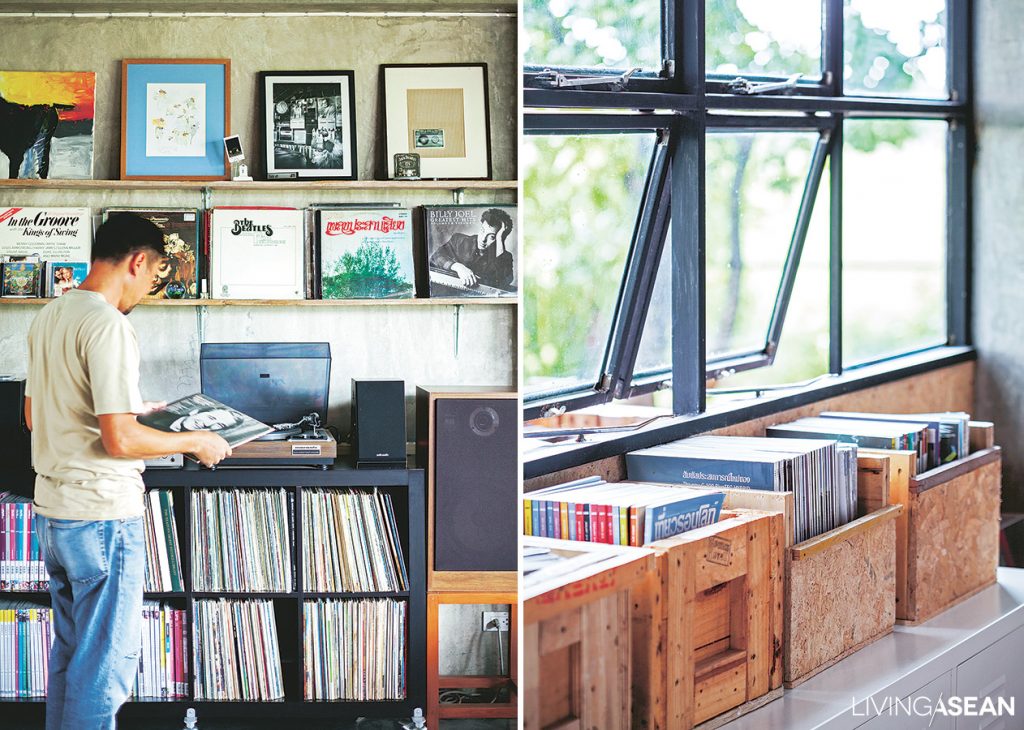
Tom keeps a collection of vinyl records for sentimental reasons. He likes listening to relaxing music on the old-fashioned phonograph while Saa cooks. Some of it is rare on this day and age. Here time goes by so slowly that it seems stuck in history.
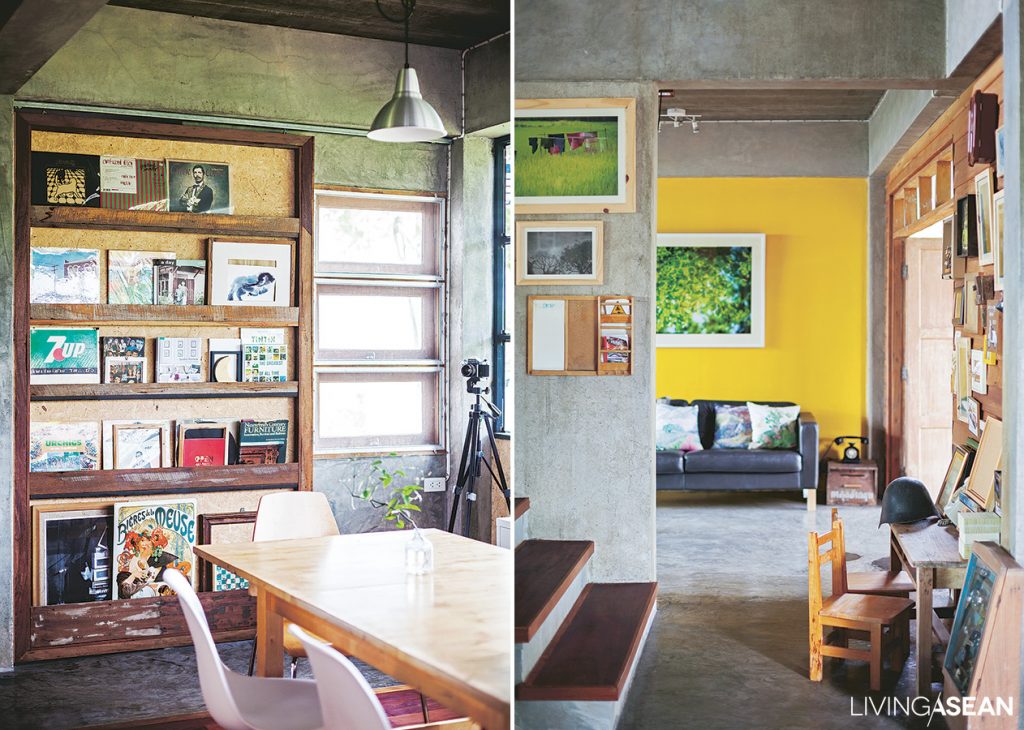
The floor plan features a flight of stairs made of concrete and wooden steps. Located in the center, it keeps the two bedrooms on the first floor a good distance apart for added privacy. There are cabinets where old books and other collectibles are neatly kept. Nearby stands a gallery made for lounging, reading, and viewing pictures on the wall.
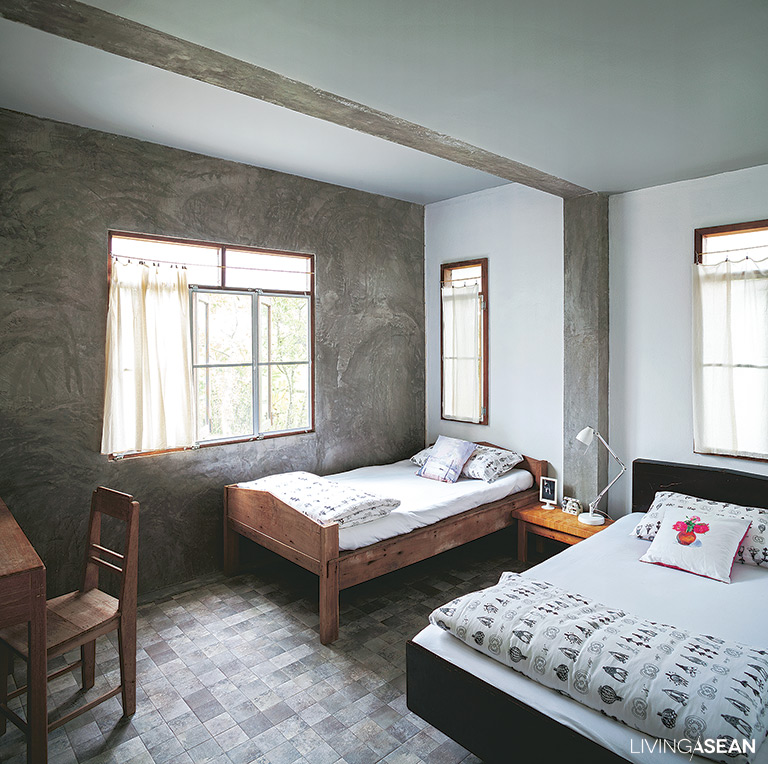
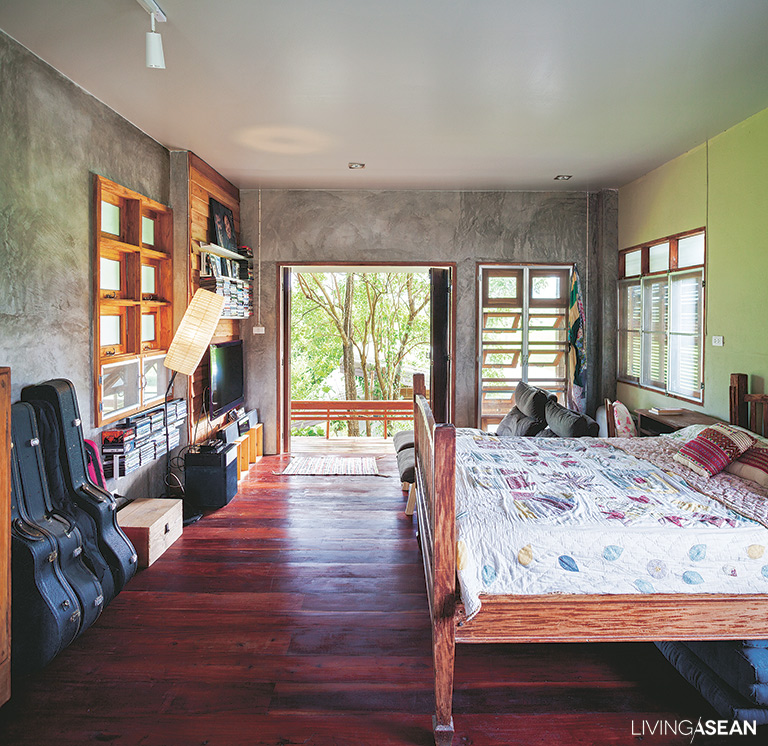
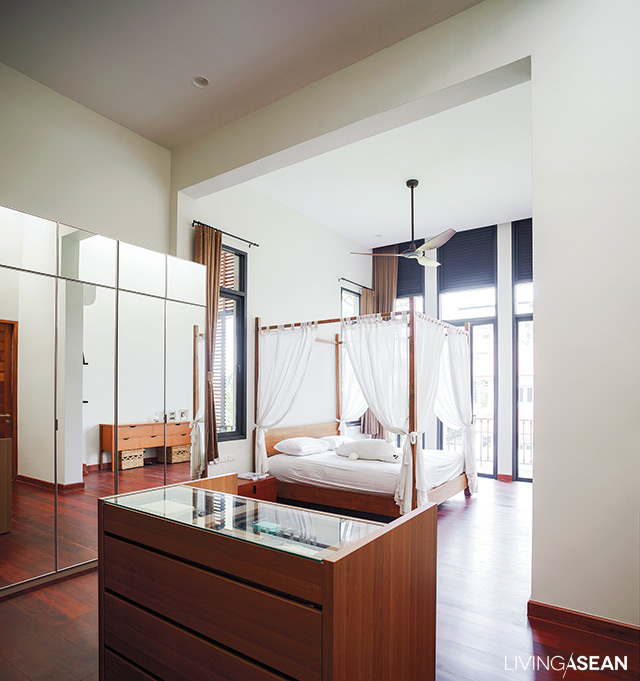
The second floor offers two good-sized bedrooms : one for guest accommodations, and the other for the couple’s exclusive use. There are antique beds in all of the bedrooms. Saa said she felt good about them knowing they came from good homes. She bought them direct from their previous owners. Between the two rooms stands an office space, where Tom spends time working at his draftsman desk. The workspace is bedecked with collectibles including old cameras and vinyl records.
As Saa puts it, “This is the wooden house that strikes the right balance for the two of us. It effectively chronicles our love story and journey through time. I am just happy being here.
“Chiangmai is such a delightful place, with canals, plenty of water, trees, and beautiful culture. During the period from November to February, our house becomes a home-stay destination.
Known as “Good Old Days,” the house has become a wholesome getaway for like-minded people. The service is not available during summer months, because we don’t use air conditioning. Time is well spent in the great outdoors.
/ Story: Wuthikorn Sut / English version: Peter Montalbano /
/ Photographs: Rithirong Chanthongsuk /
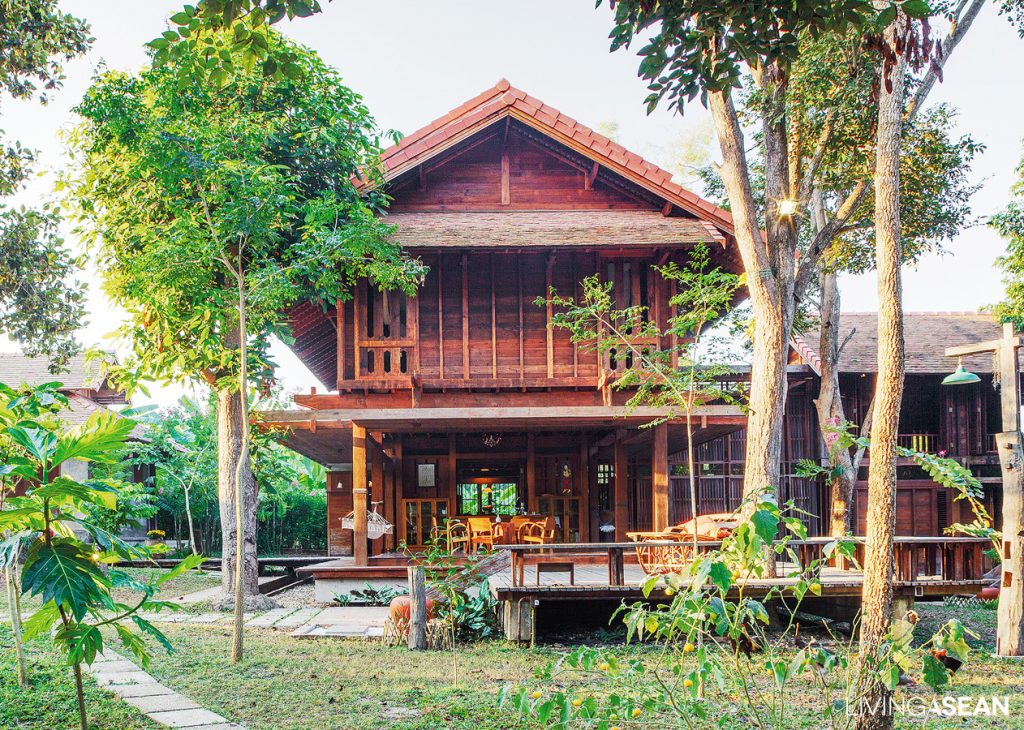
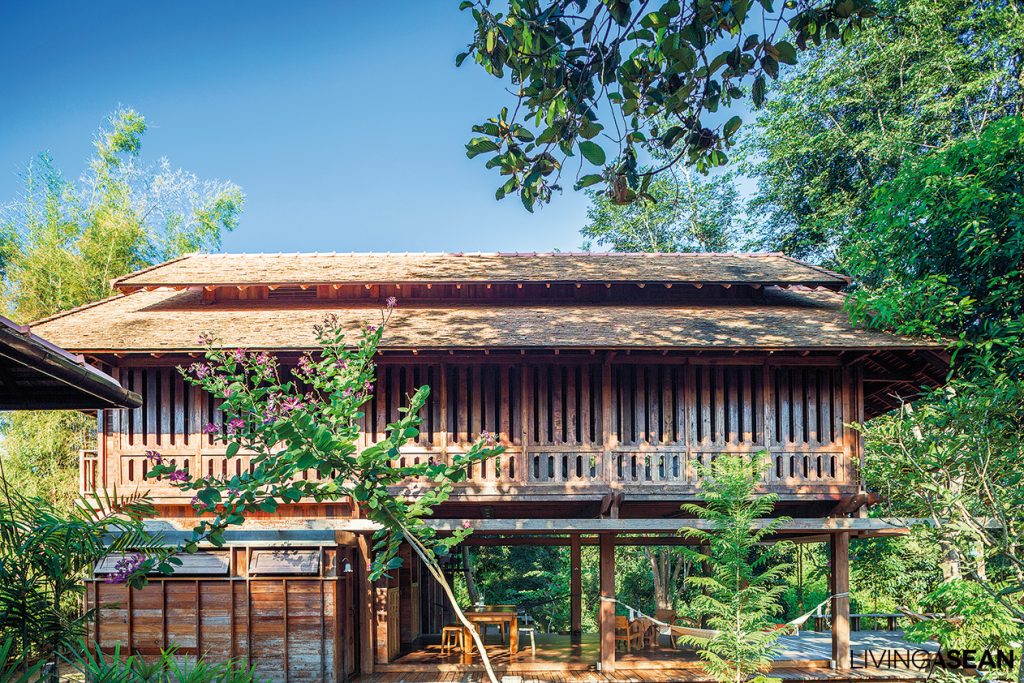
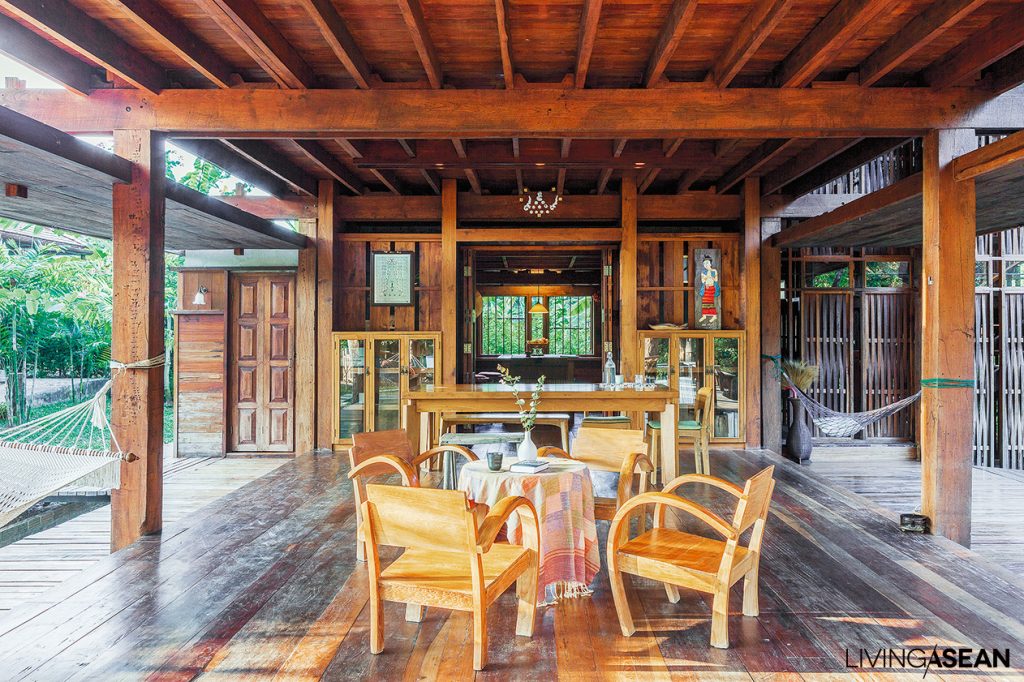
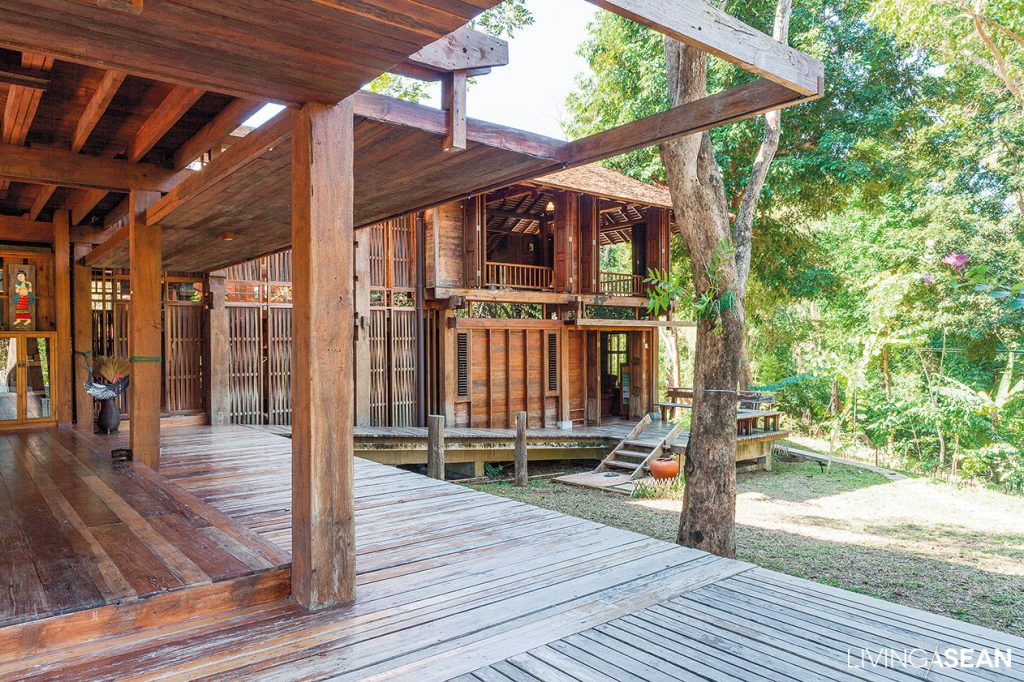
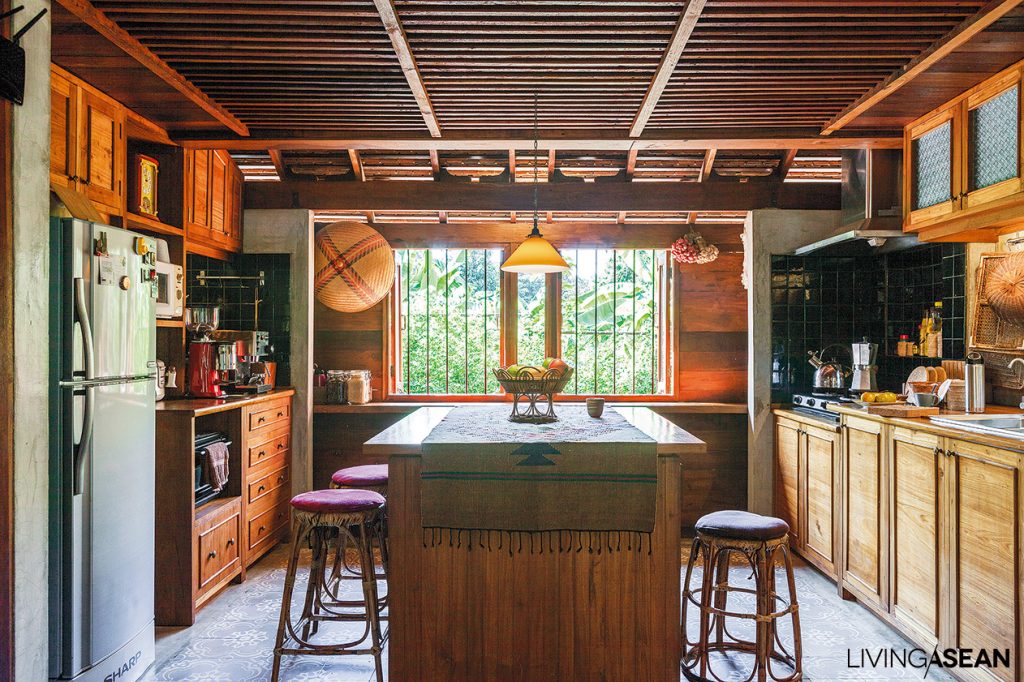
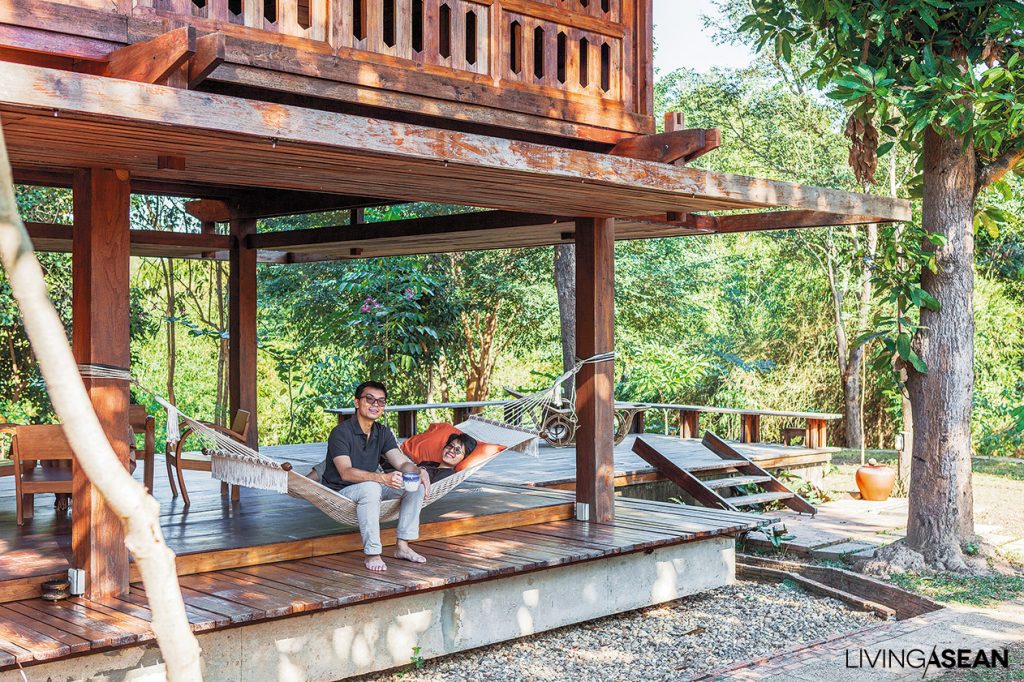
Looking back on former times for inspiration? Here’s a laid-back wooden home reminiscent of what life was like in Lanna, an ancient kingdom that’s present-day northern Thailand and vast swaths of countryside now part of Myanmar and Laos. As an expression of love for simple rural life, the homeowners named it “Tathata” in the vernacular of the region meaning “just the way it is”.
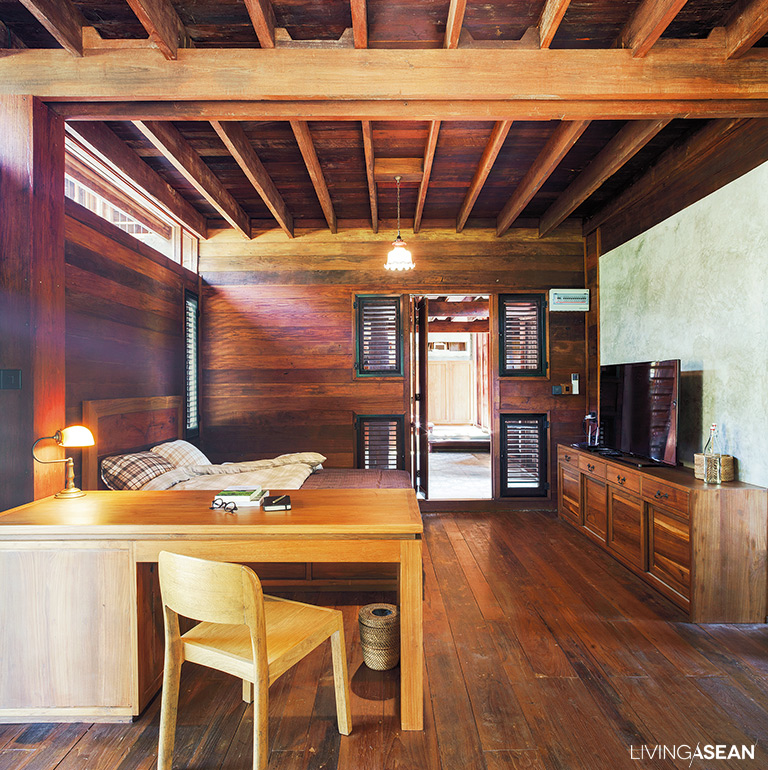
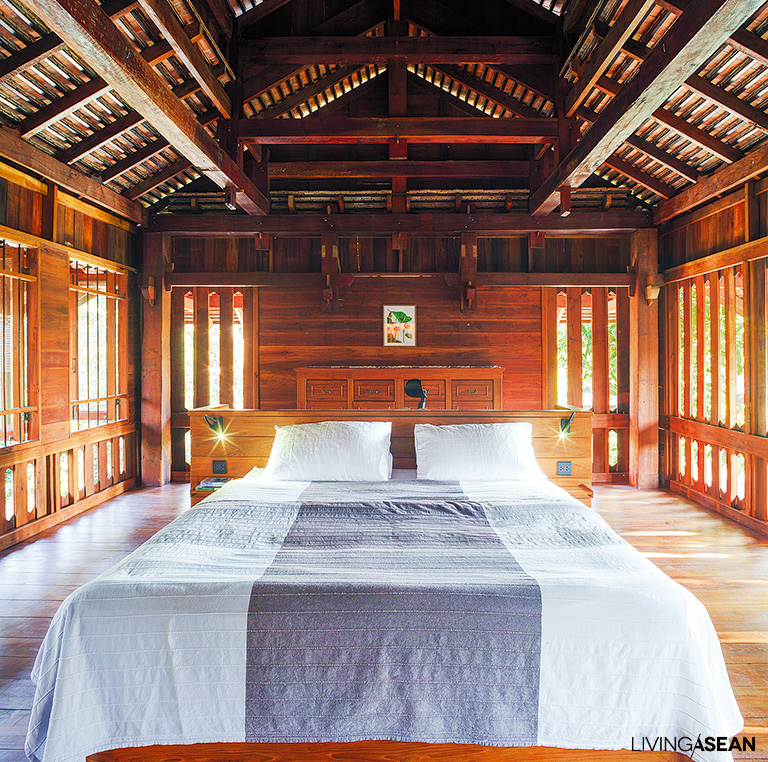
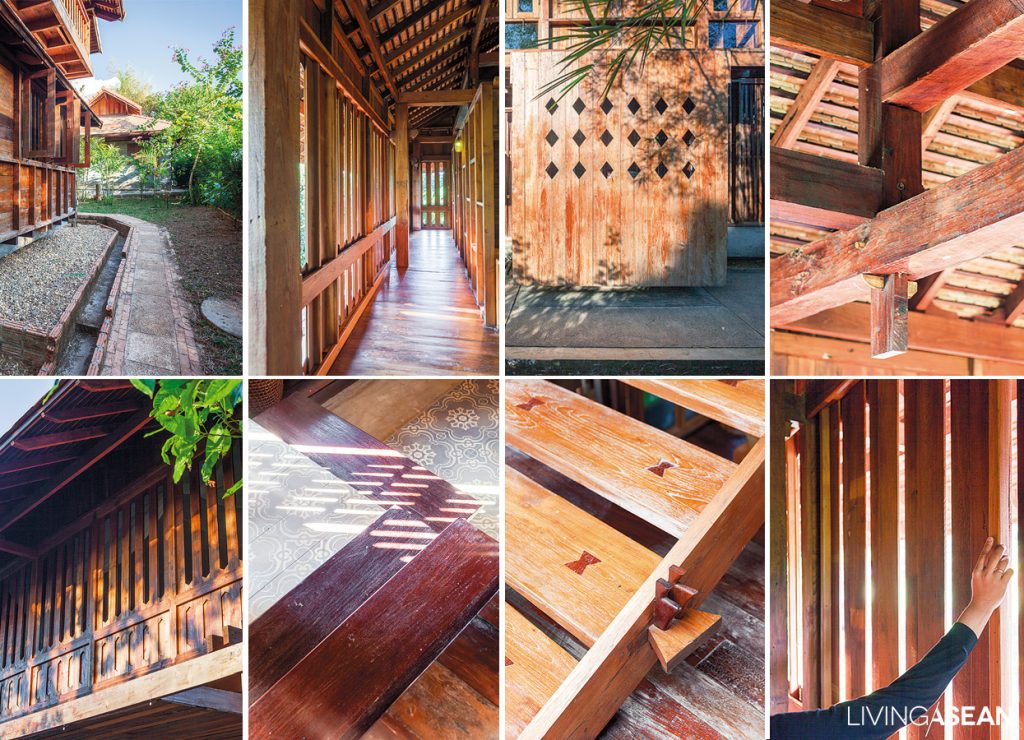
The house was built based on local traditions of the distant past. It has a pleasant, relaxed and chic open-concept space with a nice cool breeze blowing all day long through its exquisite form. Plus, harmonious lines and distinct finishes boast the charm of eco-friendly Lanna craftsmanship.
“We’re Bangkok people, but love the atmosphere and way of life here in Nan. After coming to work at Nan Hospital, we decided to live here and looked around for where to build until we finally found this property,” says Natthathon Kharaphongsathaphon, who owns the house with Jittraphon Khwamkhnueng.
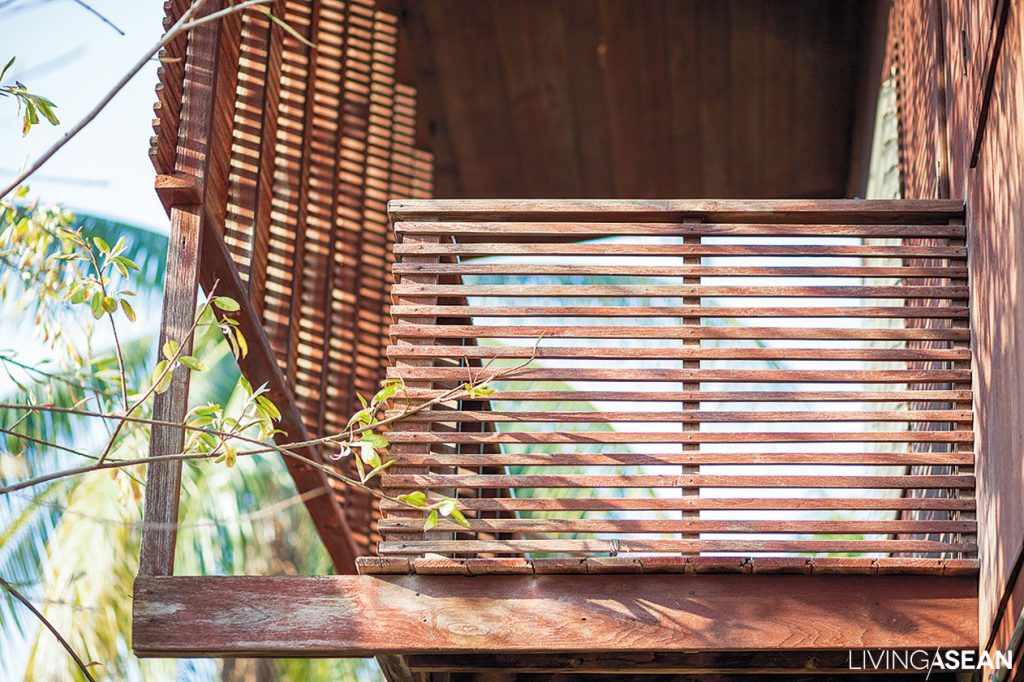
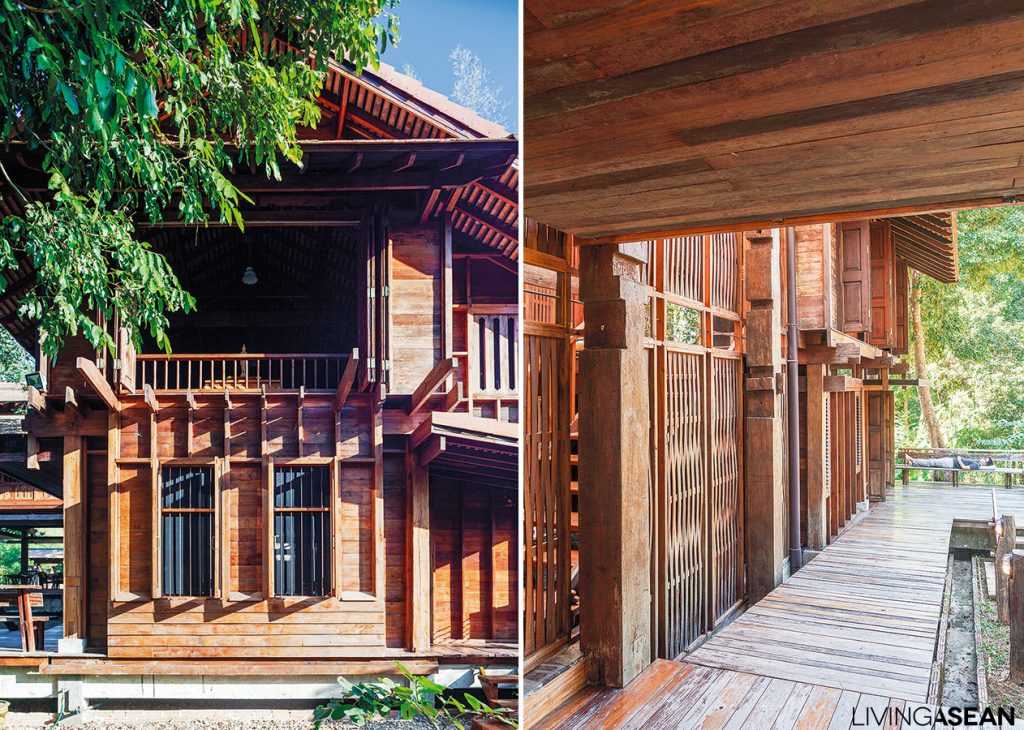
Double walls with alternating slats sliding open and closed to control airflow.
The house sits on a road convenient to Nan Hospital, in a quiet natural setting by the water’s edge. For design, the owners hired Nanthaphong Lertmaneethawisap, of Arsomsilp Community and Environmental Architect Co., Ltd. as the project’s architect.
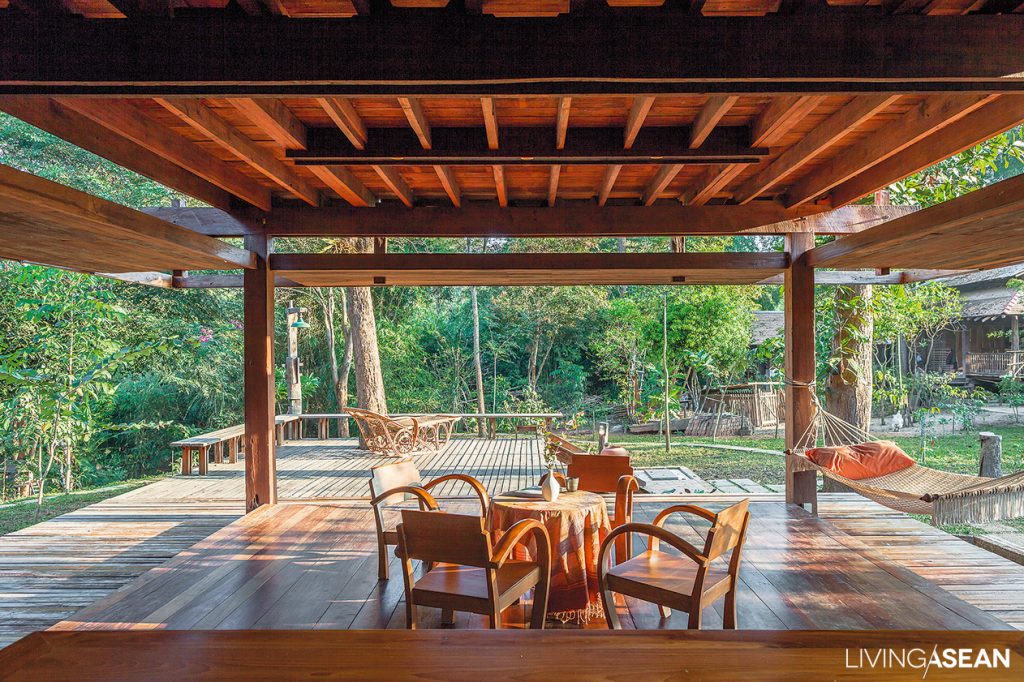
The “tai thun” (open underfloor space at ground level) acts as the guest reception area connected to the kitchen.A wooden porch connecting the father’s bedroom to the carport is designed to be wheelchair accessible when needed in the future.
The architect said, “The owners liked the cultural and artistic dimensions of life in Nan, as well as its traditional wooden architecture. This house is only a few kilometers from the city, but in a perfect natural setting, easy breezes blowing around the clock.
“From the beginning, the words “Little House in the Big Woods” popped into my head. The doctors and I agreed we should take special care of the plants on the property, and we managed to preserve all the trees.”
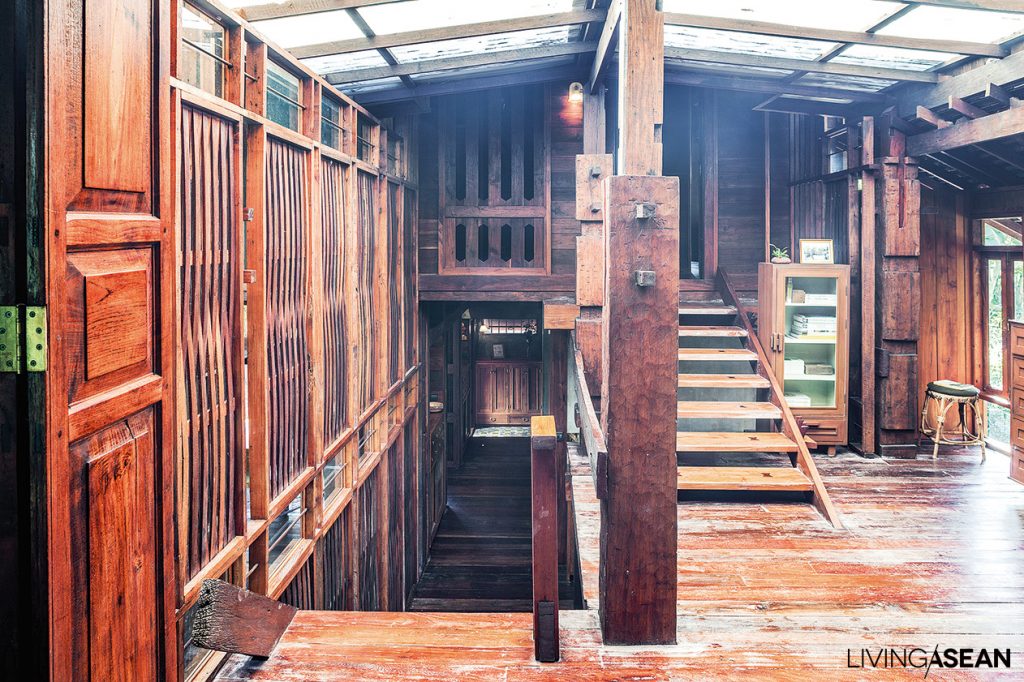
The homeowners wanted the new design to use carefully selected old wood in ways that would preserve traditional Lanna craftsmanship. So all materials were taken from five traditional houses around Nan Province. They had the imprints of time and a lot of colorful history among them.
The traditional open space beneath the house, or “tai thun,” was designed for receiving guests with a deck connecting it to the kitchen and other sections of the house. The area around the stairwell is open, so light comes in from above. Walking up, you first come to the altar room, then a living area, and furthest in, the bedrooms.
The stairwell connects all sections of the house.Compact bedroom ideas for father and mother.
“We tried to make the house airy and open while providing for privacy, safety, and a clear division of space according to use,” said Natthathon.
“Towards the end while supervising the work, I started to learn the craft techniques. I sawed wood, used a chisel, and sharpened bars myself. I even did some of the kind of self-reliant agriculture everyone used to do, raising ducks, geese, and chickens, even growing a vegetable garden.
“Doing this was a revelation: it was entertaining! And it all takes physical effort, so there’s no need to go to the gym.”
All told, it’s a home that successfully applies traditional Lanna themes to present-day life. It’s a dream home that has become a reality in the natural environment of Nan, somehow seeming ordinary while being as beautiful a home as we’ve seen.
Natthathon Kharaphongsathaphon and Jittraphon Khwamkhnueng with their dream Lanna wooden home.
/ Story: Patharasiri / English version: Peter Bontalbano /
/ Photographs: Soopakorn Srisakul /
It’s right in the middle of the city near a BTS SkyTrain station, but open to breezes and sunshine. This modern Tropical house is as cool and comfy as a country resort. It’s home to a multigenerational household including Mom and Dad and aging Grandma and Grandpa. Puchong Sathiraphipatkul, the architect who designed the renovation of this old family home, is the third-generation owner.
Open-concept design facilitates natural ventilation that lets fresh air enter on one side and out another.
“The clock’s ticking. How much time do we have?” Puchong was heard asking himself. He could still recall going about his busy schedules during his formative years that has had a profound influence on his professional development.
The old family home stands surrounded by tall buildings. Time flies. Going back a few years, his mother and father, grandpa and grandma were rapidly aging, so in just his third year of architectural studies he decided to take it on as a project, and his first customer was . . . his mother!
“I was thinking time was not waiting for us, so with my studies not finished and without much experience, I fell back on advice from teachers and older professionals.”
Puchong, now an architect with A49 House Design Co., Ltd., a Bangkok-based architectural practice, said that the challenge posed by his super-important first customer was to create what he called a “Sukhumvit-style” house, which had formerly been a family residence in the vibrant Sukhumvit neighborhood.
The reception hall and a set of stairs with teakwood treads are to the south, for distance from the sun’s heat.
The house brings many fond memories of his mother as a discerning client. “Mom is Mom. She’s the ‘decider’, always has to be pleased in every respect,” Puchong added.
“In two years of professional life since then I haven’t had such a difficult customer. Back then I was constantly visiting stores and houses around Sukhumvit to get ideas on space configurations to suit our family lifestyle.”
The building surface is open, with glass walls, and latticework to filter the light.
They were lucky to get this huge plot of land in a short, quiet alley and near the BTS SkyTrain station. Taking sun and wind direction into consideration, Puchong faced the house north, with narrow sides to the east and west making space for a big yard. He also used landfill to raise the house 150 cm height for a better view.
The house faces north: wide, spacious, light and airy.
“Starting with that trendy “Sukhumvit” theme, next comes “comfort design,” then “space design” for individual and common spaces and ‘transitional’ areas.” The architect of his own house shows us the outside fence, the carport, the walkway all around leading up to the reception hall and smaller spots, then up to the common areas and bedrooms above that.
“The home is fundamentally Tropical Asian; its heart is open to sun and wind. It’s in the form of two 600-square-meter blocks one atop the other, facing north onto the garden. The southern sun mostly falls on walkways, staircases, and outside balconies,” added Puchong.
“The central ceiling is high, for good circulation. The west side has a thick concrete wall for sun protection. It’s a ‘passive’ design: architecture in harmony with nature, no wasted budget on technologies of comfort.”
Mom and Dad’s master bedroom, with an open, high ceiling, features Earth’s own custom-designed teak furniture.
He ended by saying he couldn’t have perfected this modern Tropical home if it hadn’t been for the great contractors, relatives of a close friend, whose exquisite craftsmanship really shows.
“Others may see this house as a little off-beat, but it completely fits our family style, in a balanced way. Sure works for me.”
In many spots there’s a “transitional space” area that makes things more intimate.
/ Story: Skiixy / English version: Peter Montalbano /
/ Photographs: Rithirong Chanthongsuk /
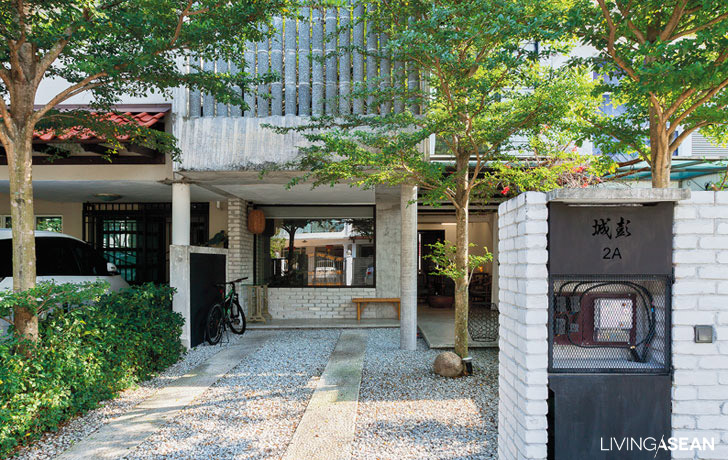
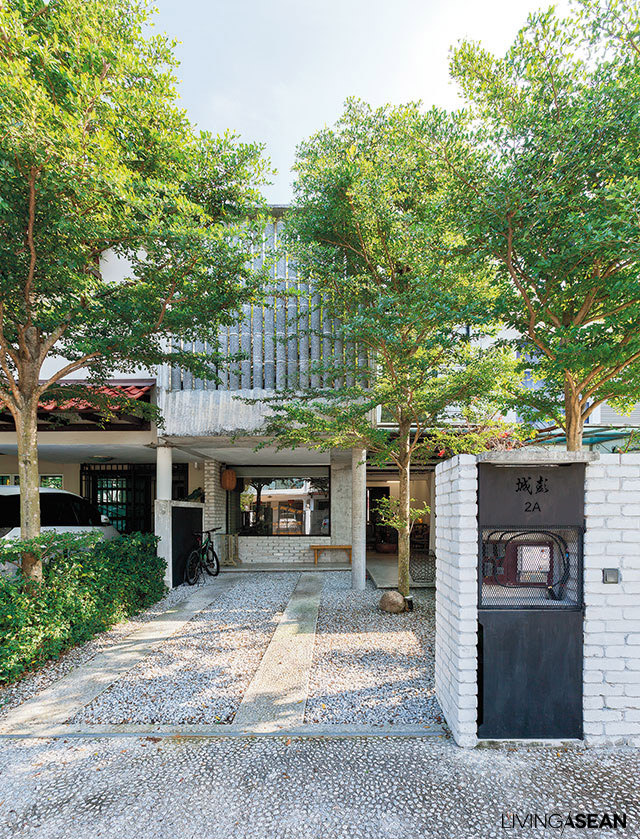
This beautiful brick house belongs to a family of four in Ampang Jaya, a town to the east of Malaysia’s capital Kuala Lumpur. The design work and use of materials such as bamboo and old brick taken from a pre-WWII colonial-style house make it special.
Childhood memories are fragments of the past that many of us can bring back to life. In her childhood, Mrs. Liew Jun Keong was entranced by house design. And in conversation with Studio Bikin’s architect Ms. Farah Azizan, her memories bubbled out, creating a happy chemistry of inspiration between the homeowner and the architect, with the end result of this gorgeous white brick house.
The kitchen counter with large pressed bamboo cylinder mortared in place and smoothed with a trowel.
Mrs. Liew said, “At first, I just had the thought I liked houses with a resort atmosphere and the sort of peace and quiet we used to find on holiday to Bali, Bangkok, or Singapore, experiencing nature in a more original state.
“Then I thought of the house we lived in then, in an area with a lot of unfinished concrete surfaces, and so told the designer I’d like a modern-style concrete house, but with plants and trees all around.
“By modern, I didn’t mean perfect, but featuring the natural surfaces of construction materials that have their own types of beauty.”
The reception parlor with dark wood furniture and vintage cloth coverings in muted tones of blue and gray.[Left] In the back of the house is a place to take a nap. [Right] The kitchen connects back to that nap space. Wood latticework helps with ventilation.A Chinese devotional altar roomThe master bathroom
After a good talk, the architect and the homeowner found their ideas really resonated with each other. Ms. Azizan also had pleasant surprises for Mrs. Liew. She came up with the materials handpicked specifically for this house.
“I was really impressed with Farah’s detailed choice of materials. I tend to think of the normal uses for bamboo, for instance, as for pipes, but she used it as a decorative façade for the house,” said Mrs Liew.
“Next, it was this batch of white brick, which has an extraordinary history, coming from the demolition of a colonial-style residence built before World War II.
“The brick had no coloring when she bought it. We were lucky to get this brick, as it was the first batch. Others looking at this may first notice it has blemishes or that the sizes are irregular, but it’s iconic material for that period, with a great value, and absolutely perfect for our family.”
The entire house is painted white, except for sections of bare cement. There isn’t a lot of interior furnishing and decoration, and furniture is limited to what is necessary.
Mrs. Liew values simplicity and doesn’t care for fancy interior décor. She said that she hadn’t yet found decorative work with the kind of natural beauty she cared for.
The homeowner added enthusiastically: “I’d never dreamed of living in a place where sunlight reached into the center of the house, which is something I now really appreciate.
“And the bricks used in the construction have blemishes, but each imperfection somehow adds to the perfection of the whole.”
/ Story: Wuthikorn Suthiapa / English version: Peter Montalbano /
/ Photographs: Sitthisak Namkham /
This tropical waterside house brings back memories of Thai life as it was along Khlong Samsen (Samsen canal) in bygone times. From the outside, it looks straightforward and contemporary, but inside is a fascinating mix of antiques from the owners’ collections.
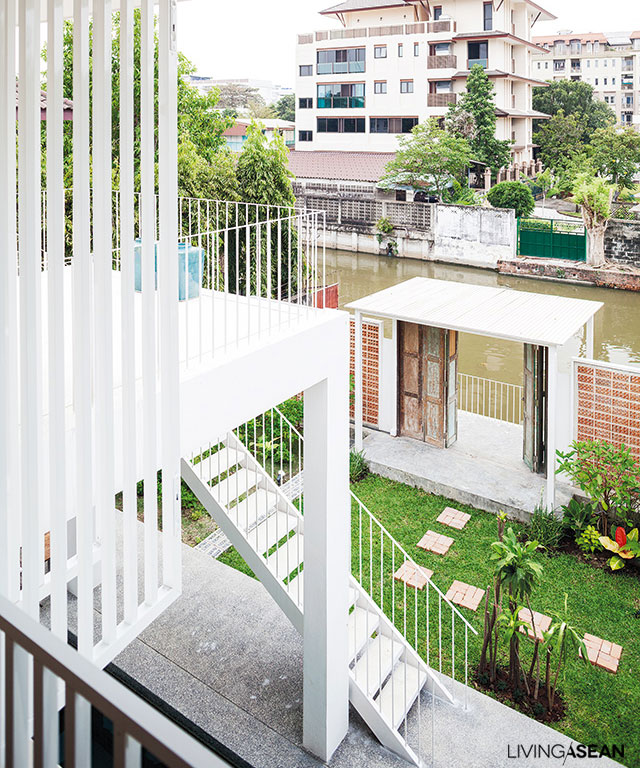
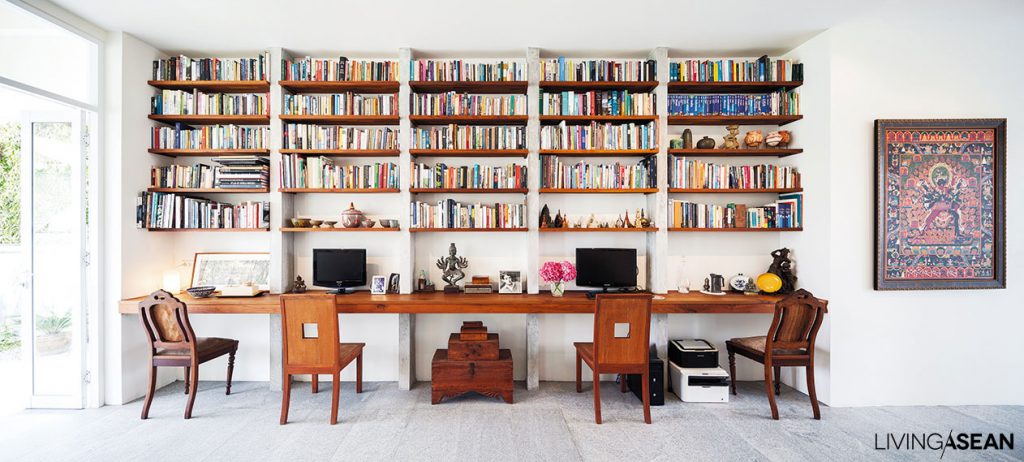
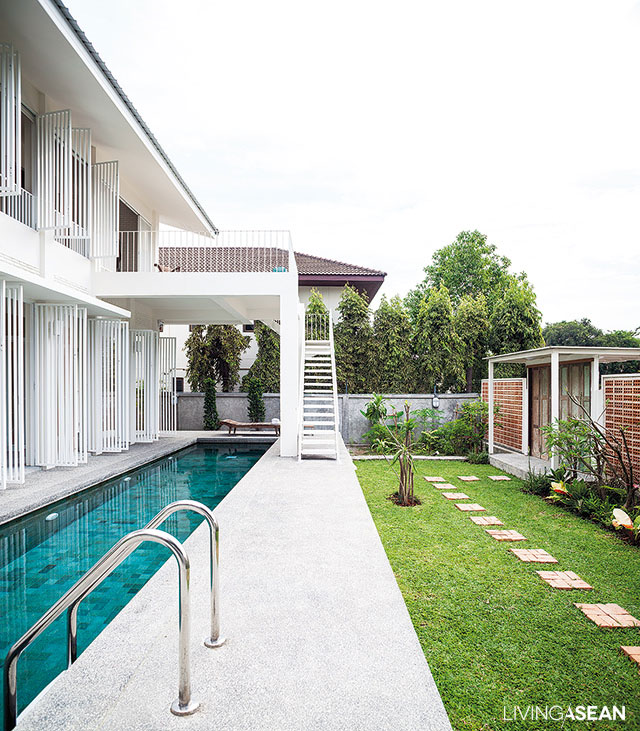
Outer stair, up from the pool to the second-floor balconyPerforated fence with wind baffles for good air circulation within the propertyBlocks with 1-inch spaces to control fresh air coming into the houseWork room with a library design
To match the Thai climate, Associate Professor Dr Tonkao Panin designed this house in a tropical style.
Although it has a contemporary look, the tropical waterside house contains a mix of antiques and collectibles belonging to owners Kajorn Tanaphaet and Eugene Kroon. A major design challenge for Dr Tonkao was to make old and new fit well together.
Swimming pool, designed as to appear continuous with the khlong (canal) outside
“My requirements are simply stated: 1. I don’t want luxury. 2. I want high ceilings, and 3. Air conditioning should be minimal. Tonkhao’s proportional design successfully connects the entire property: balcony, reception parlor, reading room, down through the kitchen and out to the swimming pool and pier.
“There are a lot of reasons I’m pleased with this location: it’s at the end of the soi, quiet and peaceful, one side opens onto Khlong Samsen, and there’s space in front for a nice garden.
“I bought the place some time before I ran across a house designed by Tonkao in a book I was reading and managed to get him to come design this one.
“As you can see, the end result is a good-sized house with a great style,” says Kajorn.
The design of this tropical waterside house took 8 months, and construction an additional year.
“We did it little by little, along the way discovering things we liked in the detail suggested by the word ‘house.’ Here is a mixture of many things: some sections come from Eugene and me, some from Tonkao, and there are things the craftsmen suggested as we chatted during construction.”
Aside from the remarkable style and the great number of owner-collected antiques and collected artifacts, another point of interest is the unusual transverse placement of the house, set crosswise on the property.
“Kajorn wanted to have the house right on the water,” explains Professor Tonkhao, “and orienting the house this way lets it catch the constant breeze from the lawn out to the khlong.”
So this tropical waterside house has permanent natural ventilation. “Even though the design is straightforward, we want it to create a feeling somewhere between being inside and outside, a tropical feeling.
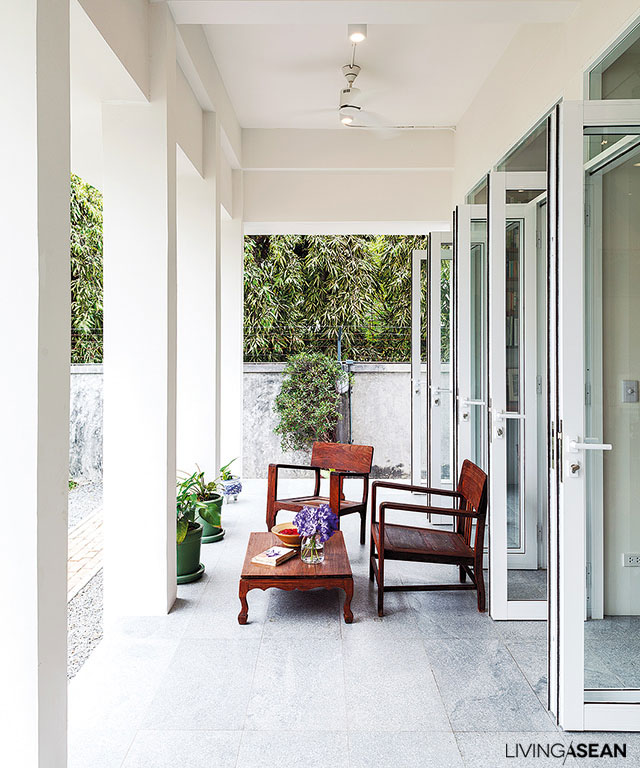
“The house is designed so it can fully open up to the air from terrace and doorways, that all can be left open. At the same time, balconies and doors block the direct sun from entering the building, creating different levels of sunshine and shade inside and out.”
Even in the late afternoon, it’s still shady and cool. The patio has a long porch deck reminiscent of an “arcade,” the façade of a Sino-Portuguese-style house.
There’s a balcony door which can be opened vertically as a sunshade, a similar design to a Thai-style “baan krathung” pop-up window.
Features such as this help create an amazing sense of comfort for a Bangkok house.
Owner: Kajorn Tanaphaet and Eugene Kroon
Architect: Reserch Studio Panin by Associate Professor Dr Tonkao Panin & Thanakarn Mokkhasamit
/ Story: Wuthikorn Sut / English version: Bob Pitakwong /
/ Photographs: Soopakorn Srisakul /
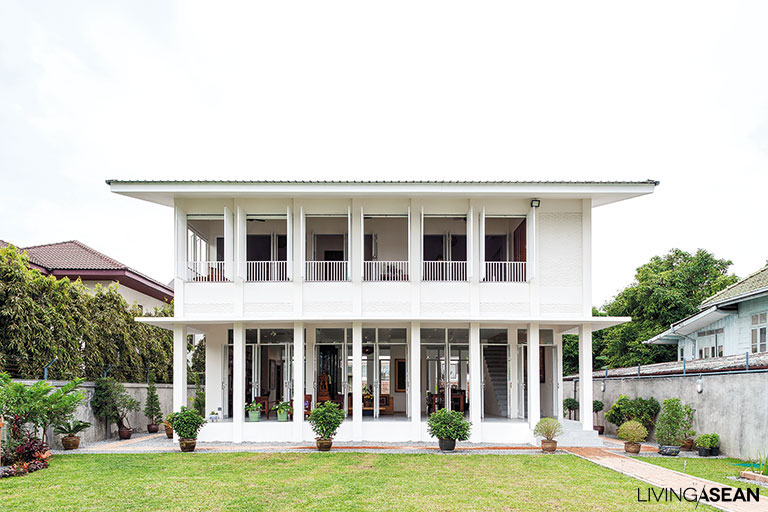
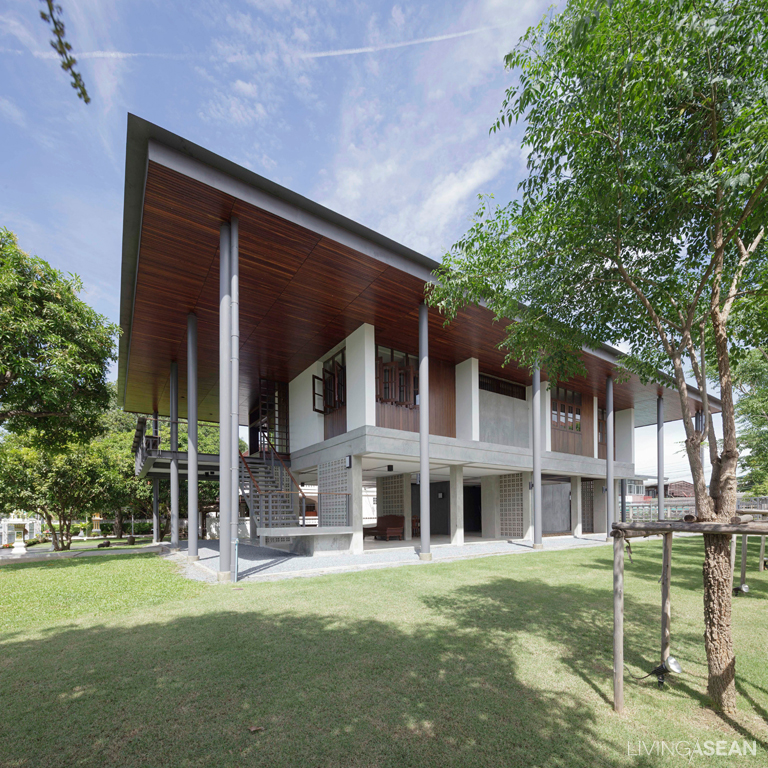
Looking anything but traditional, this hybrid steel-concrete home boasts a beautiful open-concept space. By design, it creates the light and airy ambience symbolic of the house on stilts unique to Southeast Asia in former times.
The owner’s beloved traditional-style wooden home was damaged by massive flooding that inundated much of Thailand’s Central Plains in 2011. But love never dies. She had the old house torn down to make room for a new one. The result was a hybrid steel-concrete home with all the charm and character of traditional Thai-style residential architecture.
“She requested stilt house design with three bedrooms,” said Pises Isarangkool Na Ayutthaya, one of the architects on the team. “Much of the timber was recycled from the old house and put to good use in the new, and she didn’t need air conditioning.”
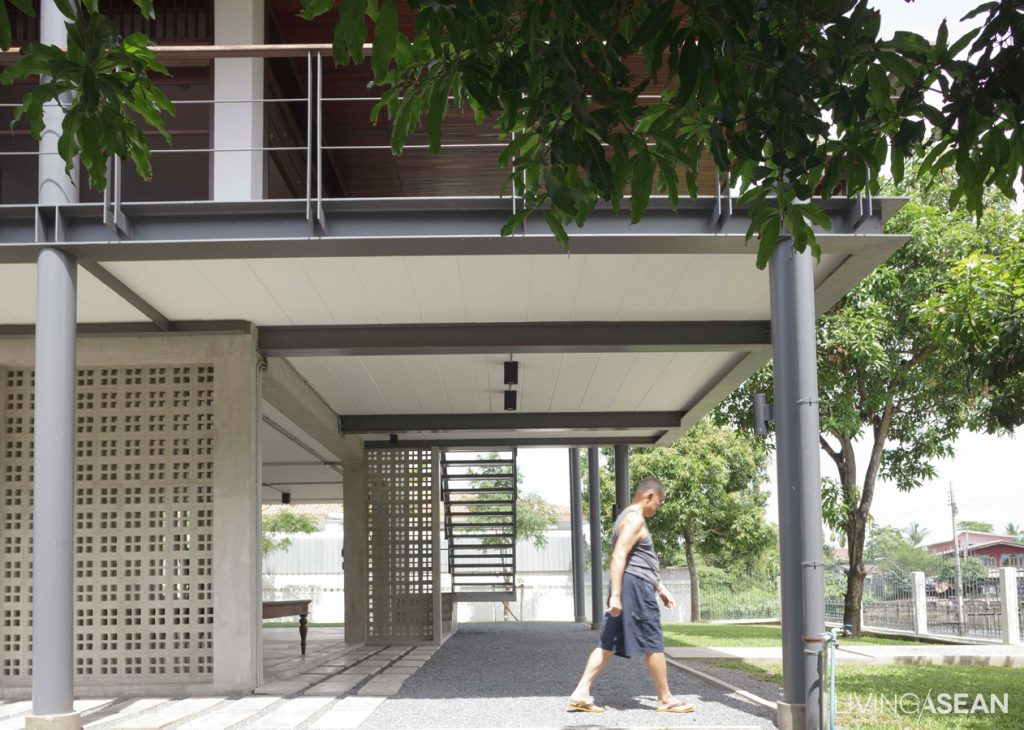
To fulfill the homeowner’s request, the team of architects came up with a house-on-stilts design with extended eaves for sun and rain protection. It was built of a mix of concrete, steel beams and connections strengthened by steel framing for durability. In the meantime, correct building orientation allowed the new home to reap the full health benefits from cool breezes blowing in all day from a nearby canal.
Generous wall openings allow plenty of natural daylight and fresh outdoor air into the home. They include sliding doors and windows along the exterior walls facing the nearby waterway.
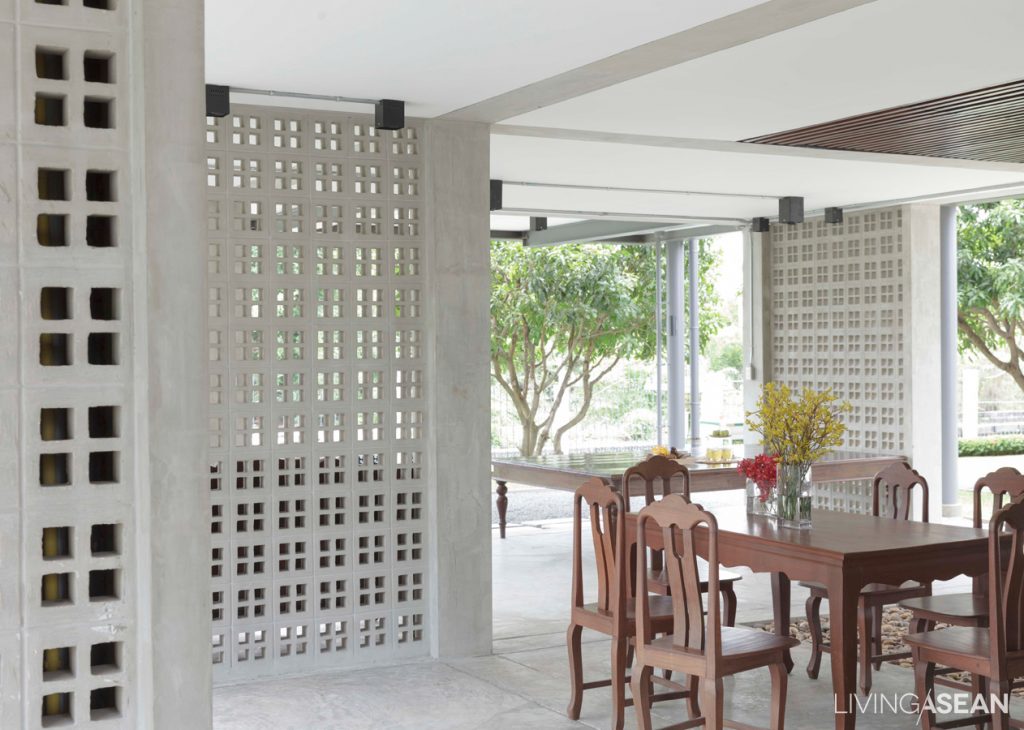
To create cross ventilation in the home, air vents are installed on the opposite side to exhaust the warm air, a passive design strategy that keeps the interior cool and dry. In doing so, they were able to eliminate the need for mechanical air conditioning entirely.
Open air vents designed to exhaust the warm air, thereby keeping the interior space cool and dry.Door panels recycled from the old house find a new purpose as cabinet doors and shelves used for storage.
To ensure nothing goes to waste, timber and other building materials left over from the old house were adapted for reuse in new purposes, such as ceiling panels, windows, handrails, and benches, even kitchen cupboards.
Reclaimed timber worn by exposure to the weather added vintage appeal to the home. It also served as a sentimental reminder of the old house that had been the family residence for many years before the big flood hit in 2011.
From the outside, the new house may look anything but traditional. But inside, it’s an entirely different story. The interior calls to the mind the image of the traditional house on stilts in the past, a place of residence thoughtfully devised to fit the Tropical climate. Plus, it’s well positioned to maximize certain aspects of the natural surroundings. And the result of all this: a beautiful home with curb appeal and a panorama of the lush landscape and nearby waterway.
Architect: Pises Isarangkool Na Ayutthaya, Itirit Hatairatana
/ Story: Samutcha Viraporn / English version: Bob Pitakwong /
/ Photographs: Quang Dam /
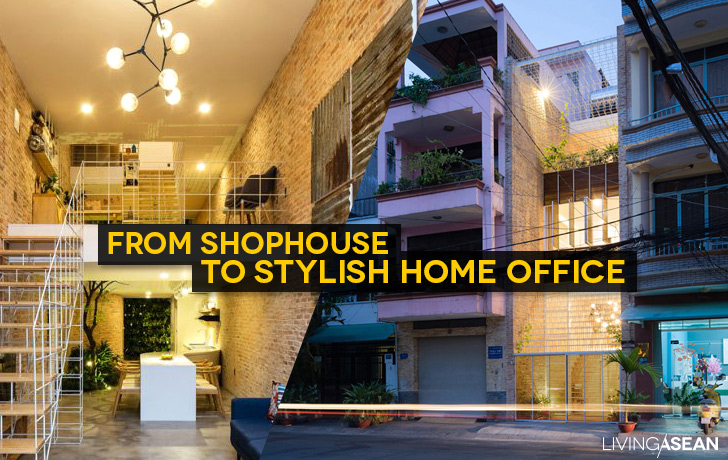
Home offices are trendy nowadays. Given thoughtful planning, a dull shophouse can transform into a fashionable dwelling and place of business. The results are illustrated in this home office that looks to be one of the trendiest in Ho Chi Minh City.
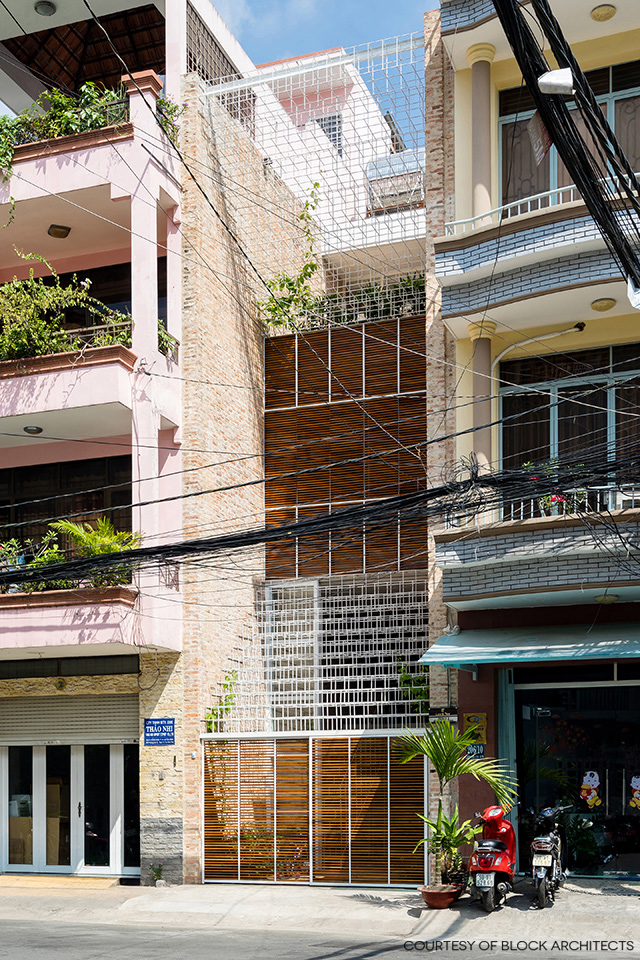
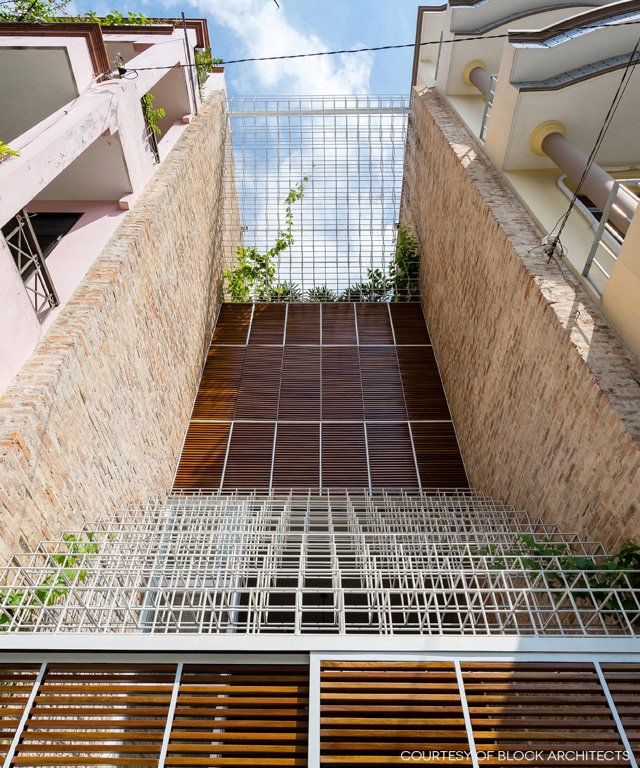
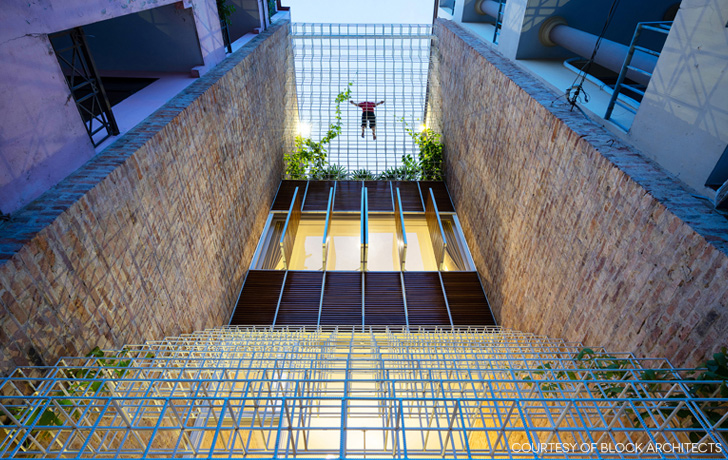
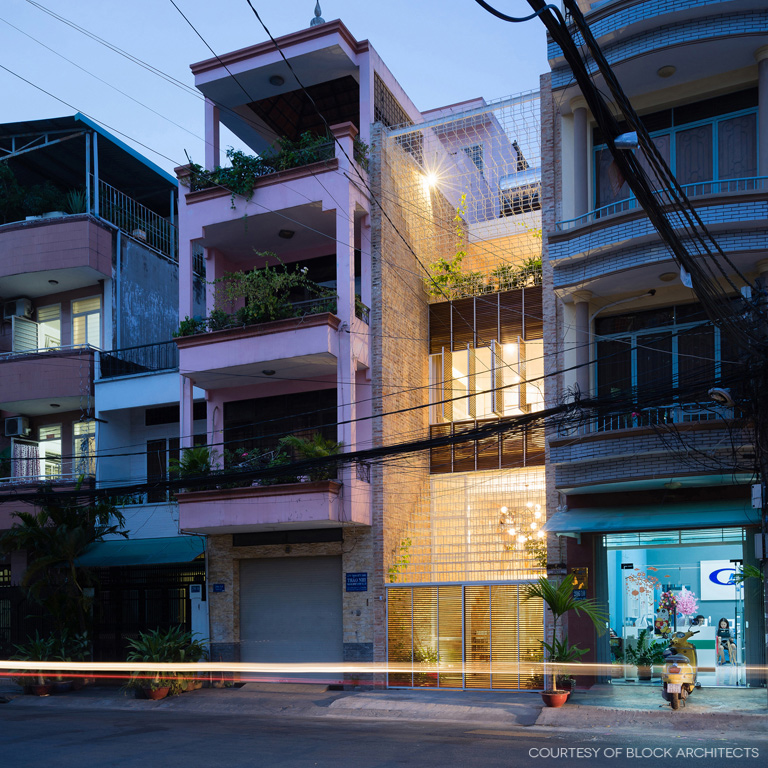
The new design integrates a modern living space and a home office with a factory producing handcrafted leather goods. The house’s front façade is filled up with elaborate structural rod systems reminiscent of a giant labyrinth of beautiful needlework, albeit built of brick and steel.
It’s only recently that a homeowner couple acquired this downtown retail space and later decided to give it a complete makeover. “This house means everything to us because it’s the fruit of constant efforts to pursue our dreams,” said the young couple with an active lifestyle.
“For a product to be successful, say a handbag, it takes many processes involving fastidious needlework,” said the owners comparing their manufacturing job to that of the architect.
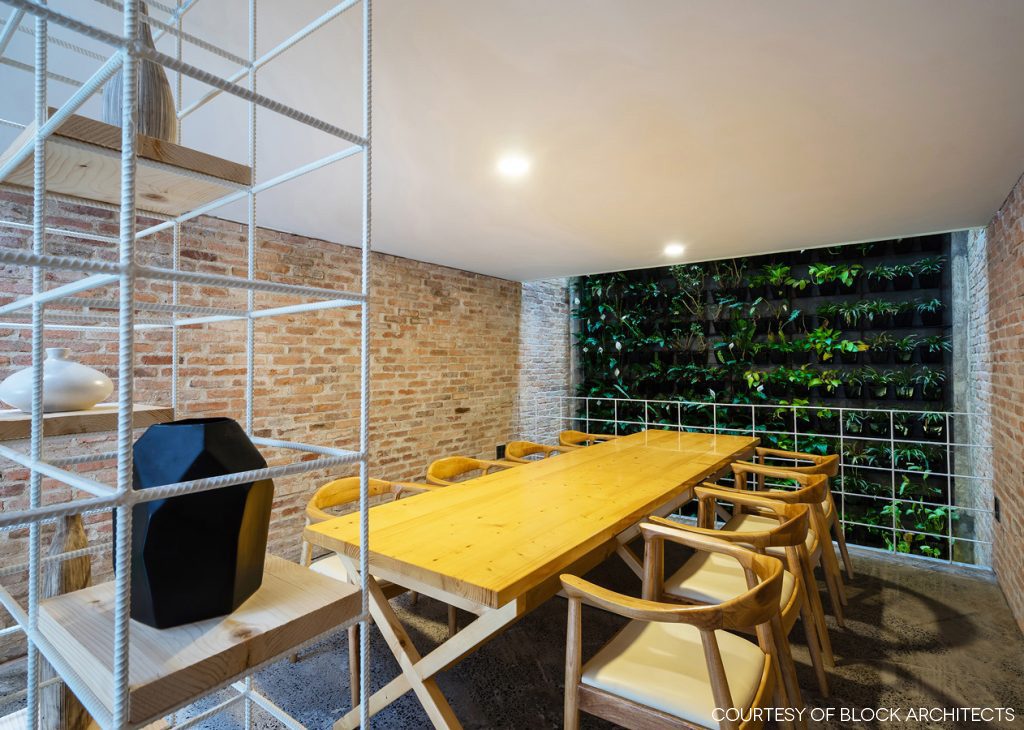
“Like meticulous craftsmen, the architect carefully puts together different parts to make a home, mixing old pieces with new ones, replacing unneeded features with practical strategies, and relying on well-thought-out plans to use every ingredient effectively, be it wood, brick, concrete, metal or even trees.”
In a way, this pretty much explains the elaborate structural rod systems that fill up the redesigned front façade. Elsewhere, parts of the walls and flooring deemed to be unnecessary were removed to make room for new ideas.
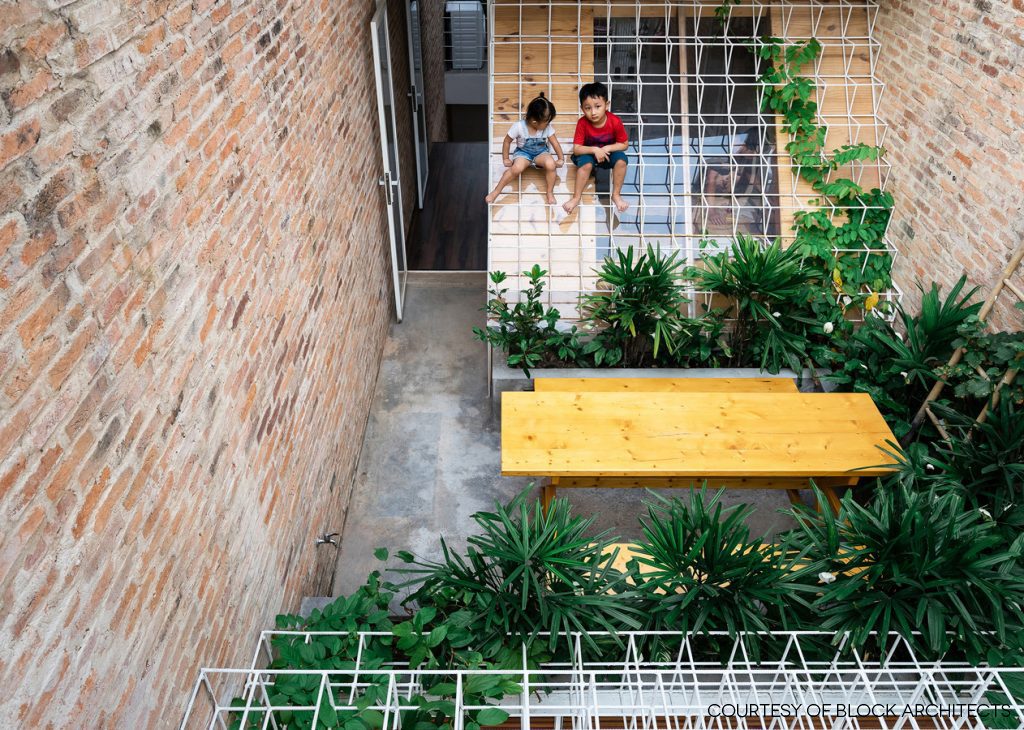
The remodeled front and rear facades showcase a multitude of steel cube frames welded together to look like a web of fine threads being “sewn” together to fill the void between two side walls.
The welded steel rod paneling is painted white and decorated with climbing plants thriving in full sun. Despite its slender appearance, the design is strong enough for home protection, at the same time creating a light and airy ambience for both indoors and outdoors.
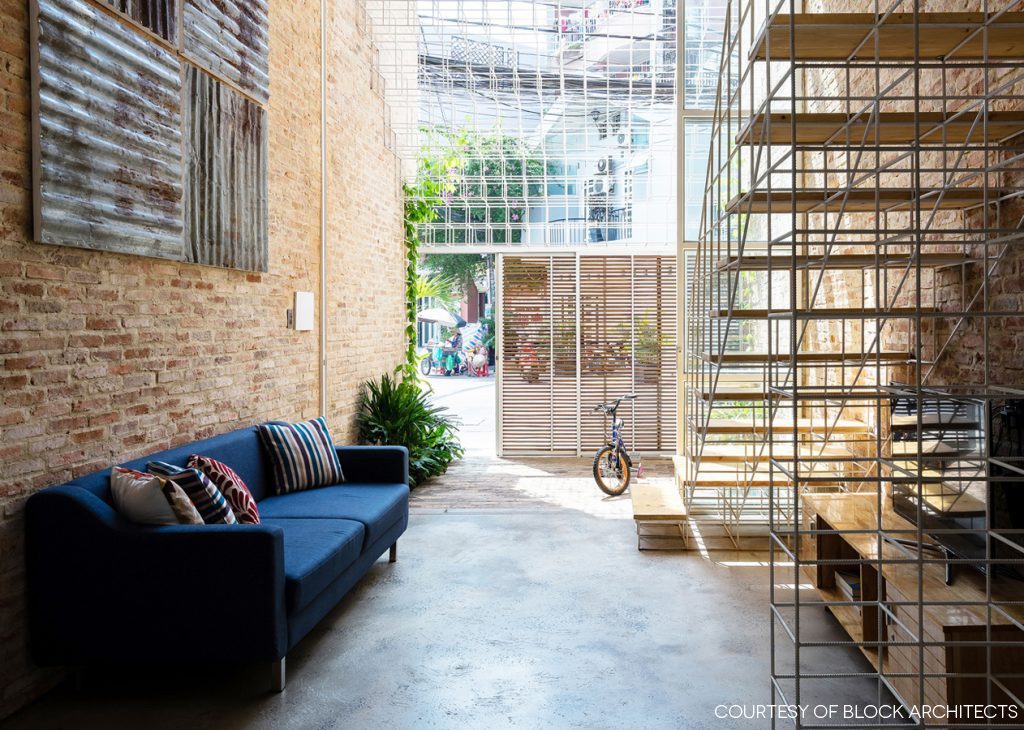
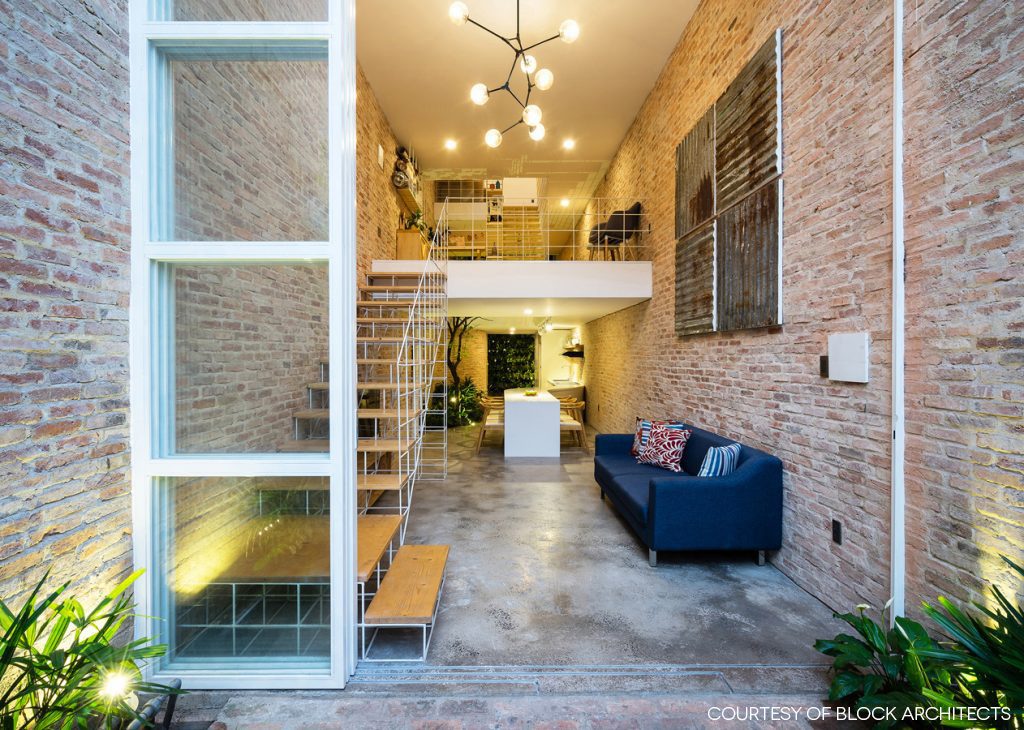
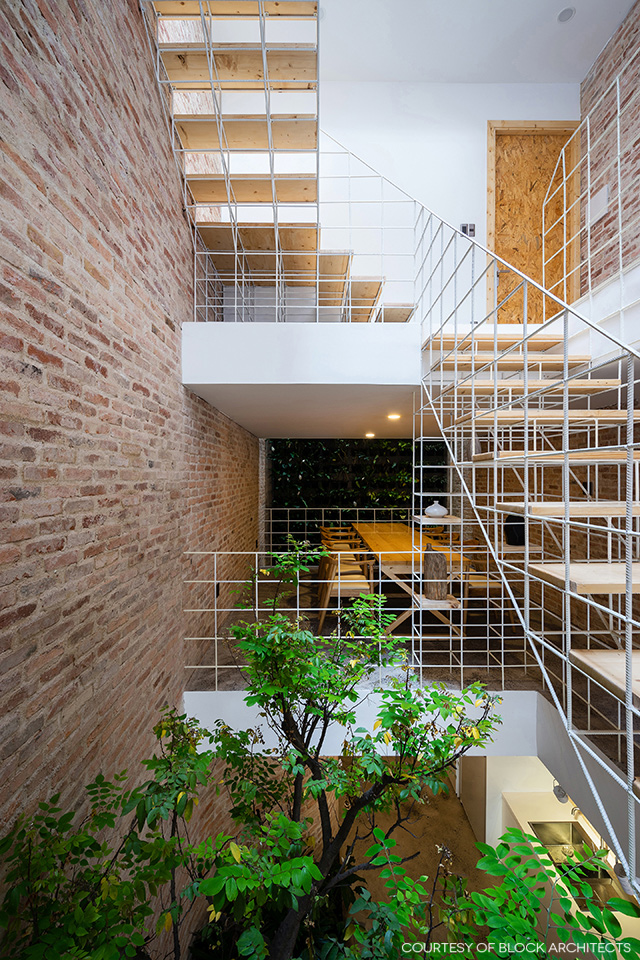
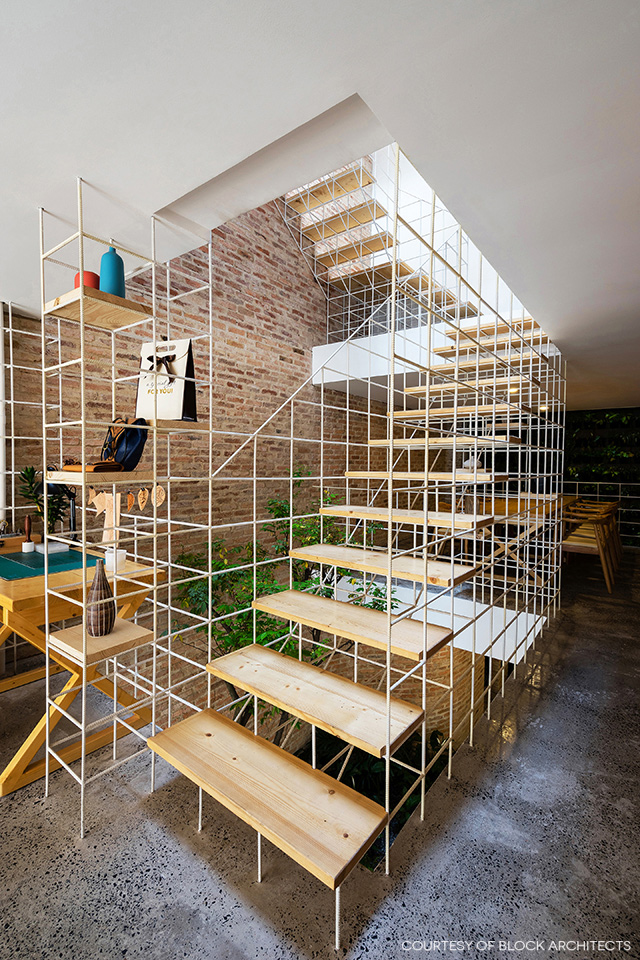
Among other things, the old concrete stairway was removed to prevent the indoors from feeling stale and stifling. Then, a new set of airy stairs with no risers between the treads was put in place instead.
For a lightweight look, stair railings were crafted of steel rods painted white with wood treads in complementing shades. The uplifting design rendered the staircase looking as if it were hovering above the floor.
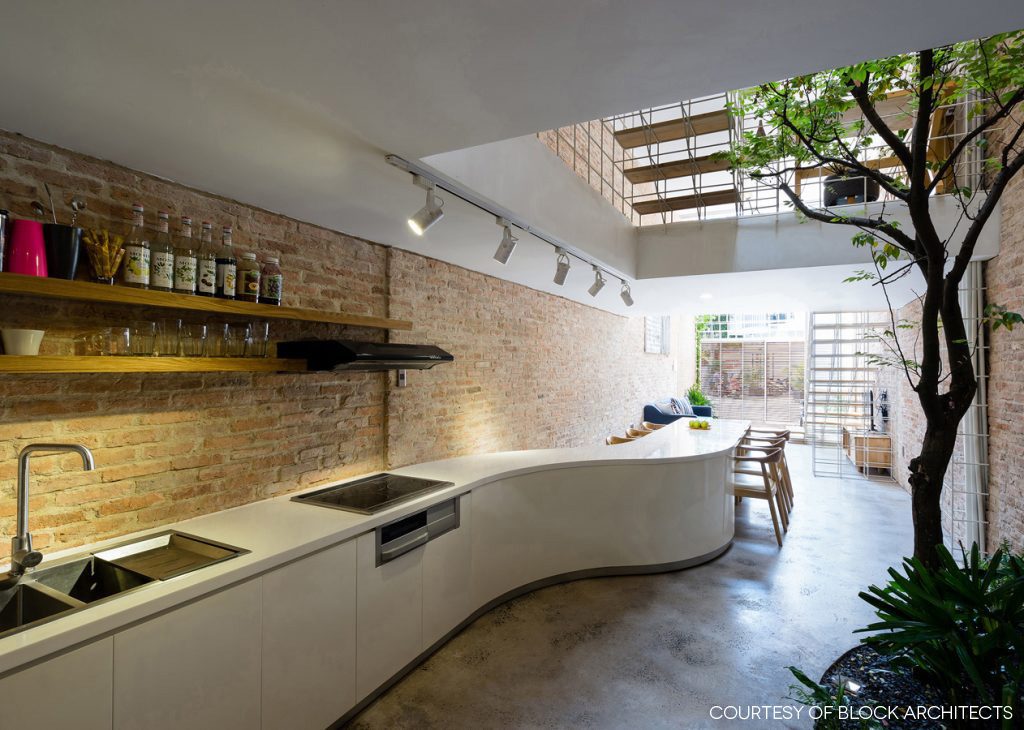
In the kitchen and dining area, a long curvy counter stands in contrast to the stillness of rough brick texture on the wall. All in all, clever design has transformed an unexciting shophouse interior into a home office that looks to be one of the trendiest in Ho Chi Minh City.
Marketing/Advertising Cookies – used to remember and process the relevance to your website visit in order to personalize contents shown including optimization of commercial advertising placements. For instances, we use this type of cookies to display commercial advertisements related to user’s attributes and interests as well as to limit how many times should a user see repeated advertisement in order to optimize and measure marketing activities. อ่านเพิ่มเติม