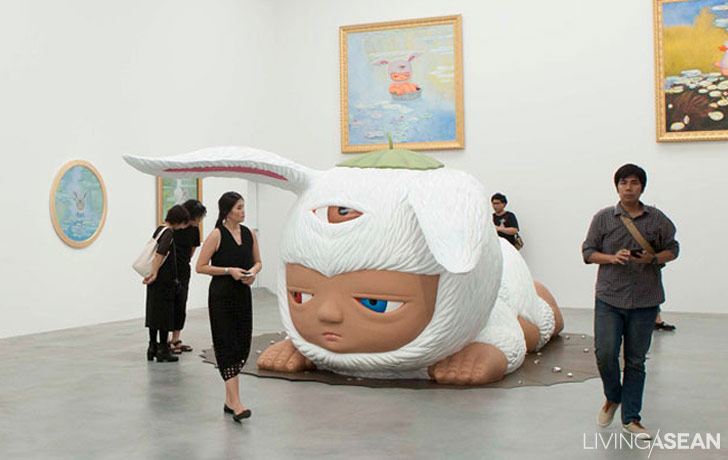
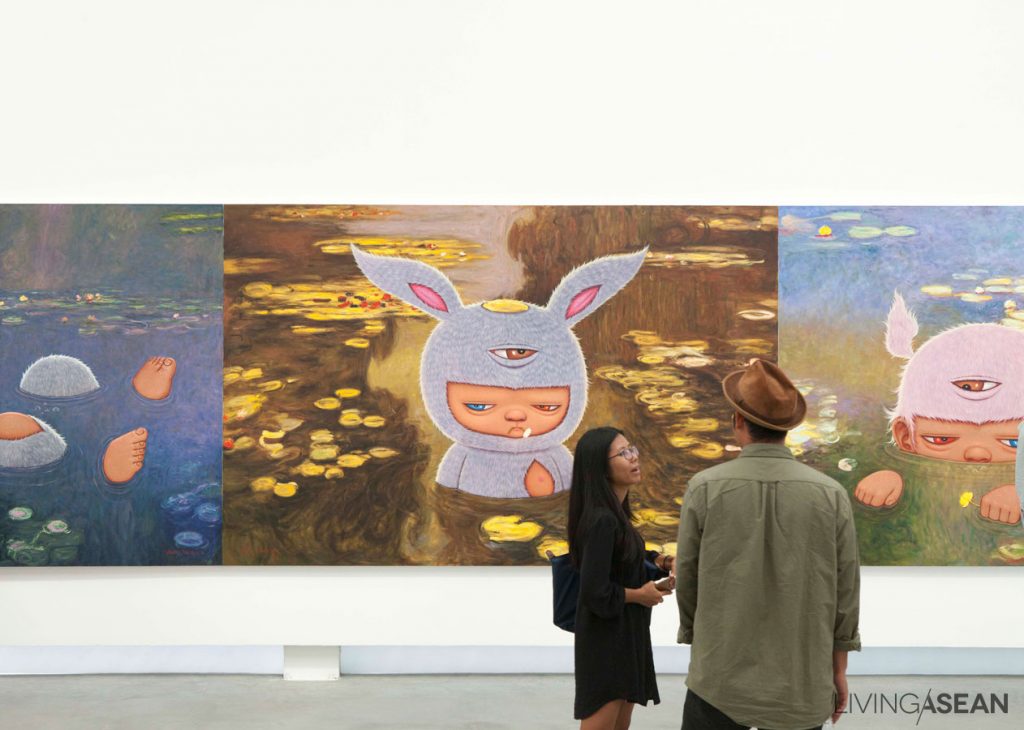
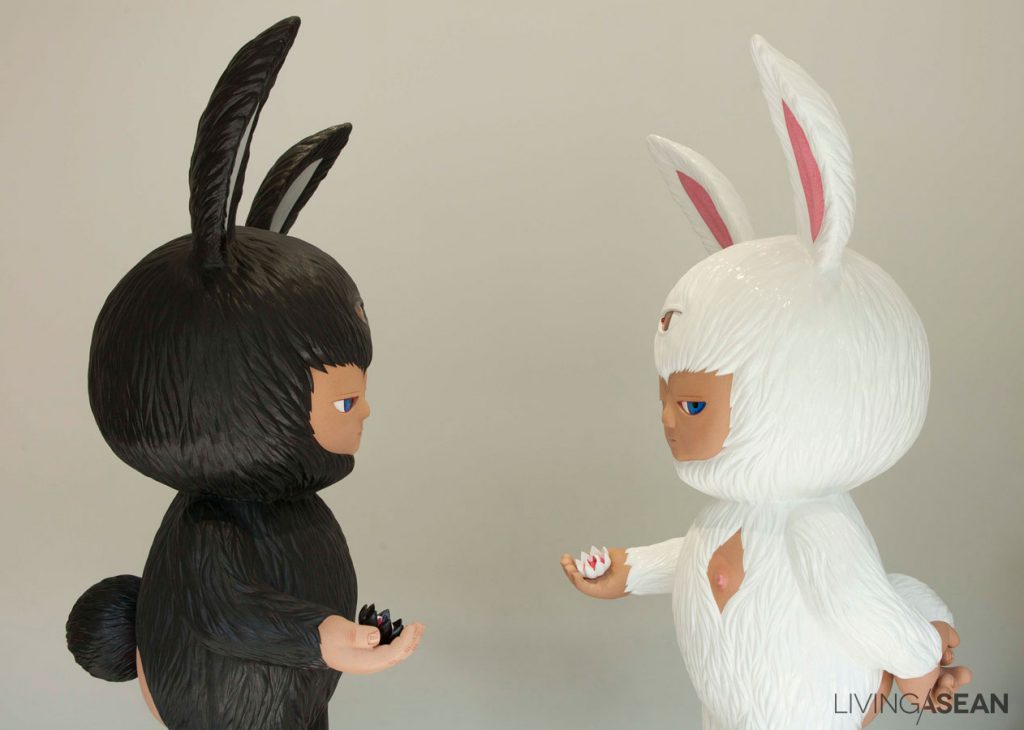
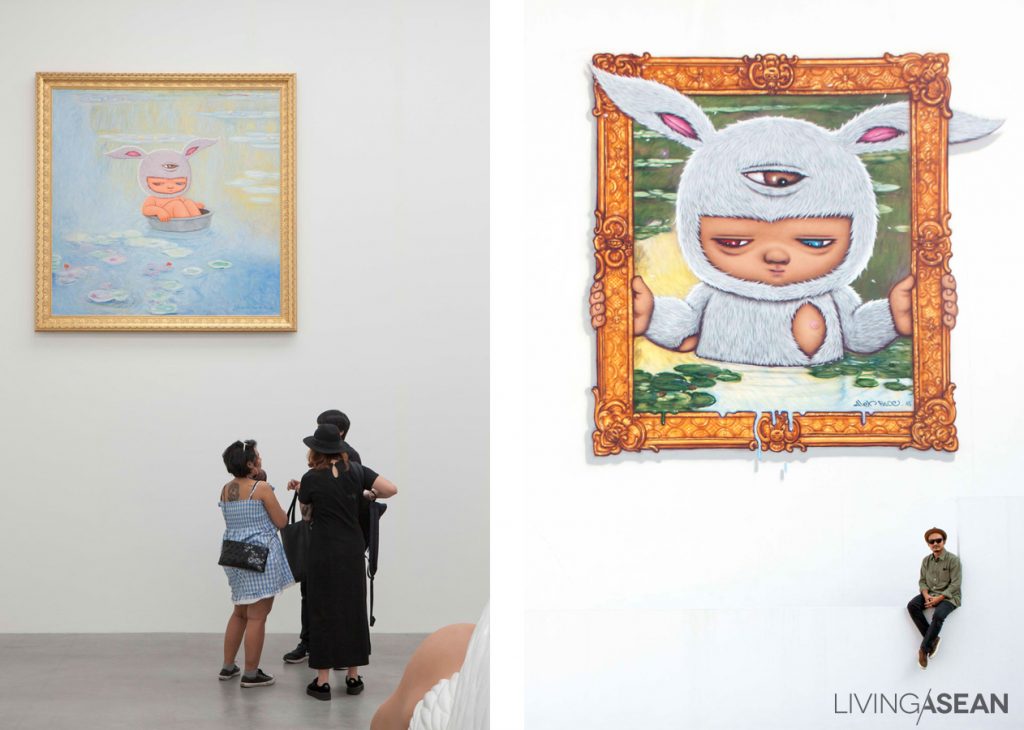
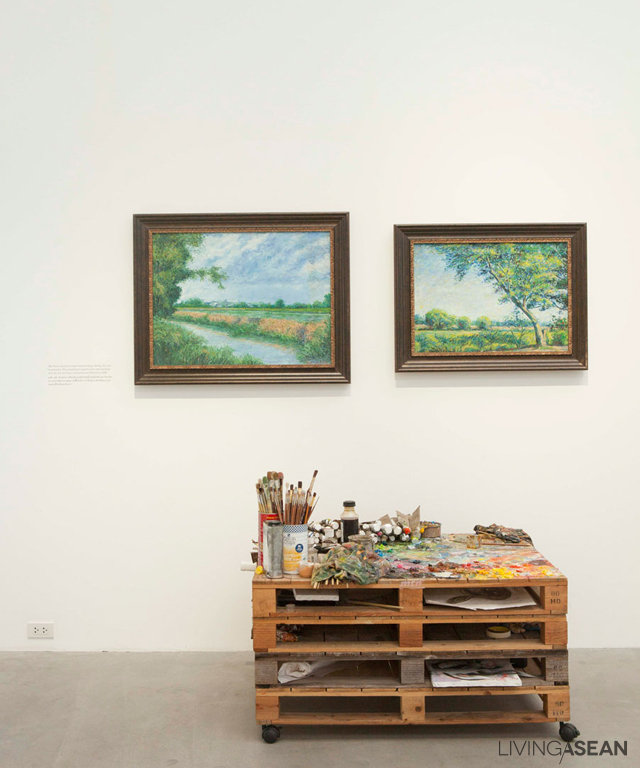
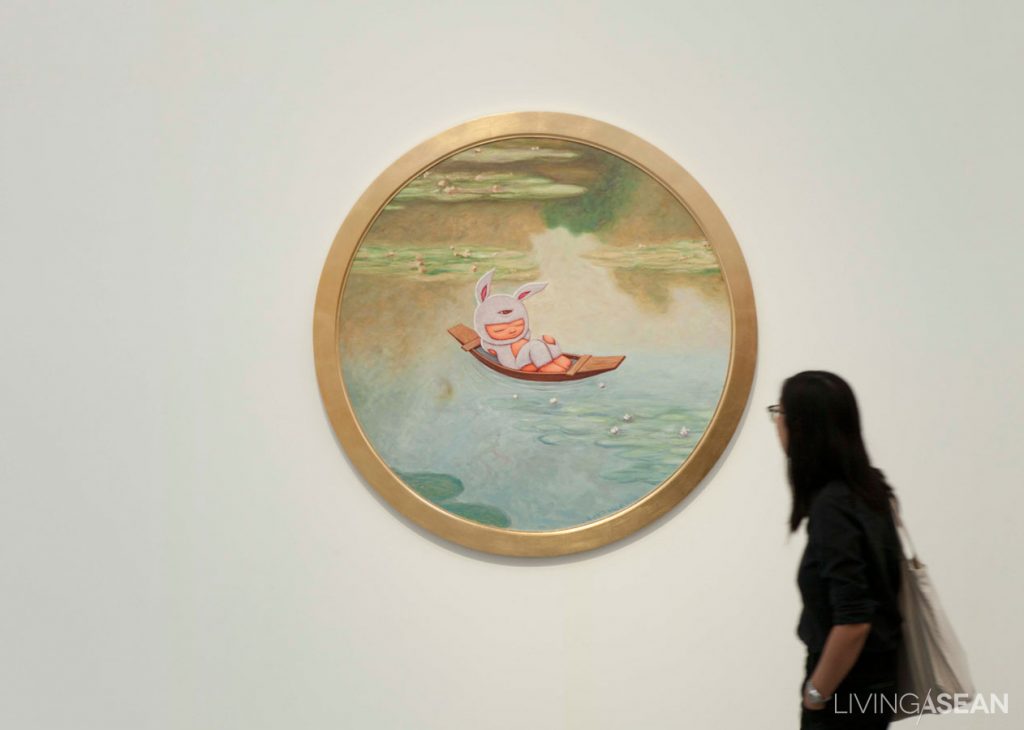
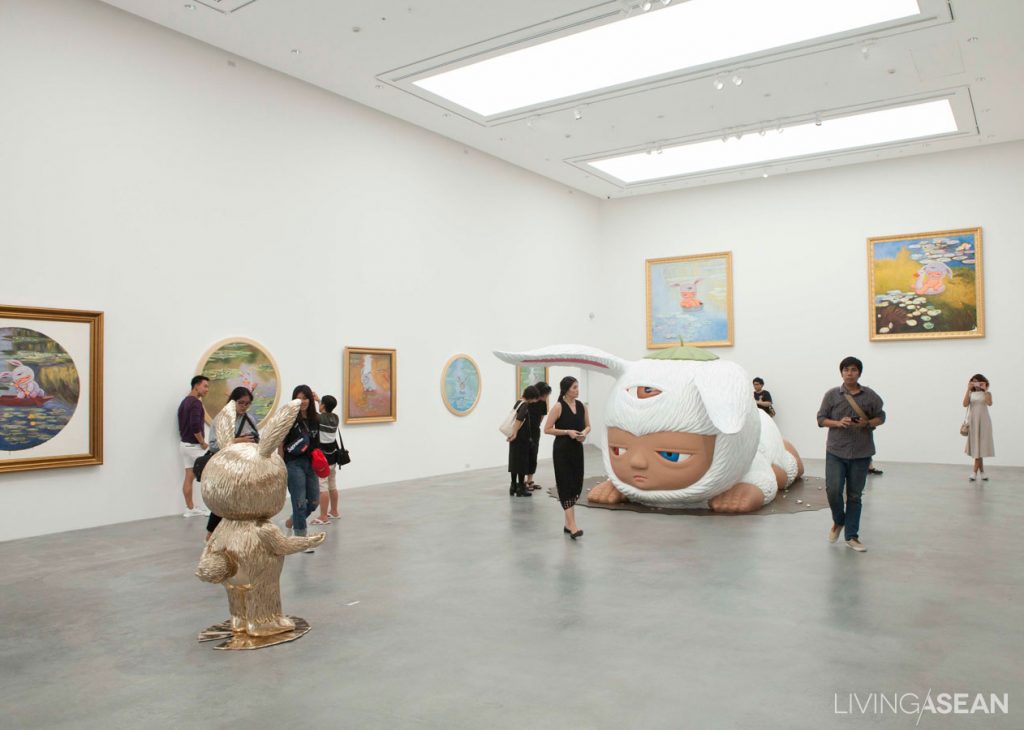
Street art has achieved recognition on the Thai art scene over the past decade. The leading artist in this genre is Patcharapol Tangruen, also known as Alex Face. He created the three-eyed baby in fluffy bunny outfit character that appeared on the walls across Bangkok, Jakarta, Tokyo, Seoul, Taipei, London, Copenhagen, Amsterdam and Berlin.
While he was an art student, his friends and professors didn’t understand why he kept spraying in public space, and thought it was ridiculous. But Alex Face disagreed. “Street painting is a kind of expression and could draw many audiences,” he said. “If it’s hard for people to engage with art, we should take it to engage with people instead.”
With that idea in mind, Alex Face hit the street with his colorful graffiti and the signature character that was inspired by his daughter. He also met fellow street artists from around the world, got the invitations to work abroad, and became an internationally-renowned street artist.
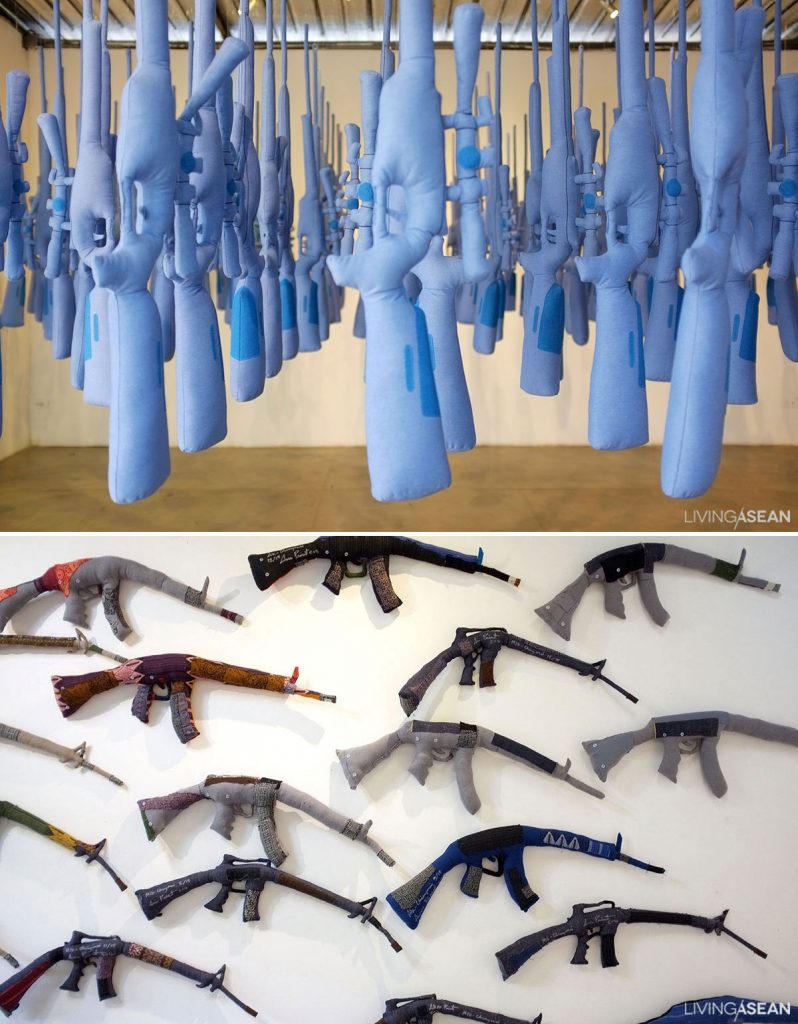
“I studied art, so I’m interested in all kinds of art,” Alex Face answered when asked about his style of work. “Not only did I graffiti, I’ve also painted, printed and sculpted. I like it all. It depends on which techniques could be compatible with my concepts.” He also said that he set up “ALIVE”, his most recent event, to show his art experience from childhood till now.
“You will see what skills I had practiced, and encounter different kinds of works of art that you’ve never seen before,” he assured.
Alex Face’s ALIVE is taking place at Bangkok CityCity Gallery until February 19, 2017. For more information please visit www. bangkokcitycity.com.
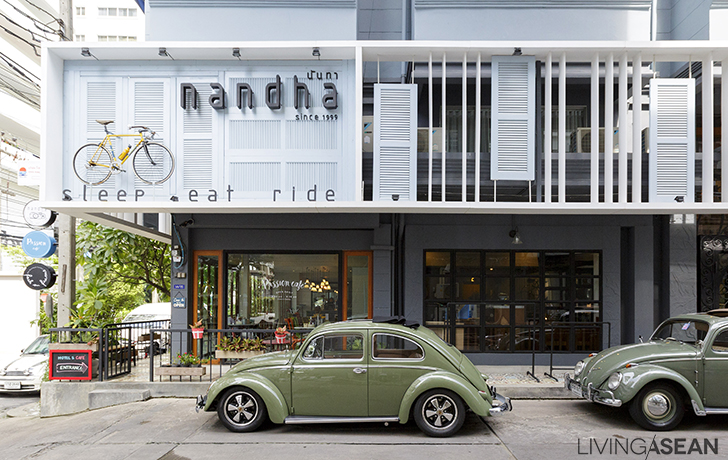
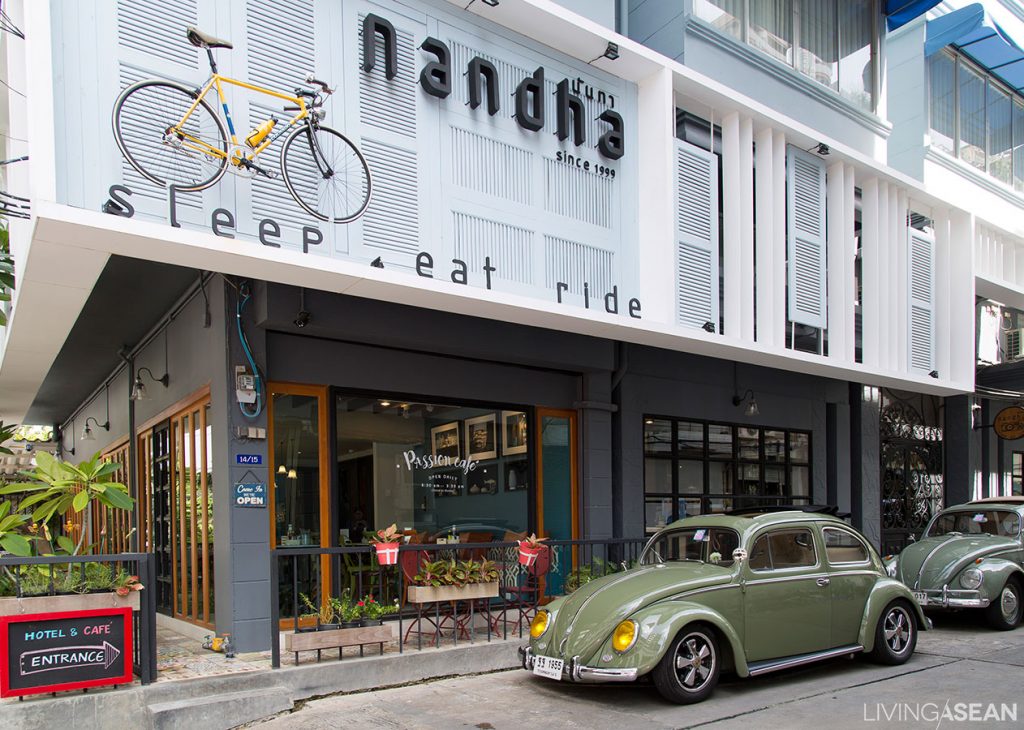
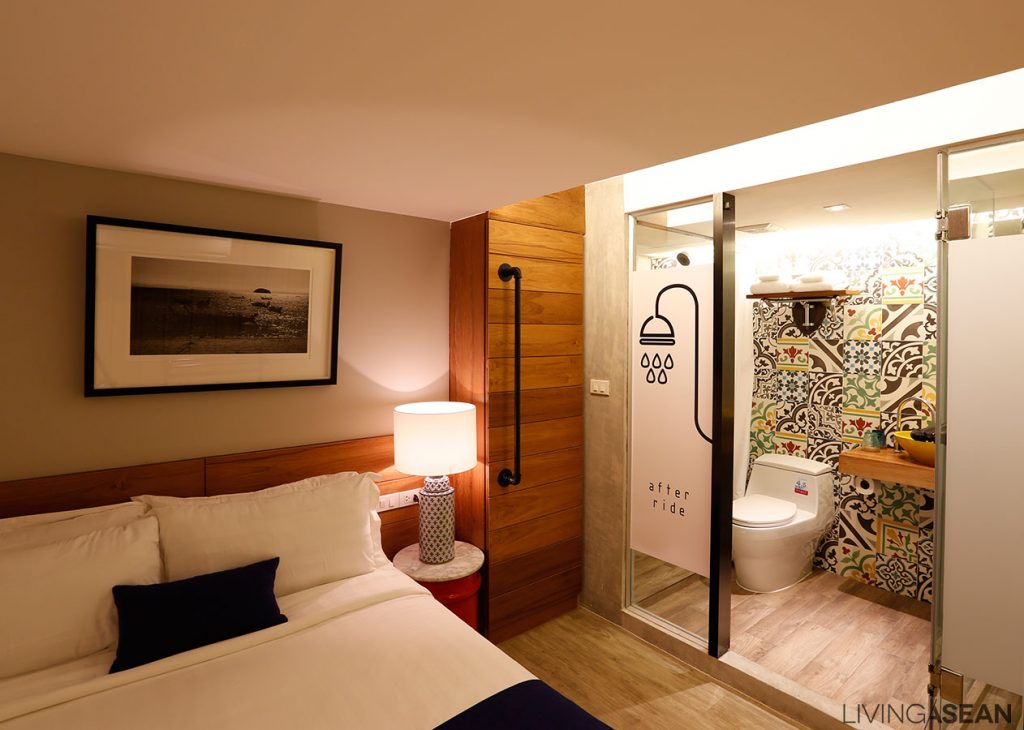
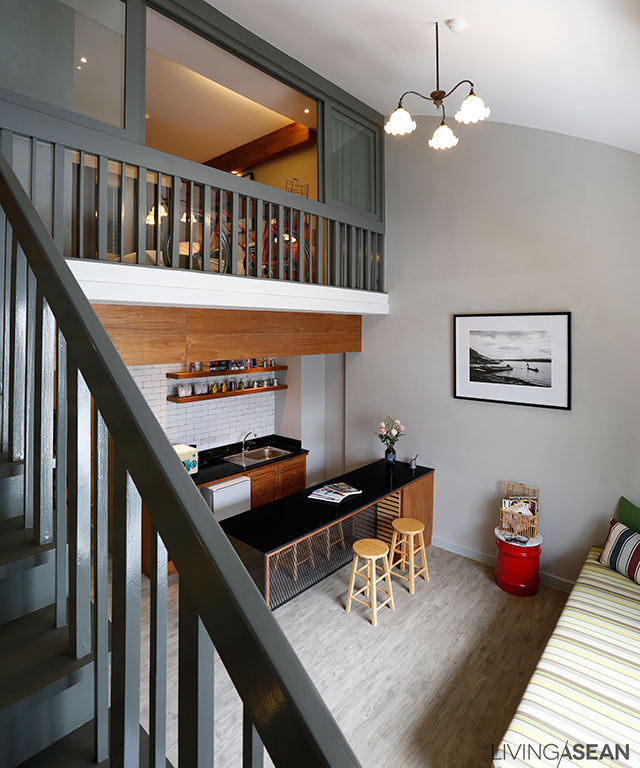
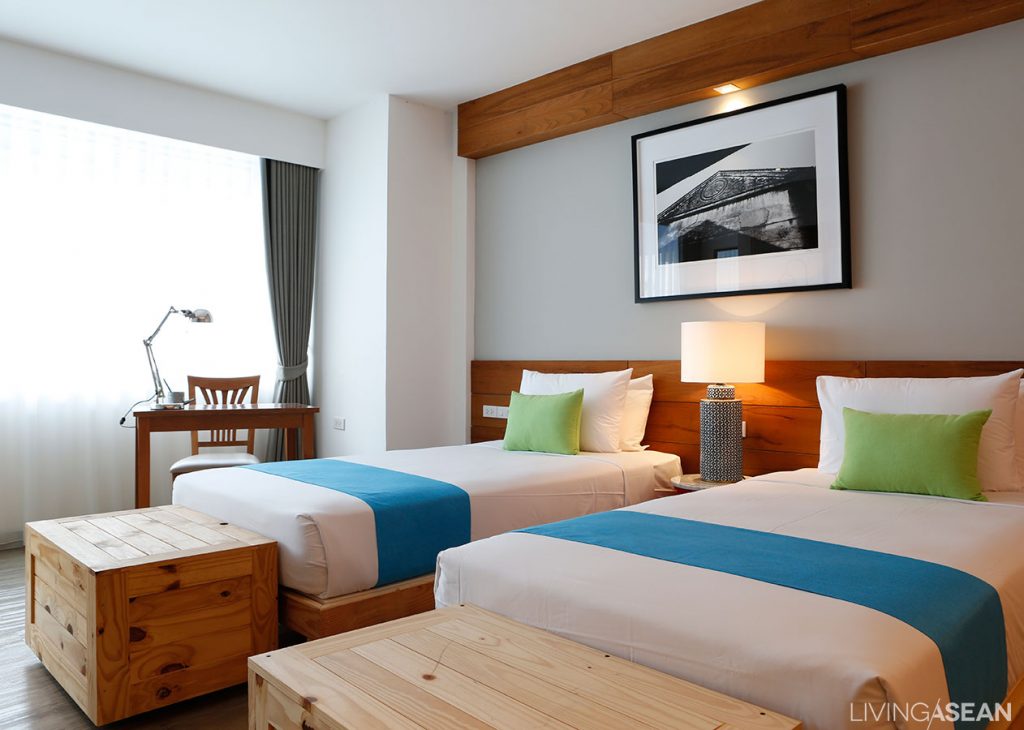
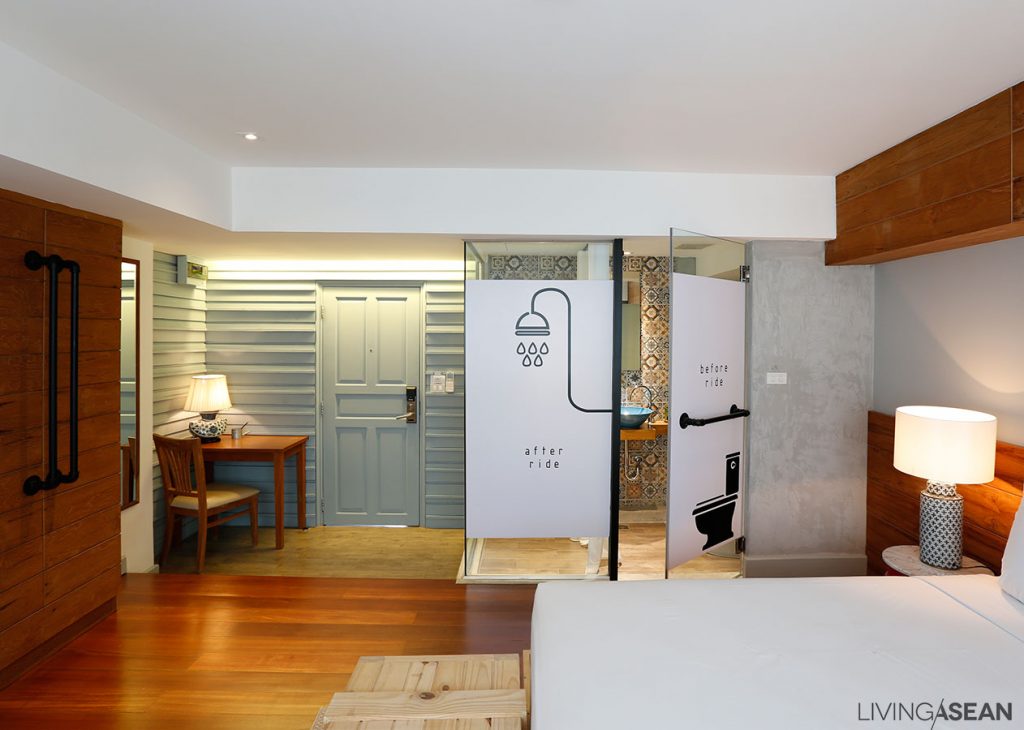
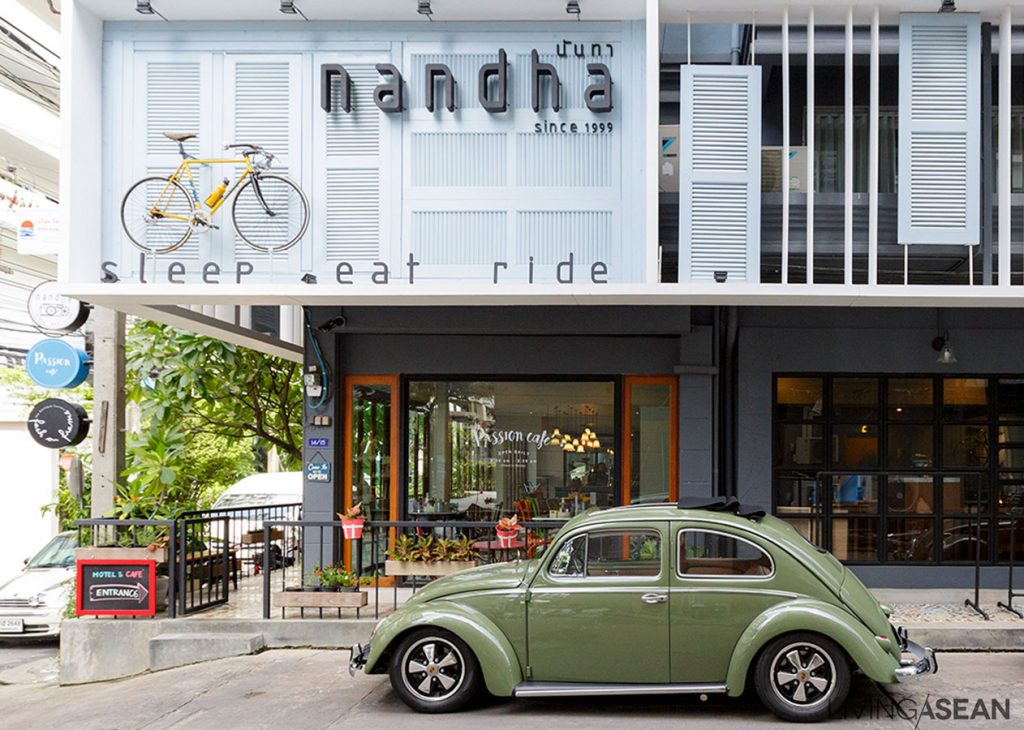
Nandha Hotel is a cycling hotel located in the heart of Bangkok, lodging where lovers of all things vintage can enjoy their holiday surrounded by eclectic décor.
/// Thailand ///
Story: Bundaree Deewong /// Photo: Sungwan Phratep /// Interior Designer: Bangkok Day Group by Kasisin Suwattanaphim
The Nandha is named after the mother of owners Anucha and Bheema Jotikabukkana. These two have strong passions for both cycling and photography, and with a designer’s help, have expressed these favorite pastimes through the hotel’s interior decoration.
Kasisin Suwattanaphim, of Bangkok Day Group, is the designer responsible for this project. He came up with the catchphrase “Sleep-Eat-Ride,” which became the hotel’s main concept.
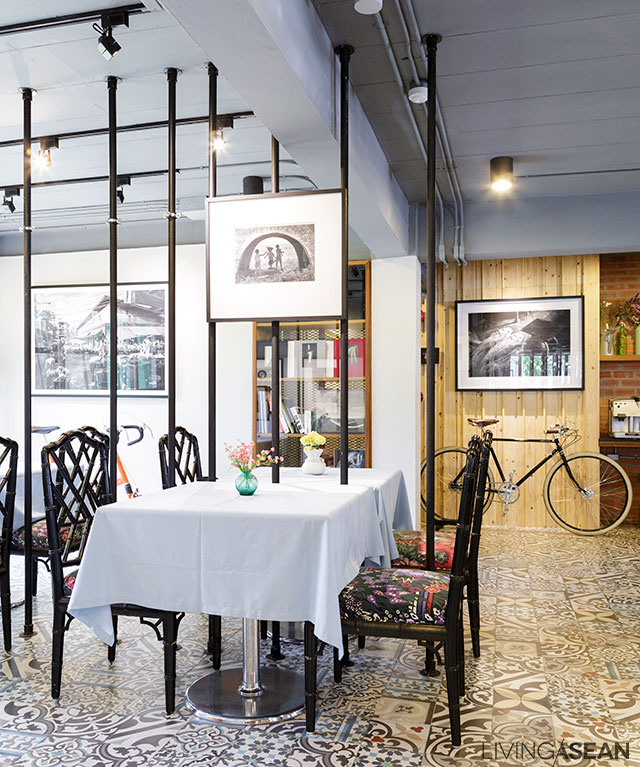
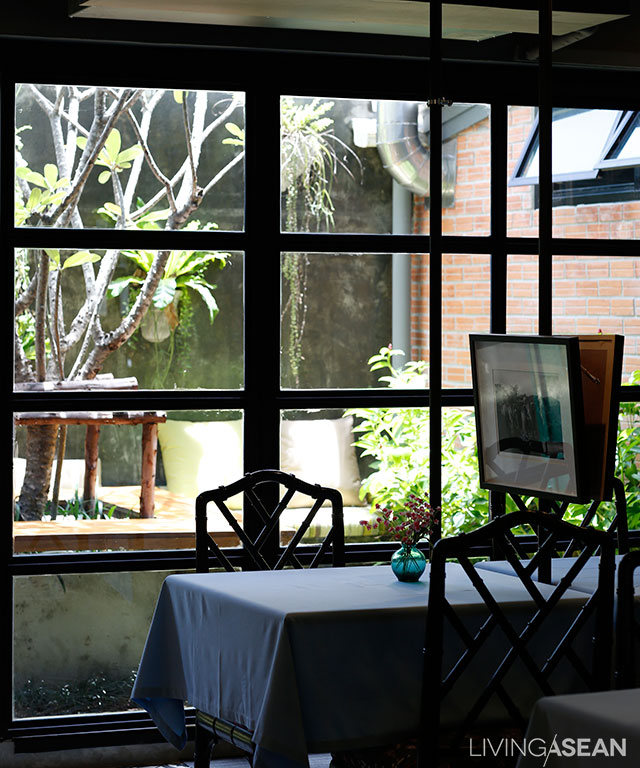
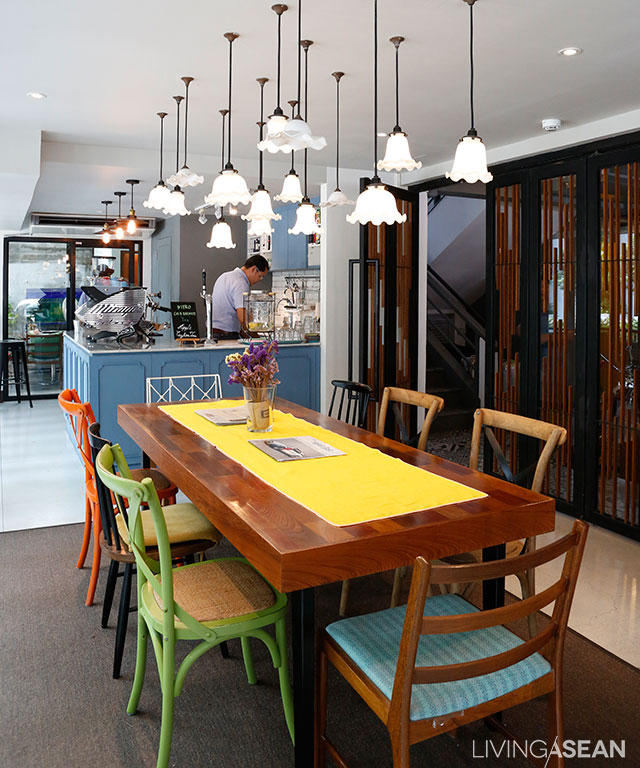
Above the storefront, the hotel façade features striking light blue wooden latticework with a yellow vintage bicycle hanging above its signature slogan. The latticework also acts to screen out harsh daylight. On the left corner is the loft-style Passion Café,in whose cozy, warm atmosphere guests imbibe coffee and other drinks.
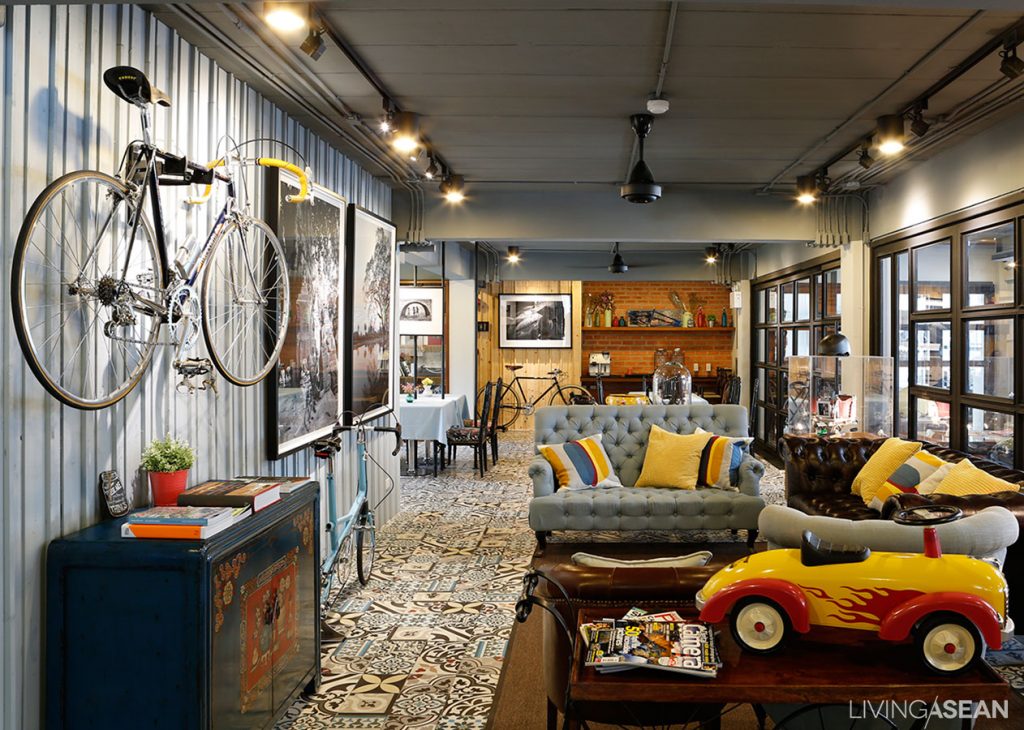
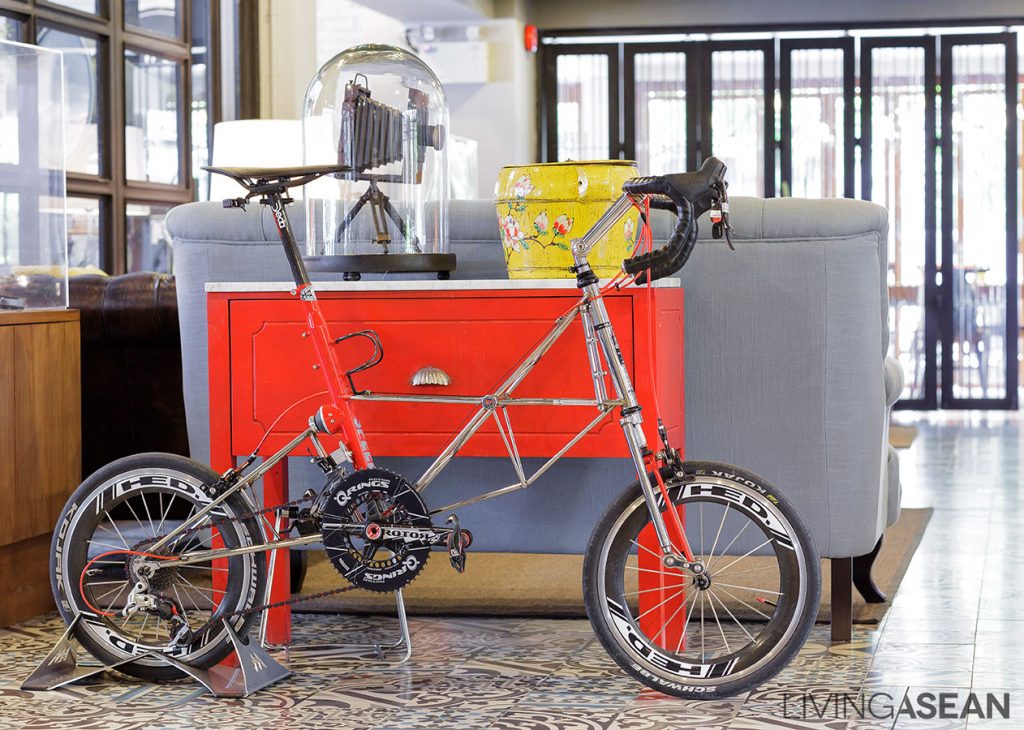
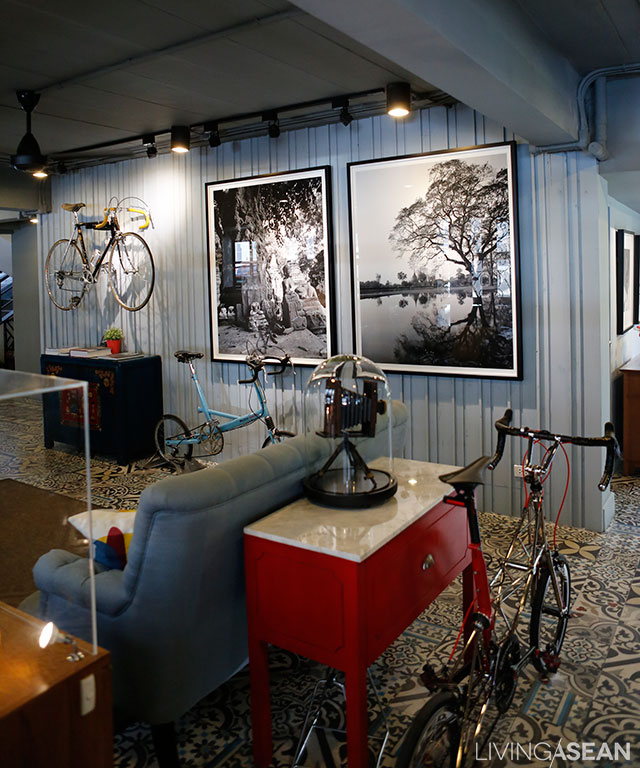
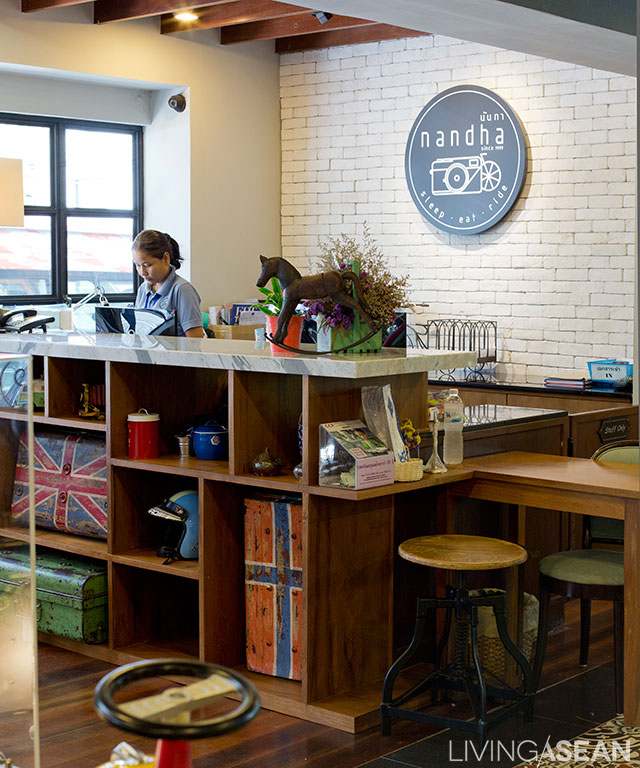
The lobby interior is decorated with old collectibles such as rare bicycles and vintage cameras, making it one of guests’ favorite photo spots. The railing on the stairwell to the rooms is constructed of water piping.
Each floor has its own decorative color assigned to it: pink, blue, green and so on. Room entrances play along with the hotel’s concept, and each room even has its own bicycle bell with room number, for use in calling hotel staff for assistance.
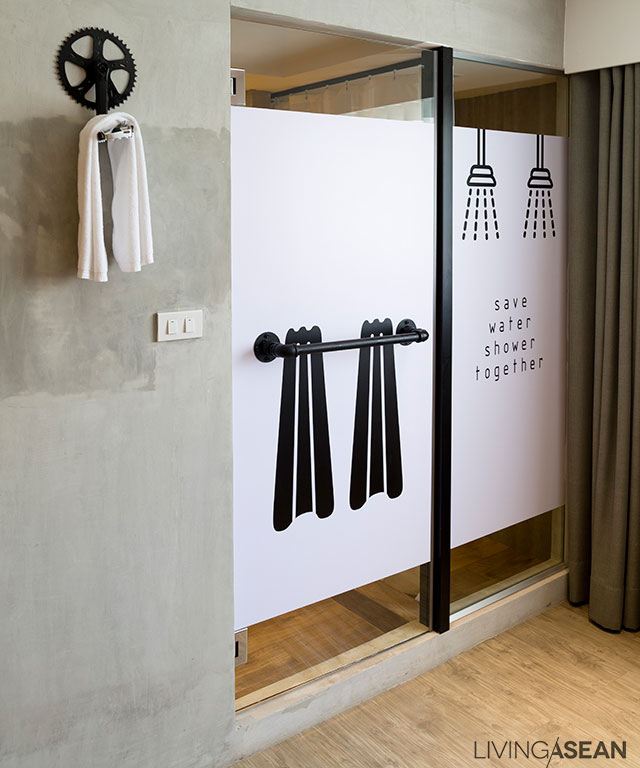
An in-room desk is adapted from a real bicycle. There are clothes hangers made from pedals. The secretive little gimmick-like details are part of what makes this place unique and special.
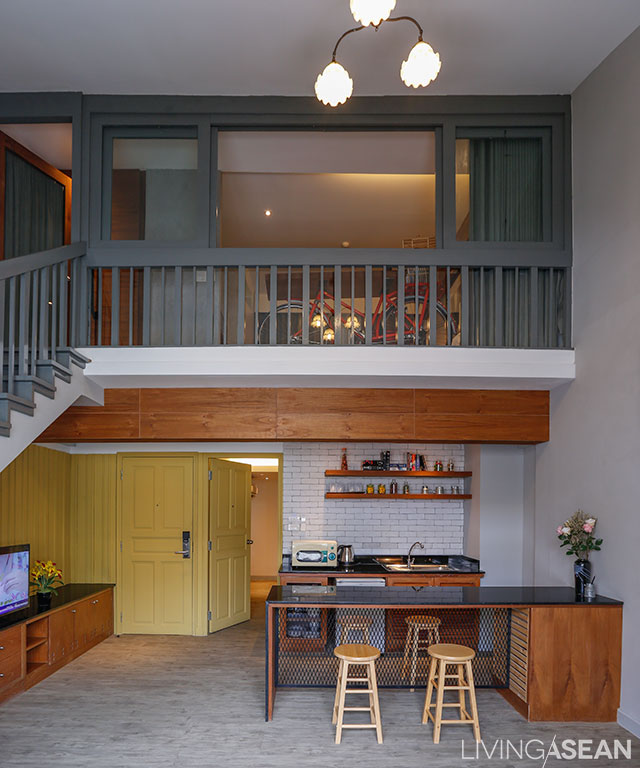
The hotel offers two types of room: vintage-style with a contemporary feel and classic-style, with a warm wood décor. Additionally, for groups there is a two-storey duplex suite with two bedrooms.
For those looking for a unique experience and heartwarming hospitality, or simply seeking a cycling hotel with a budget price, Nandha hotel not to be missed.
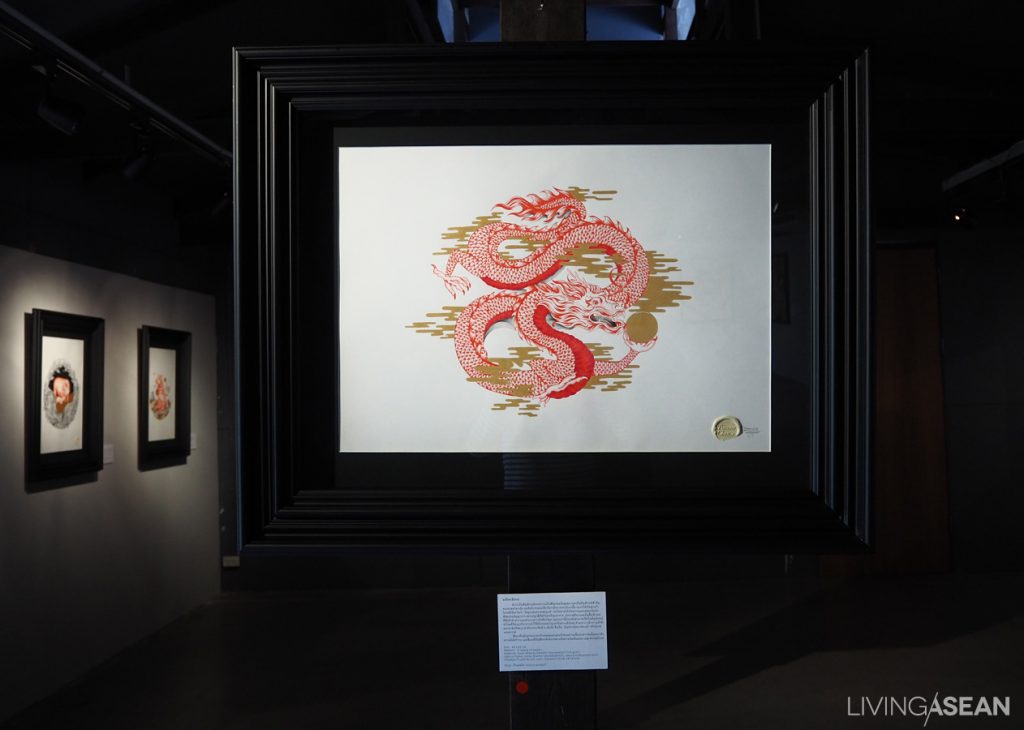
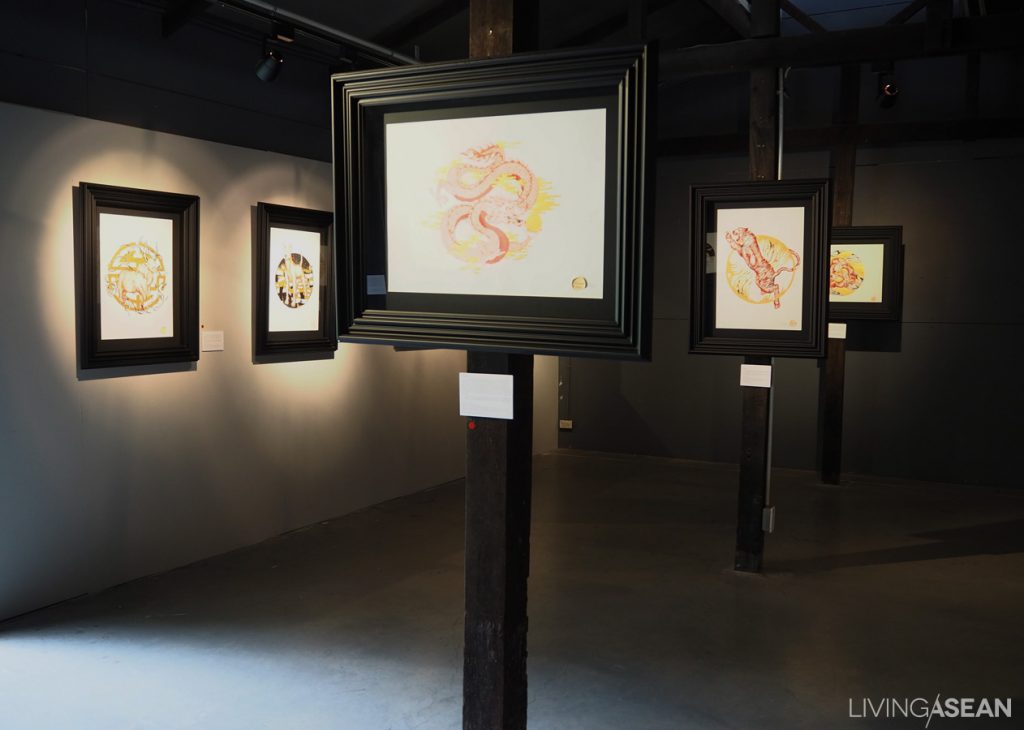
Bid farewell to 2016 and ring in the New Year with Sirimongkol, an exhibition of works by celebrated illustrator Pomme Chan. The artist got her inspirations from the twelve signs of the Zodiac, which in the Chinese belief system are thought to have profound influences on us humans. The event is on from now until February 12, 2107 at the Jam Factory.
/// Thailand ///
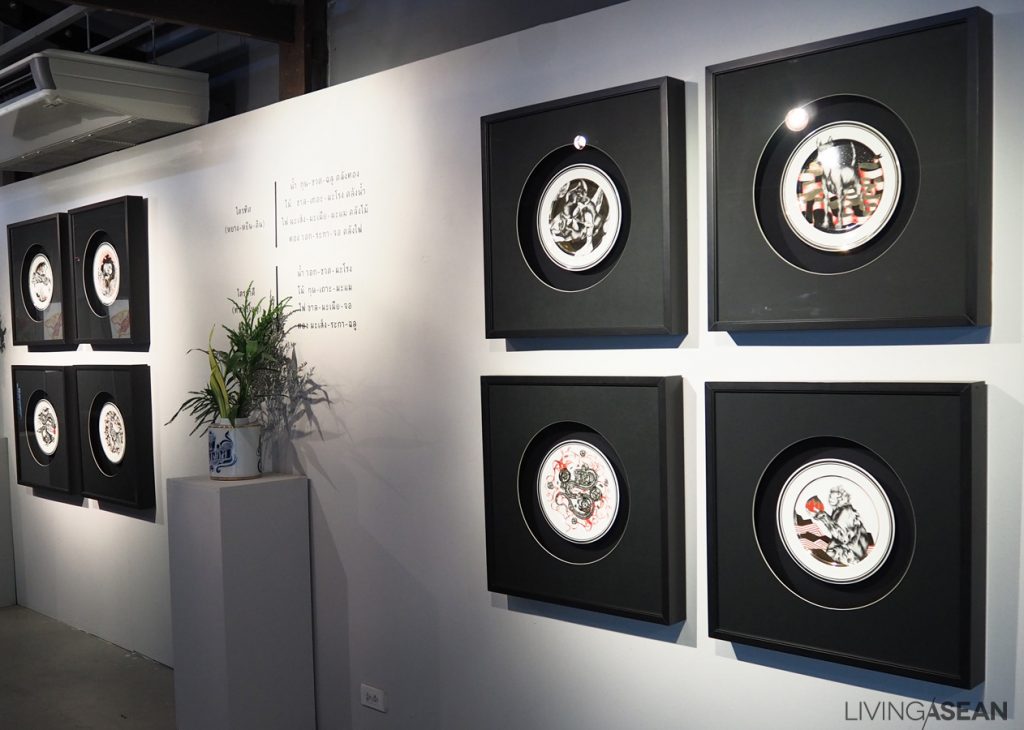
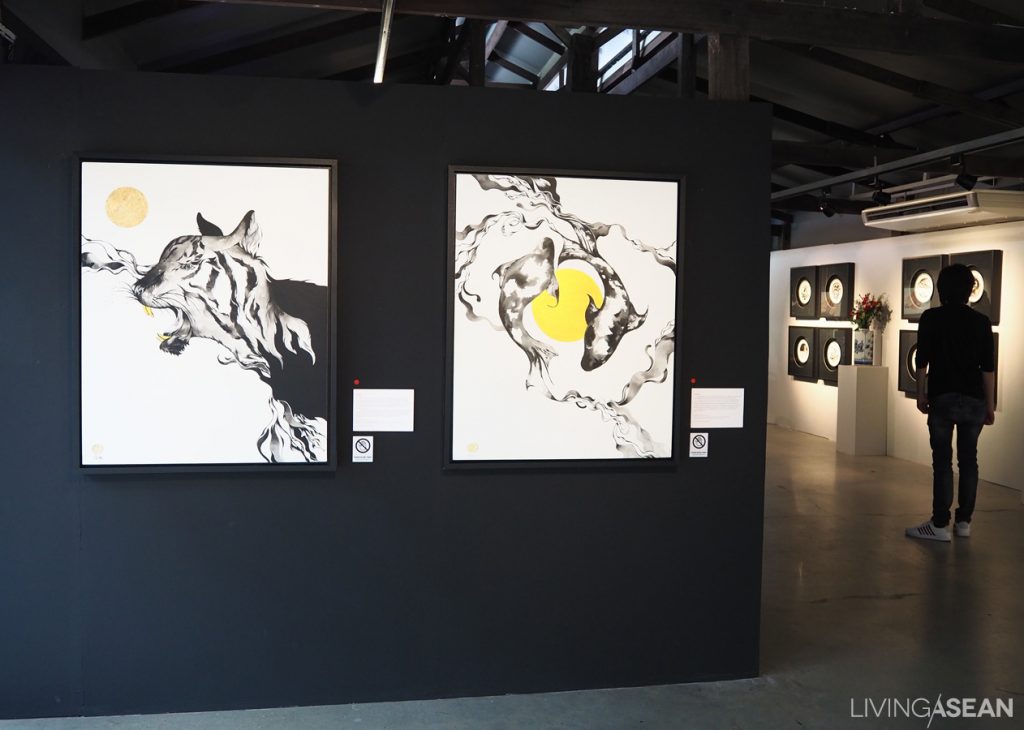
The spiritual art exhibition is appropriately named “Sirimongkol,” which is Thai for good omens or positive energies believed to foretell the future. Pomme Chan’s masterpieces depict the twelve signs representing the constellations that form the imaginary belt of the heavens. To make it easy to appreciate, the exhibition comes in four parts.
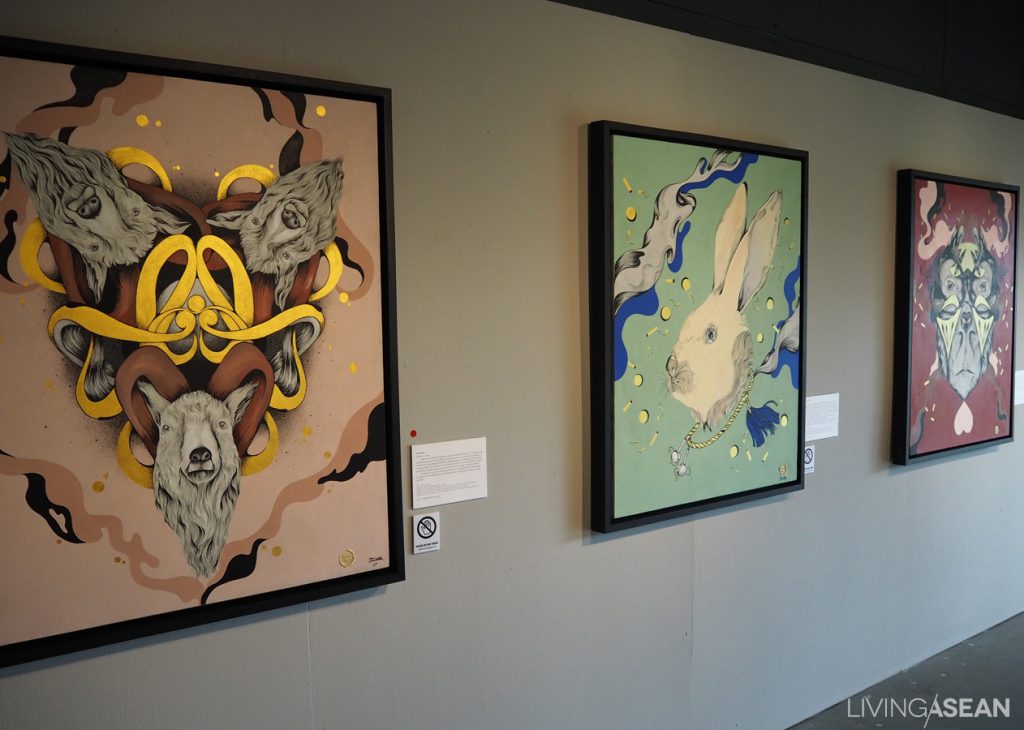
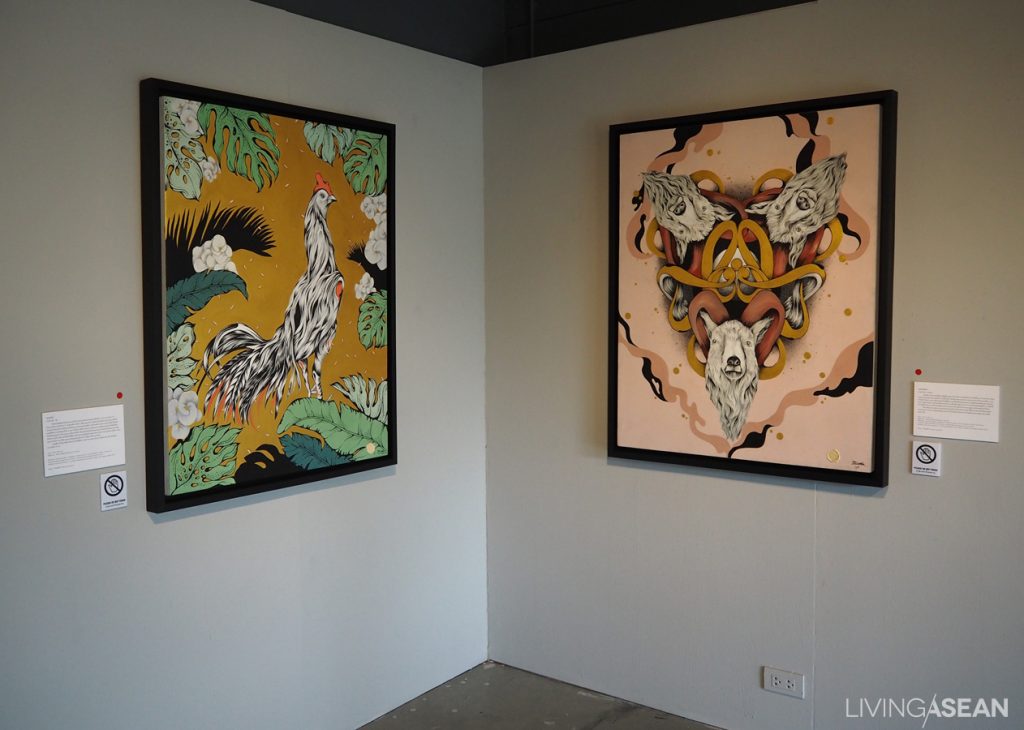
The first part consists of illustrated works on canvas depicting the 12 animal signs of the Chinese Zodiac. Each sign comes accompanied by floral and botanical ornaments that speak to basic character, preferences, strengths, and weaknesses of individuals.
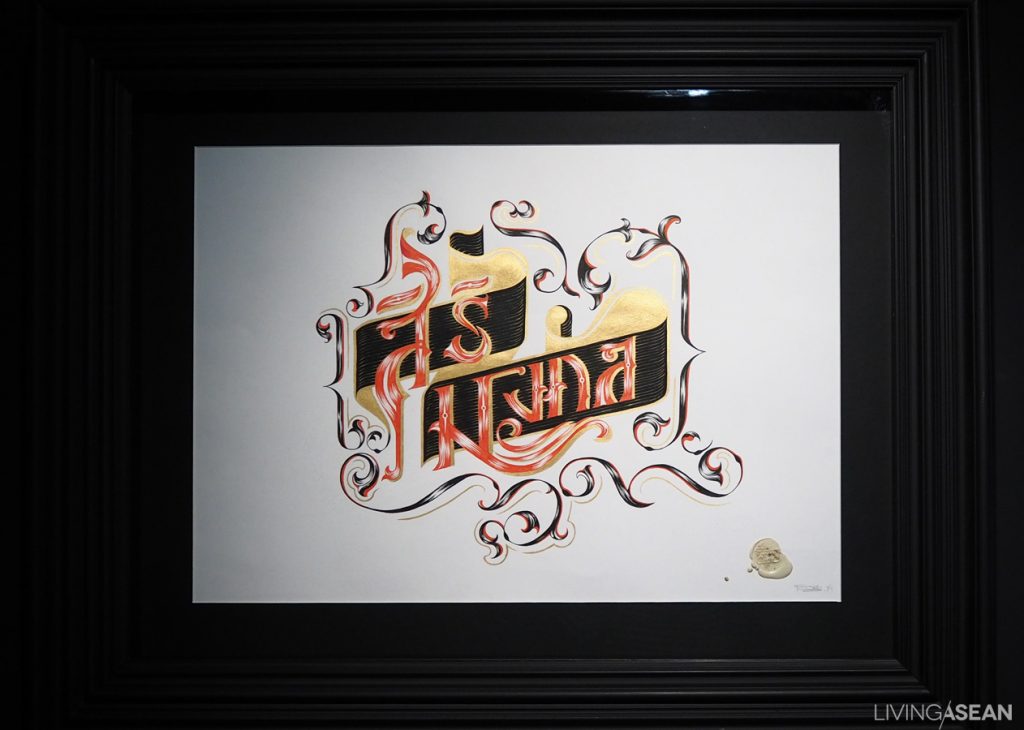
The second part is quite a striking collection. Using hand-drawn techniques on paper, the artist lets red and gold play a prominent role in her contemporary interpretation of the Zodiac signs. Sharp geometric shapes blends well with curves and brush strokes from Chinese calligraphy and other symbols of wealth, success, luck, and power.
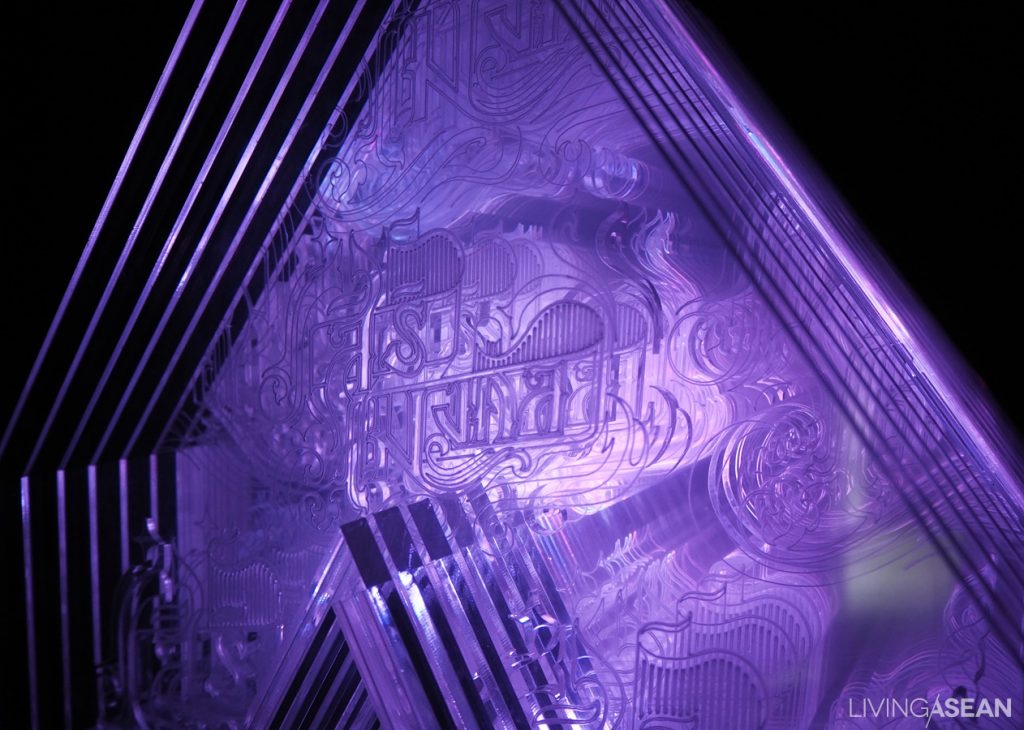
The third part is three-dimensional showcasing a futuristic spirit house. The 3D shrine is crafted of clear acrylic sheets illuminated by LED lighting, a collaborative effort between Pomme Chan and interior designer Pruitsatorn Sakulthai. Finally, the fourth part comprises illustrated works printed on 10 porcelain plates and mounted on frames to focus on the meaning of “Sirimongkol” as we know it. May 2017 bring happiness and prosperity to you all.
Exhibition period: Now – February 12, 2017. Location: The Jam Factory
For more information, visit www.facebook.com/thejamfactorybangkok
About the artist
Pomme Chan is a Thai illustrator based in London. Her feminine style and detailed illustrated works are recognized worldwide. She has been working with various leading brands and magazines, including Marc Jacobs, Nike, Adidas, Volkswagens, and The New York Times. She is moving back in Thailand, where she has a studio of her own.
For a traveler, what could be better than a nice hotel in the heart of the city? Pick a hotel with a relaxing atmosphere and good design. If your destination is Jakarta, the capital city of Indonesia, the Morrissey hip hotel is the one and only right choice to choose.
/// Indonesia /// Story: Wuthikorn Suthiapa /// Photos: Soopakorn Srisakul
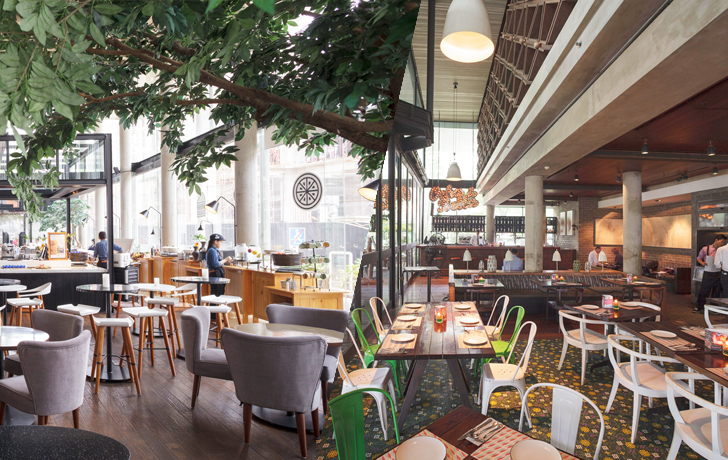
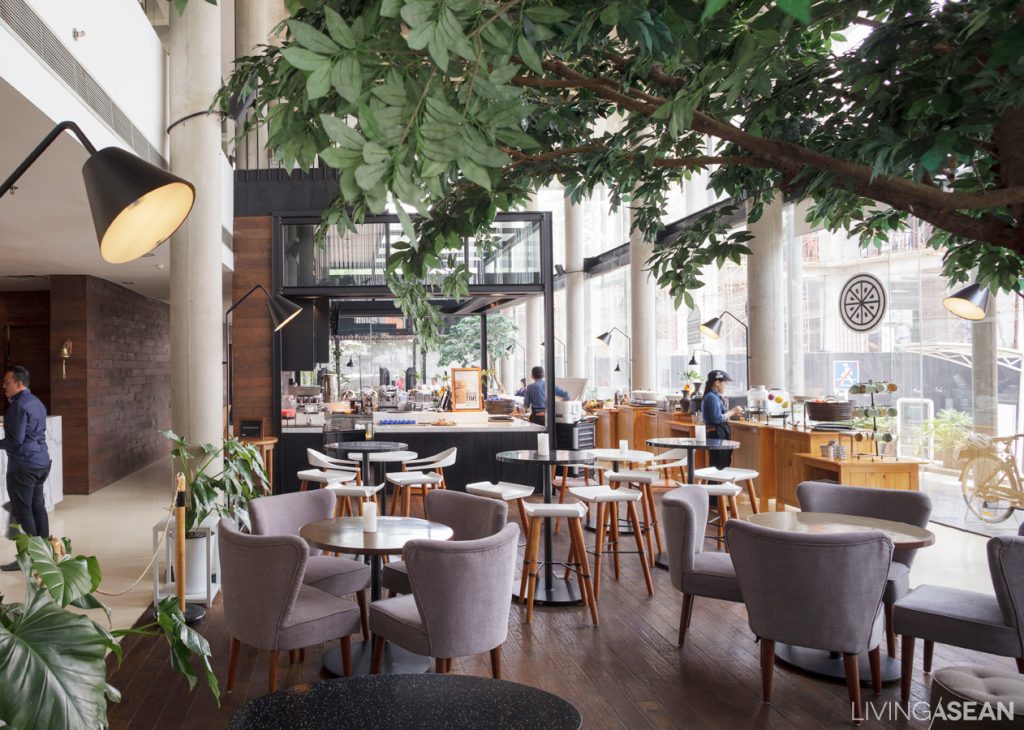
The Morrissey reception area features modern cubic architecture and a restaurant serving brunch meals.
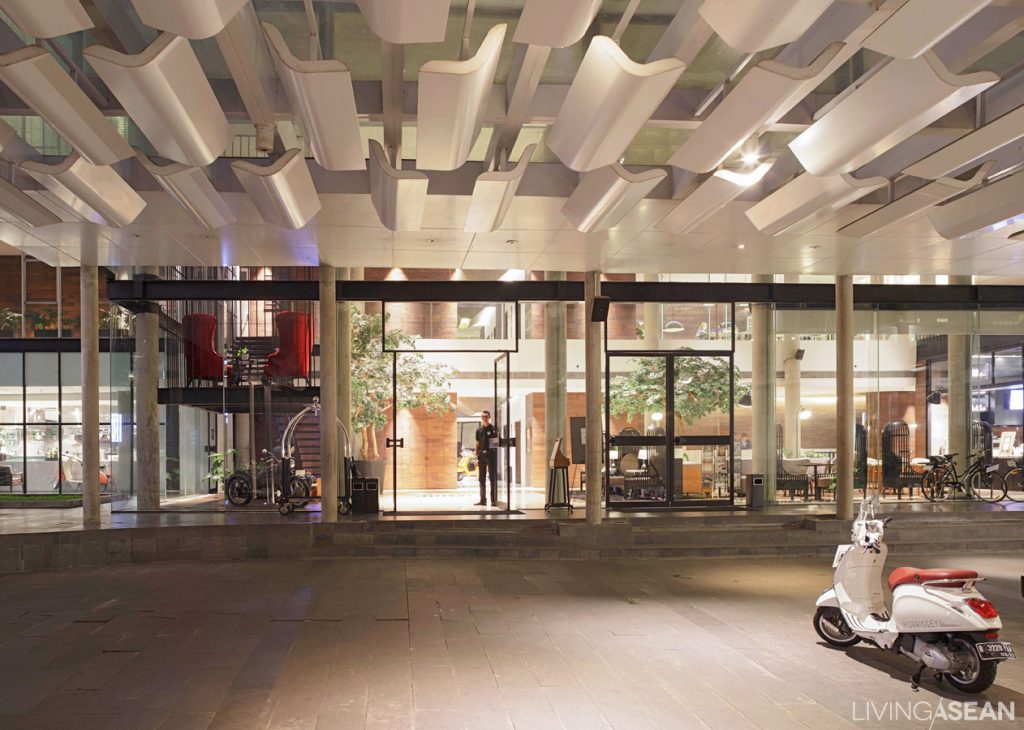
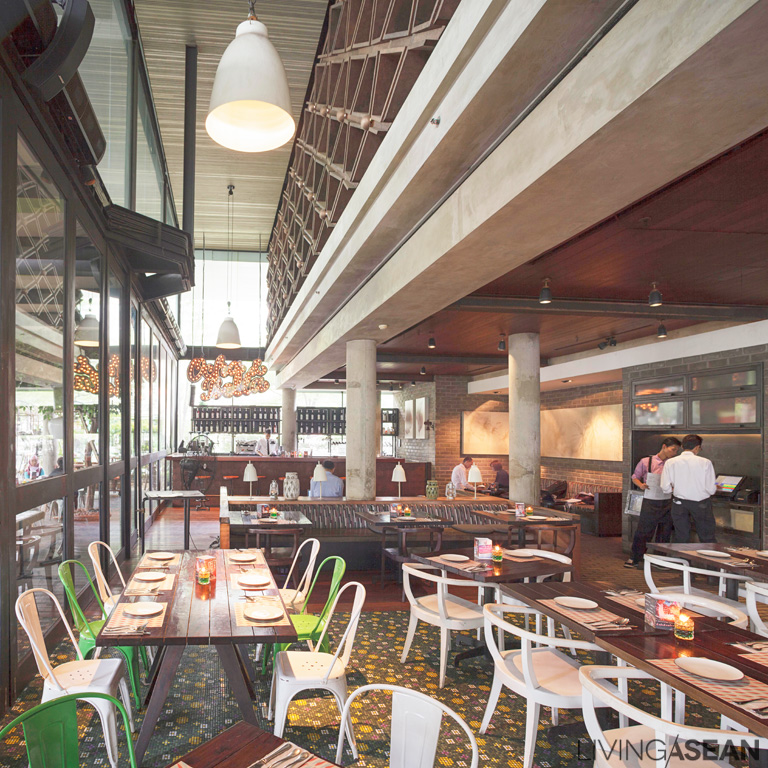
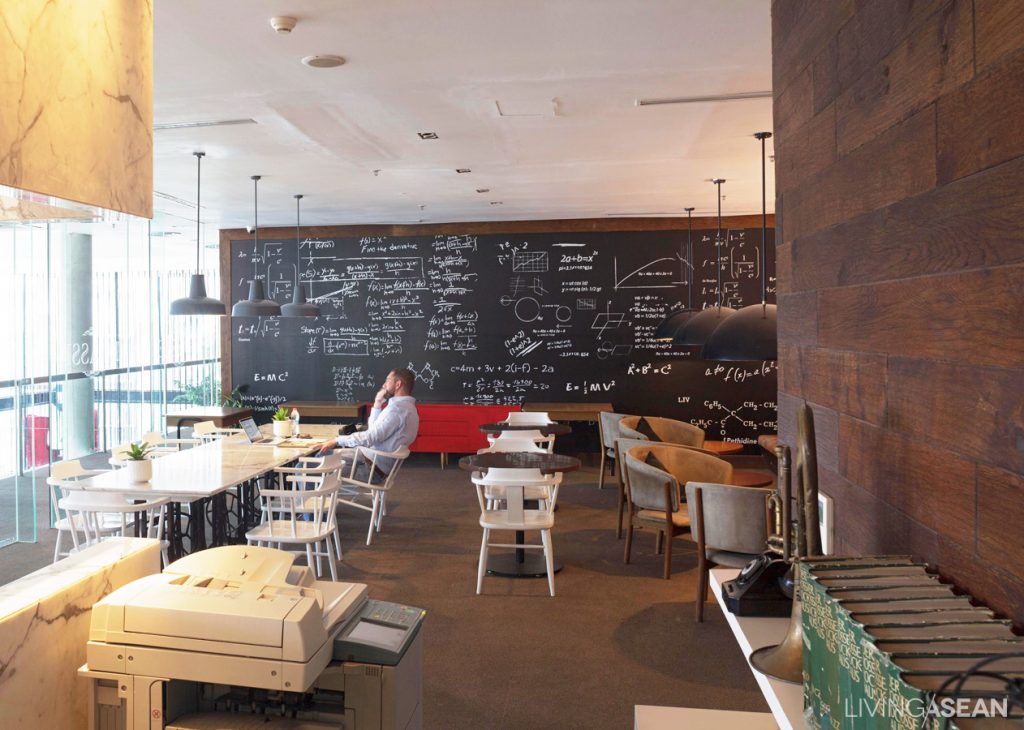
Designed for high quality accommodations, the Morrissey features a gorgeous mix of Jakarta’s urban tropical ambience and ultramodern architecture. There is a hint of Industrial Loft design that comes with high ceilings, plenty of wall openings, and abundant natural light. Naked concrete finishes alternating with brick painted white, and dark-colored wood floors provide a welcome contrast between stylishly chic design and natural rawness.
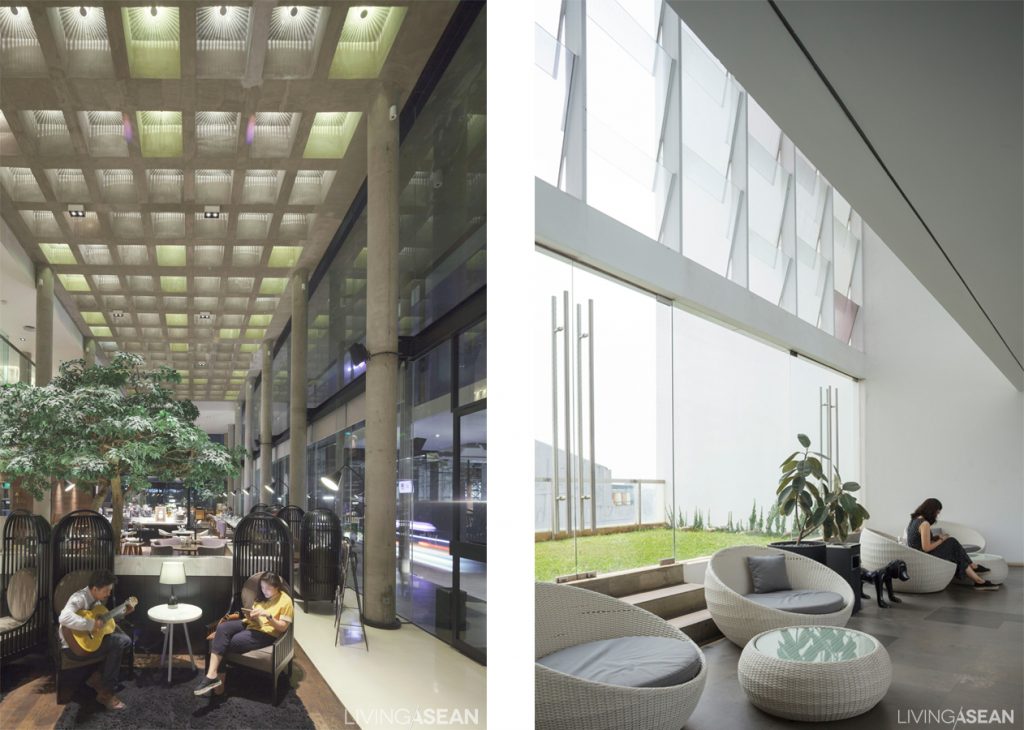
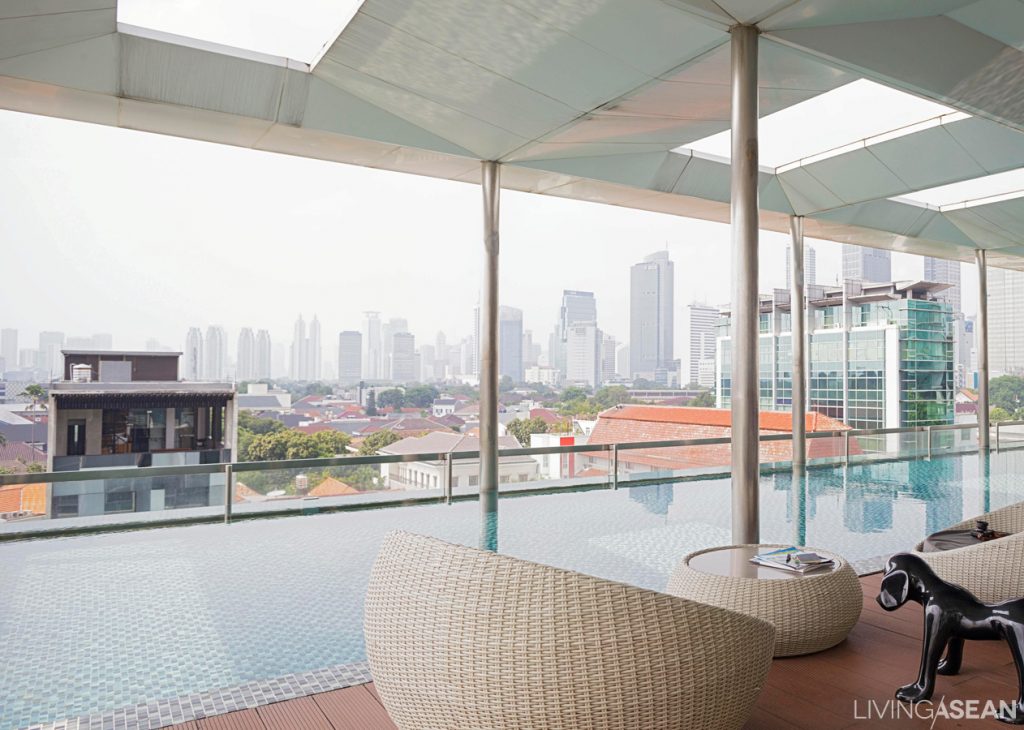
The Morrissey interior becomes an enchanting, well-lighted place by night, thanks to beautiful lighting effects and natural textured finishes. /// The rooftop garden features a perfect escape for those seeking a little peace and quiet, in which to read or just sit back and relax.
The hotel is conveniently located within walking distance to interesting attractions throughout Jakarta’s CBD. The famed Museum Nasional Indonesia is less than two kilometers away, while the fashionable shopping mall Plaza Indonesia, aka “P.I.” is roughly a kilometer or 7 minutes if you prefer going by train.
Cozy Resident’s Lounge looks out over the lap pool with panoramic views of the city skyline stretching farther than the eye can see.
If a journey back in time is for you, know that the Old Djakarta Theater, the Jalan Surabaya Antique Market, and the Taman Ismali Marzuki Cultural Center are easily accessible from the Morrissey. It’s a good idea to walk to these great attractions. It only takes about ten minutes. Having been to all of them, we had the most fun exploring the city on foot.
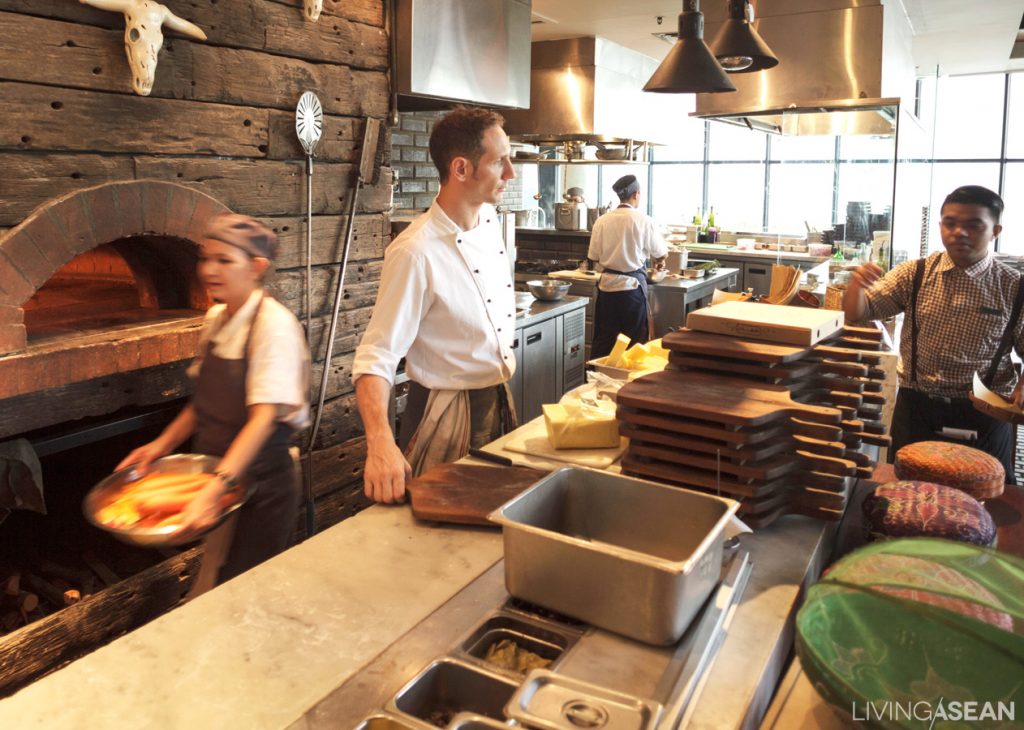
Besides excellent service and upscale accommodations, the Morrissey is also known for Italian cuisine as well as local and fusion foods. Drop into the Ocha & Bella restaurant to find out. Open kitchen design lets you see chefs at work preparing meals right before your eyes.
Along the way, take your time to experience the Indonesian versions of street food similar to the ready-to-eat meals ubiquitous throughout Asian. Highly recommended is Nasi goring, the Indonesian version of fried rice. Buy a set from the street vendor and have it cooked to order right on the spot. Another not-to-be-missed dish is Satay, especially Goat Satay. It smells good and tastes like heaven.
In case you have had a long day, the Morrissey offers plenty of cozy spots in which to relax and unwind. The Sky Lobby offers a vantage point to take in panoramic views of Jakarta city skyline. If fitness is for you, go to the swimming pool, or burn calories and build muscle on the treadmill. Take your pick. A full array of gym equipment is available onsite.
The Morrissey reception area is also home to a lobby café. Most outstanding is the architectural design that is strongly influenced by Le Corbusier, the icon of Modernism.
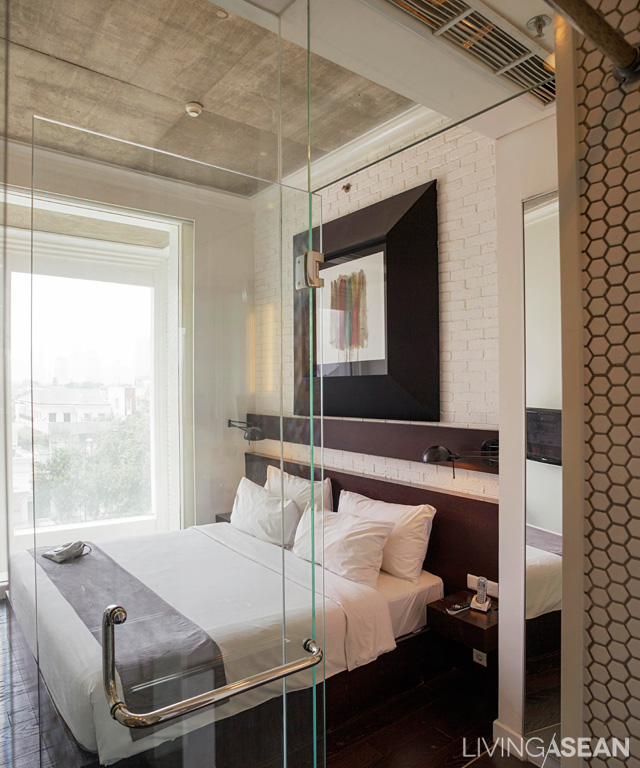
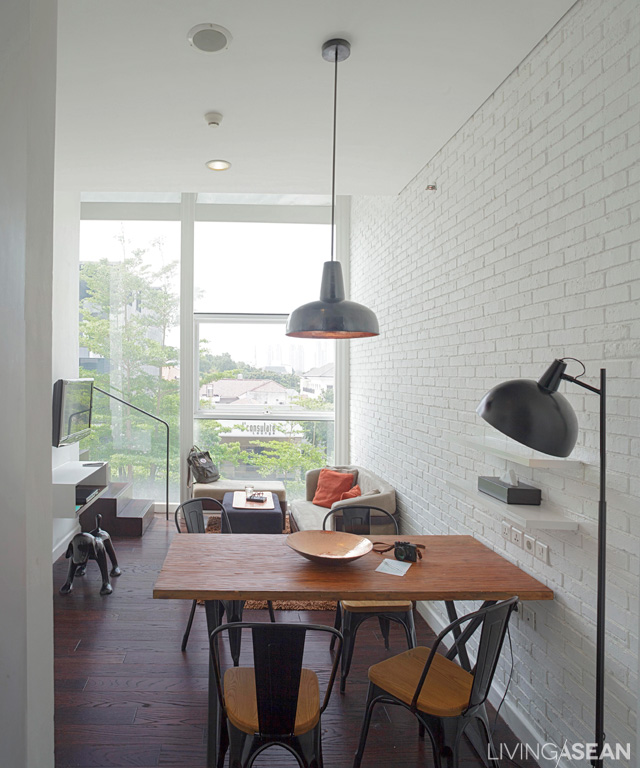
Large window frames the view of Jakarta city skyline. Simple décor belies the comfy and warm atmosphere. Natural textured finishes, no-fuss ceilings, and painted brickwork add a touch of Industrial Loft to “Double Volume” Room.
Fueled by tropical inspirations, guest rooms at the Morrissey showcase textured concrete finishes and brickwork in relaxing shades of white. Simple, clean design leaves plenty of room for wall openings. Frameless glass doors and panels allow abundant natural light. Such inspiring Modern Tropical details can be applied to many parts of your home.
The Seminar Room with an information center is at your service on the mezzanine.Workspace on the first floor of “Double Volume” Room consists of a desk-cum-dining-table, a sofa and coffee table. Furniture varies from one room to another. But every piece is representative of the Industrial Era. Chairs in this photo are the Tolix Model A designed by Xavier Pauchard in 1934.
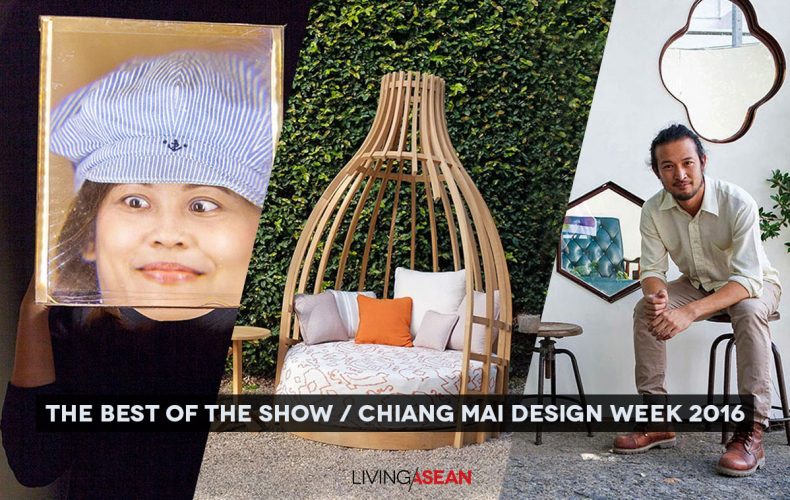
Ideas are all around. Designers and artists create their works from Chiang Mai heritage. The local wisdom was developed under the theme “New Originals”. Living ASEAN picks the must-see exhibitions arranged by locations for your convenience.
Along the walkway lined with graphic design exhibitions, Chiang Mai entrepreneurs open their booths to stage the shows here.
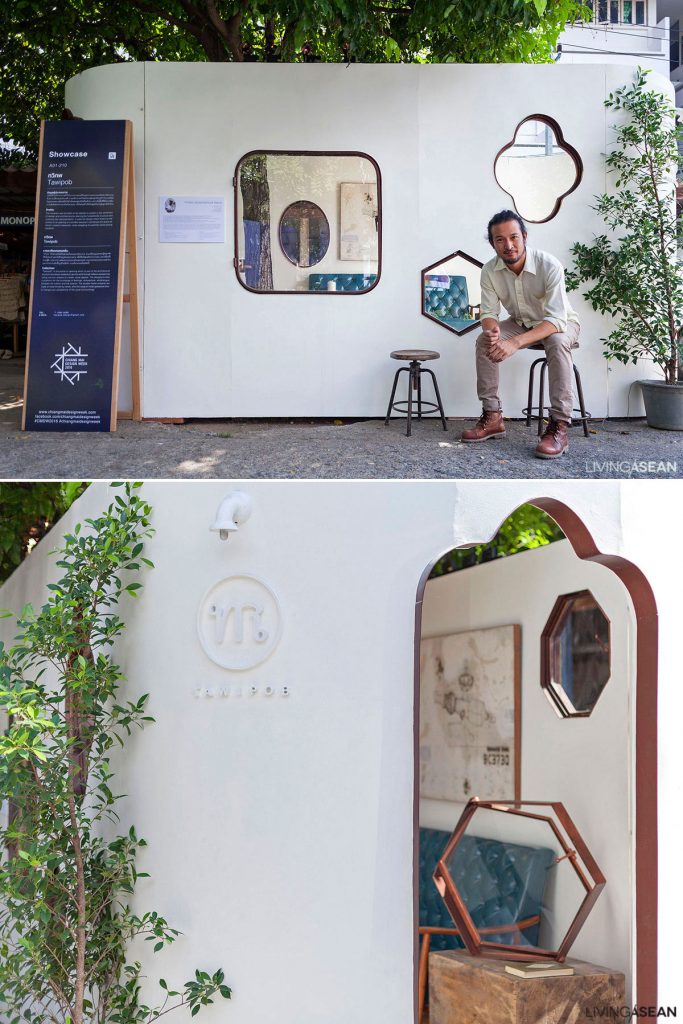
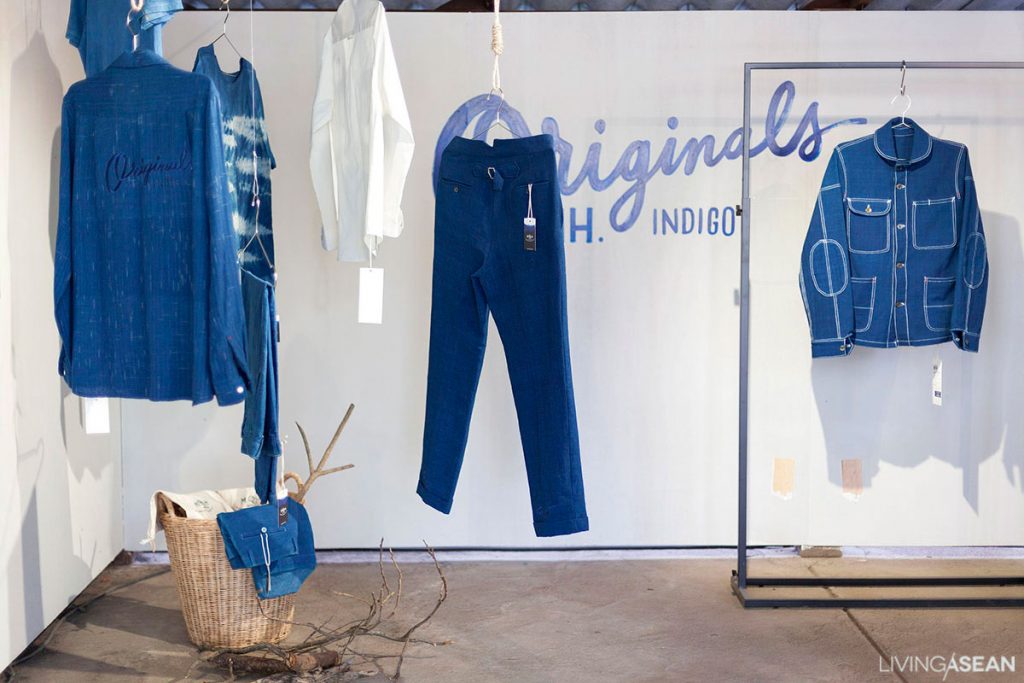
“Tawipob,” a collection of handcrafted metal-frame windows, created by Thai artist Torlarp Larpjaroensook“Mohhom,” clothes dyed indigo blue the traditional way, are re-created to showcase new uses by MOHHOMM.
TCDC Chiang Mai
The Center of Modern Design Knowledge in Chiang Mai, organizer of this event, puts on shows of many interesting projects featuring works by local and international designers and artisans. Beautiful designs, artworks, and crafts from Japan and Indonesia are on view here.
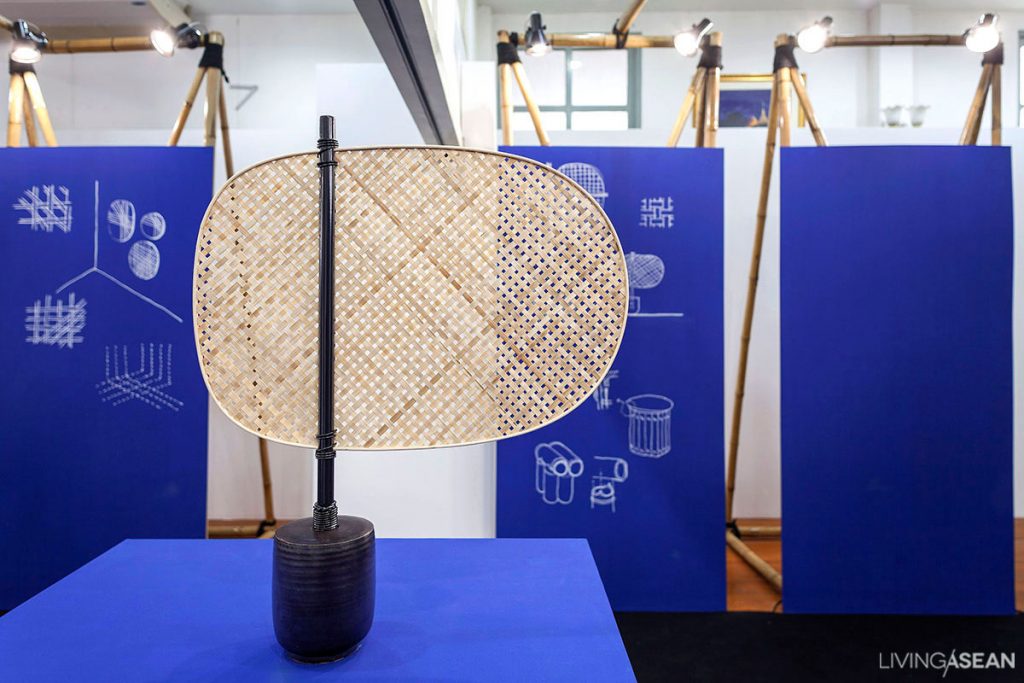
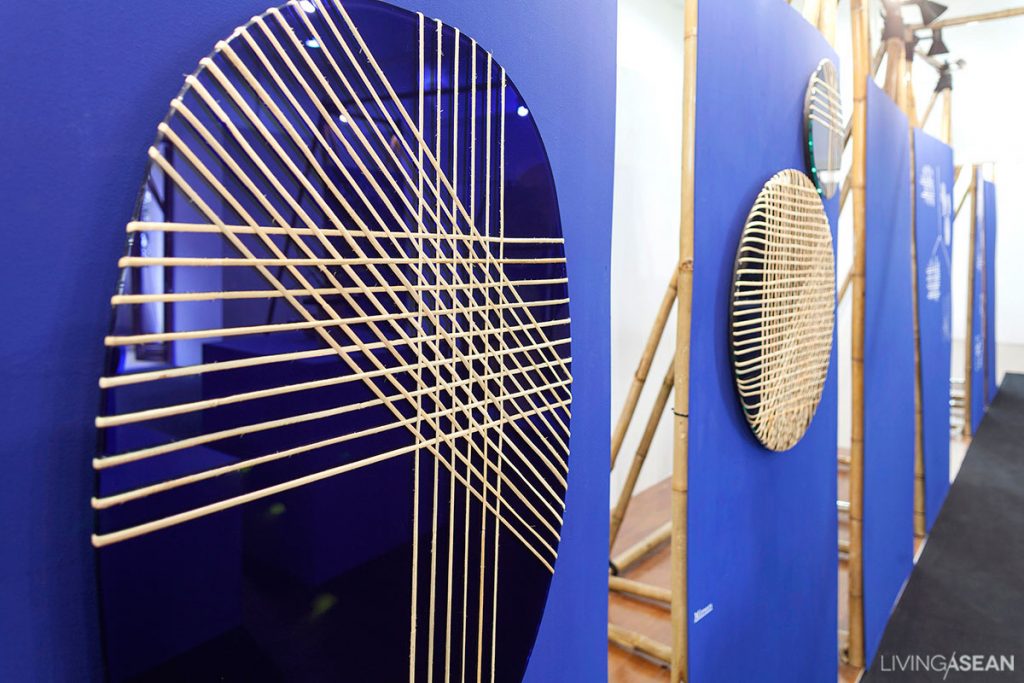
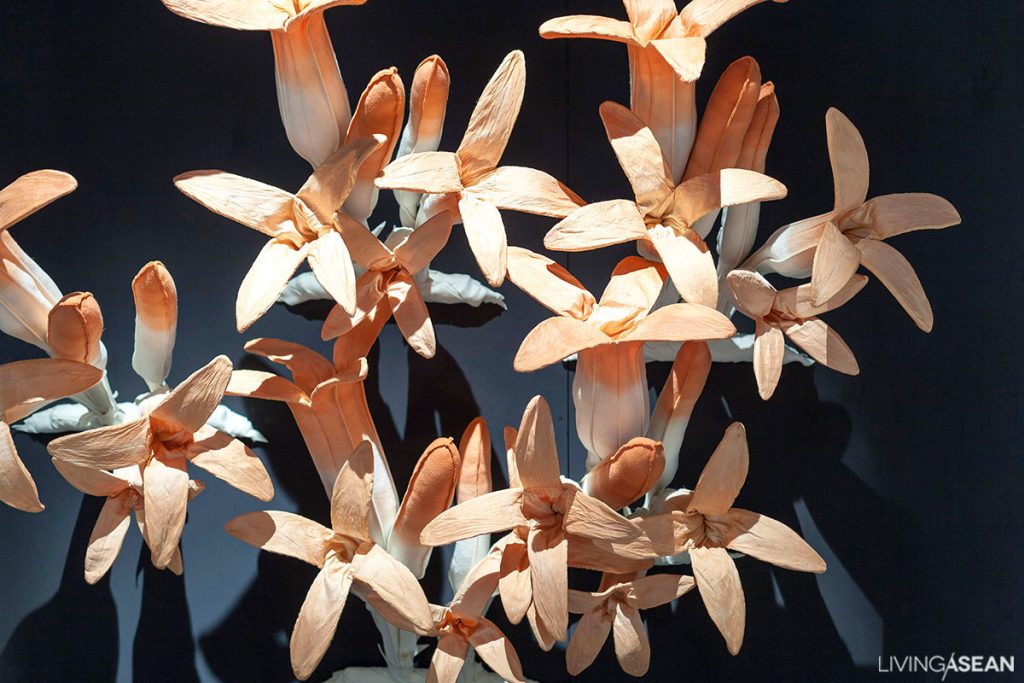
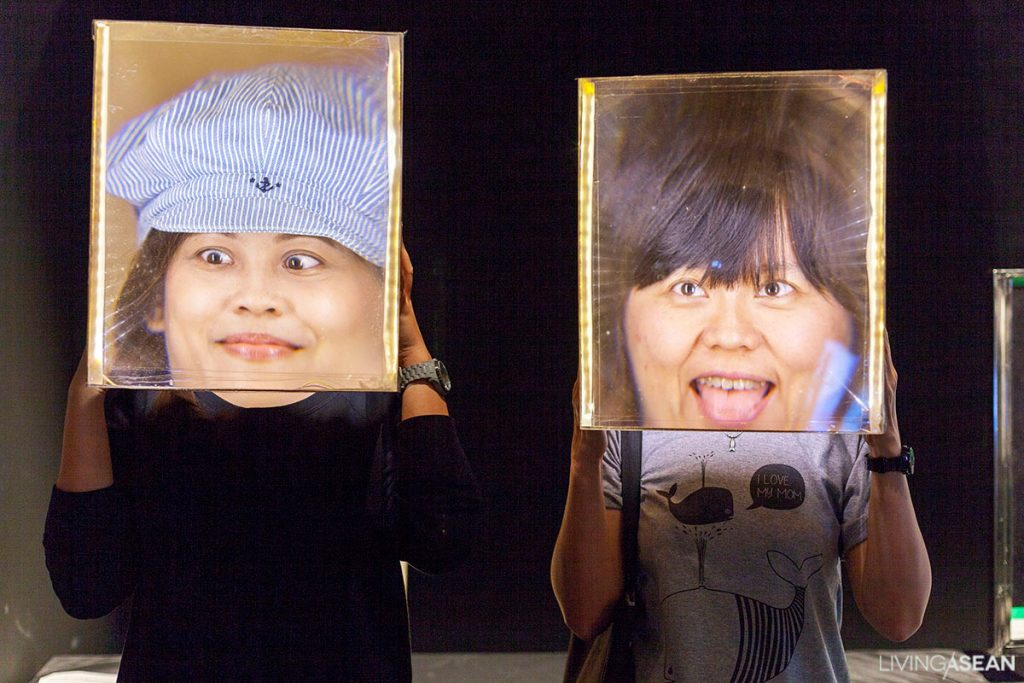
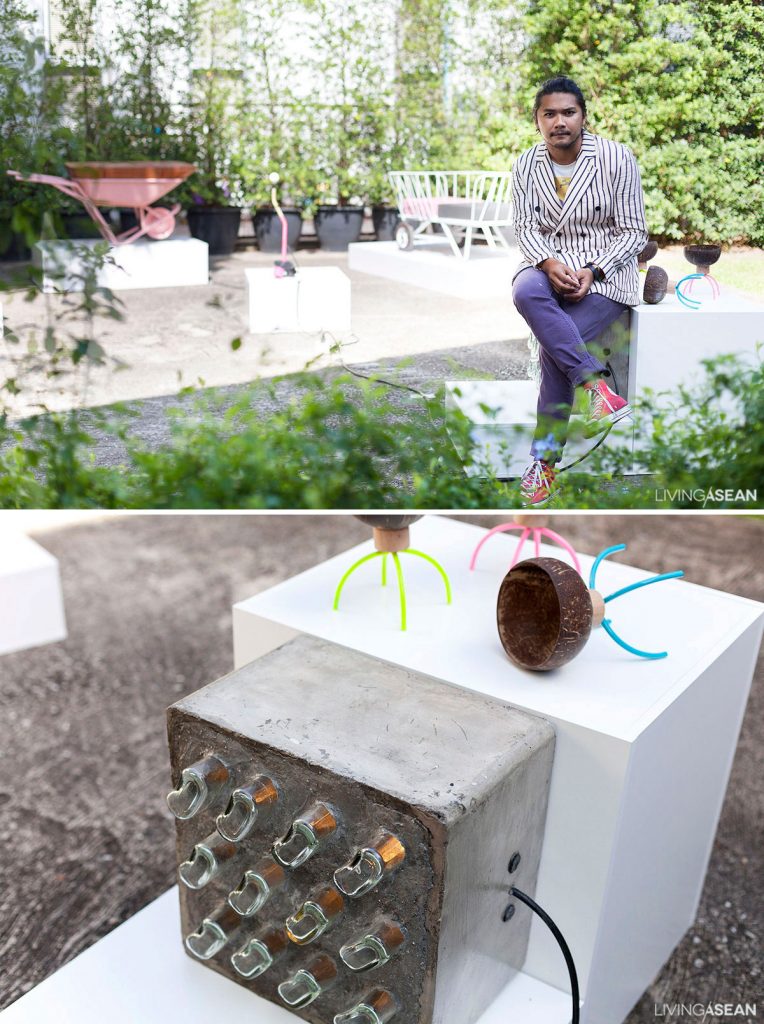
TRANSFER(S), a creative collaboration between Thai and French designers, features beautiful objects of handicraft made by local artisans and designed by Sam Baron, Charlotte Juillard, Nocc Studio, Thinkk Studio, and Rush PLEANSUK.“Desk Partition” by TRANSFER(S) / An exhibition by La Fete“Nanaa Mirror” by TRANSFER(S) / An exhibition by La Fete“The silk-wool plant collection,” an over-scale flower design, was crafted of Thai silk and Holland wool and designed by WANDSCHAPPEN in collaboration with JIM THOMPSON. / An exhibition by Here and There, Holland“The Big Face Box,” by Daily Portal Z, isn’t about just making a face big. It makes people around you smile and come away happy. / An exhibition by Knowledge Capital, Japan
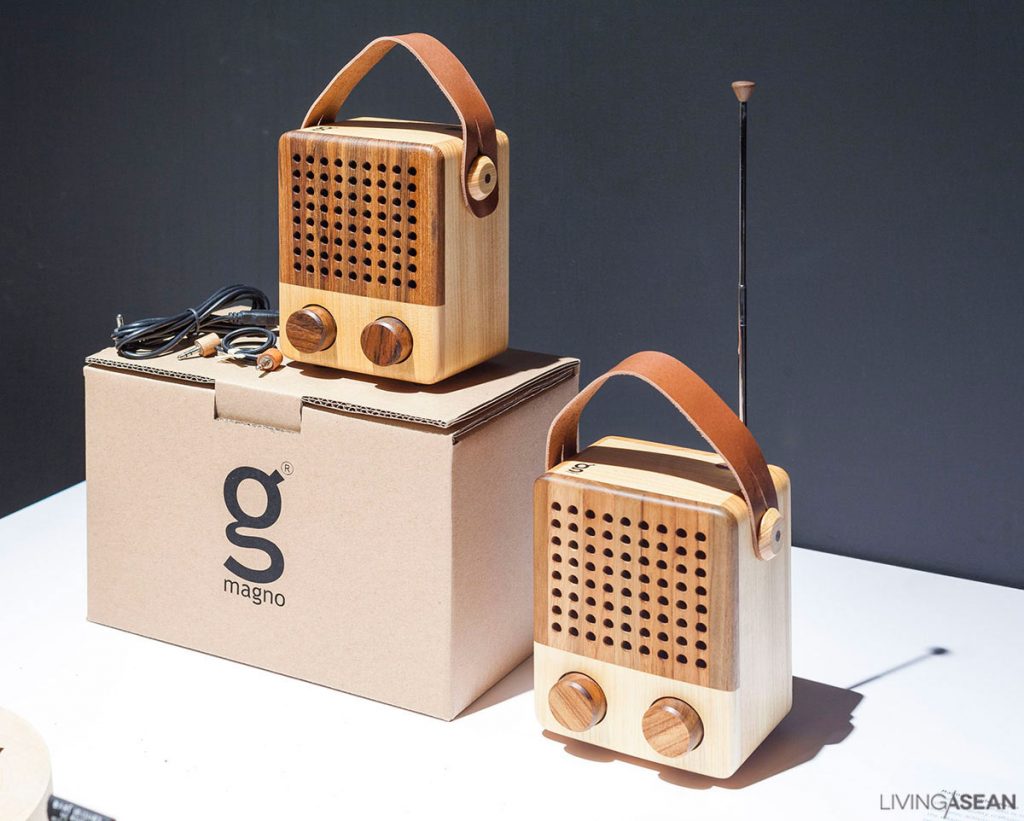
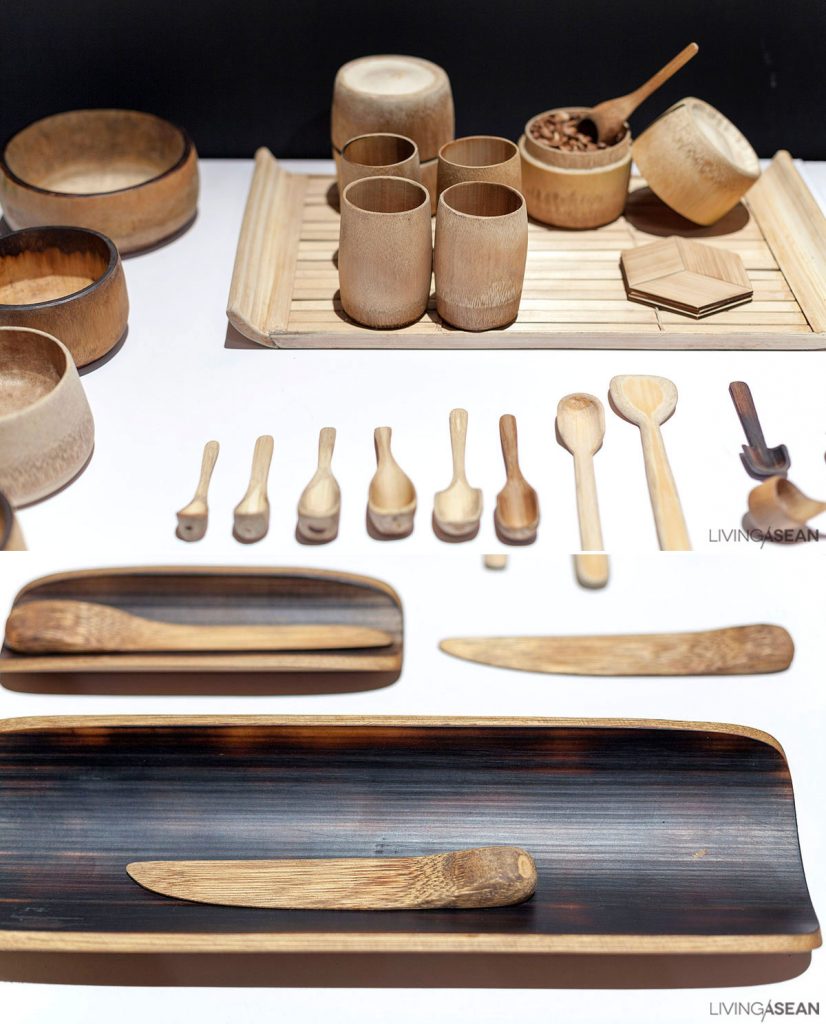
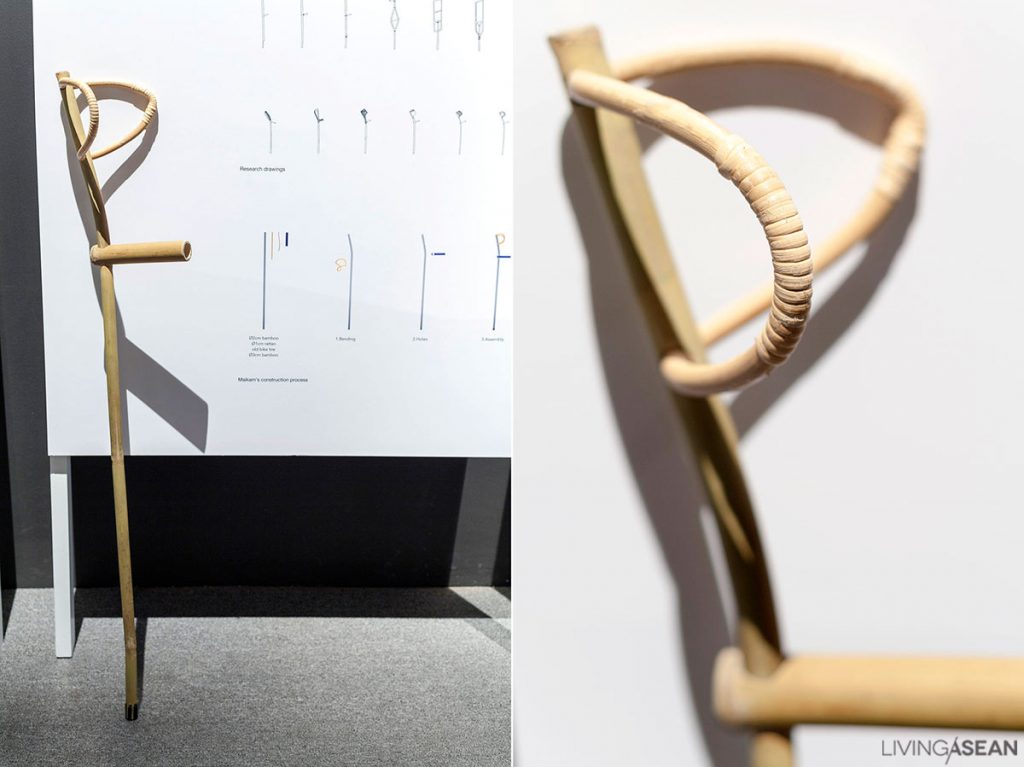
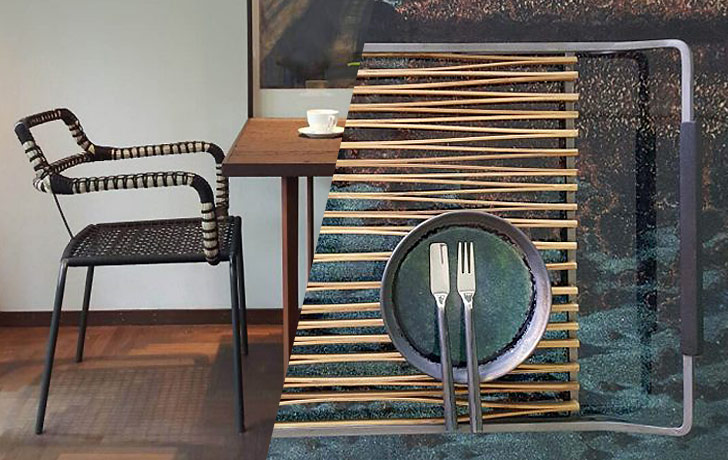
Wooden radio sets by Magno / Exhibits by Rumah Sanur Creative Hub, IndonesiaBamboo coffee set and cutlery inspired by the breakfast tableware of the Bomari village / A show rich in exhibits by Rumah Sanur Creative Hub, Indonesia“Maikam” is a simple crutch handcrafted of bamboo, rattan and the inner tube of an automobile tire. This physiotherapy equipment is a product of local craftsmanship in Chiang Mai.
Chiang Mai House of Photography
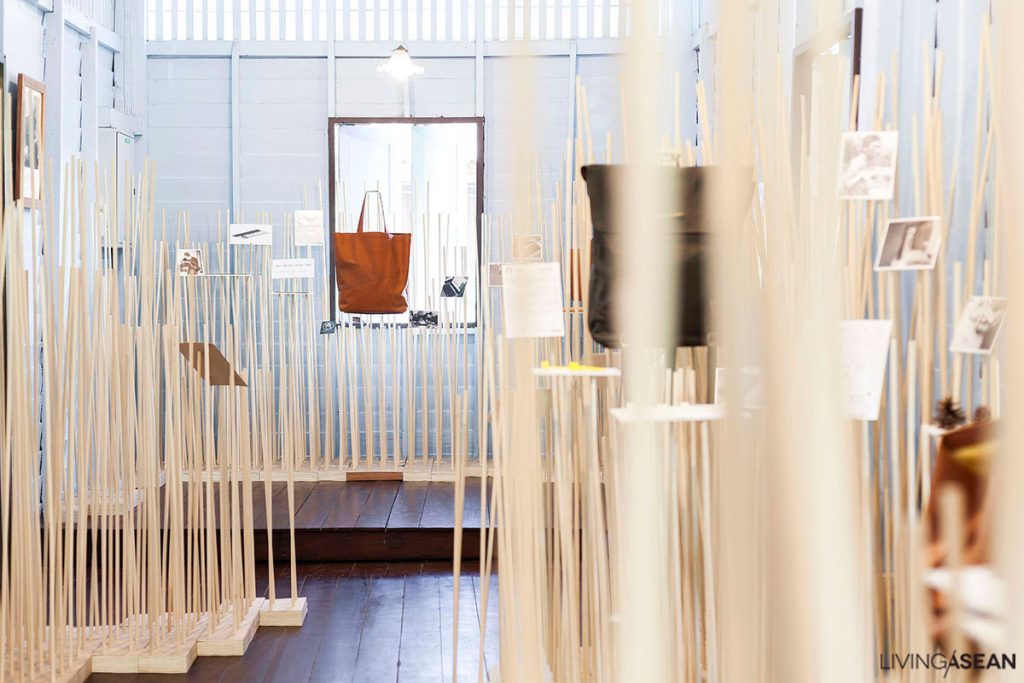
The Small Blue House behind the Lanna Folklife Museum becomes a venue for talented designers to showcase their great ideas, which art lovers shouldn’t miss.
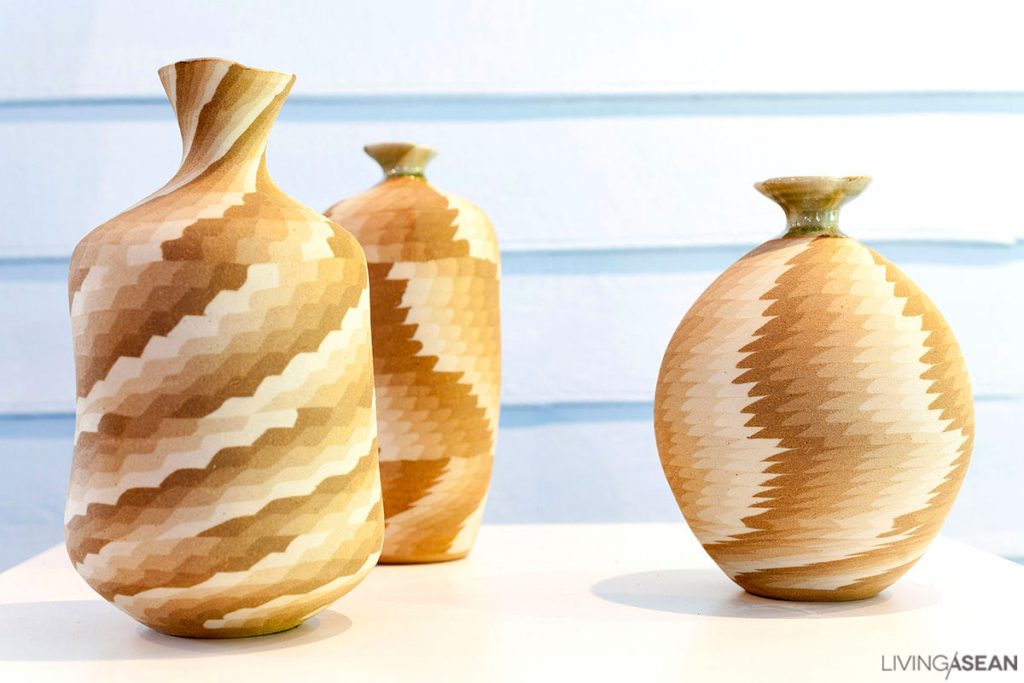
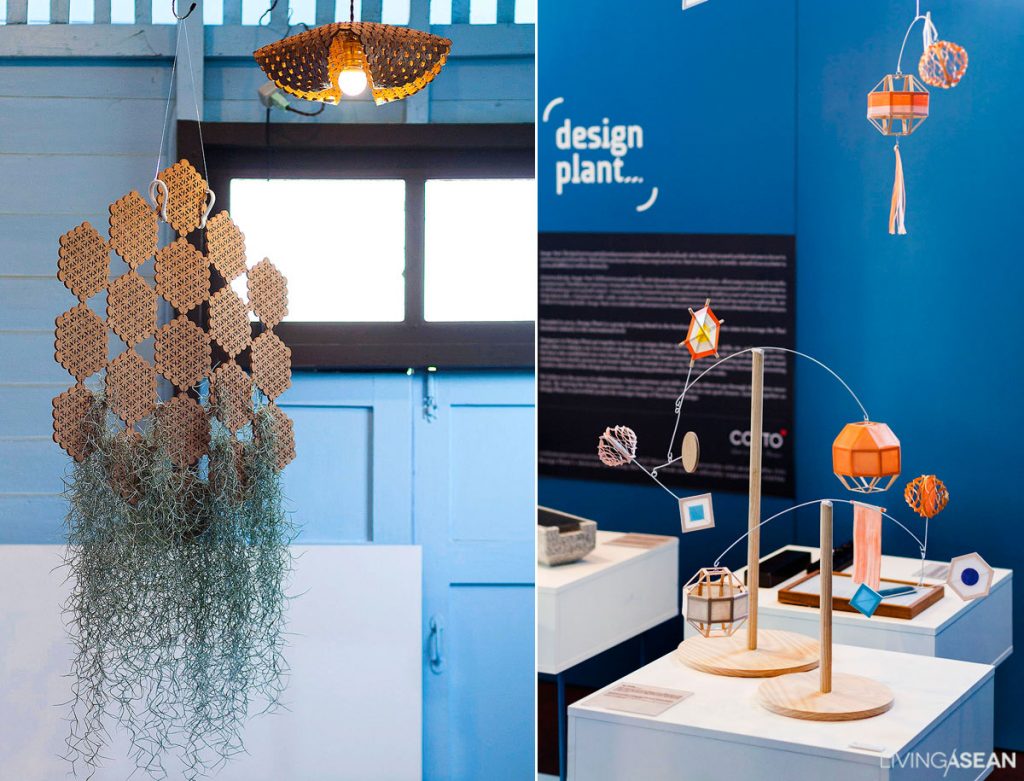
Art and design objects made from recycled materials by Chiang Mai designer Pichakorn Chukeaw, from Tua Pen NotAn opportunity to explore production techniques used in making leather lifestyle products by Labrador x FabcafeA unique technique of mixing clays by Inclay Studio, a local ceramic studio in Chiang Mai“Ta-Ton-Yon: Keep it Slow, and Grow Better,” an exhibition by Design Plant, supported by COTTO
Rachamankha Hotel
Elegance never fades. The best of Chiang Mai Design Week culminates in “720 New Originals,” which consist of three shows at the iconic hotel in Chiang Mai.
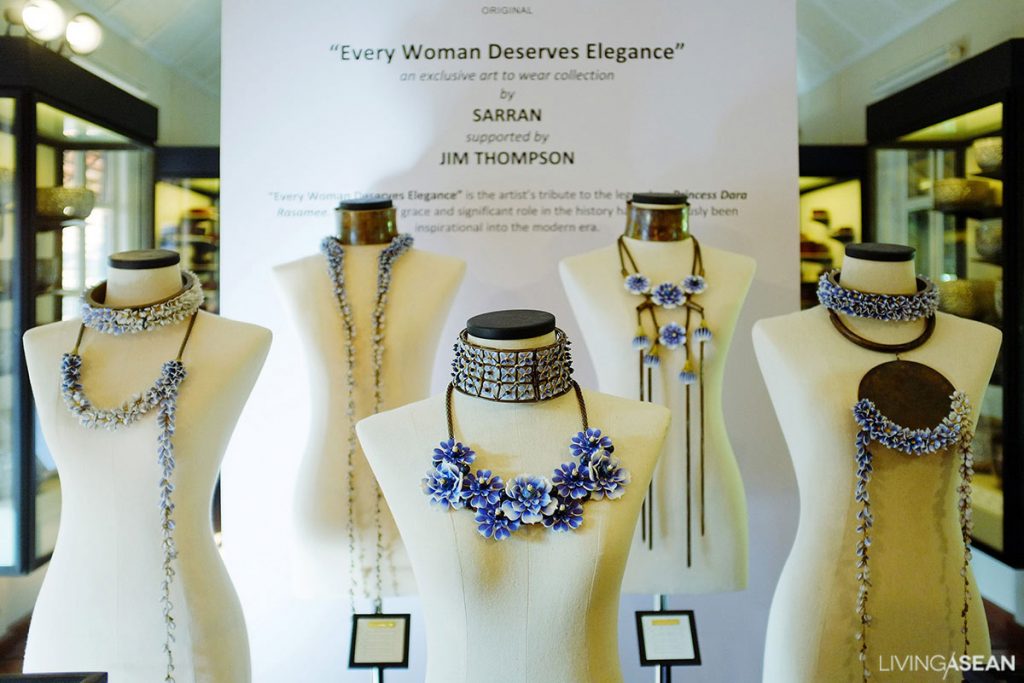
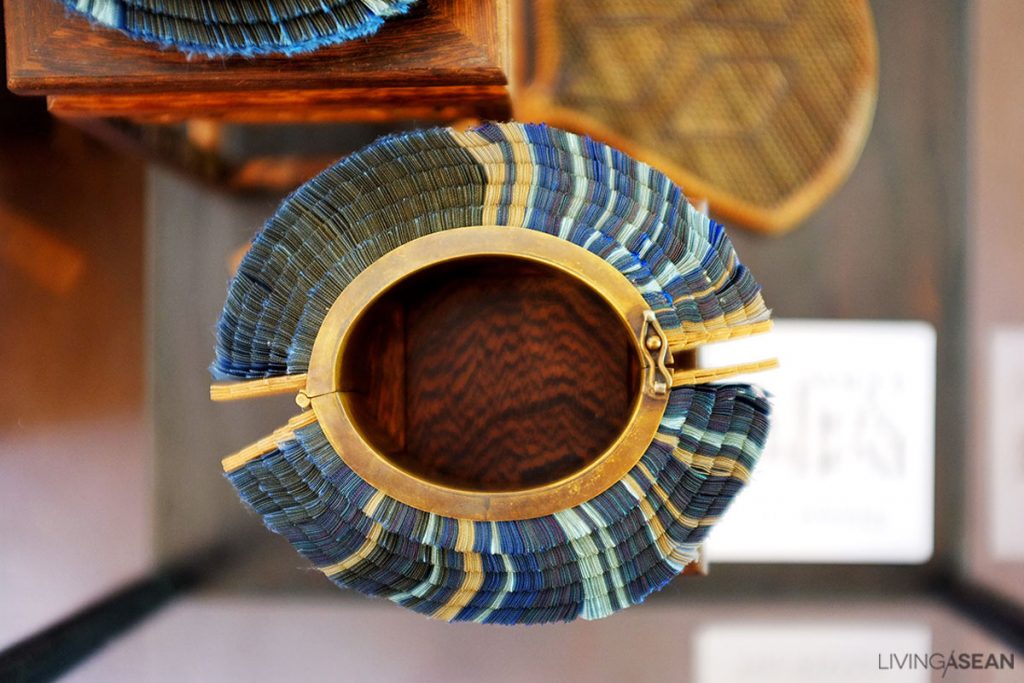
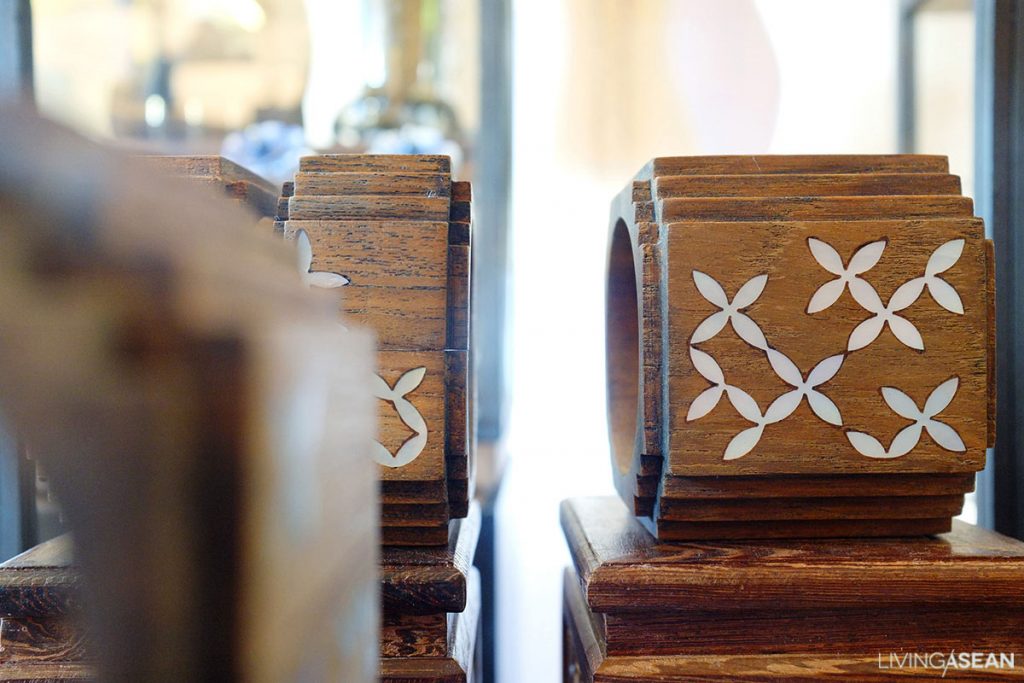
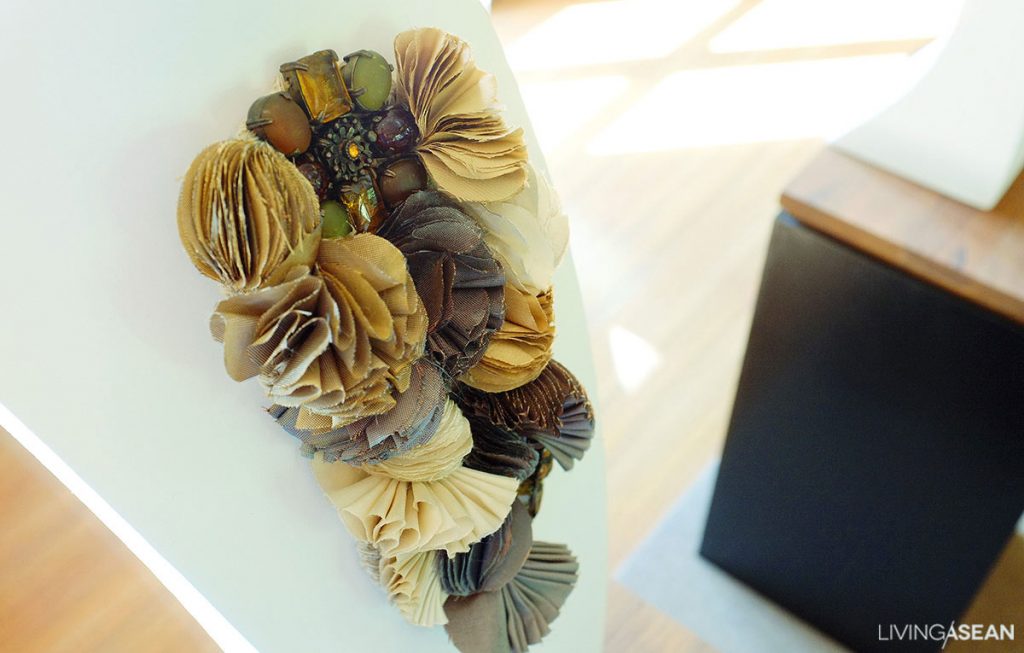
“Every Woman Deserves Elegance”, an exclusive art to wear collection inspired by Princess Dara Rasamee, is made by SARRAN and supported by JIM THOMPSON.Turn waste silk thread into a beautiful bangle by SARRAN x JIM THOMPSONA bangle made using techniques in pearl inlaid furniture by SARRAN x DEESAWAT“Wear Our hearts,” an art to wear collection for charity by 17 guest designers“72 Seats,” the joy of the outdoor living co-created by SARRAN, JIM THOMPSON, and DEESAWAT
Thapae East
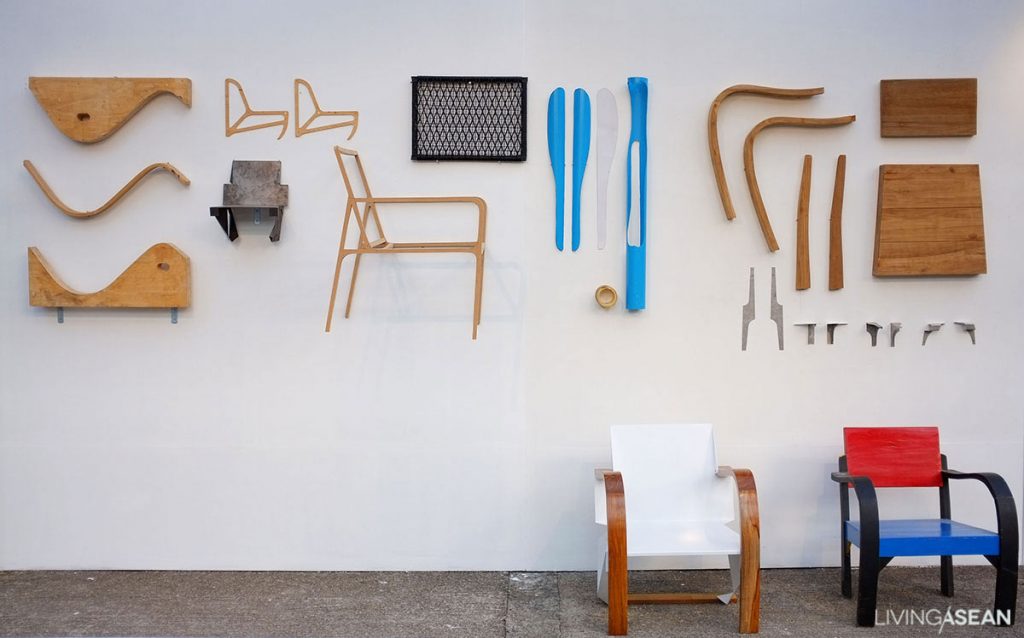
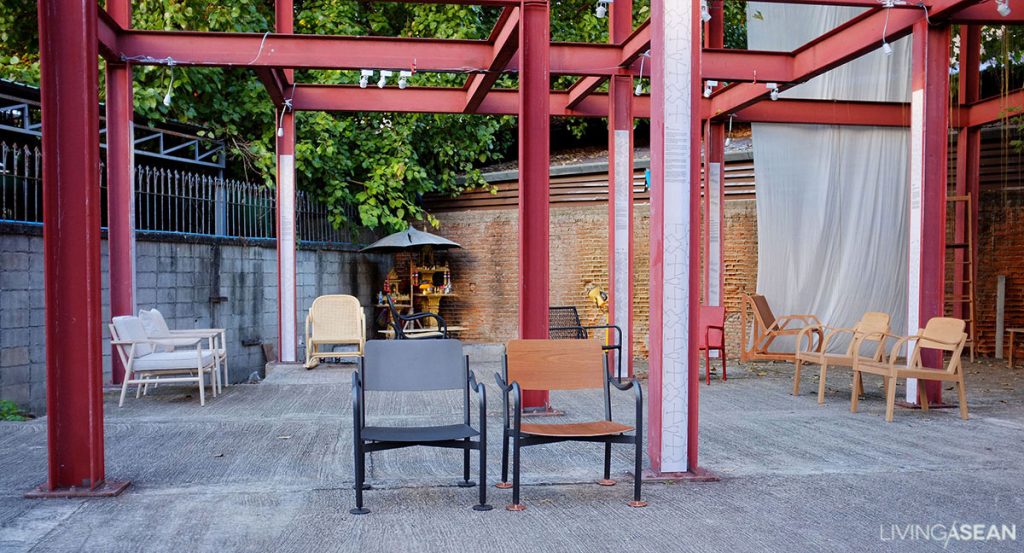
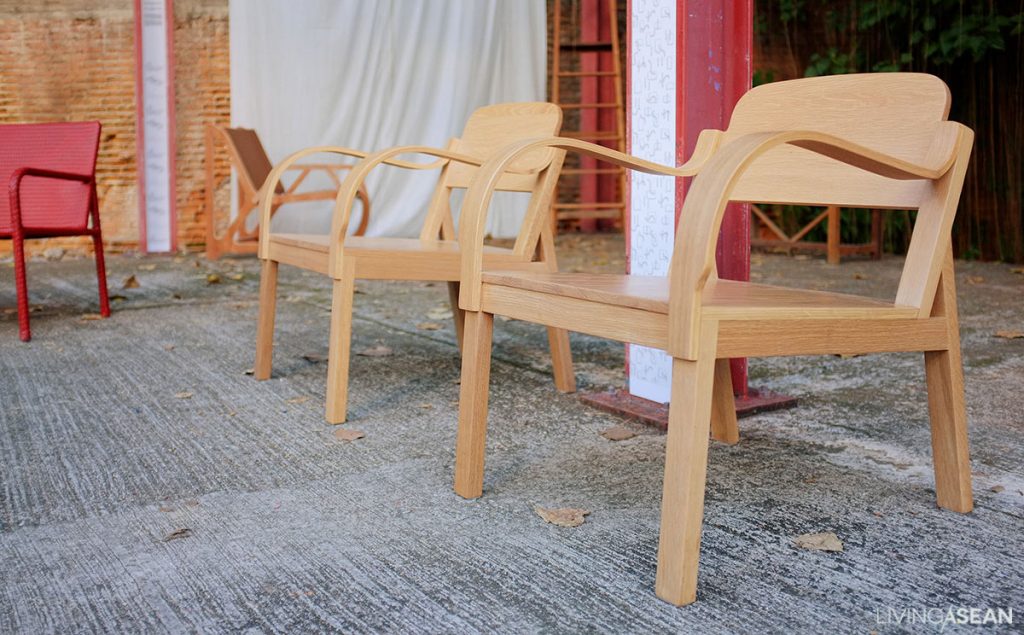
“Re-Design Anonymous Chair” features an exhibition depicting the thinking process that goes into making a traditional chair with curved wooden arms.
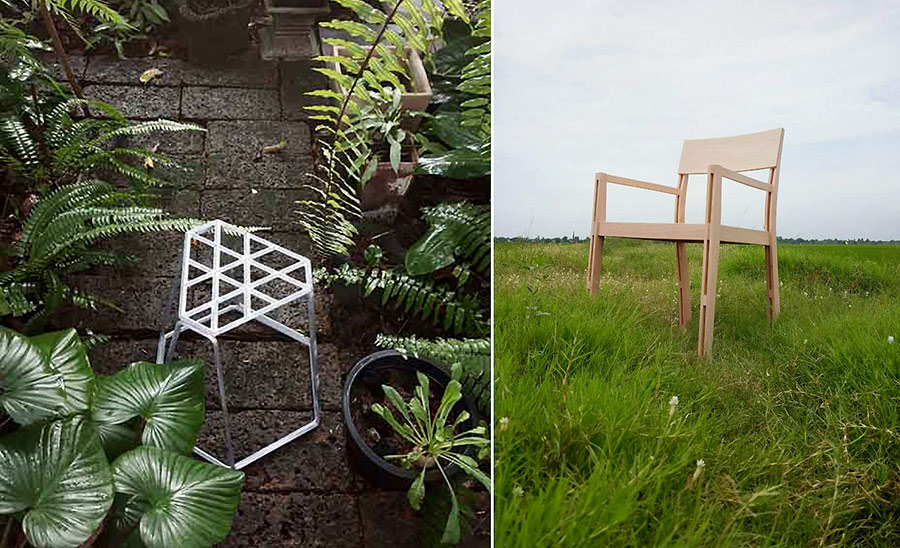
Virtual diagram of the thinking process of this project“Ele” by Doonyapol Srichan, of Re-Design Anonymous ChairA design called “Same, Same” by o-d-a, of Re-Design Anonymous Chair“Ping” by ease studio, of Re-Design Anonymous Chair
Gallery Seescape, Nimmanhemin Soi 17
“Gallery Seescape” puts on an art exhibition by Anon Pairot, a Thai designer who is curious about the goings-on in our society.
Come 2017 the exhibition “Souvenirs from Depressions” will be staged on an even bigger scale at the Art Stage in Singapore.
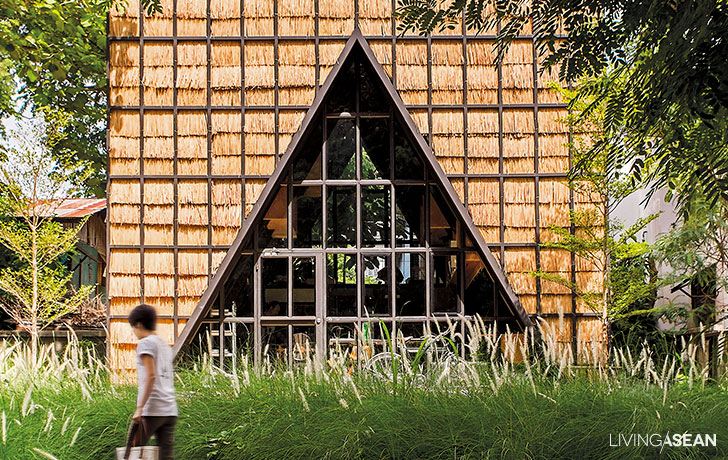
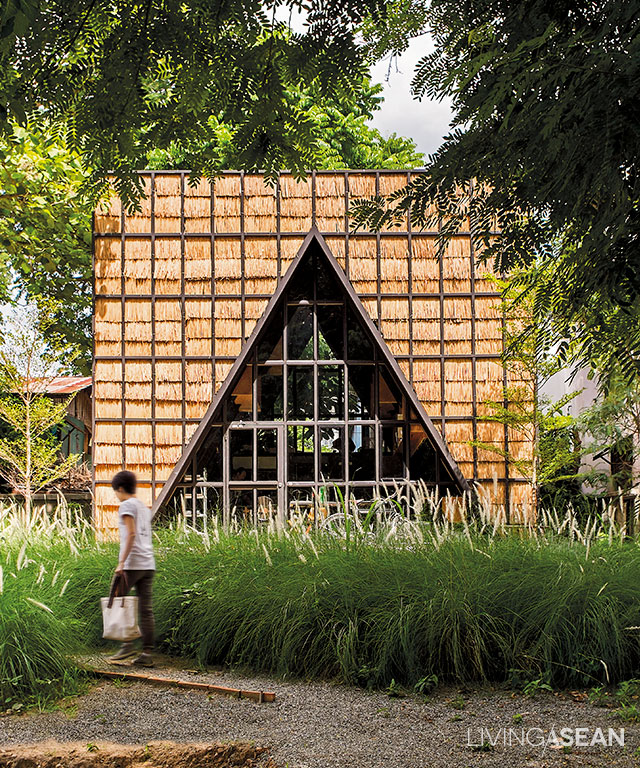
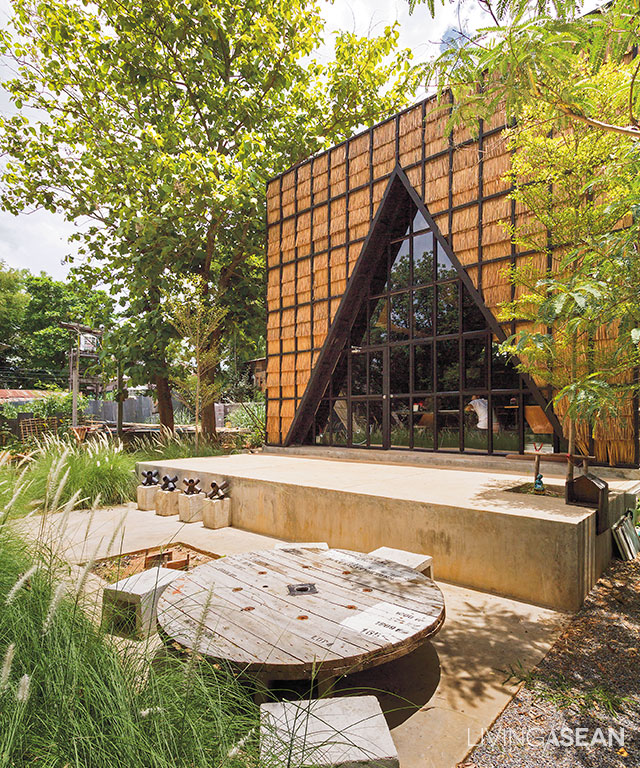
As a child he liked designs connecting old traditions with environmental awareness. This found expression in this straw-covered cubical building reminiscent of a farmer’s paddy hut.
/// Thailand ///
Story: Nutt /// Photography: Chaiyaphon Sodabanlu
Design: Ronachai Khanbanya, Mae Khaning Creative Co., Ltd
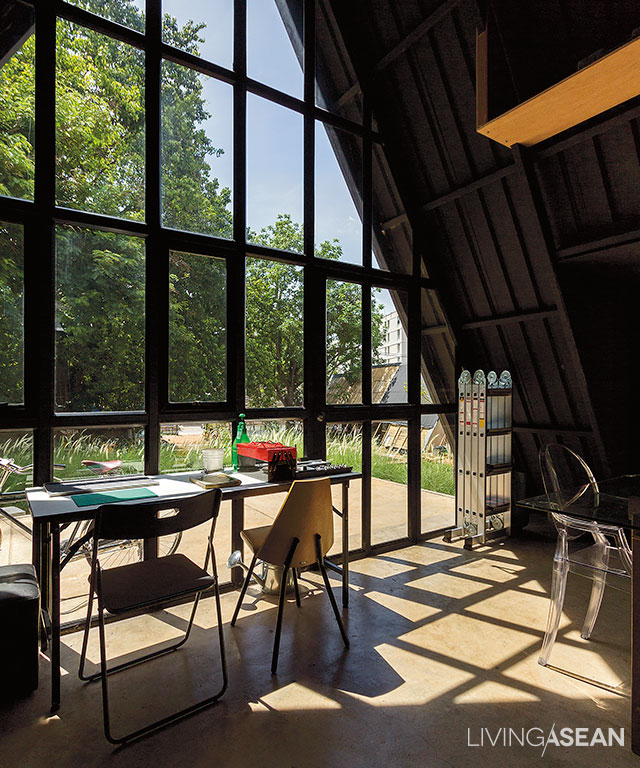
A single large pane is expensive, so smaller ones are set into a metal frame, economical and also tasteful, reflecting the framework of the building.
Ronachai “Art” Khanbanya, architect from Mae Khaning Creative Co., Ltd, has redesigned a lot of old offices and developed a preference expressed in the slogan “reuse, repair, recycle.”
“Reuse” is putting things that are still usable back to work again.
“Repair” is fixing broken or abandoned things and making them useful once more.
“Upcycle” is designing discarded materials for new use.
“Our old office near the city moat was small and inconvenient. We relocated here for the pleasant atmosphere. Having to rent, we designed a structure we could easily dismantle and reassemble. Budget was important in choosing building materials.”
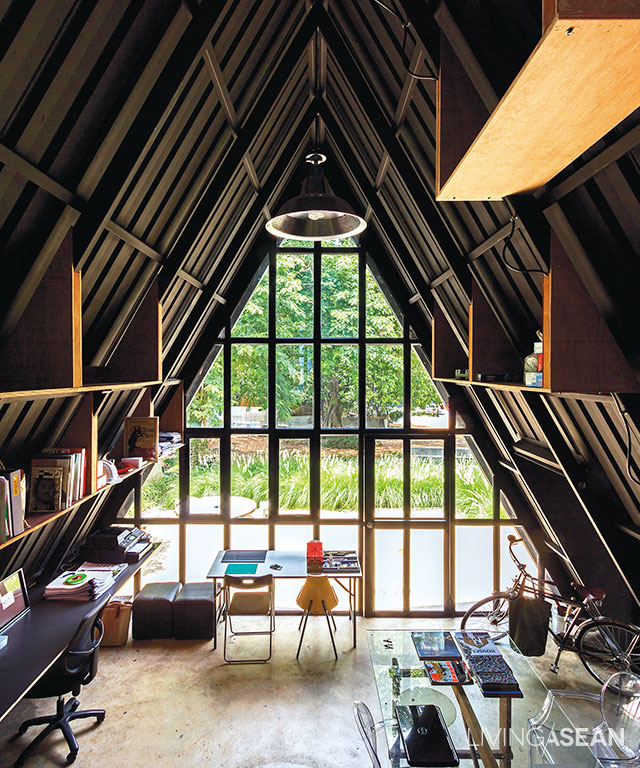
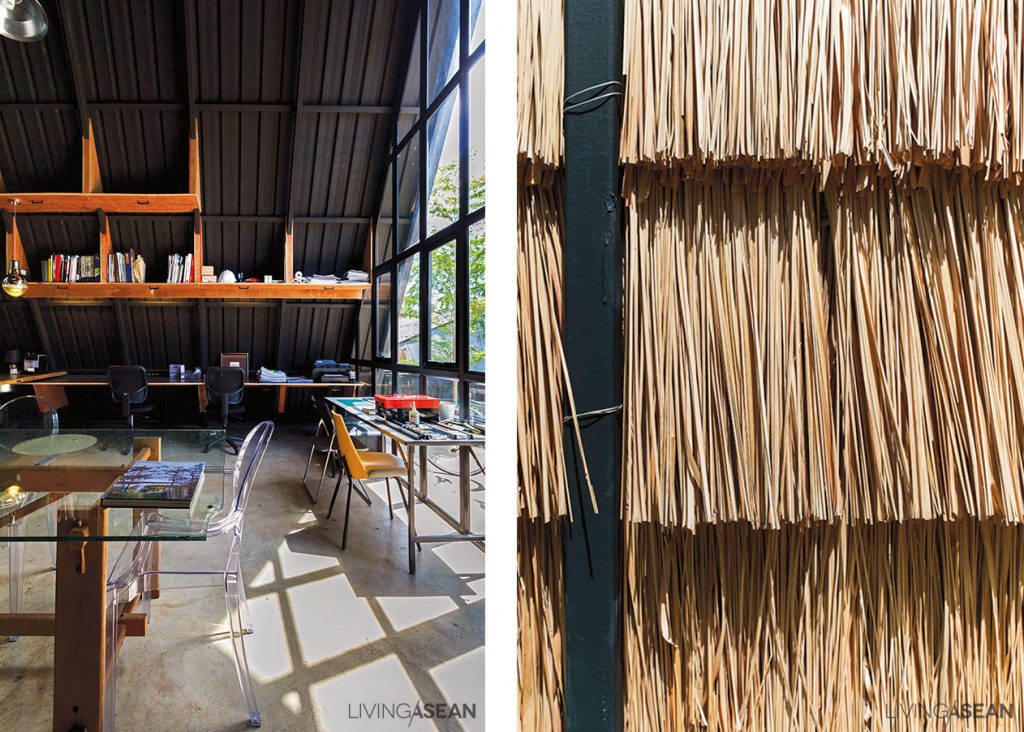
The structure is tent-like: a frame of 6-meter-long box steel beams supports a high gabled structure. The entrance gable has glass panes set in a metal framework. Outside walls are thatched with cogon grass, effective heat insulation that helps save energy and is also excellent soundproofing. Sheet metal lines the inner walls.
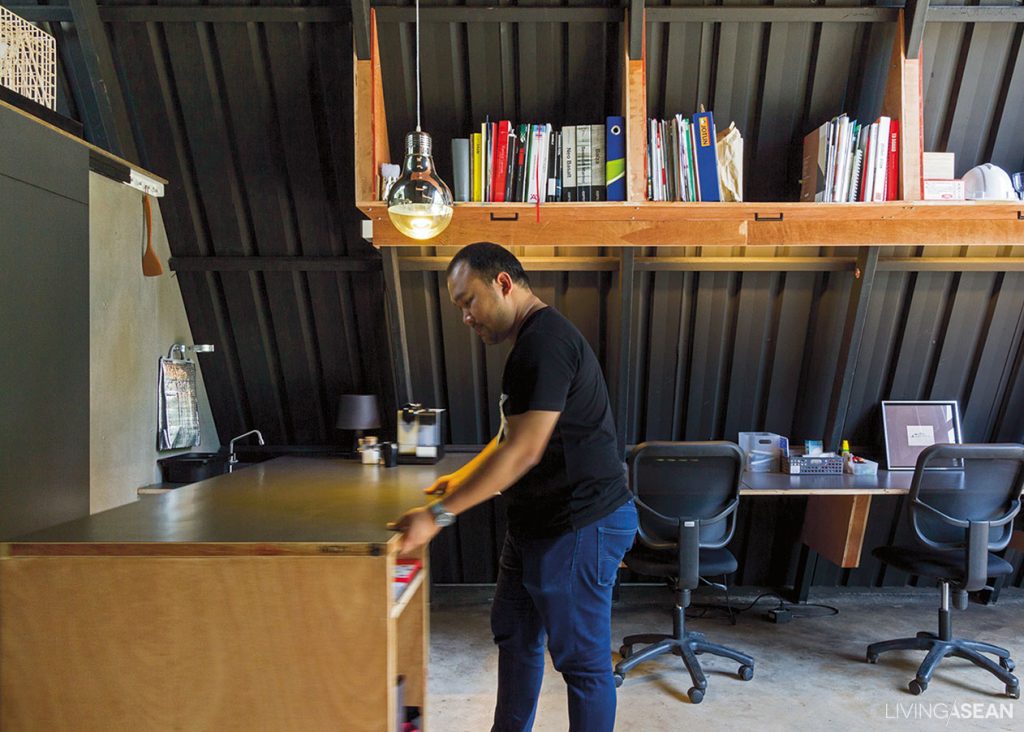
An old door panel transformed into a sliding counter for a multipurpose table: adaptable to work desk, dining table, or for kitchen use.
“Easy-to-use materials like cogon grass are locally available, and give the building a distinctive look. I wanted to show that cheap materials could be not only effective, but also beautiful. We’ve had pretty good success without having to use expensive imports. The new generation of designers should get aware of what’s here already.”
Metal wall, second floor heat insulation, creating intra-wall space for good air circulation. /// Cogon grass roofing, effective use of local materials for good heat insulation and soundproofing.
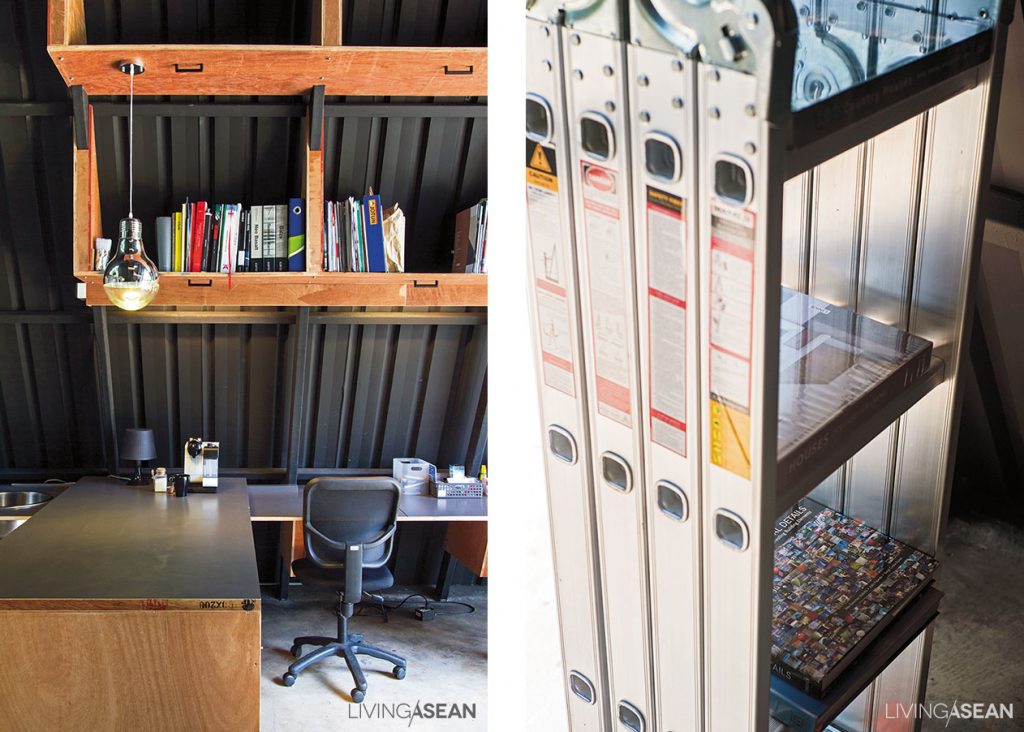
Furniture and décor here is quite simple, as seen in the particleboard shelving and the use of an old door to create a sliding counter. Art was aiming for a universal space, with furniture adaptable for work, eating, or food preparation.
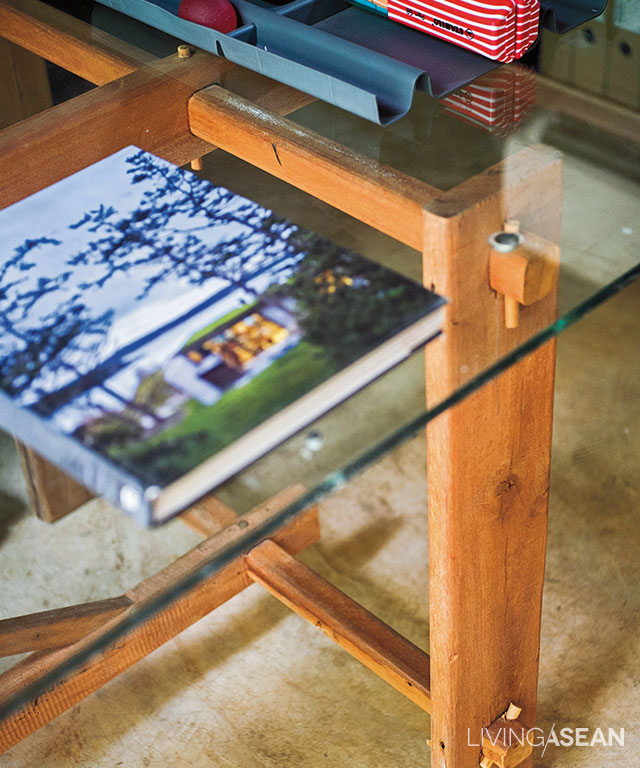
The tabletop is made from an old unused pane of glass attached to make a new table using shims and pegs.
“I’m thinking a completely new lifestyle, not like old office designs, more an arrangement of work tables in a relaxing environment, like working at home or chilling at a café. We find comfortable work environments work for other sides of life, too.”
A shelf is crafted of simple materials such as unpainted particleboard. /// A stepladder: When not in use, it can be used as shelving.
The garden outside is a comfortable space where you can drink coffee at a table made from a cable spool. Landscaping features fountain grass, which doesn’t require a lot of care and fits in with the “paddy hut” theme. The walkway curves around before shortcutting into the building, evoking the image of paddy dikes. “Everyone wants to live in the country. In Chiangmai these days you see only buildings, not many plants. The plants here make it fun to come to work.”
The outside area in front of the building is used as a living and relaxation space for drinking coffee. A cable spool is used for a table. Landscaping is fountain grass, easy to care for and evoking thoughts of a life in the fields.
This office is comfortable. It has complete functionality, and saves on materials, construction, and energy. Good for the environment, good for the folks working there. “The more you think, the more you save” should be the credo of a good designer. The evidence is here: as Art says, it’s a great place to work.
The Commons, a new community mall, describes itself as one that stands for a “common” concept. Shops here offer a variety of consumer goods that are necessary for healthy living and meeting daily needs. Open every day from 08:00 to midnight, the new-fashioned building is located in the posh Thonglor neighborhood of Bangkok.
/// Thailand ///
Story: Fernkul /// Photos: Suppakorn Srisakul
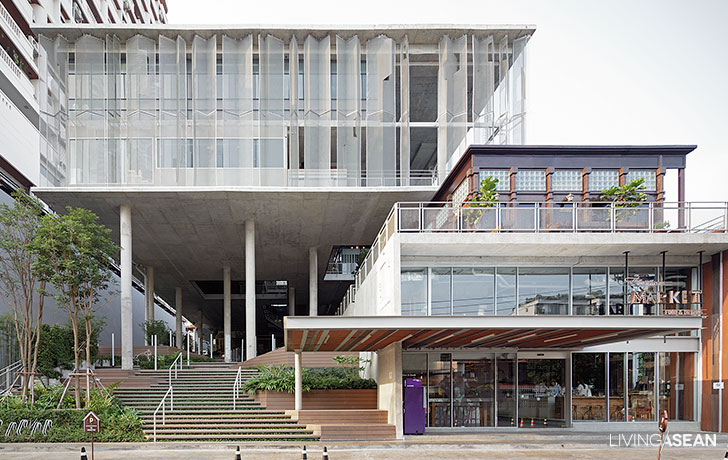
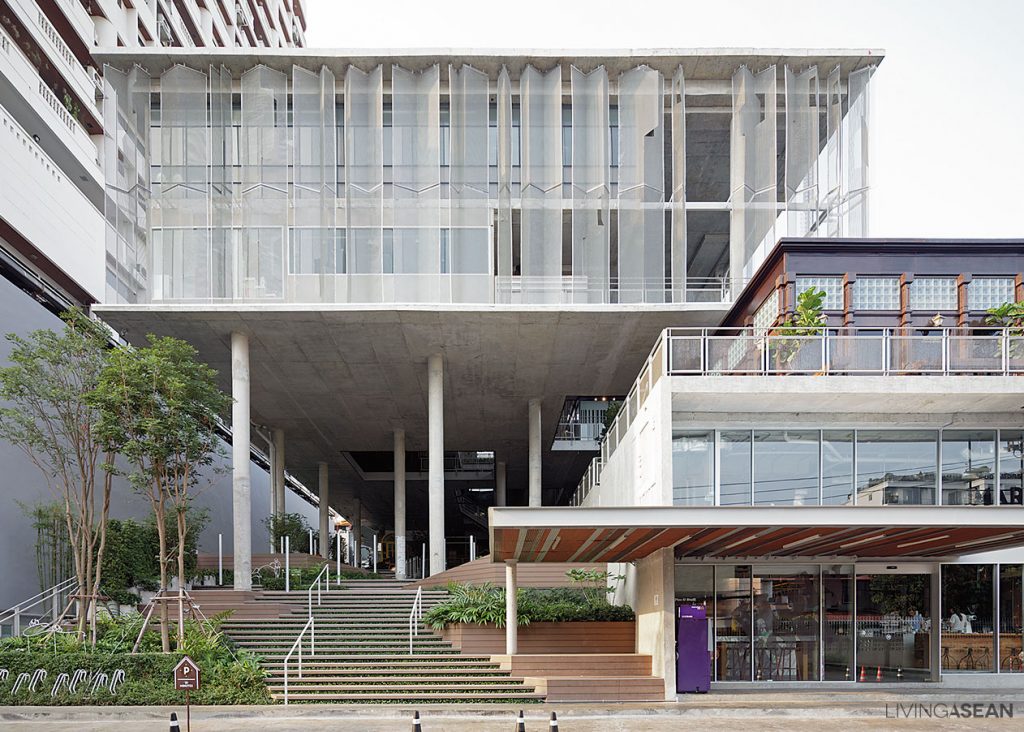
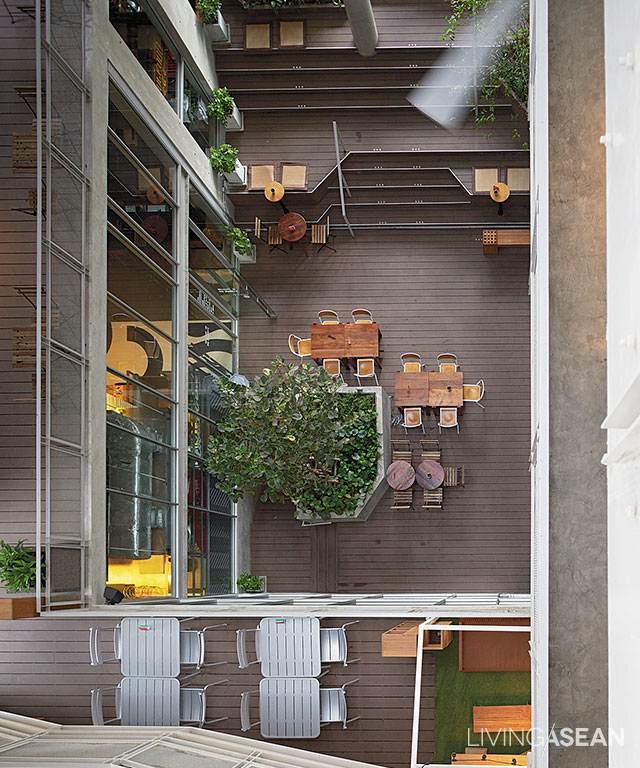
Enjoying a social space status, the Commons is open and accessible to the public. People are welcome to visit for business or pleasure as often as they like. Psychologically speaking, the modern complex is designed to focus on a sense of community, promoting the bonds of friendship that members of the public have for one another. Its purpose is slightly different from what is generally referred to as the “Commons” in other countries. Out there it’s more about public spaces that are open and being used by the public at any time for any reason. Ammata Lupaiboon of the Department of Architecture designed this ultramodern four-storey mall.
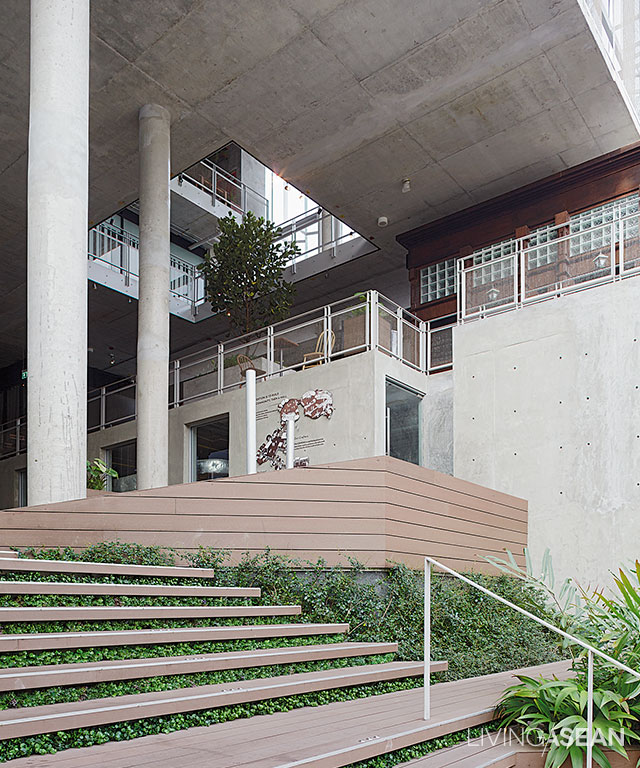
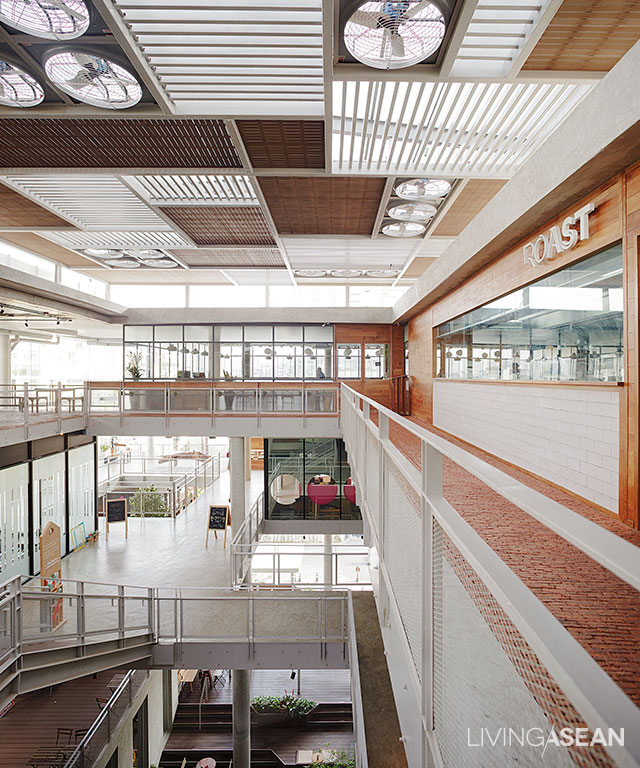
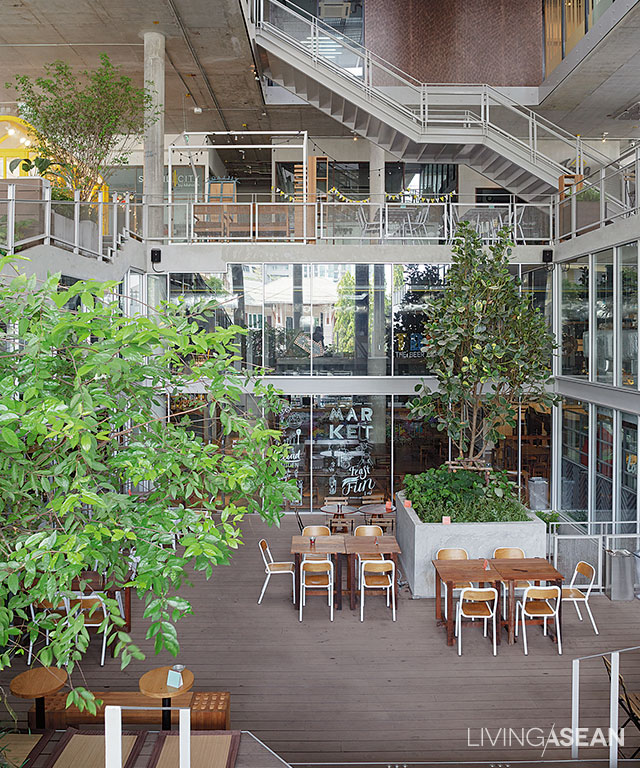
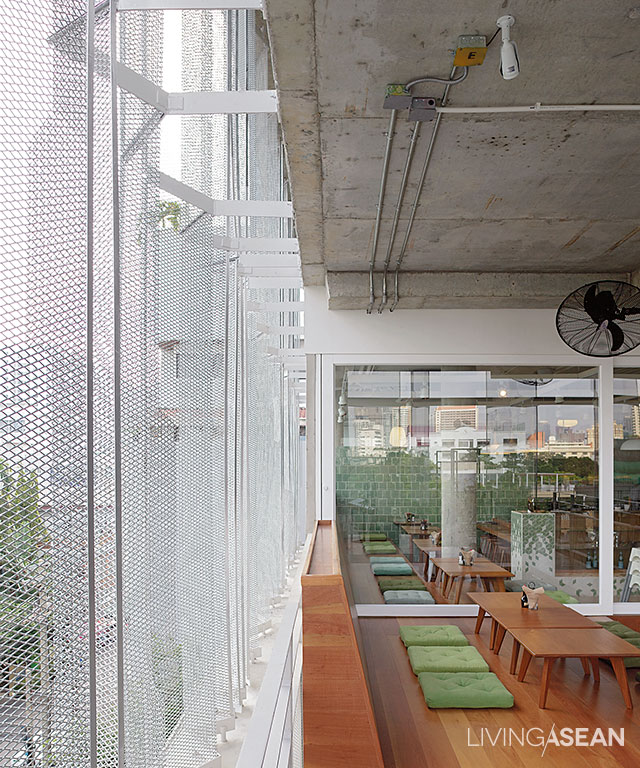
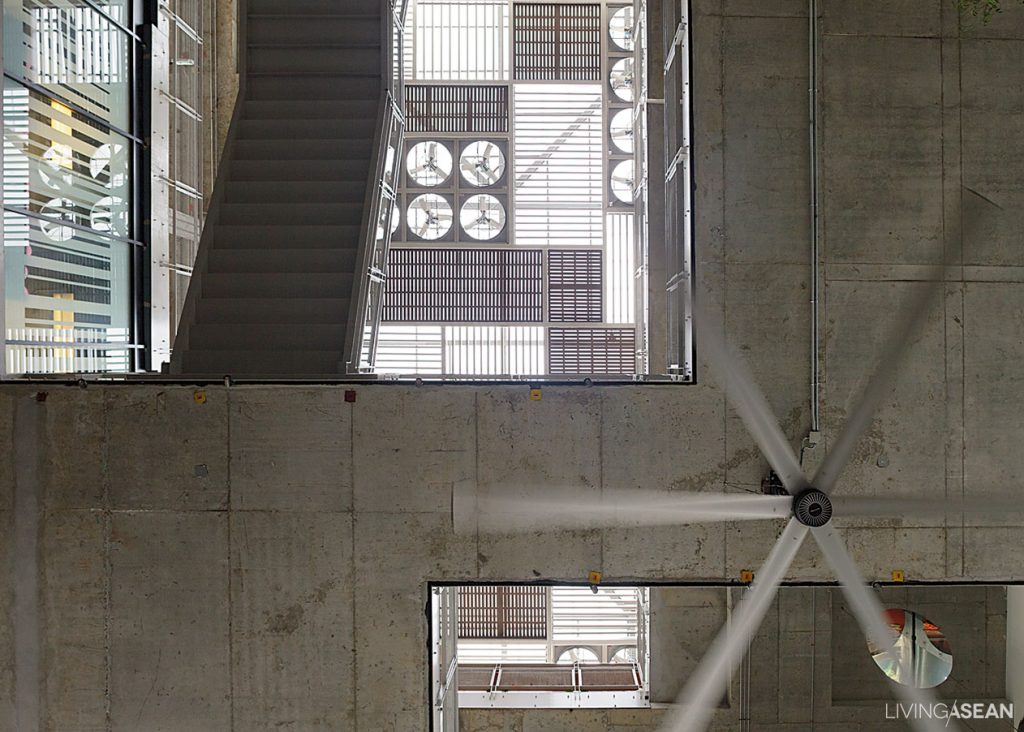
The Commons’ interior is stylishly chic thanks to the ingenious choice of raw concrete finishes that bring out a warm industrial loft look. Softly white shades on the walls help reduce the harshness of bold patterns and textures, making the interior feel friendly and very inviting. Meantime, the lower section boasts wide-open spaces with steps and slopes nicely designed to extend a warm welcome. The third and fourth floors are different. They feature box-shaped design adorned with windows crafted of steel frames, resulting in a light and airy atmosphere. Up here thermal comfort comes from cool breezes that flow in for much of the day. As a precaution, electric fans come in handy to boost natural air circulation if need be.
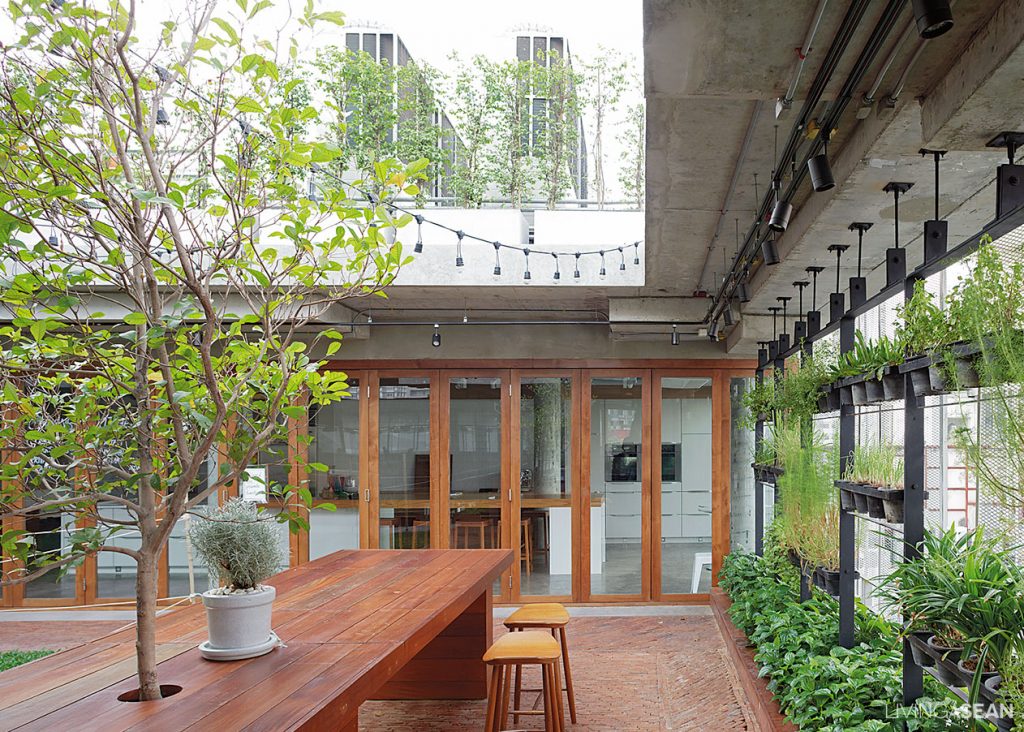
The trendy mall is designed to offer lots of clear spaces. “Visual continuity is very important. Almost all of the upper floors can be seen in full view from down here,” said Ammata. “Apart from that, our concept has always been about creating a place that thrives on a sense of community. It’s the sense of belonging that will keep people coming back.” To facilitate temperature moderation and natural daylight, the designer put in plenty of leafy trees both in and around the building. Meantime, good orientation helps to maximize certain aspects of the surroundings. As he put it, the project relies on those patches of greenery to connect the built environment to nature.
The Commons is divided into 4 zones, namely; the Marketplace that offers a variety of foods and beverages, and the Village zone, which is a retail area specializing in daily consumer products. The other two include the Courtyard capable of hosting all kinds of activities for both children and adult populations, and the Rooftop zone, which offers rental venues for social gatherings, workshops, and private parties.
Designed to meet urban lifestyle needs, the ultramodern mall is anything but common. It offers plenty of spaces for social gatherings, where people meet for business or just sit back and relax in the company of friends and loved ones. In the shortest possible word, it’s a new kind of urban community center, one that offers much more than just shopping experience.
The Commons is located at No. 335 Thonglor Road, one of the hot spots in Khlongton Nue, Wattana District of Bangkok. It’s open daily from 08:00 to 24:00 hours.
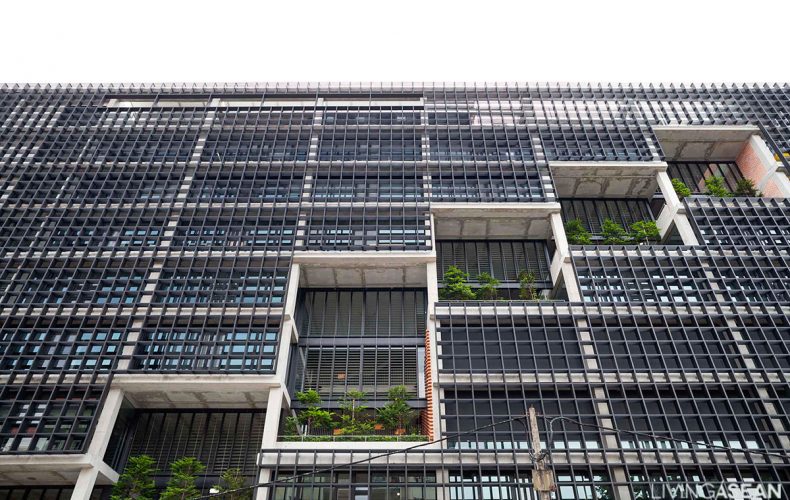
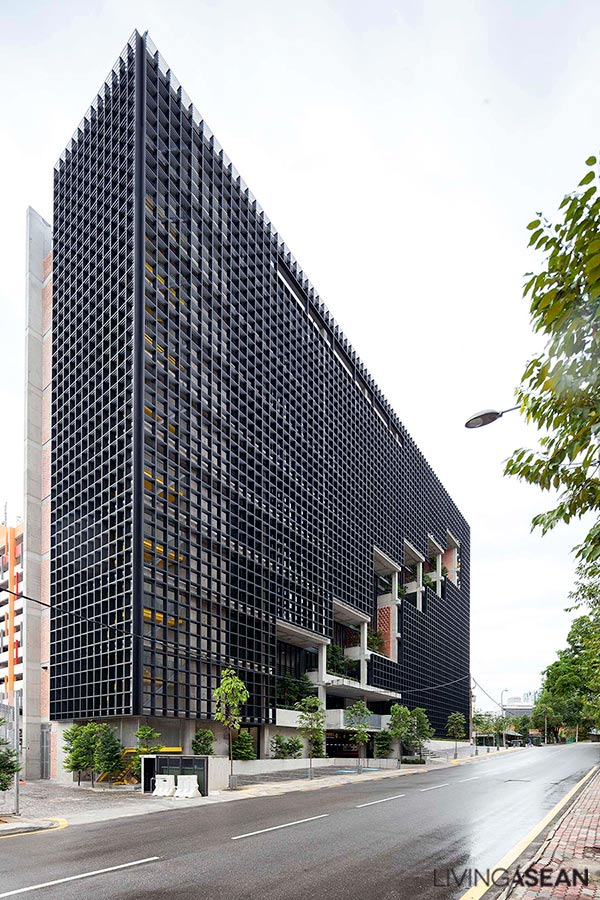
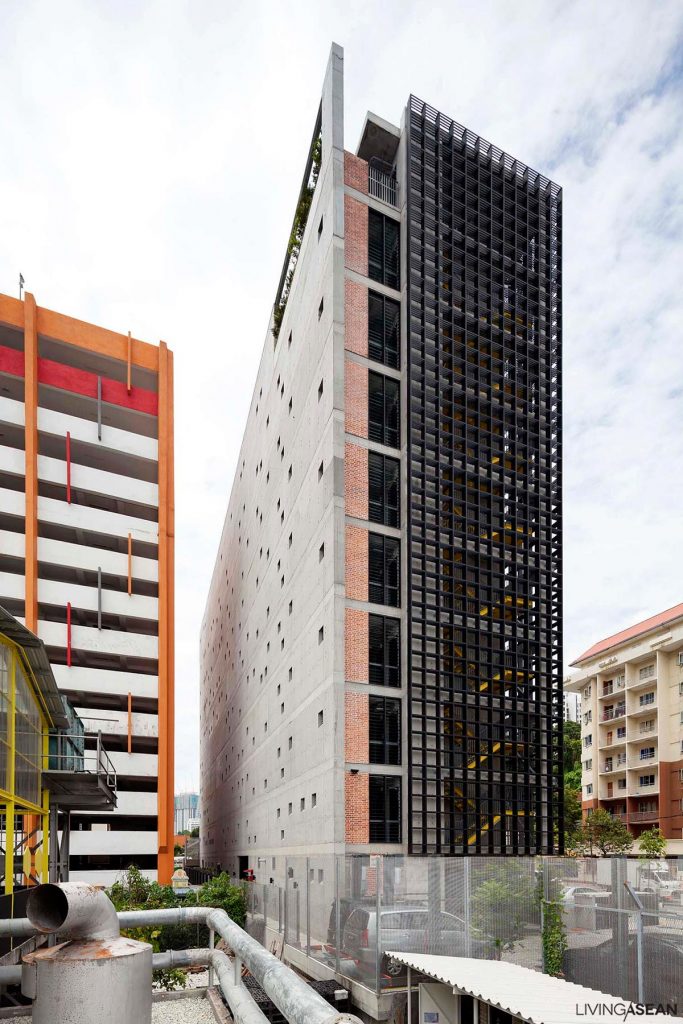
The New PAM Centre just has opened in Bangsar, Kuala Lumper. The design incorporated the use of a narrow tract of land and provides a unique ventilation system as a climate solution. The striking black aluminum façade of this building has made the new architecture icon in Malaysia.
/// Malaysia ///
Story : Samutcha Viraporn /// Photos : Sitthisak Namkham
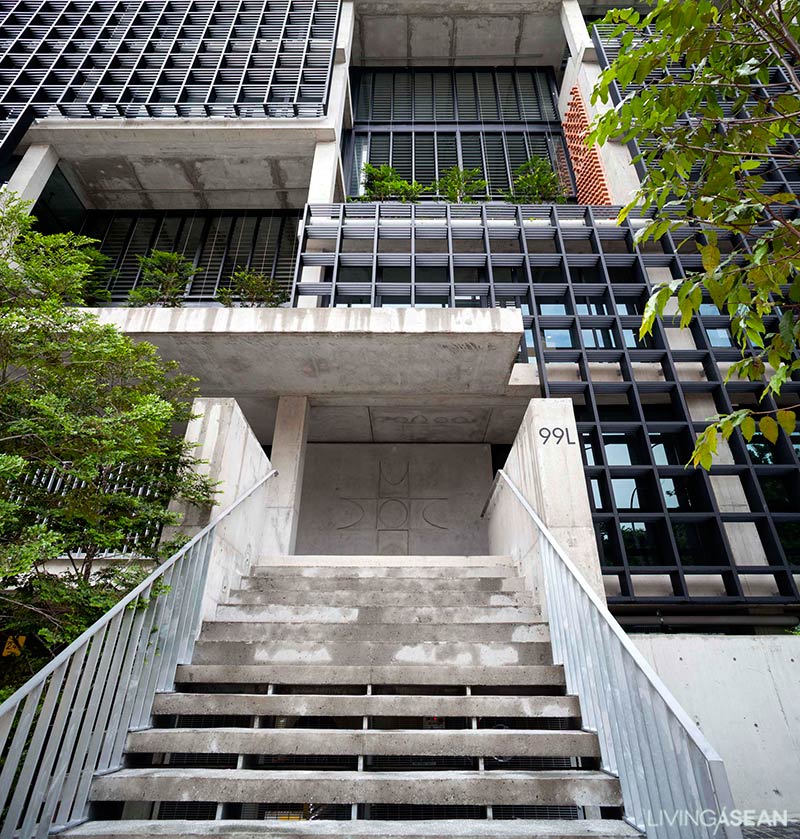
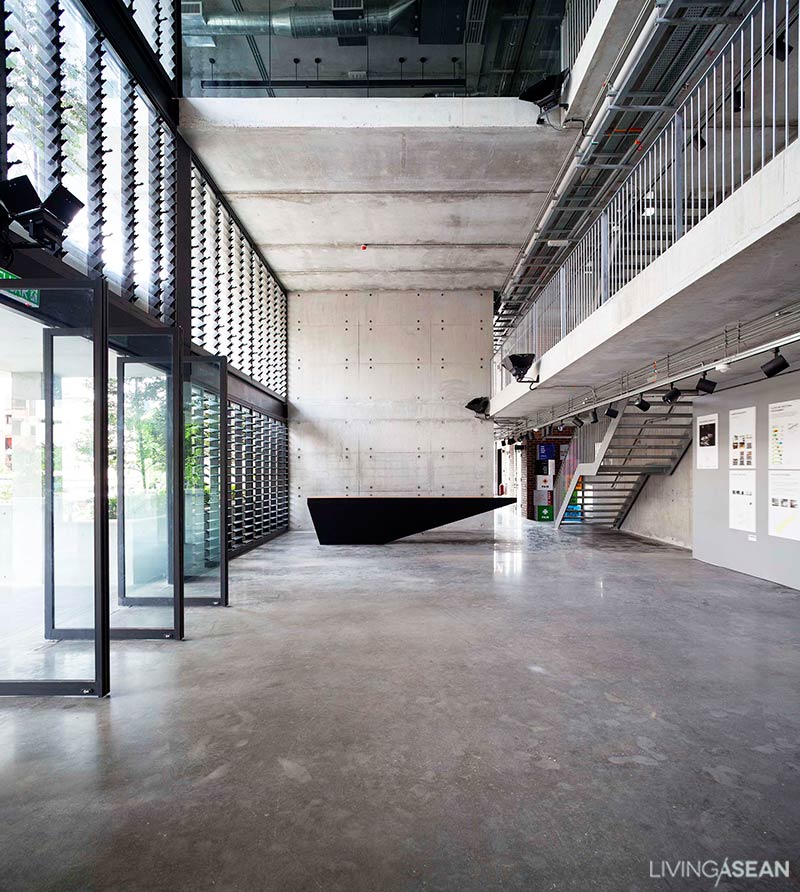
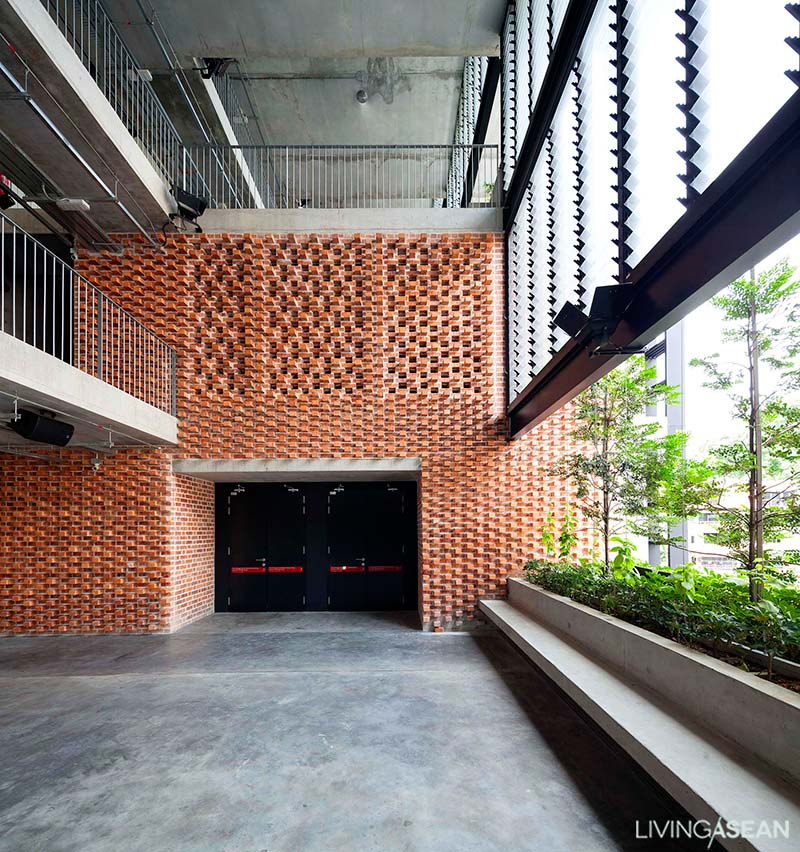
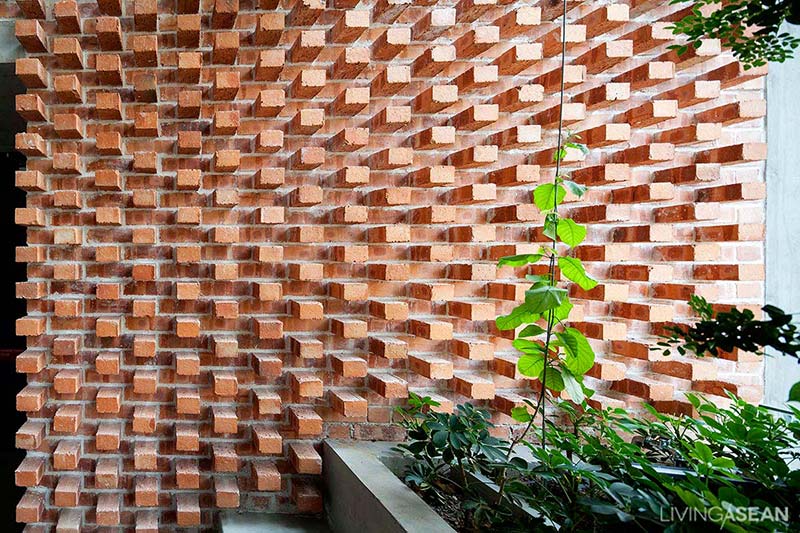
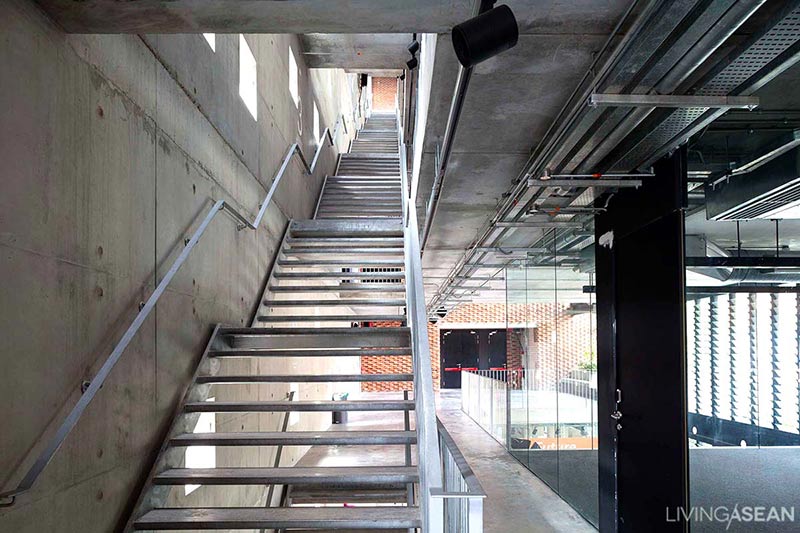
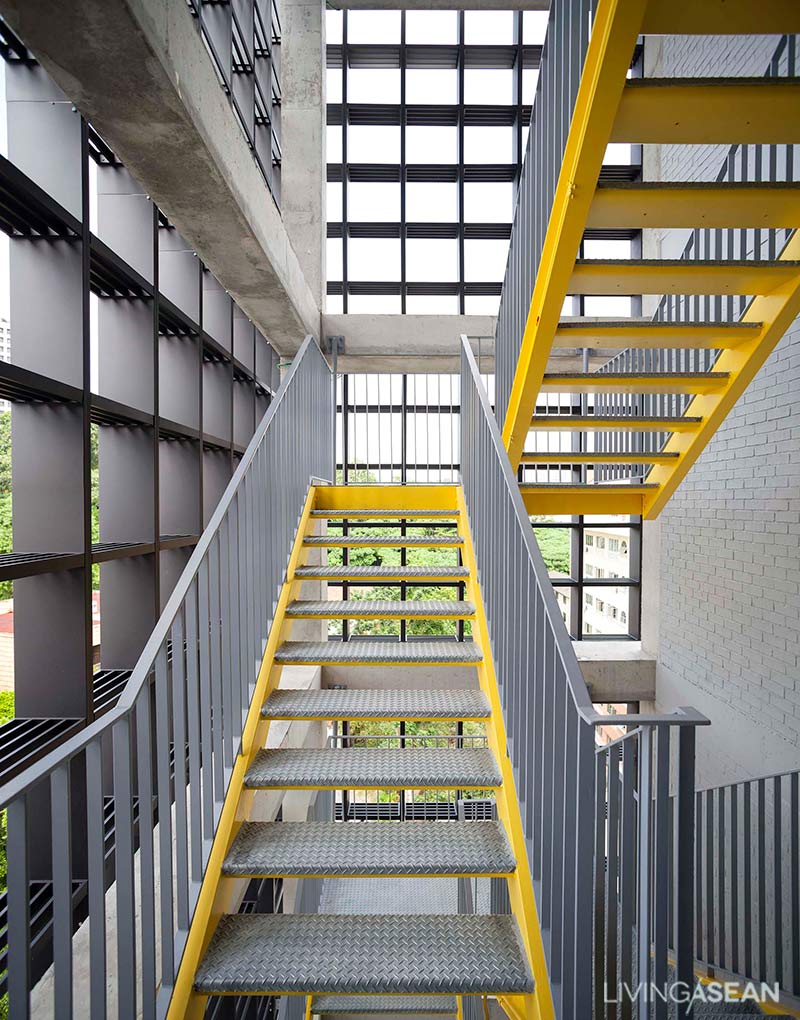
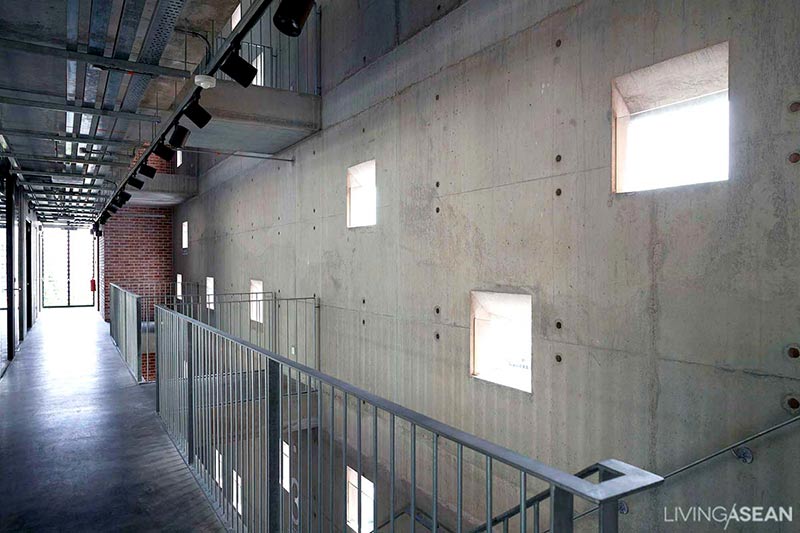
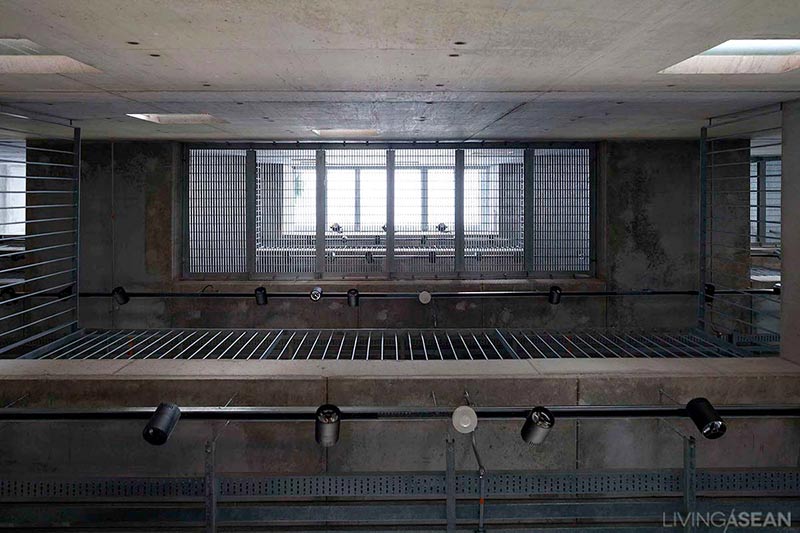
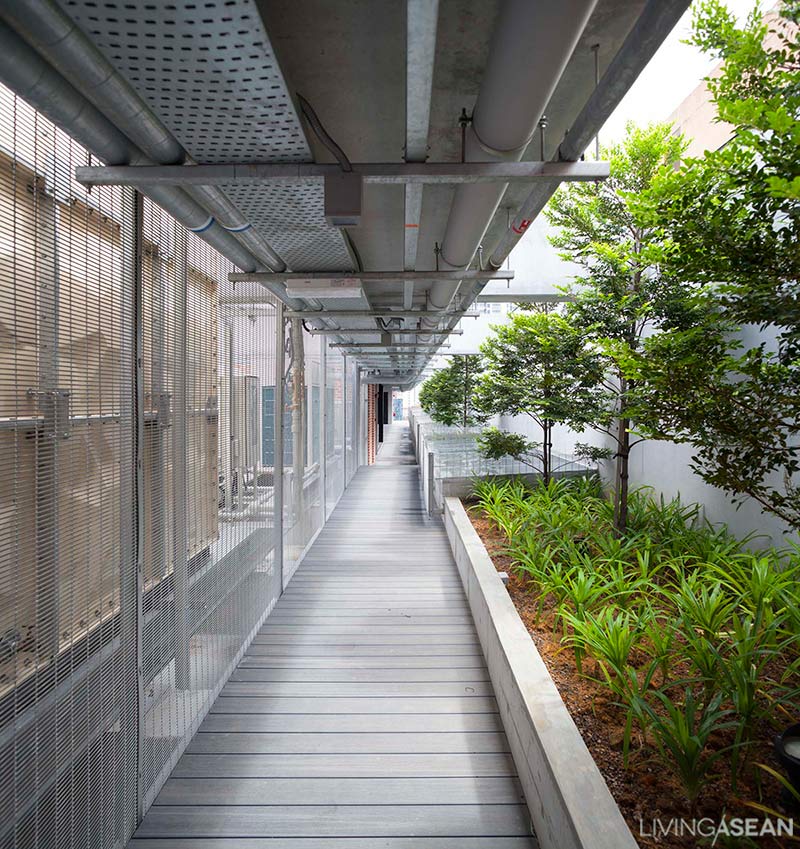
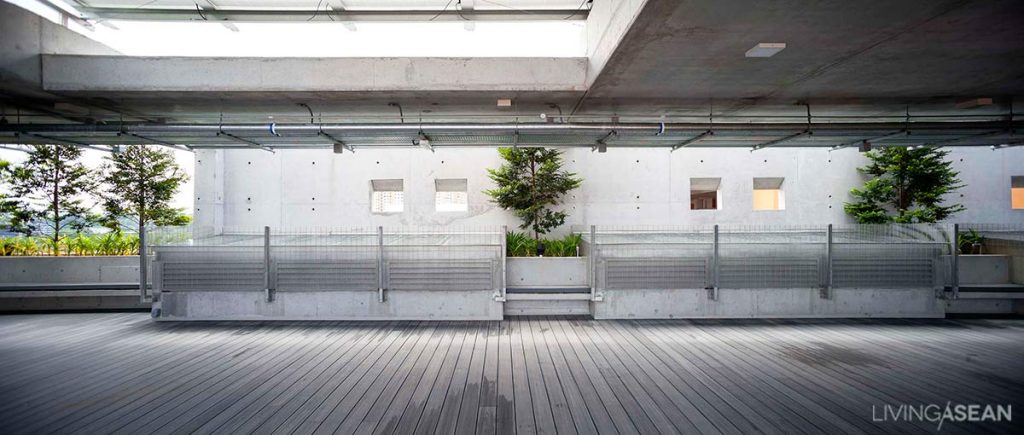
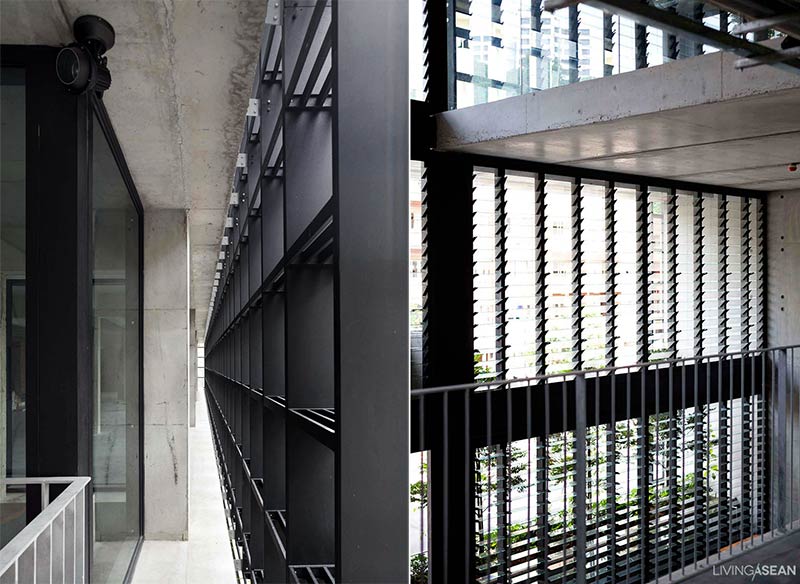
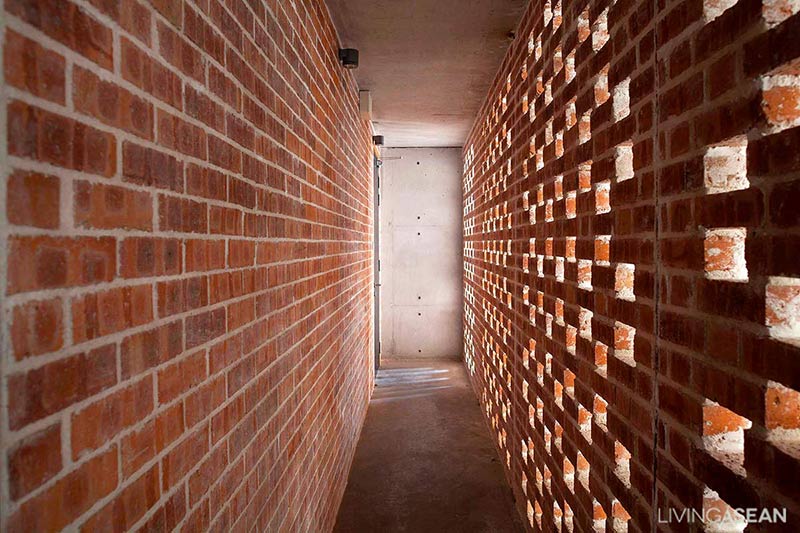
Malaysian Institute of Architects or also known as Pertubuhan Akitek Malaysia (PAM) held the competition to build the new PAM centre in 2012. The winner, HMA & Associates came up with the ultimate solutions in designing this unique space. The 10-story building features black aluminum screening, concrete slabs and blocks, brick walls, steel staircases, exposed pipes, and green spaces inside the building to balance the space.
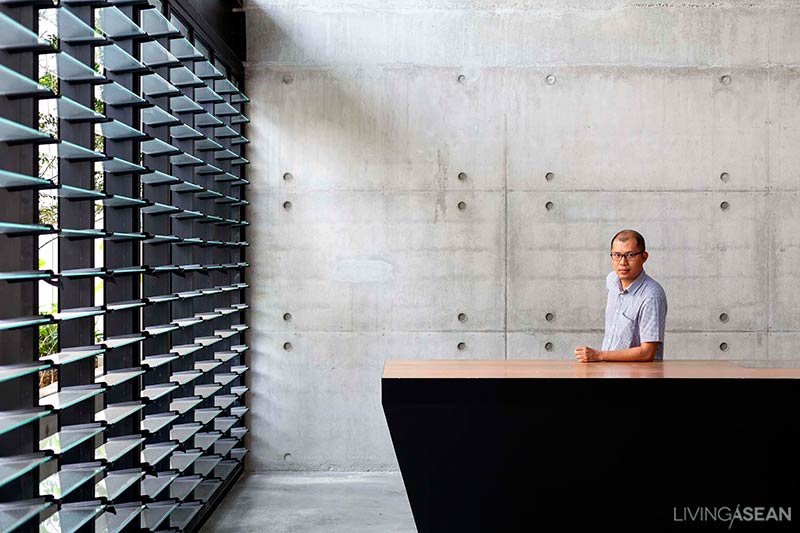
Mohd Heikal bin Hasan of HMA & Associates
“It is a linear site, very narrow. Actually the size is suitable for a bungalow. The concept is how to bring external space into the building. You can see the green spaces in many areas as staircases design. Because of the limited size, we didn’t have the external Space needed.” Mohd Heikal bin Hasan of HMA & Associates explains.
This type of architectural designcontains 4 main elements
The Space Between, This void merges necessity, functionality, and aesthetic beauty into a remarkable facade.
The Stairs, The vertical staircases create excellent ventilation from one floor to throughout the structure.
The Plane, Also known as the shields blocks neighboring bulky design with eye-straining color scheme.
The Screen, A breathable skin that helps to protect the building from the sunlight from the west.
Once you step into this building, you can feel the natural ventilation around you. Of course, this design reduces energy consumption for saving electricity. All of the elements are not only appealing but also functional. This building is an excellence example of regional tropical design.
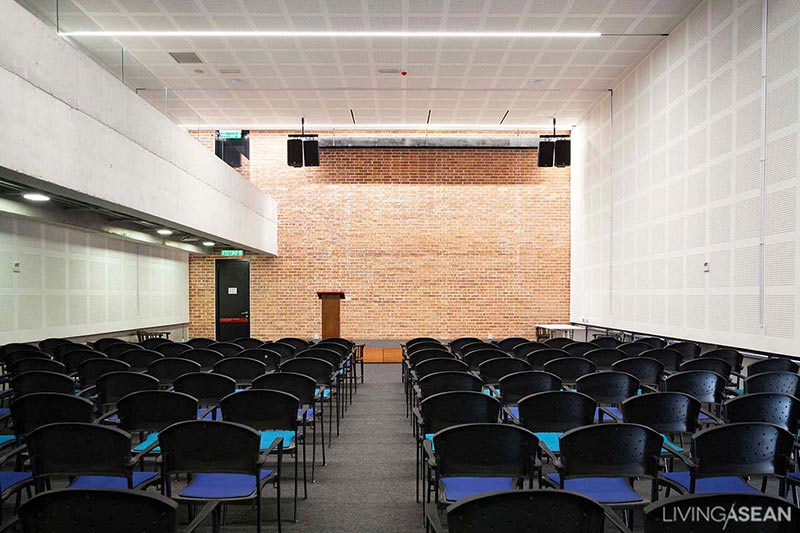
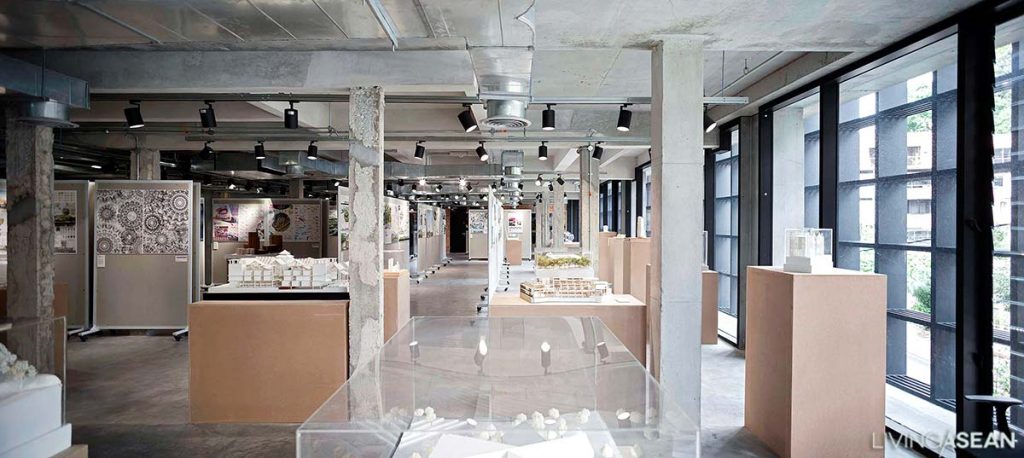
The auditoriumThe exhibition room
Moreover, this building has even more small surprise inside of it. Before the building was built, a small 2-story dwelling was previously located on the land. The architect decided to keep the structure of the house inside the big building. On the first and the second floor, you can see the original columns and beams in the exhibition room. It is amazing how the older structure remain in this big project. The architect wanted to communicate to us to “Please do not forget who you are and where you come from in the new modern world.” Brilliant!
In this year’s Thailand BIG + BIH 2016, we explored SACICT exhibition on developing Thai’s handicraft to global level and integrating different body of knowledge together.
/// Thailand ///
Photos: SACICT
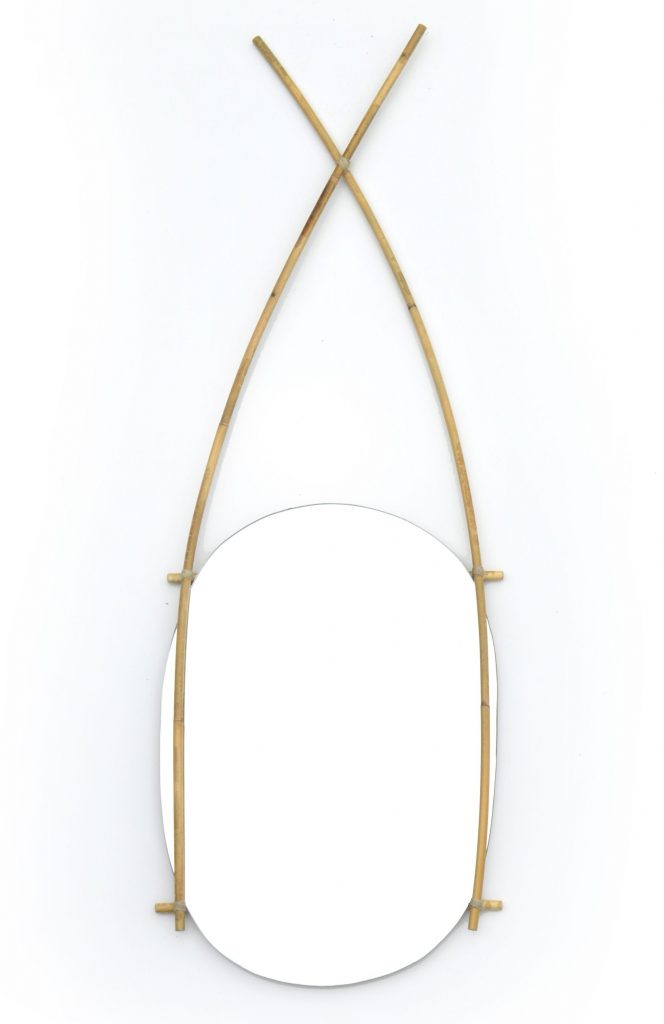
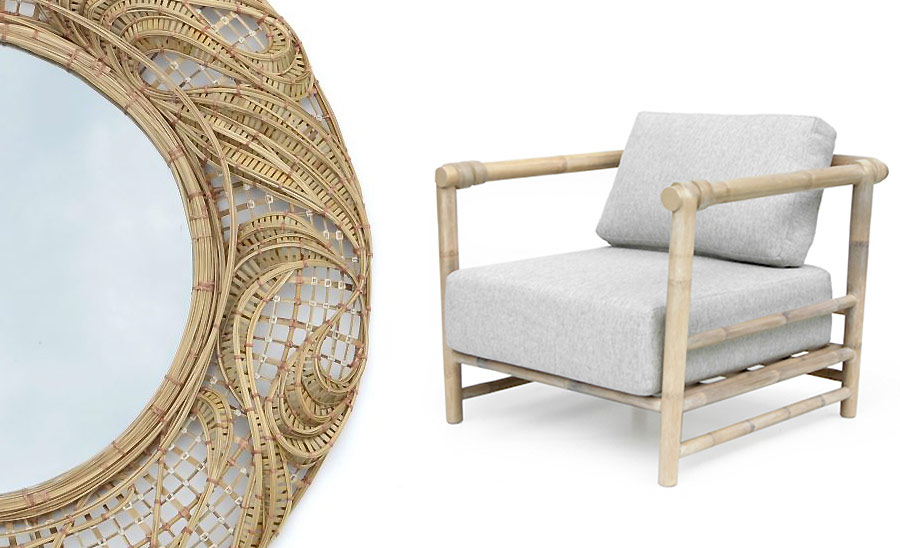
Nian mirror, by Jaoban
To promote Thailand’s handicraft industry in the competitive global market, Creative Economy on Culture by SACICT (The SUPPORT Arts and Crafts International Centre of Thailand) has rolled out the following interesting projects:
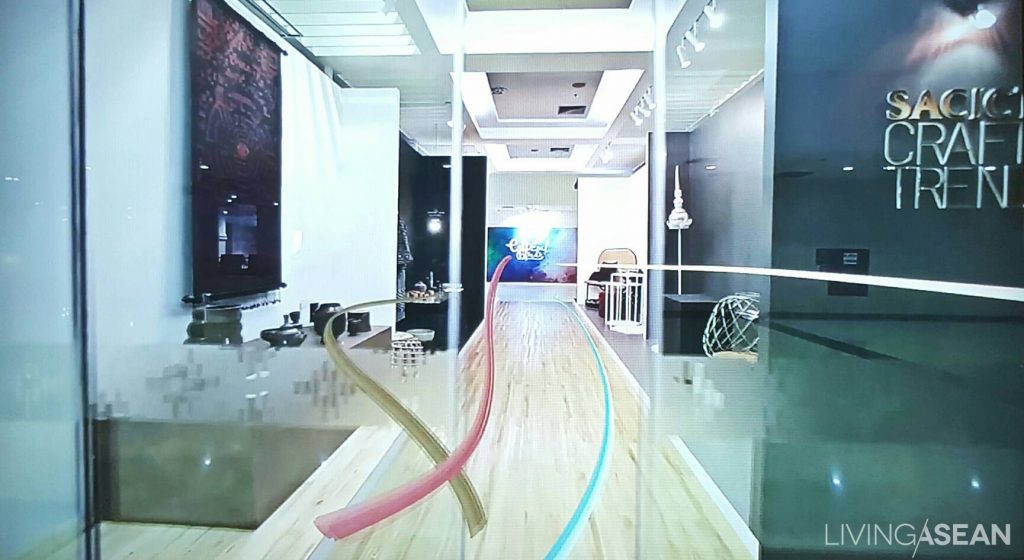
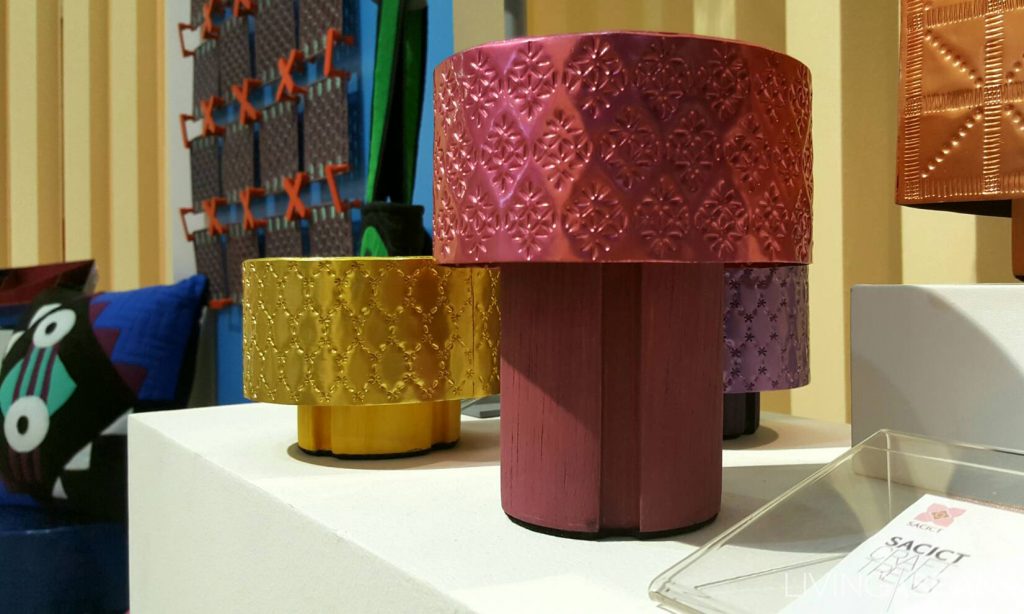
Future Value of Crafts – SACICT Craft Trend forecasts trending styles of handicraft products in 2017 not only to globally promote Thai craftsmanship, but to encourage local artisans to be aware of current global fashion.
Future Value of Crafts Exhibition
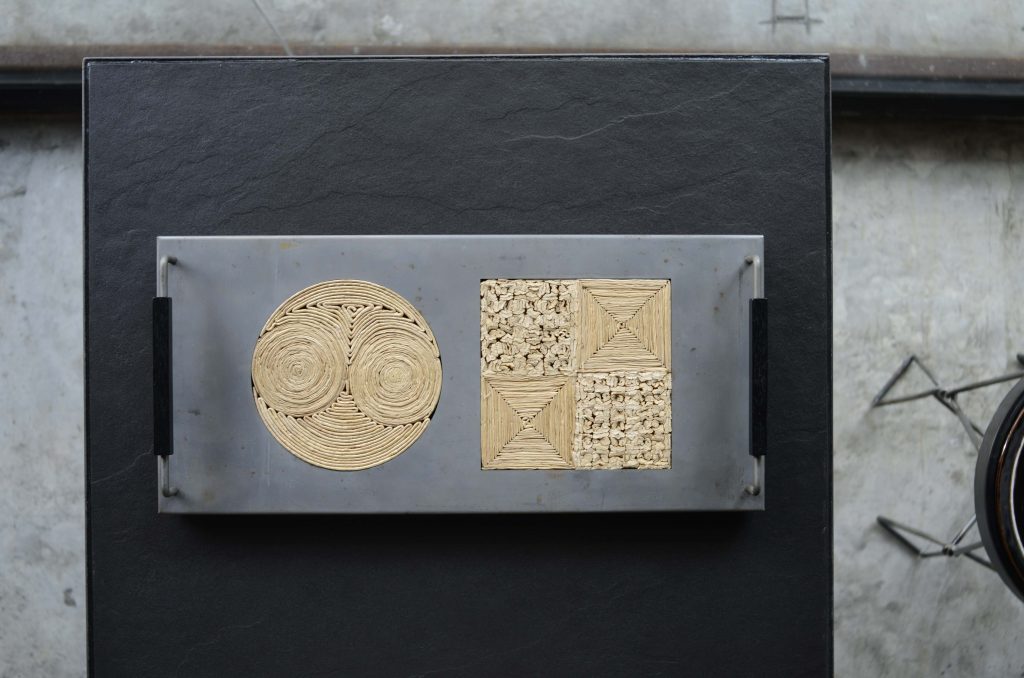
LUXX by SACICT – Under the Touch of Nature concept, Thailand’s emerging designers are collaborating with artisans and craftsmen to create various types of fine craftwork.
Participating in LUXX by SACICT are these renowned brands; Yothaka, AYODHYA, Korakot, Jaoban, and Pin Metal Art, among many others.
To see a state-of-the-art exhibition, visit Thailand BIG+BIH 2016 during the weekend of October 22-23, 2016 at BITEC, Bangkok.
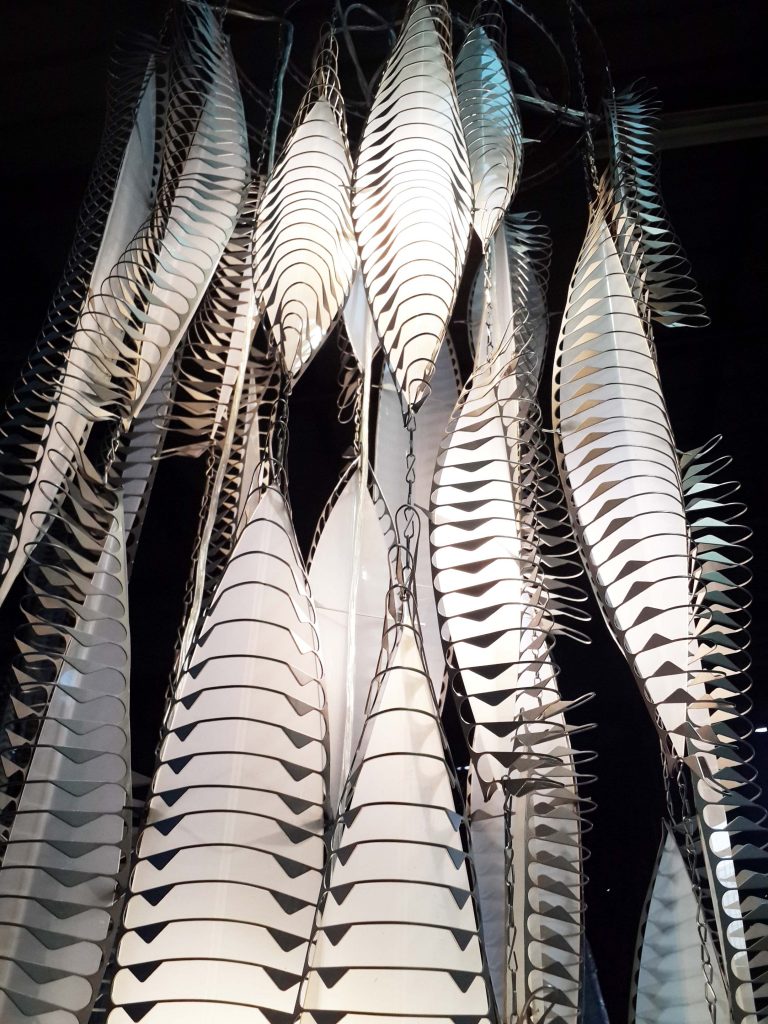
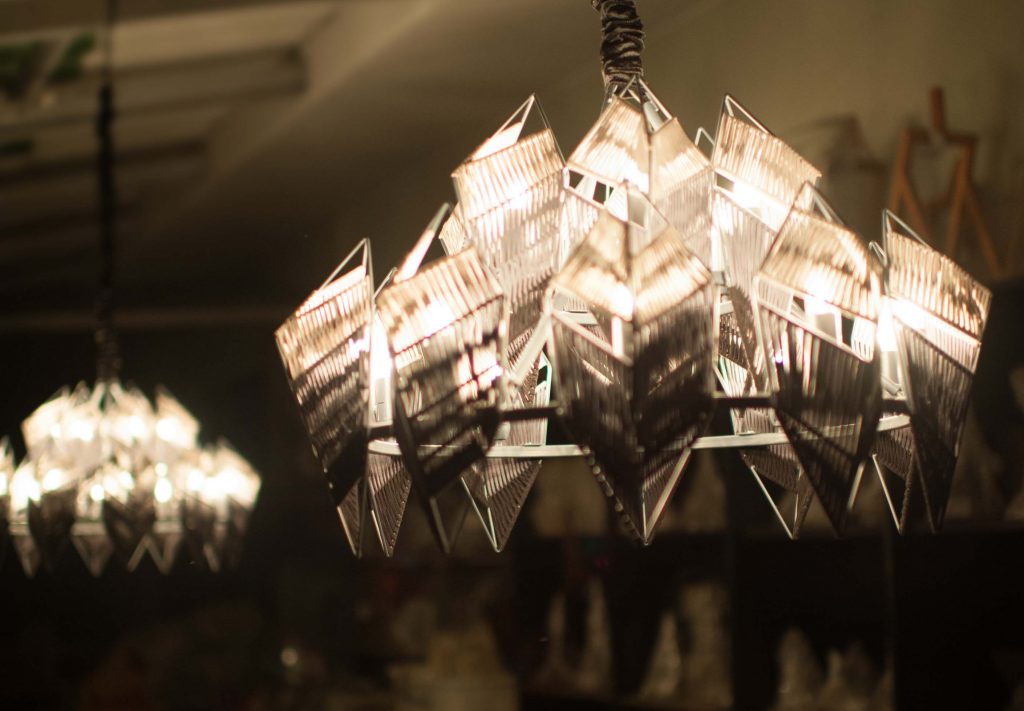
Metal pedant lights, by Pin Metal Art
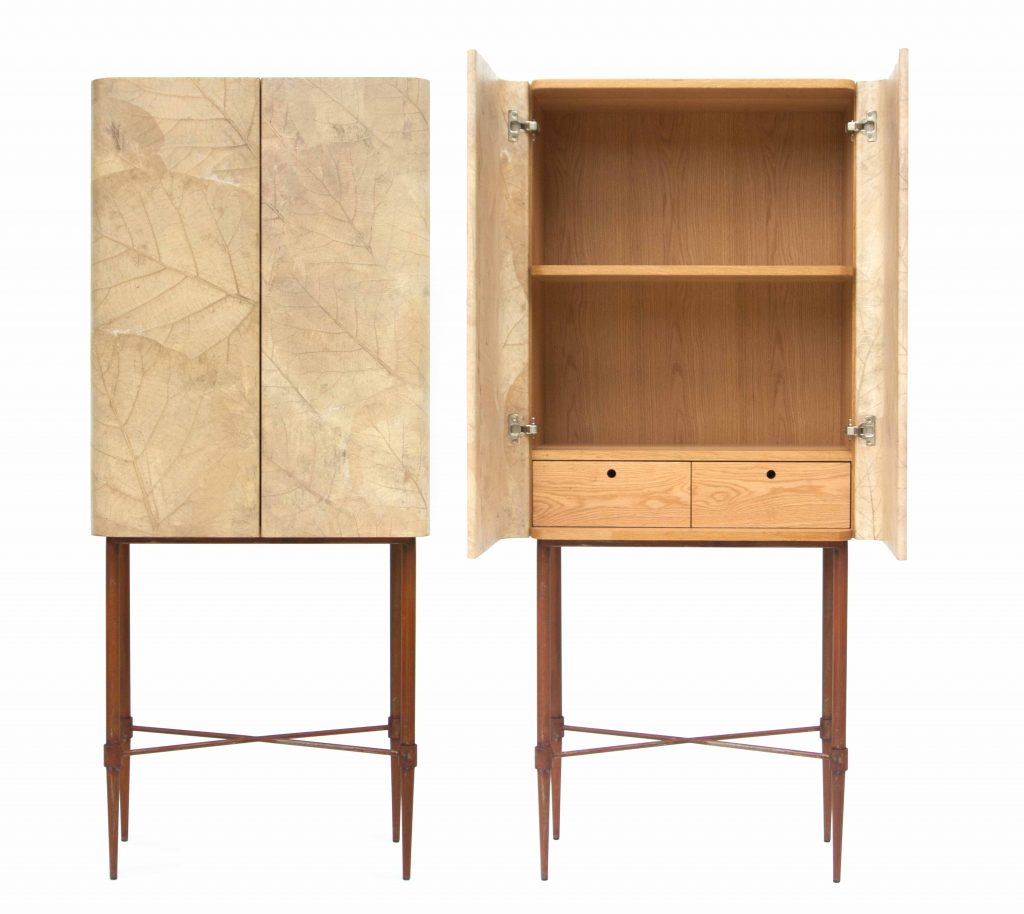
Crown, by Baanchaan ExportZero Mirror, by Korakot International and Hug Easy Chair, by Natural UnitLeaf Cabinet, by THELIFESHOPDurian Basket, by YothakaMoo-Mu, by YothakaChuan Lhong Vase, by Chuanlhong Ceramic
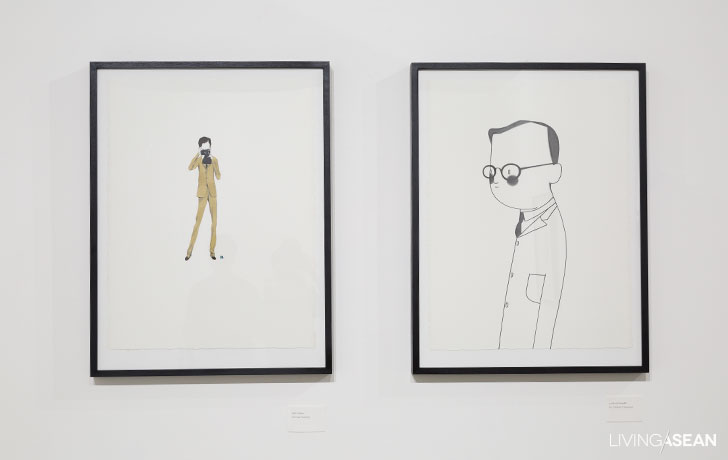
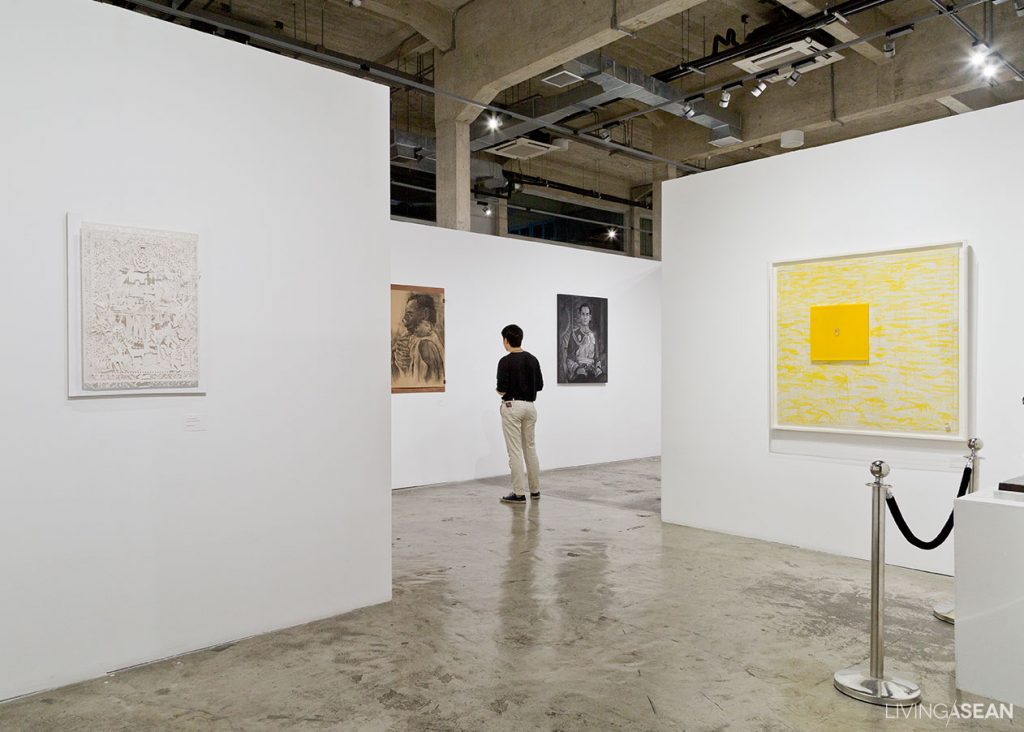
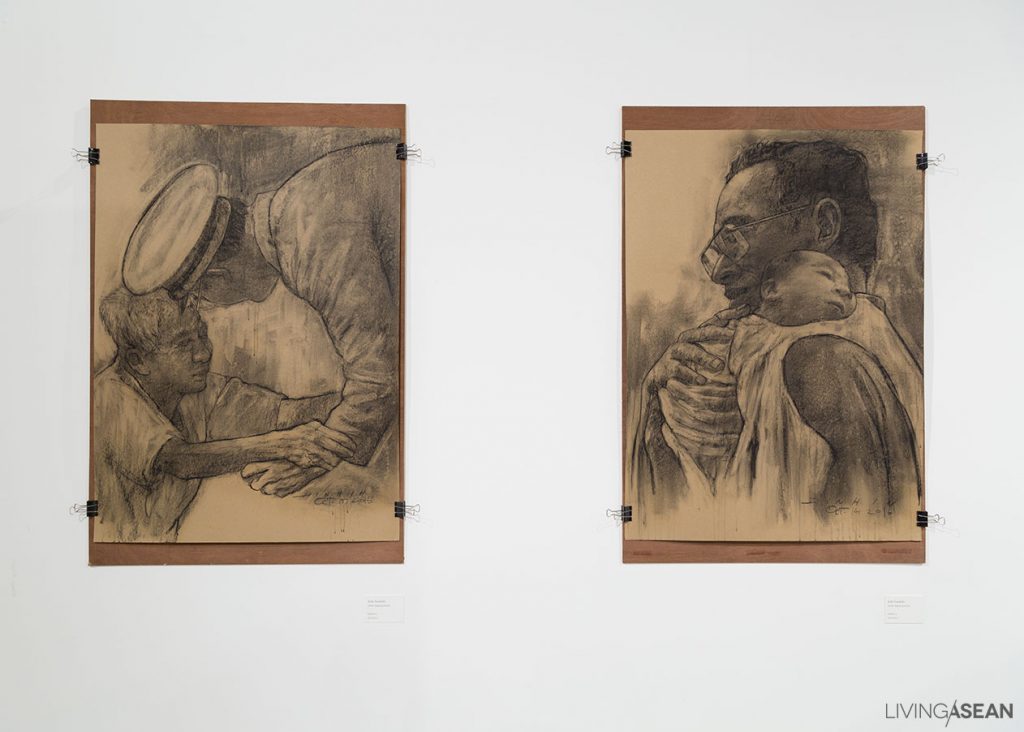
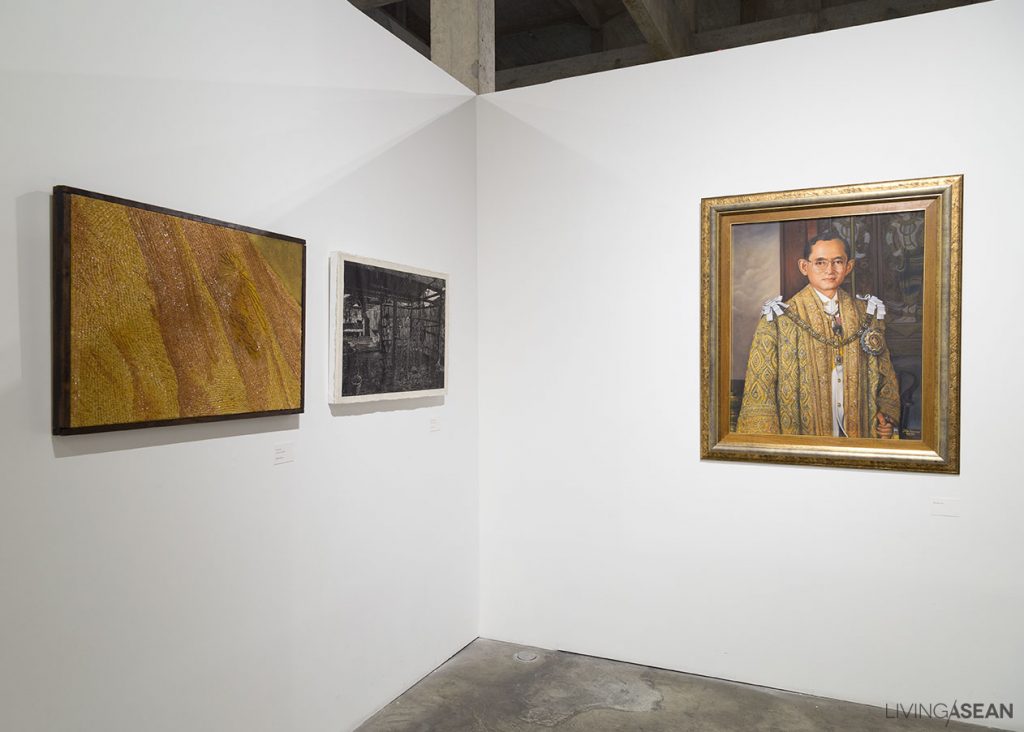
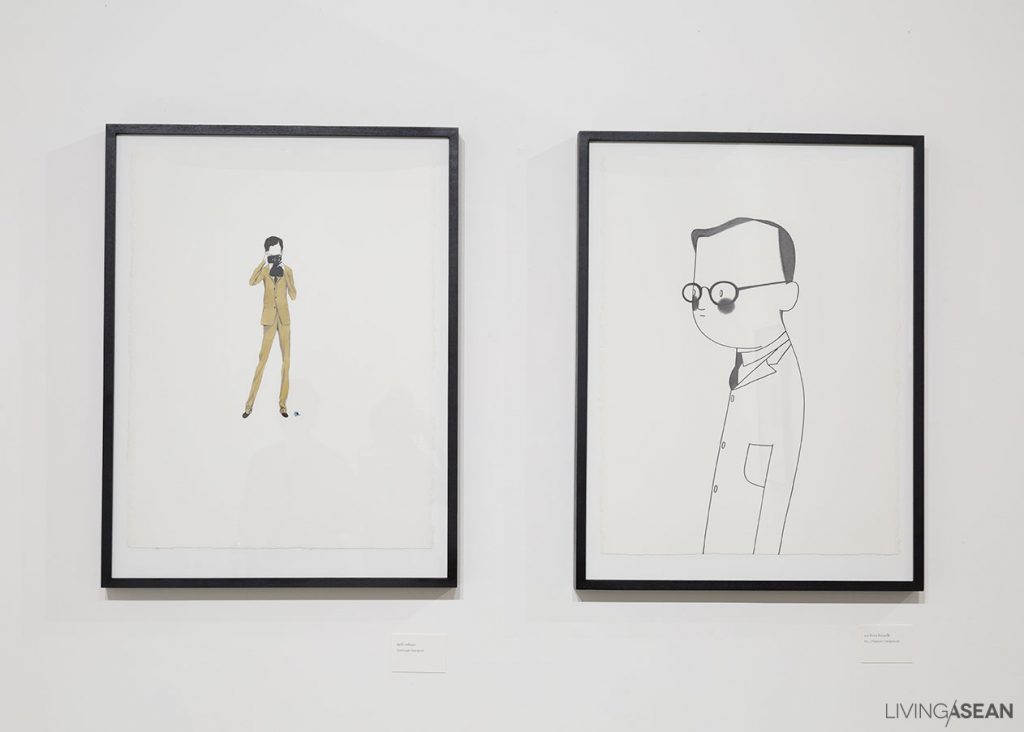
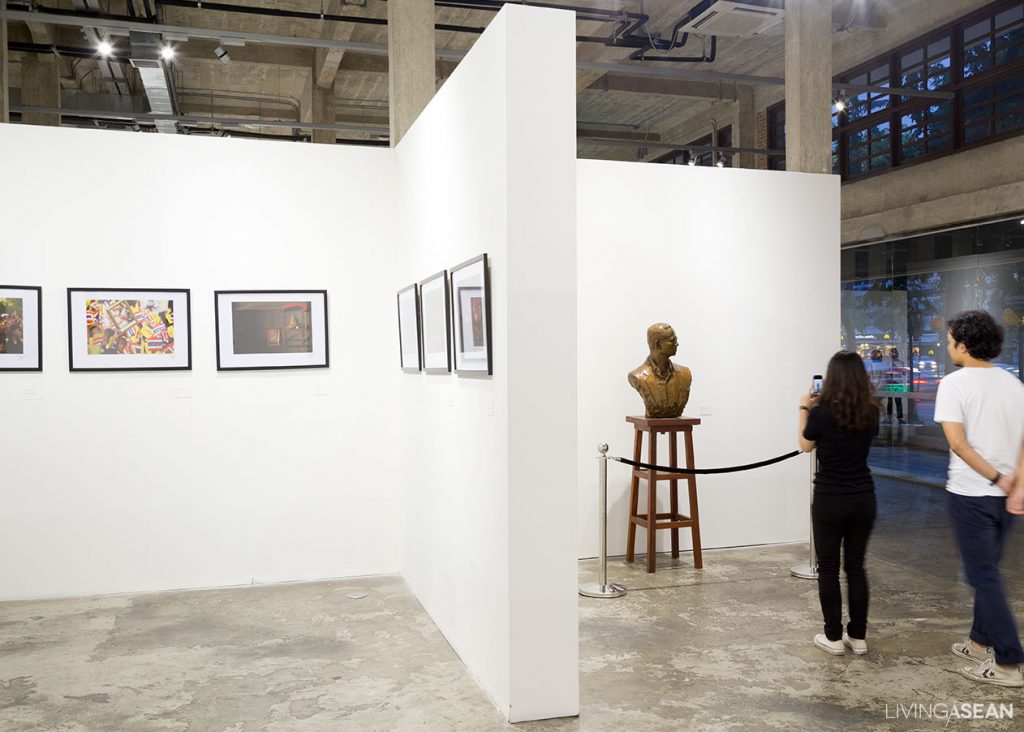
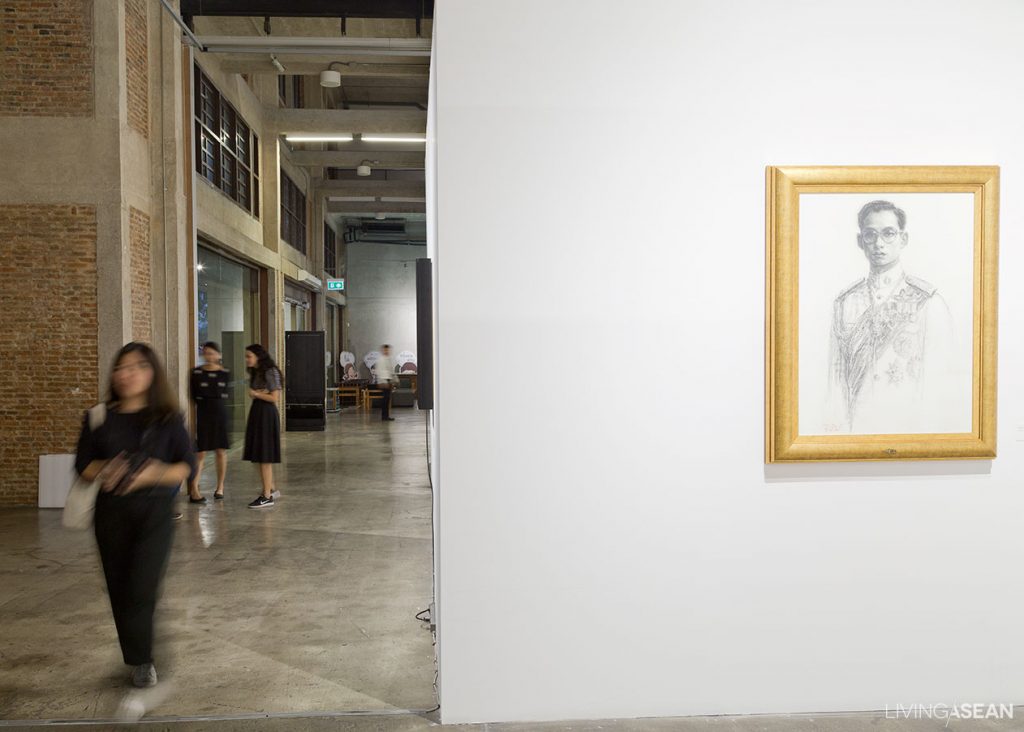
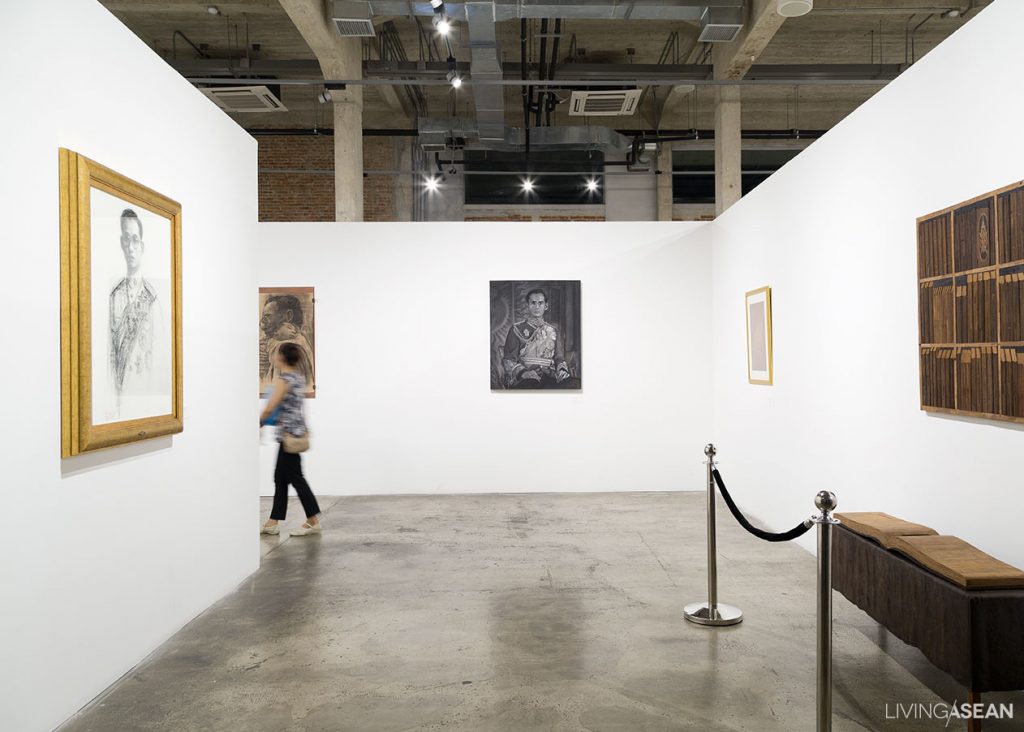
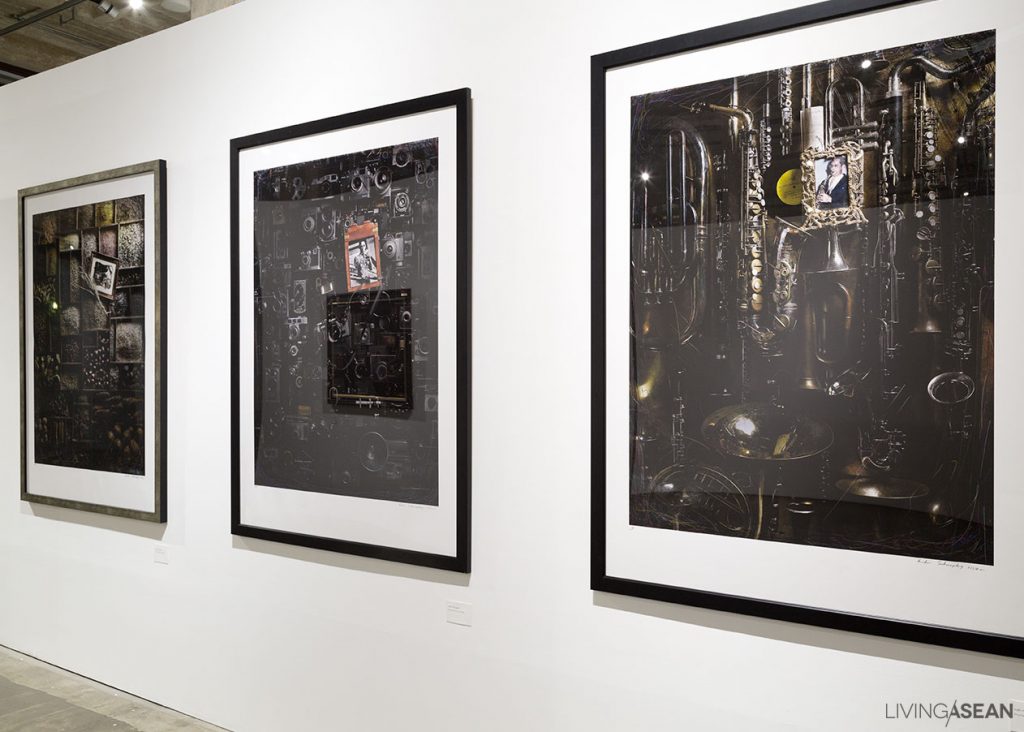
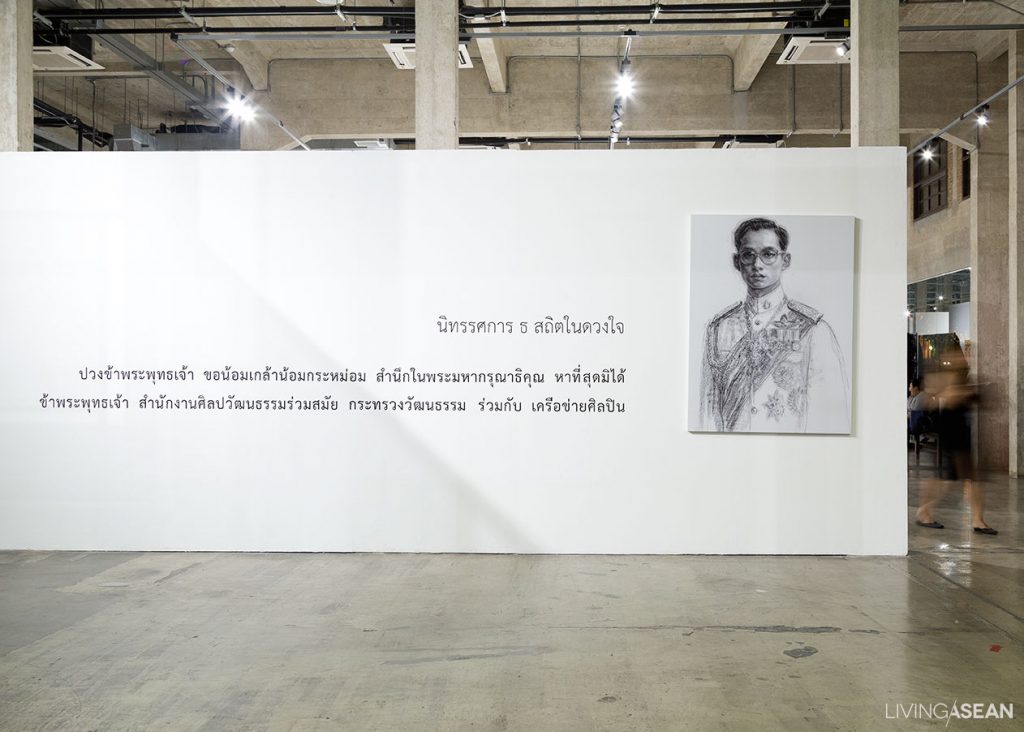
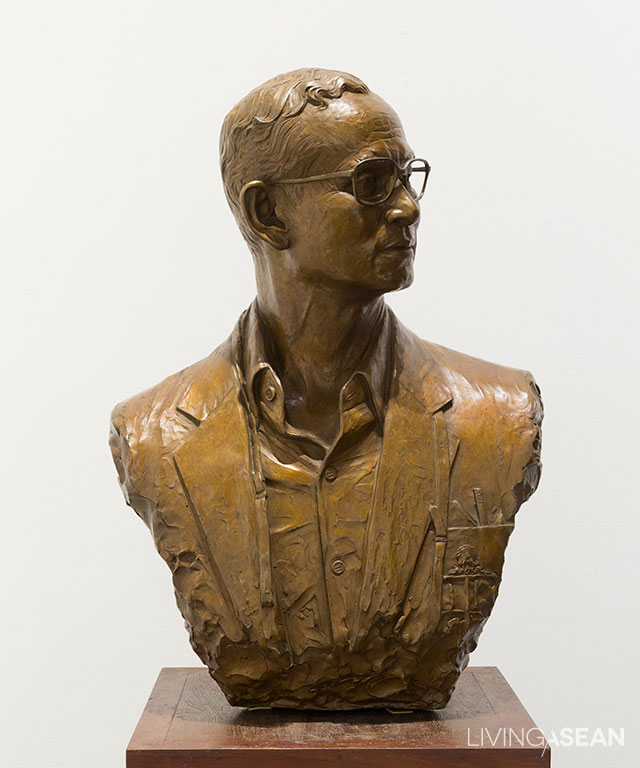
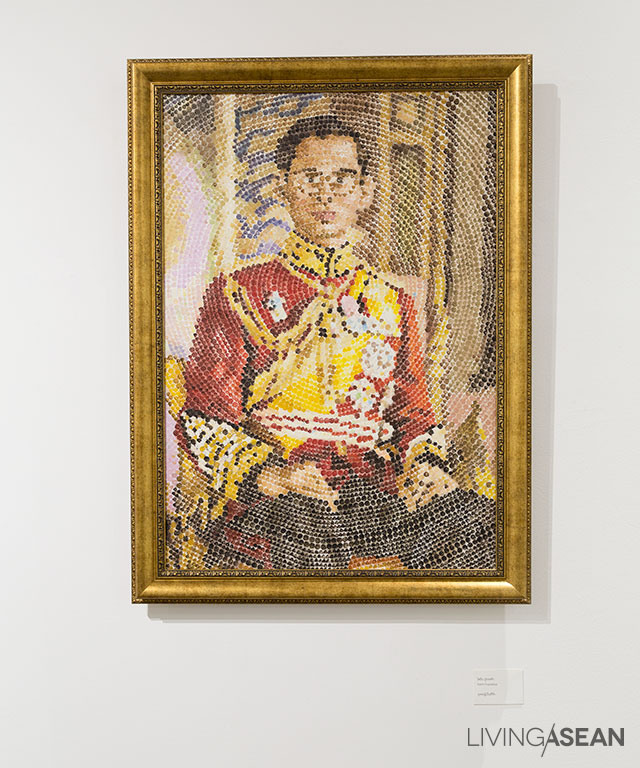
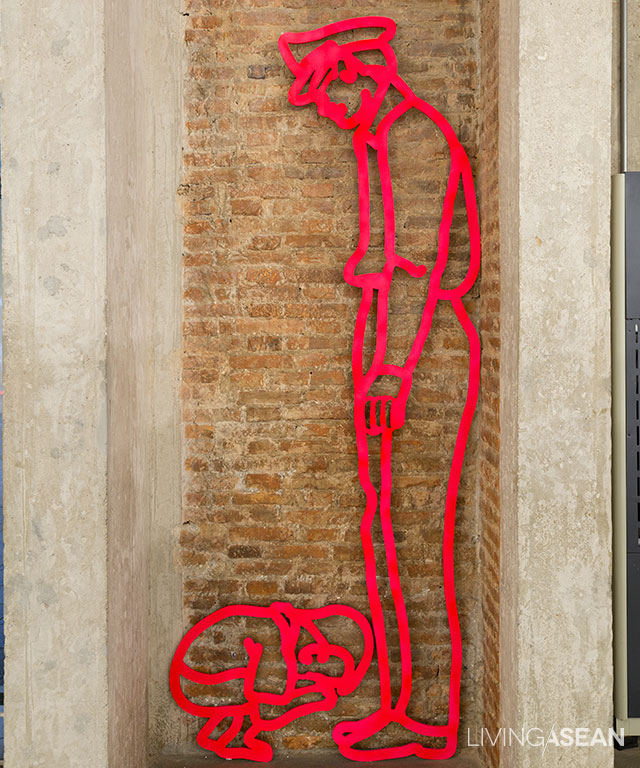
On learning the news so distressing for the Thai people regarding the passing of His Majesty the King, to honor his memory The office of Contemporary Art and Culture and twenty-nine Thai artists have put on display an exhibition of heartfelt original art in honor of His Majesty: portraits, sculpture, photographs, graphic arts, and other relevant works.
The art exhibition is open daily 10.00 am to 7.00 pm between October 18 and 30, 2016, excepting Mondays and national holidays, on the 1st Floor at the Ratchadamnoen Contemporary Art Center, 84 Ratchadamnoen Avenue, Bangkok, Thailand.
The name of 29 Thai Artists as follow…
Vasiree Hiranyalekha
Kitikong Tilokwattanotai
Vichit Pittayakorn
Widsanupong Noonan
Professor Kanya Charoensupkul
Suraporn Lertwongpaitoon
Kamthorn Paowattanasuk
Jutarad Phattharasirasak
Kampol Mungngam
Patipon Supanpong
Rattana Sudjarit
Santi Seedarach
Pairin Pupradup
Sakwut Wisesmanee
Anuchai Secharunputong
Wasinburee Supanichvoraparch and Aungkana Panthongka
Marketing/Advertising Cookies – used to remember and process the relevance to your website visit in order to personalize contents shown including optimization of commercial advertising placements. For instances, we use this type of cookies to display commercial advertisements related to user’s attributes and interests as well as to limit how many times should a user see repeated advertisement in order to optimize and measure marketing activities. อ่านเพิ่มเติม