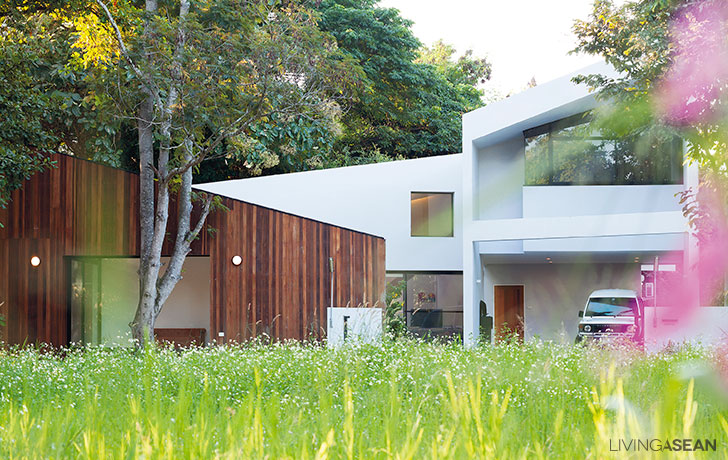
The classic and retro style of the three-story, 750-square-meter rowhouse is an awesome makeover from what was once a printing facility owned by the family.
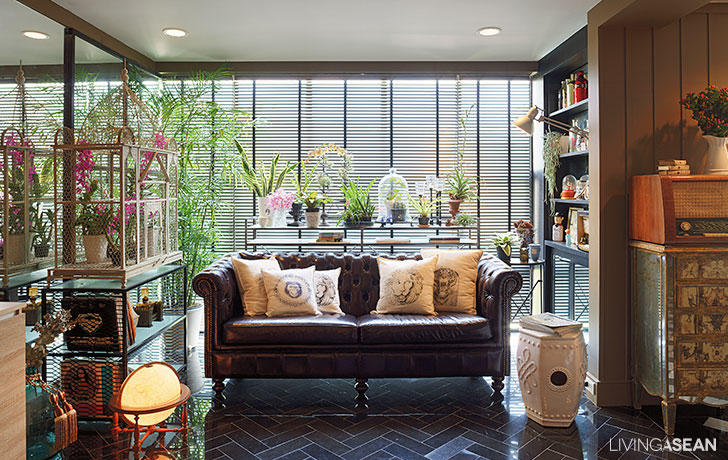
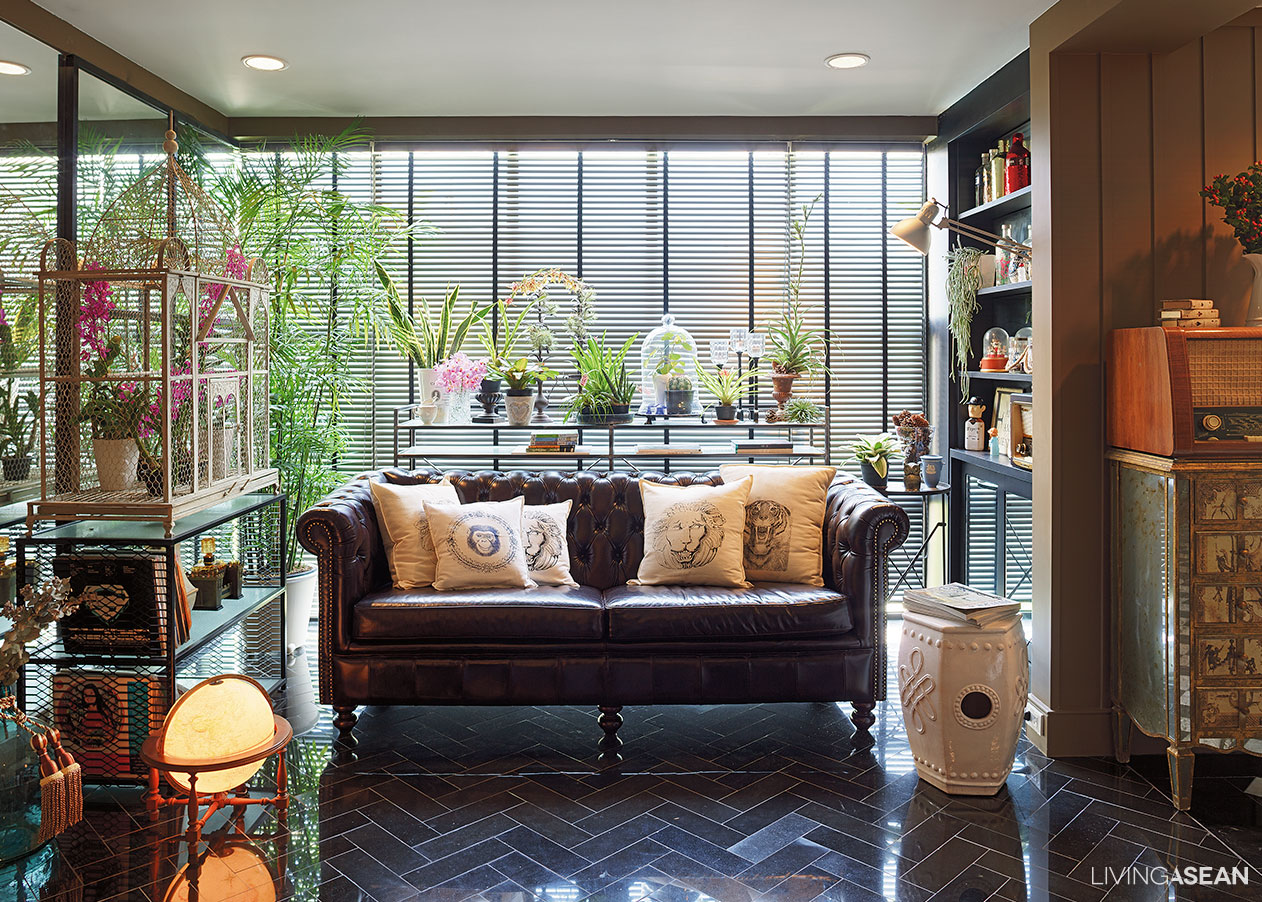
Mirrors are used on one side to make the interior seating space seem larger. A plush leather upholstered sofa in dark hues contrasts with an aerial white cutout ceramic stool in Oriental style. The floor is covered with alternating gray and black granite tiles in the herringbone pattern. A rich array of terrarium adds life to the ambiance.
Much of the structure of this classic and retro style house is kept intact, except some parts of the wall that are removed to make way for optimal space utilization. In the process, the main entryway is relocated for added convenience. As the owners, Worapong and Sukanya Suwatpim put it:
“We built this row house duplex ourselves. The design is based on slightly different dimensions compared to those standard-sized row buildings. Our rectangular-shaped plot happens to be much longer than it is wide. In remodeling the living spaces, the main entrance that used to be on the front is relocated to the long side. It is more convenient that way.”
The second-floor living spaces feature open studio design with all amenities for comfortable living. Glass siding on the exterior walls lets natural light pour into space during daytime.
The ground floor offers parking spaces for classic cars that make parts of his collections. There are areas for hobbies and creative workspace surrounded by unadorned concrete finishes and hand-hewn, bare brick walls. Metal detailing is painted black, paired with cool retro-style furniture. The well-conceived combination adorns the interior spaces that obviously speak to retro-Industrial style.
The second floor features ample seating spaces, dining area, kitchen and a bedroom, which comes in cool classic style, and yet not too sweet.
Plans are afoot to turn the third-floor spaces into a gallery of many antique clocks that the homeowners have collected over many years.
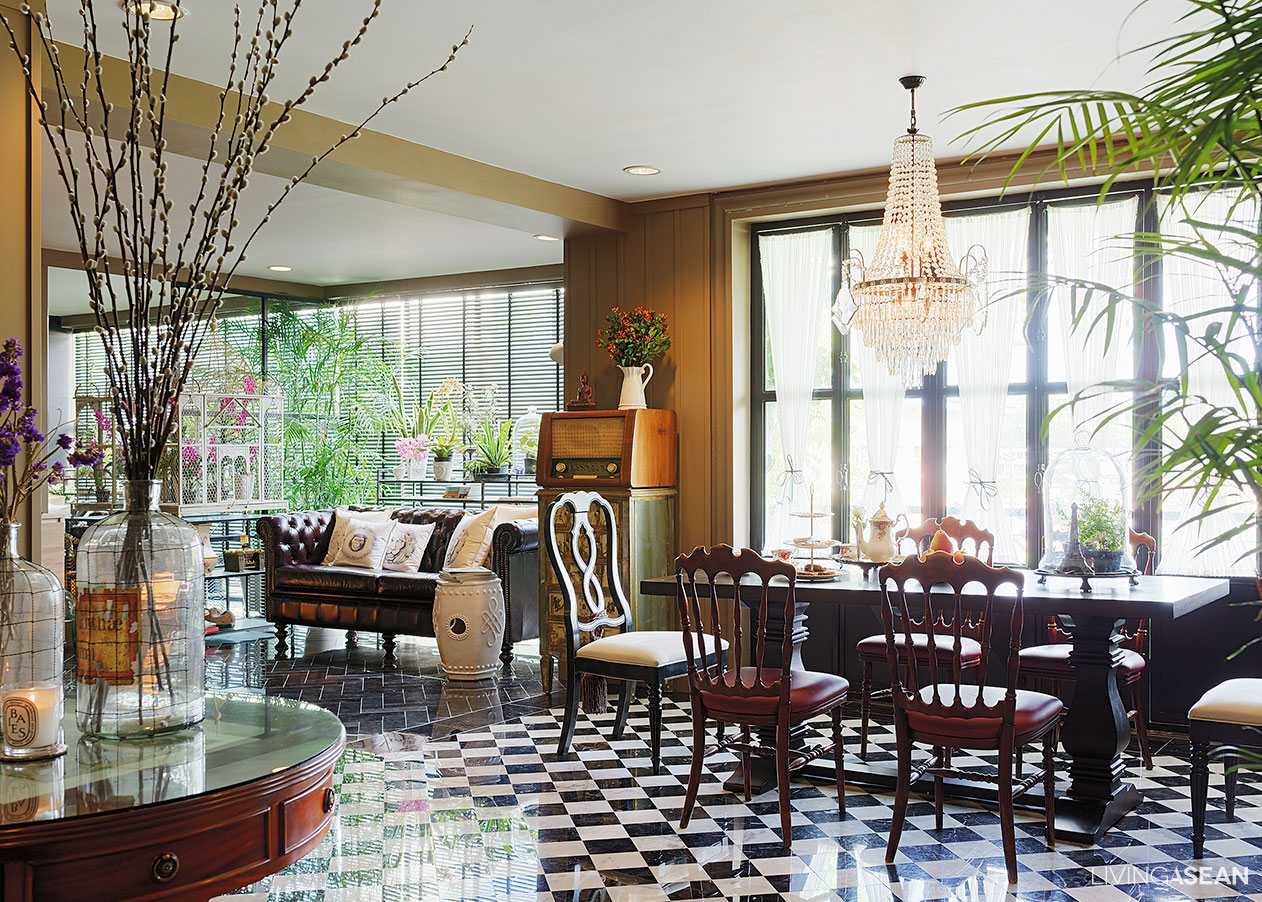
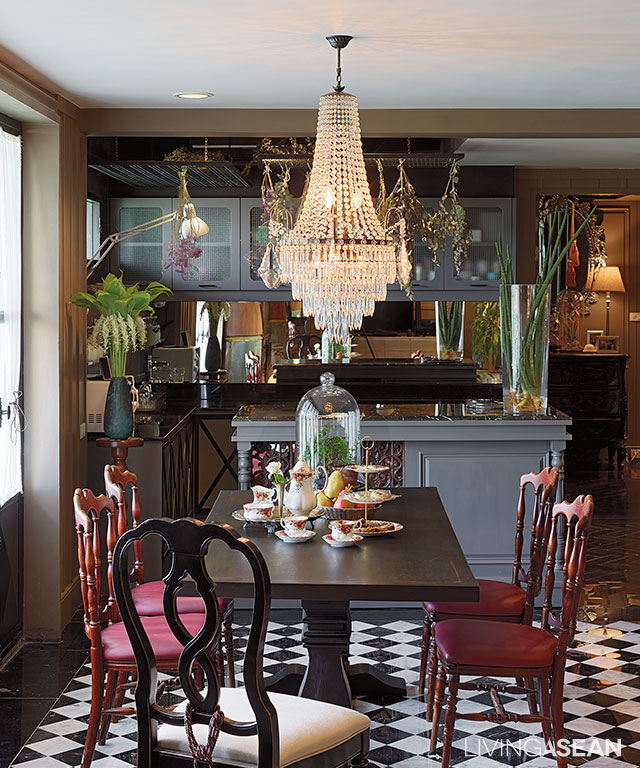
The dining space and adjoining pantry boast Classic appeal with a mix-and-match approach to interior decoration. Victorian wood chairs and a crystal chandelier contrast with the black and white tile floor in a diamond pattern, adding even more interest to the room.
The couple has preferences for different interior decorating in classic and retro styles. This is where the designer, Paisal Chongprasobtham, comes in to create a welcome contrast in the interior living spaces, ones that are aesthetically pleasing despite different natures, luminance and color.
Sharing his thoughts, Paisal said:
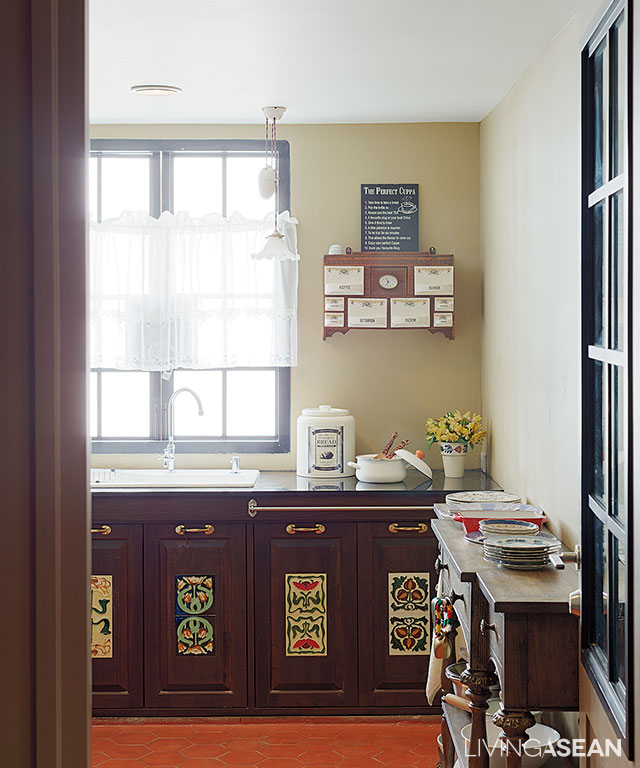
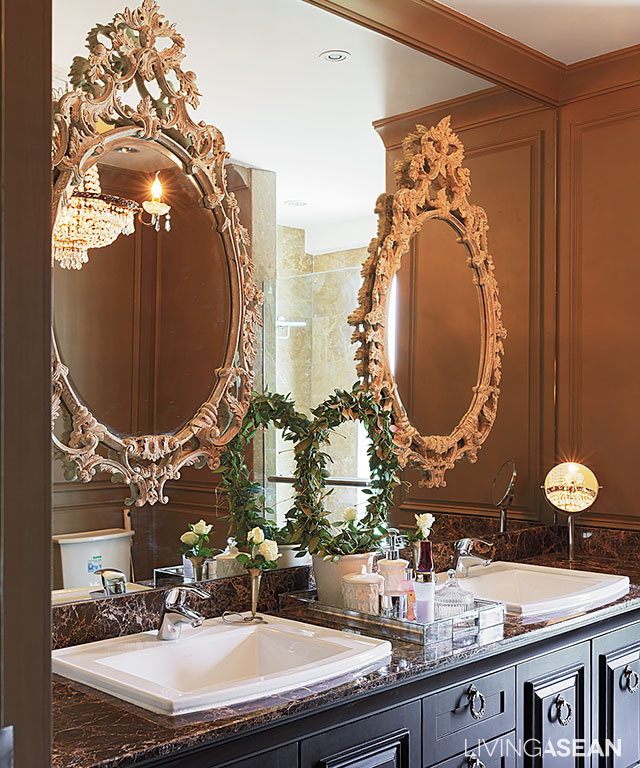
The real kitchen that gets used every day comes with beautiful tile in-laid kitchen cabinets. Antique tile patterns add a unique touch to the atmosphere.The bathroom is perfectly adequate for two users at the same time. Double vanities beneath the granite countertop provide plenty of storage for bathroom supplies. The entire backsplash is covered in glass-bedecked with a pair of exquisite, jewel-like French mirrors
“Worapong prefers the raw rustic look that is the way of men, while Sukanya wants her design simple, and yet appealing by its very nature. So I give the ground floor unsophisticated look by incorporating features that are attractive, and yet unrefined. The interior walls show steel and bare bricks after plaster covering has been removed.
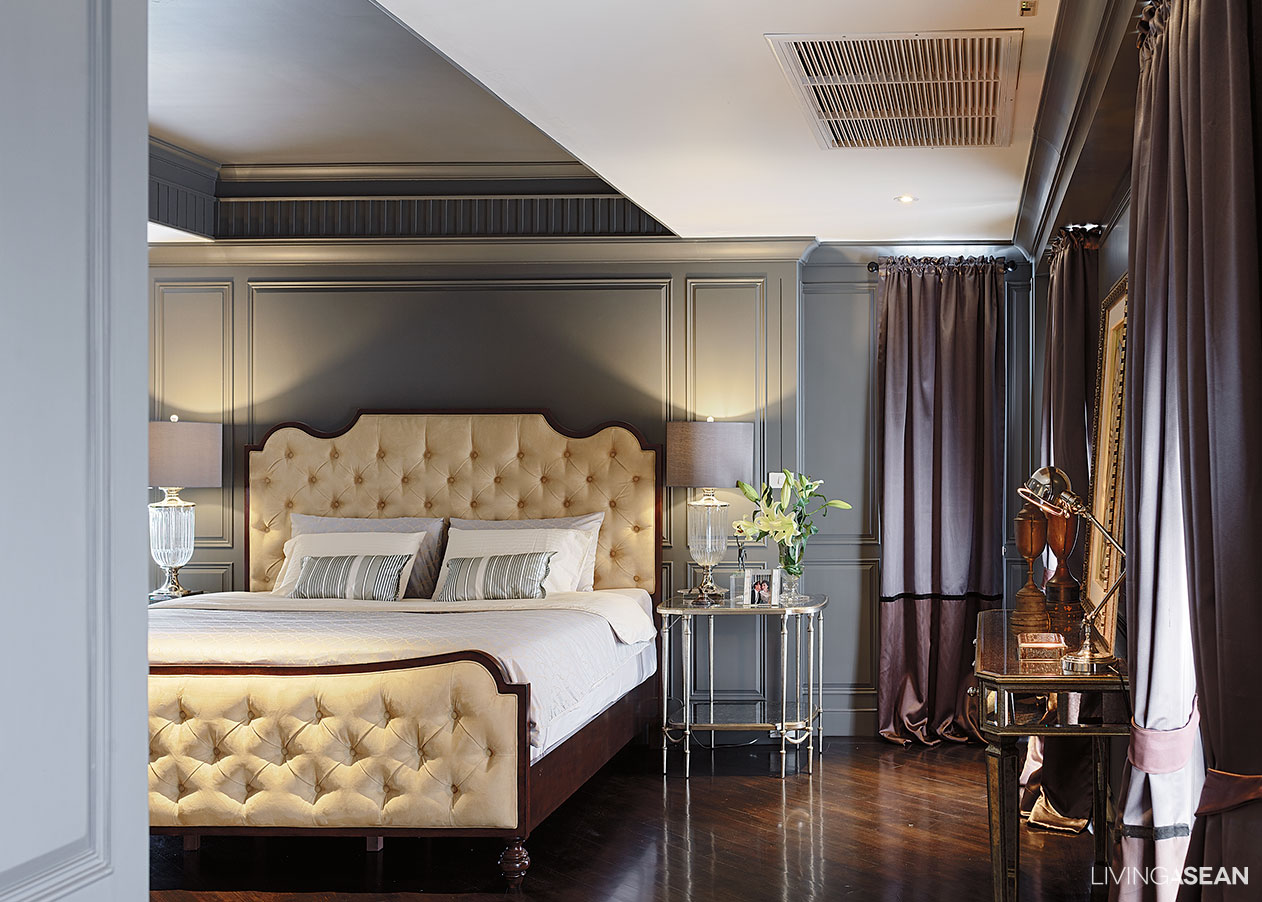
“I try to make the two interior styles of the classic and retro style go hand in hand by using dark shades like black and gray as connecting agents. Meantime, wood furniture comes in natural tones with an emphasis on simplicity, and yet cool. The kitchen counter is adorned with classic woodcarving patterns, making the atmosphere highly agreeable. The bedroom is given to luxury, no doubt the most comfortable and relaxing in every sense of the word.”
Leather-upholstered headboard and footboard in soft hues serve as statement pieces inside the master bedroom. Adorned with antique brass nail heads, they contrast with the bluish gray tone of decorative beading on the wall.
Being a much-traveled person, Sukanya is the one who chooses all of the decorating items. The job as a flight attendant has taken her to Europe often. And she particularly likes going to the flea market, out outdoor events selling secondhand goods.
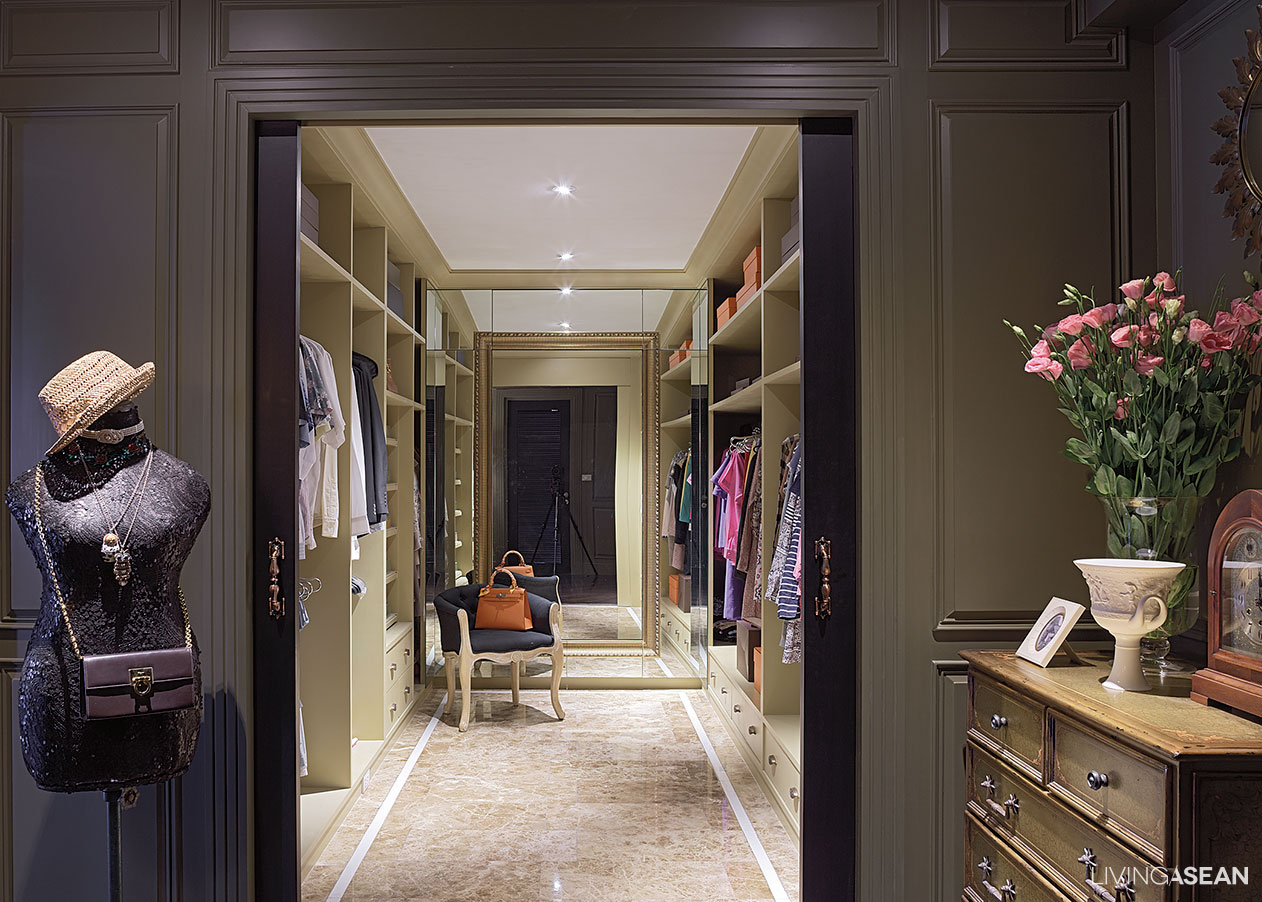
A walk-in closet offers overhead shelves for rarely used accessories. A full-size mirror at the far end adds depth to the well-styled personal space.
“Both of us want a home with the Western appeal, but not to the extent of Louis style. And it must not be too sweet. With this job, I get to see and stay in nice hotels. I collect décor items that I like and adapt them to best suit our home.
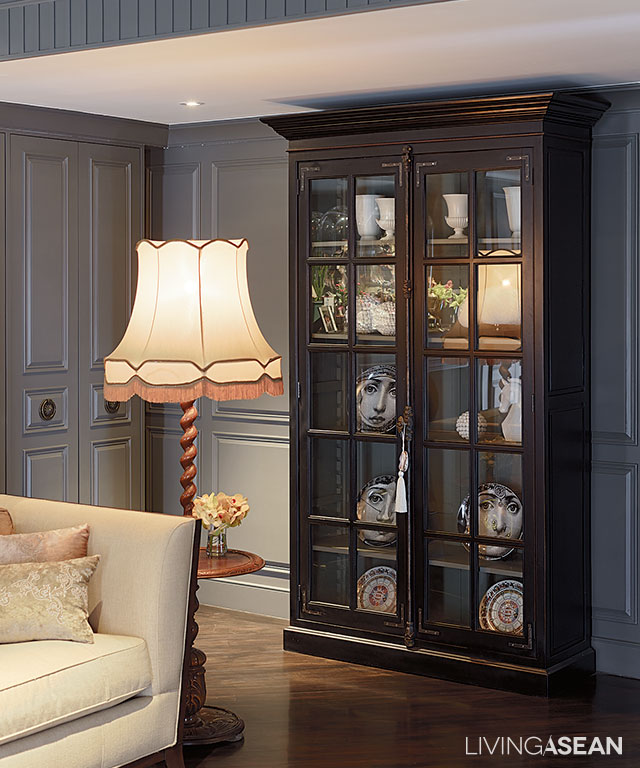
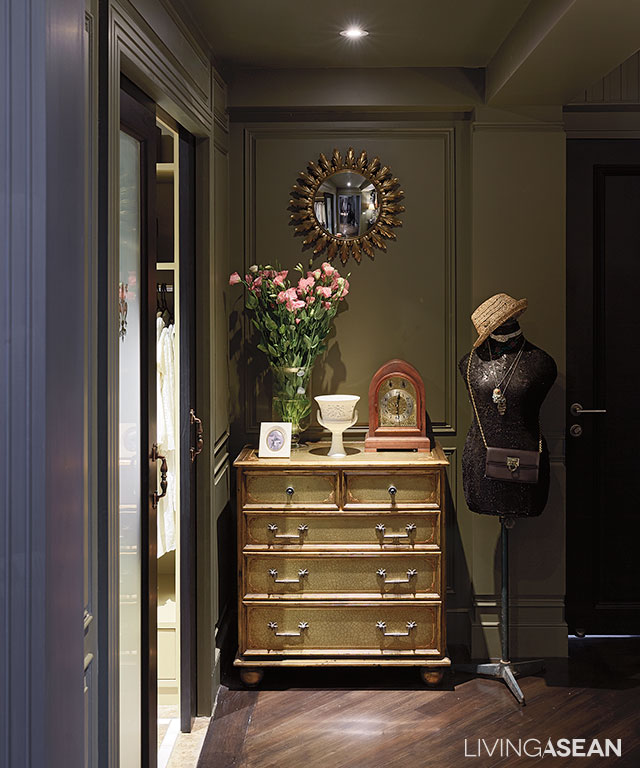
A glass front armory features private collections including Fornasetti graphic plates.A handcrafted dresser and rustic mirror find their perfect spots in the space between the bathroom and walk-in closet.
/ Story: Supachart Boontang / English version: Bob Pitakwong /
/ Photographs: Rithirong Chanthongsuk /
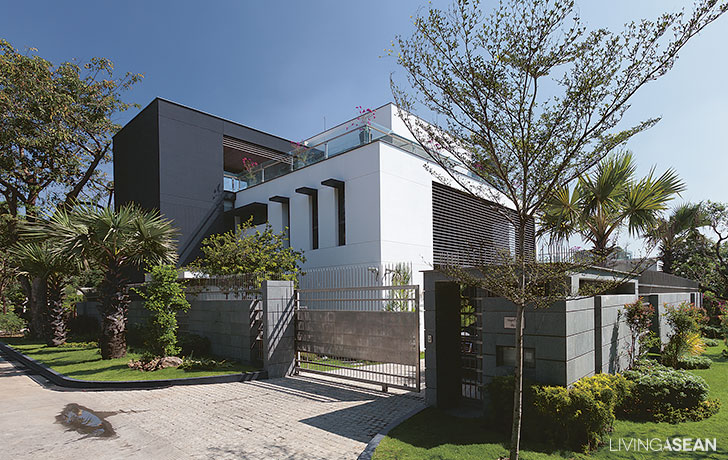
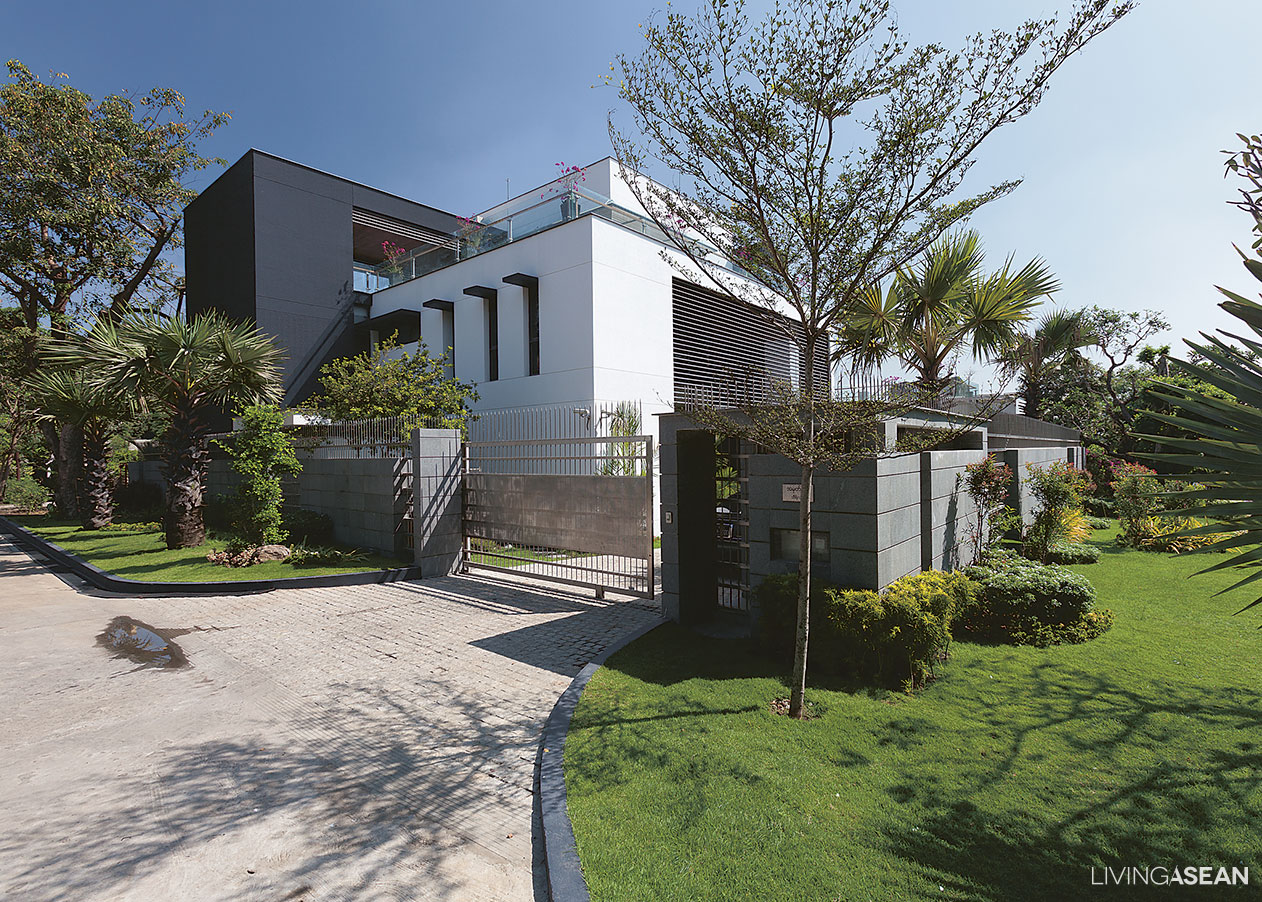
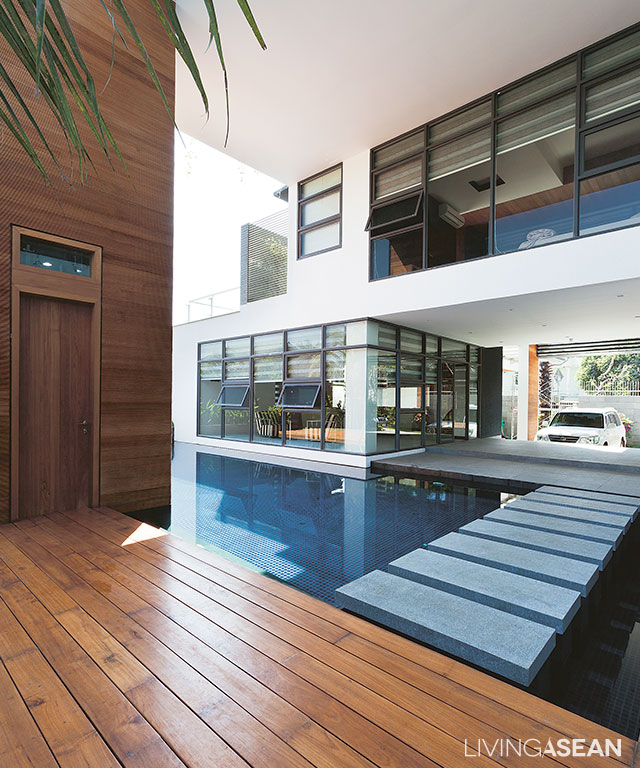
From the outside, this cube-shaped home with a swimming pool as the centerpiece looks like a combination of three overlapping boxes. Distinctive simple line design sets it apart from the rest in the neighborhood. The hall just inside the front entrance is well connected to all living spaces around it. Based on the form-follows-function principle, it’s thoughtfully devised to create a seamless transition from room to room, plus easy access to all intended functions and amenities.
The three-story white home with a cool undertone stands at the center of the property. Homeowner Thin Thin Lwin was on hand to show around. Asked about her thoughts on inspiration, she said:
“Just the two of us, my husband and I, live here. The home was built on what used to be a vacant lot. To begin with, we didn’t want a place that was going to be too big for our needs. We wanted just enough functional areas with easy access to other parts of the house, kind of like keeping with long established traditions from the past.
“By happy chance, I have a friend who is an architect, and the rest is history. Stephen Zawmoe Shwe and I have been good friends since we were kids. So we asked him to design it.”
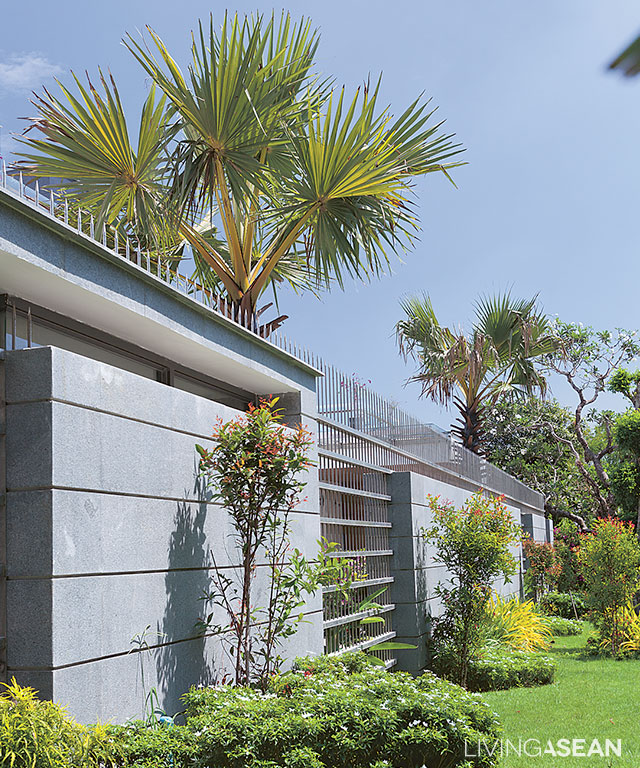
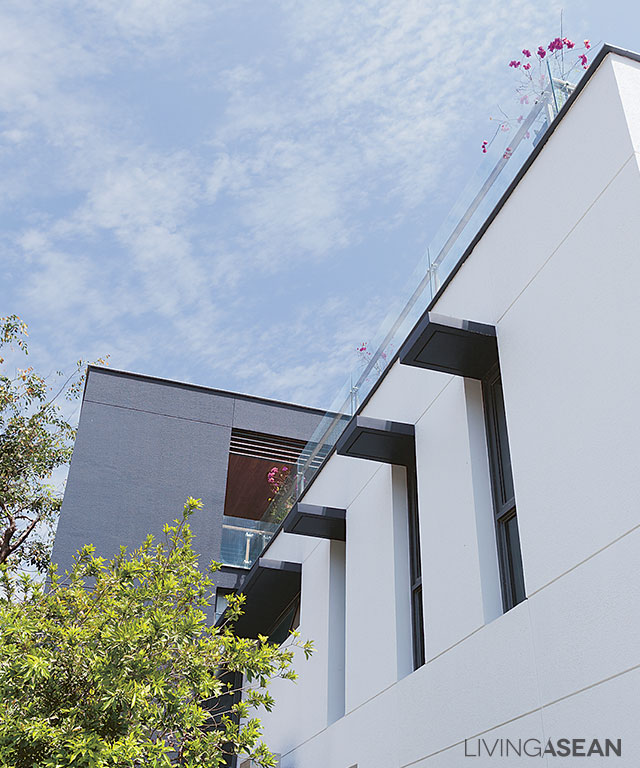
The boundary fence made of concrete features large openings at intervals to improve the flow of air in and out of the property.An array of window awnings protruding from the exterior wall protect the interior from heavy rain and increase its energy efficiency.
Have a look around the first floor. The overall effect is impressive. The house with a subtle shade of white looks like three dimensional shapes coming together neat and clean. The interior at the front of the house is light and airy thanks to double height ceilings.
It’s two stories tall to be exact. There is a sense of interior elegance. The spacious, well-ventilated hall is well connected to other rooms around it. One of them, a living room, is clearly separated from the dining area and kitchen.
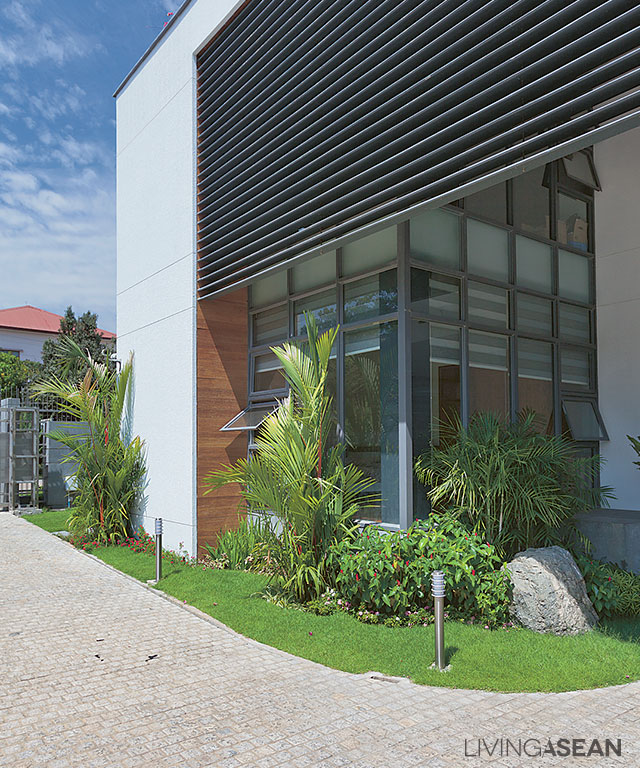
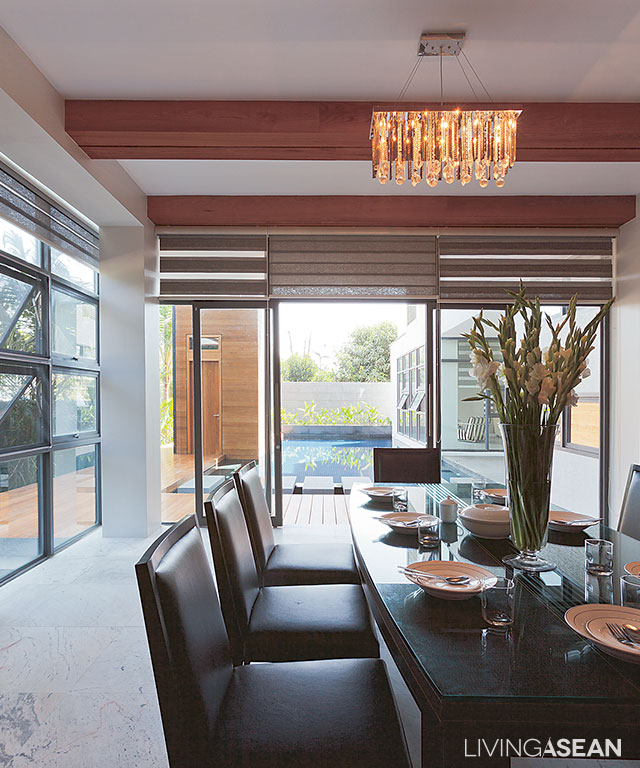
An outdoor louvered awning on the front façade protects the interior spaces from scorching sunlight and improves the home’s general appearance. The exterior is kept simple, modern, and fuss free.Just inside the front entrance, a stepping-stone pathway stretches across the pool. Double height ceilings and transparent partition walls make the atmosphere bright and lively.There is visual and spatial continuity from the cozy dining area all the way to the pool and beyond.
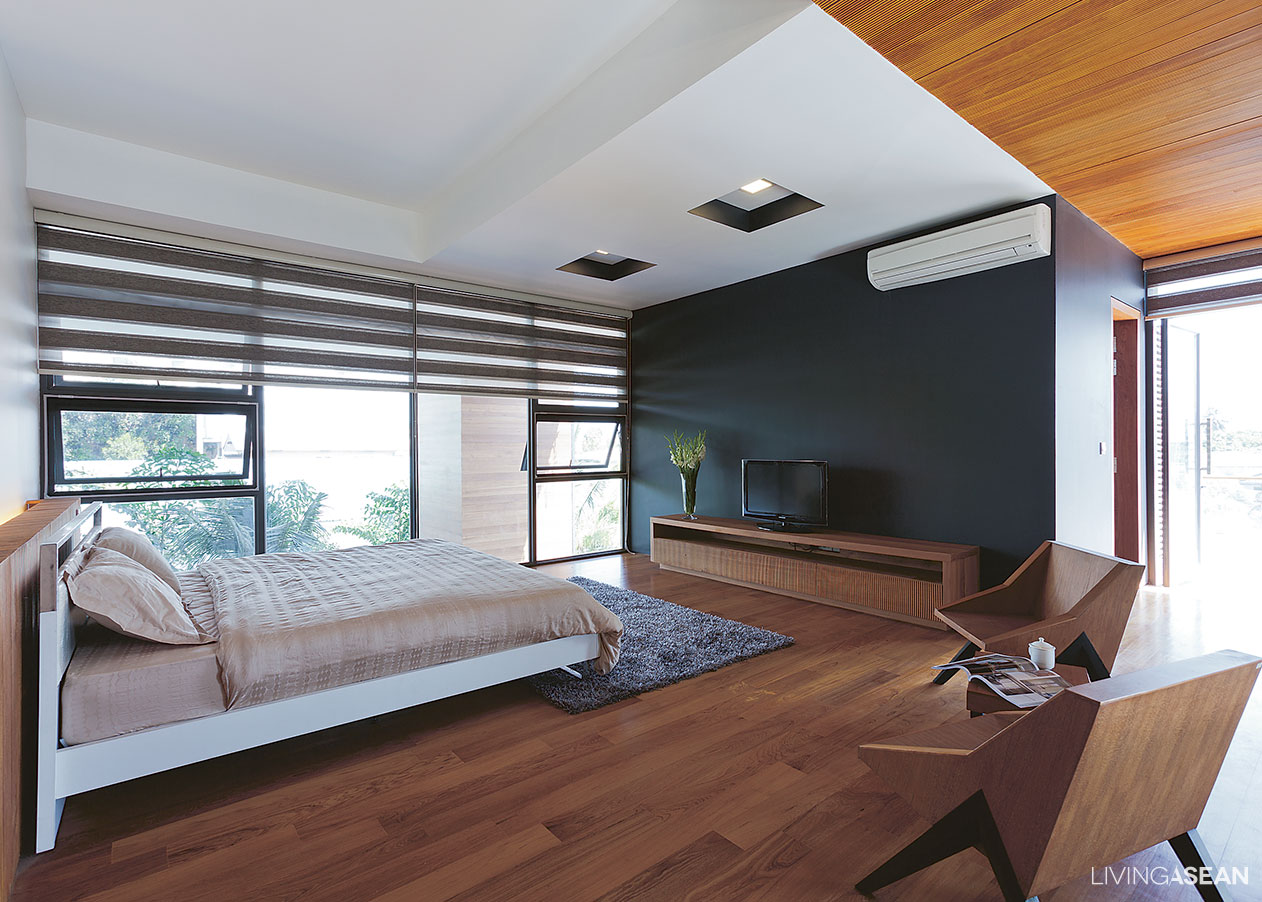
The second floor has two spacious bedrooms, each with a private balcony to take in the view and cool breezes. The swimming pool below is clearly visible from here.
Other than that, interior design emphasizes crisp, clean lines and white tones that go together well with shades of gray. Furniture comes in warm earth tones that enhance the charm of natural wood flooring.
Transparent glass walls create a warm, welcoming atmosphere in the bedroom. There are windows that open to improve air circulation and bring in cool breezes.
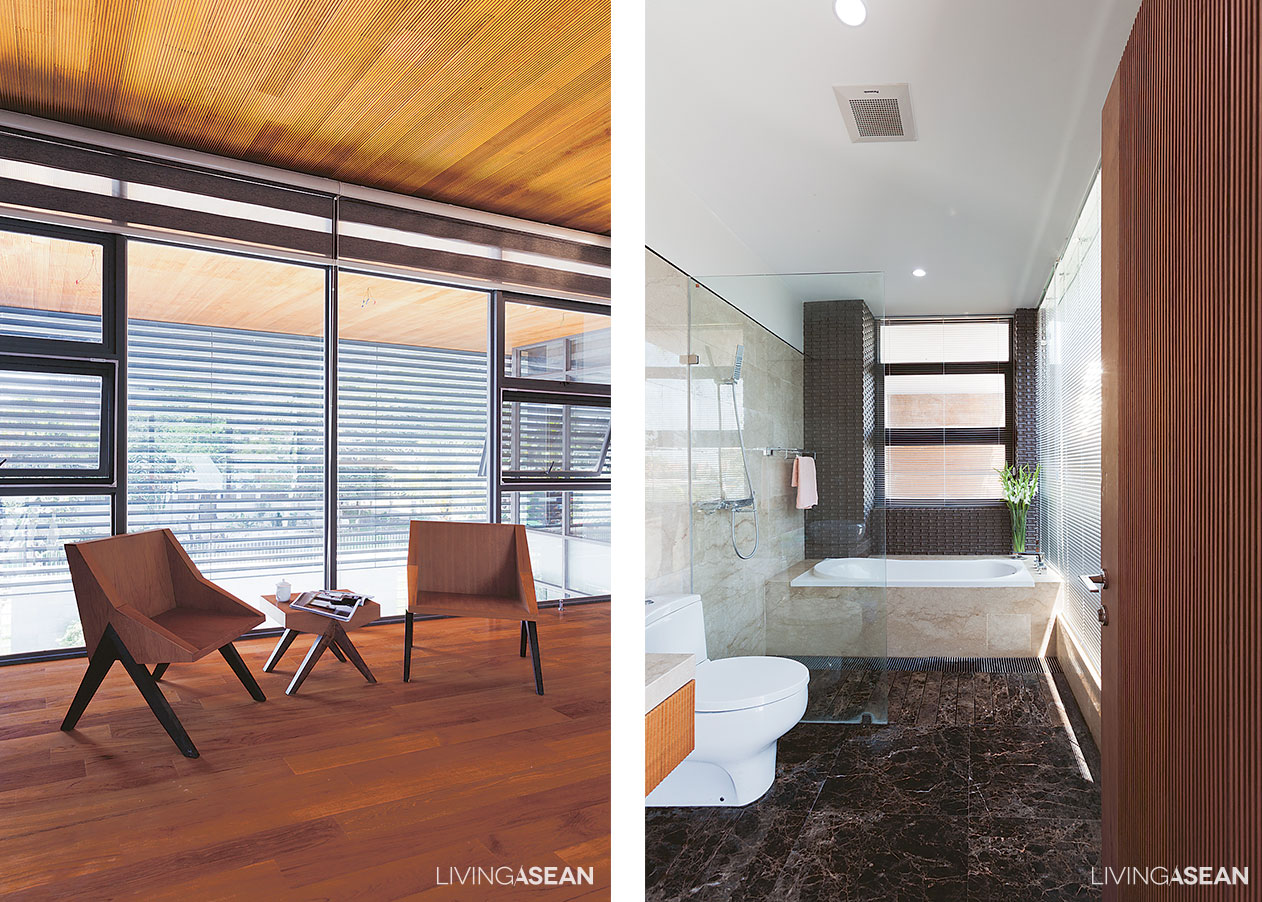
[Left] Louvered awnings under the roofline provide added privacy and protect the second-floor bedrooms from intense heat during the daytime. / [Right] Venetian blinds behind glass walls provide privacy in the bathroom and control natural light.The third floor is a penthouse with a panorama of the city landscape. A peaceful place for relaxation with family, it’s great for stargazing in the dark of night. There is a large Buddha room on one side, where the homeowners come to pray and perform religious rites.
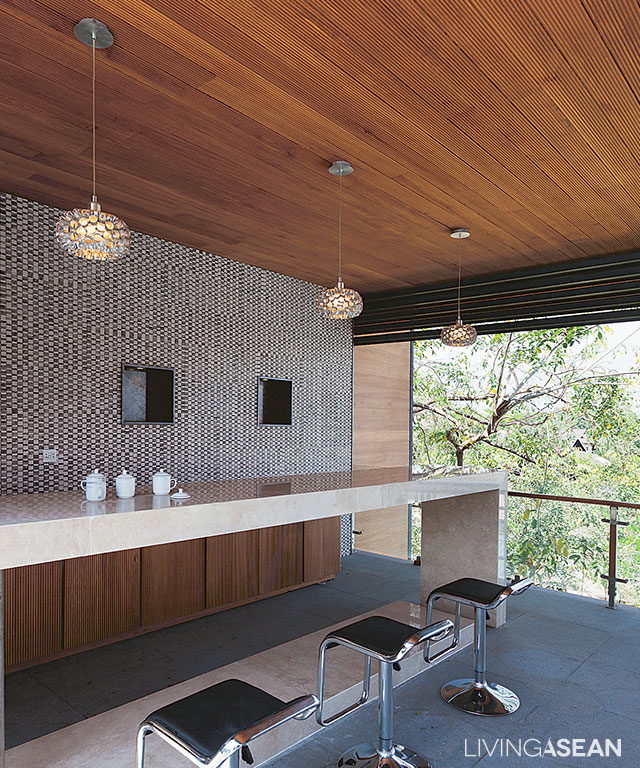
A corner of the penthouse has been remodeled into a reception area with marble countertops and matching bar stools.
All things considered, it’s simple clean line design that makes this Cube-Shaped Home in Yangon stand out in the rustic old town neighborhood. Well-thought-out planning ensures there are plenty of functional areas and modern amenities for comfortable living. Plus, it’s energy efficient thanks to passive cooling strategies, such as large windows that open to bring in cool breezes and natural light.
Where appropriate, louvered awnings are installed to minimize the amount of sun on the exterior wall. They reduce the workload on air conditioning and make the home perform as intended amid the hot and humid climate.
/ Story: Ajchara Jeenkram / English version: Bob Pitakwong /
/ Photographs: Soopakorn Srisakul /
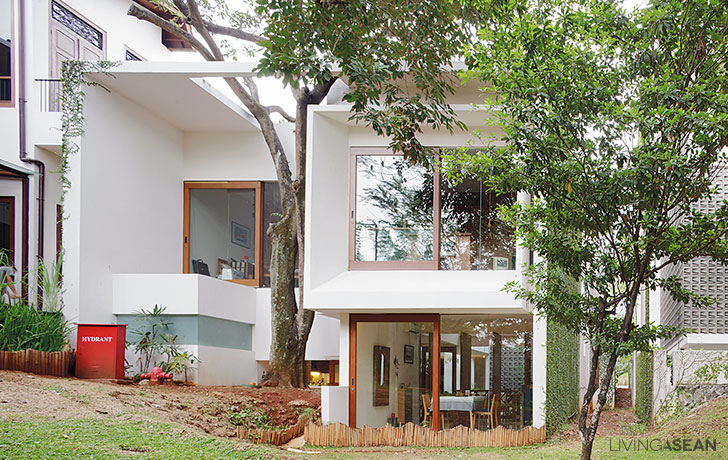
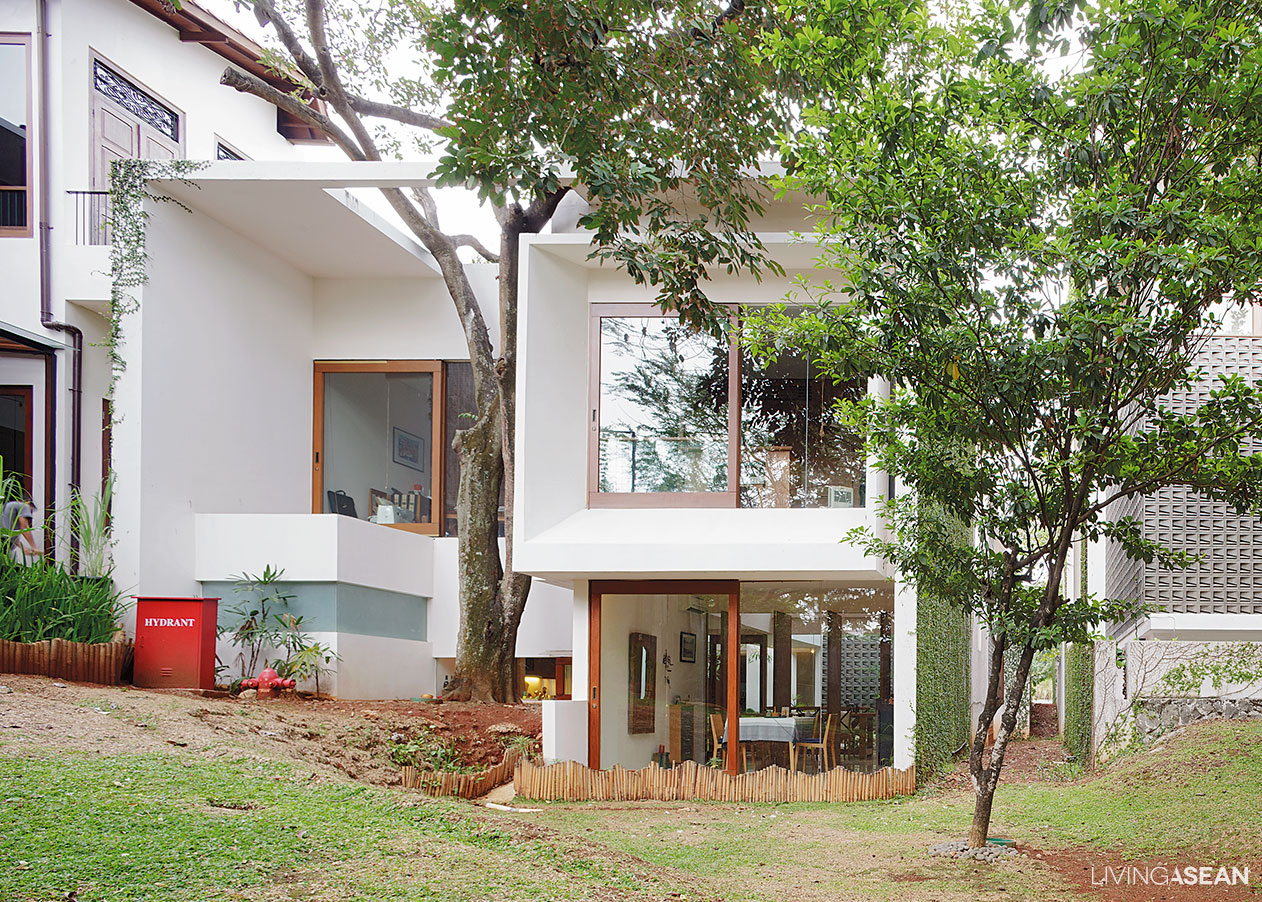
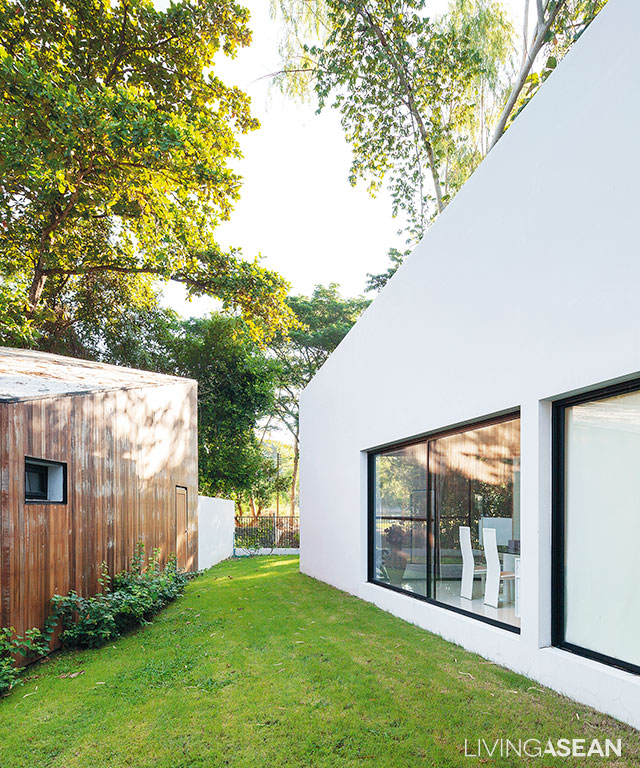
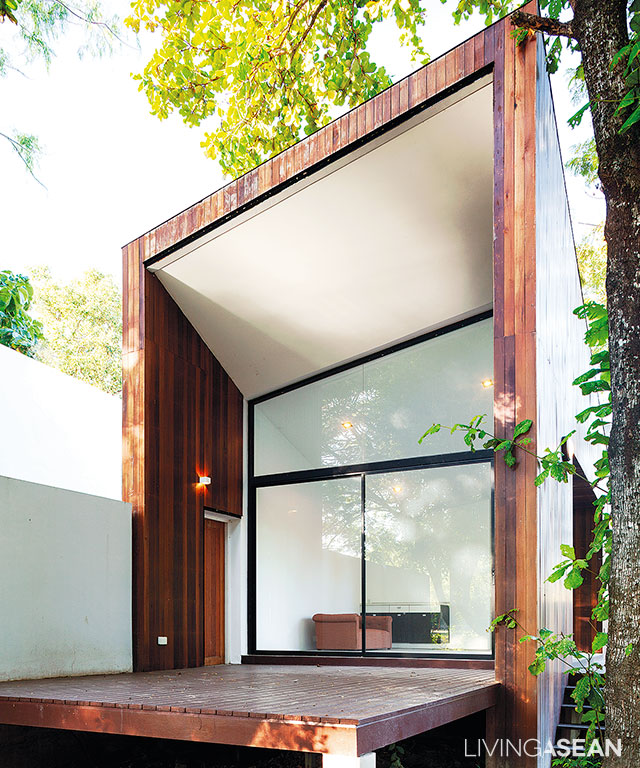
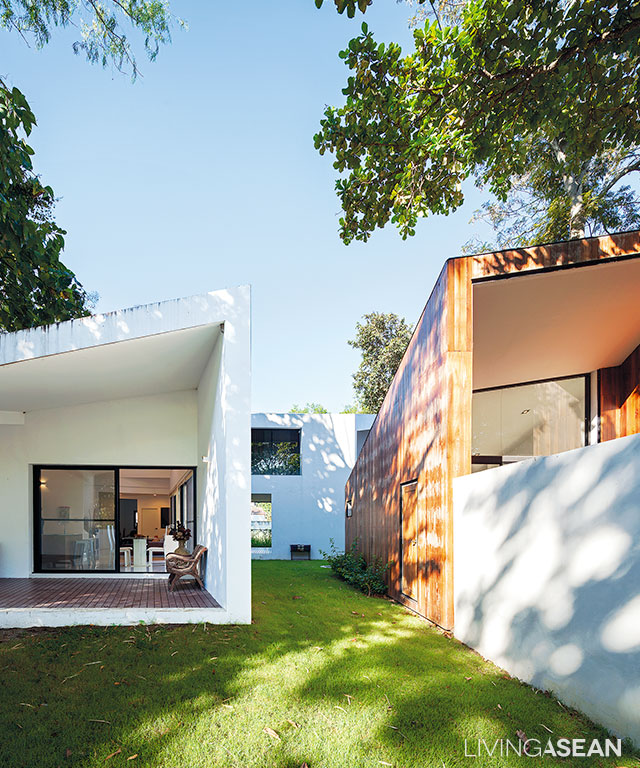
This house among the trees is part of a suburban residential development nestled in a wooded area where calming fruit orchards once grew. It is comforting to know the developers have made every effort at preserving as many trees as they possibly could. Like so, the houses are built around mature trees that have long been there. Here’s one of them.
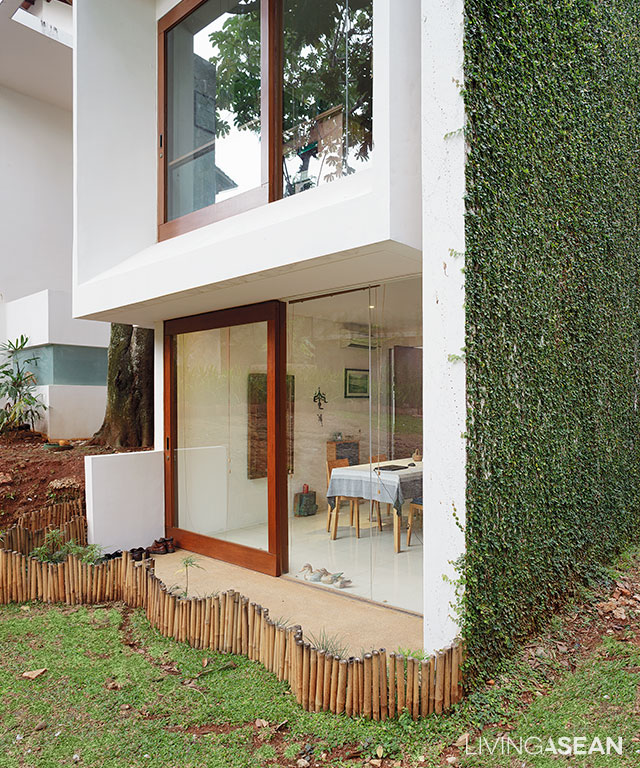
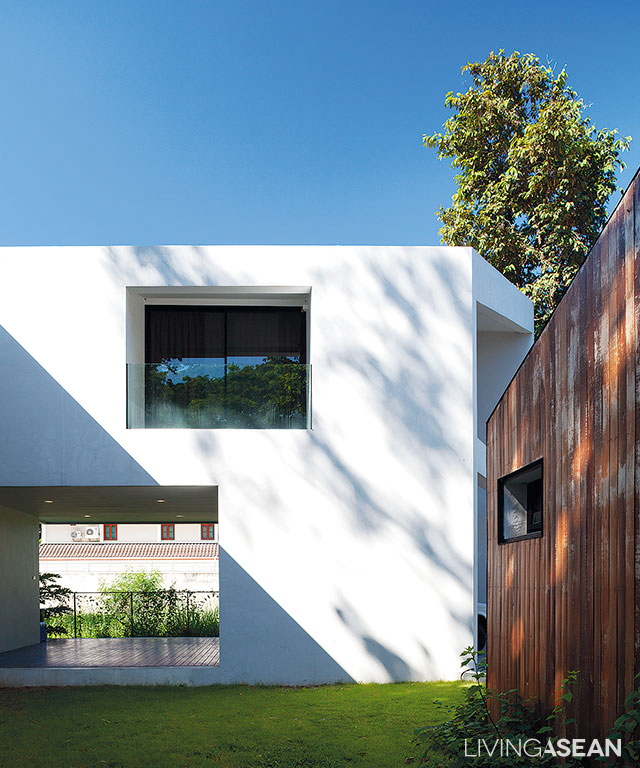
The cube-shaped façade looks out over the front yard. Large glass windows in wood casings stretch across the entire face of the building. To let nature permeate, patches of greenery occupy every open space including the rooftop deck.
The cube-shaped façade looks out over the front yard. Large glass windows in wood casings stretch across the entire face of the building. To reconnect with nature, patches of greenery occupy every open space including the rooftop deck. Meanwhile, open concept floor plans allow abundant natural light. The positioning of windows and other features ensures minimum consumption of electricity, which translates into big savings. More than anything else, it’s about building a relationship with the natural world.
“Tanah Teduh” is the name of the housing development. It’s a reminder of the residential projects where a large number of houses of similar design are built closer together, creating a friendly neighborhood in which everybody knows everybody.
Here, all the residential units have access to common areas via both front and back doors. Well-thought out design ensures security is achievable without sacrificing privacy. Taken as a whole, the housing development is situated on 21 Rai of land (roughly 8.3 acres) that once upon a time was a thriving fruit orchard.
Exterior walls covered in coat-button vines help cool down the interior living spaces.
Inspired by the need for nature conservation, the project developer offers only 20 modern houses with a view of the lush garden landscape. The privacy of its residents takes priority over any other matter. But the beauty of the landscape is important, too. So, instead of building boundary walls that can be unpleasant to look at, the homes are kept separate from each other by green hedges and other smart architectural hacks.
It takes a team of top ten Indonesian designers to make this housing development exceptionally good. To avoid repetition, the front façade varies from one unit to the next, and each unit is a signature of an individual designer.
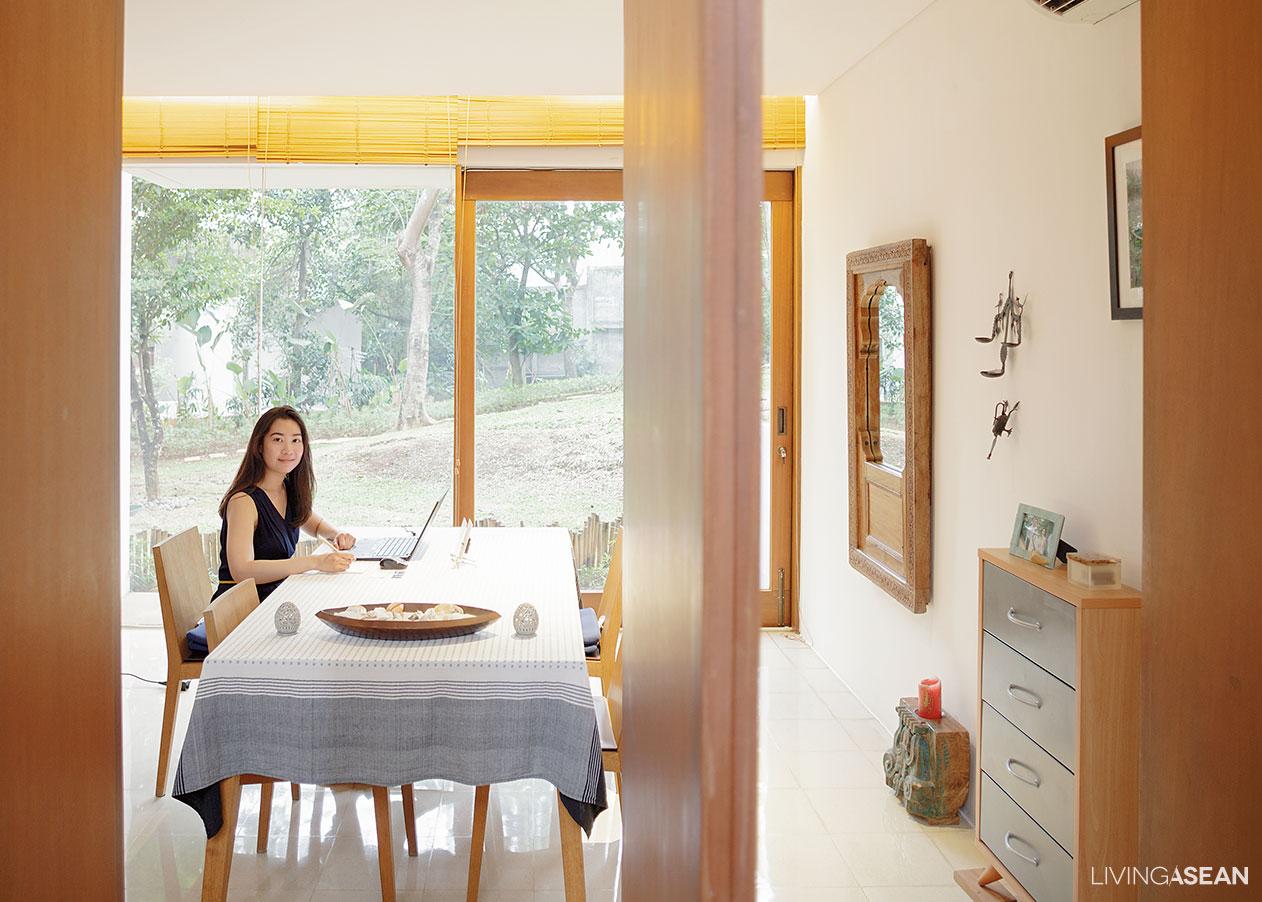
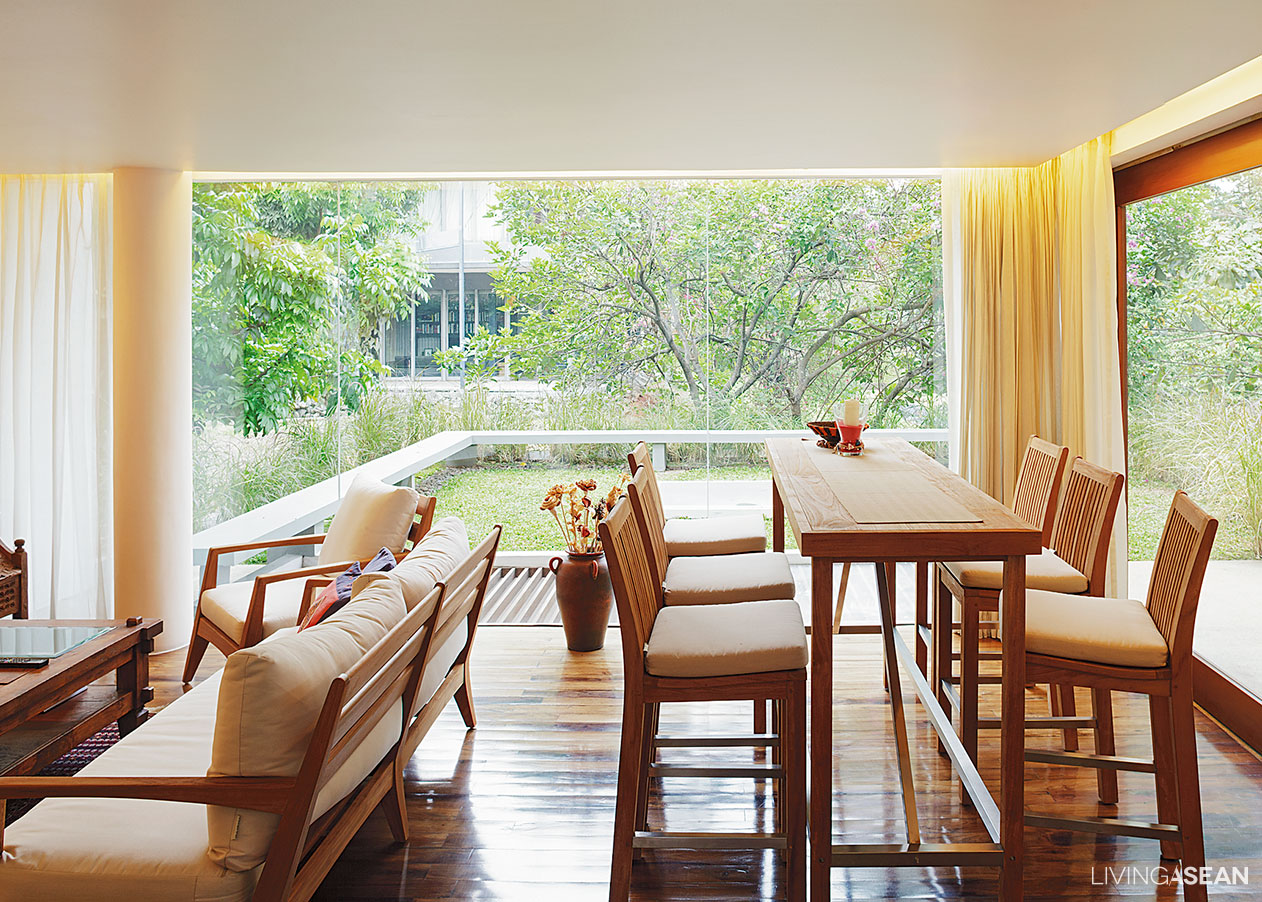
A relaxing multi-use room in the front part of the house. The sliding door and exterior wall are glazed using clear glass to take in the garden view and ensure there’s plenty of natural light in the house.
Oranat Pernquist is the owner of the house that we visited on this housing development. A Thai lady who has come to call Jakarta home, she welcomed our editorial team to take a look around. Overall, the home was beautiful, well-designed, and nicely decorated.
Andra Matin, the designer and project director, sure did a good job at it. He put in a small center courtyard to let nature pervade throughout the home. Natural light and correct building orientation were taken into account, resulting in well-connected, warm, and inviting interior living spaces.
Meanwhile, the external envelope showcased the charm of modern design, something akin to the works made famous by world-renowned architect Le Corbusier, but with an Asian outlook.
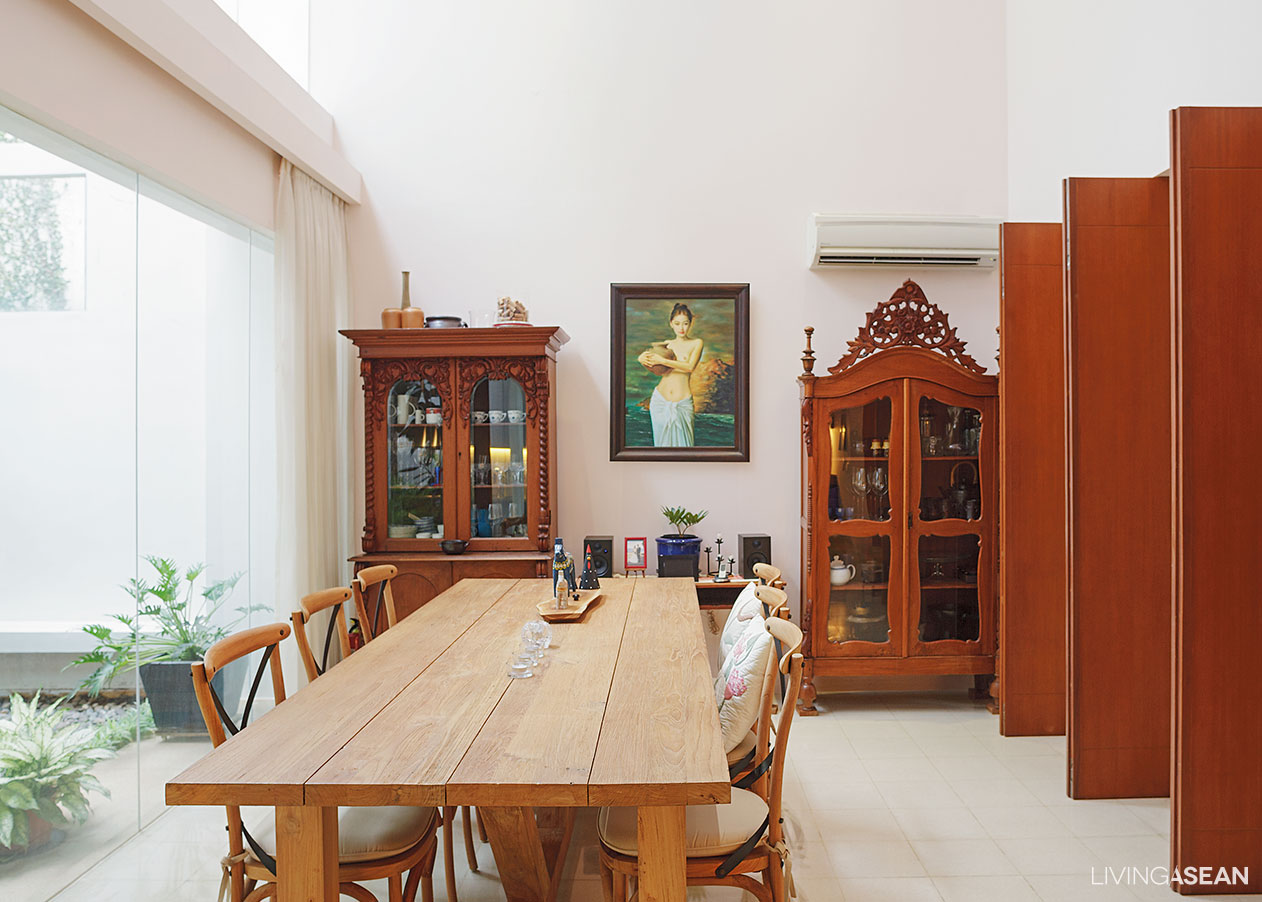
The dining room features a large wood table capable of seating 6 to 8. The table and chairs are made to order from Jakarta. Glass-front armoires in the backdrop are imported from Thailand.
The house has two wings. The ground floor of the first building offers a good-sized sitting room, dining area and kitchen. Glass siding fills the entire exterior wall on one side, making the center court clearly visible from within. The second floor holds a home office, while the third is a sundeck converted into a sky garden.
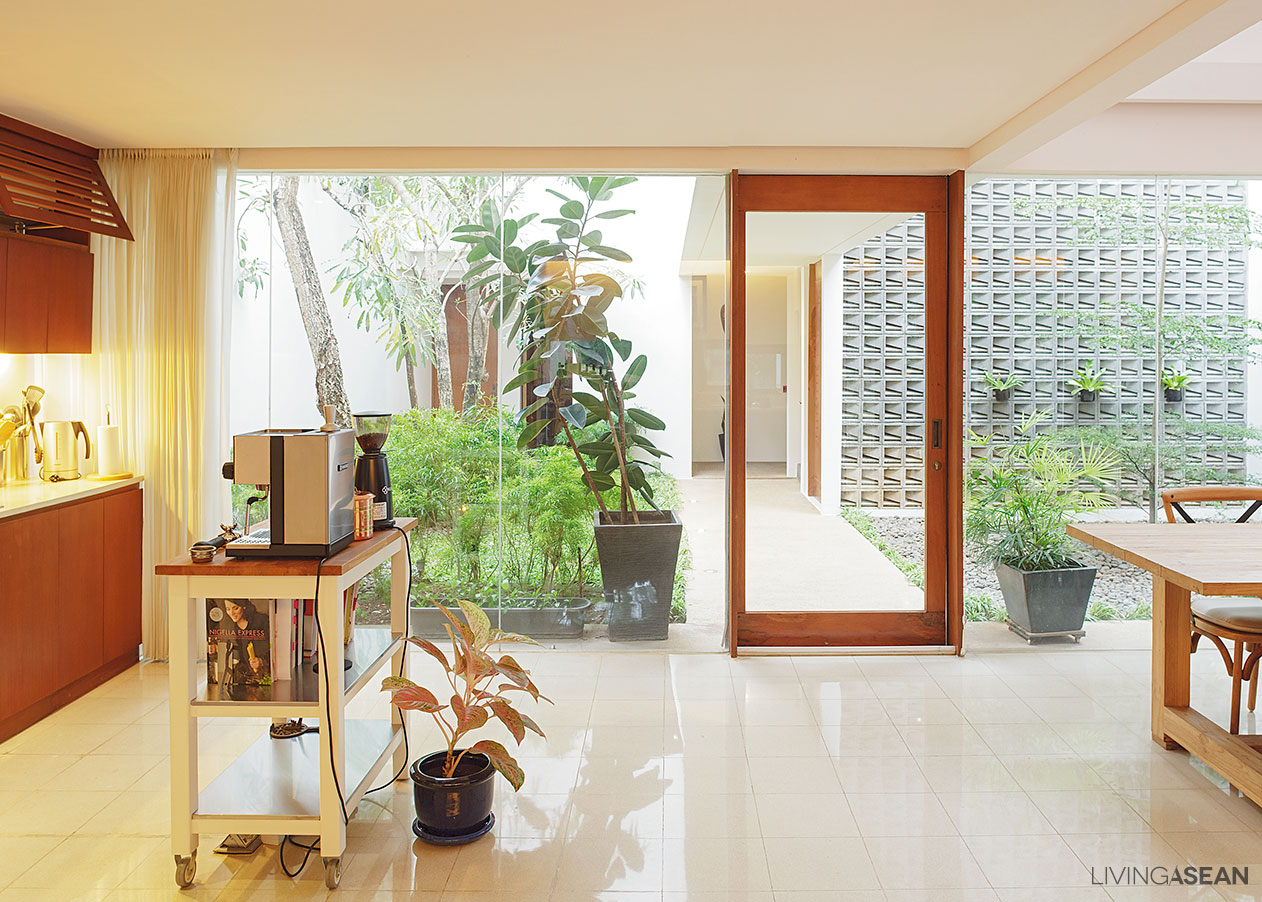
The kitchen is connected to the dining room. A utility table on wheels compensates for the absence of a kitchen island. The center courtyard can be seen in full view from here, thanks to glass siding that stretches across the exterior walls.
The second building also has two levels with multi-use spaces on the first floor. The second floor contains a sitting room with access to the garden. It’s decorated with a sofa in soft hues and a set of table and chairs. There is a park bench made of concrete for relaxation in the outdoors.
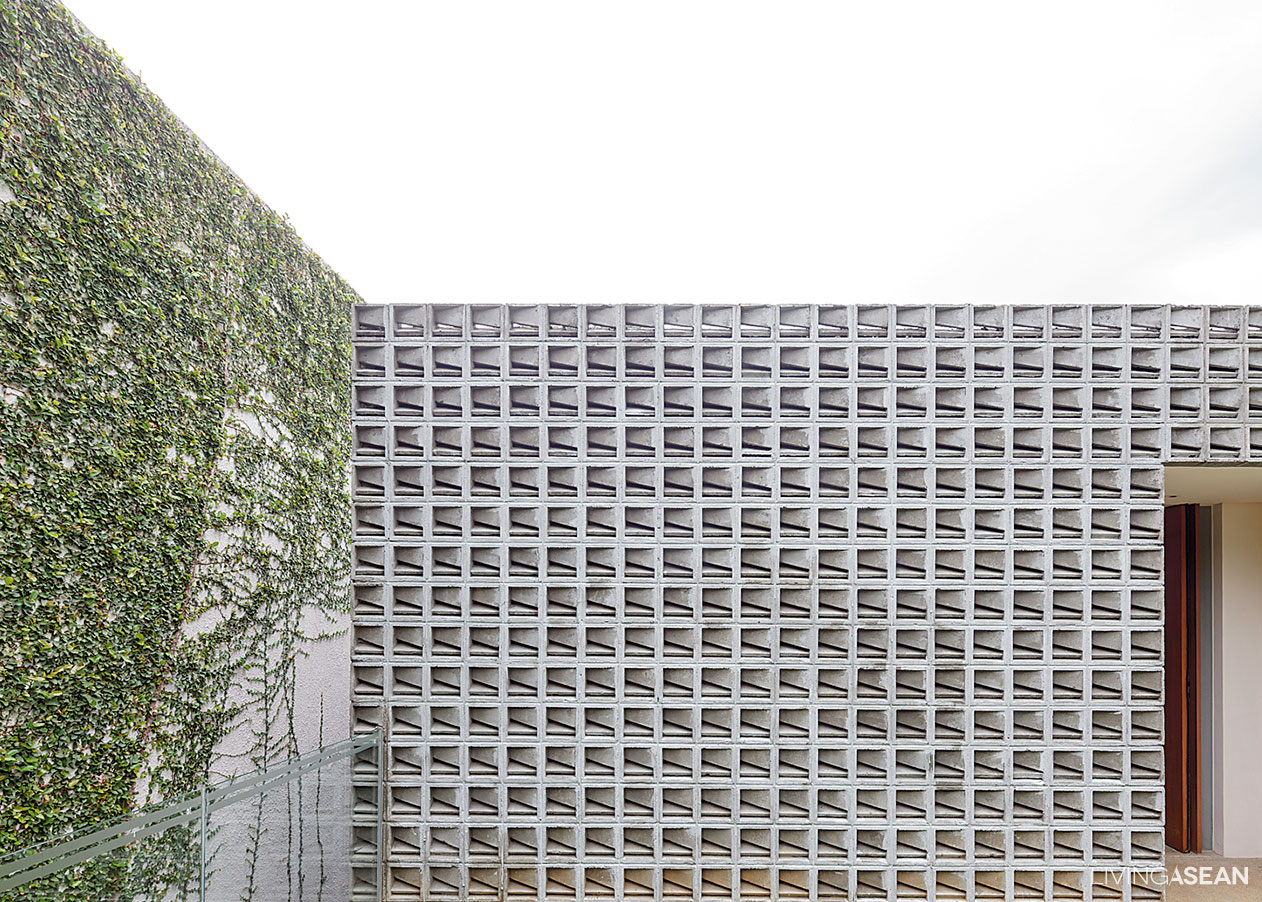
The perimeter wall made of perforate cement blocks not only protect from the sun’s harsh glare but also allows air circulation. Breathe block design adds modern curb appeal to the home.
The designer is passionate about Thai-modern design that’s evident in the interior decorated with simple materials. They include real wood, bare concrete walls in lighter shades and a perforate shell. Every living space is designed for specific use. It looks uncluttered and opens to let nature permeate.
Oranat said that her other half, Anders Pernquist, traveled abroad for business often and brought home beautiful objects from Italy, Taiwan, and India. She wrapped it up nicely: “Anders is responsible for purchasing,” and she for installation. No wonder home interior design is so full of life.
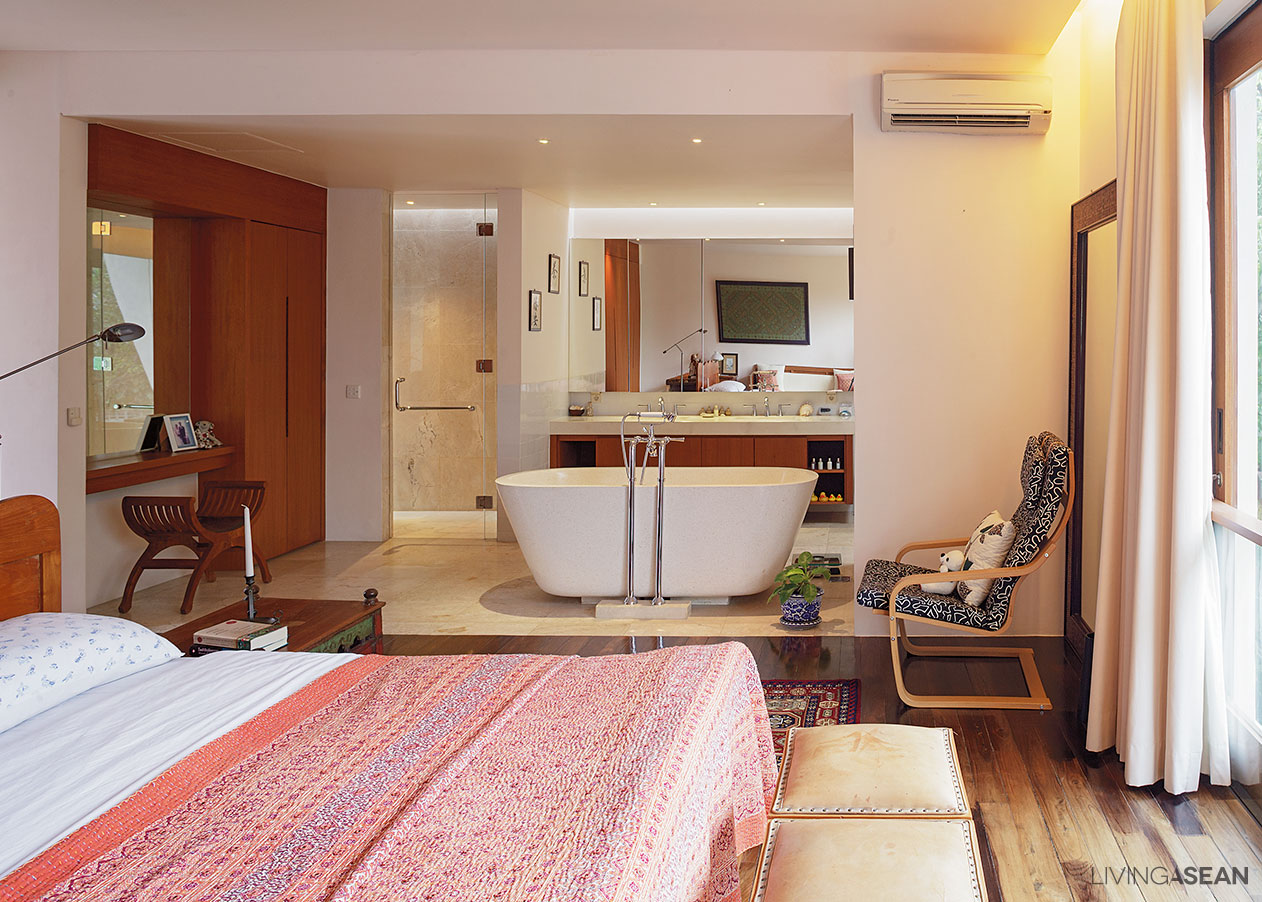
The master bedroom on the third floor has floor-to-ceiling windows and wood flooring in glossy finishes. Different materials serve as boundary markers among the internal spaces. The en suite bathroom showcases fine-stone terrazzo flooring with a dressing room and walk-in closet.
“Anders likes Asian style handicrafts. Works produced in this region are beautifully crafted. We have glass-front armoires with superb wood carving imported from Thailand, area rugs from India, and other pieces that are made to order in Jakarta,” said Oranat.
“Our collections come from various parts of the world. They remind us of our long journey.”
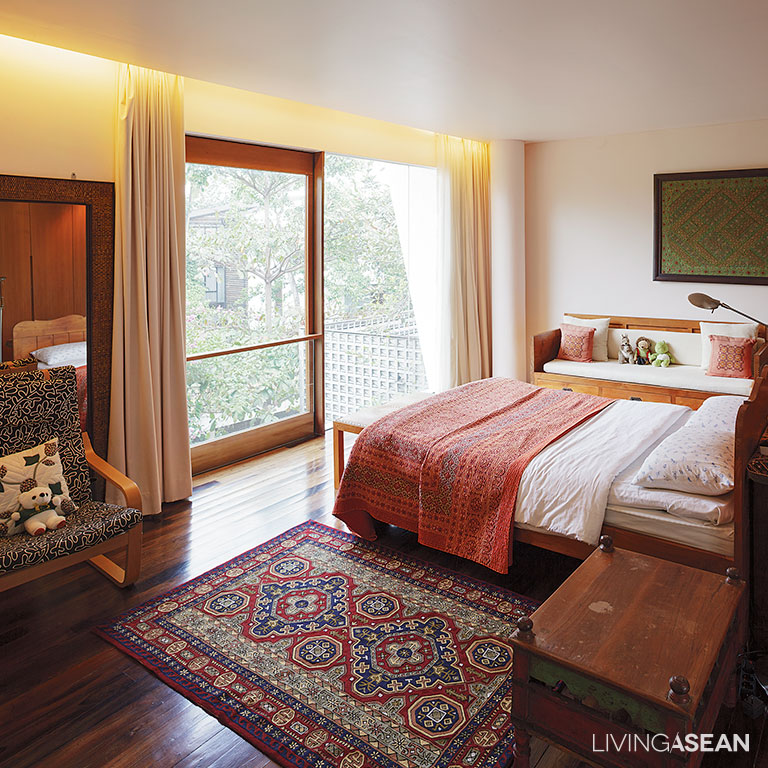
The bedroom overlooking the courtyard has a wooden bed with area rugs and bed cover in complementing hues from India. A birch veneer IKEA chair adds Scandinavian vies to the room.Wall openings keep the interior well-lit by natural daylight. The architect put this opening in the kitchen on purpose to take in the views.
/ Story: Wuthikorn Suthiapa / English version: Bob Pitakwong /
/ Photographs: Sitthisak Namkham /
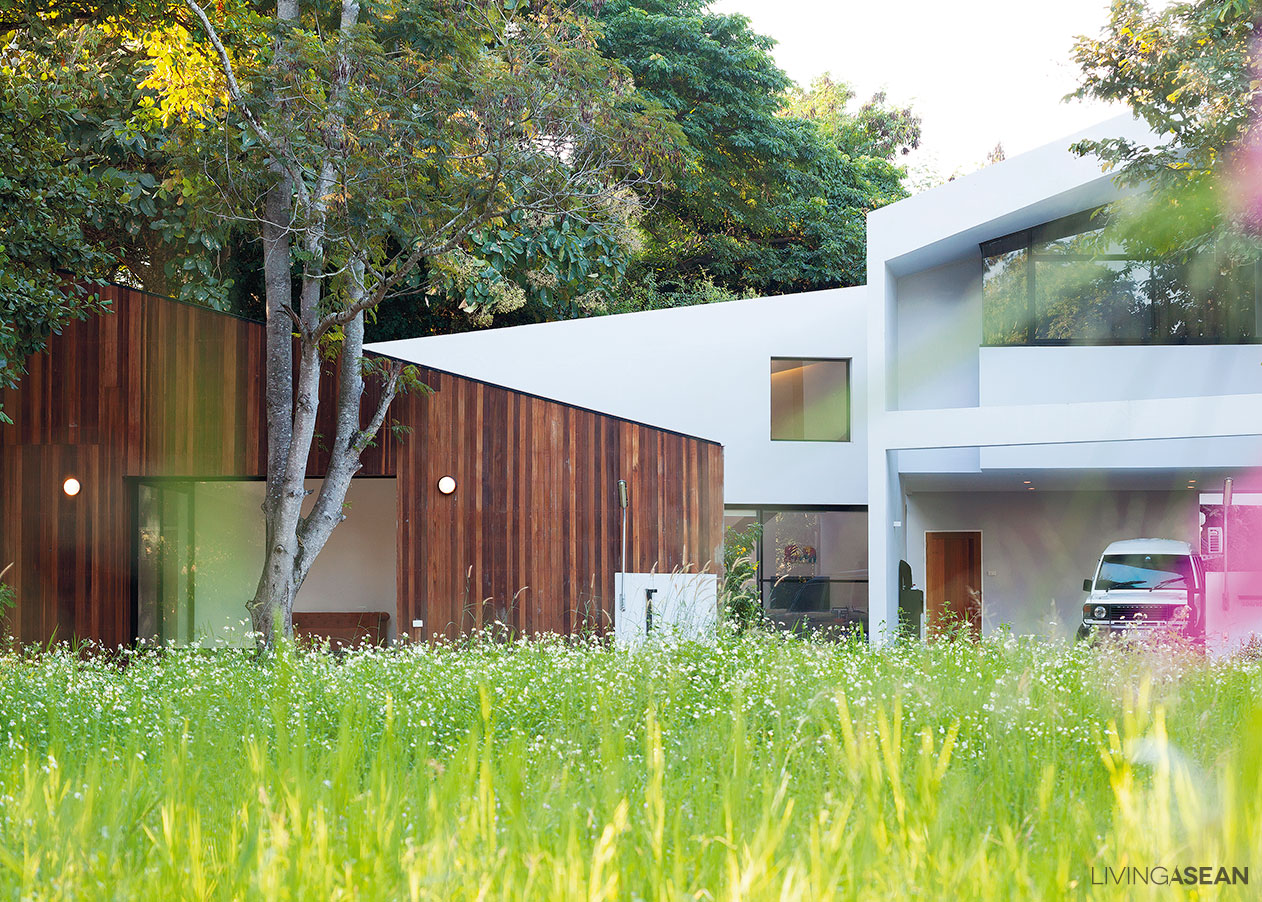
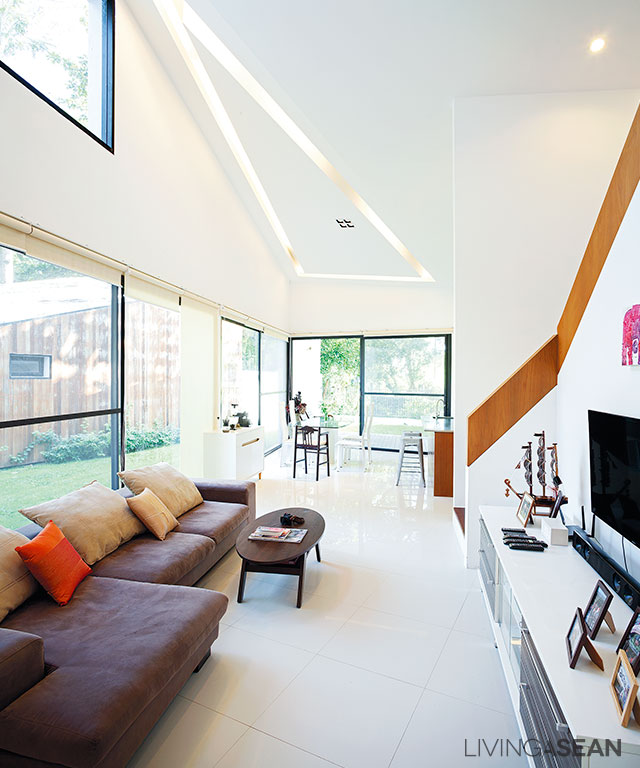
An old-styled waterfront house was recreated for modern living in Chiang Mai. It is made up of a coffee shop, piano classroom and a private space for the family.
“I want to emulate the Thai style waterfront home of the past, kind of set on land that slightly descends to the riverbank. Like so, the new home is designed with respect for nature. Meantime, it embraces all features that are up to date, from materials to style to character.” So said the designers when asked to elaborate on the concept behind this home project.
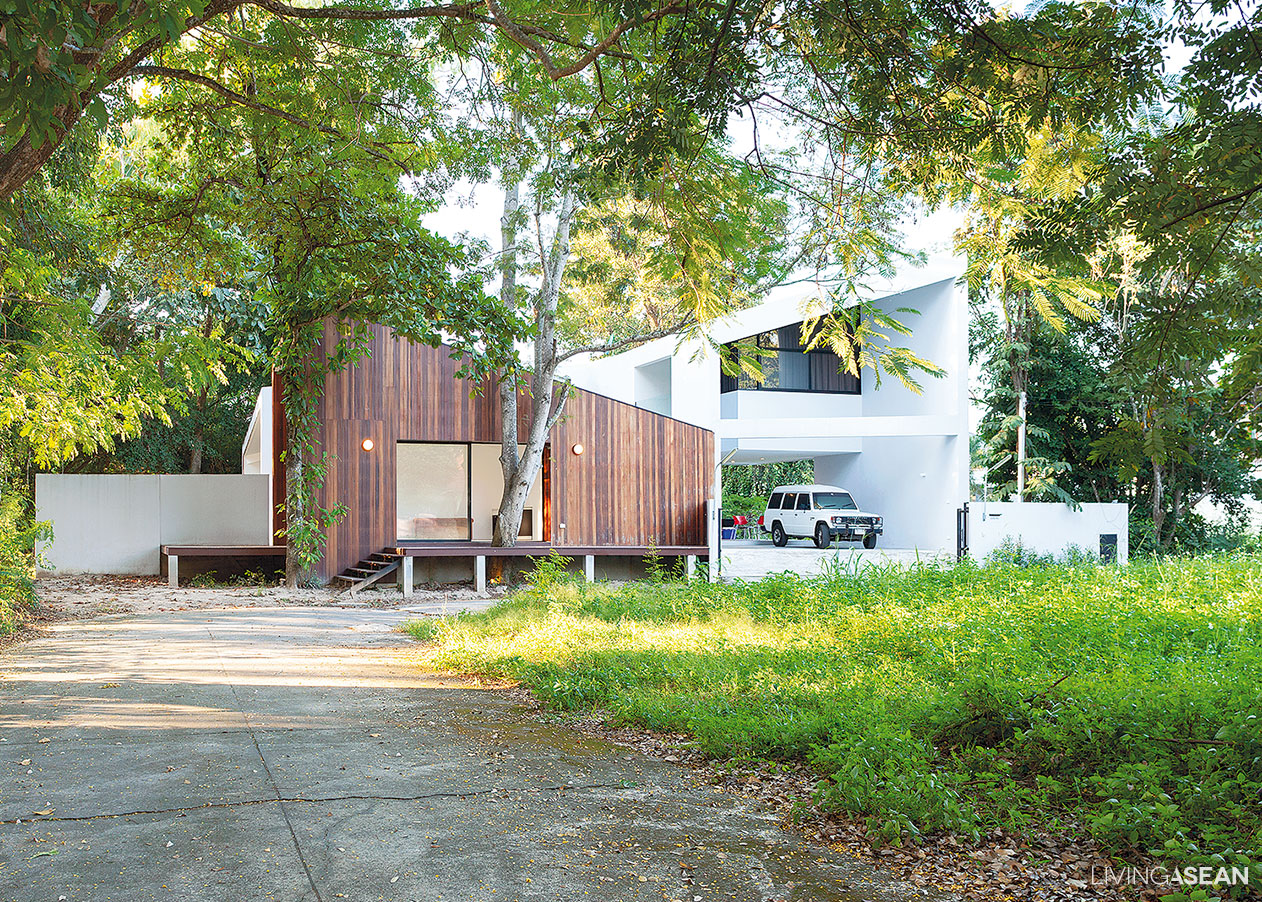
The handsome waterfront house featuring smooth exteriors and eye-catching roof design is affectionately called “Baan Muan,” literally home of baby Muan.
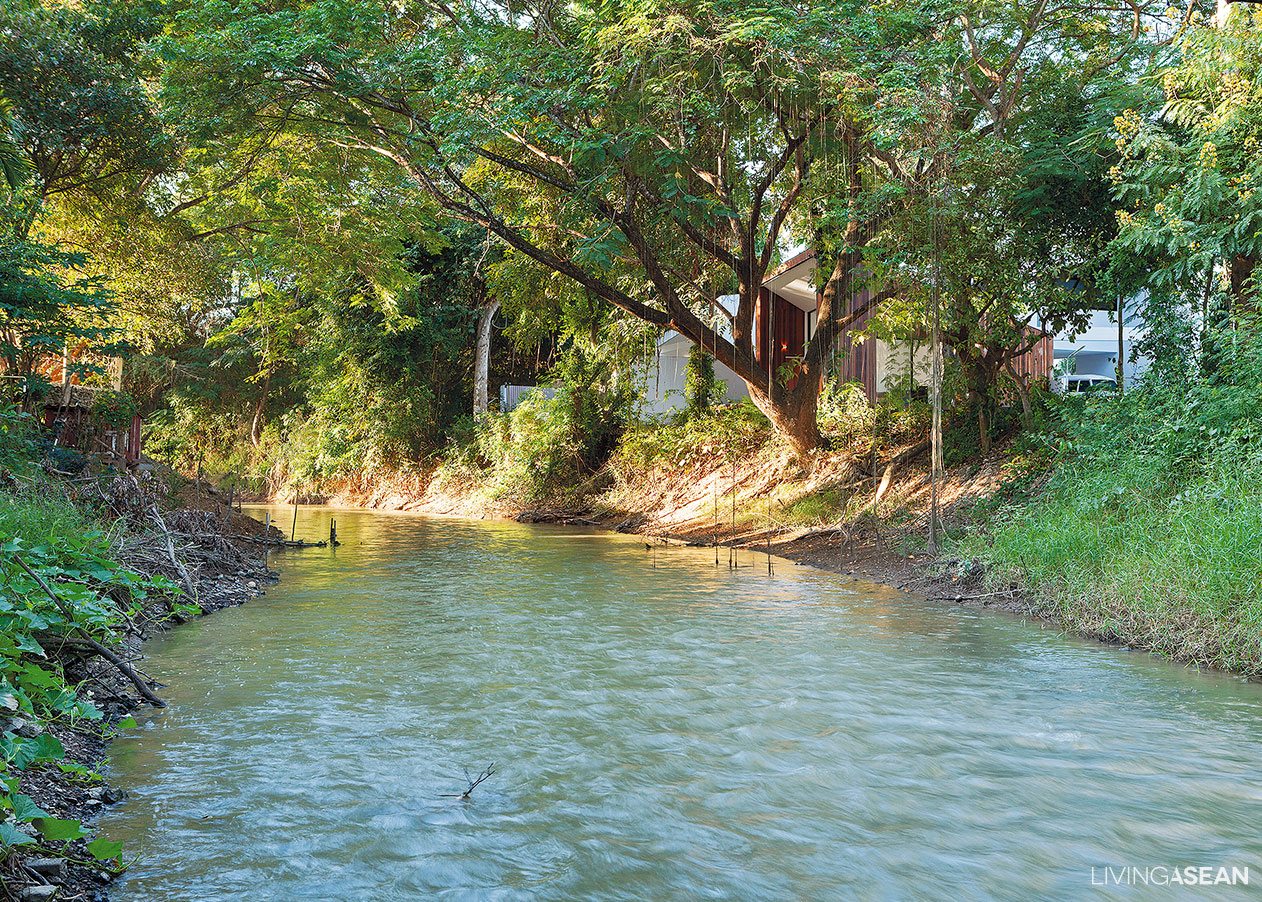
The Mae Kao, a tributary that flows past the property, inspires the owners to create an old-styled waterfront home. The design celebrates the water feature and pristine foliage that have long been the charm of this suburb of Chiang Mai.
The homeowners, Nathee and Kanokwan Nateniyom inherited this piece of land from their grandma. Their baby was born while the construction project was underway.
So both the home and the baby were given the same name. Ekapab Duangkaew from EKARand Arthasith Kongmonkhol from Full Scale Studio were responsible for the design.
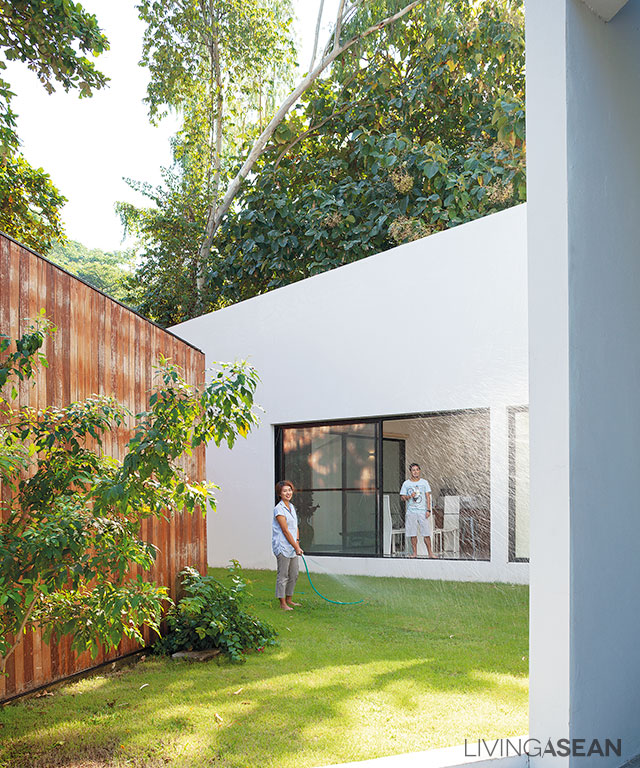
A well-kept lawn is used as the only access to the house’s main entrance. Walking on grass adds fun and excitement to nature inspired lifestyle.
As Ekapab put it, “We were so fortunate to have received full freedom to conceptualize this project. Arthasith and I then proceeded to develop a waterfront house design with an emphasis on relationships with the surrounding terrain features. Various functions were laid out based on their proximity to the water’s edge or existing patches of greenery.
“The next step was about translating the concept to meet the homeowners’ needs and personality.”
A coffee shop is the first thing visible from afar. It separates semi-public spaces from the private zone without obstructing views of the modern front home. Dark stained wood clad exteriors subtly set the shop apart from the rest of the property.
In so doing, the designers had to identify features that were typical of the waterfront house of the past. They looked into every design from Post-Modern to Minimalist in a bid to arrive at a common ground.
The final design showcased the main hallway as the centerpiece of this new home.
Nature permeates through the landscape that rolls down into the waterfront area below. Meanwhile, it serves as the dividing line between different functions on the property.
“At the time we didn’t have a specific design in mind. We just said that we preferred open spaces. My husband wanted to put Mom’s coffee shop in front. For us, we needed a piano room for practicing and giving music lessons at home. Basically, that was it,” said Kanokwan.
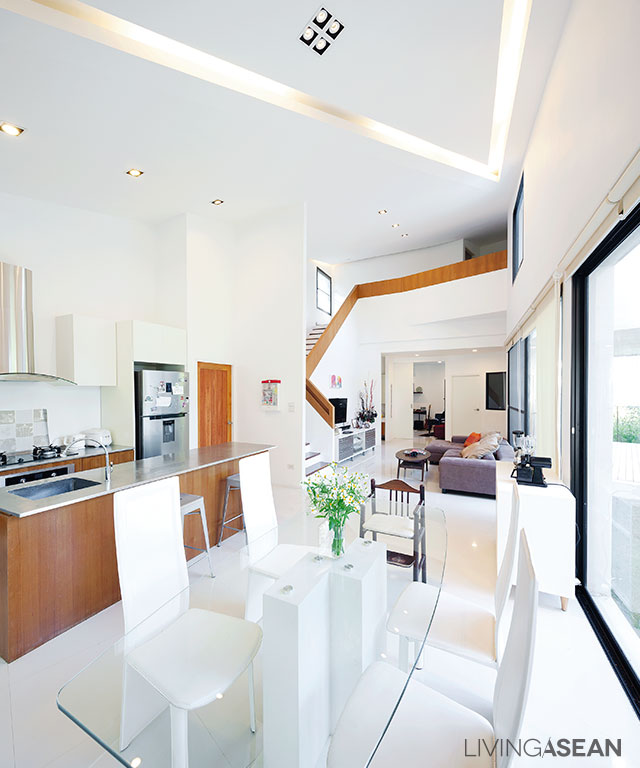
Hence the open interior space was the goal. The plan envisaged the main hallway, the kitchen and seating areas for everyone merging into one big space.
The coffee shop features a sundeck that looks out over the waterfront area. (An interior makeover project was underway on the day we visited.)The white exterior walls showcase sharp geometric shapes as the designer intended. Clean line design advocates the uncluttered look typical of the minimalist style and leaves plenty of room for nature to pervade.
“I like sitting here,” said Nathee referring to the big dining table.“The waterfront is on this side. Meantime, the main entrance opens to the front yard. On the other side, Kanokwan and the baby are playing on the sofa. They make for relaxing interior spaces and I like it here.
“If asked to describe this home, I will just make it brief – cozy”
Like several picture frames coming together on a lush lawn, the home not only looks stylish on the outside but also adds variety to the rolling landscape.
The open plan design of the waterfront house meets the needs of this small family of three. Everyone is aware of everything that goes on inside the vibrant interior spaces. It is the kind of plan that merges all parts of the house into one great room.
The designers reserve the second floor for privacy. The first floor has a playroom for the kid and the piano room for Kanokwan. The rest is open.
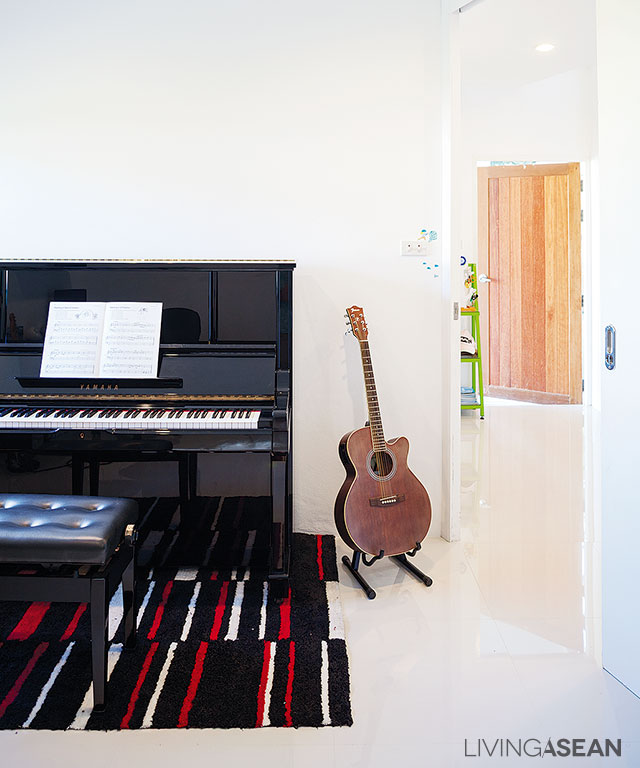
Open plan design ensures that all interior spaces are easily accessible. Large windows allow abundant natural light and provide visual continuity to the water’s edge.The child’s playroom makes way for family activity spaces for the time being. The piano was recently moved in here along with Dad’s guitar.
The property comes in two zones, business and residential. The coffee shop sits in front and is covered in natural wood palettes.
From the outside looking in, the roof design is eye-catching in every respect. As a matter of fact, its unique look is dictated by interior design needs.
The designer puts bedrooms on the second floor, leaving the spacious first floor for seating spaces. Kanokwan plans to give music lessons at home in future.
“It has to do with how we want to view the great outdoors from within the home. For this reason, the main hallway steps aside just a little bit so that the waterfront area can be seen in full view from the bedroom. Likewise, one side of the coffee shop offers a sundeck that overlooks the water’s edge.
“It is never meant to be jazzy. Rather we take into account advantages and disadvantages of every component before arriving at the final design,” Nathee explained.
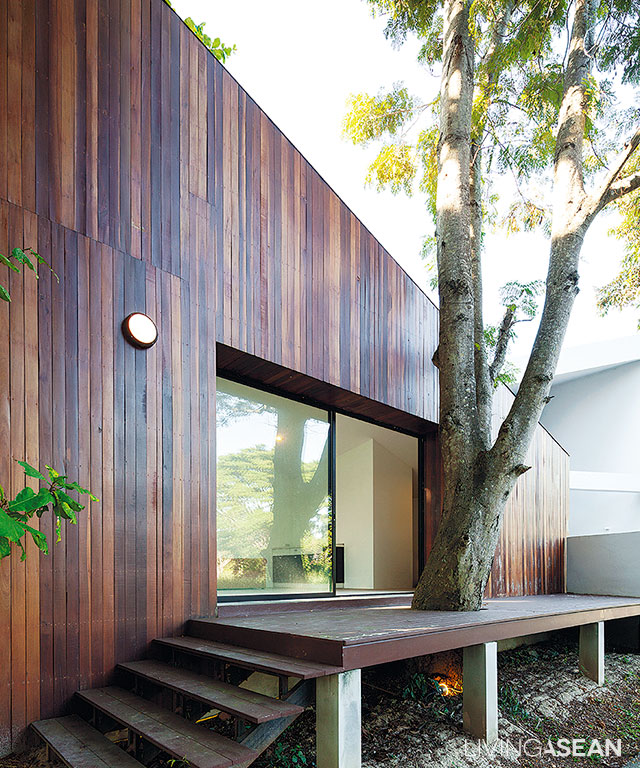
The homeowners wanted to leave the existing tree where it was, and the designer got that. So the terrace was built around the tree while the building itself was kept a good distance away.
By now, our readers probably feel they have been mistaken all along about design intentions. A house that looks showy at first sight may not be showy after all. Rather it is designed for easy waterfront living based on existing terrain features and homeowner needs.
All things considered, it strikes the right balance to showcase a new kind of waterfront home, one with an eye-catching minimalist style.
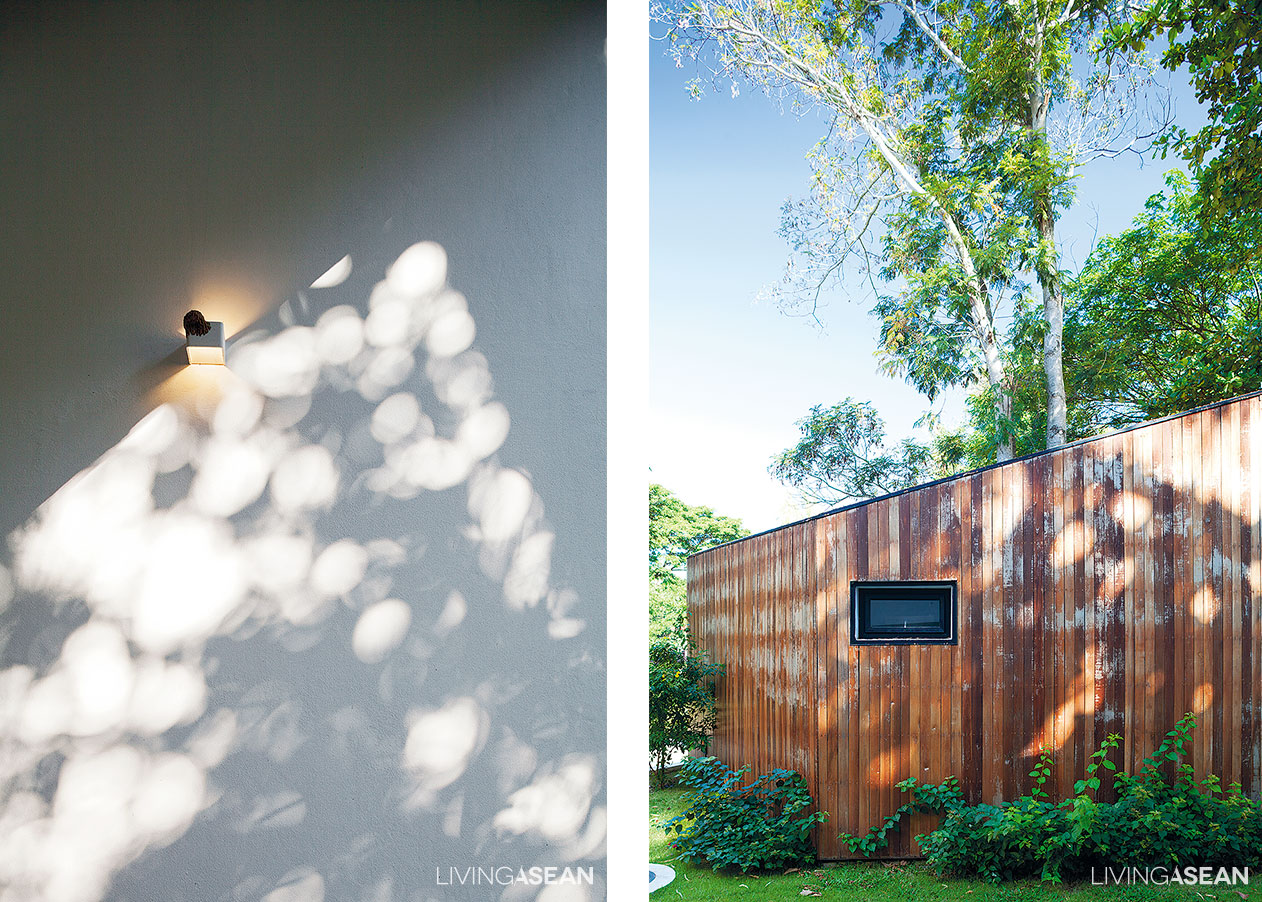
[left] The lacy shade of tall trees casts interesting light patterns on the home’s white exteriors. [right] An artist’s rendition shows relationships between building formations and areas near the water’s edge. The drawing demonstrates how existing trees are preserved while the land is being readied for the home project.
/ Story: Supachart Boontang / English version: Bob Pitakwong /
/ Photographs: Soopakorn Srisakul and Arsom Arch Community and Environment Co., Ltd. A division of the Arsom Silp Institute of the Arts /
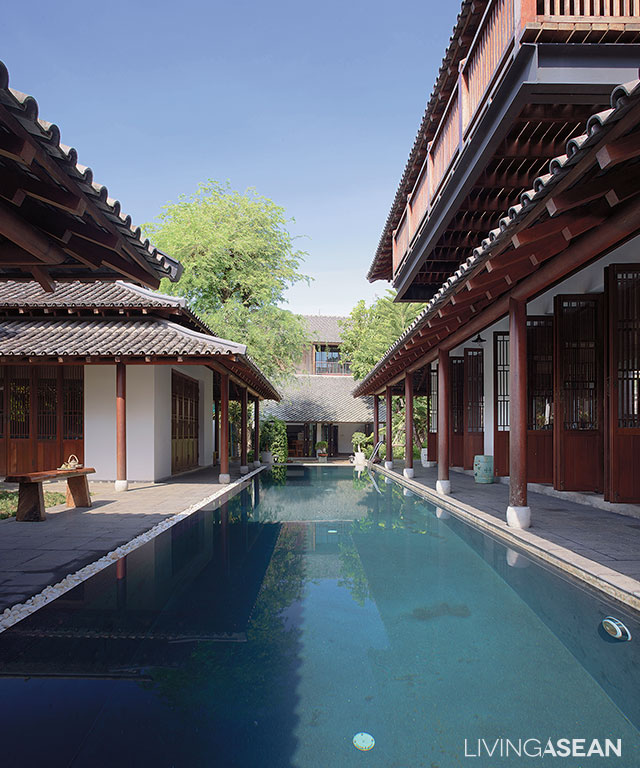
This urban home named “Baan Gongsi” is beautifully crafted in keeping with Chinese heritage in architecture mixed with defining features that are characteristic of the traditional Thai-style home. The perfect visual blend is the brainchild of Pongsakorn Tumprueksa and Nattanan Pokinpitak of the Arsom Silp Institute of the Arts.
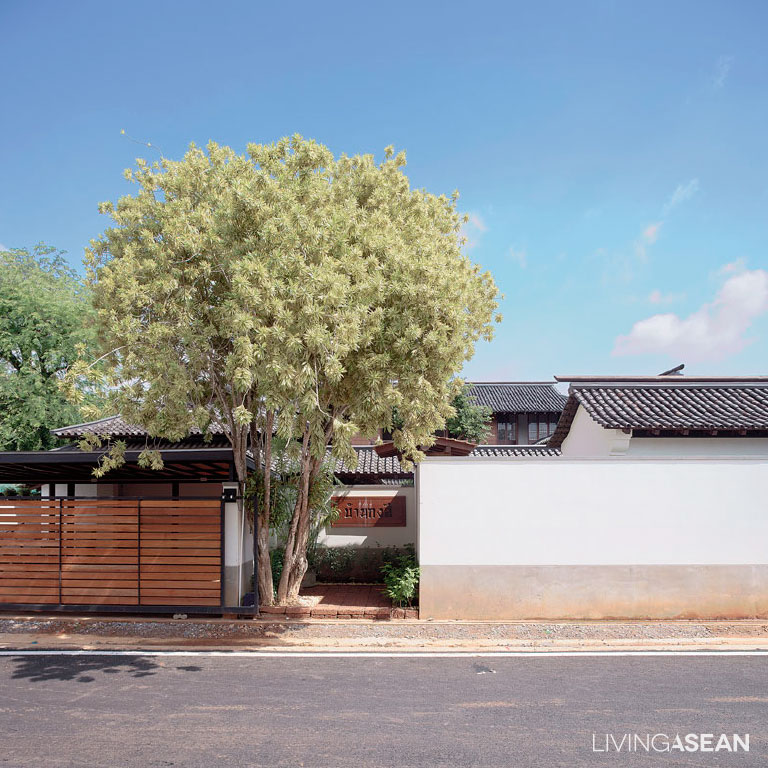
The two-story home that’s the main villa on the property features large double doors providing a grand entrance and promoting natural air circulation. In every part of the house, passive design strategies create a comfortable and energy-efficient indoor environment, and hence there’s no need for mechanical air conditioning. The bottom line is heat doesn’t build up inside it.
Architecturally, it’s a well-thought-out design that seeks reconnections with nature at home and, at the same time, keeps family heritage alive. Homeowners Thianchai and Noree Niyom, both of them of Chinese descent, want to live simply and traditionally, embracing a lifestyle that values a culture of sharing and caring.
Thianchai’s sister also lives nearby in the same compound, which explains the concept of Baan Gongsi, a colloquialism for extended family living arrangements.
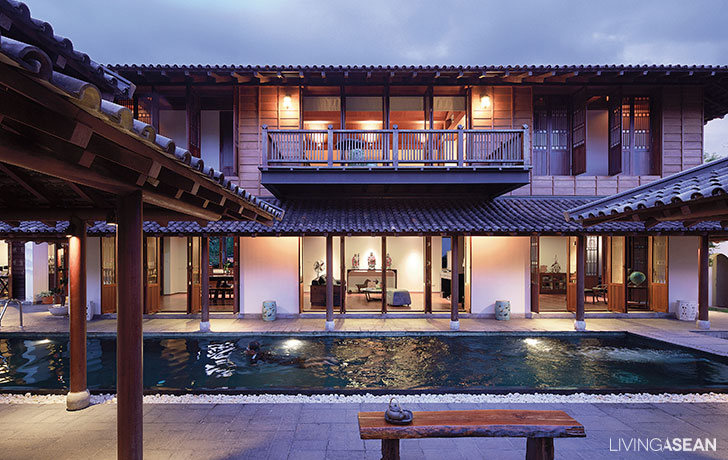
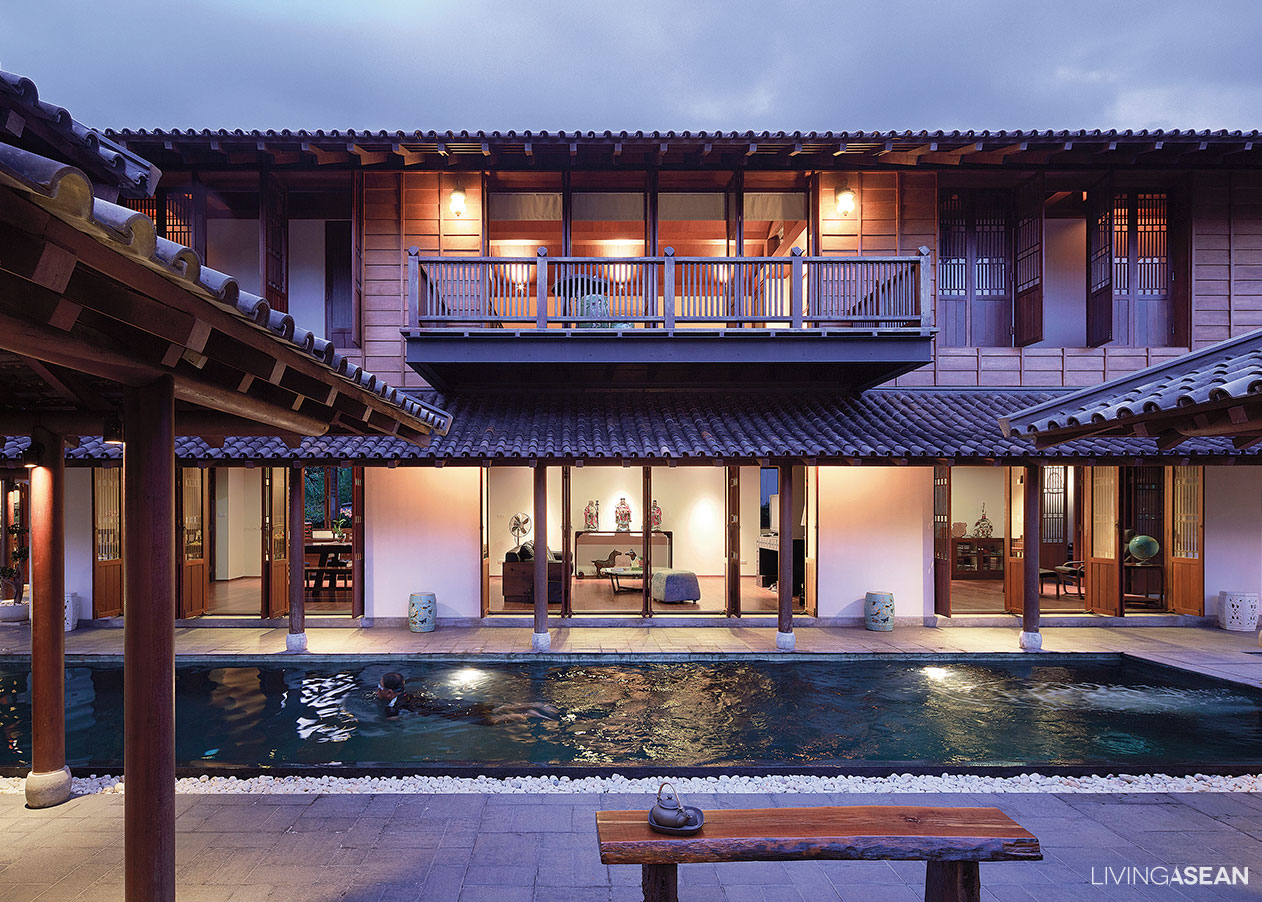
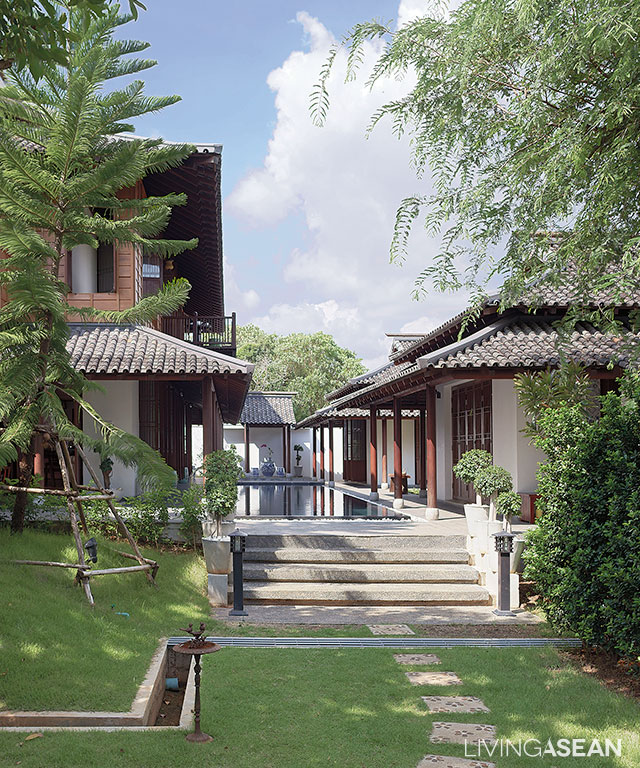
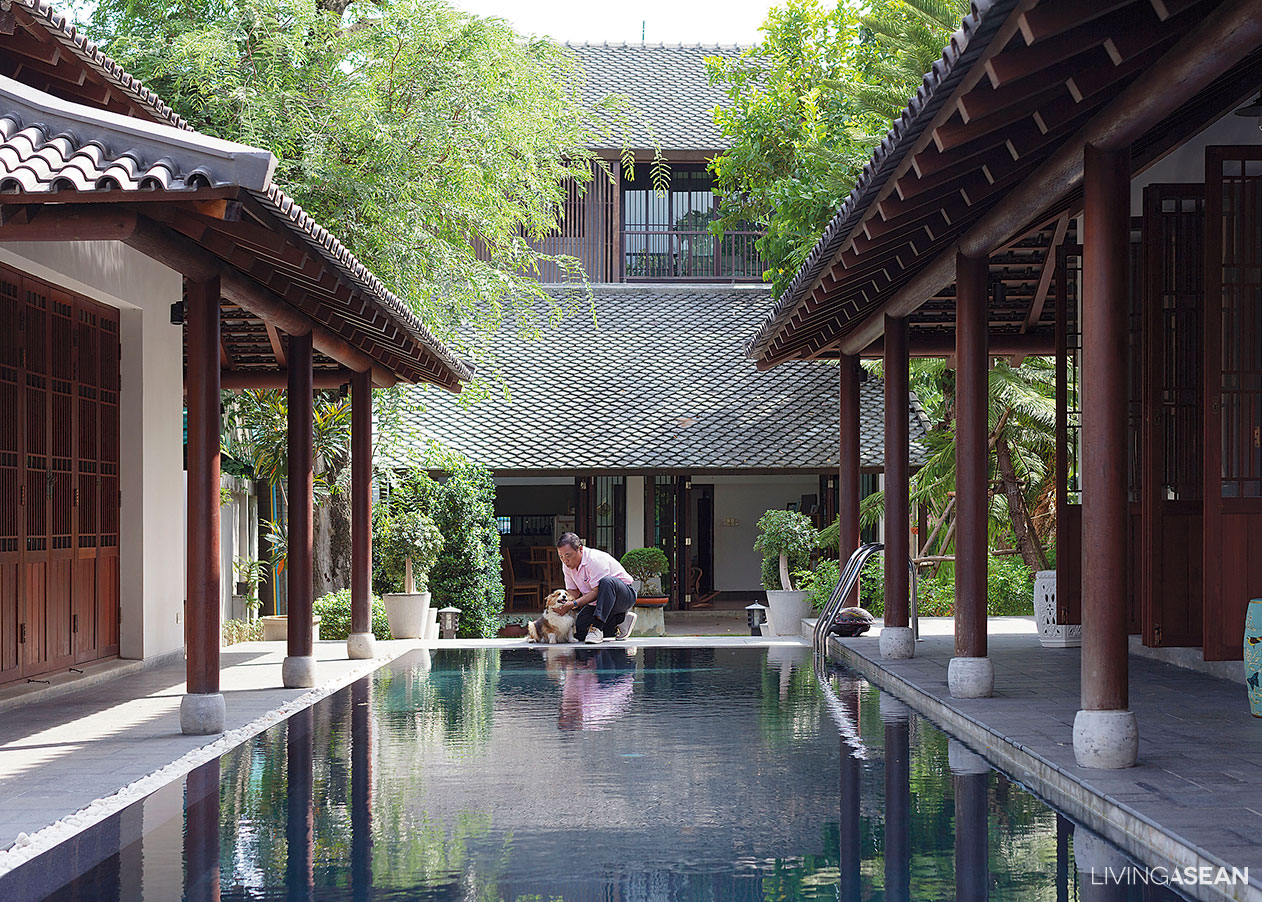
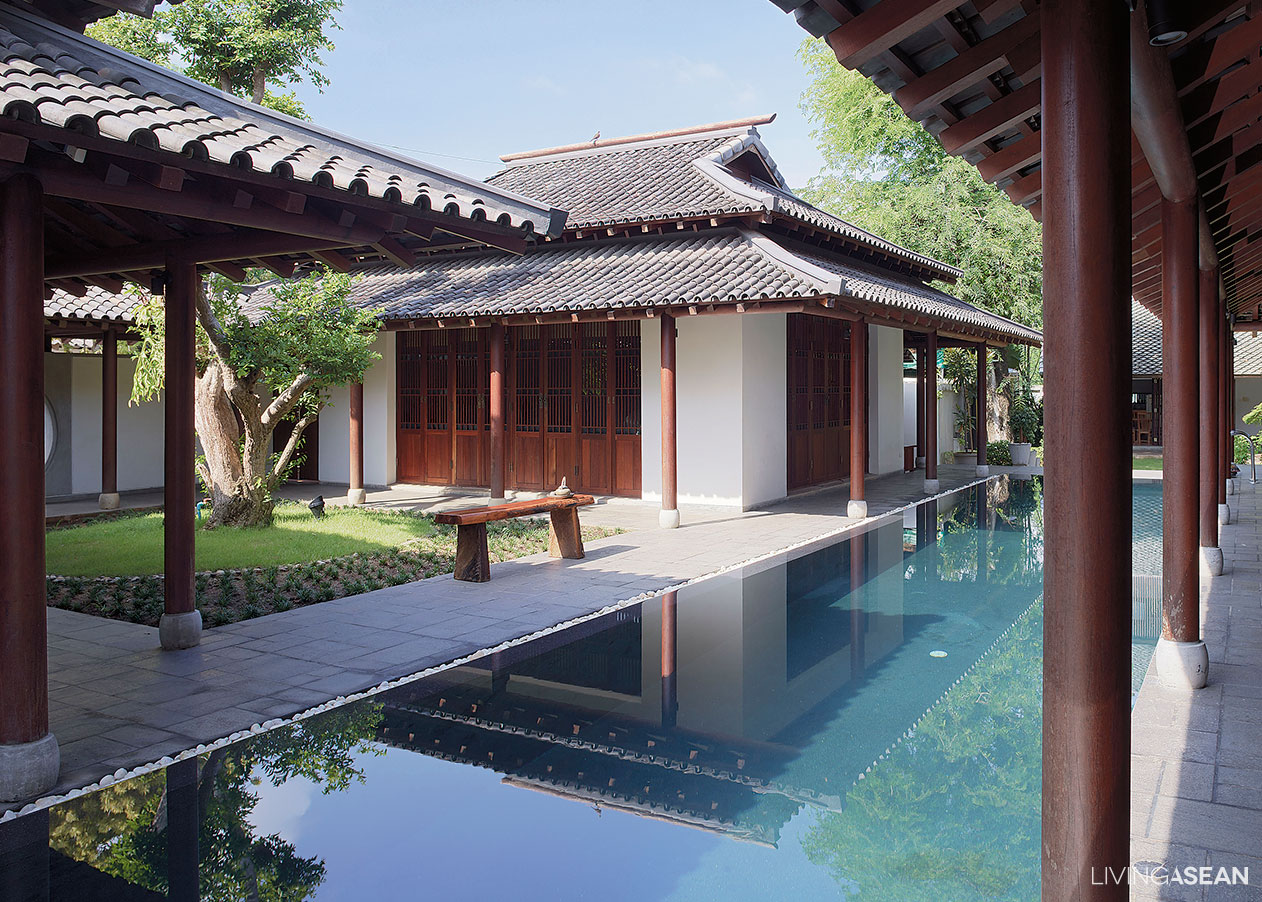
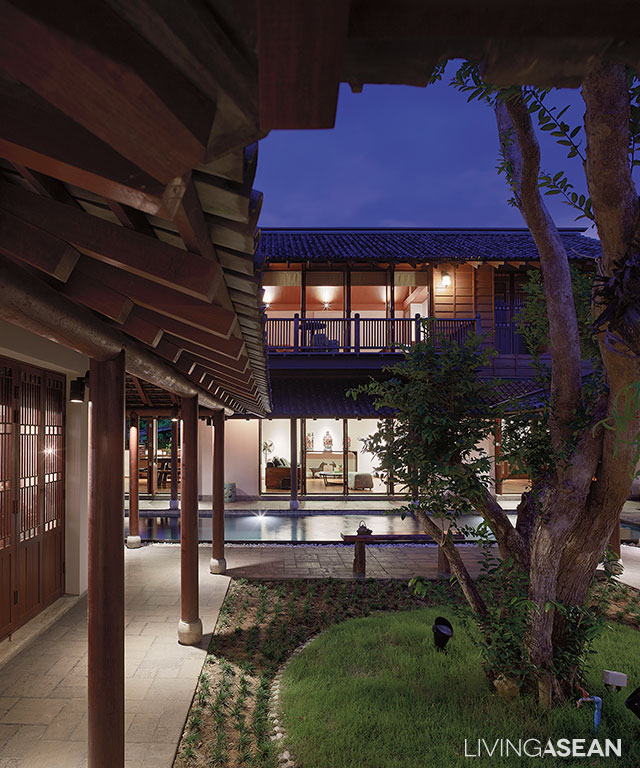
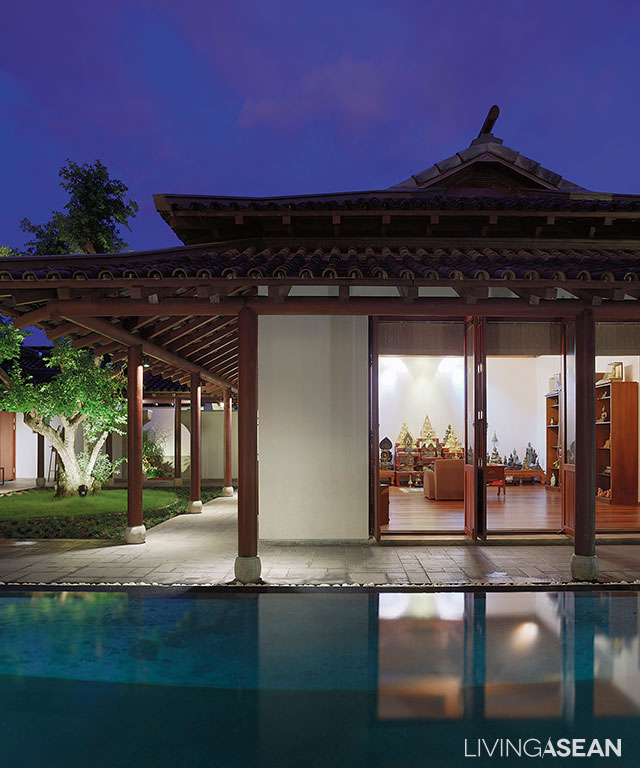
A garden slate walkway leads to an elevated pool hemmed in by Applied Chinese architecture. The tiled roofs with slightly upturned eaves evoke memories of a style that first became standard during the Song Dynasty. It makes the main building and surrounding annexes feel lightweight and delightfully charming.The center court pool stretches across the entire length of the veranda. It provides plenty of room for exercise. Meantime, the interior spaces are kept cool by breezes blowing in over the pool.
At the same time, it’s a design that embraces elegance in architectural aesthetics. There’s a courtyard with swimming pool at the center of the house topped by tiled roofs with curved sides. A striking feature of Chinese style, the unroofed area enclosed by the buildings doubles as engine that drives natural air circulation keeping the home cool and comfortable round the clock.
The well-conceived design also ensures the building fits in well with the hot and humid climate prevailing in this region. Speaking of a fusion between two cultures, there’s a large open-air platform that provides easy access to all the rooms, a layout quintessential of Thai-style cluster homes in the past. The Thais call it a “chaan” meaning a gallery or semi-outdoor room overlooking the garden.
The main villa and nearby annexes are disposed around the center courtyard. The sprawling design allows a healthy dose of morning sun to pour into the interior living spaces. In the nighttime the courtyard is aglow under the moonlight.
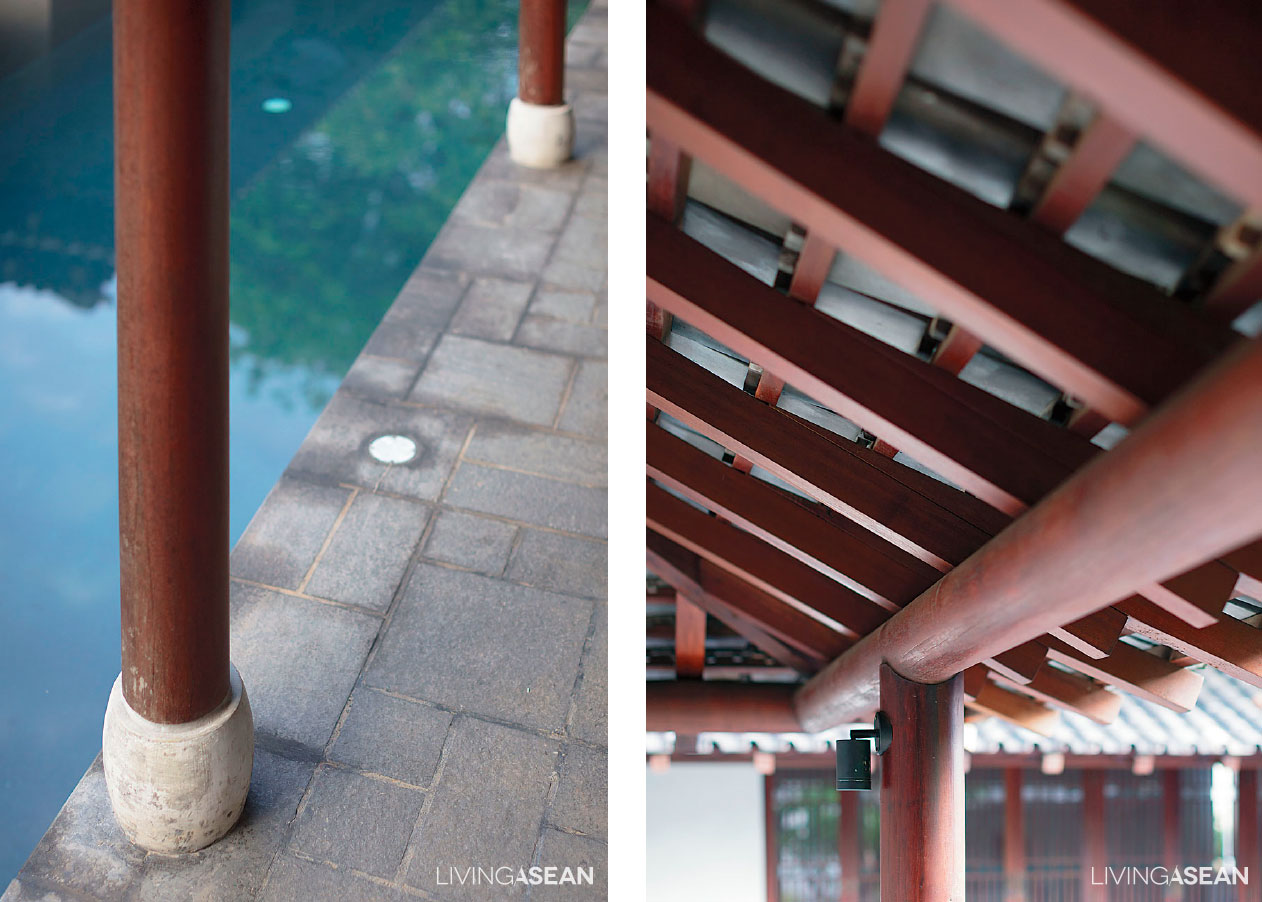
Overhangs of tiled roofs protect the buildings from harsh afternoon sun. Diamond-shaped tiles at the far end blend well with Chinese-style slightly curved roofing on either side of the pool.Tiled roofs with slightly upturned eaves are in keeping with the home’s Chinese character. The buildings make use of large structural timbers for primary support of the roof tiles.
The center courtyard has been the heart of family life and one of the most important elements of cluster home design since time immemorial. It brings joy to the family and supplies every part of the home with fresh air.
Here, everything exists for a good reason. Among others, a stone paver patio adjacent to the family’s ancestral home serves as a venue for morning tea. Nearby, the swimming pool brings the health benefits of good exercise. They’re there for the taking. Overall, it is a piece of architecture designed for the salubrious lifestyle of an extended family.
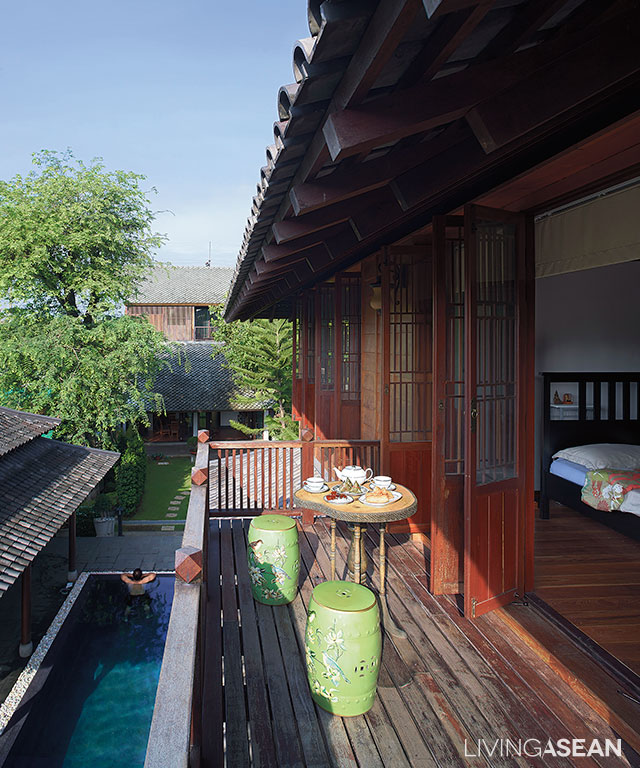
The second-floor balcony looks out over the pool and garden landscapes to the further side. The wood deck in itself is reminiscent of Thai-style homes in earlier times.
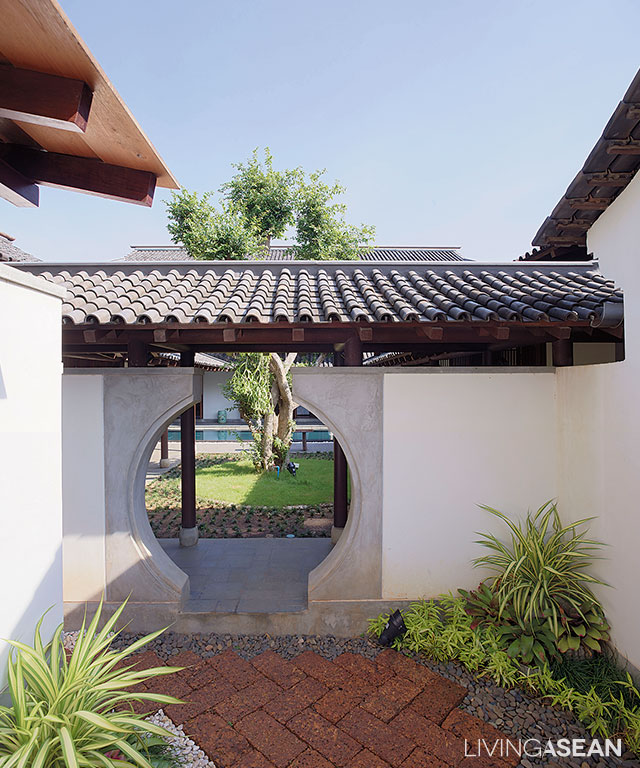
Baan Gongsi is a well-crafted home, one made with attention to detail and quality to provide safety and protection against external disturbances. The floor plan offers smooth transition from one area to another. There’s a welcome room with patches of greenery connected to a stone paver patio leading to the Moon Door that’s the house’s main entrance.
From there, a stone paver garden pathway provides access to the main villa and nearby annexes. The center courtyard itself lies protected by a lacy canopy of mature trees making every day an enchanting experience. Because it’s situated amid the bustle of the city center, the home relies on plenty of lush vegetation to protect against noises and air pollution.
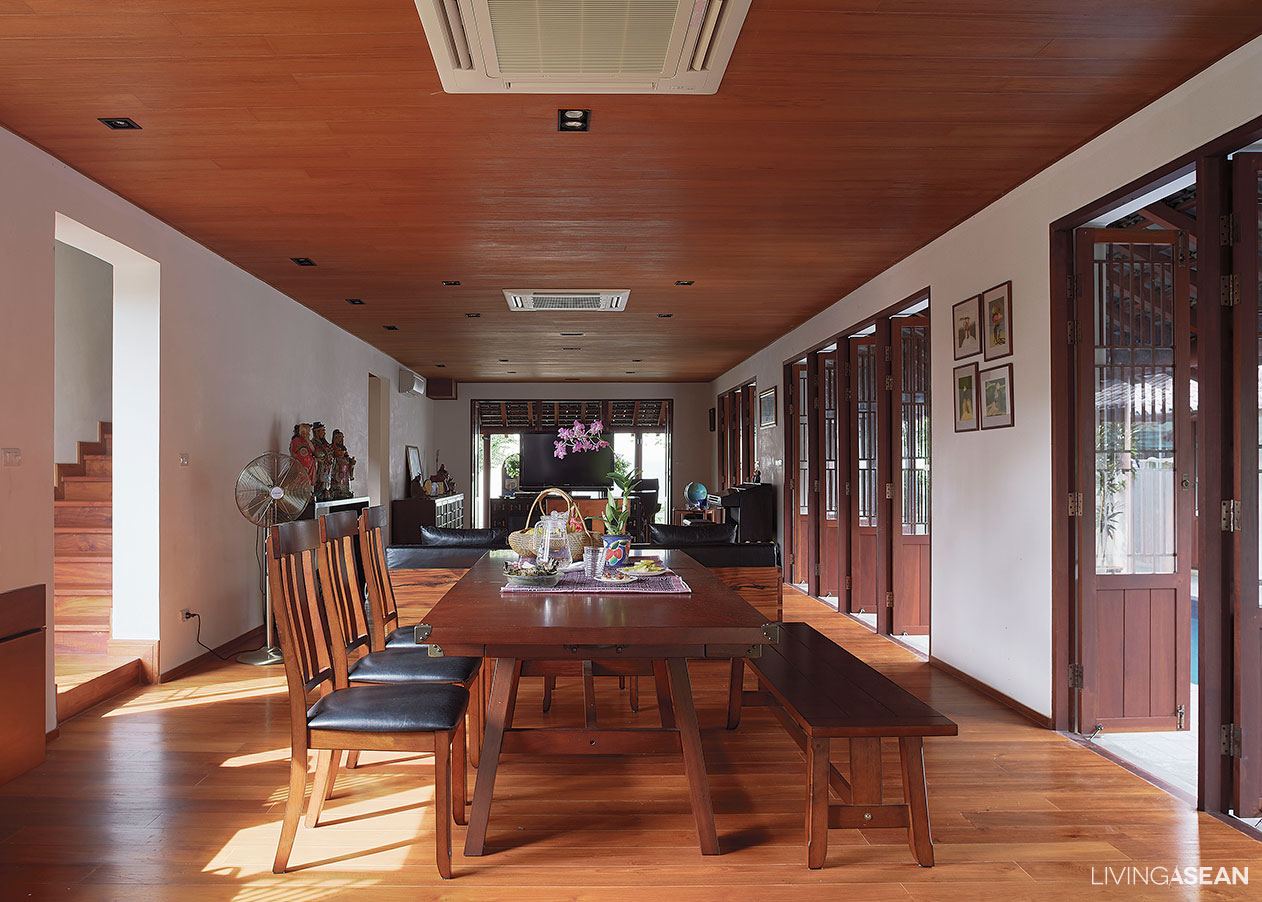
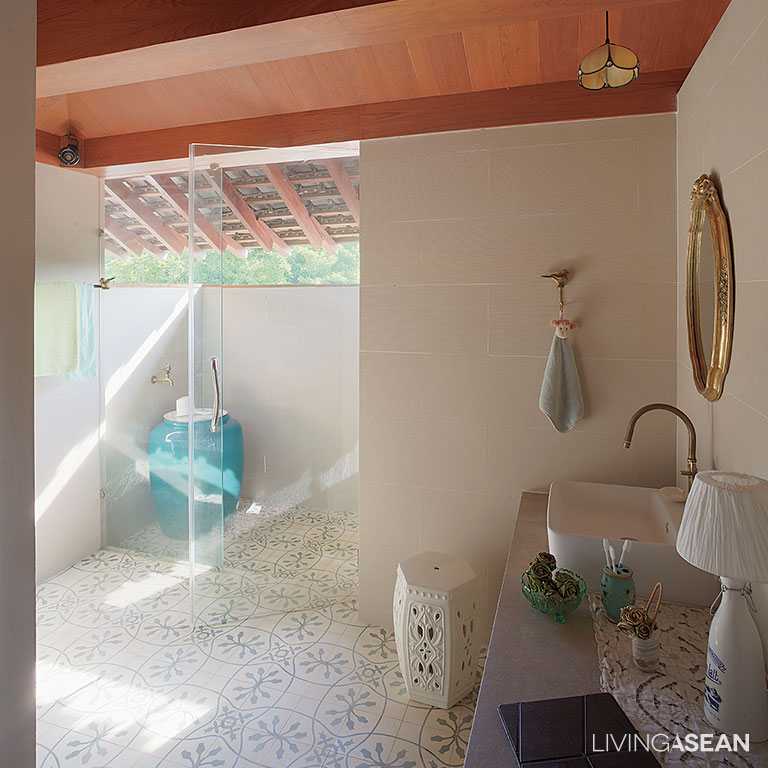
The interior features open-concept living spaces that stretch from the dining area to sitting room to the library and, beyond, the veranda at the far end.The bathroom features common elements of a contemporary style with a minimalist feel to it. The shower section is semi-outdoor reminiscent of a traditional Thai-style home. Floor tiles with antique patterns complement cool-toned whites on the walls.Lush greenery adds a refreshing touch of nature to the center courtyard.
As for build quality, real wood is the material of choice and one of the most outstanding features of the house. What makes it aesthetically pleasing is the slightly curved eaves characteristic of Chinese architecture. Needless to say, it’s a wholesome place where nature and culture coexist in peaceful harmony, a home beaming with pride.
The Moon Door, adapted to sport a more contemporary look, provides access to the cluster home environment that lies beyond.A street view of the home showcases the gracefully curved gable roof overhangs characteristic of traditional Chinese architecture.A stand-alone house of Buddha serves as a reminder of Thai architecture in earlier times.[Left] Concrete footing protects timber piles from humidity that could pose a threat to the home in the long term. / [Right] Primary roofing support is crafted the old-fashioned way utilizing of large structural timbers. The crescent-shaped cutout at the top of the pole allows the ridge beam to rest securely for extra durability.
“It’s a co-housing arrangement.Mine is more of a dynamic, full-of-life home. The house next door is my brother’s. It appears to be more private in the midst of a tranquil setting.“
Between the different spaces, natural radiance is all in the eclectic details. Despite its modern edge, the open seating area rekindles a fresh interest in terrace design of a Thai style home.
The homeowner, Suthiphong Pongpawasuit said I was kind of speechless for a bit when I heard him express his feelings about the co-housing house. It could be that I was expecting the most beautiful replies like always. No offense intended. It was the most honest and unpretentious of feelings.
“I could feel a warm and friendly atmosphere, and appreciate the meaning of “home” as he defined it. I have come to one that reflected the true personality of its owners.” The two houses are surrounded by pleasant grounds made the two brothers happy in their own way.
The two buildings brought out differences in their lifestyles and their preferences.
An array of overhead windows let a healthy dose of morning sunshine into the cozy seating area. Wrought iron detailing in the multiple-paned windows creates an interesting light and textural display on the surfaces below.
The first building
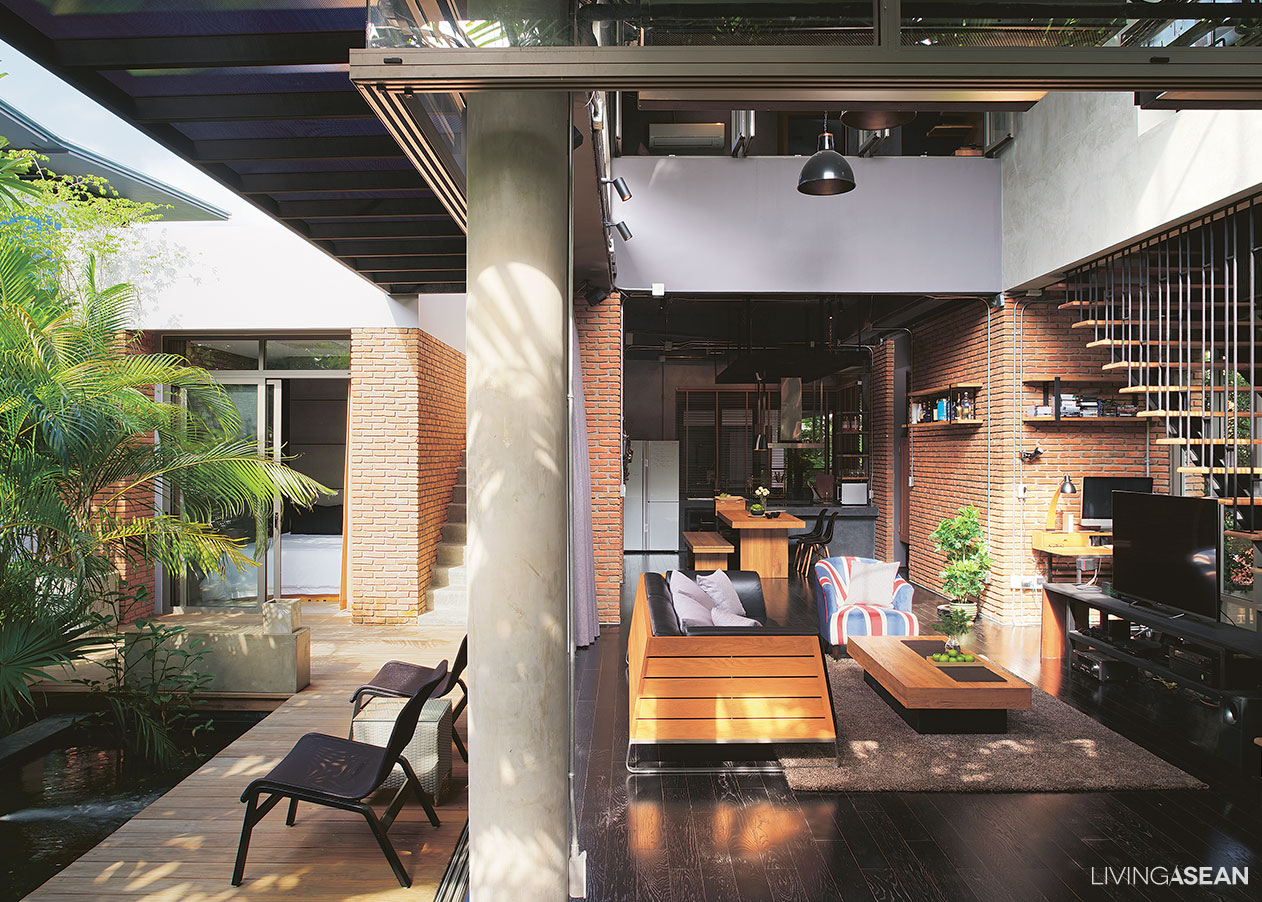
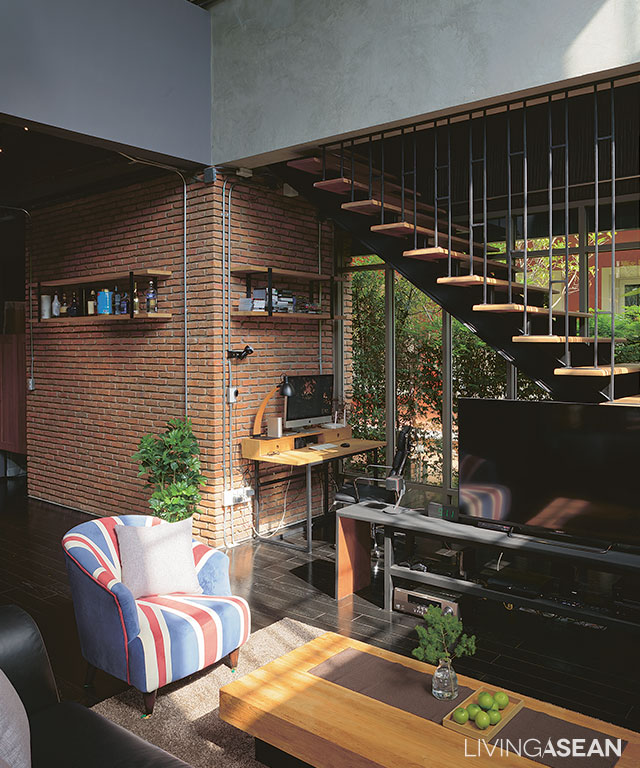
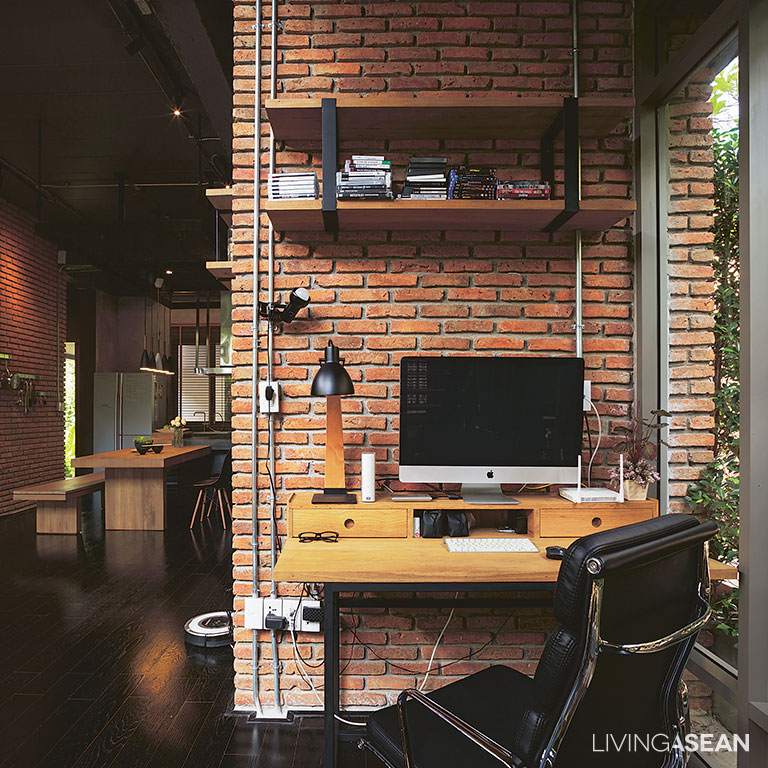
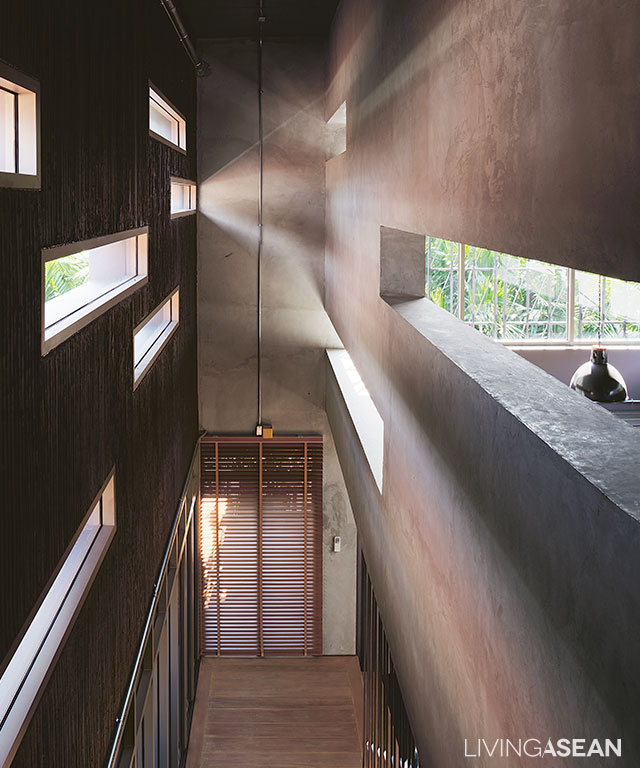
The first building belongs to Suthiphong. It is concrete chic based on a straightforward design. The walls are fabricated of unornamented concrete finishes and an interesting mix of textures and materials. Floating systems of electrical conduits conjure up images of an urban industrial loft apartment.
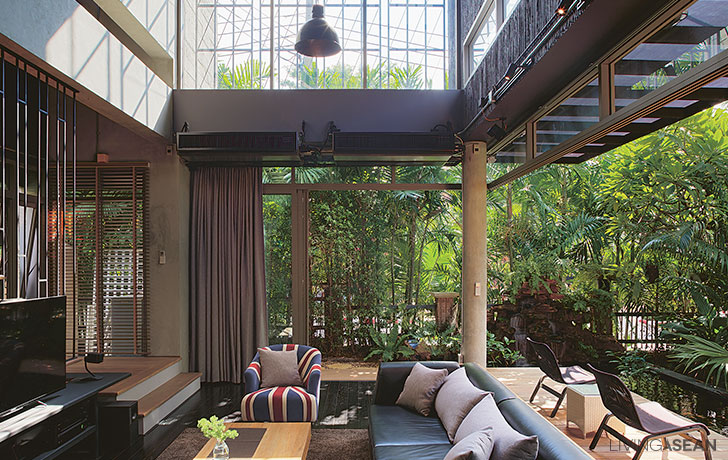
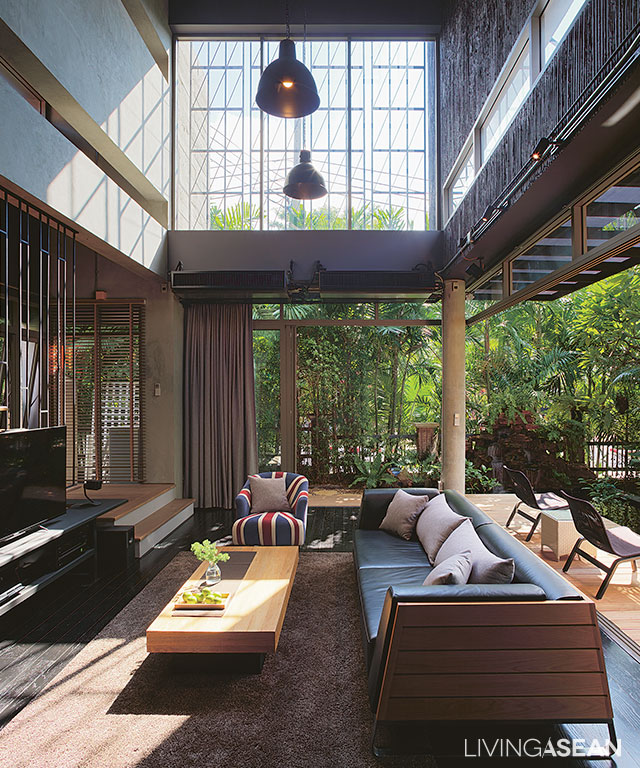
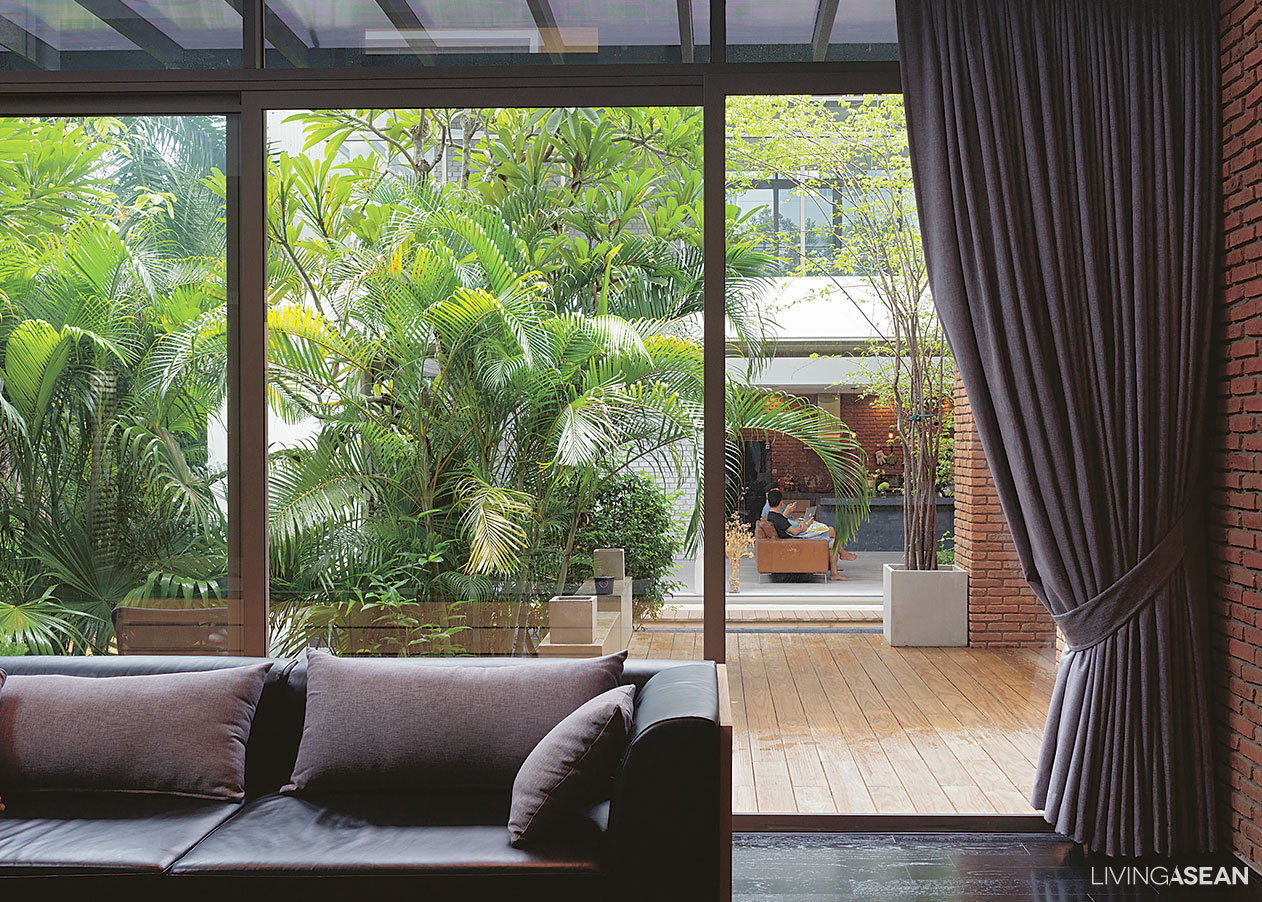
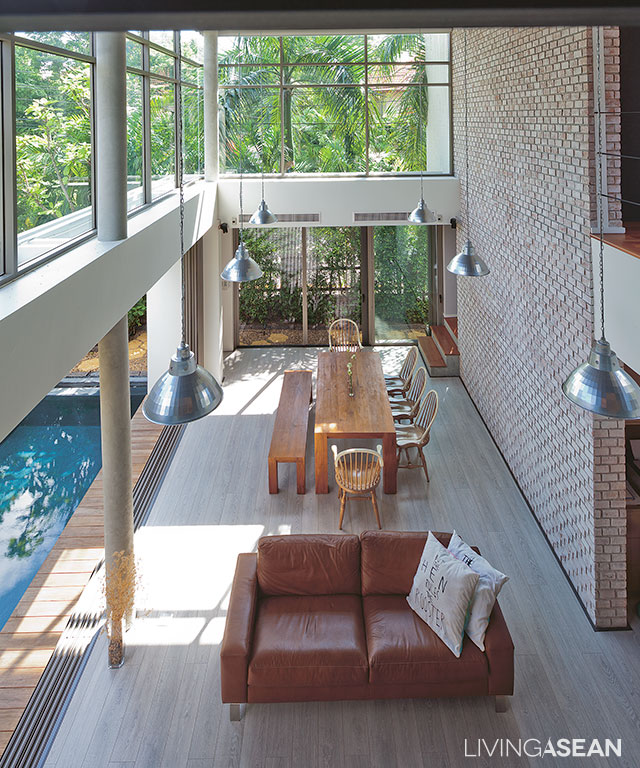
The interior features gorgeous living spaces. During the day, natural light shines through large overhead windows with wrought iron detailing, creating an amazing shadow play. There is a sense of visual continuity that connects seamlessly with the exterior as soon as the large door slides open.
On the outside, peaceful lush landscaping under a tree canopy can be seen in full view. On the inside, different furniture styles add a hint of interest in a subtle way.
Awesome overhead opening lets natural light into the relaxed living room and nearby stairway. Well thought-out design makes the area playful and inviting.
The layout epitomizes a relationship of mutual benefit between the two brothers. What goes on in one house can be seen from the other.
Obviously, the co-housing house is designed for the local climate. Oftentimes we complain of too much sun, winds, and rain. But since we call this country home, why not make the most of the extreme weather conditions?
They are the natural appeal of this Region. That is why we see all natural elements being incorporated into the design scheme. Here, the sun, the winds, and rain are all taken into account in framing the house within a beautiful botanical border. That makes living in a co-housing house a life fulfilling experience.
The working area and nearby kitchen are neatly incorporated into the total living space. The interlinking design takes into consideration personal preferences and lifestyle.
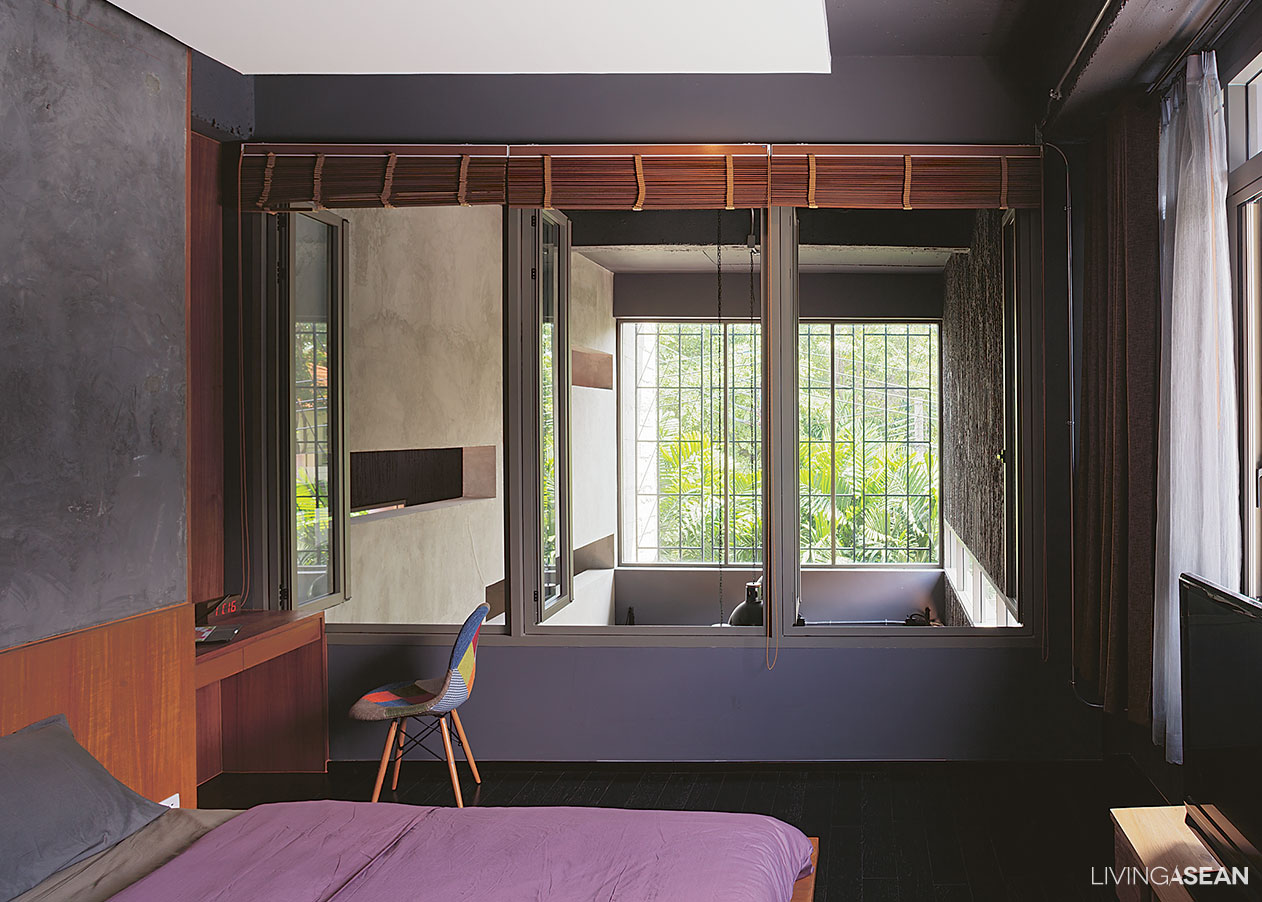
The bedroom, which is supposed to be private and personal, is not exactly cut off from other living spaces. The awesome opening allows the guest area below to be seen in full view from the bedroom.
The second building
The second building belongs to Suthiphong’s brother, Kittiwat Pongpawasuit. Unlike the first house, it comes in a mix of white, cream, and gray tones, which together give it to a strikingly handsome appearance.
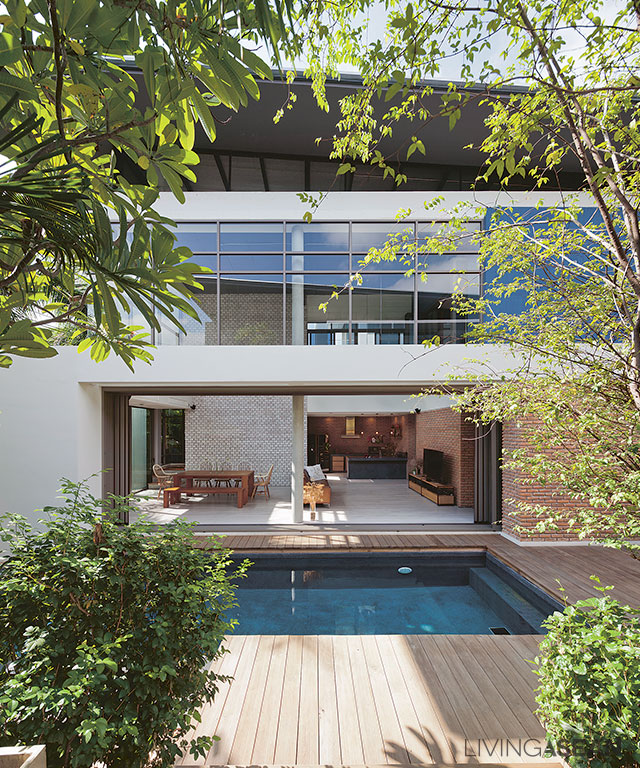
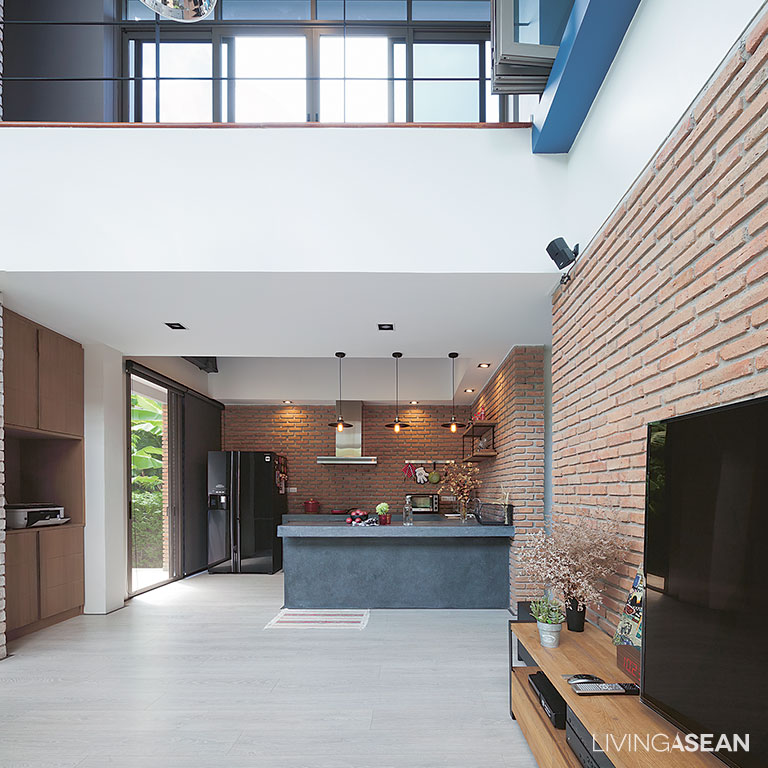
The design is light and airy and emphasizes a warm and peaceful atmosphere. Brick walls are painted white to minimize any alteration of natural light and color reflecting on the surfaces. The home, especially its living spaces, is all about enhancing a seamless indoor-outdoor relationship.
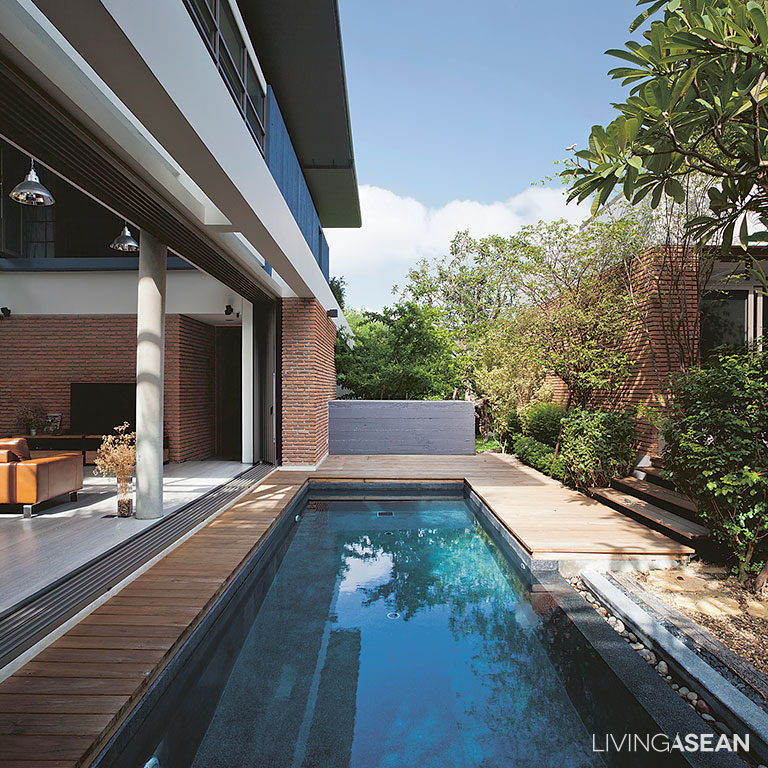
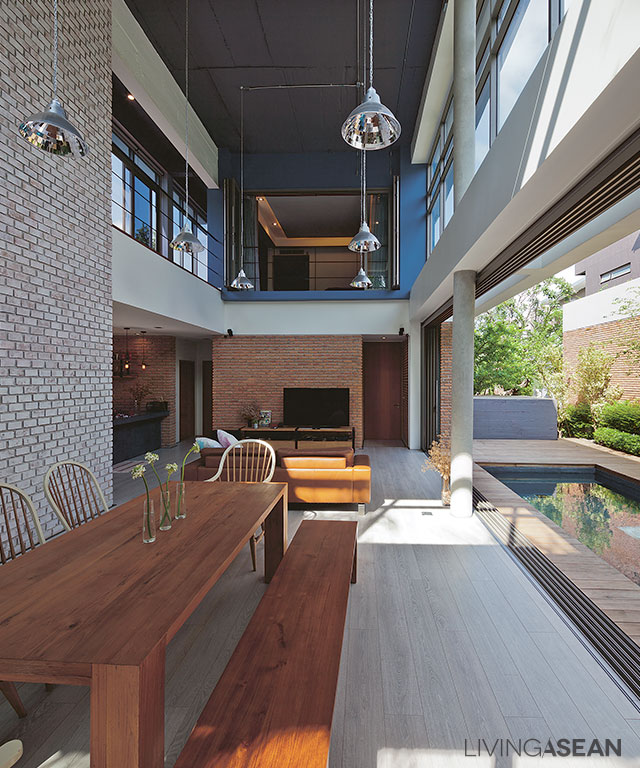
Crisp, clean landscaping can be seen all the way to the swimming pool, thanks to large single-paned glass doors that slide open and neatly disappear into the walls. The living room gets nice cool breezes from the swimming pool and is set facing north to avoid the harshest of the afternoon sun.
Exterior walls on the north side are open to natural light all day. Downstairs the seating space is made comfortable by nice cool breezes blowing in over the swimming pool.
The swimming pool is literally a few steps from seating areas on the terrace. There is an unobstructed, gradual descent from the veranda to the garden.
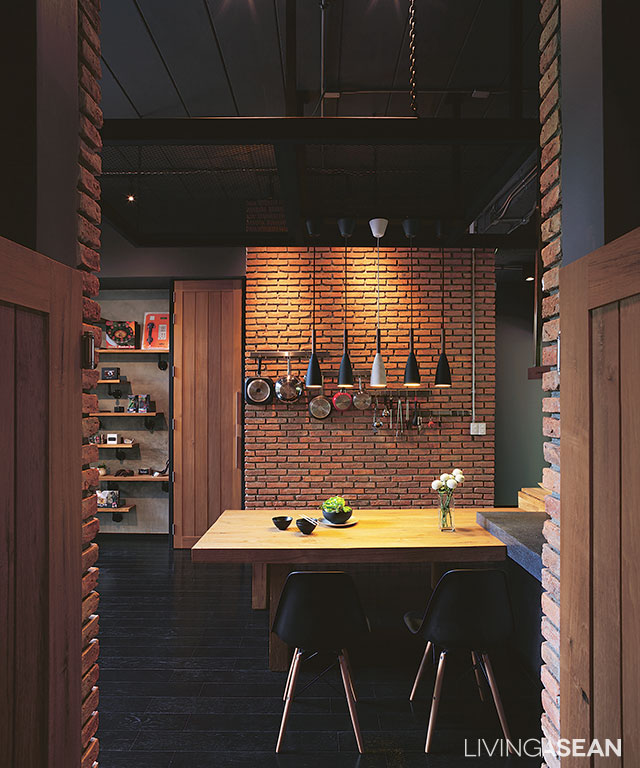
The easy-to-maintain kitchen design features a countertop crafted of unadorned concrete finishes. A red brick wall subtly separates it from the adjacent guest area.
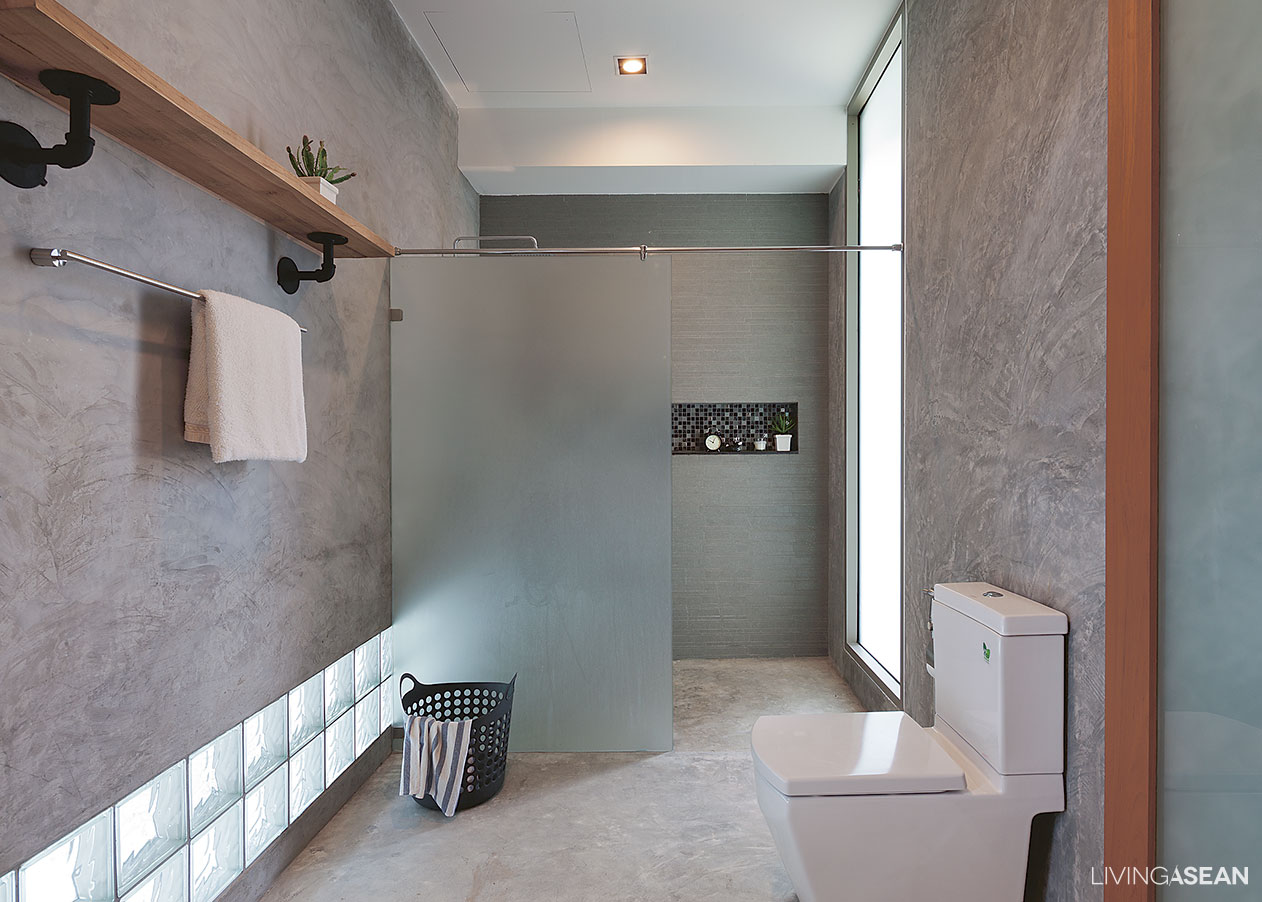
The bathroom is inspired by industrial loft design. Details are reduced to just clean, straight lines within the modest style.
Design relationship
The two designs may contrast in personality, but architect Kraipol Jayanetra of Alkhemist Architects found a relationship between them by opting for like materials, textures, and mutual décor ideas.
By this was meant the use of naked, unornamented concrete finishes, industrial-style electrical conduits, wood furniture, and a plenty of accent pieces.
The guest area of one of the houses lies fully open to bring in the outdoor atmosphere.
“I started out with something small but interesting, and worked my way up until I arrived at a complete unit,” said Kraipol.
That being said, every part of the co-housing buildings, be it vertical or horizontal spaces performs the functions it is intended. Overall, a great mix of patterns and textures makes the two houses appear in perfect harmony with each other. The difference is in the details.
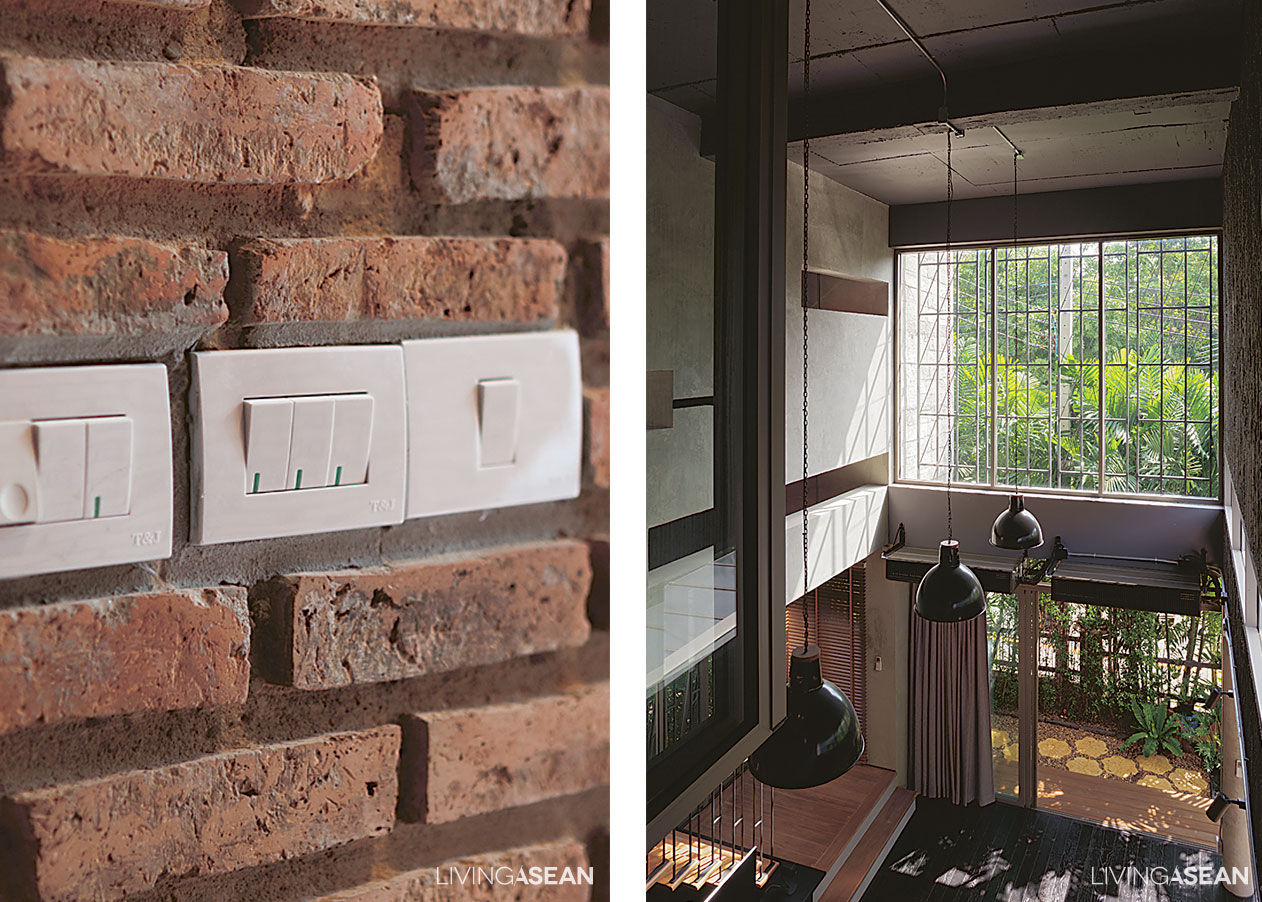
[left] Playing with patterns light switches are installed in a way that they playfully mimic the appearance of a naked brick wall. [right] Shadow play wrought iron detailing create beautiful works of art at no cost by casting light and shadow patterns on the interior spaces.
This has been a story of two youthful homes in a co-housing house that coexist to complement each other. One is overflowing with life. The other is tranquil and handsome in its own way. They enhance and improve each other’s curb appeal, and set the stage for a simple fulfilling lifestyle.
To protect against the intense heat of the sun particularly in Thailand, perhaps it is wise to opt for double-layer roof design. It keeps homes cool by reducing the amount of radiation from reaching the interior living spaces. The vents between each layer allow increased air circulation and keep the heat out.
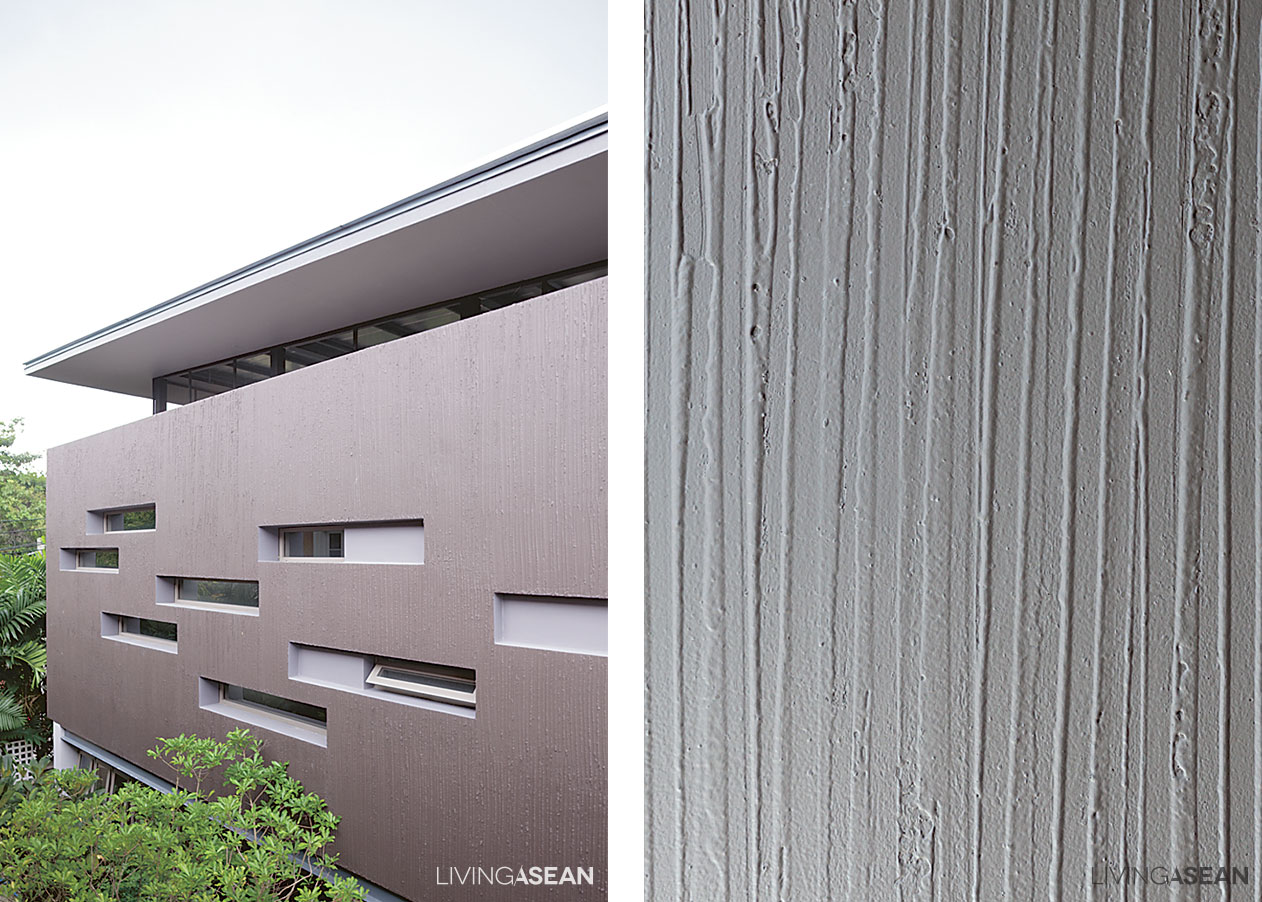
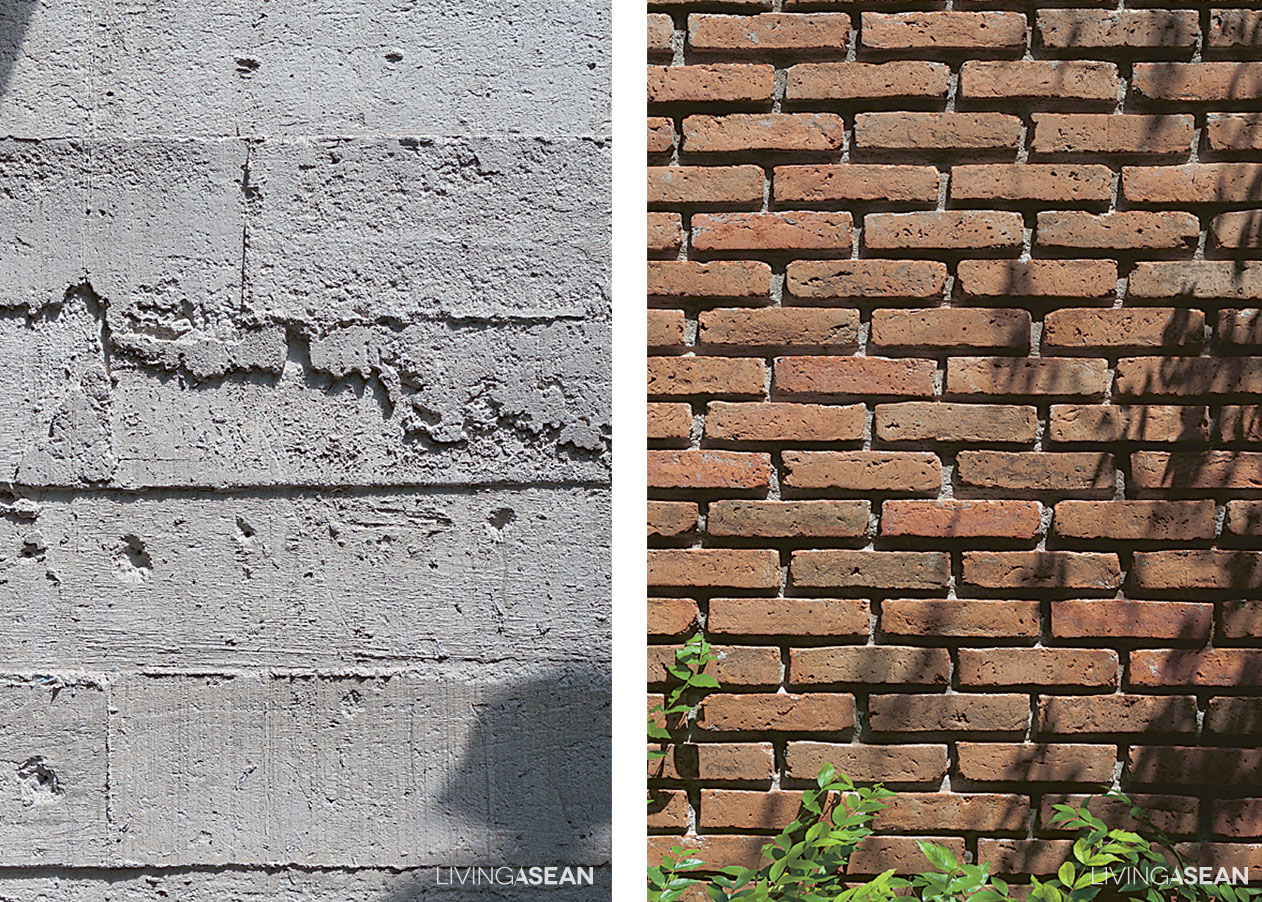
There are so many ways to texture your walls and ceilings. If smooth, fine-grained designs are not your style, you might want to go for coarse-textured, more natural looking surfaces. One alternative is the naked, unornamented concrete that rough to the touch. The design is playful and full of life. Any rough surface, whether concrete or brick.
Marketing/Advertising Cookies – used to remember and process the relevance to your website visit in order to personalize contents shown including optimization of commercial advertising placements. For instances, we use this type of cookies to display commercial advertisements related to user’s attributes and interests as well as to limit how many times should a user see repeated advertisement in order to optimize and measure marketing activities. อ่านเพิ่มเติม