/ Story: Kangsadan K. / English version: Bob Pitakwong /
/ Photographs: Nantiya June /
The cacophony of narrow shop front styles and crowded roads lined with street food stalls has attracted a young architect to a quaint old town on the bank of the Chao Phraya River. He found what he’s been looking for.
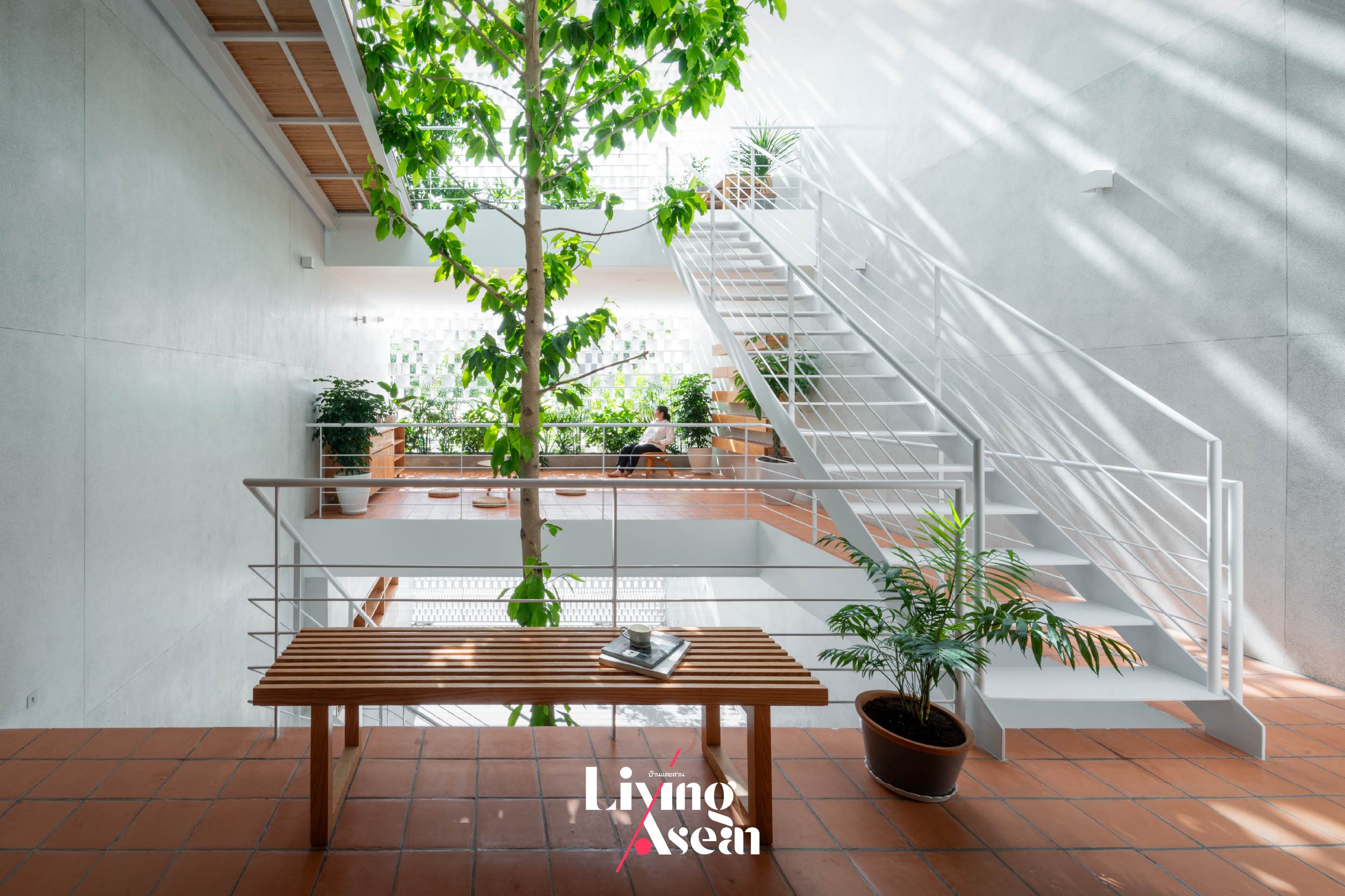
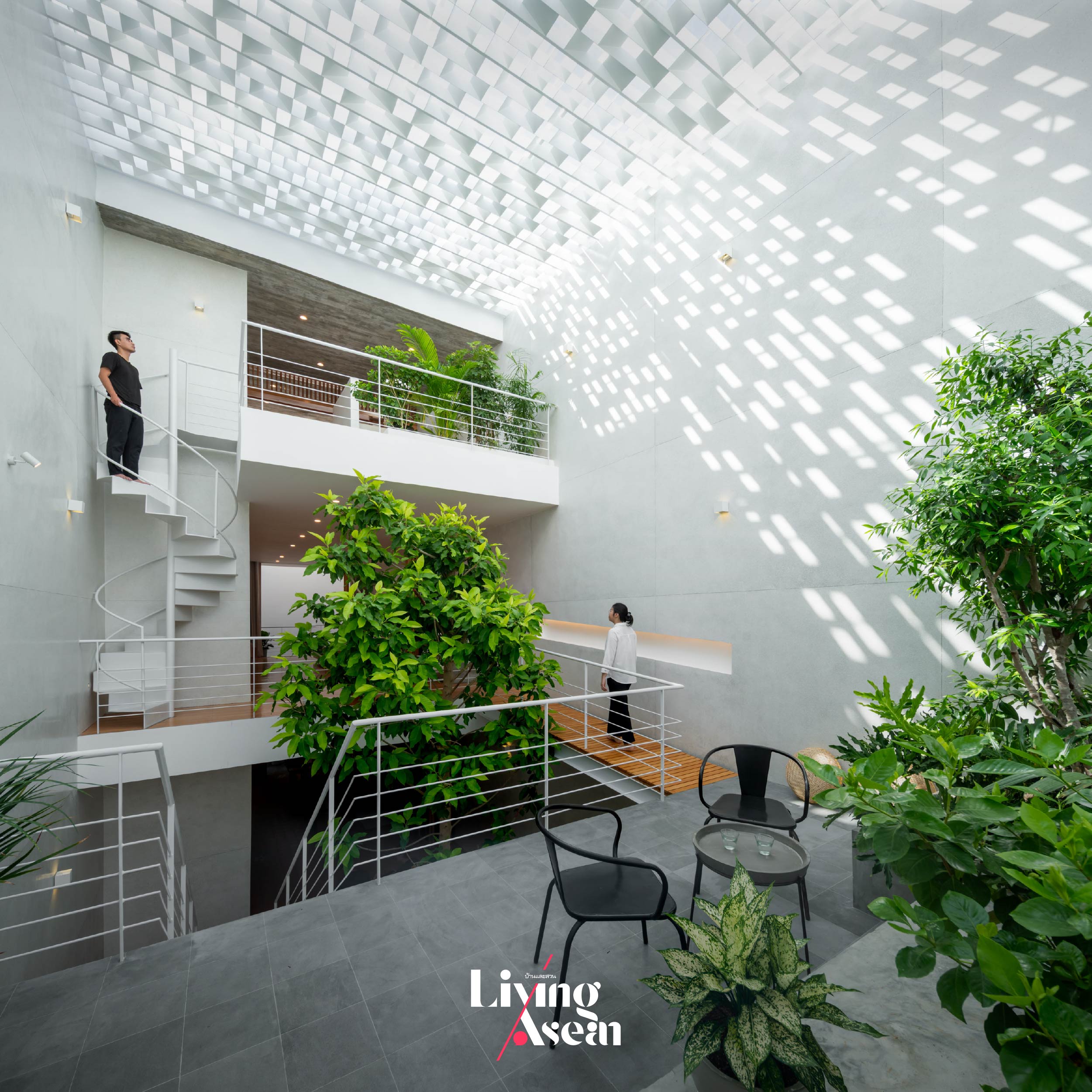
A front yard garden filled with green foliage contrasts with the white wall, making the small living space feel warm and welcoming.
A shophouse exuding old world charm in Bangkok’s Talad Noi neighborhood had the potential to be renovated as a new home. In a short time, it transformed into a three-story living space with all features and options despite its small size. The old opaque façade was removed and replaced by a new exterior that’s light and airy. It’s thoughtfully devised to merge perfectly into the narratives of the area known for its richness in history and the ambience pleasantly reminiscent of an early time.
Courtesy of Ekkachan Eiamananwattana, Phuwasit BuakhaoCourtesy of Ekkachan Eiamananwattana, Phuwasit BuakhaoCourtesy of Ekkachan Eiamananwattana, Phuwasit Buakhao
From a tired old place, the building made a thorough change in the form, resulting in a beautiful white home on a narrow lane that stands out from the crowd. There’s a lush garden bed in the front yard and trailing plants thriving among white slats that from the house façade. Together they harmonize in color and texture with original features of the house. It’s a great way to add instant curb appeal and welcome family and friends to the home. Past the steel panel fence painted white, the atmosphere is cozy and comfortable despite the house being located at the end of a narrow lane. Like the architect intended, the home is well-ventilated and well-lit by natural light, qualities that help banish stuffy rooms.
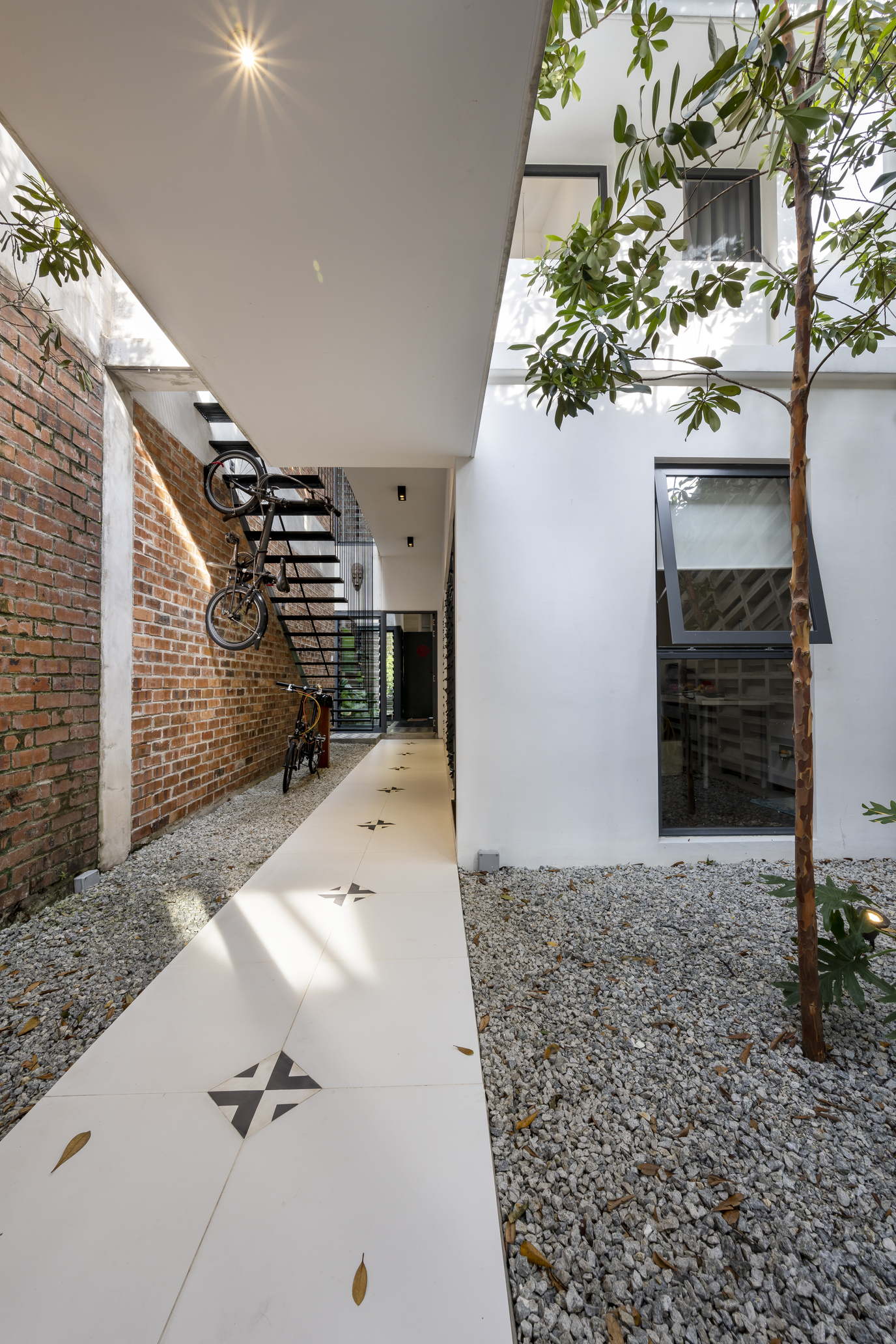
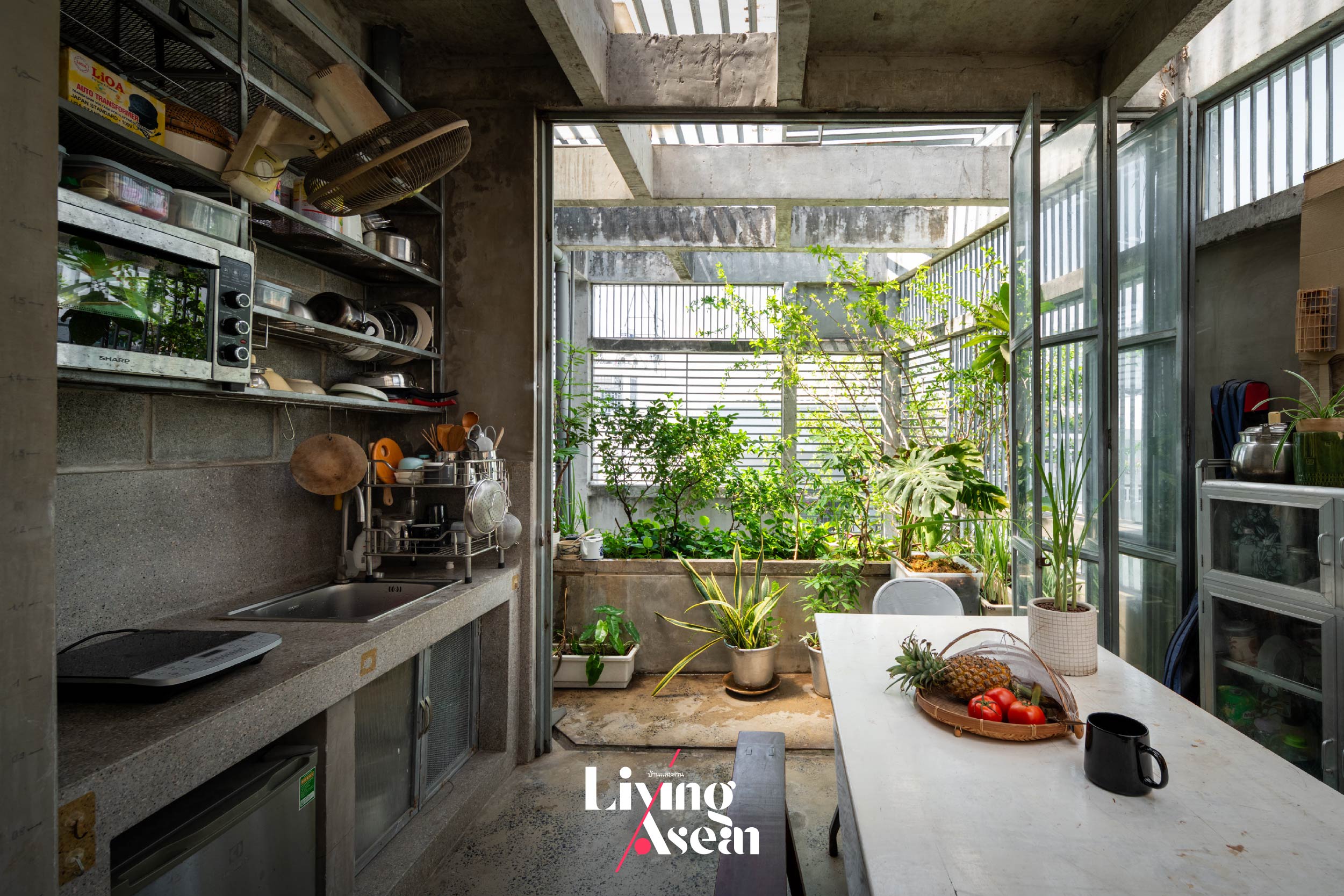
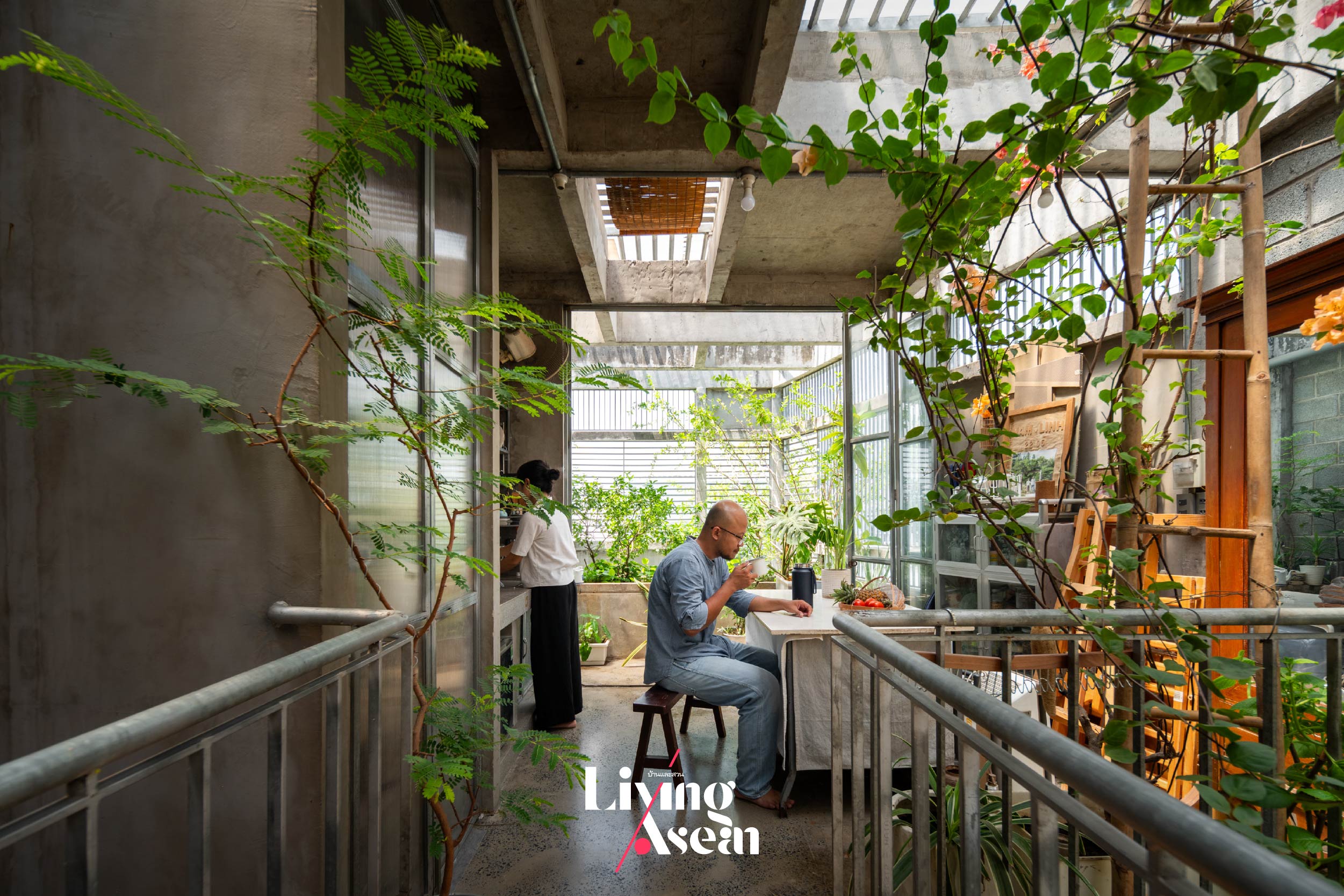
The waiting area is made attractive by an old weather-beaten wall with hanging bike storage.A full kitchen setup with range hood venting keeps the room clean, drawing fresh outdoor air into the home via front and back doors.
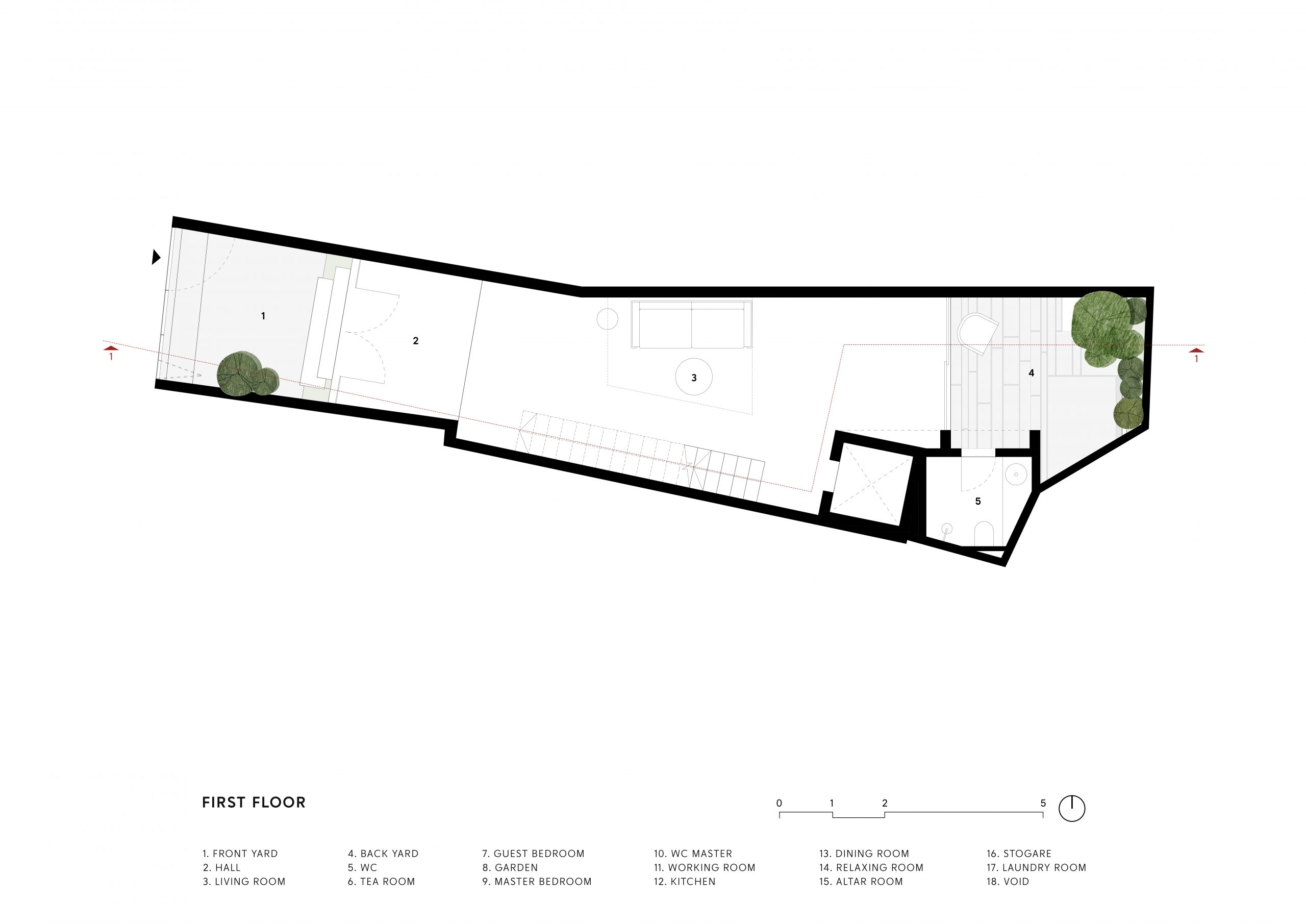
Take a look at the first floor. The waiting room up front is simple and practical with only a few pieces of furniture. It’s made colorful by peeling paint on old plaster walls left behind by the passage of time. On the whole, spatial arrangements are proportional to the narrow house plan, with the stairs and a kitchen sharing space designed to create an airflow pattern that eliminates odors through an opening at the rear.
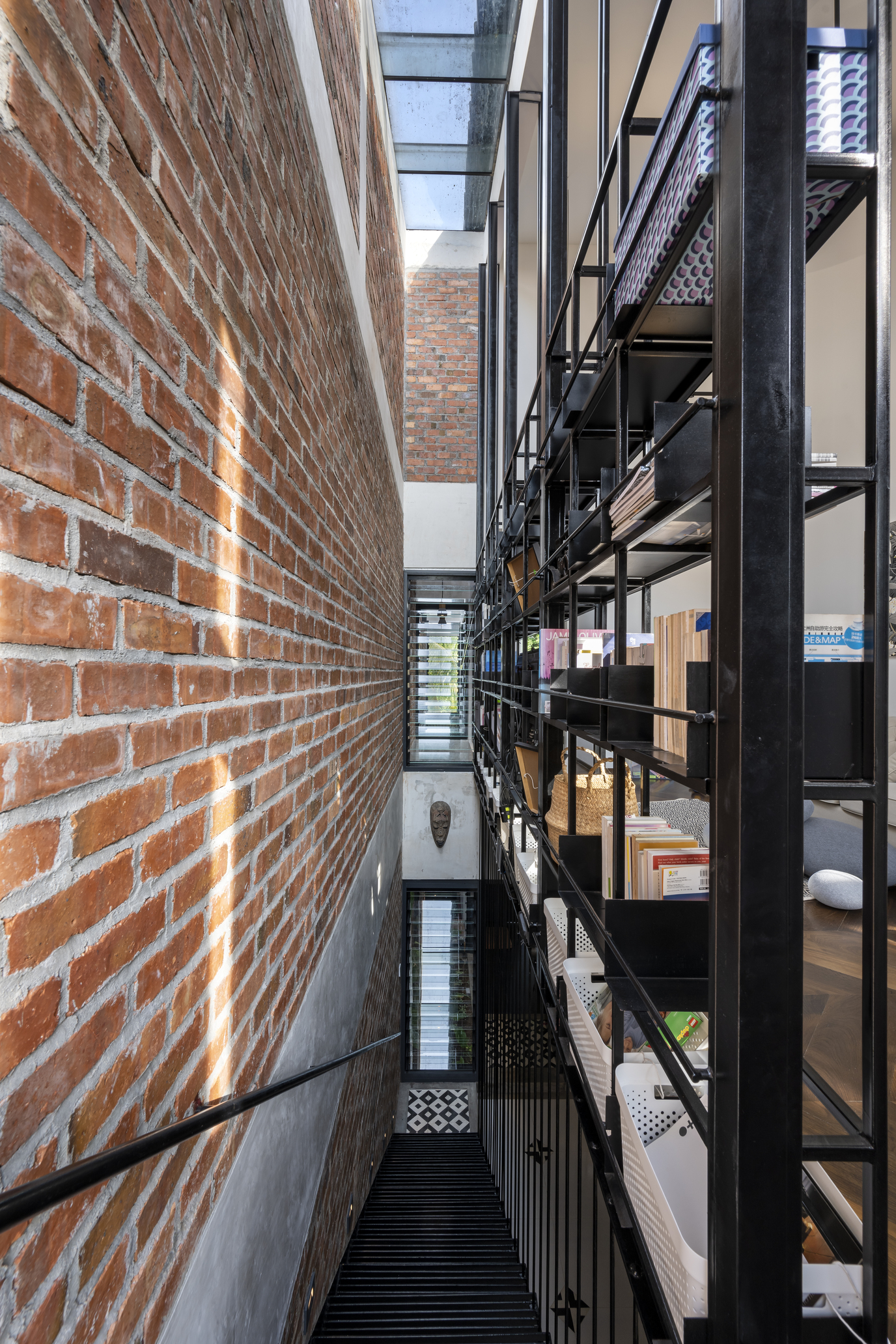
The passage of time has left an imprint on the stairs wall, mixing textures and putting old and new design together in contrast.
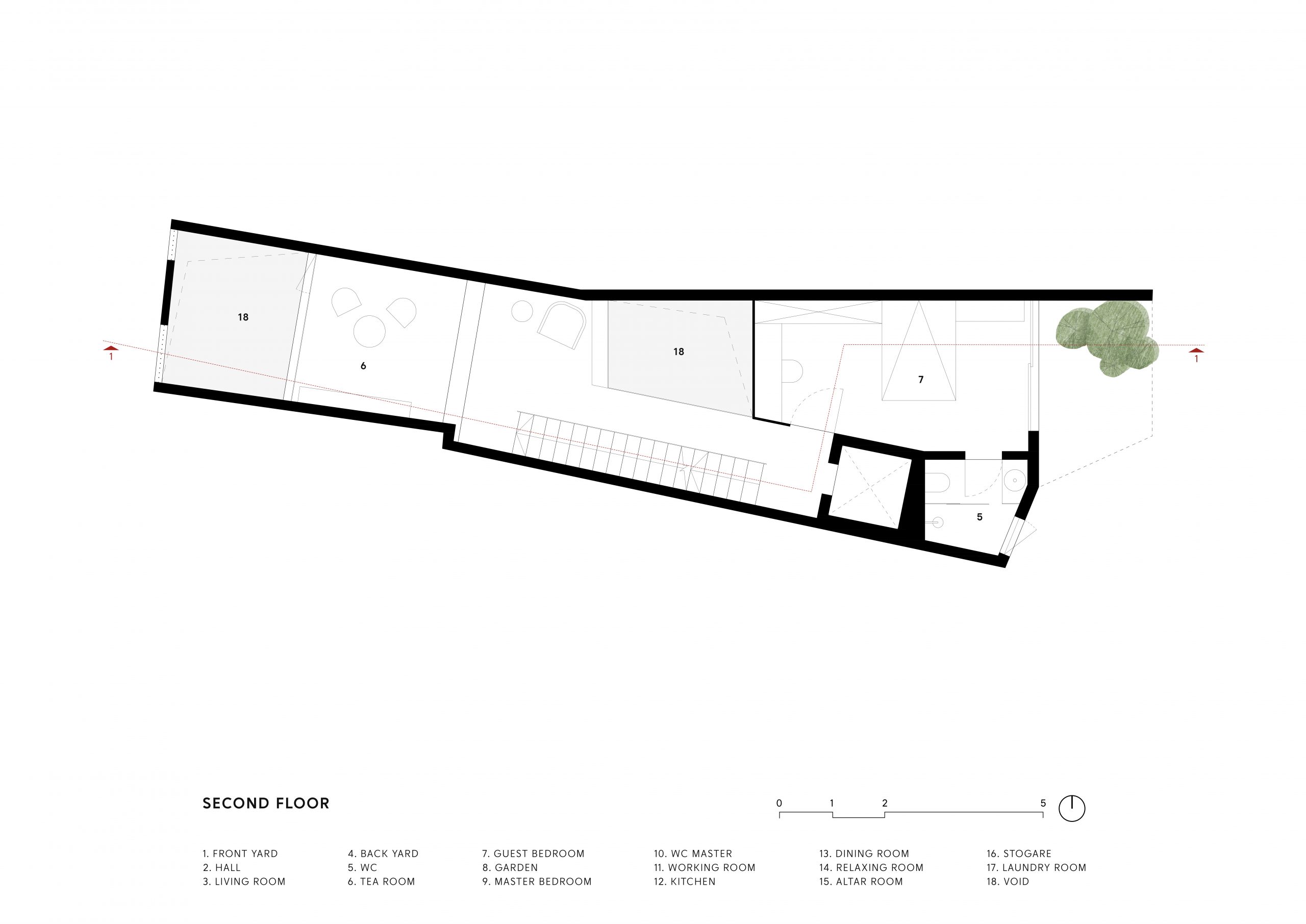
On the second floor, the plain hallway gives access to a cozy nook tucked away at the far end. It’s lined with functional storage spaces and a bathroom with a vessel sink countertop built flush against the wall to save floor space. The quiet corner provides an oasis of calm with upholstered seats and wooden furniture handcrafted by local artisans.
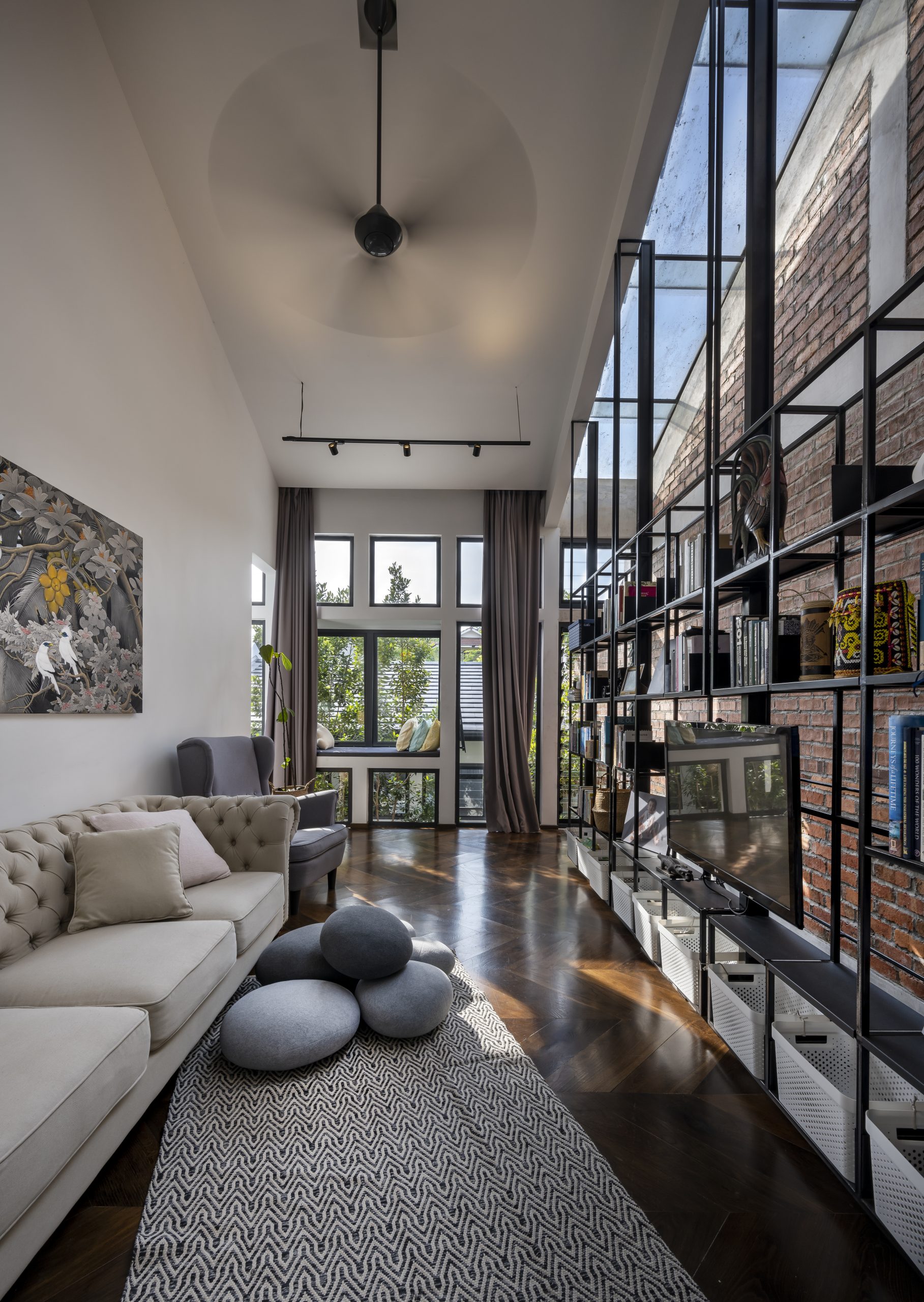
The upstairs living room feels relaxing with a few pieces of furniture, while overhead bike storage speaks volumes for the homeowner’s lifestyle.The bedroom has a pleasant, soothing ambience, tucked away on the third floor behind a large glass wall and a balcony filled with green plants, a nice way to welcome morning sunlight into the home.
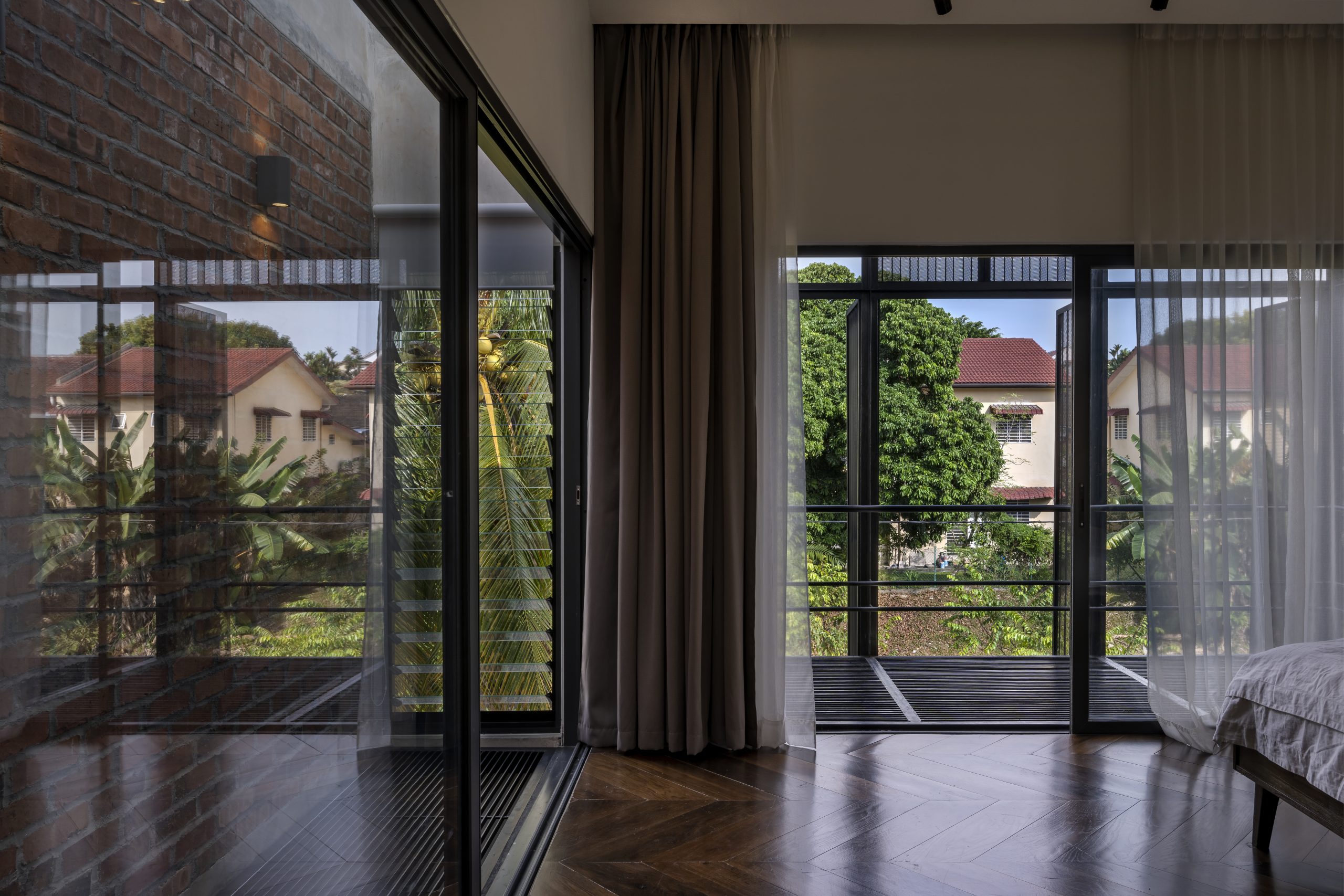
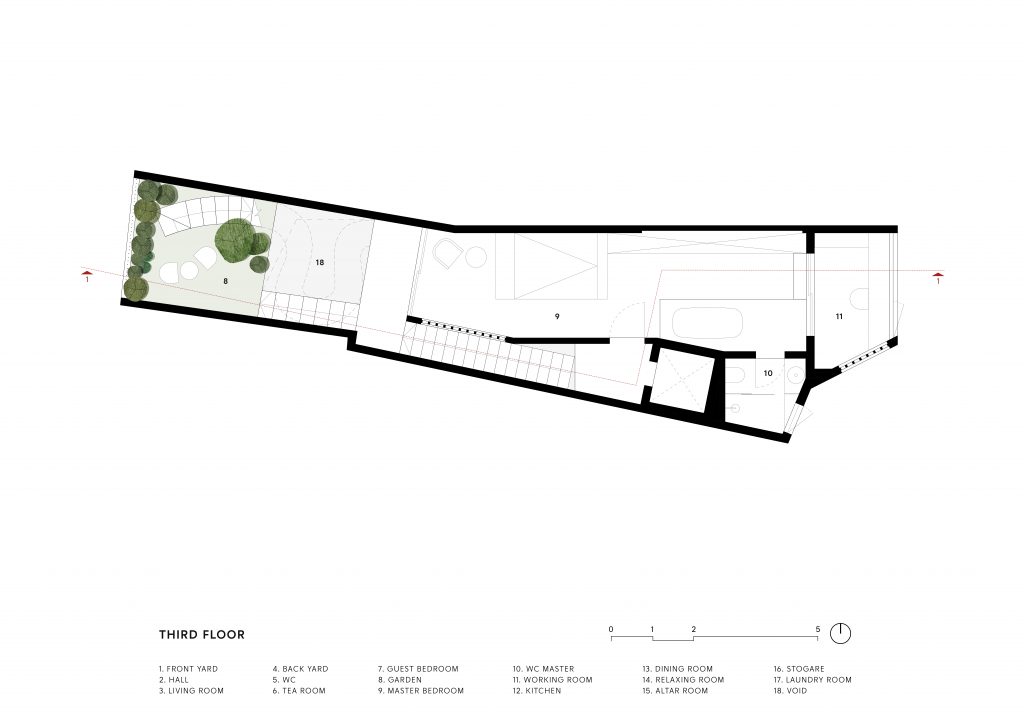
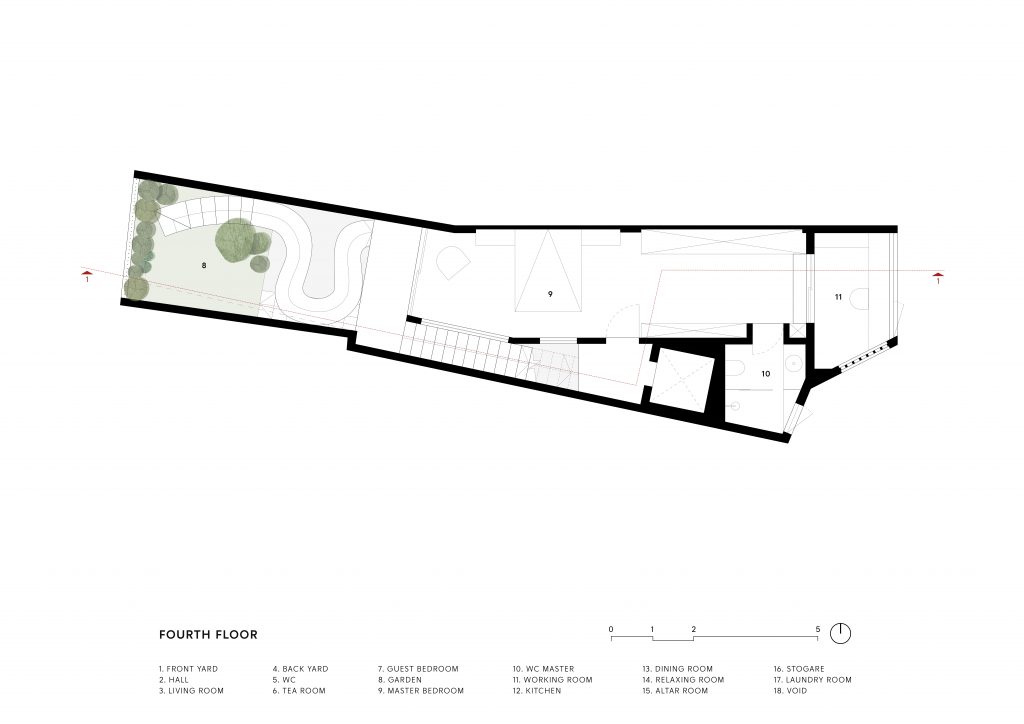
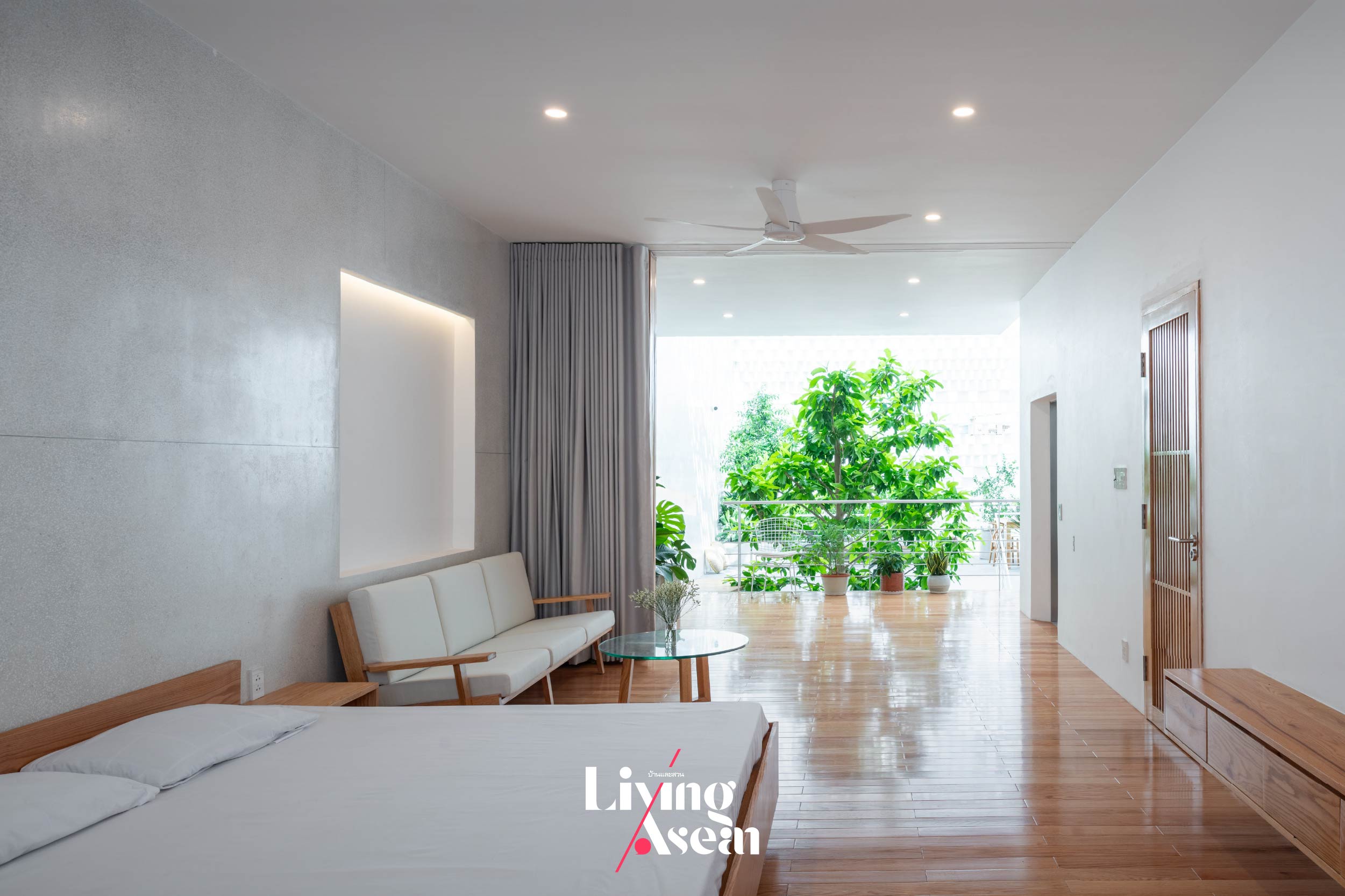
The third floor that previously was a rooftop deck has since been renovated as a bedroom that’s the right size for the compact house plan. It’s cozy and comfortable, thanks to a large glass wall and a balcony filled with green plants. The balcony is in turn enclosed by slatted wall panels that regulate the amounts of sunlight shining into the interior painted a cool-toned white.
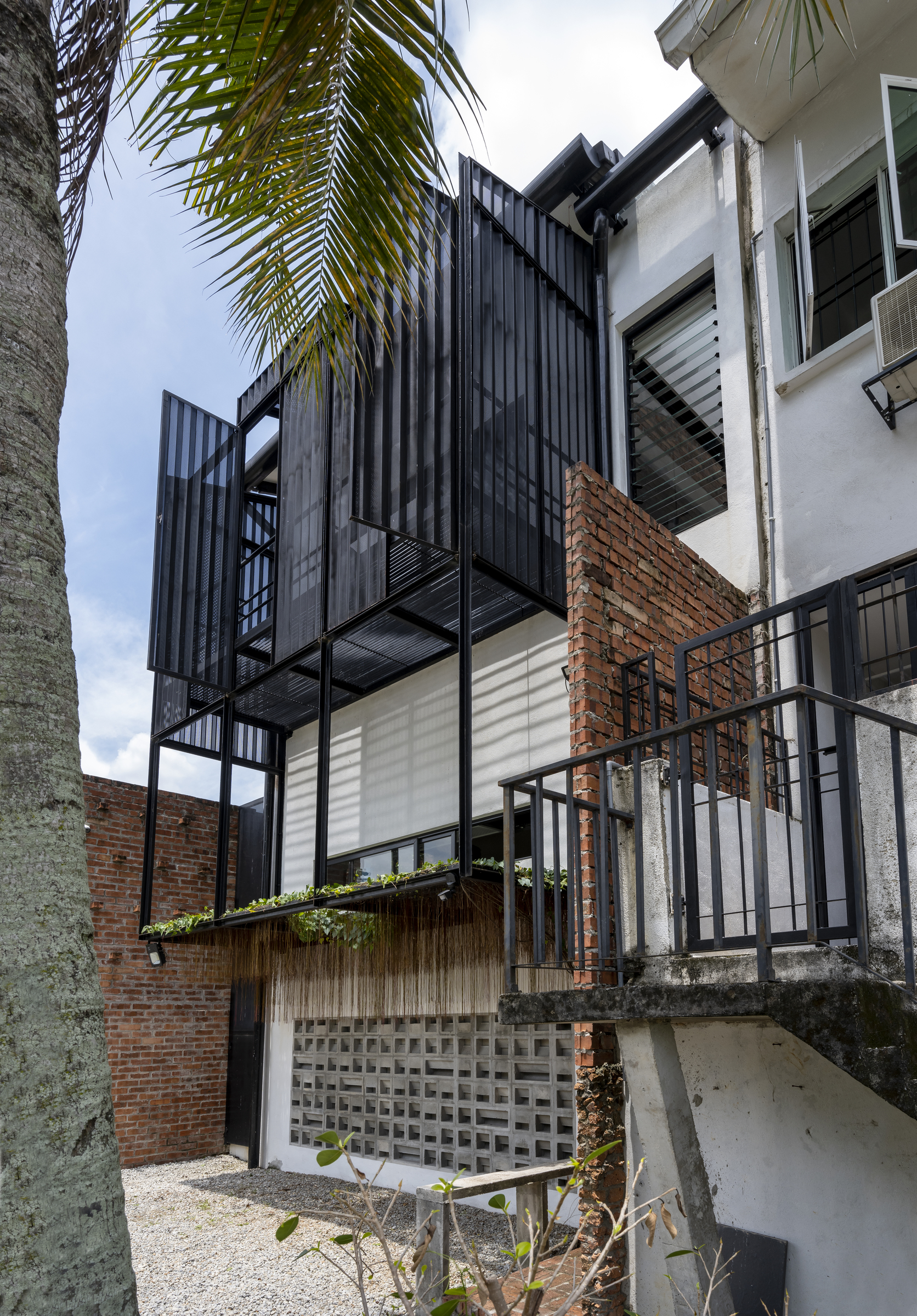
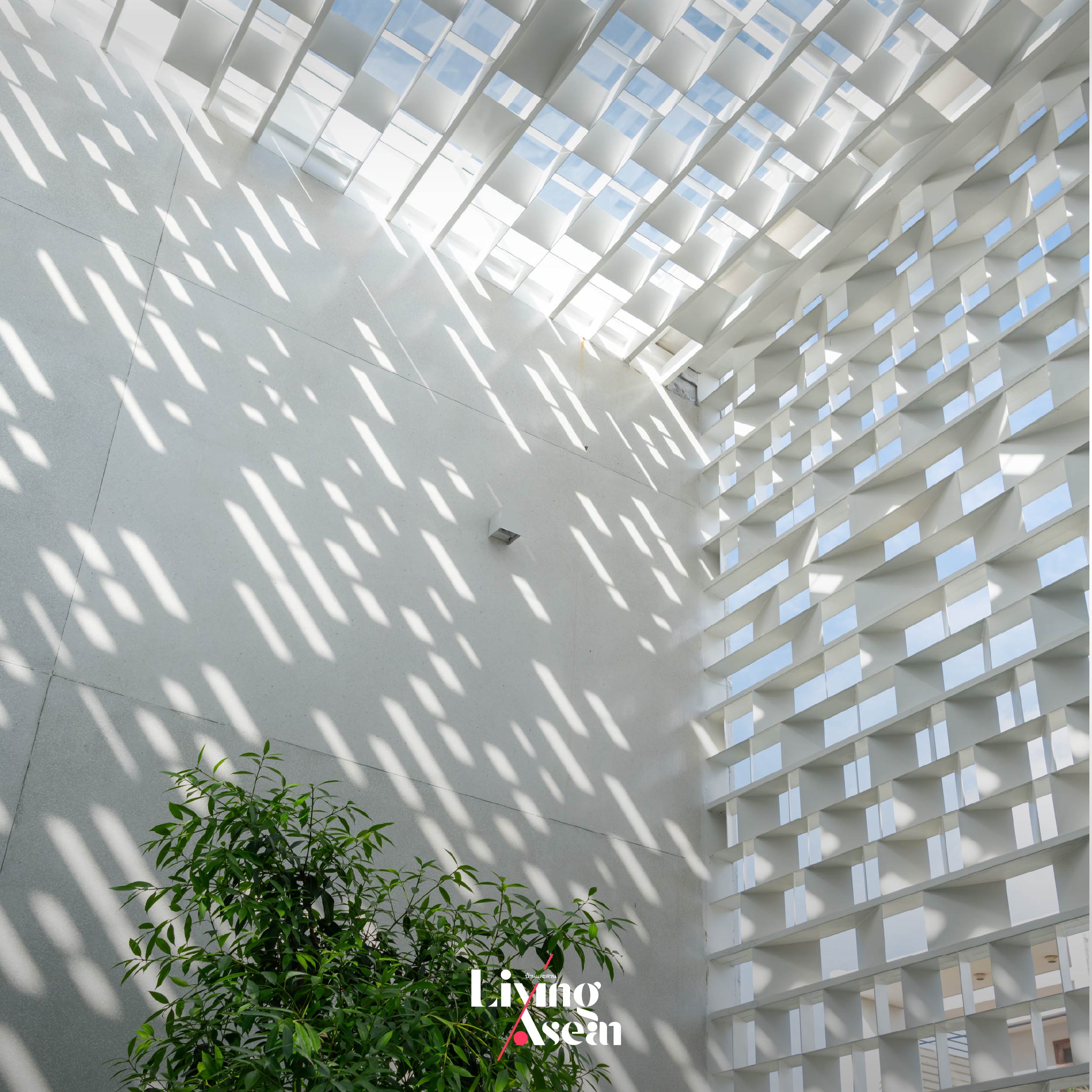
A slatted wall panel on the edge of the balcony regulates the amounts of sunlight shining into the bedroom.
Albeit restored for living at the present time, the home still retains the original support structure, intricate shapes and features exactly where they’ve always been. In essence, it’s about preserving the memorabilia in place because of their historical interest. They include peeling paint on old plaster walls that time forgot, wooden furniture handcrafted the old-fashioned way, even old plant containers scattered on every floor.
Together they bring back warm childhood memories plus it’s design that admits natural light and promotes good air circulation keeping the house cool and comfortable in summer. It’s the very picture of a house renovation done right, one that perfectly fits into the small space, yet it has the feel and functionality of a happier home.
This house appears in the special Baan Lae Suan issue on the theme of “Cozy Living in Urban Homes” is out now. Design lovers, this one is for you. It’s the latest in the ongoing “ASEAN Tropical House Series”.
The exciting new bilingual edition (Thai-English) is a nice little collab between the Baan Lae Suan Press and its English language media arm Living ASEAN. It’s the coming together of ideas for dealing with the problem of limited space, turning site constraints into solutions. Precisely, it looks at problem solving techniques, ultimately creating small urban homes that are right within the context of Southeast Asia. In this issue, ten houses are chosen for their exemplary designs that inspire. It’s meant for architects, designers, and homeowners searching out new ideas for creating a living space that’s cozy and comfortable plus it blends in beautifully with the environment.
/ Story: Natthawat Klaysuban, Kangsadan K. / English version: Bob Pitakwong /
/ Photographs: Nantiya June /
A house that’s right for the size of the land is just what this homeowner has been looking for, one that can satisfy his passion for living in close touch with nature in Bangkok.
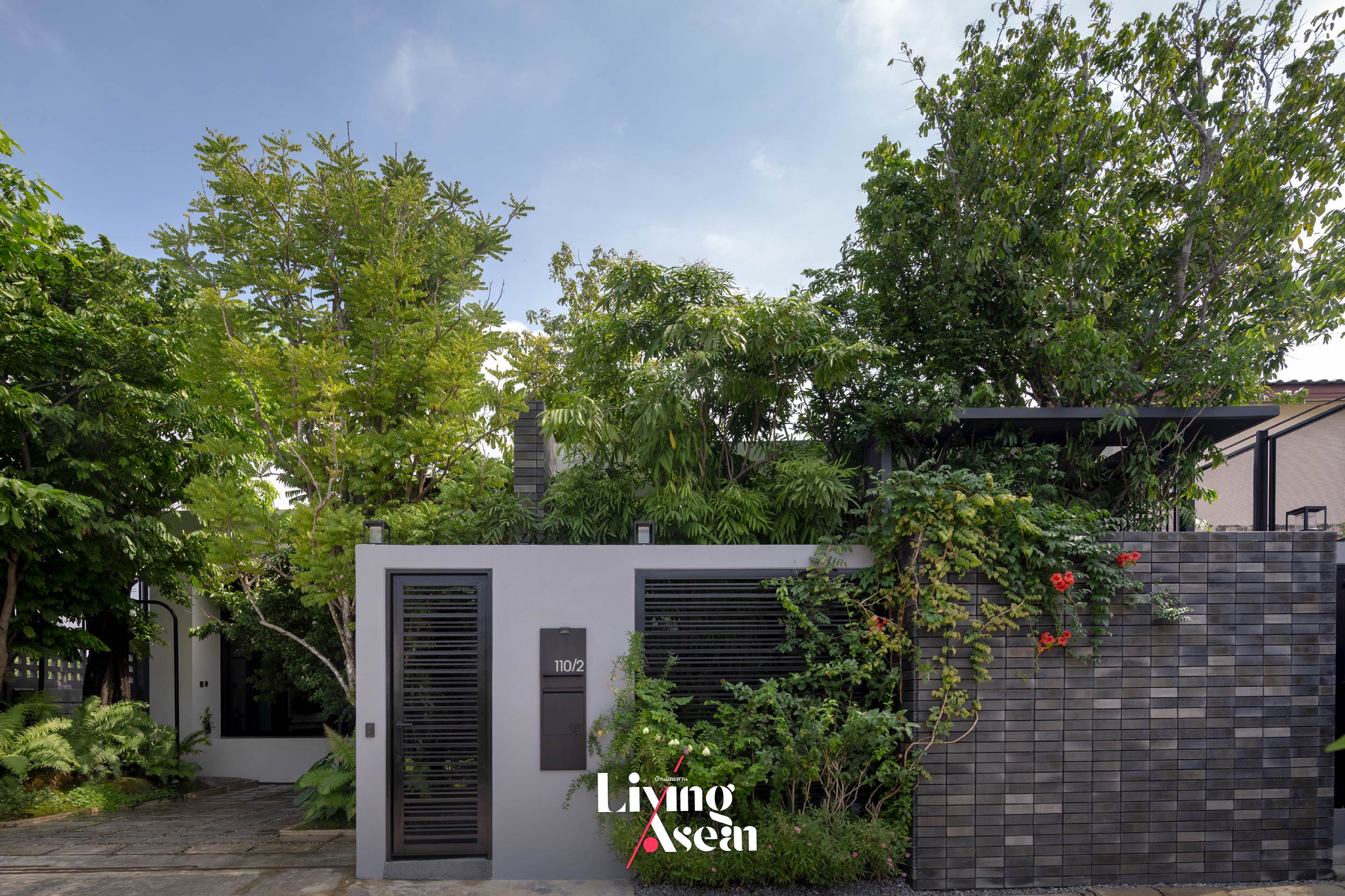
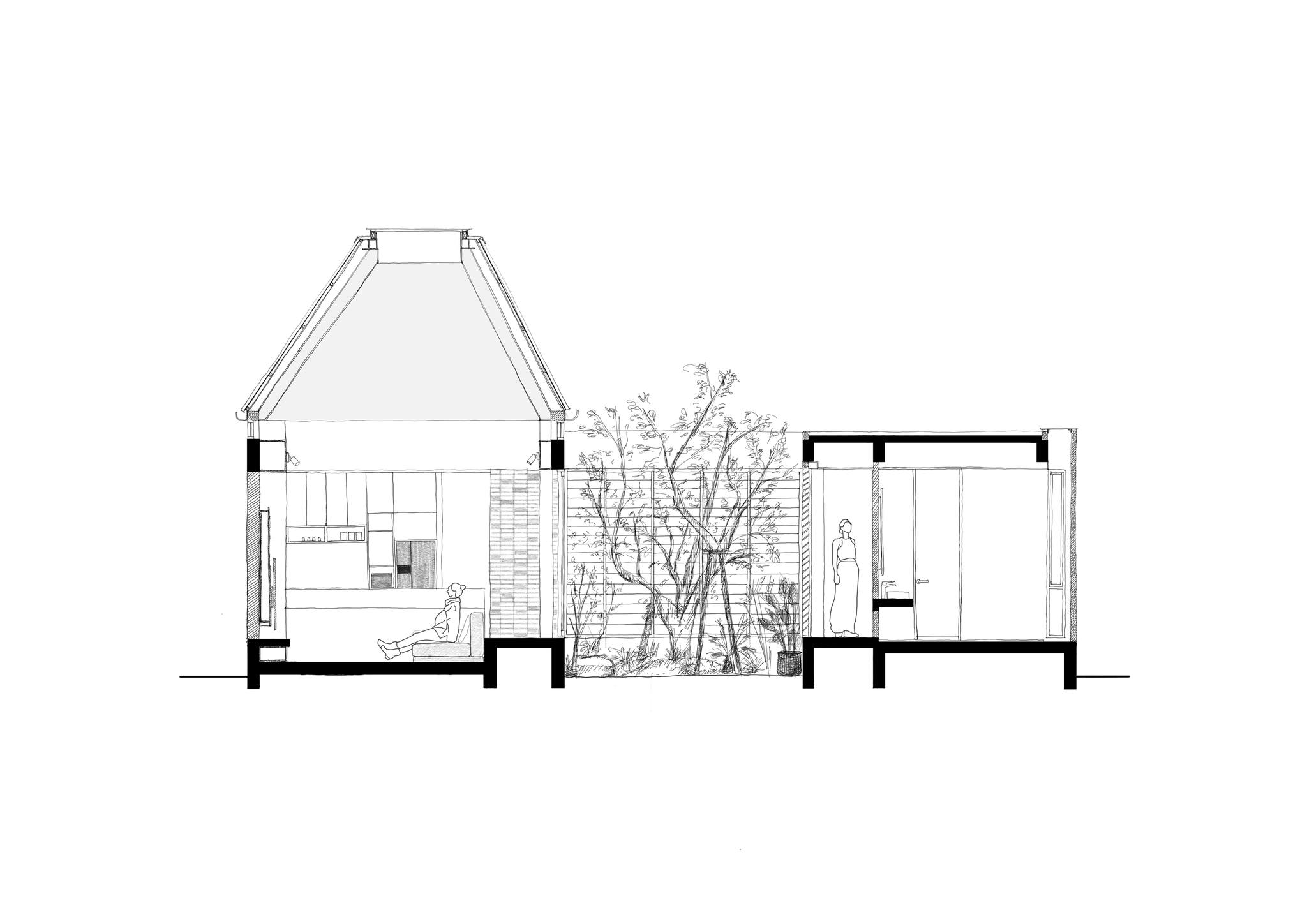
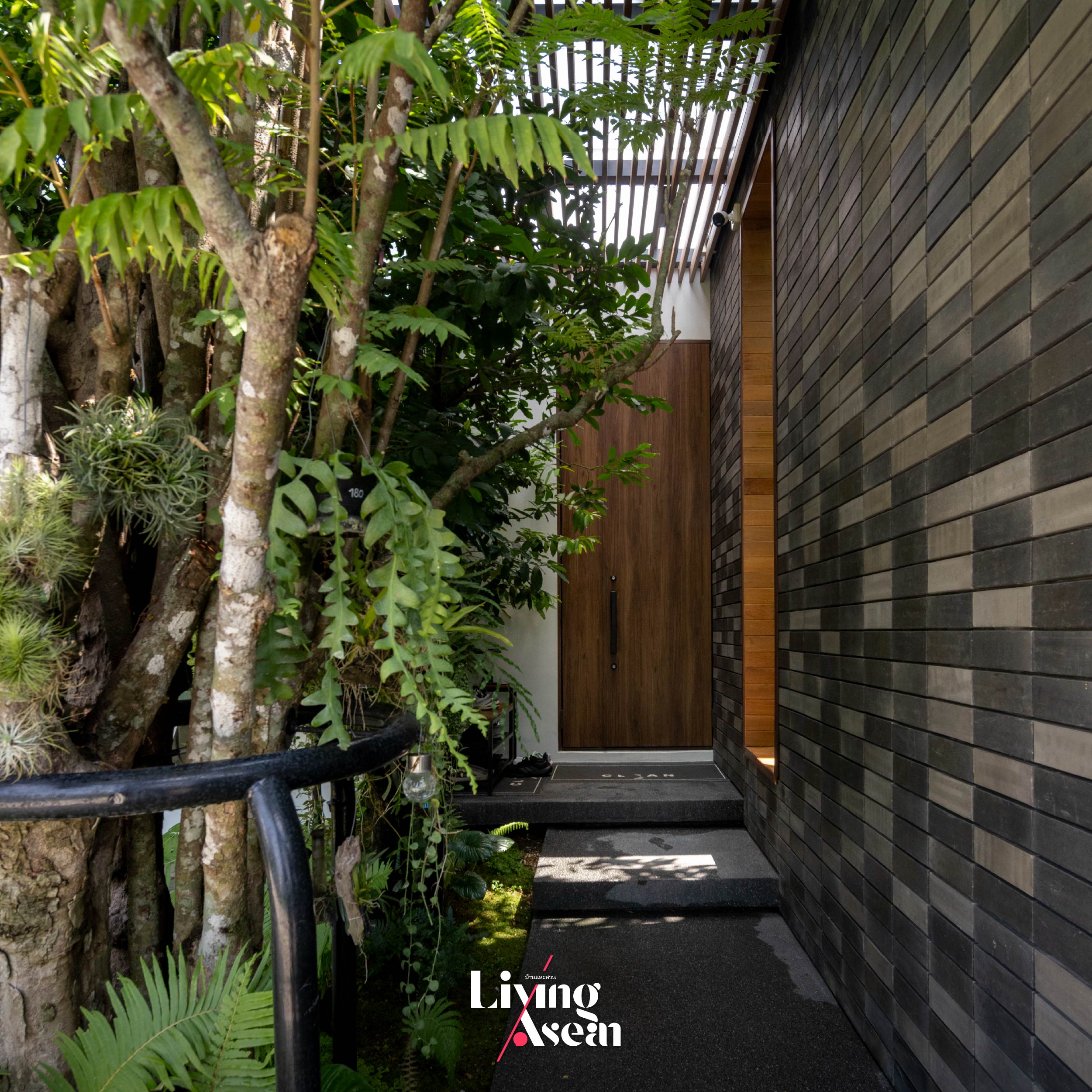
Lush foliage and overhanging tree branches welcome visitors to nature’s warm embrace.The homeowner’s passion for plants is evidenced by an abundance of green spaces in the house plan. / Courtesy of Studio BewellA drawing of the front elevation view of the house in cross section. / Courtesy of Studio Bewell
Wind back the clock. The existing family home where he had previously lived was decorated mostly with potted plants. And when it came time to put in another house on the premises, he thought it wise to leave it in the good hands of professionals, at the same time working closely with them to create a home that would reveal his true self and his love for gardening.
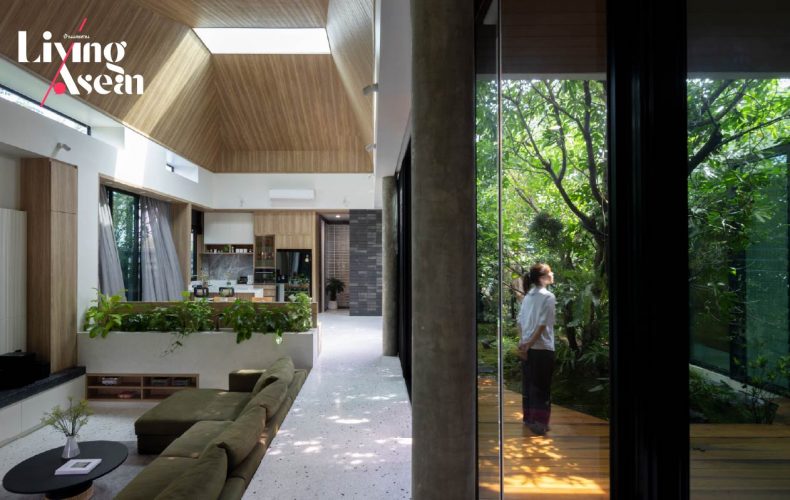
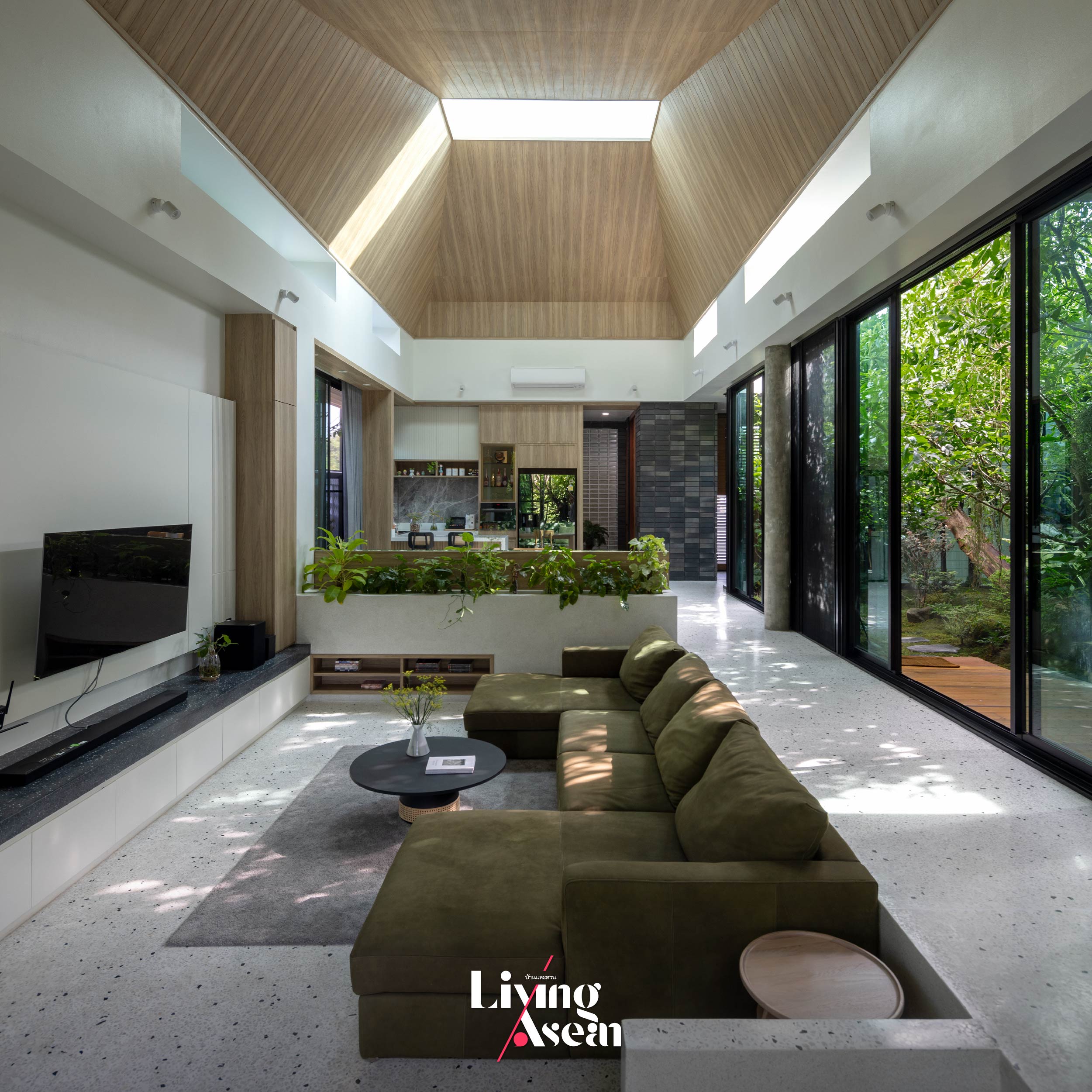
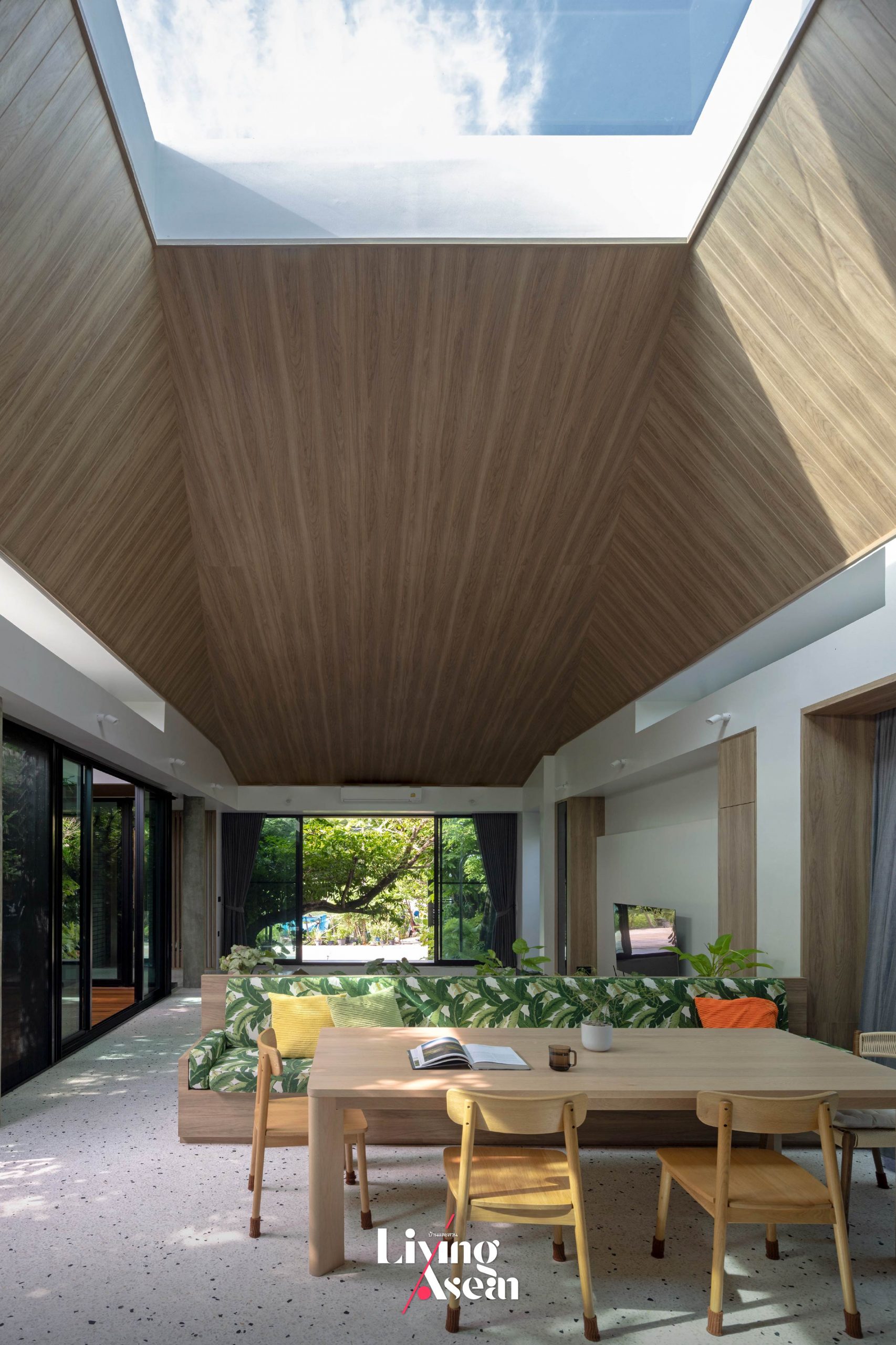
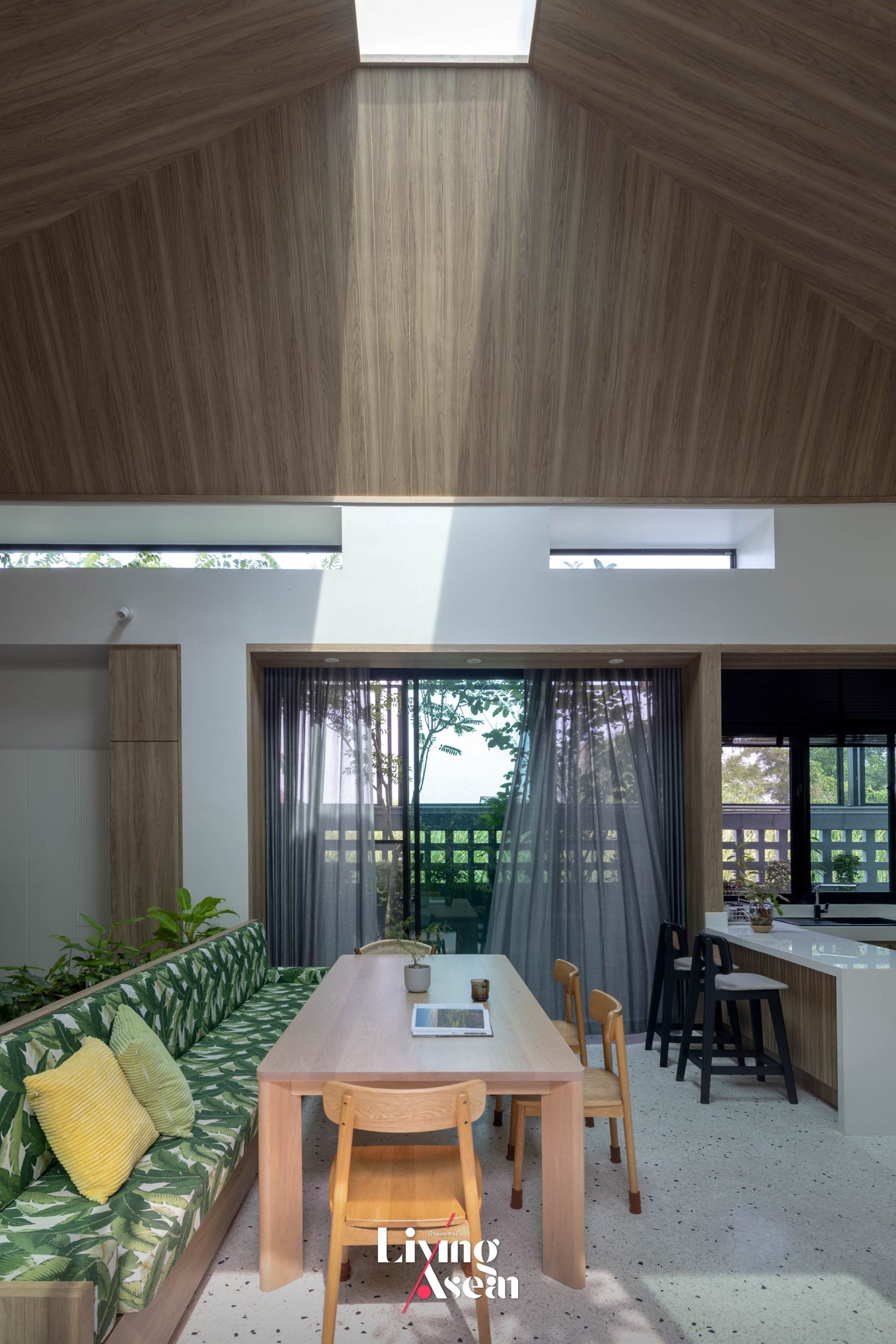
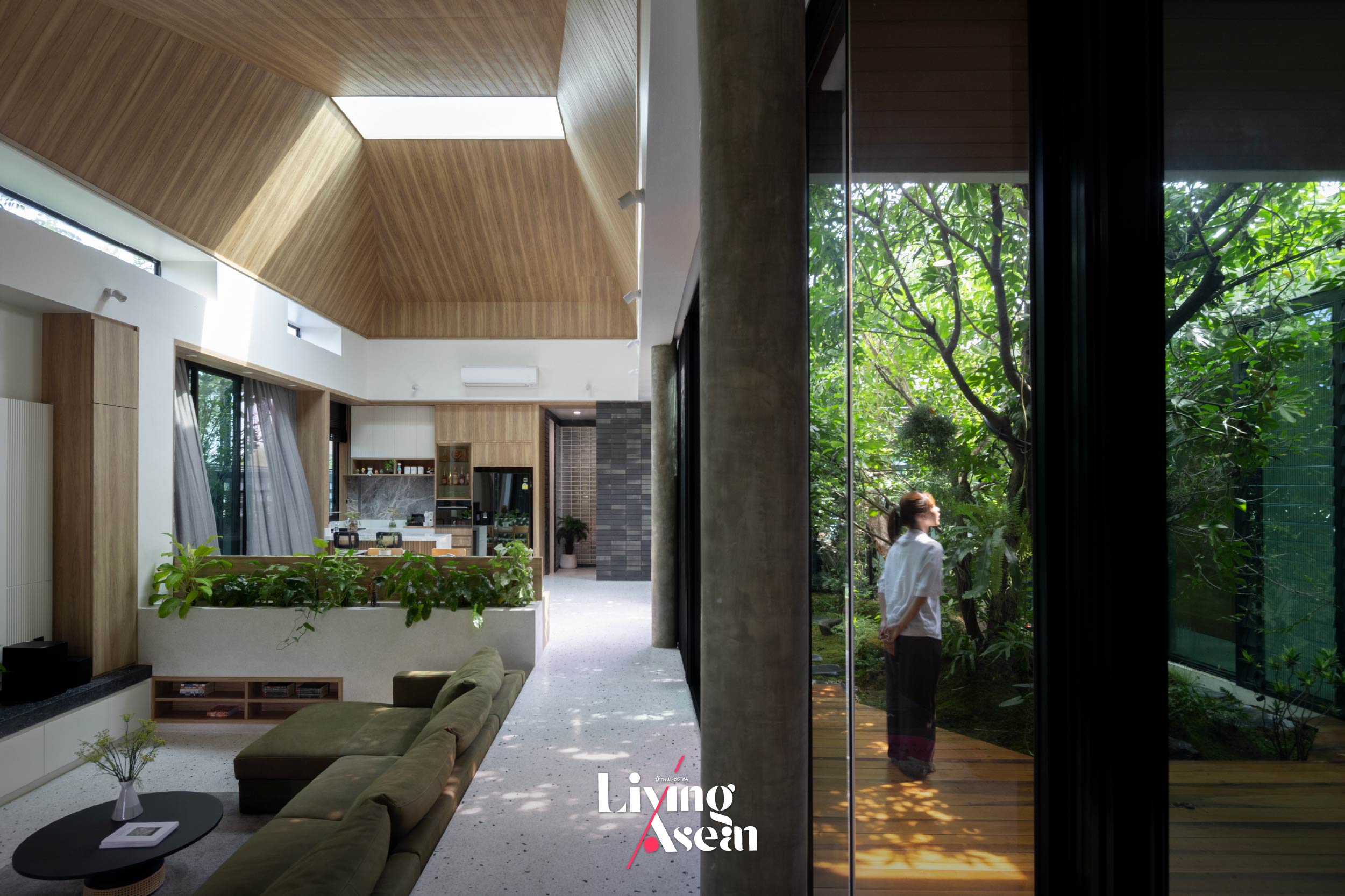
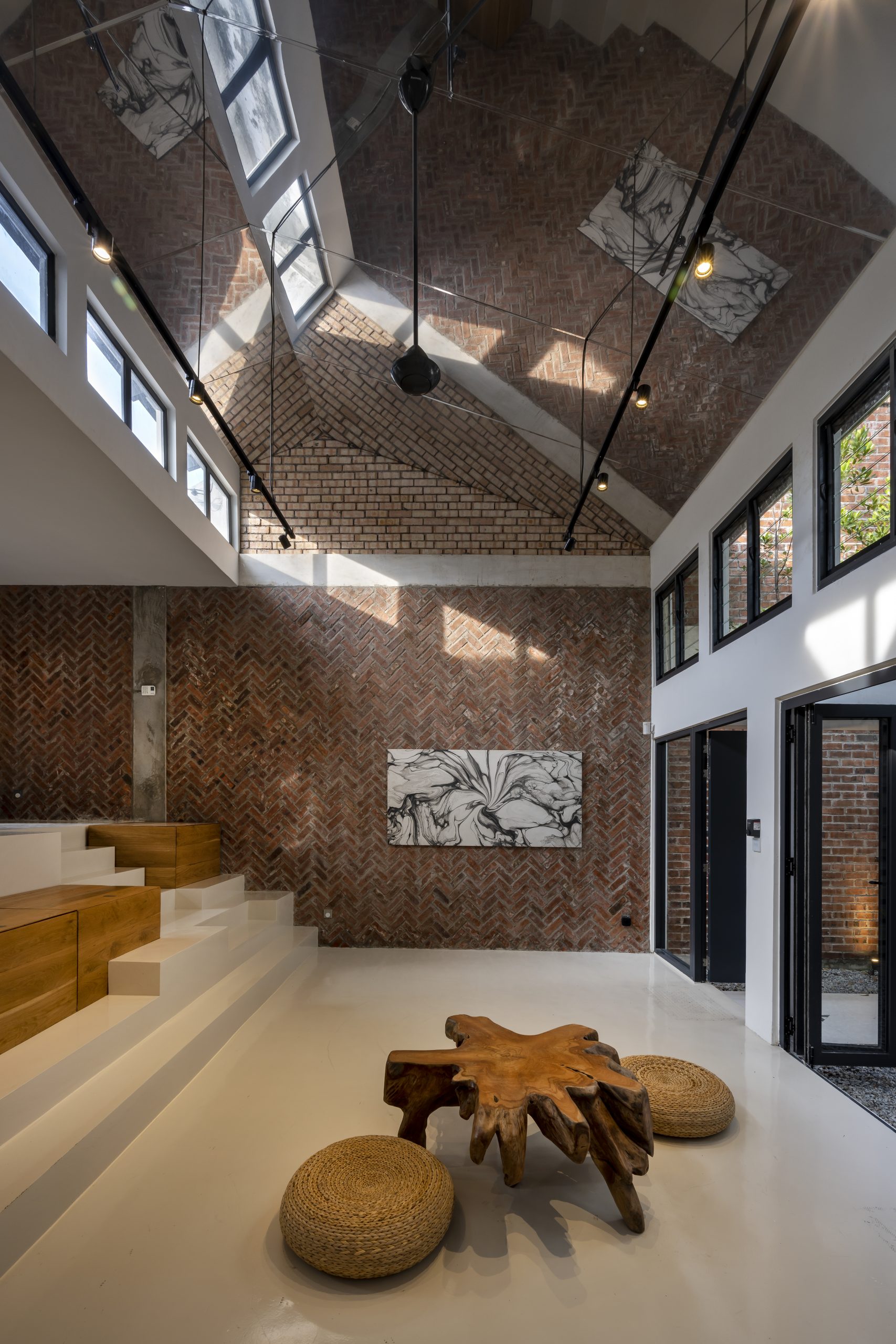
Open plan design gets rid of stuffy room, a way to overcome the problem of limited space.A skylight on top of a vaulted ceiling creates a volume of space overhead, making the living room feel bright and airy, at the same time allowing plants to capture the energy of the sun.
The result is a home among trees that boasts the beauty of living spaces cocooned by the warmth of luxuriant foliage. He started planting trees while construction was underway, content to watch them grow from the very first day the new house rose from the ground in a designated area.
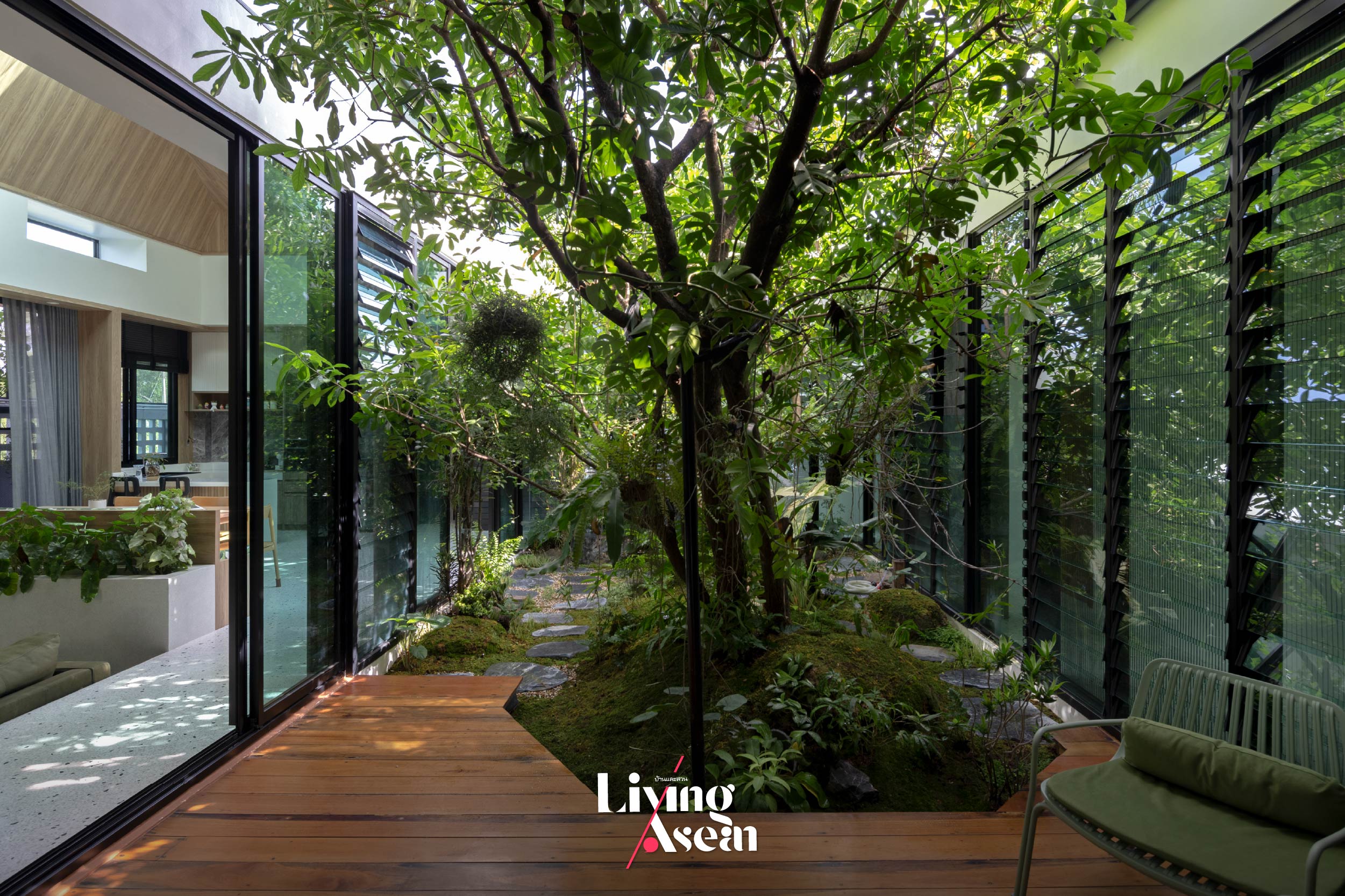
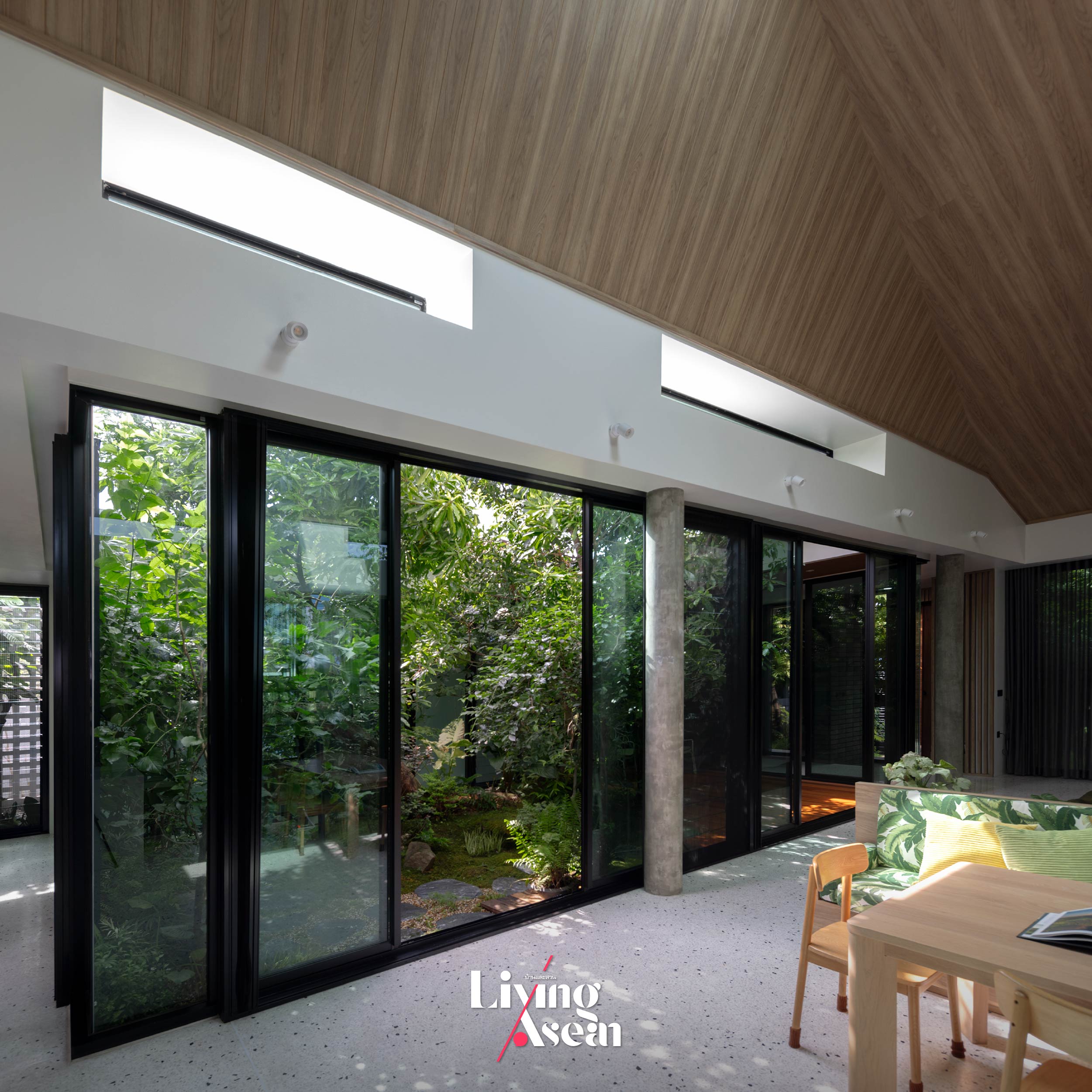
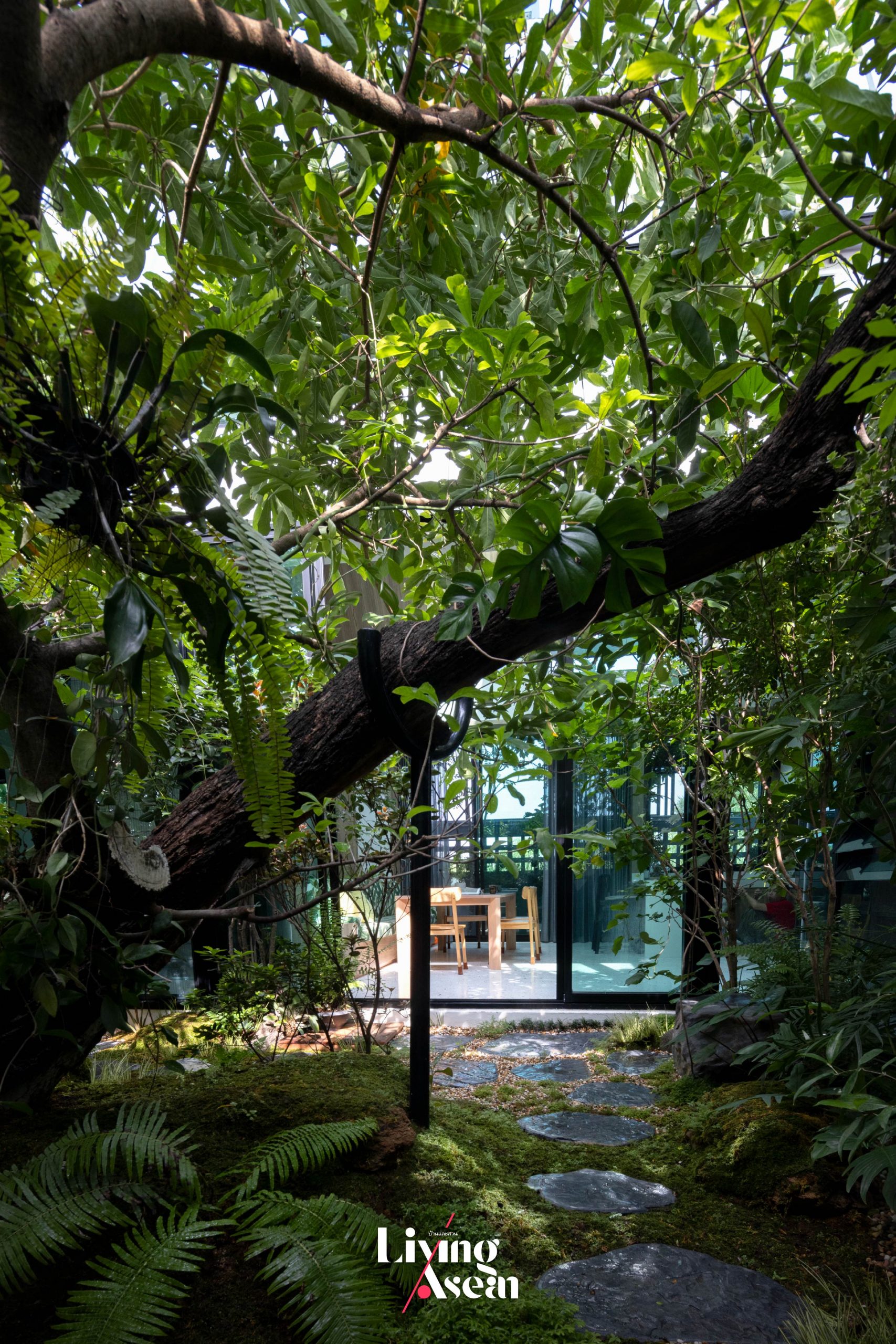
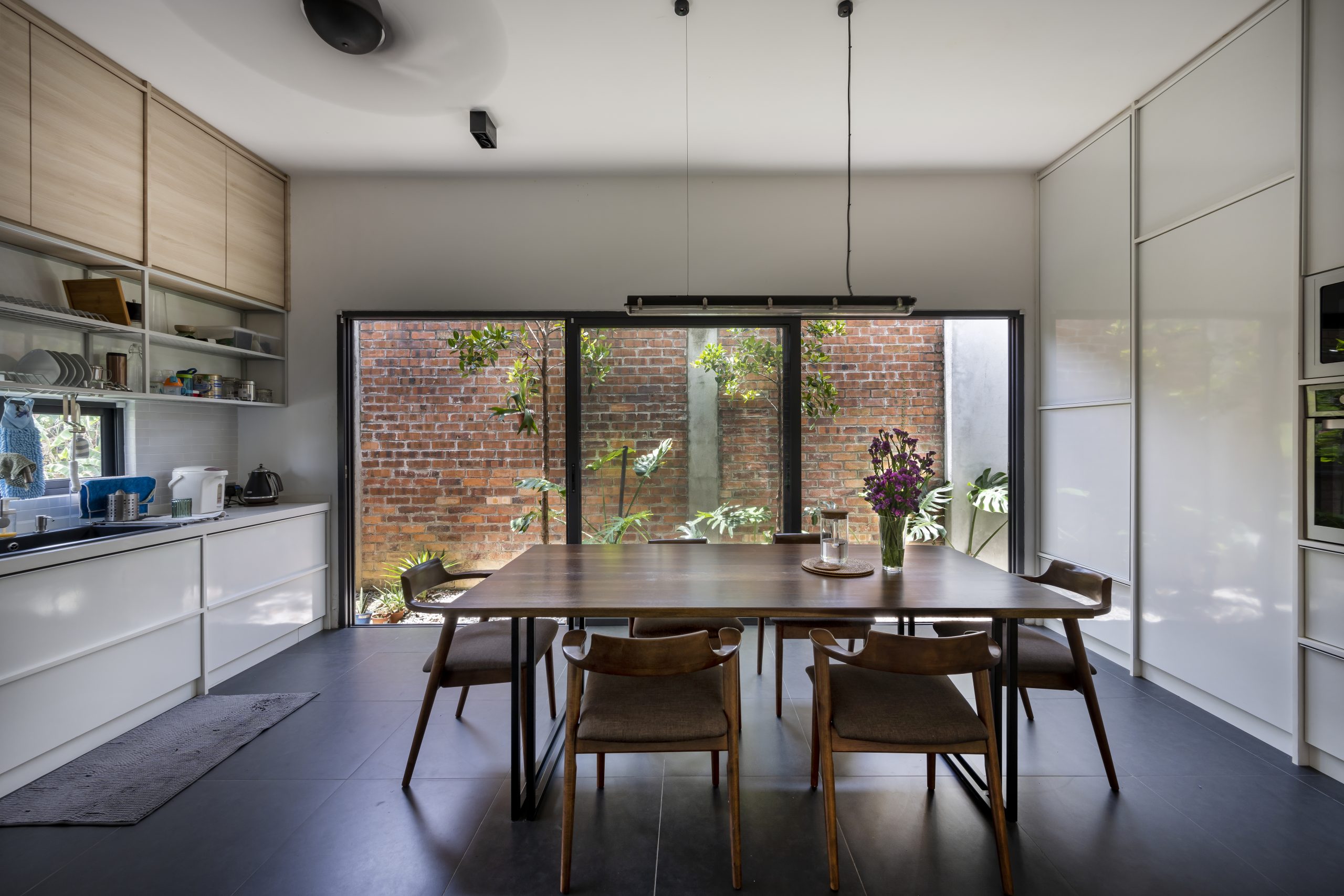
The center courtyard provides fresh air for people and plants, meanwhile keeping the house in shade for cool and comfortable living.Sliding doors glazed using clear glass afford a view of the center courtyard and bring fresh outdoor air into the home.
From a distance, the perimeter fence merges into lush vegetation, conveying a great deal about design thinking that integrates natural elements into design in ways that arouse intrigue and interest. It’s a layout that speaks volumes for a relationship between the homeowner and various plant species in the yard. The trees and understory plants take prominent positions in and around the well-planned single-story home.
A pleasing vista of the courtyard designed with overhanging tree branches in mind.
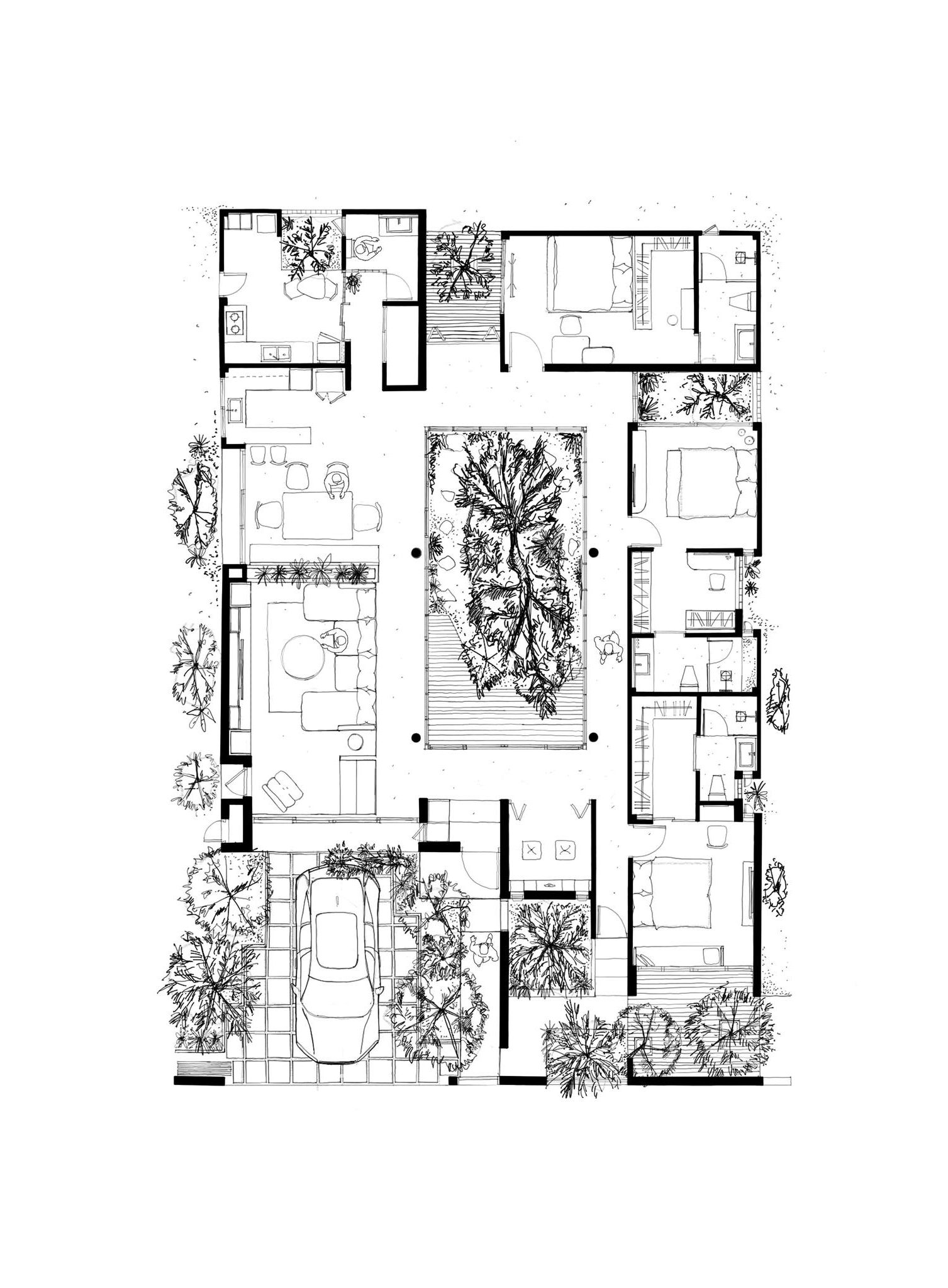
From inside every room, a bright interior courtyard filled with greenery and garden pathways can be seen in full view, effectively blurring the boundaries between indoors and outdoors. The center courtyard performs a dual role. It creates visual continuity between the home and the landscape.
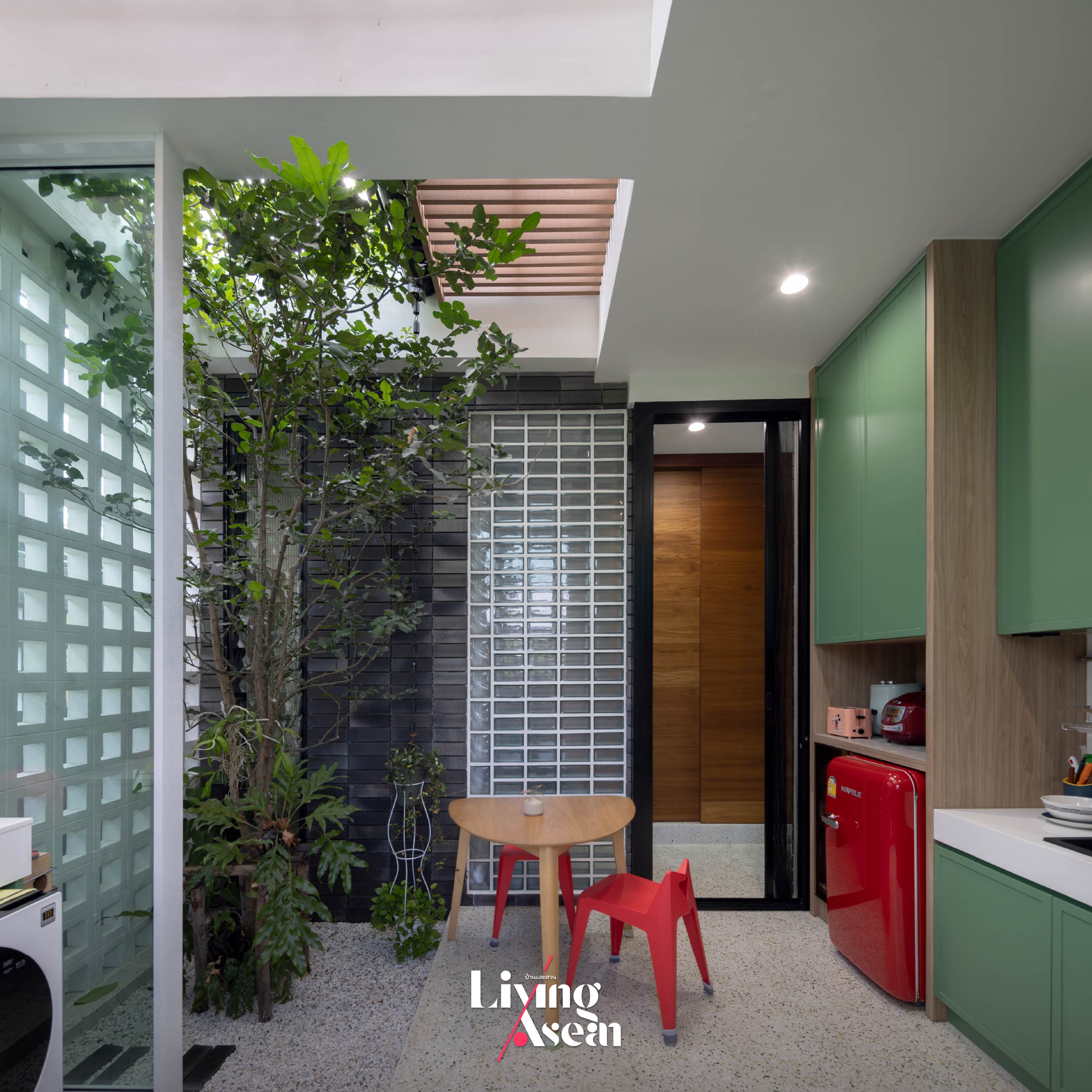
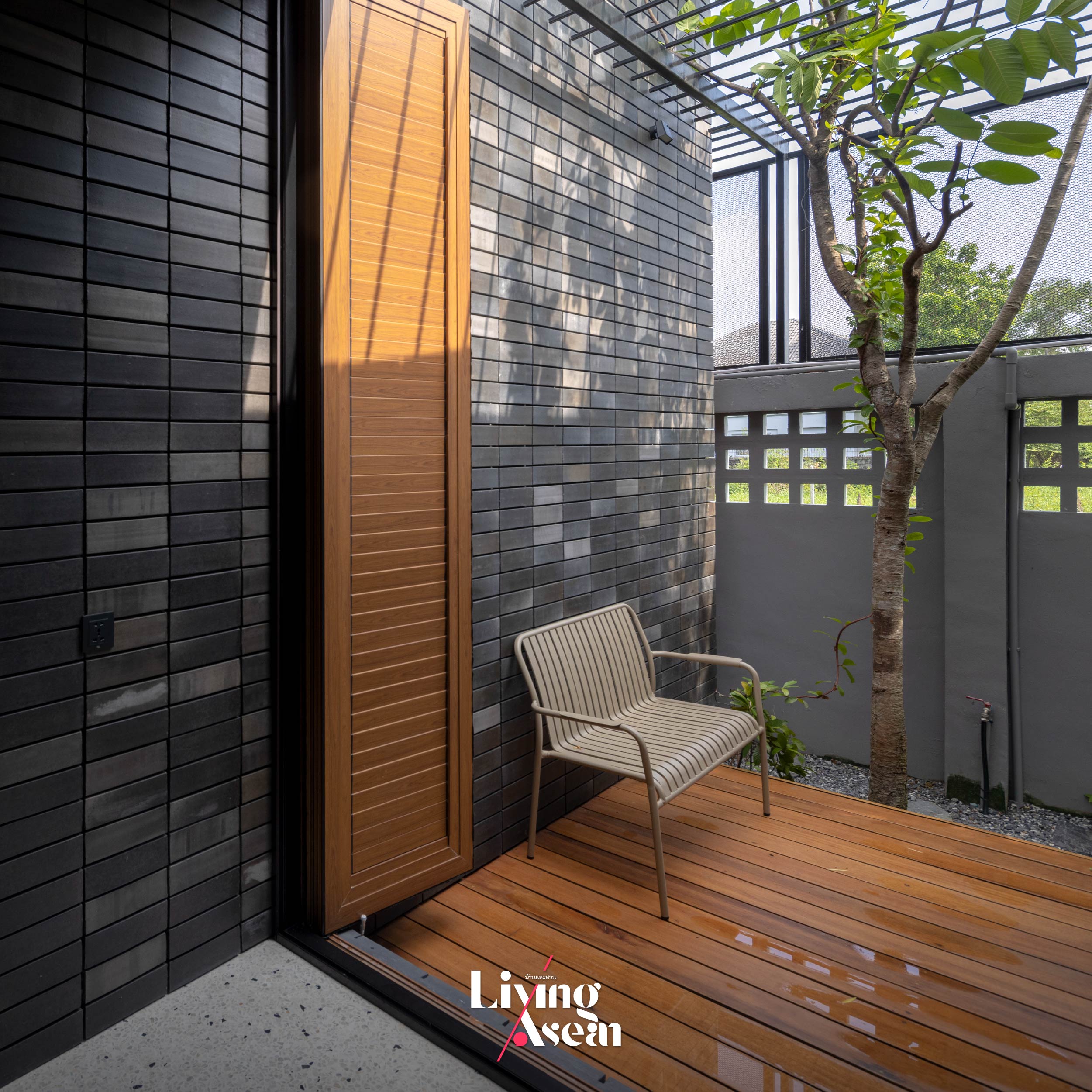
At the same time, moisture in the atmosphere transforms the entire premises into a peaceful, refreshing garden oasis. By design, the green courtyard splits the house into two separate wings. A corridor adjacent to the living room and dining room gives access to private living spaces tucked away in quiet corners. Along the way, a bare brick wall in grayish hues keeps the two wings apart, simultaneously serving as part of interior decoration.
The laundry room located at the far end is fully equipped to perform everyday functions.A sitting nook at the rear of the house has quite a charm to it. The room is well-lit by natural light, featuring the simplicity of bare brick walls in shades of gray and a small tree.
The concept is clear. When the trees are regarded as part of family, design must ensure that they are treated right like house occupants behave toward one another. This is evidenced by the way skylights are installed at the top of vaulted ceilings to allow indoor plants to capture the energy from the sun.
At the same time, the living room floor is set lower than ground level creating a volume of space overhead. Nearby, the trees and plants thriving in the courtyard get full sun that enables them to grow vigorously, providing a nice cool place to relax and unwind. In terms of the feel and functionality, the house boasts modern conveniences that fit together well with the layout forming a cohesive whole.
The materials and finishes are mostly wood, white walls and concrete blocks in shades of gray that merge with the color of the real wood floor. More than anything else, it’s sunlight working in tandem with texture on the walls that adds dimension and much-needed depth to the room, a perfect integration of nature in living space design and people’s lifestyle.
In a nutshell, the homeowner’s passion for nature is translated into a single-story house appropriate for the size of the landscape. Surrounded by an expanse of trees big and small, it feels calm and peaceful, thanks to passive design making space available for all things to go to work as nature intended. The result is a well-lit, well-ventilated place made for a healthy lifestyle and desire to be eco-friendly taking it one step at a time.
This house appears in the special Baan Lae Suan issue on the theme of “Cozy Living in Urban Homes” is out now. Design lovers, this one is for you. It’s the latest in the ongoing “ASEAN Tropical House Series”.
The exciting new bilingual edition (Thai-English) is a nice little collab between the Baan Lae Suan Press and its English language media arm Living ASEAN. It’s the coming together of ideas for dealing with the problem of limited space, turning site constraints into solutions. Precisely, it looks at problem solving techniques, ultimately creating small urban homes that are right within the context of Southeast Asia. In this issue, ten houses are chosen for their exemplary designs that inspire. It’s meant for architects, designers, and homeowners searching out new ideas for creating a living space that’s cozy and comfortable plus it blends in beautifully with the environment.
/ Photographs: Antoine Raab, Nataly Lee, Bloom Architecture /
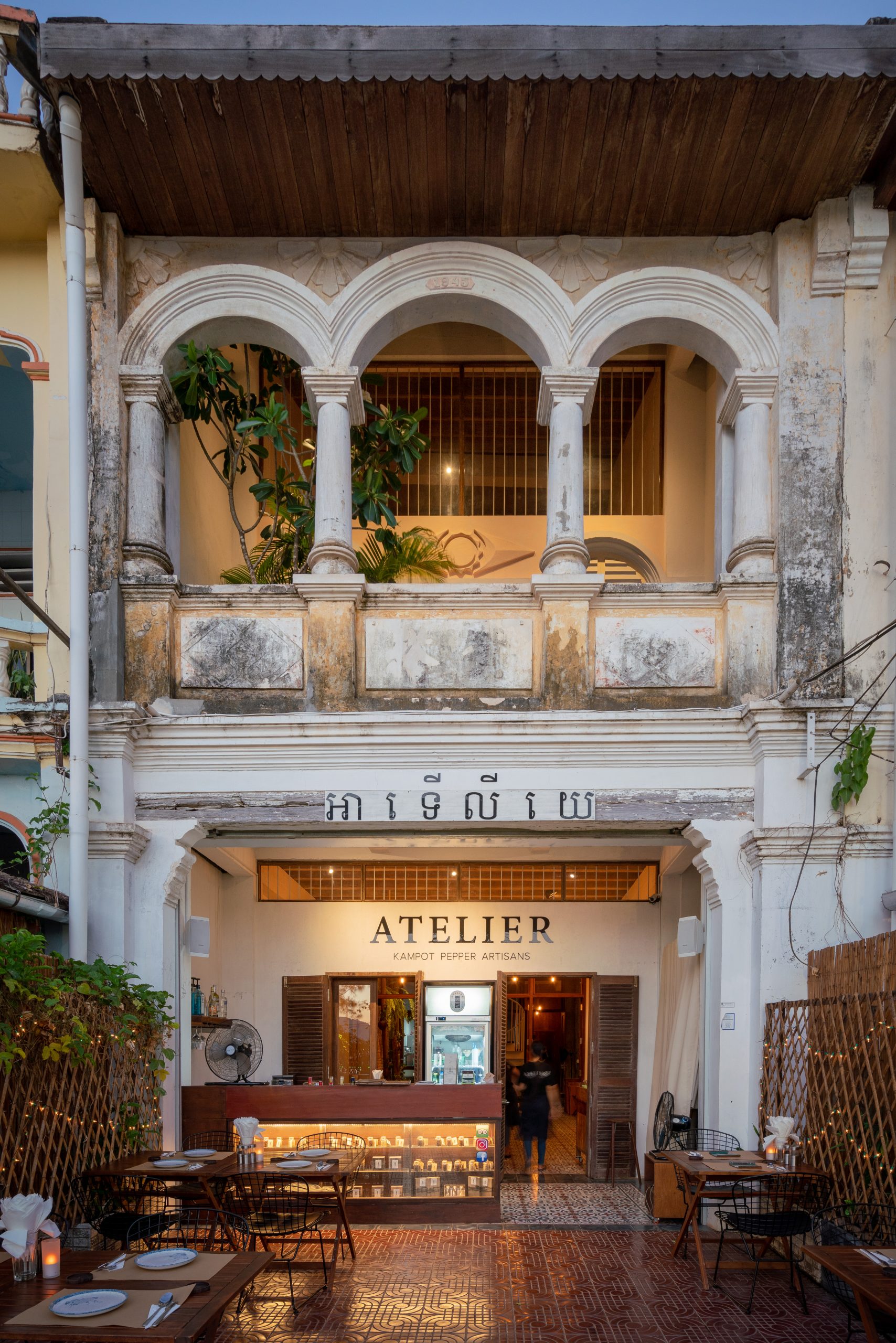
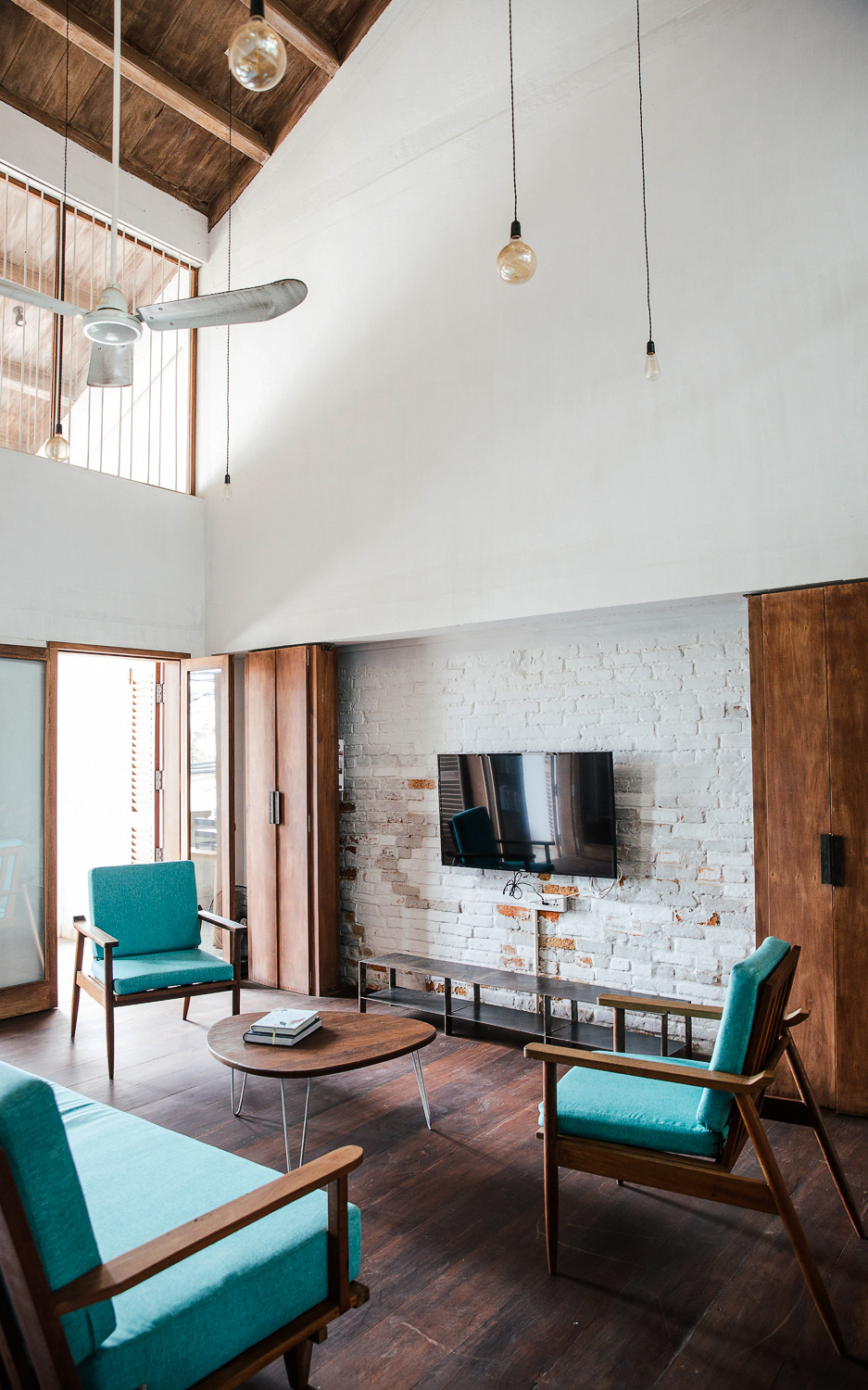
A colonial terraced house stands the test of time in a quaint riverside neighborhood in Kampot, a city in southern Cambodia. The house that had previously fallen into disrepair and kept closed for years was recently restored to all its former glory. Beautifully renovated, it transforms into a home-cum-restaurant exuding good vibes. The dining room is downstairs, while the family home is tucked away in a quiet place upstairs. It’s the story of architectural preservation in an area rich in history. Things have changed, people’s lifestyles included.
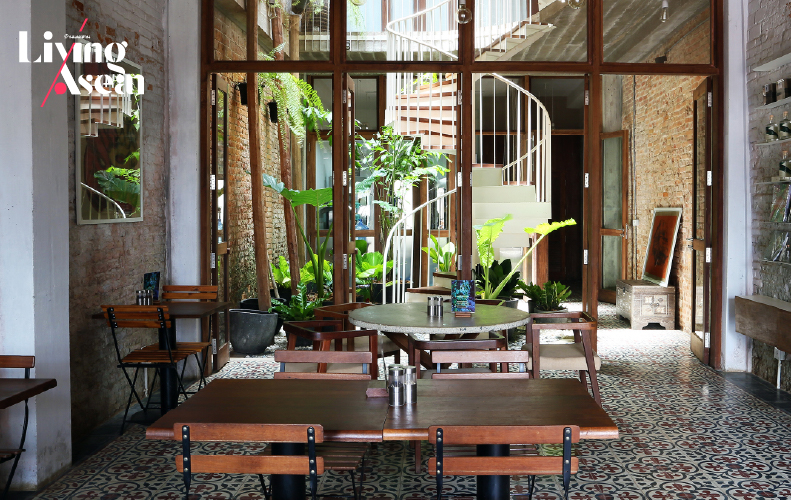
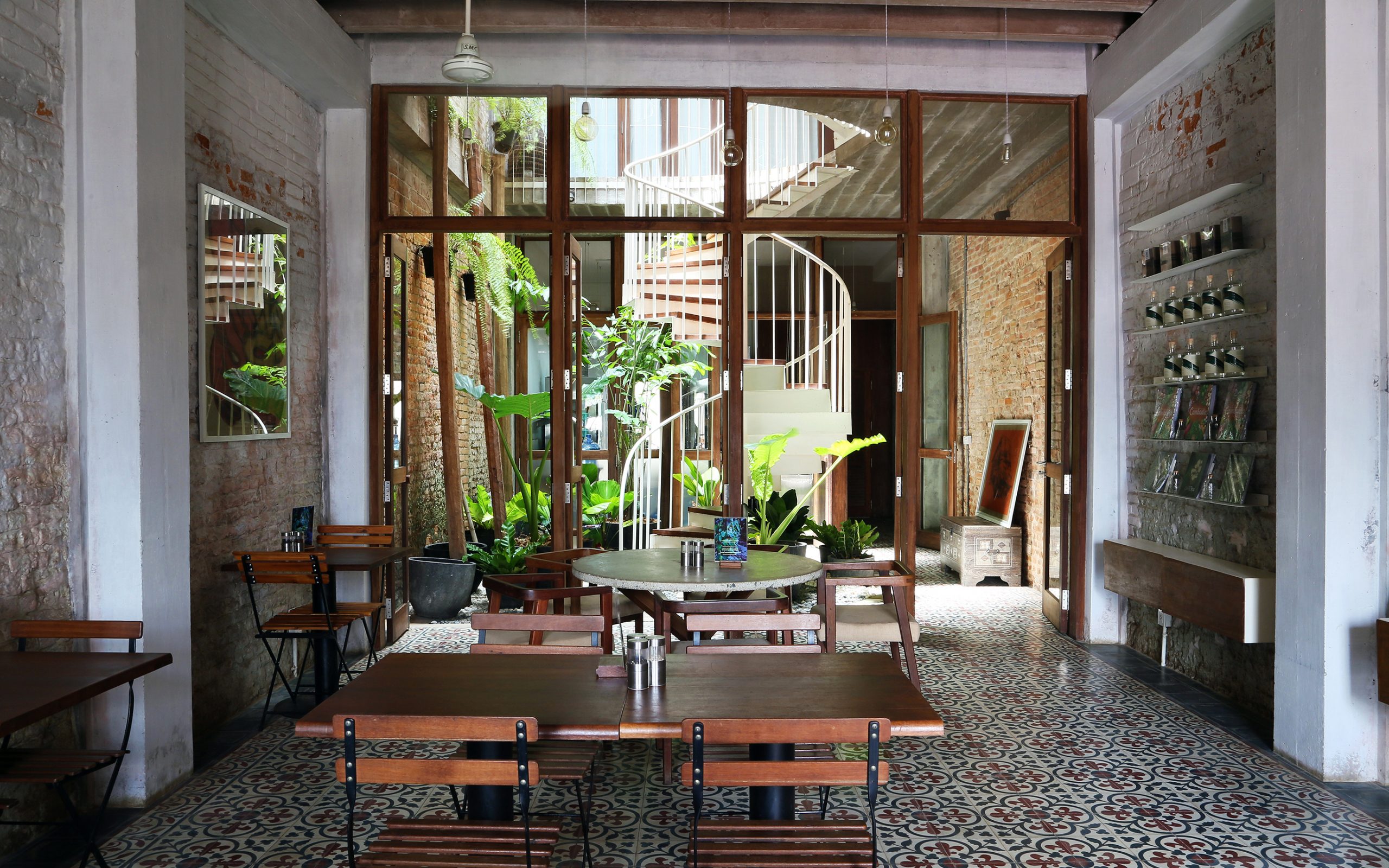
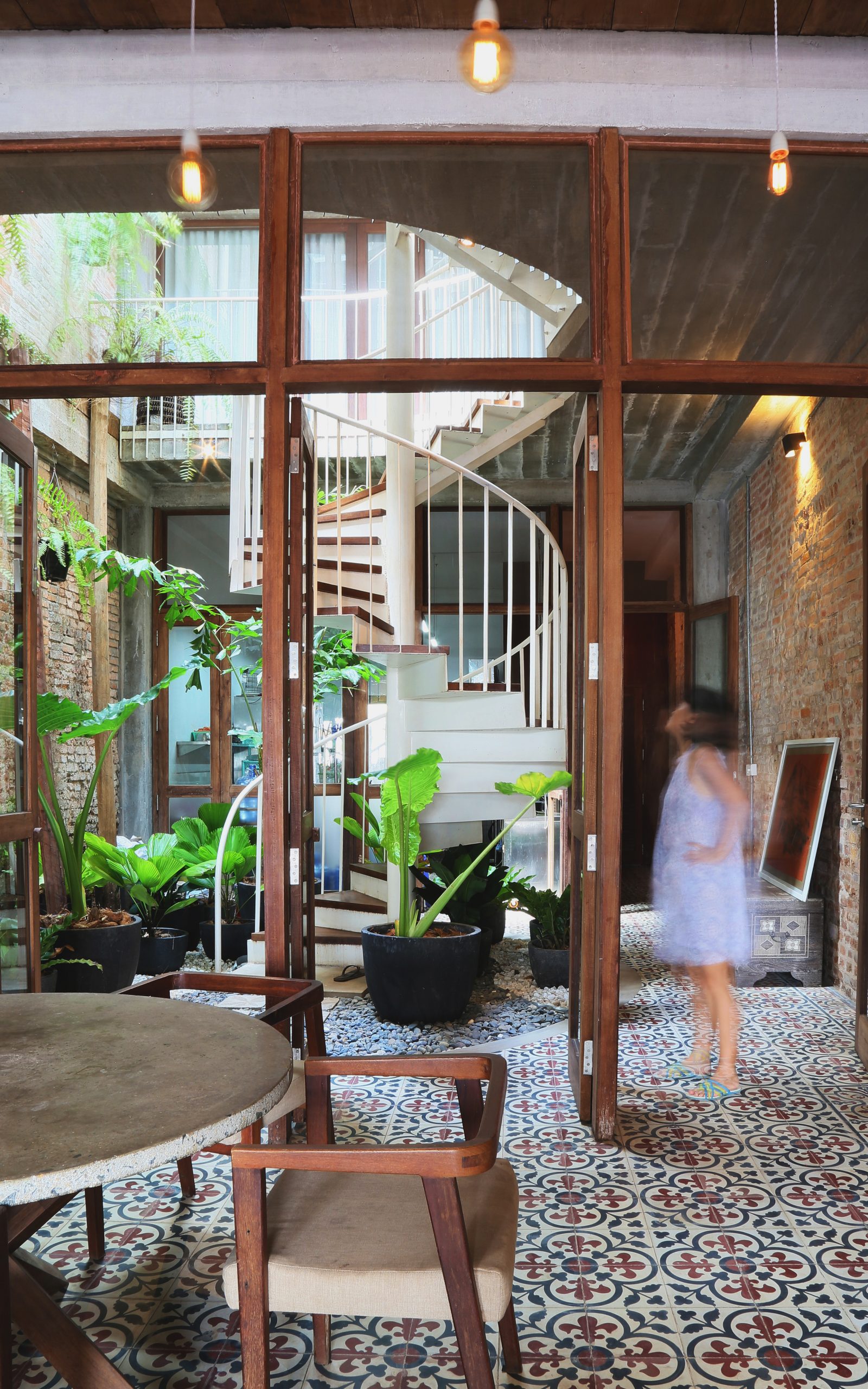
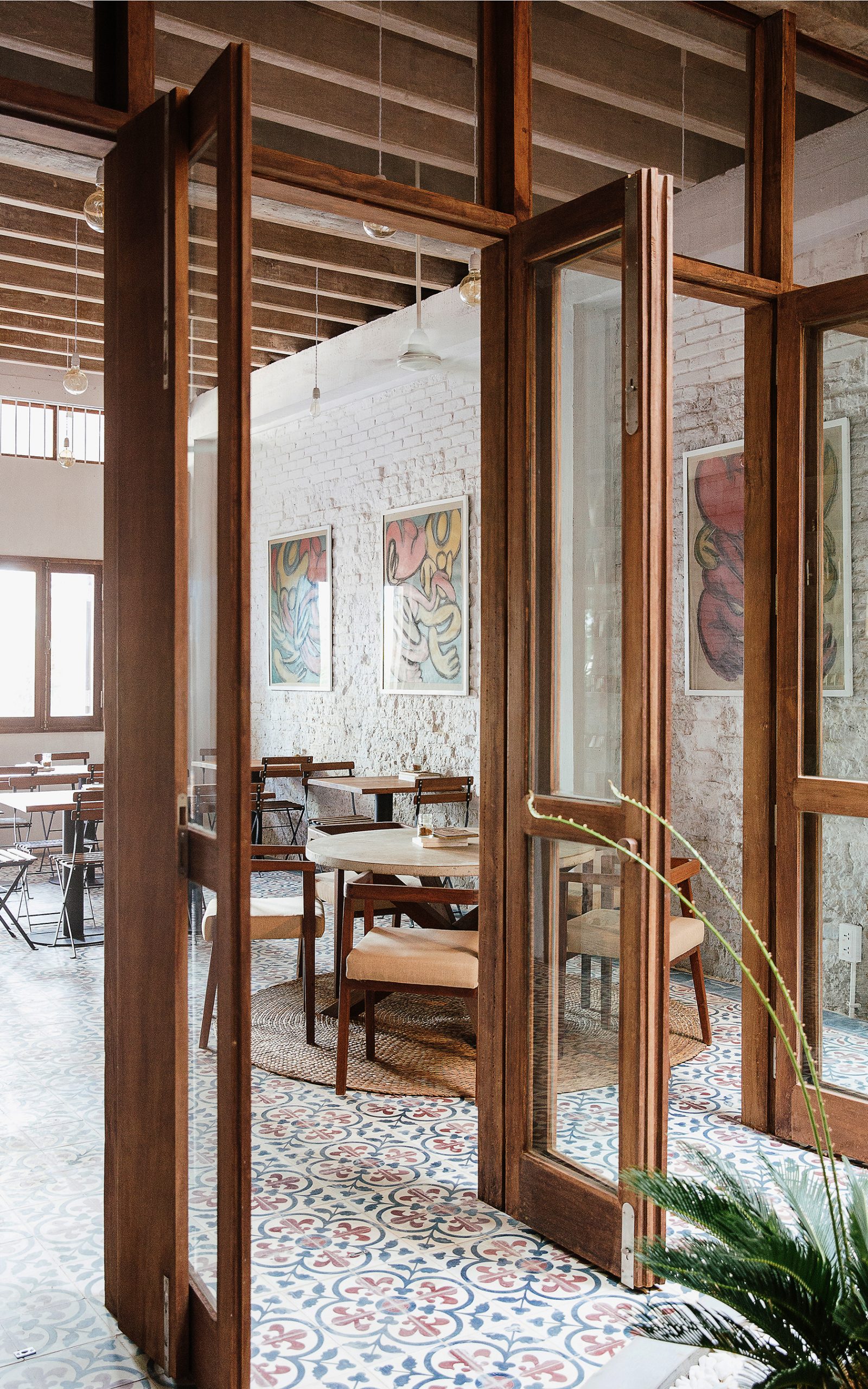
Hiding in plain sight inside a colonial style commercial building, the family home-cum-restaurant tells the story of architectural conservation in a neighborhood known for its richness in history and heritage.Like a journey through time, the downstairs dining room boasts a beautiful mix of old-fashioned porcelain tiles on the floor, uncovered brick walls and wooden furniture.
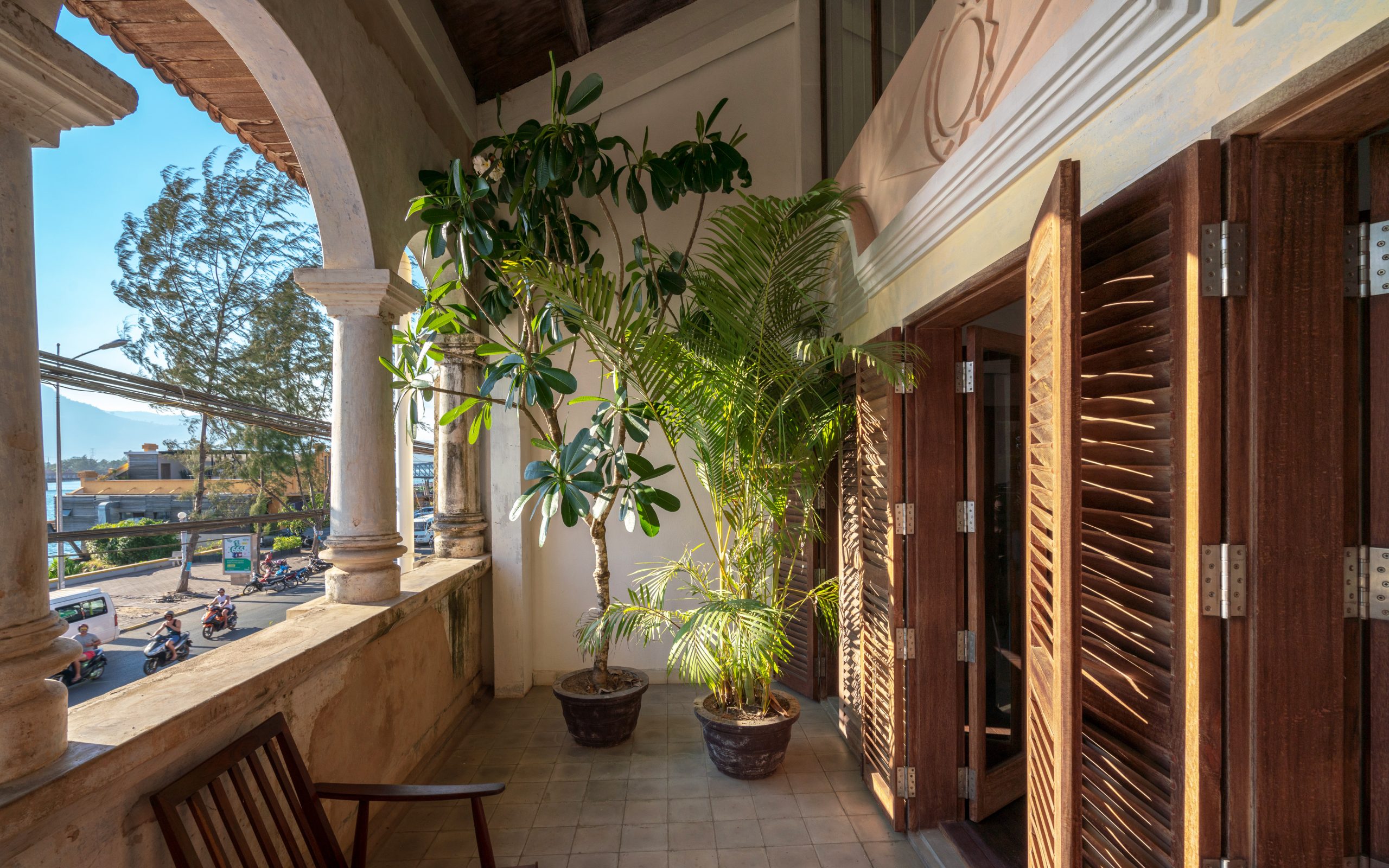
To make the old house fit for modern living, the design team focused on conserving all distinctive attributes in their existing state. They included, among others, the building façade with large arched openings on the second floor balcony, elaborate ornamentation, and weather-beaten looks on the walls left behind by the passage of time.
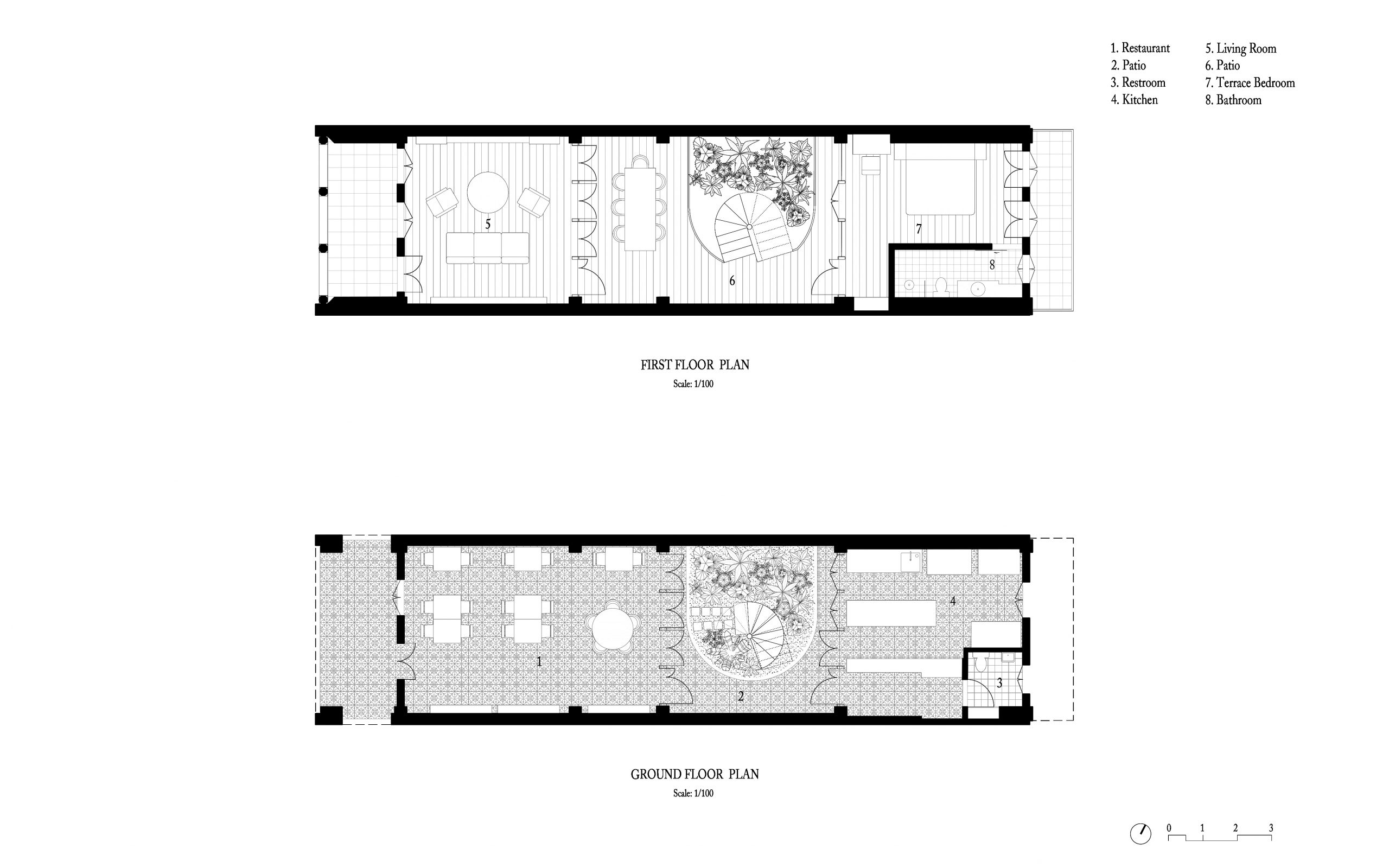
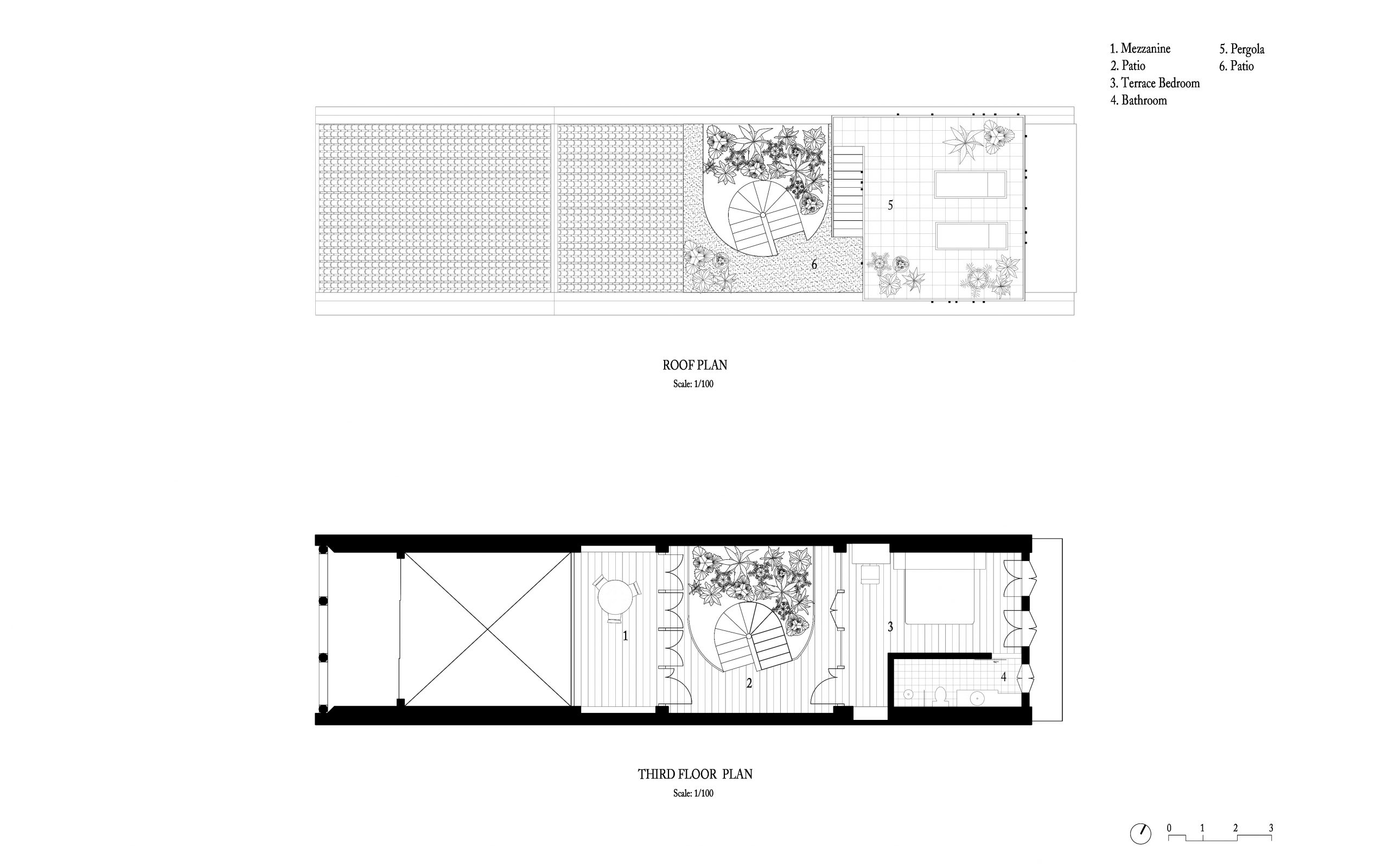
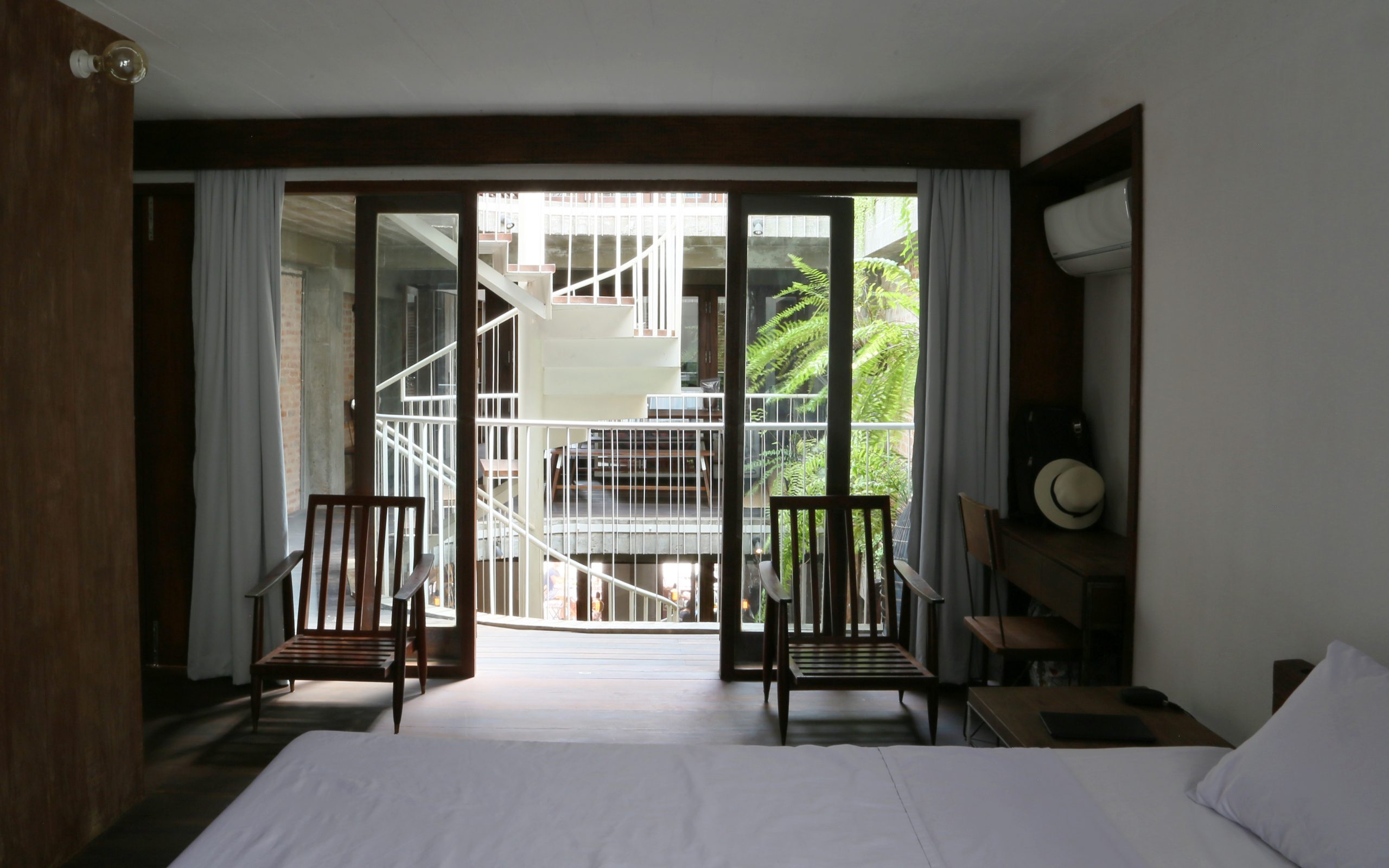
SECOND FLOOR PLAN (above) and FIRST FLOOR PLAN (below) / Courtesy of Bloom ArchitectureROOFTOP PLAN / Courtesy of Bloom ArchitectureThe bright and airy interior is connected to the courtyard accessible via glass doors that open to admit natural daylight and fresh air.
Together they chronicled events on a long journey through time. Where suitable, old timber recycled from the old house found a new purpose as part of furniture, while all the windows were built fresh, combining the old with the new.
Interior design showcases a textured wall in its existing state adorned with custom framed photo prints.
Despite the appearance of a colonial style commercial building, things have changed inside in a way that’s right for modern lifestyle needs. The downstairs dining room is light and airy with plenty of seating available. Wooden tables and chairs come in various shapes and sizes, while exposed wood beam ceilings make the room feel more spacious. Underneath it all, uncovered brick leave textures on walls, whereas the floor is of porcelain tiles showcasing the patterns unique to colonial times.
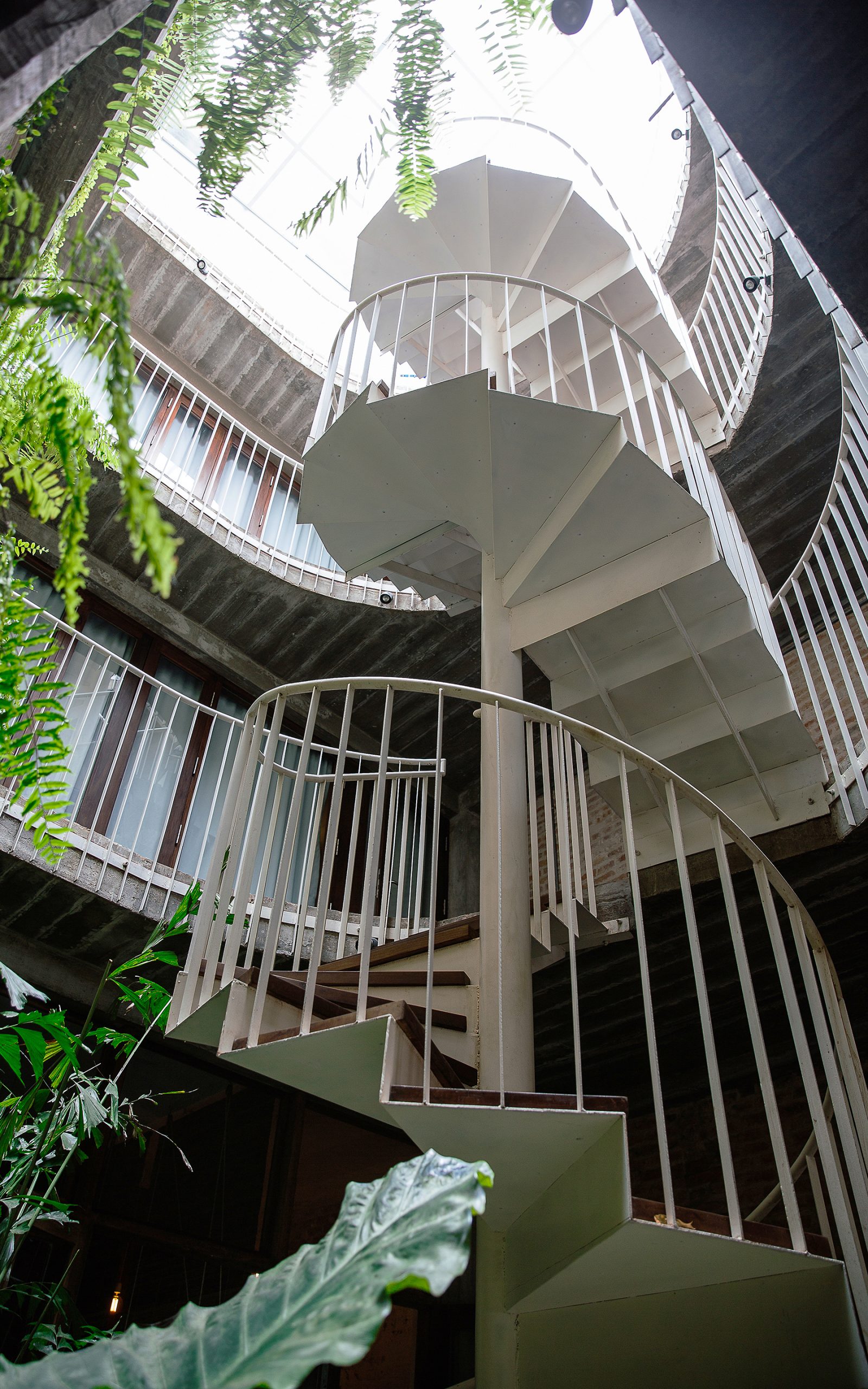
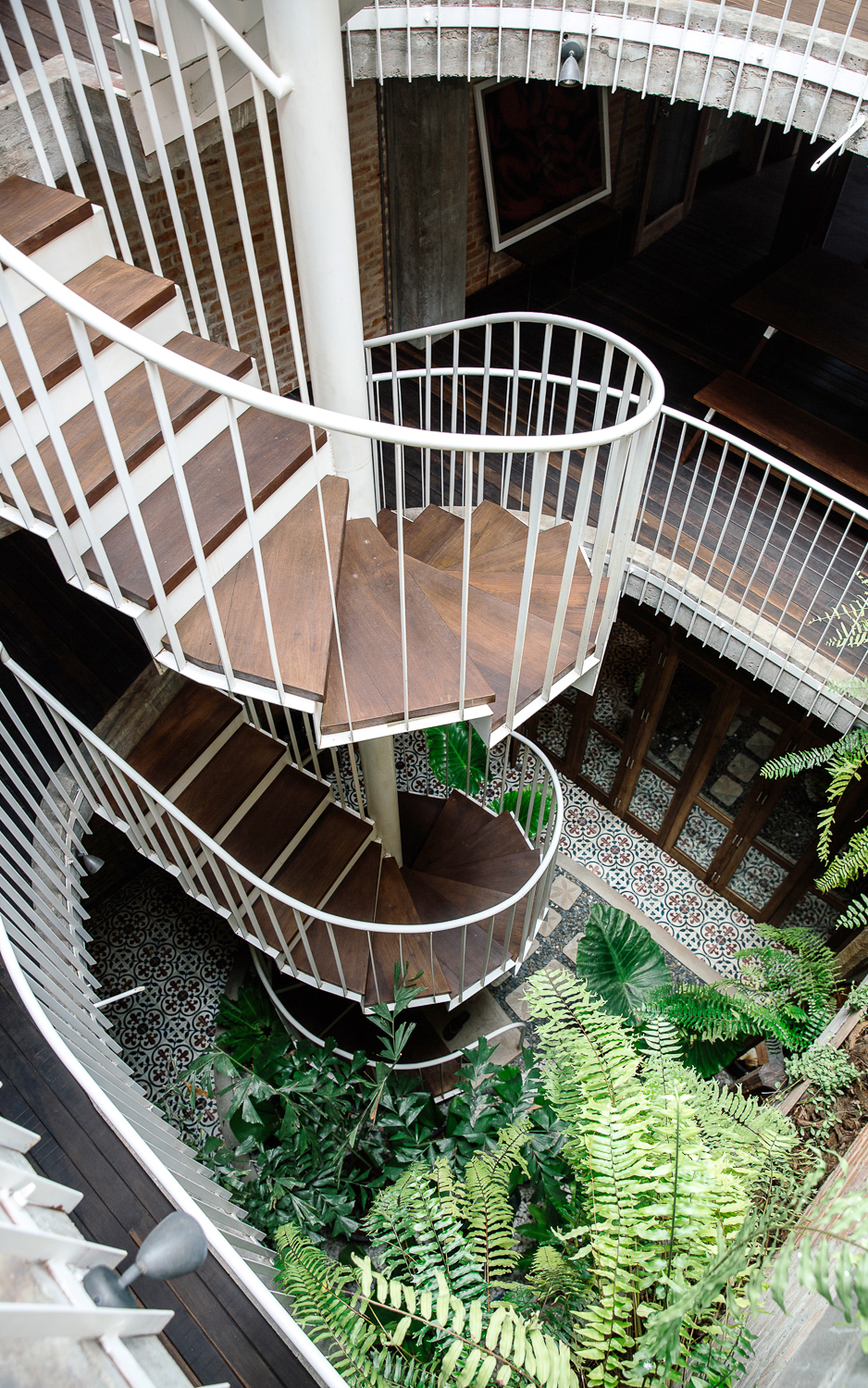
A spiral staircase gives access to the family home upstairs and continues on to the rooftop deck with skyline views of Kampot.Viewed from a high angle, the center courtyard with a spiral staircase painted white brings sunlight and fresh outdoor air into the home.
Taking everything into account, the interior is impressive and well-lit thanks to a center courtyard with a steel spiral staircase giving access to the family home upstairs. As the most important feature of the house, it brings in natural daylight and increases ventilation, keeping the house cool in summer.
The upstairs family living room is spacious thanks to double height ceilings. Furniture is made of reclaimed wood left over from the renovation project.The bedroom is well-ventilated as a result of large glass doors that open to connect with the center courtyard.Arched openings on the building façade and elaborate ornamentation are jealously preserved for old times’ sake.
Plus, it creates a calm living space to relax and recharge after a busy day at work. Simply step out on the balcony to get some fresh air. From here, the spiral staircase continues on to the rooftop deck affording a wonderful panorama of Kampot. In a few words, it’s a renovation done right, one that breathes new life into a tired old home in an interesting way.
Bangkok, the capital of Thailand, is a densely populated, diverse metropolis renowned for being active and bustling with energy happening around the clock. Residential areas within the city itself are experiencing challenges including heavy traffic, the heat and noise, and increased air pollution to name a few. Many people are caught off guard by new construction projects and high-rise buildings mushrooming in their neighborhood.
The “Earth and Sky House” is a thoughtfully designed, beautifully built family home offering an escape from the hustle and bustle of the city. It’s energy efficient and has access to outdoor space and recreational facilities to enhance comfort and convenience. Thanks to its relaxed atmosphere, the house becomes a favorite hangout for friends and family. Plus, there is a dedicated space within the property for the owner to operate a business from home.
It all started with the owner wanting a home with a view of the landscape and sky. At the same time, he wanted a design that prioritized privacy without closing off his space. The architects responded with a three-story house plan, a single detached home built on 1 Rai of land. It offers 3,000 square meters of usable space. Aptly named “Earth and Sky House”, it’s a work of outstanding artistry by greenbox Design in collaboration with Poonsook Architects. Interior design is done by EKAR Architects. Together they succeeded in overcoming site constraints, framing them as opportunities for innovative design solutions. The result is a family home that is physically and psychologically relaxing, achieved by combining a natural ventilation system and advances in air conditioning technologies from DAIKIN, the world’s largest air conditioner manufacturer.
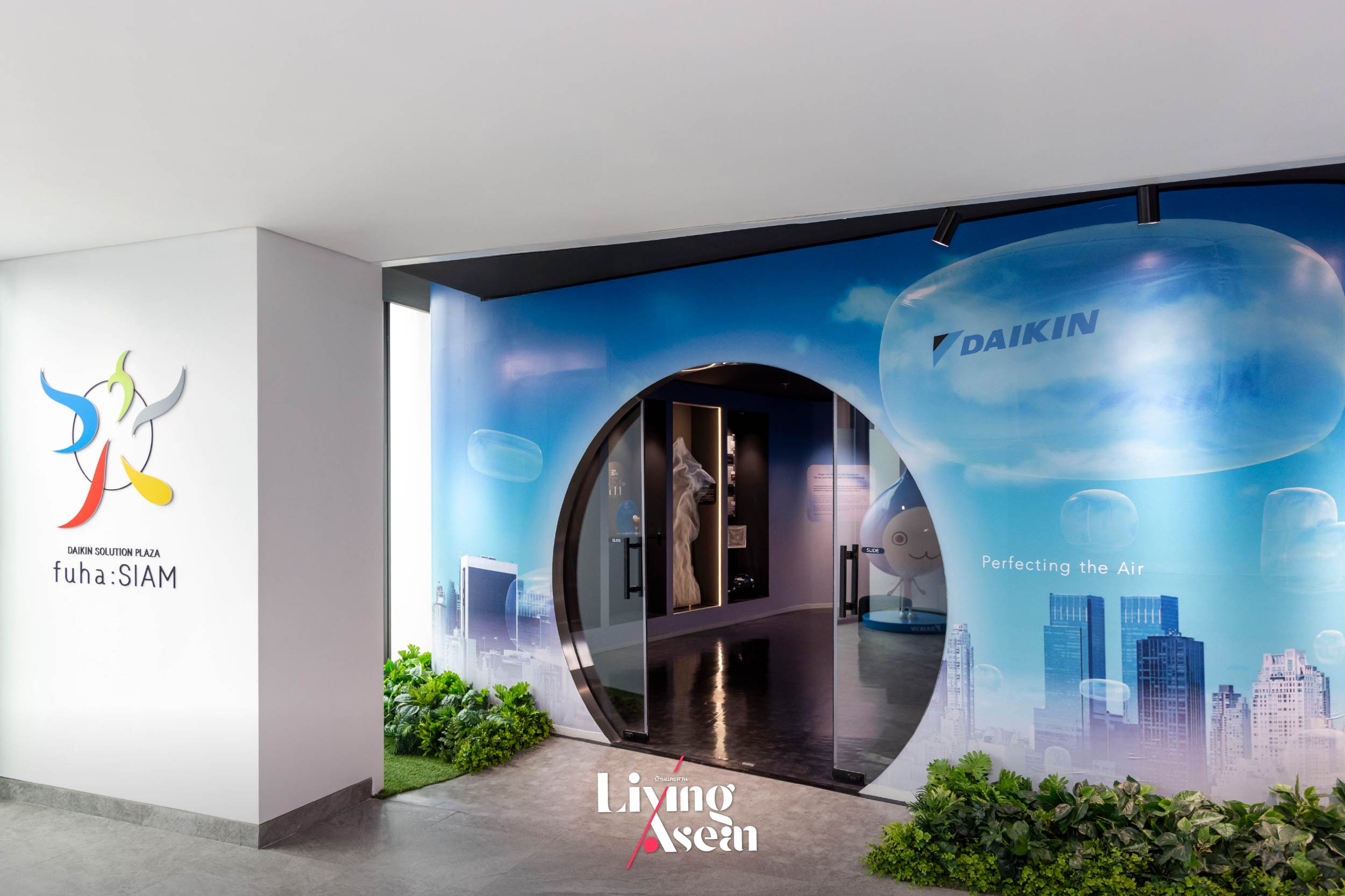
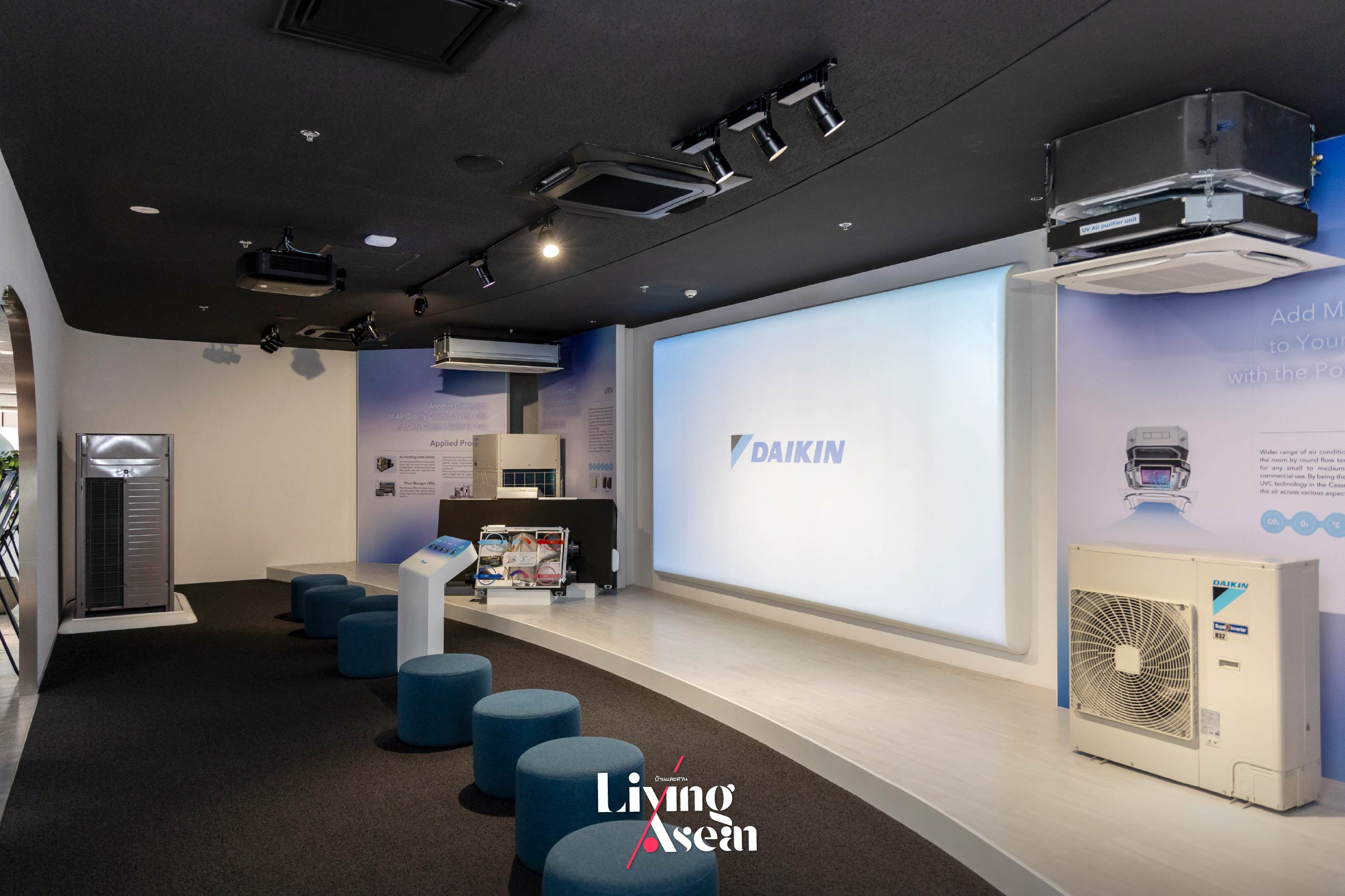
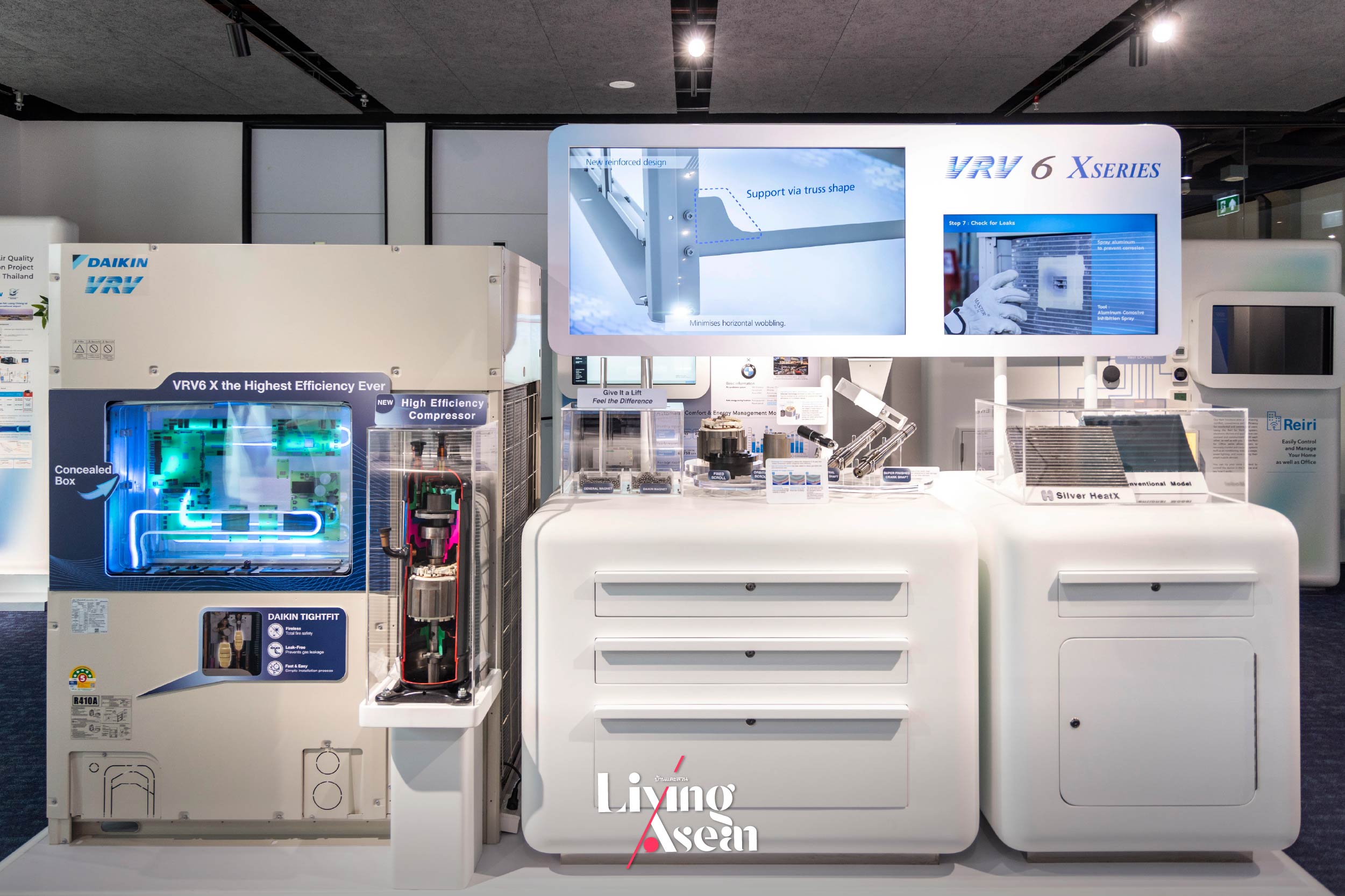
Come join us as we explore cutting-edge innovations shaping our world at DAIKIN Solution Plaza fuha: Siam. This experience allows a profound understanding of air, discovering every detail with true expertise and moving toward perfecting the air beyond what you’ve ever known.The show is part of the ASEAN HOME TOUR series, a weekly program on Baan Lae Suan TV.
Earth and Sky Home
The house with three levels of living space and an office is built on 1 Rai of land, offering a 3,000-square-meter total usable area. Nestled in a busy neighborhood of Bangkok, it offers a sense of privacy, a peaceful place to live, work and meet up with friends. The name “Earth and Sky House” conveys a great deal about the homeowner’s belief that human lives are enriched by relationships with the environment. It’s a concept he learned from experience working as a photographer. From his perspective, “a home doesn’t have to look like a home in the traditional sense”. Instead, it can be an expression of personal taste and value and, in this particular instance, a private world that has something for everyone in his family.
The above concept provides a seed from which new ideas grow, giving the architects means to translate creative thoughts into tangible results. In this case, the construction site has limitations that affect planning and execution. To build on a trapezoidal piece of land, first they assess the relationships between the physical location and its immediate environment. Only then can they start work on spatial planning, distributing people and activities to see how well it serves daily needs. Take for example the private office and a cozy space where family members can relax and enjoy quiet time together are secluded in a quiet, isolated spot away from the high-traffic zone that include guest reception areas. The overall effect is impressive with an emphasis on clearly defined open spaces that are visually pleasing, well ventilated and well lit by natural daylight.
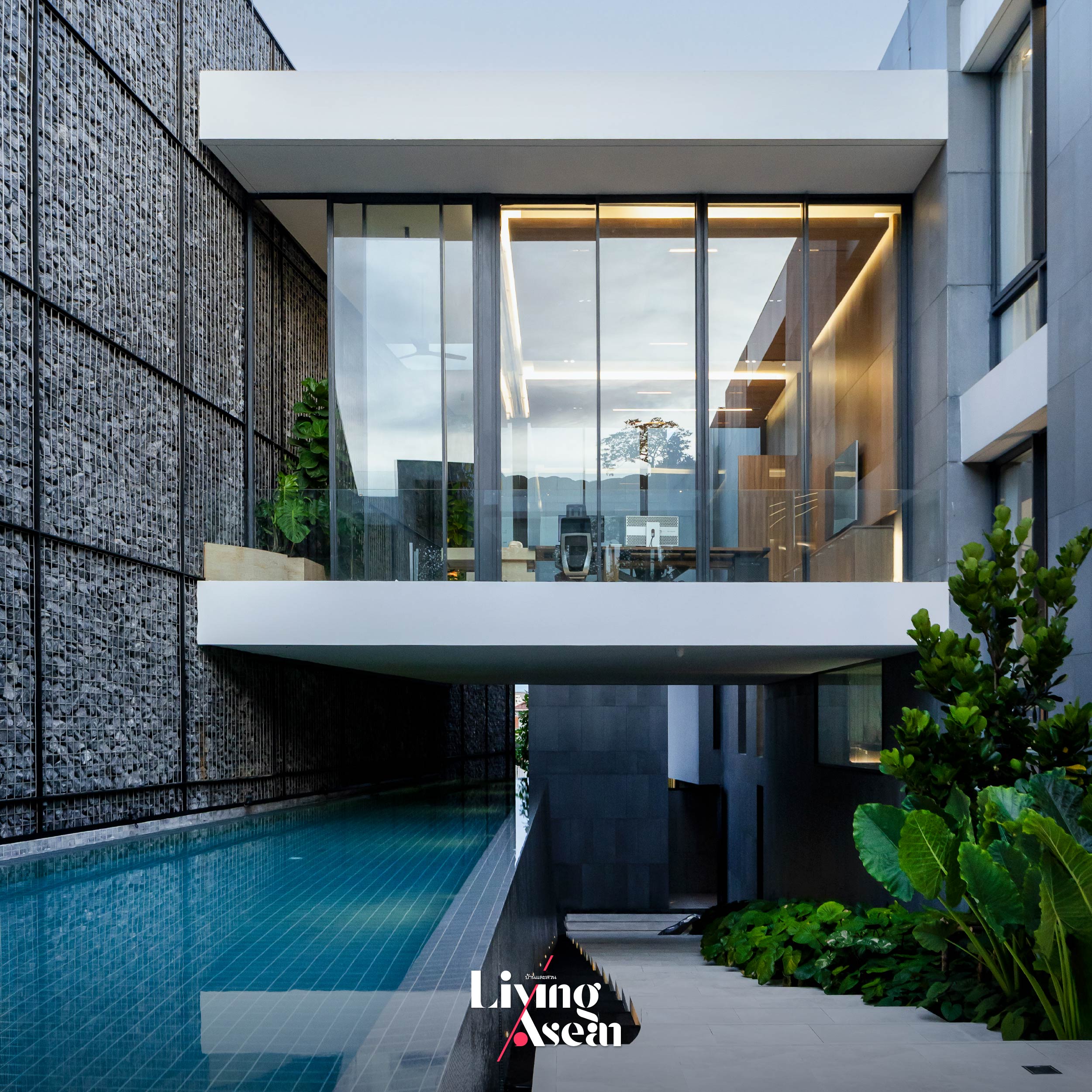
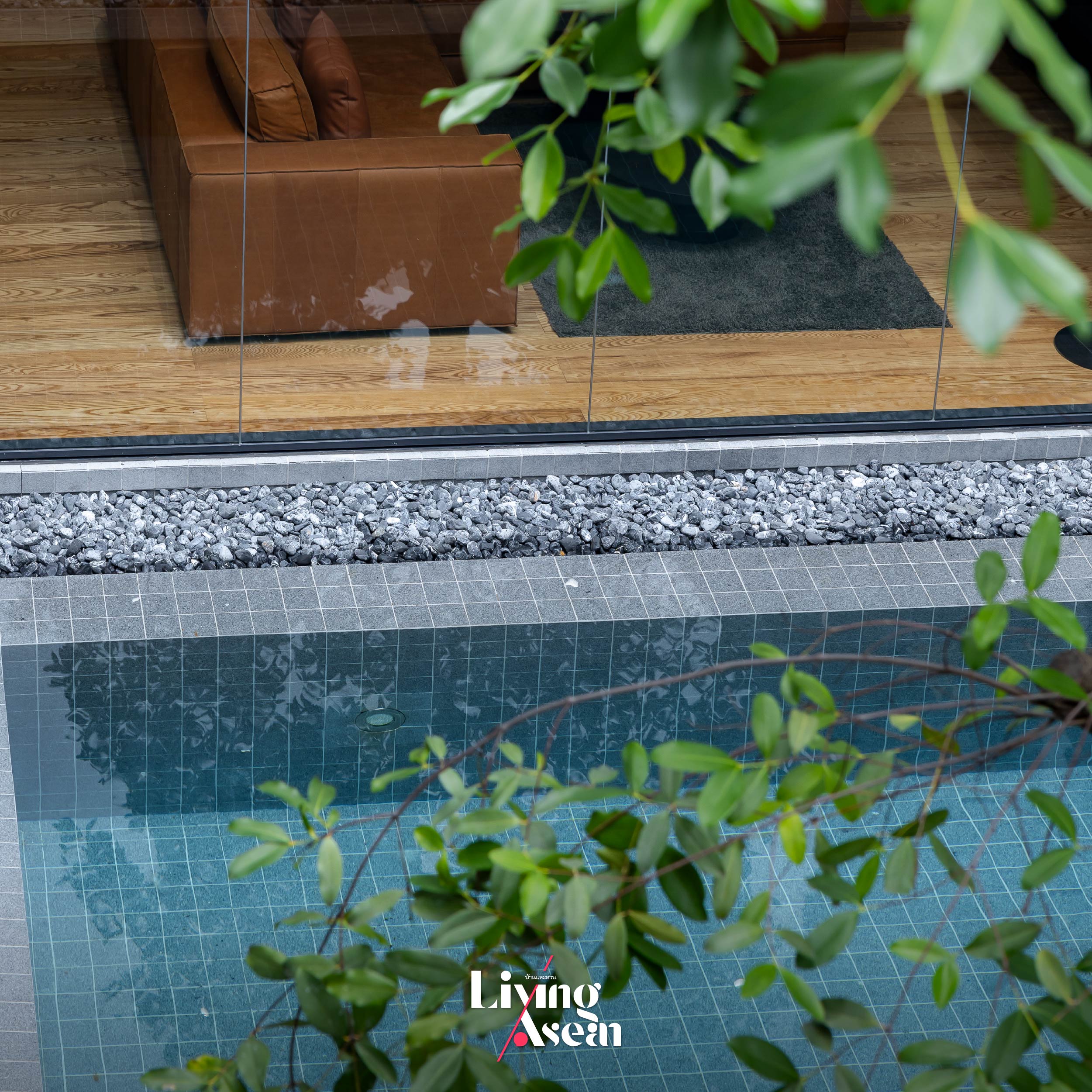
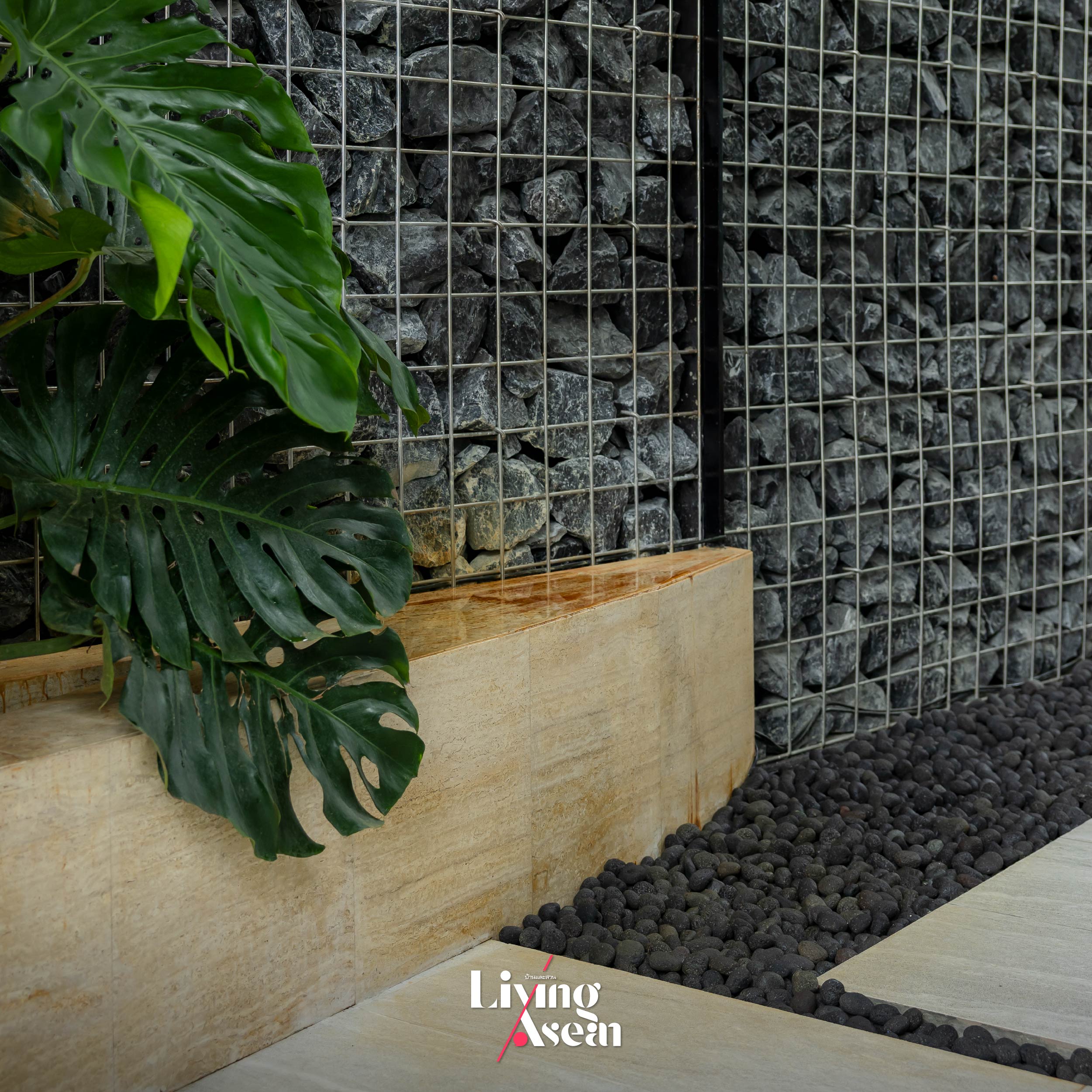
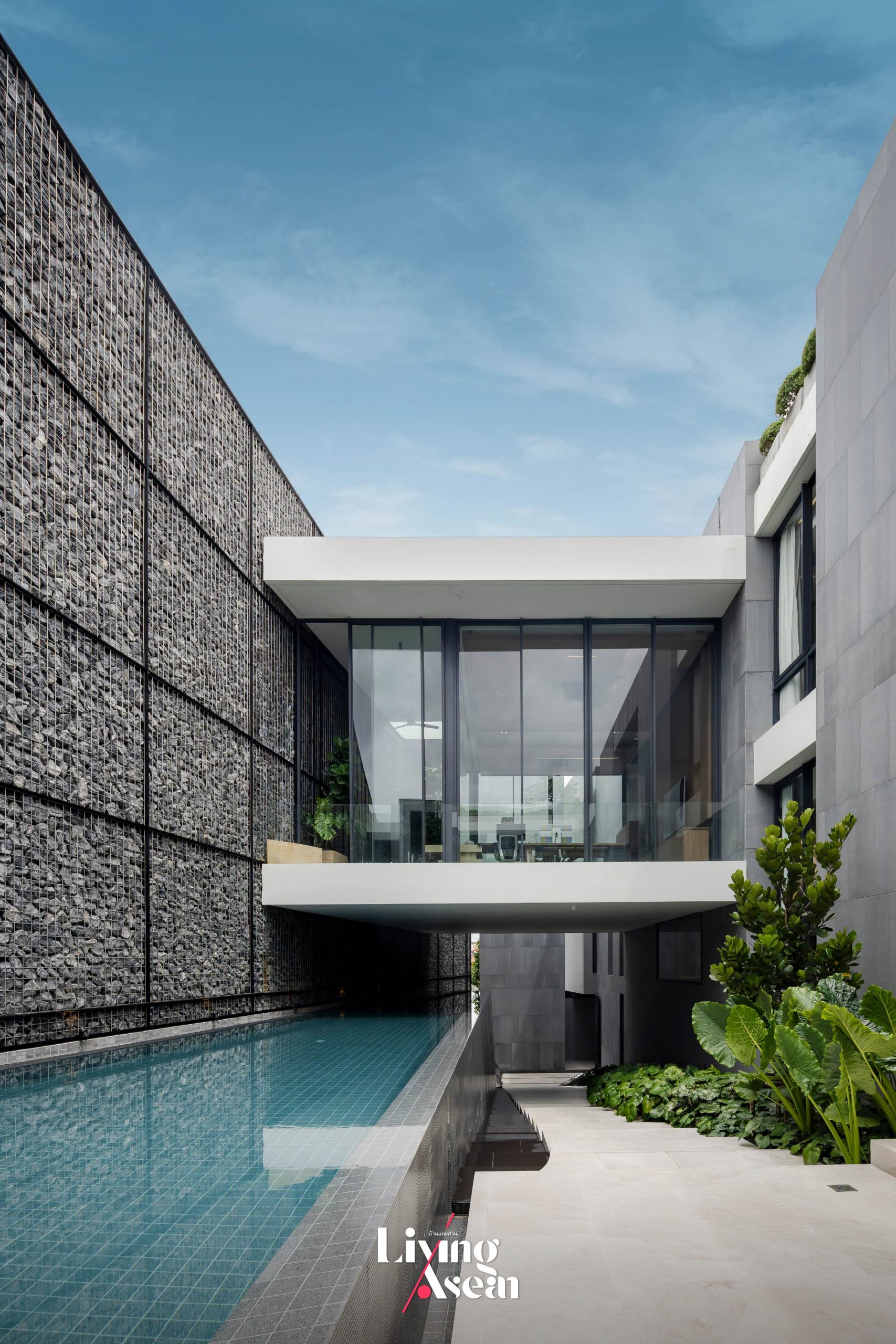
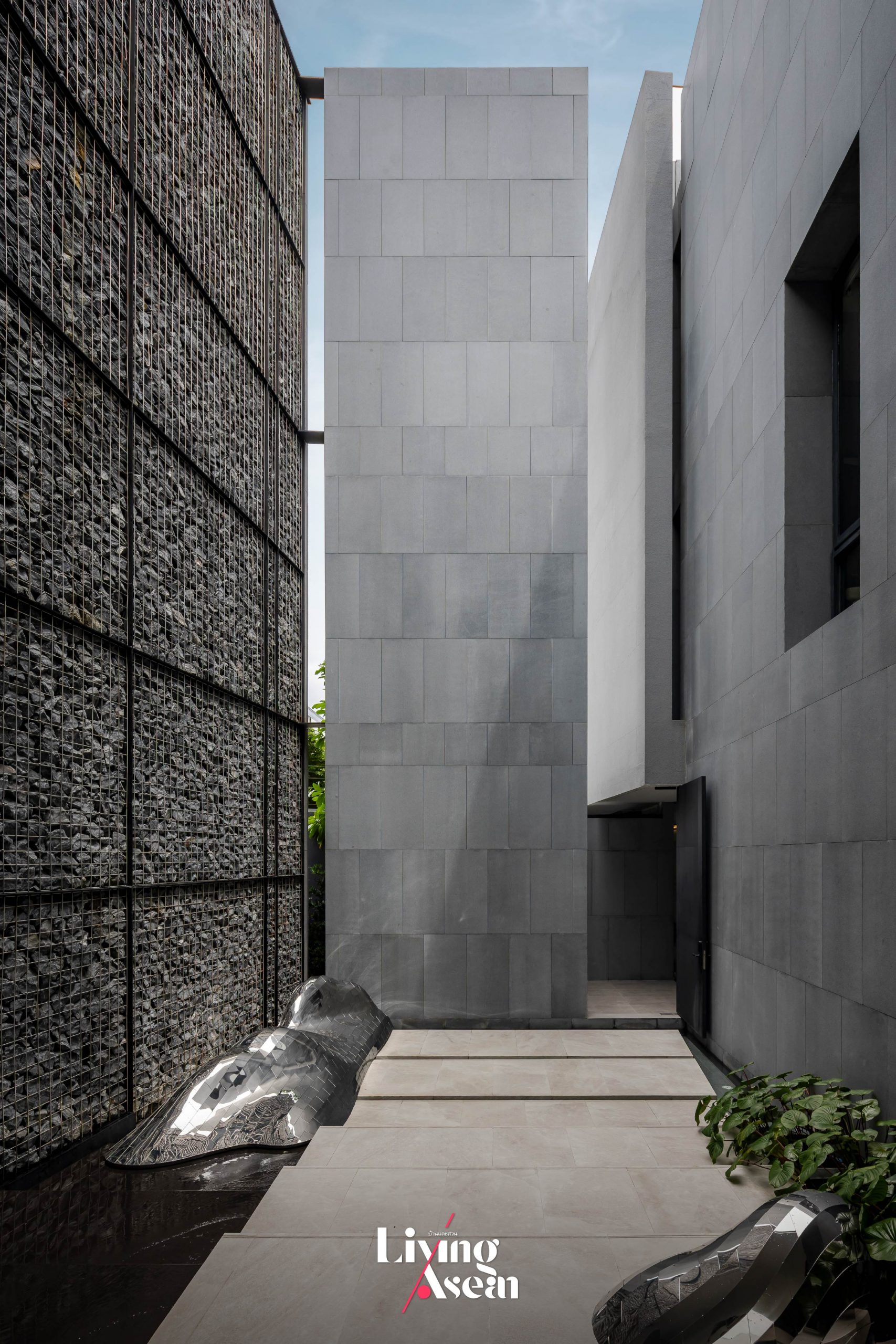
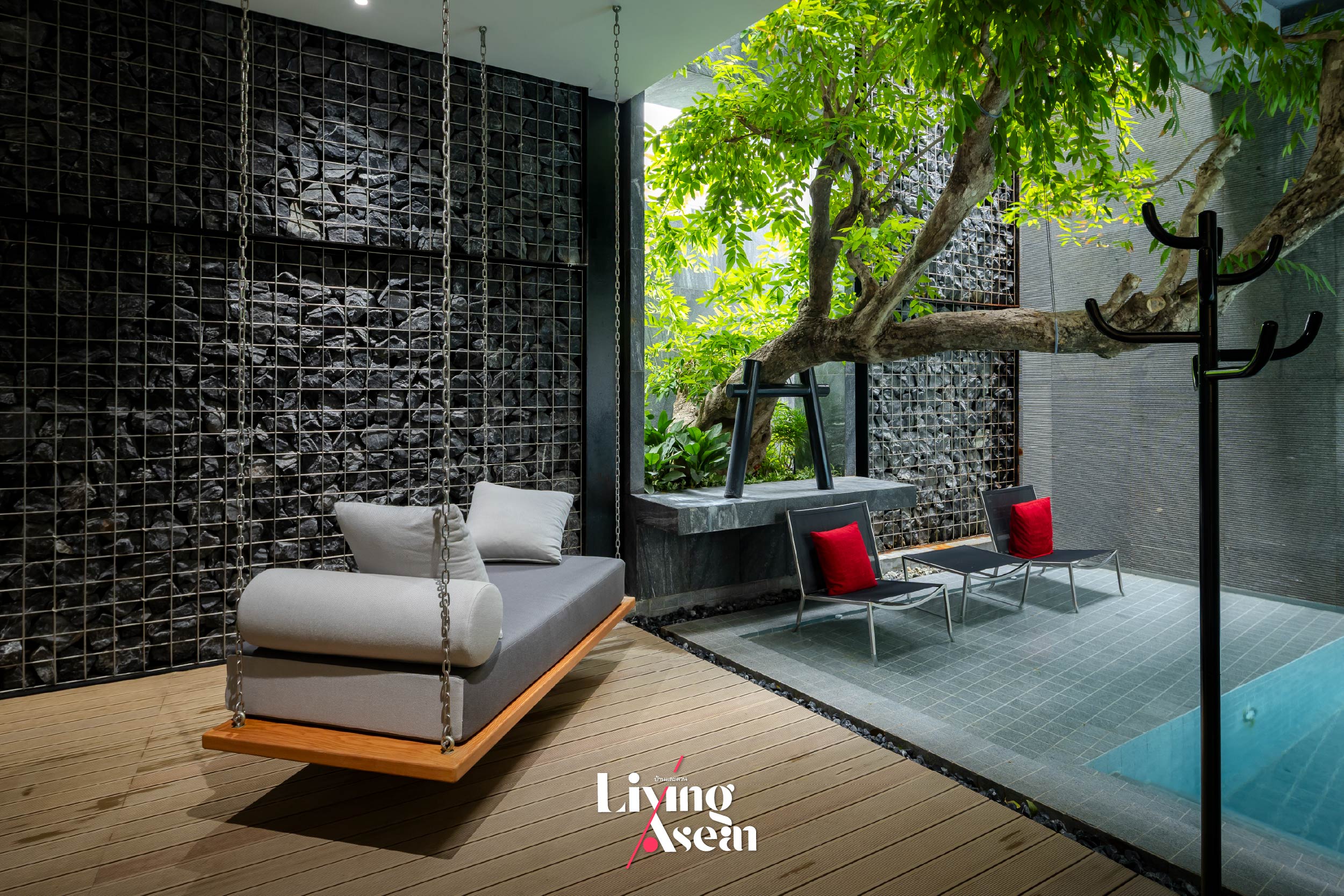
The earth is portrayed through various elements, such as the choice of building materials, colors and textures that connect with nature. Seen here, volcanic rocks adorn a stone wall while the bathroom floor is covered in pebbles juxtaposed with smooth pavers in natural sandstone. Vertically stacked lava rock creates an atmosphere of harmony with the physical world. It makes unique outdoor decorations and doubles as a privacy screen for the home.
The sky is represented by open concept design that gives the home a more spacious feel and a sense of tranquility. The center courtyard under blue skies brings more natural light, fresh air and views inside, meantime, providing a dynamic connection to the outdoors.
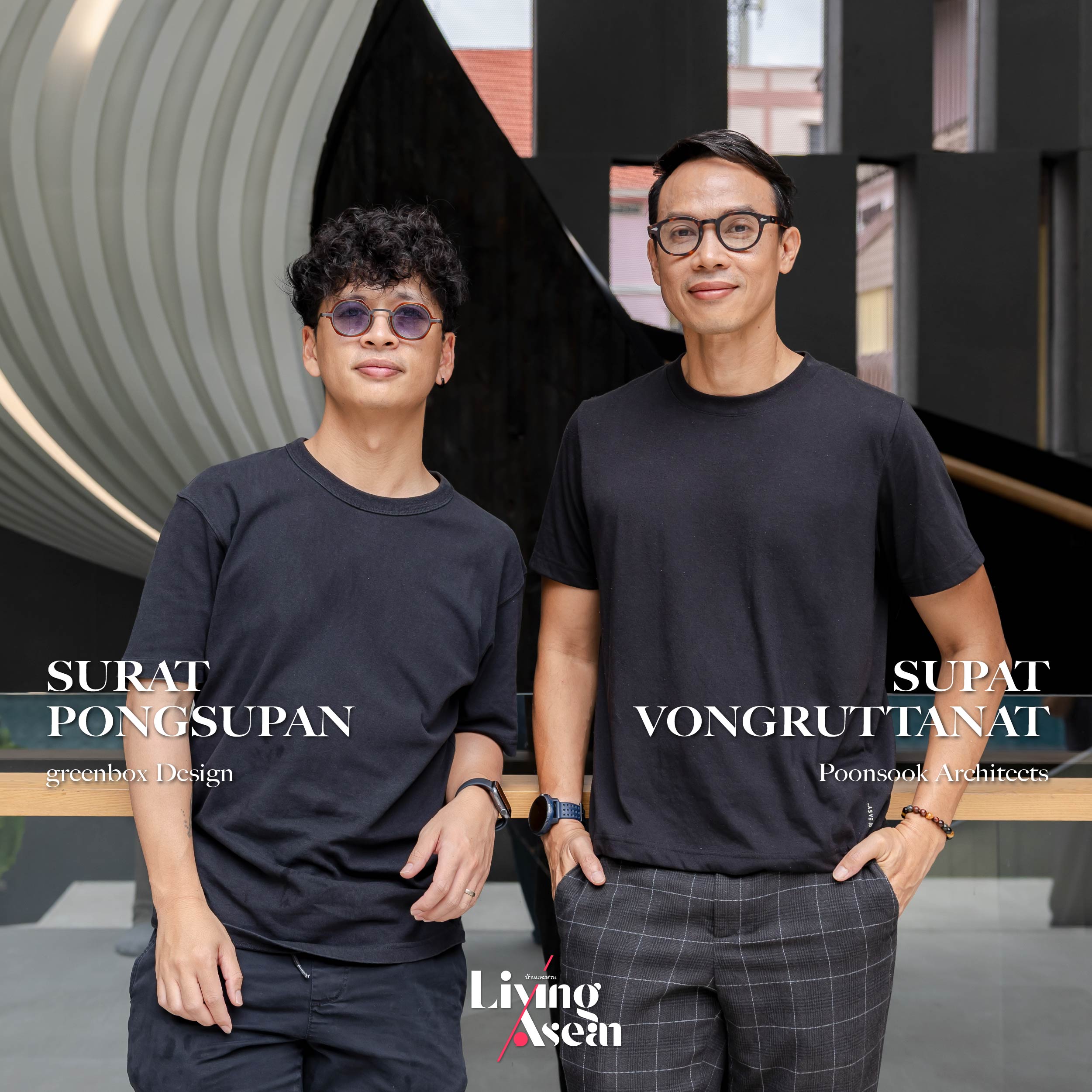
The design duo who created the Earth and Sky House, from left, architects Surat Pongsupan of greenbox Design and Supat Vongruttana of Poonsook Architects. Sharing the vision that guided this project, they said:
Surat Pongsupan of greenbox Design (left) and Supat Vongruttana of Poonsook Architects, the two architects who make the homeowner’s wish come true.
“The idea of the earth is portrayed through stone surfaces and the use of vertically stacked lava rocks and travertine, which is a type of limestone, in various parts of the building. They include stone wall cladding that protects home privacy and fosters a sense of connections with nature.”
“The concept of the sky is integrated into the design through openings in walls, connecting interior and exterior spaces and creating visual flow. Like so, the wild blue yonder can be seen from every living space in the house. Take for example the living room enclosed by an eight-meter high glass wall and a spiral staircase that gives the feeling of walking to the sky.”
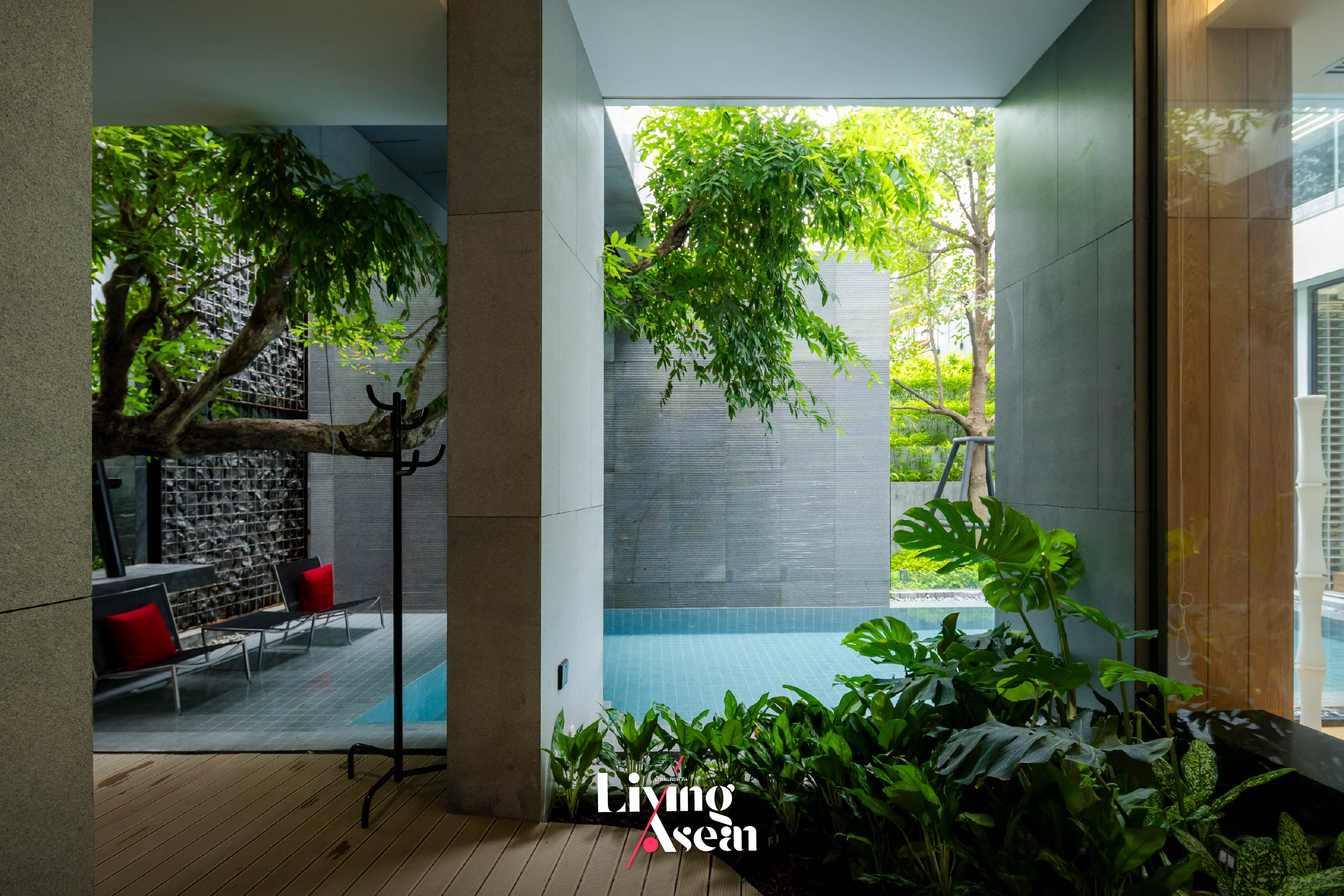
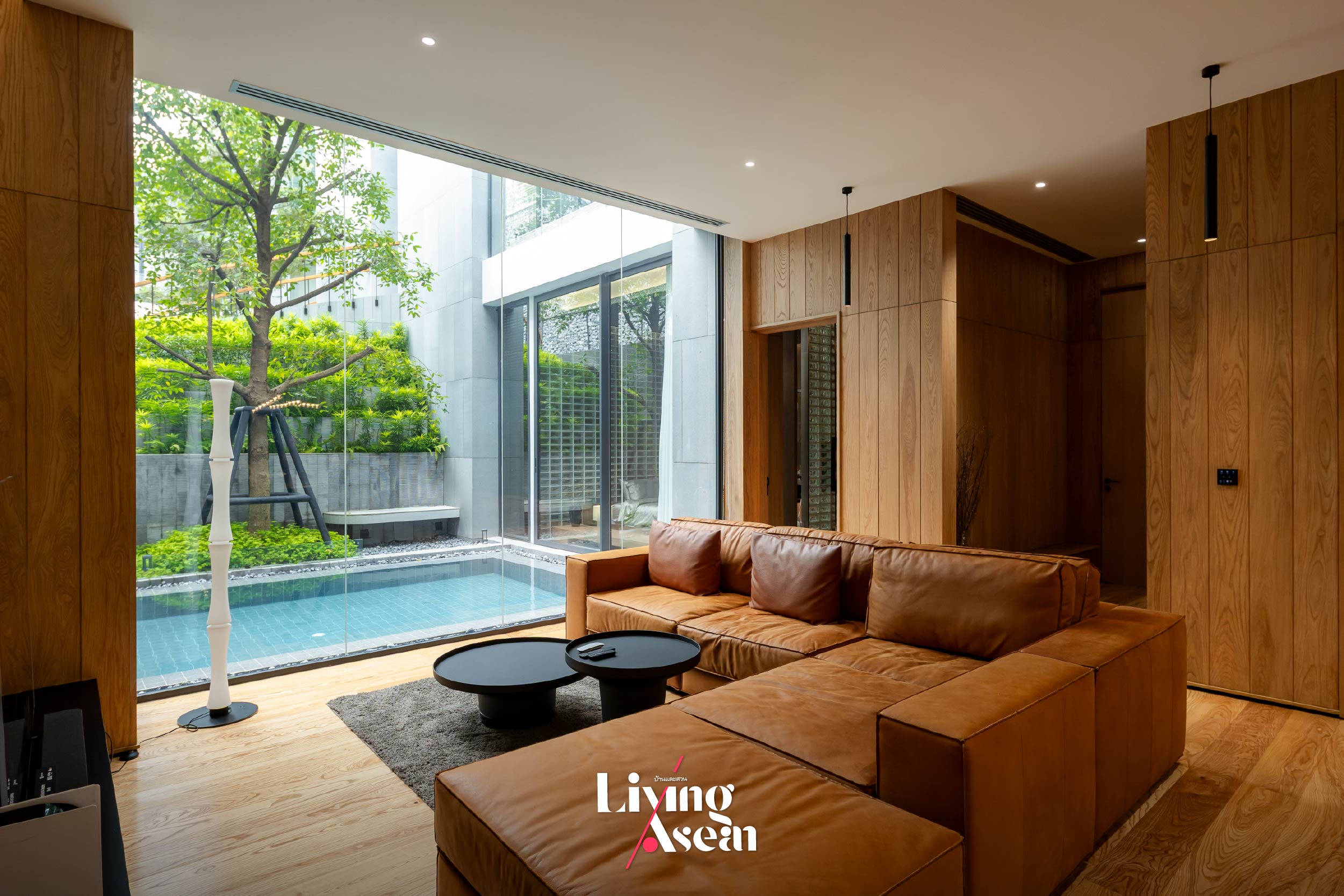
“The most outstanding feature is the center courtyard adorned with a well-tended small garden nicknamed the Pocket Park. Healthy foliage seems to come up at every turn, evoking a sense of a vibrant environment. There’s a lap pool nearby that’s built flush with the house wall. Windows fitted with glass in the rooftop allows light and fresh air in, turning the courtyard into a private outdoor space that opens to the sky.”
Making a good first impression with private living space design
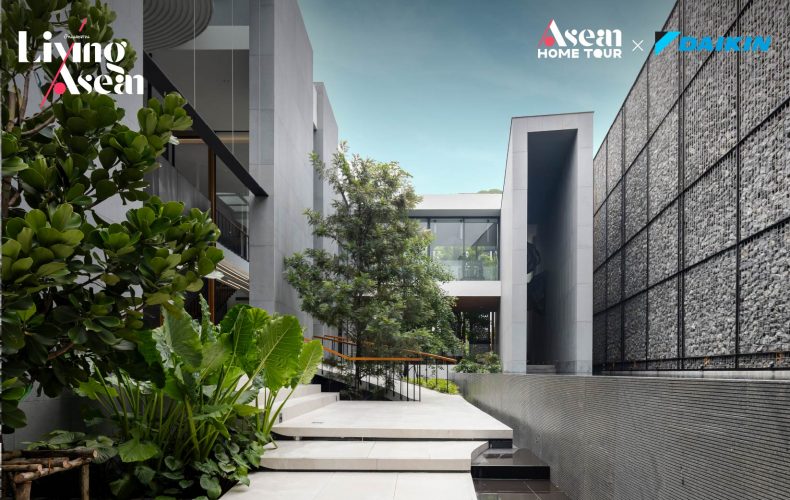
Because the house is in a busy area where new high-rise buildings are expected to increase in the near future, the architects responded with an effective layout that prioritizes privacy. From a distance, the house facade built of stacked stone enhances privacy and curb appeal while reducing noise and protecting from the elements. Step inside, and you come to an impressive entrance hall providing access to various parts of the home.
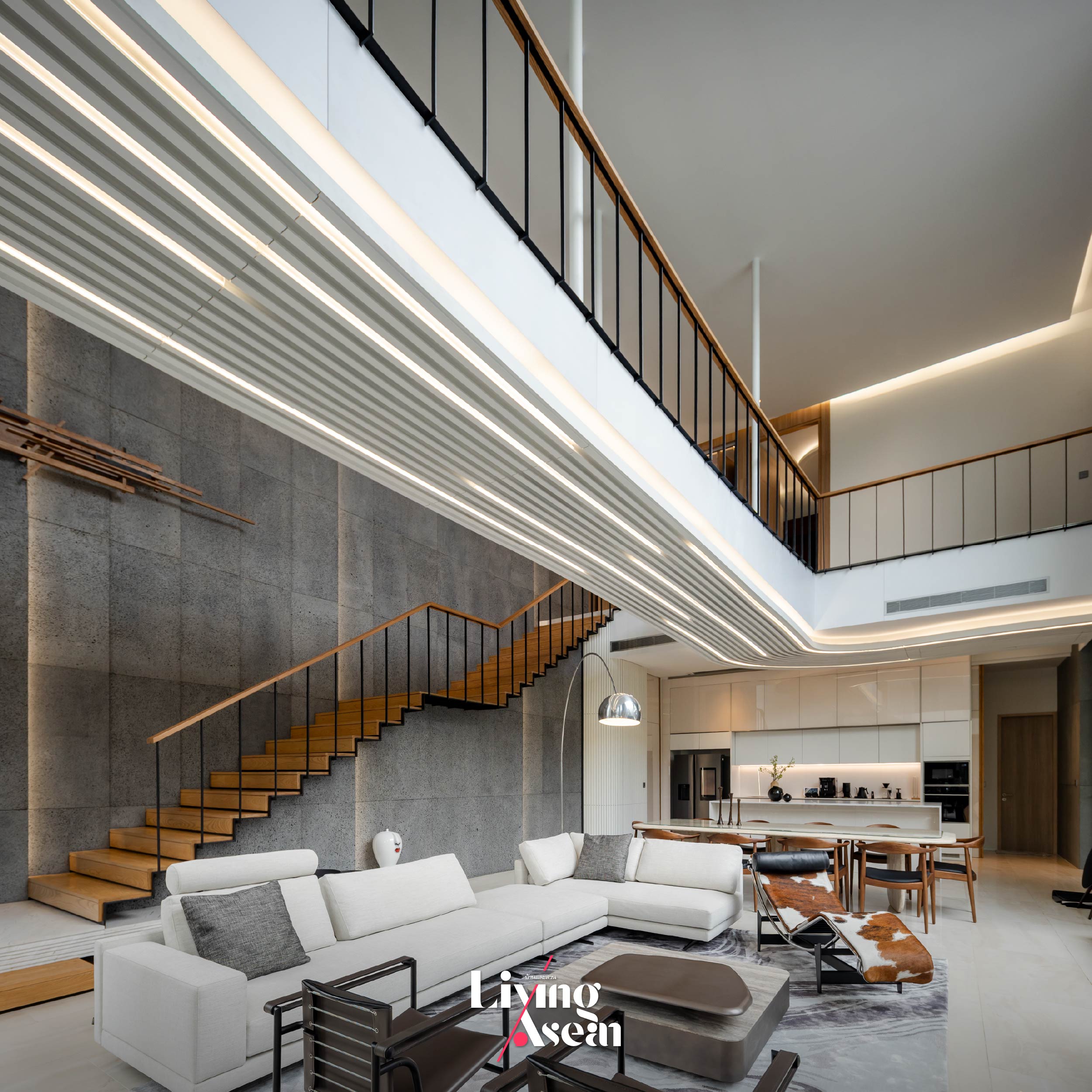
The three-story house is divided into two wings to create distinct zones, typically separating private living spaces and areas for hosting guests. By design, the reception hall is brilliant with a modern touch to it, offering a relaxed, social environment. The net result is remarkable, thanks to natural stone wall cladding on one side of the room and the eight-meter high glass wall on the other. At the center of the room, light colored furniture paired with double-height ceilings creates a sense of spaciousness and opens the room to garden views, fresh air and sunshine.
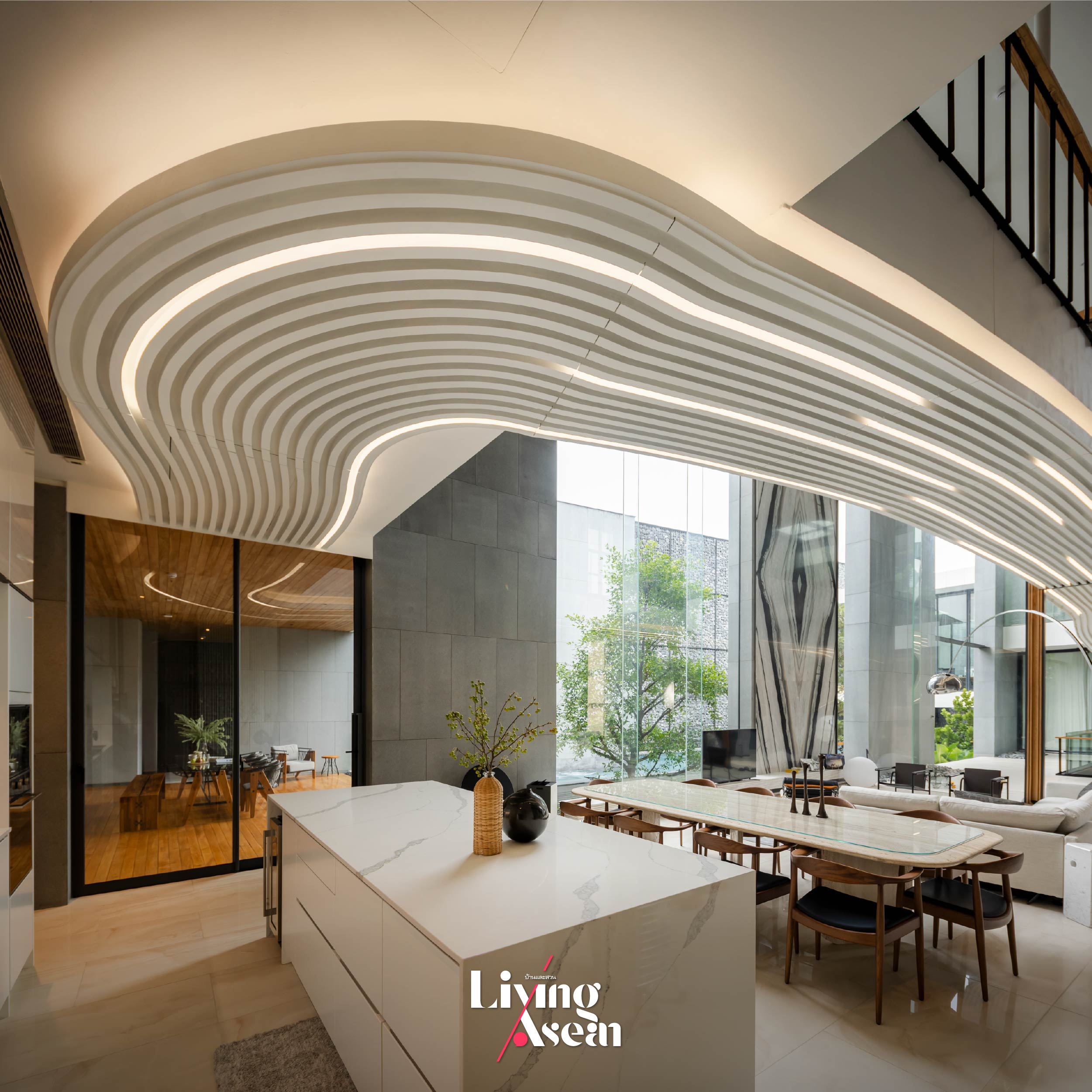
A double-height ceiling paired with bookmatched marble wall coverings make the reception room feel bright and airy. Not far away, a pedestrian bridge flies overhead connecting two wings on the second floor. Graphic design using light effects on the underside of the footbridge, adding a curvy touch to interior decor. Furniture is neatly arranged to achieve a sense of balance, harmony and order. There is a long rectangular table that can seat ten people, flanked by a large sofa set on one side and a pantry table with a marble top on the other. Open concept design eliminates interior walls to create one large, unified space connecting different areas and improving natural light and air flow. In the fewest possible words, the room is party ready.
Taken as a whole, it’s a specially large house with many outstanding features for comfortable living. It’s evident that the team of architects has succeeded in creating a home that’s functional and aesthetically pleasing both inside and outside, yet there’s no compromise on privacy. A design with an enormous richness of light and airy spaces is a good case in point. As architects Surat and Supat put it, integrating nature into house design is just the right move that brings many benefits. In their words:
“The most fundamental idea that we further developed has led to a perfect fusion of natural materials and architecture, plus it’s about maximizing natural daylight indoors, letting it bounce back from surfaces, ultimately creating a tropical feel in the home.”
“The parts of the house dedicated to living are protected by walls made of vertically stacked rocks that double as privacy screens preventing outsiders from seeing in. Meanwhile, the west-facing wall is a different story. It’s intentionally constructed with gaps to allow air and moisture to pass through, a clever hack to keep the home cool and comfortable year-round. At sunset, rays of light shine through gaps in the wall, creating visual effects that enhance the home’s aesthetics.”
Interior decorating focuses on original and unique styles
Apart from the areas for receiving guests, the house also has ample relaxing spaces set aside for the family, including a sitting room that balances aesthetic appeal with comfortable furniture and modern amenities enhancing quality of life. As might be expected, the atmosphere is warm and welcoming thanks to a thoughtful layout that evokes a sense of ease and tranquility.
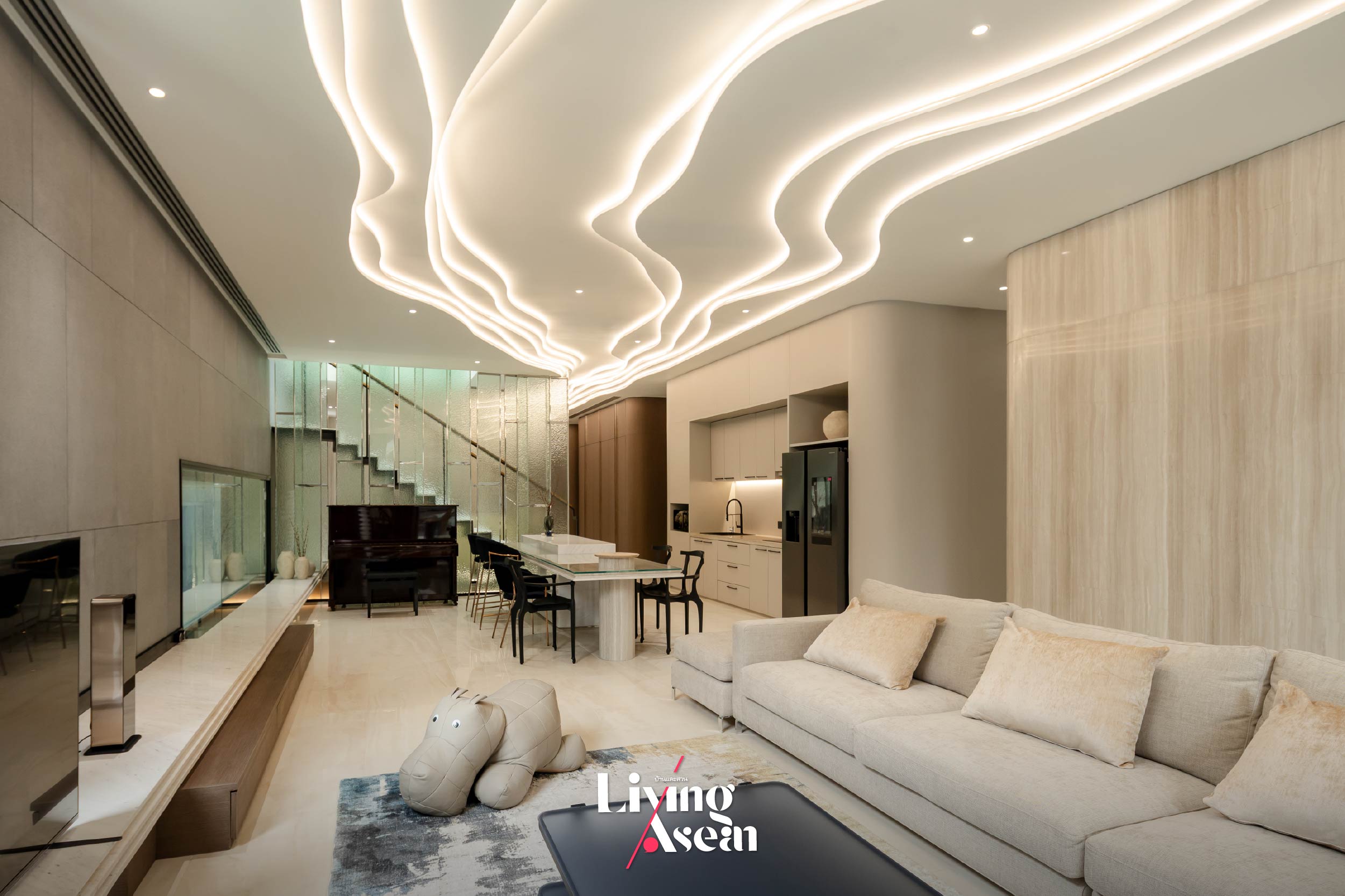
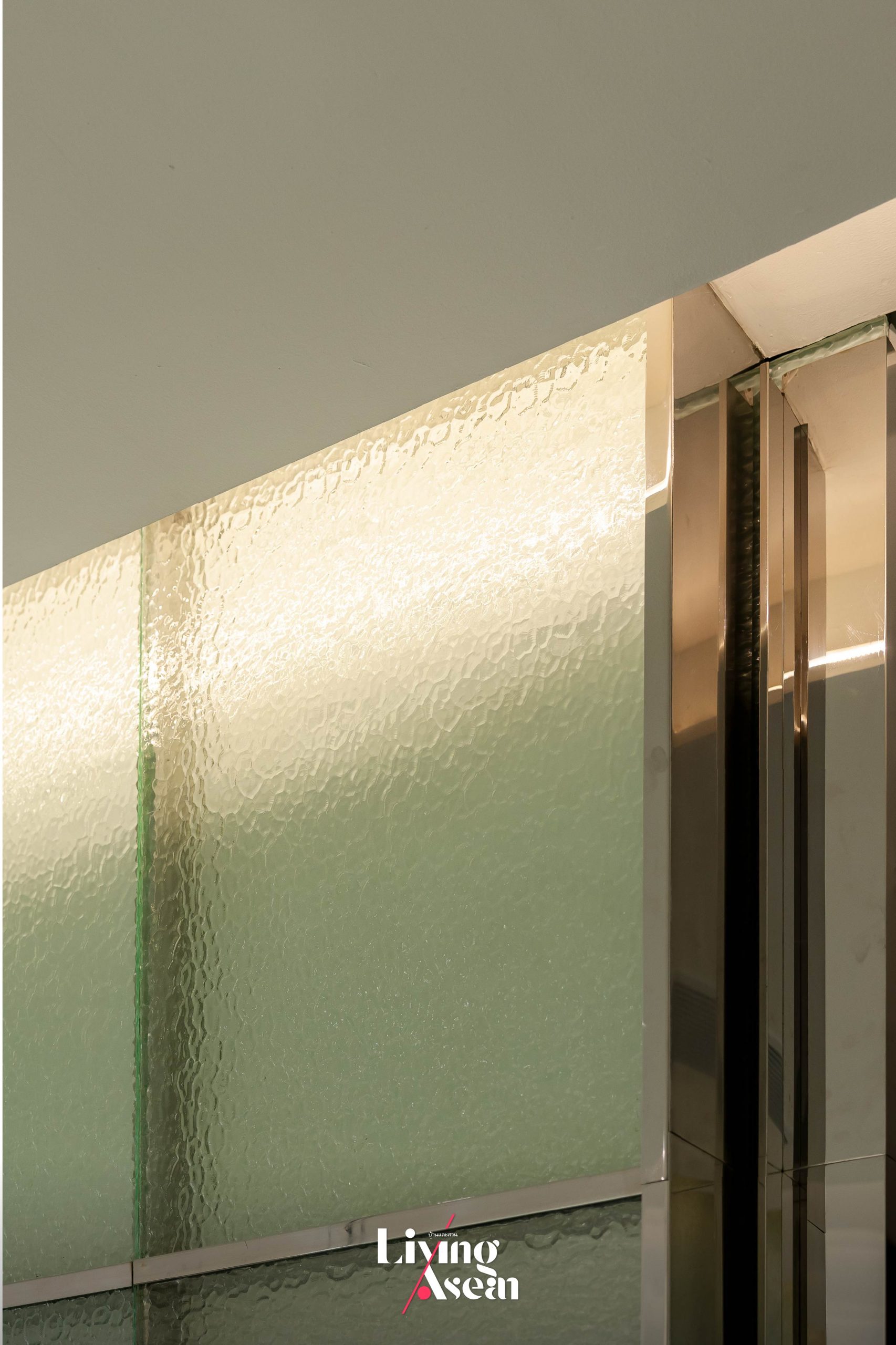
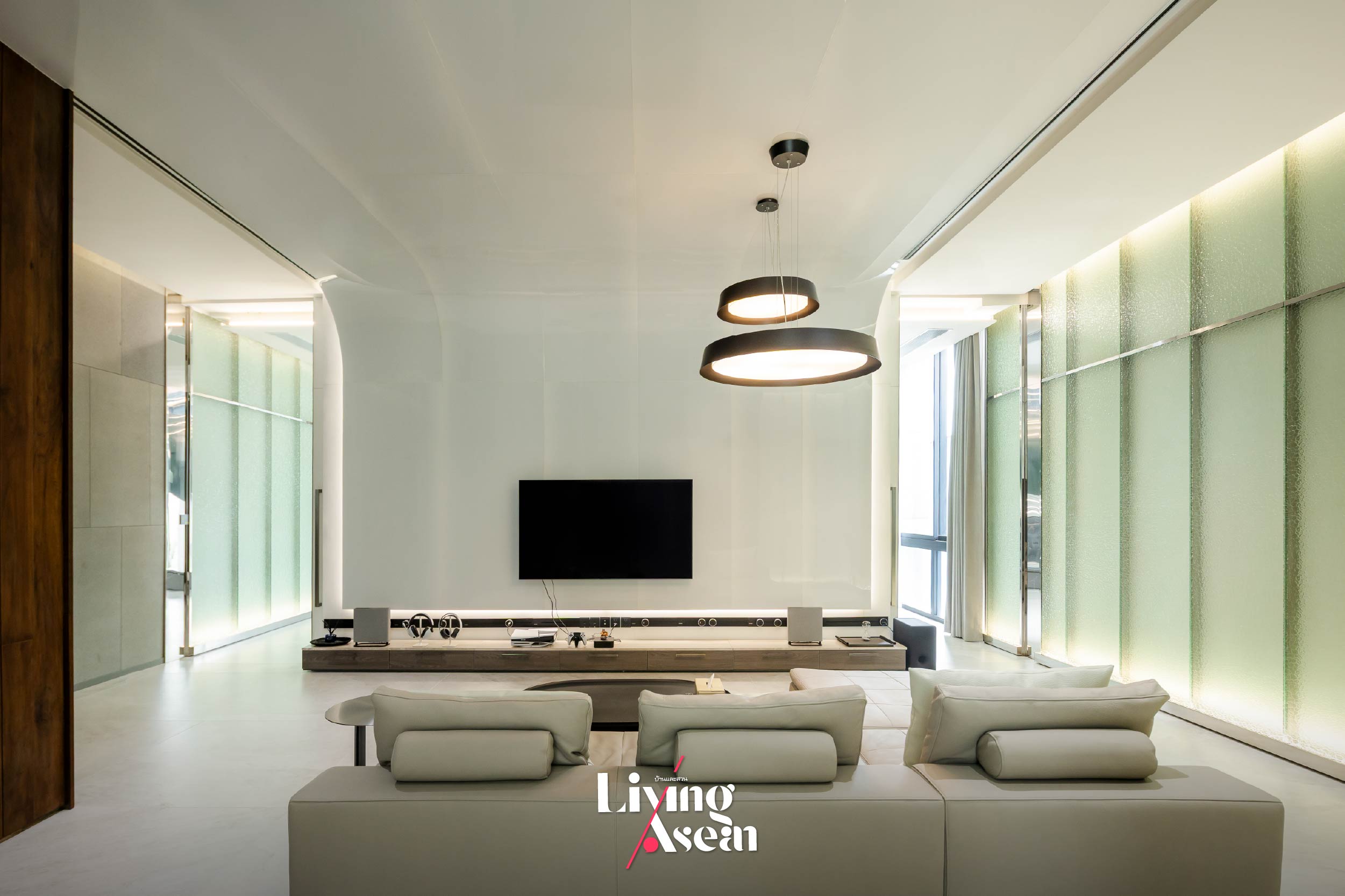
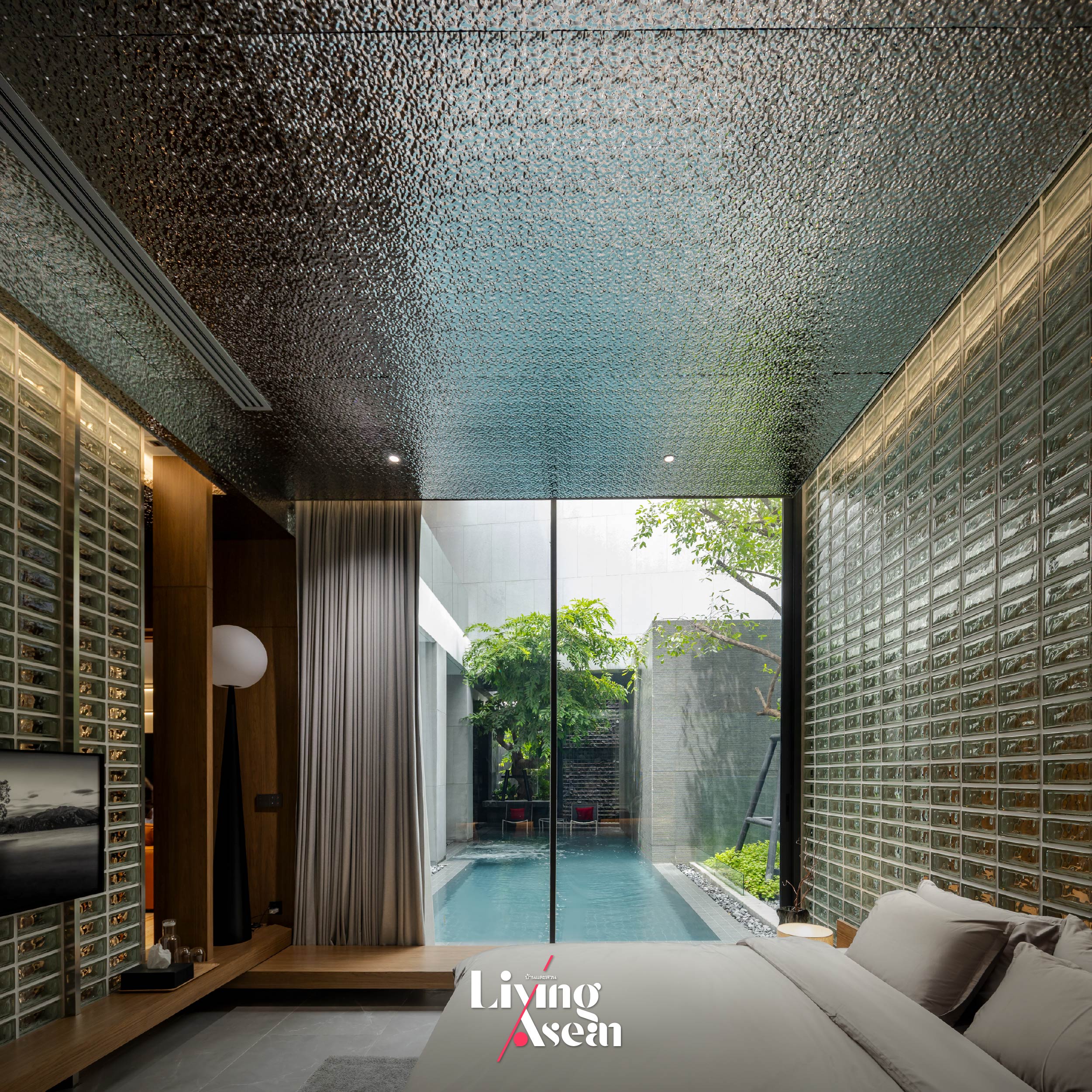
To be more specific, the sitting room is elegantly furnished and rich with warm tones creating a positive home atmosphere. It’s enclosed by the house walls glazed with wave textured glass that gleams when touched by light. Look up, and you find the ceiling with a wavy graphic pattern that evokes pleasant visual movement from one end of the room to the other. Needless to say, the extra long deep sofa is soft and cozy, flanked by a dining table set and a dream kitchen pantry that comes complete with modern conveniences.
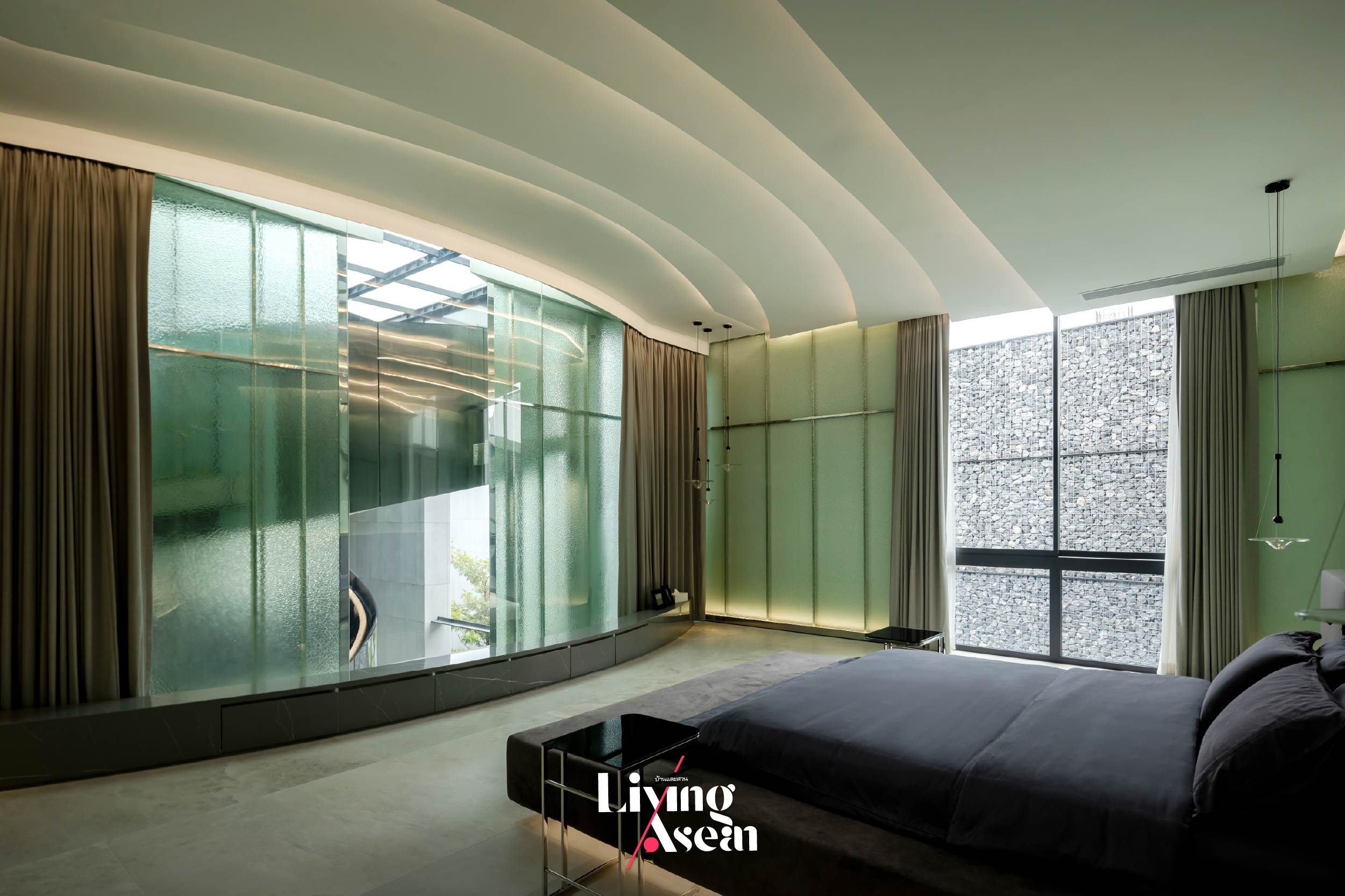
The principal bedroom embraces a minimalist design approach, emphasizing the beauty of simplicity and uncluttered space with only a few pieces of furniture. A calming atmosphere is created by removing distractions in the bedroom. The only focal point is a platform bed with its low profile that gives the room a sleek and modern look. On one side of the room, window coverings improve comfort by regulating temperature, while a pair of bedside table lamps provides the ideal soft lighting. On the ceiling, curved design incorporating arched elements add a gentle touch to bedroom vibes.
Wave textured translucent glass creates a relaxing atmosphere, evoking the feeling of walking underwater. Other than that, the room is well-lit, spacious and cooled by an air conditioning system that blends with interior design.
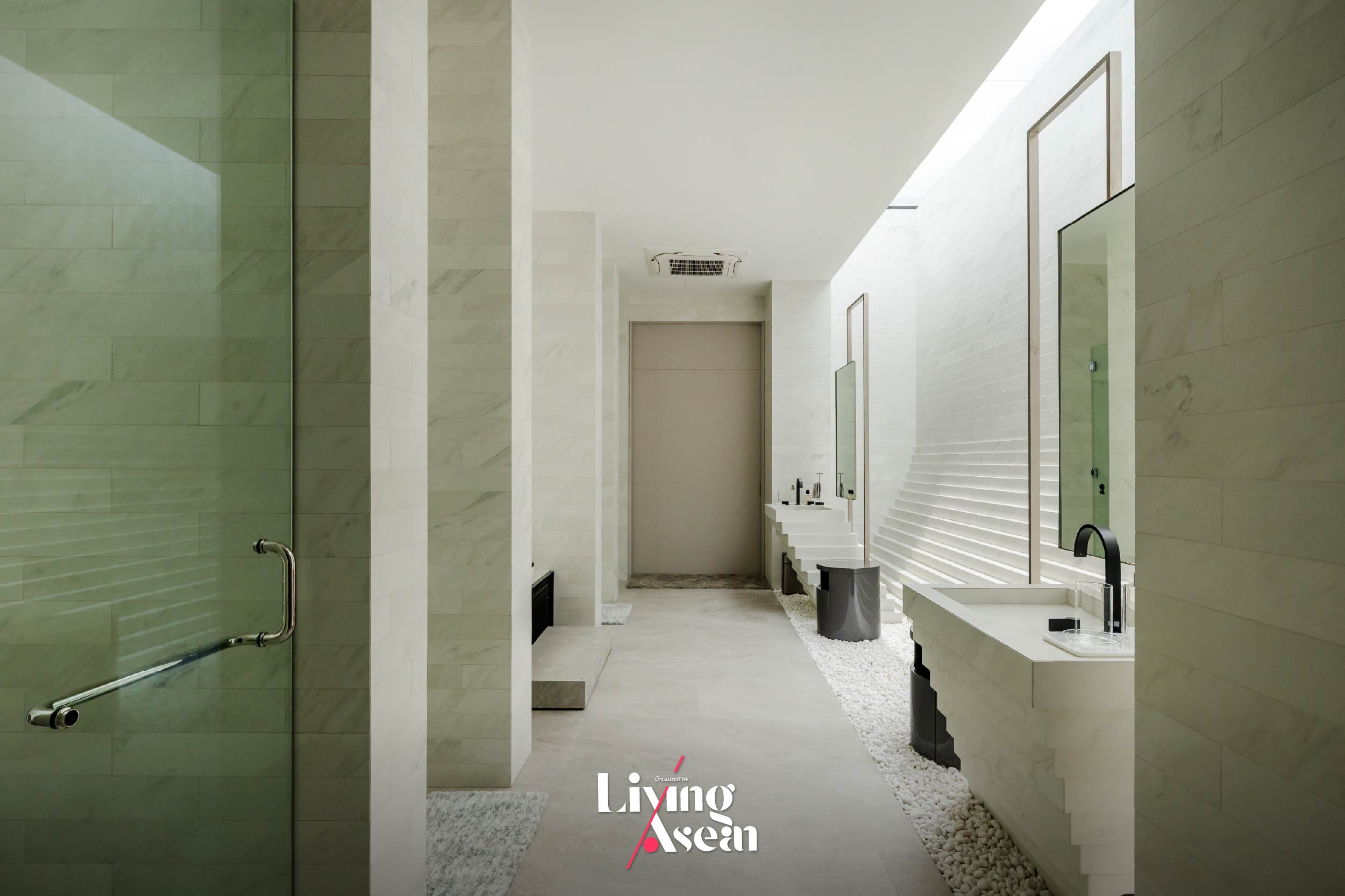
Equally impressive is the principal bedroom that has an ensuite bathroom with a Jacuzzi and an oversized bathroom sink. As expected, the bathroom comes in a cool white shade that’s associated with cleanliness, clarity and calm plus it makes the room appear larger and brighter. On one side of the room, the wall curves upward for aesthetic reasons, creating a sense of fluidity and dynamism. A window installed in the roof increases natural daylight and improves ventilation. As time passes, changing light creates a wide range of visual effects in the room. Interestingly, the floor with smooth tiles and natural pebble stones speaks volumes for a connection with the earth and sky.
Every corner of the house is a journey, a living space full of memories
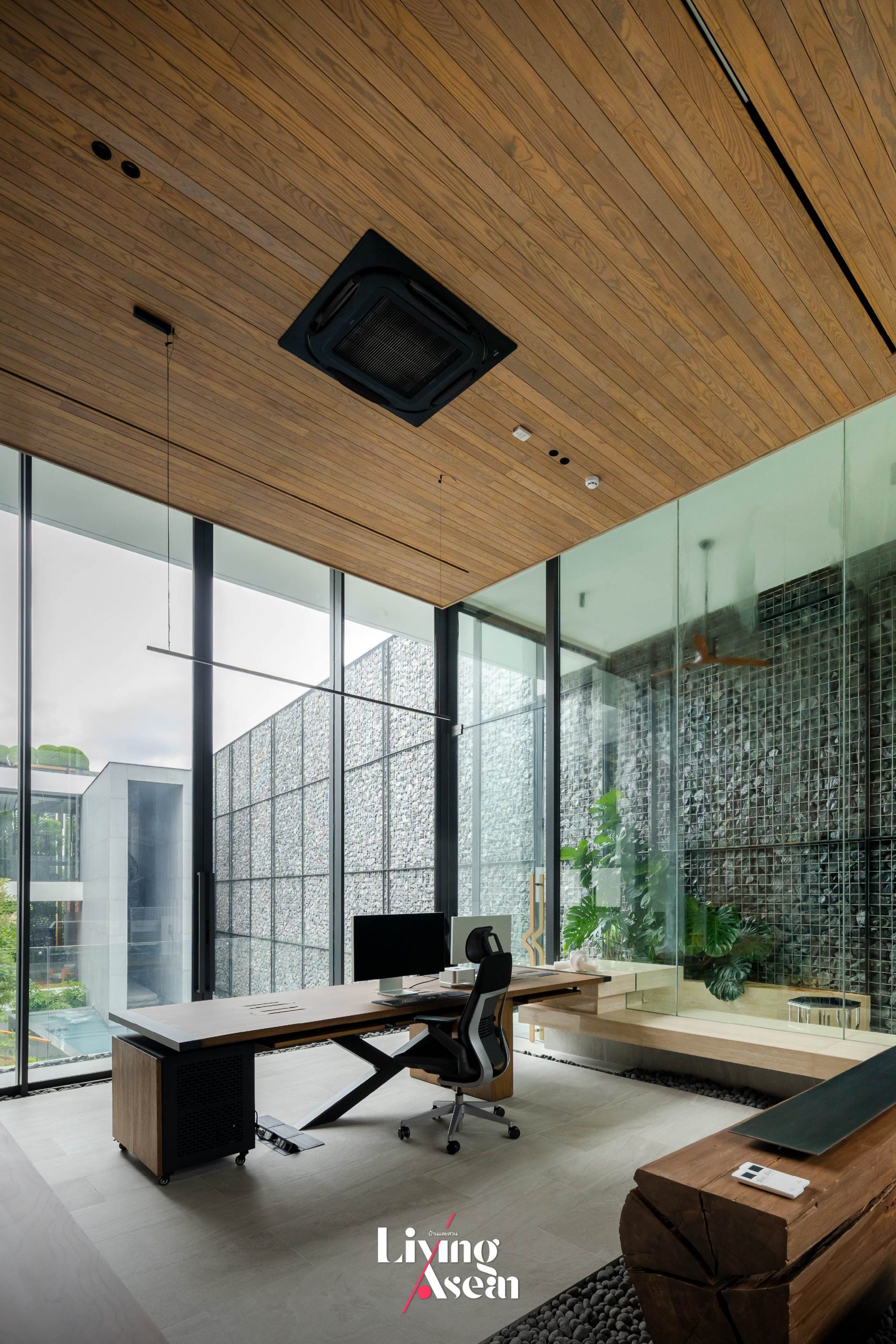
Apart from the two distinct zones for family living and receiving visitors, the house also has an office that the owner uses for work. For this reason, it makes perfect sense to establish a dedicated workspace with good lighting and a comfortable atmosphere. In this particular instance, a raised office space with large windows comes in handy to minimize distractions and set clear boundaries between life and work.
By design, other parts of the home can be seen in full view. From his vantage point the owner can see into the courtyard adorned with a pocket park, the guest reception area and the swimming pool nearby. For easy access, the home office has doors on both sides, a clever hack to improve natural ventilation, plus a paved outdoor area to take a break, prevent burnout and improve productivity.
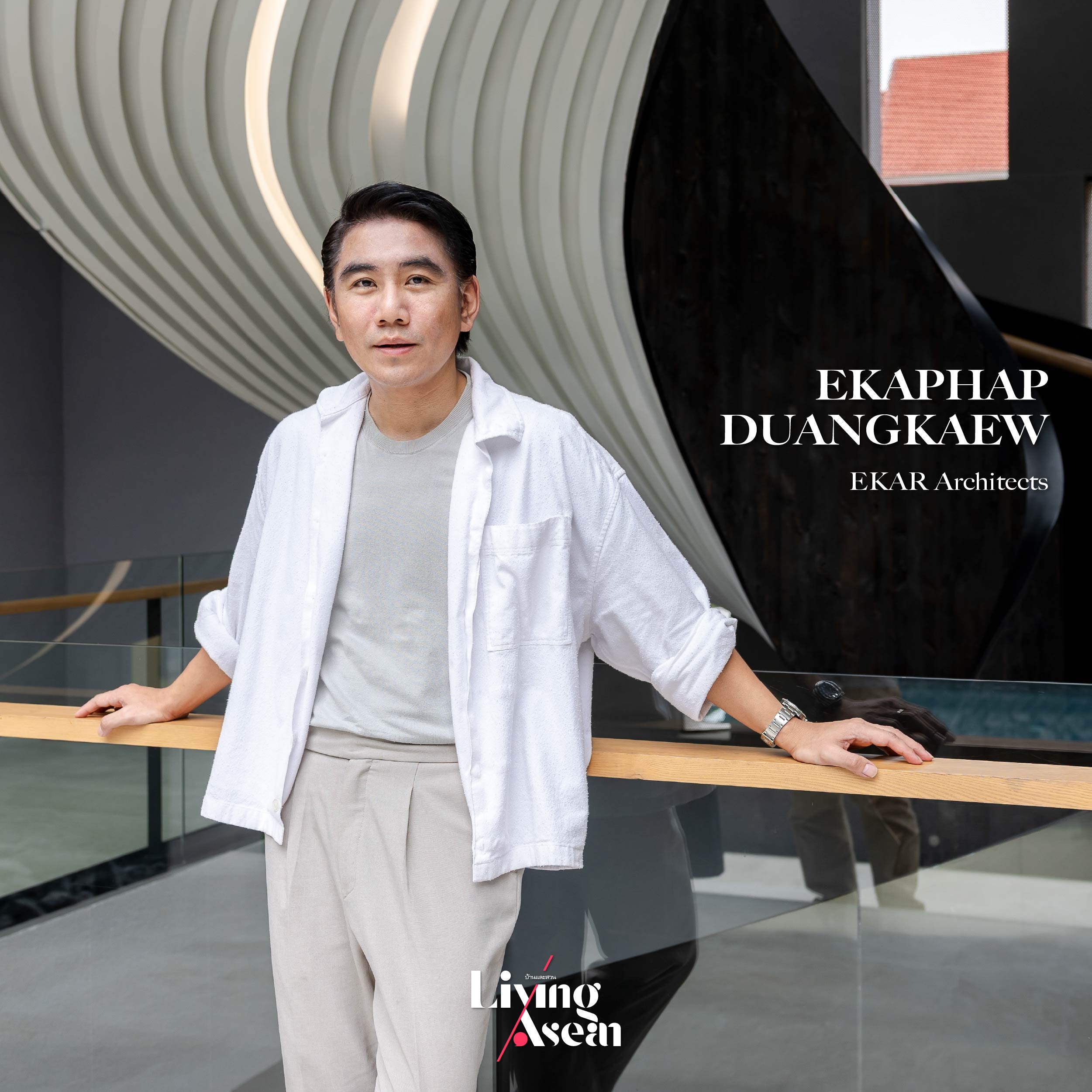
Ekaphap Duangkaew of EKAR Architects
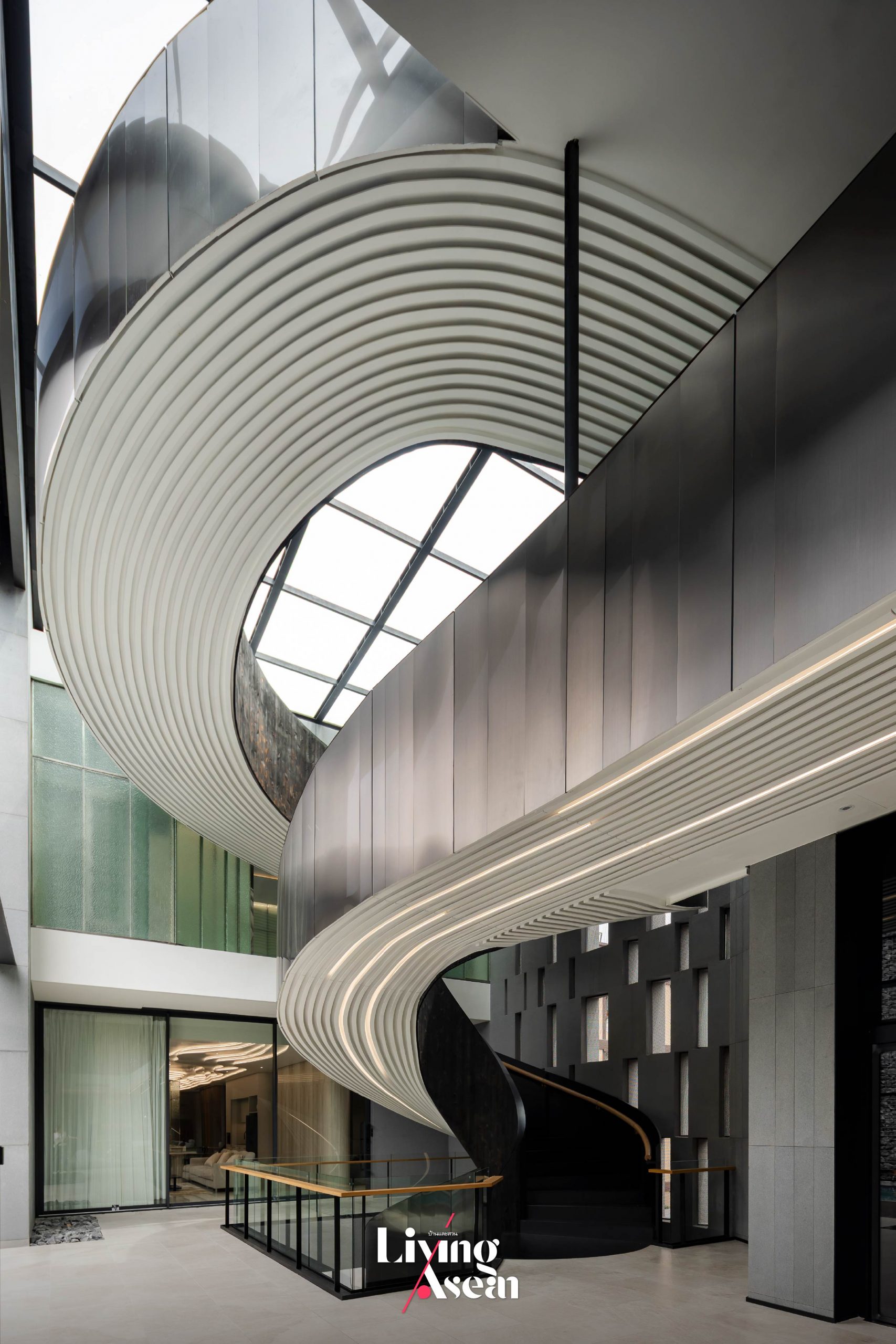
Ekaphap Duangkaew ofEKAR Architects is responsible for creating and overseeing the implementation of interior design plans. Sharing his ideal and perfect place of joy with us, he said the house design got its inspiration from a diverse range of the homeowner’s experience as a photographer and globetrotter. Precisely, it conveys a great deal about the concept that home is always a journey. It’s about creating dynamic spatial sequences showcasing elements marking the passage of time. Yet it never digresses from the original notion about human relationships with the earth and sky. This is evident in the design of a spiral staircase that’s in and of itself an architectural sculpture. Illuminated by a rooftop skylight system, the staircase and its surrounding walls evoke a feeling as if one is walking up toward the sky, a journey of aspiration so to speak.
“A work of interior design must have a definite wow factor. In this particular case, it’s about creating funky, futuristic looks that speak volumes for the homeowner’s experience as a photographer who has traveled the world. Every part of the house has a story to tell. And the designer is obliged to do exactly that – telling stories of journeys to new places across the globe. It’s quite a challenge for large house plans.”
“The architects and interior designers must stay focused on reducing overall energy consumption. They have to determine which part of the house can open to fresh air and sunshine and which part will require an air conditioning system to keep the interior cool and comfortable year-round. In the meantime, lighting is important. Sustainable design can be achieved by finding balance between natural light and the amount of sun’s heat passing through openings in walls. This is especially true in homes with double-height ceilings such as this one. There are parts of the house that will require air conditioning to create indoor thermal comfort. Plus, it’s reasonable to make sure an air conditioning system can be integrated with interior design, thereby becoming a perfect complement to the existing decor.”
A cozy living design thanks to good ventilation and knowledge of a tropical climate
The interior living space is cozy and comfortably cool thanks to a large air conditioning system known as VRV, or Variable Refrigerant Volume. It’s an advanced innovation developed by DAIKIN, the world’s largest air conditioner manufacturer. The VRV system connects outdoor and indoor units through a smart refrigerant network, supporting up to 64 indoor units within a single system.
The evaporator coil and blower fan are discreetly hidden, circulating cool air throughout the home’s ductwork. Daikin offers a variety of indoor unit designs to complement any interior style, and this home beautifully features two of them: the Duct Type, which delivers air through concealed vents, and the Cassette Type, which integrates seamlessly into the ceiling to create a refined, harmonious look.
According to Ekaphap Duangkaew ofEKAR Architects, “The VRV system provides benefits beyond just cooling. It operates quietly to create thermal comfort throughout the entire house, plus there’s nothing unsightly or visually jarring that can create an eyesore. The secret lies in concealing the home’s ductwork, indoor evaporator units and blower fans behind walls and ceilings, leaving only wall vent covers and ceiling cassettes visible to the naked eye. In this way, it’s possible to create large windows and doors to let natural daylight in, giving the home a bright and airy feel.”
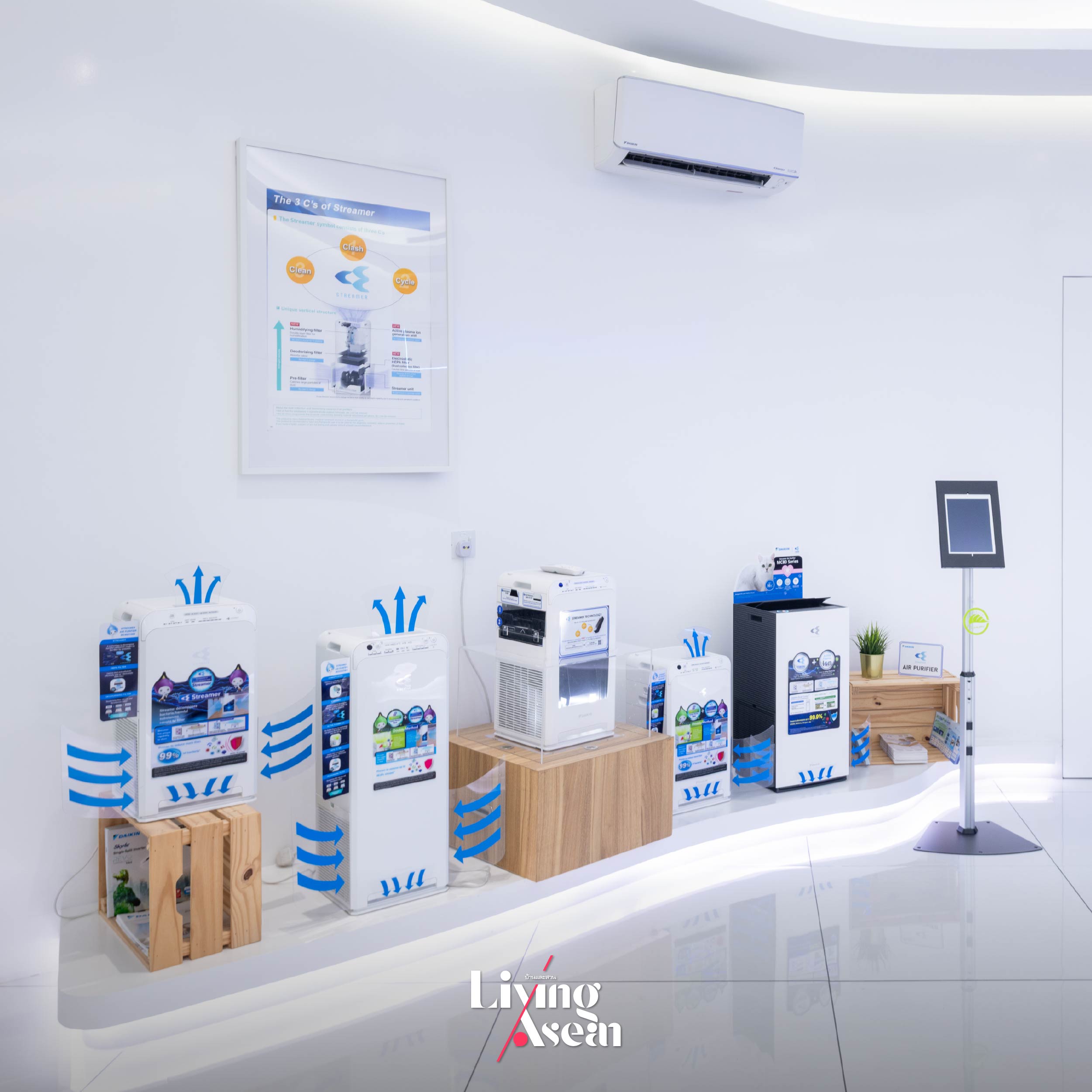
There is much more to new air conditioning technologies than smart design integration. Rather, it’s about enhancing comfort and well-being by improving indoor air quality. Above all, it has to do with removing allergens and dust, especially PM 2.5 or inhalable particulate matter that’s considered a serious health threat. Because homes can easily become contaminated with dust, pollen and unpleasant odors, the design team chose to give the Earth and Sky House an extra layer of protection by installing the DAIKIN Streamer, an air purifying system that helps filter out allergens and keeping indoor air clean and safe from pollution.
Large by any standard, the Earth and Sky House looks the epitome of architectural design best fit for a tropical climate. It offers a whopping 3,000 square meters of usable space distributed across the three floors. A fully functional home, it’s clean and fresh thanks to correct building orientation that optimizes passive ventilation in response to wind direction, shade, and sunshine.
It proves that privacy can be achieved despite being in a busy urban neighborhood. The key is to create buffer zones, such as green space in a center courtyard that increases natural light and air circulation in the interior. In a few words, it’s an improvement in physical and mental well-being that comes from using architectural strategies in combination with modern technology.
Learn more about air quality and technology at DAIKIN Solution Plaza fuha: SIAM.
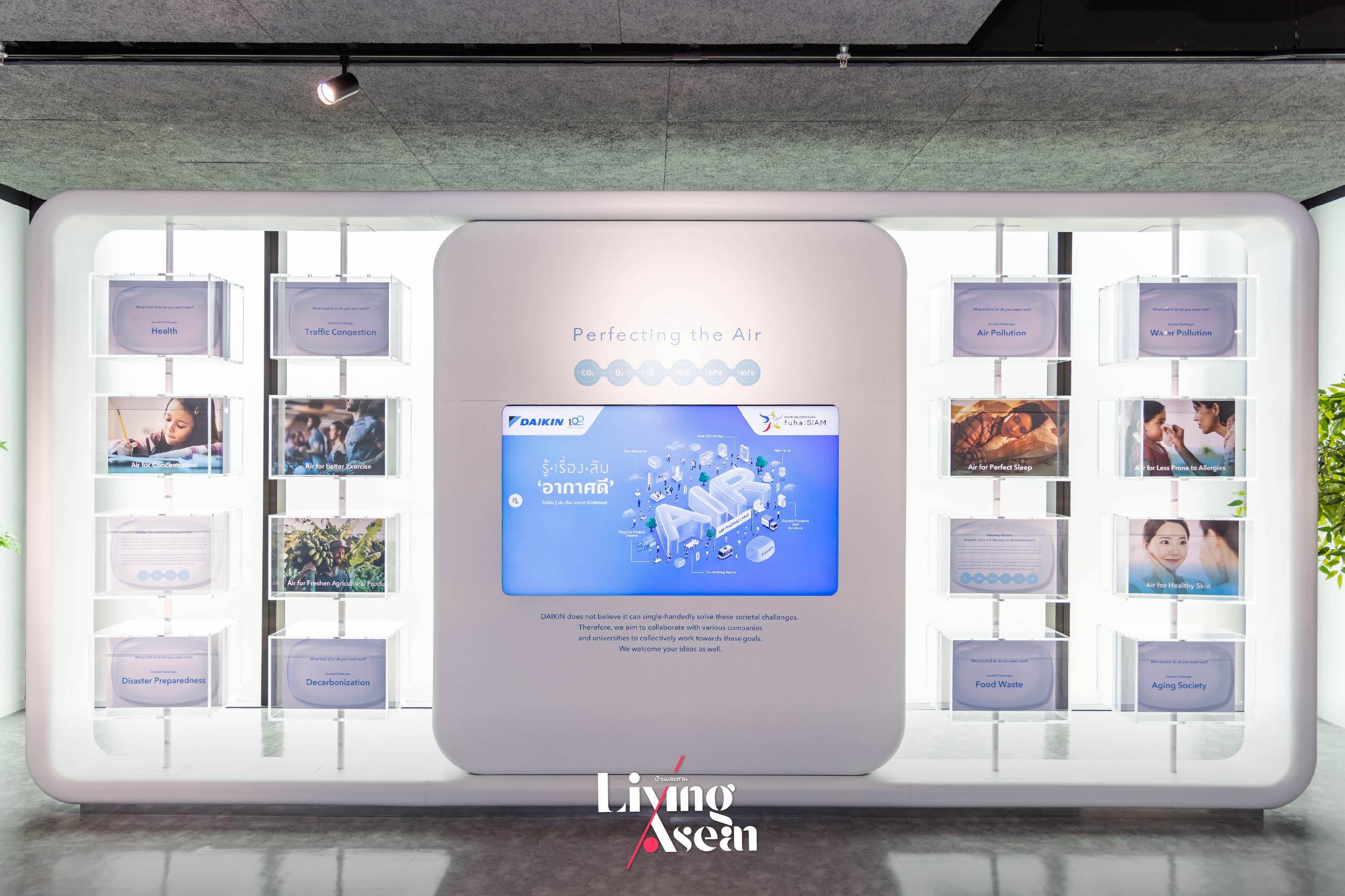
After touring the Earth and Sky House, it’s time to visit another interesting place in the heart of Bangkok to explore the essence of air quality and stay informed about the latest advances in air conditioning technology. Let’s stop by an ongoing exhibition that offers a deeper insight into the world of air — an experience that allows a profound understanding of every detail, moving toward perfecting the air beyond what you’ve ever known.
This is DAIKIN Solution Plaza fuha: SIAM, located on the fifth floor of Siam Pathuwan House. Stop by an exhibition to learn more about the “secret to clean air”. Admission is free. The exhibition showcasing new innovations in air conditioning technology is presented by DAIKIN, the world’s largest air conditioner manufacturer. The show titled “Perfecting the Air for All” is about keeping the air fresh and clean for everyone.
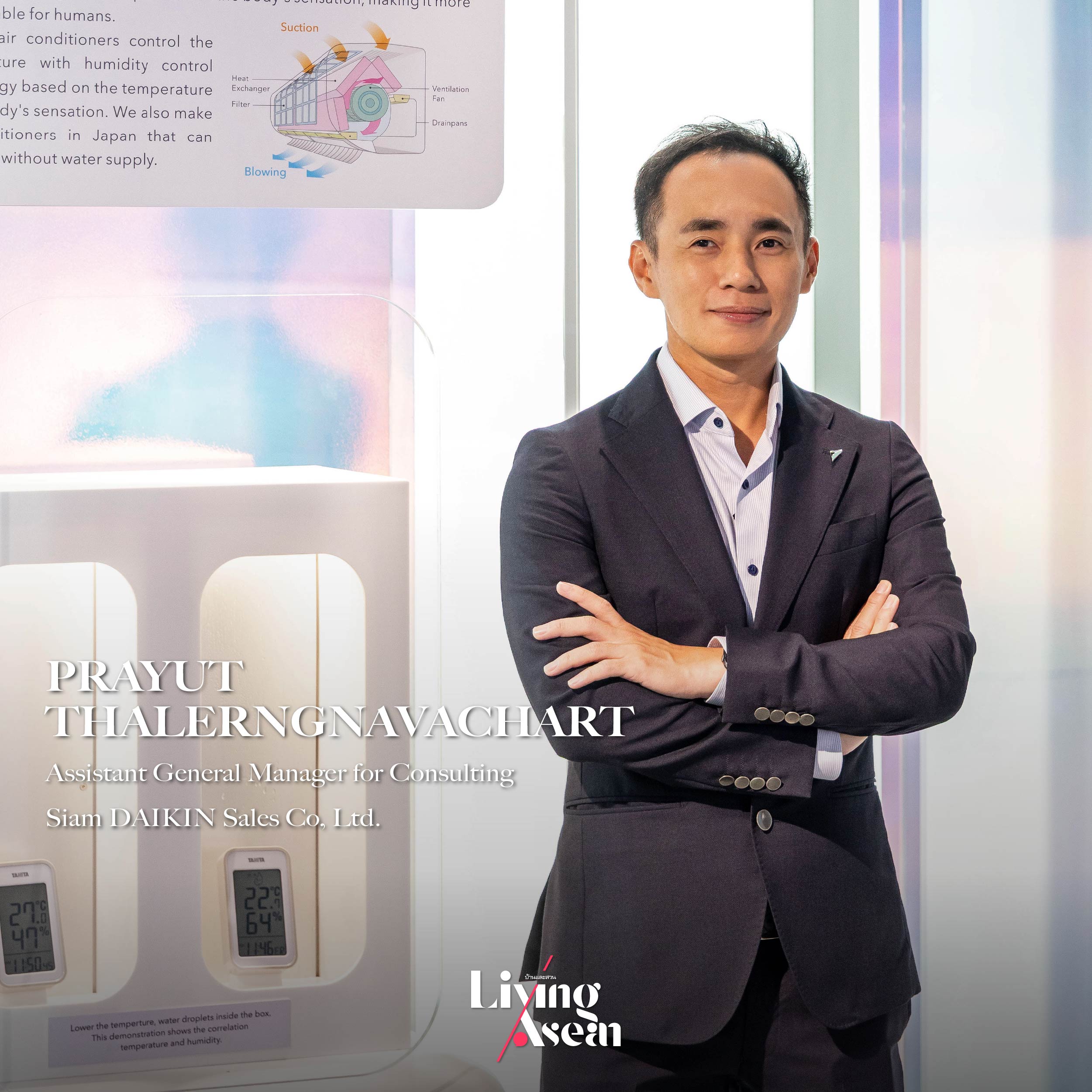
Prayut Thalerngnavachart, Assistant General Manager – Consulting, at Siam DAIKIN Sales Co, Ltd.
Prayut Thalerngnavachart is assistant general manager for consulting at Siam DAIKIN Sales Co, Ltd. He’ll tell us about Thailand’s first learning center dedicated to clean air, learning resources and latest innovations in air conditioning technology. In his words:
“Not only is DAIKIN a leader in air conditioner manufacturing, but it’s also an expert in air quality science. Because of that, we are in the best position to offer the highest quality products and services.”
The exhibitions are thematically divided into six zones, each featuring a distinct field of knowledge. Among other things, visitors will get to learn more about components of the air and technologies for air movement. It’s a show that conforms to the concept of “fuha”, a word arising by anomatopoeia –“fu” being the sound of cold airflow, whereas “ha” refers to the vibrations caused by warm gusts of wind. Together they inspire this exhibition, which is aimed at promoting an understanding of different aspects of global air movement and creating conditions conducive to physical and mental well-being.
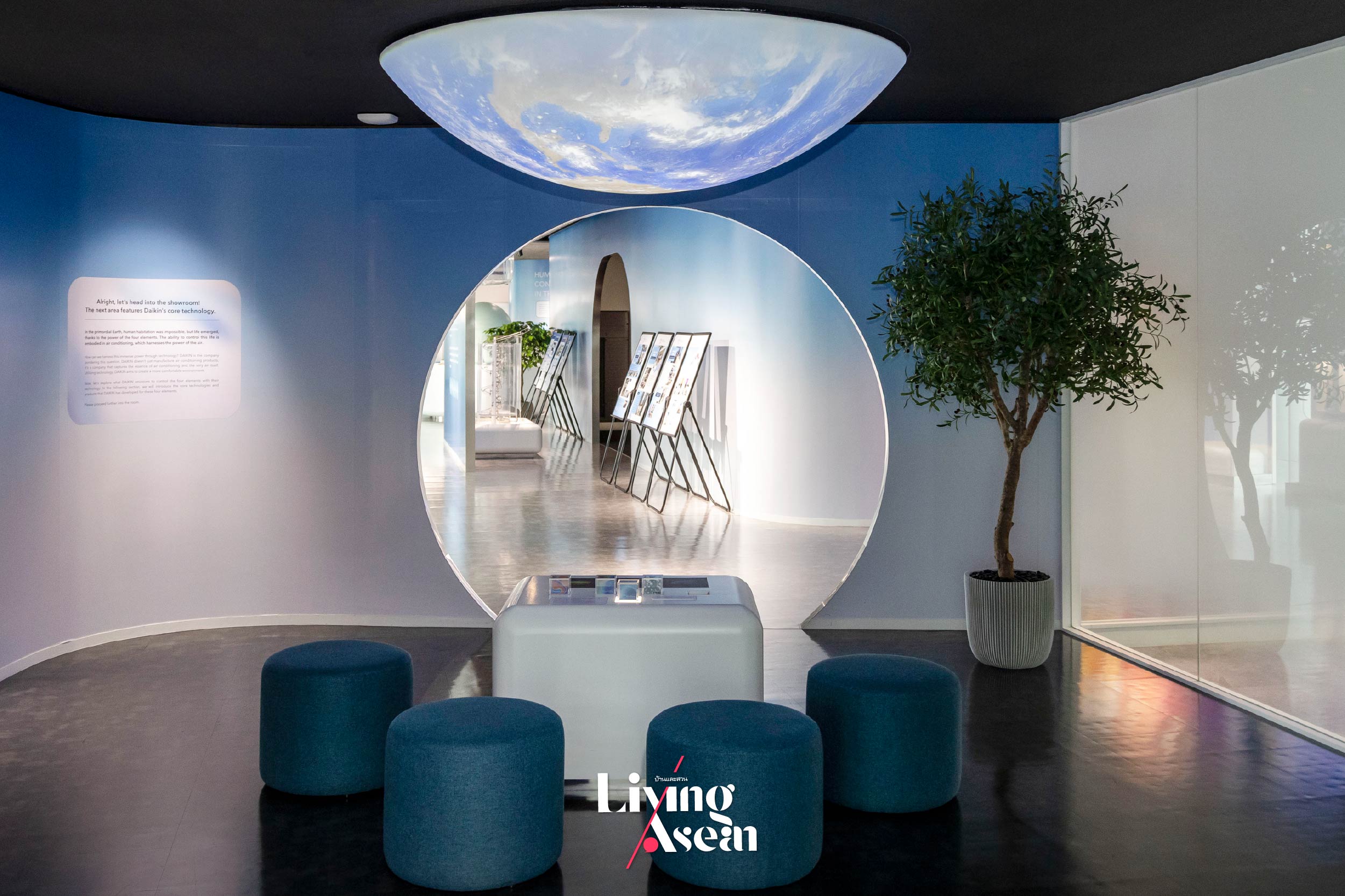
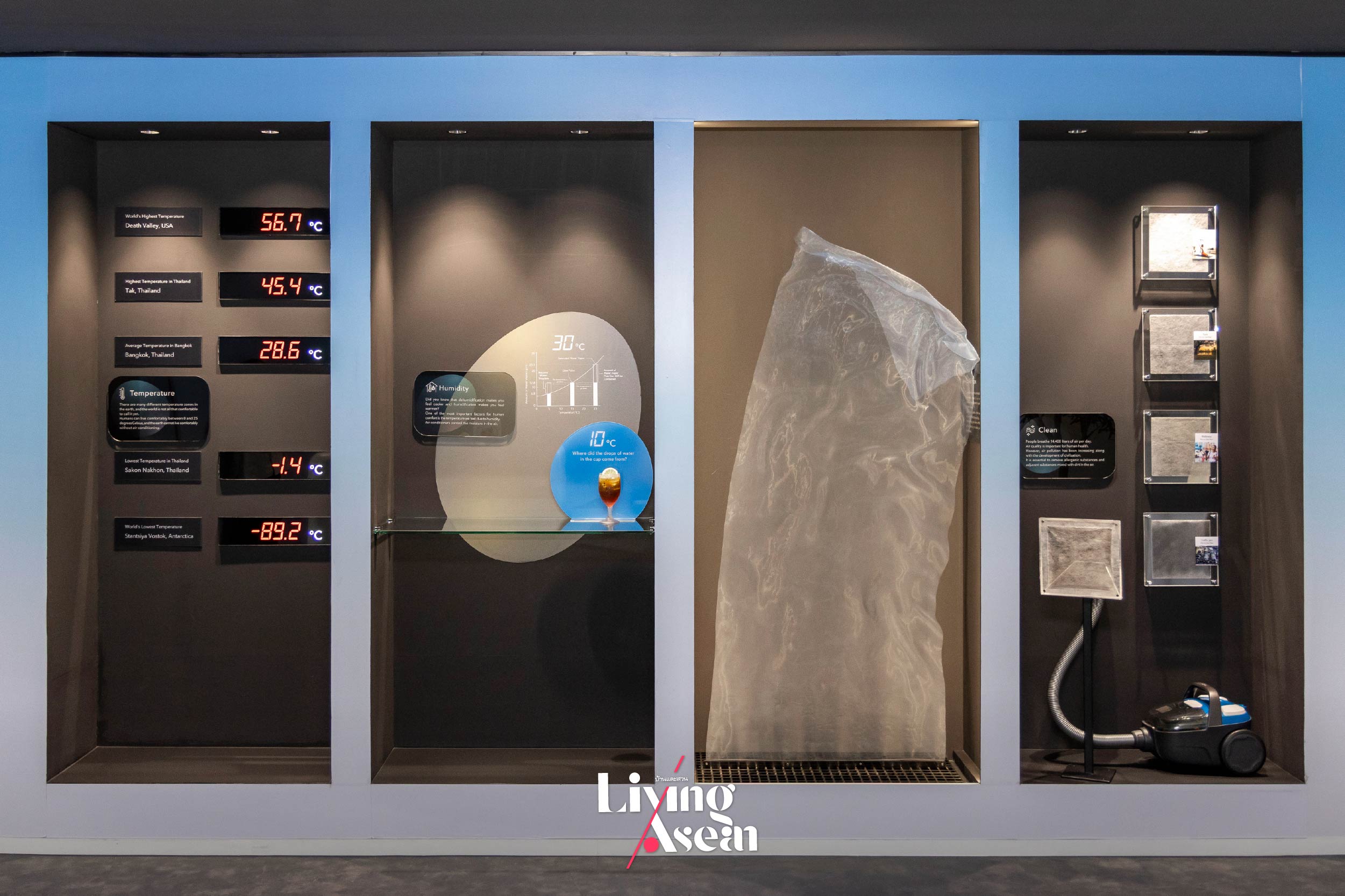
The first exhibition is aptly named “Four Elements Zone”. It’s an interactive video presentation with a wide range of public displays showcasing the relationships between sun’s heat, humidity, clean air and global air circulation patterns – the key factor regulating the planet’s temperature.
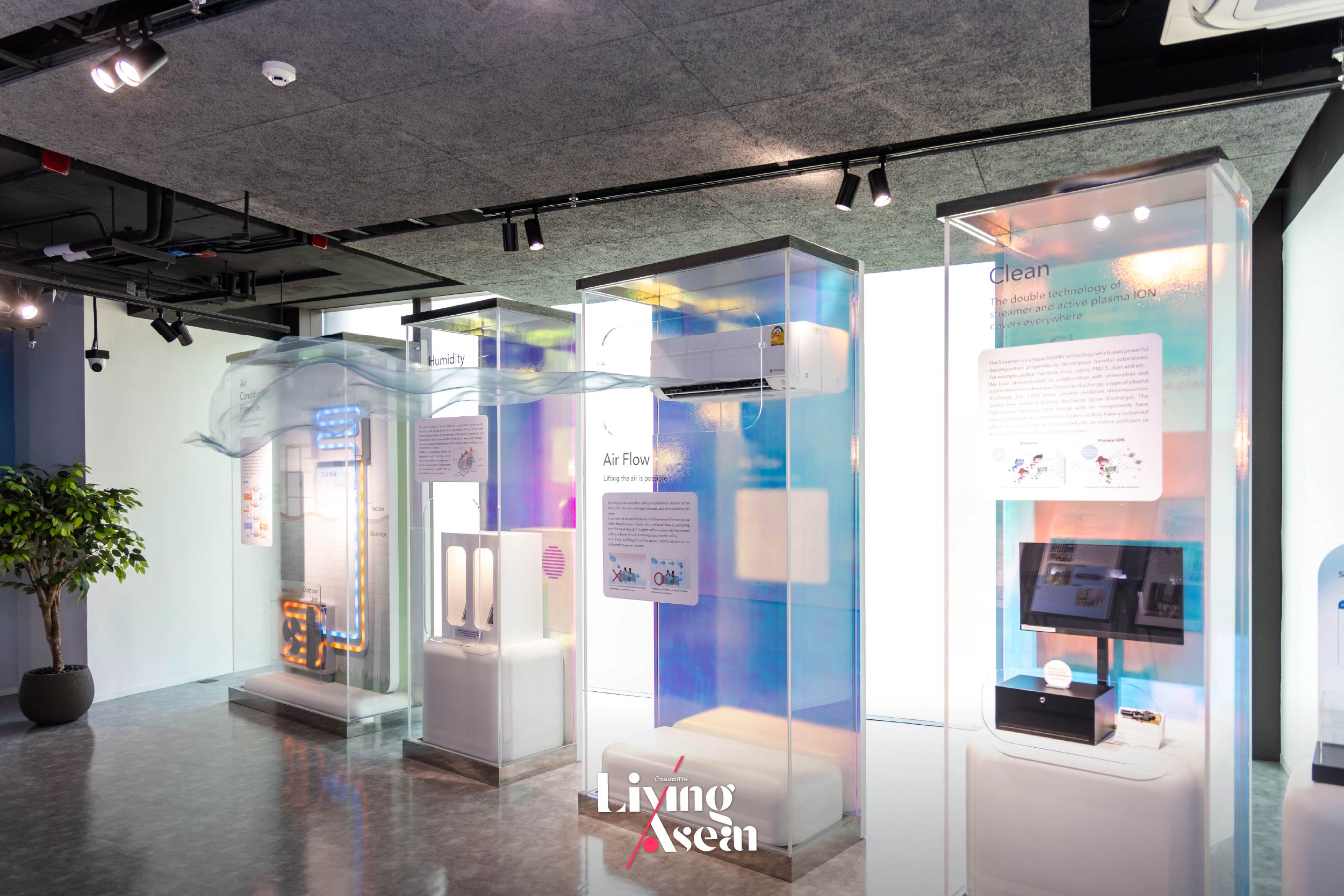
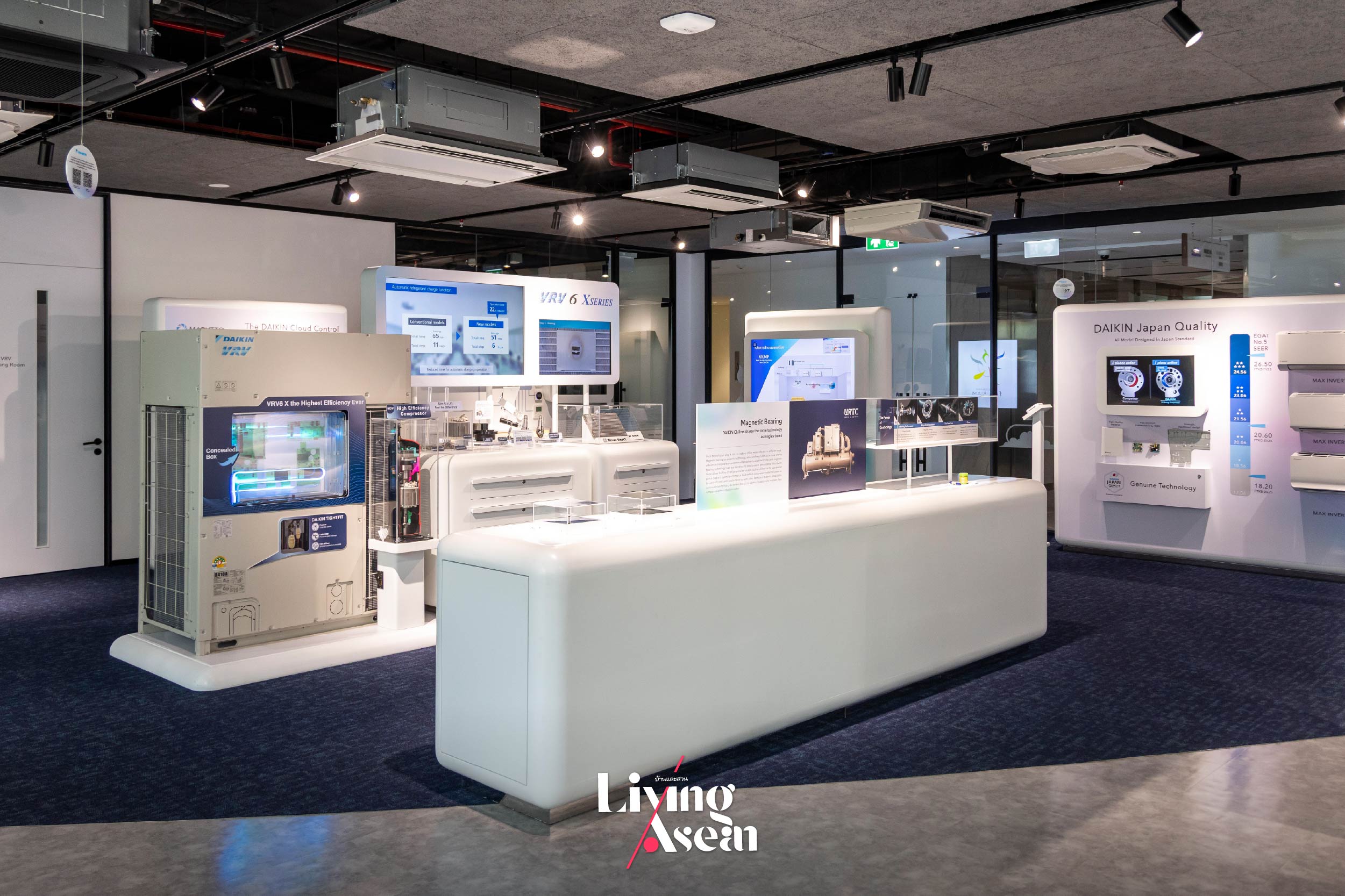
Area 2 of the exhibition, named “Core Technology Zone”, reiterates the point that good, clean air can be achieved through a whole new approach. Presented by DAIKIN, it lays the foundation for air conditioning technology of the future, meantime, allowing viewers to experience the inner workings of an air conditioning system firsthand.
Area 3, named “Flagship Product Theater Zone”, sends a message that “good, clean air is not restricted to a single, specific location”. It’s a theater-style event showcasing the history of air conditioning system development by DAIKIN and cutting-edge technologies for clean air that can be put to good use in all kinds of space, ranging from homes to condominiums to offices and large business establishments such as hotels and shopping malls.
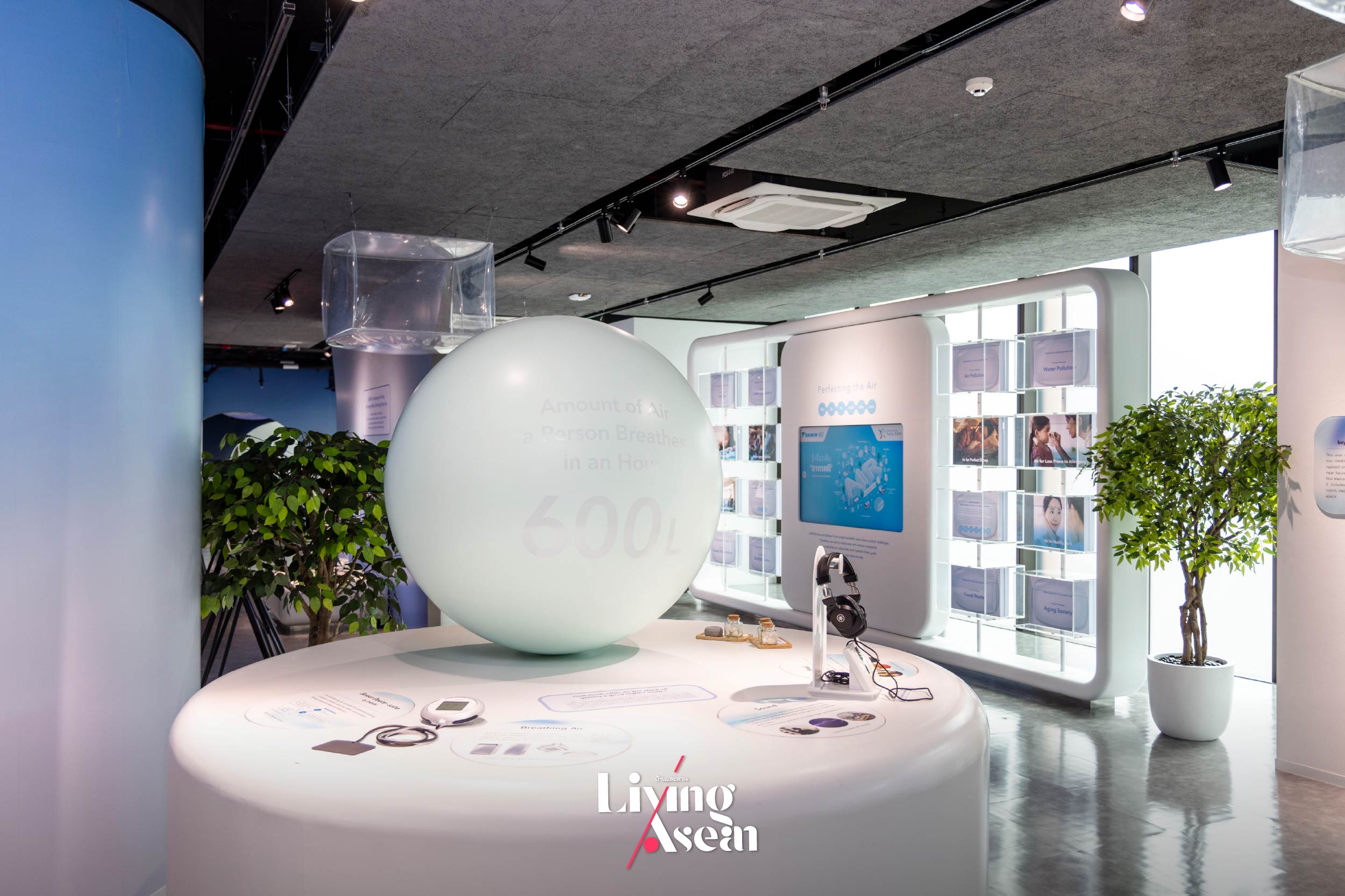
The fourth exhibition, named “New Value Zone”, communicates a concept that there is much more to good, clean air than just breathing. It’s an installation event showcasing the health benefits of pure, unpolluted air and a positive atmosphere that’s the key factor in improving the quality of life. The focal point of the show is a spherical balloon that reminds us of the amount of air a person breathes in an hour. There’s a daybed nearby set aside for relaxation and comfort that comes with the aroma of fresh, clean air.
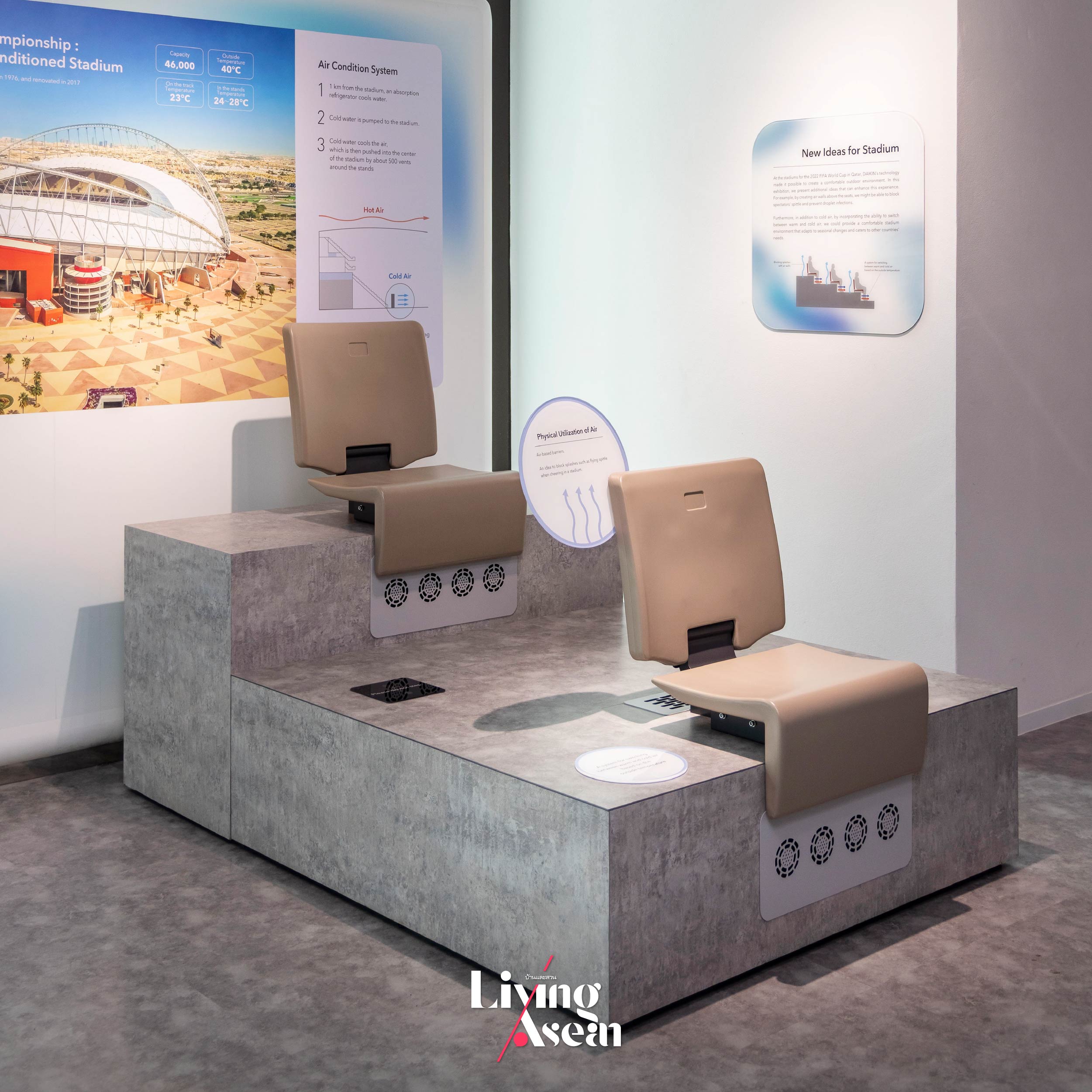
Other attractions in Zone 4 include new innovations for keeping outdoor spaces cool. It’s a cutting-edge solution that was put to good use at Khalifa Stadium when Qatar was the host nation for the 2022 FIFA World Cup tournament. Because the stadium was located in the middle of a desert, DAIKIN was able to overcome the challenge of extreme temperature by inventing a large-scale cooling system that worked by blowing hot air out and replacing it with fresh, clean air to make the stadium more comfortable and free of disease.
Area 5, named “Current Products and Solutions Zone”, demonstrates that “good, clean air can be achieved through design”. It’s a show about creating solutions by using DAIKIN air conditioning systems that are capable of meeting consumer needs across all sectors, whether it be for homes or for large business establishments such as hotels and manufacturing facilities.
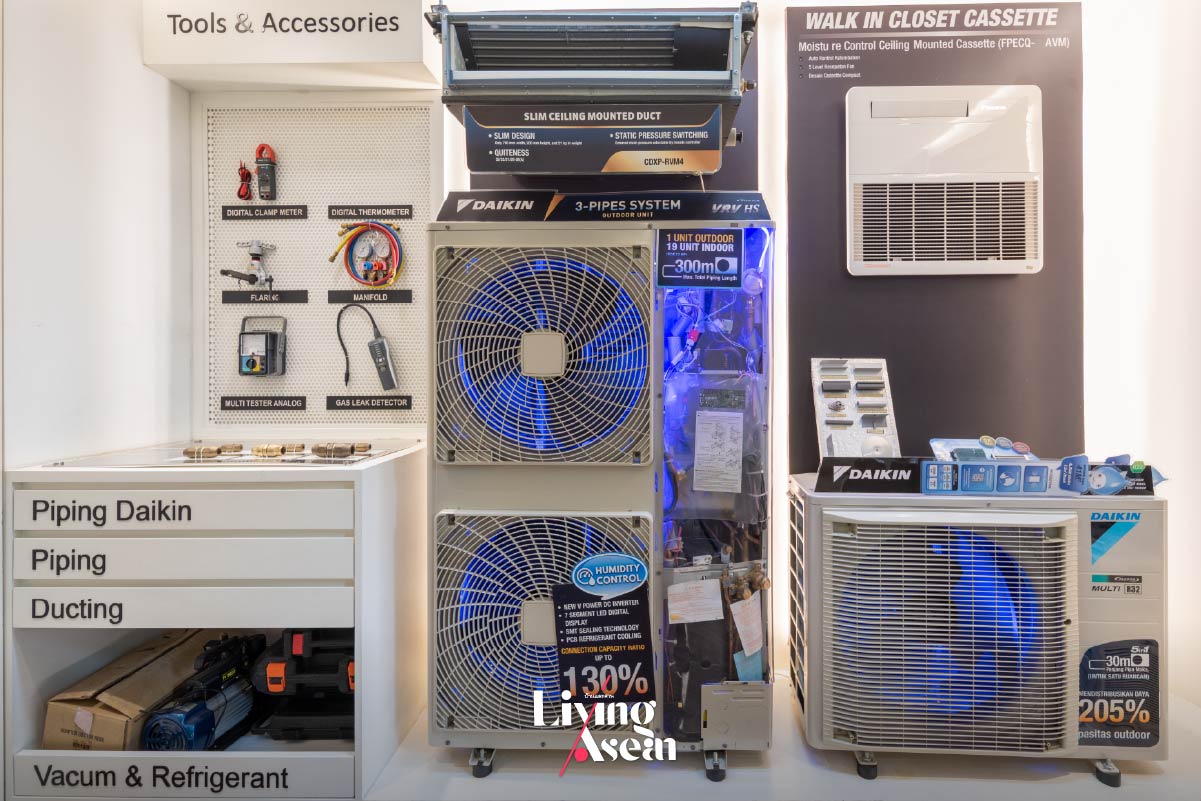
DAIKIN VRV air conditioning systems work by distributing variable amounts of refrigerant to multiple indoor evaporator units, meantime, regulating refrigerant flow to create a cooling effect at precise temperature. Equipped with inverter technology, the system is highly energy efficient, plus installation is flexible. One outdoor condenser unit can distribute variable refrigerant volumes to a variety of indoor units.
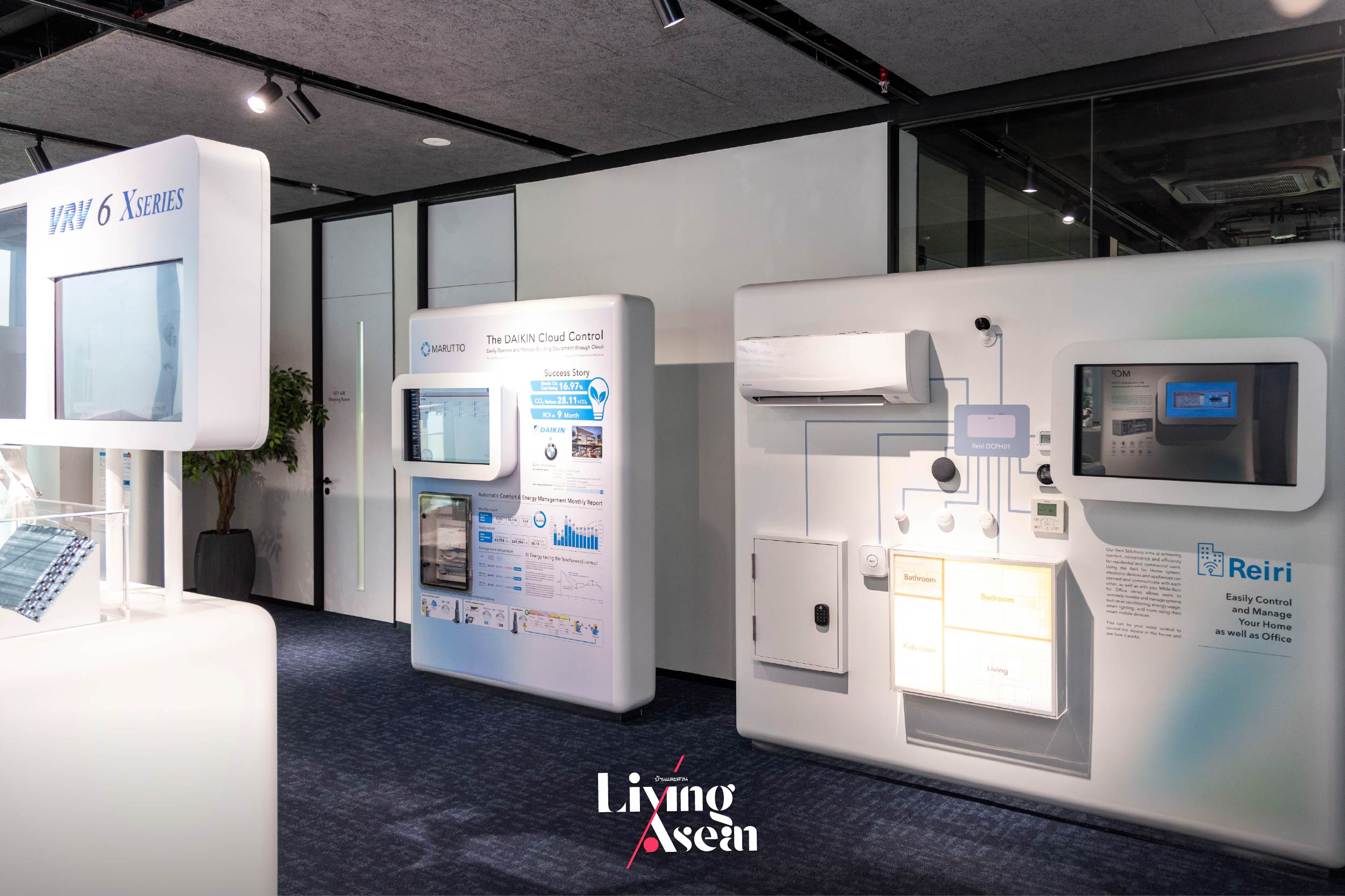
That’s not all. The company also has developed an advanced control system called “Reiri for Home” that works with DAIKIN air conditioners and other devices to achieve a smart home integration. They include air conditioners, ventilation systems, air purifiers, and a variety of home automation devices. All of them can be controlled from anywhere on earth via cellphones connected to WIFI and the Internet.
“Reiri for Home” technology works with IAQ (indoor air quality) sensors to monitor and provide a visual display of air quality index, PM 2.5 index, TVOC (total volatile organic compounds) index, humidity reading and temperature. Together they create a cozy home environment conducive to physical and mental well-being.
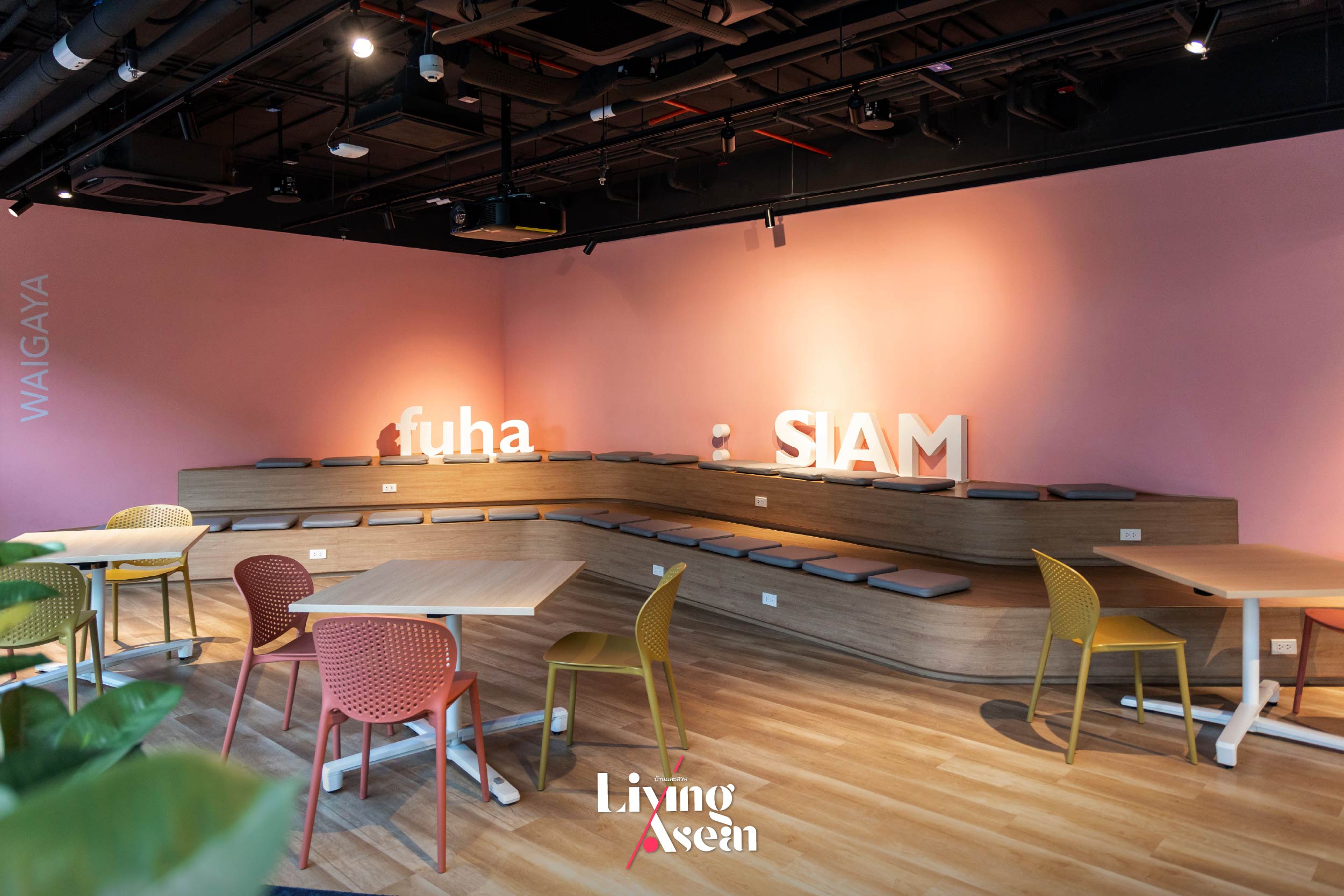
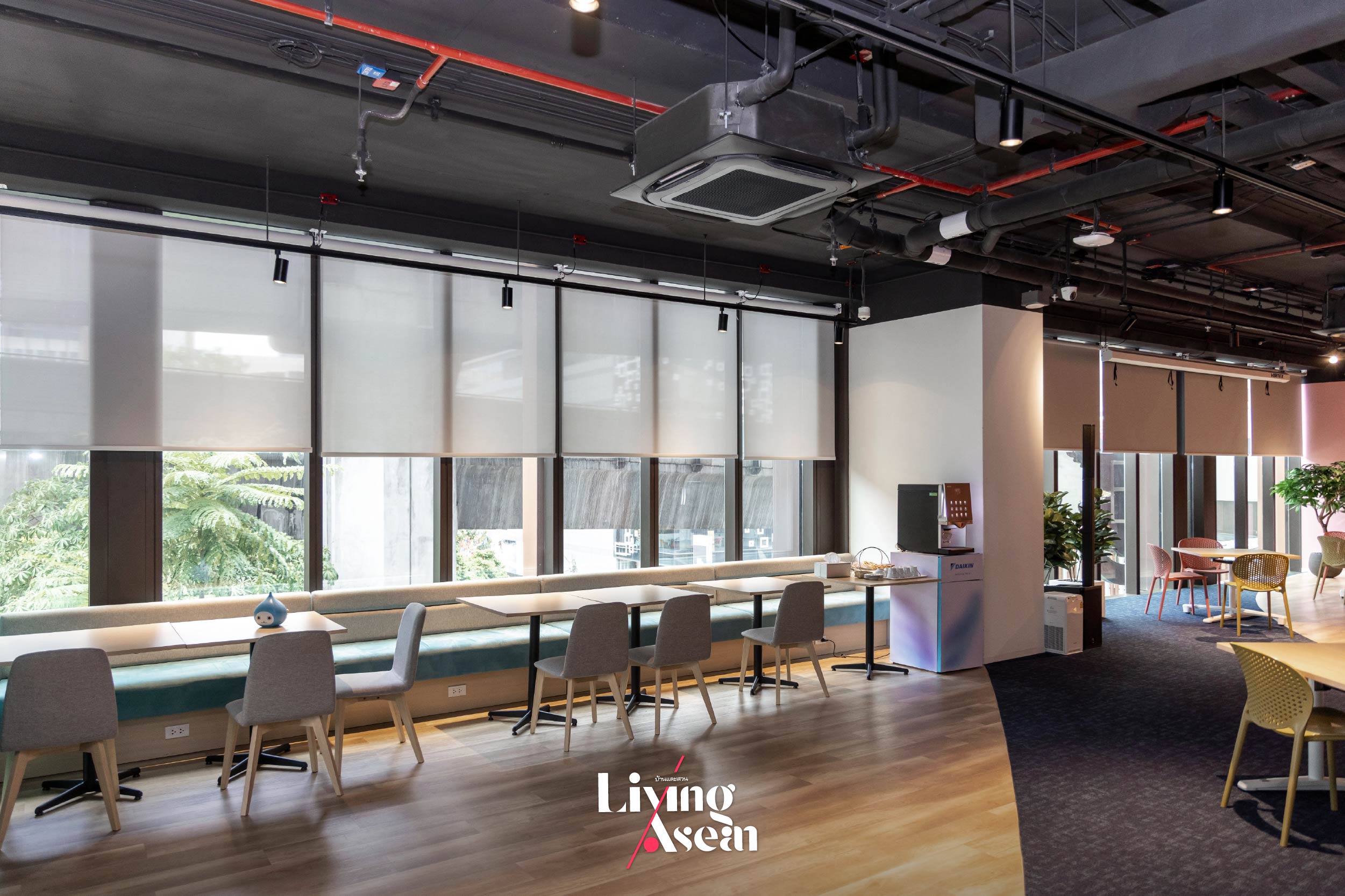
We now arrive at Zone 6, or “Co-Working Space Zone”. The theme of the venue is “good, clean air is for sharing”. It’s the last zone curated by DAIKIN Solution Plaza fuha: SIAM. Just a friendly reminder. Admission is free and the atmosphere is relaxing yet informative. Swing by next time you’re in the area. Sit back and relax, do some work, meet up and do a tutorial with friends. There are tables and chairs available for meetings, even TV screens to work with. Come experience a good atmosphere together.
In short, it’s about reaching out to connect with consumers across all sectors. As Prayut Thalerngnavachart puts it, “DAIKIN’s vision is to provide new value. Like so, fuha: SIAM is much more than a showroom for promoting products and services. Rather, it’s a strategy to open up spaces conducive to learning and inspiring people about the benefits of good, clean air that gives meaning to everyday life.”
Mark your calendar. The exhibition is open Monday through Friday from 08.00 to 17.00 hours. It’s located on the fifth floor of Siam Patumwan House. Click here for more details fuhasiam.daikin.co.th.
Indonesia, a nation straddling the equator, enjoys a tropical monsoon climate with two distinct seasons: the dry season (April to September) and the rainy season (October to March). Unsurprisingly, homes in this region often contend with year-round warmth and humidity, influenced by both climate and urban living conditions. Creating a home that remains comfortable in such an environment presents an ongoing challenge. Nora’s Residence is a thoughtfully designed, three-story, single-detached modern tropical house. Purposefully built for hot and humid weather, it integrates seamlessly into its urban surroundings in Jakarta, Indonesia.
The design concept for Nora’s Residence is rooted in the principles of tropical architecture, specifically using an understanding of local climate to make the home more comfortable. At its core, the design aims to achieve indoor thermal comfort by minimizing heat buildup and promoting cross ventilation throughout the interior spaces. Additional strategies include the use of locally sourced building materials to foster a healthier living environment, along with exterior aesthetics that harmonize with the surrounding landscape. More than anything, it’s a design that thoughtfully responds to the lifestyle needs of those living in the warm, humid climate of the Indonesian archipelago. Join us as we discover the latest innovations in air conditioning technology perfectly crafted and installed by professionals. It’s a great opportunity to stay up to date with state-of-the-art systems for home use, now on view at DAIKIN PROSHOP INDONESIA. All of this is part of the ASEAN HOME TOUR series broadcast by Baan Lae Suan TV in collaboration with Living ASEAN and supported by DAIKIN.
Modern Tropical — Light, Airy, Simply Brilliant
This modern tropical house is located in Jakarta, the capital of Indonesia that is known for its high humidity, warm temperatures and vibrant city life. Named Nora’s Residence, it demonstrates how thoughtful planning can make all the difference in cultivating a cozy and livable atmosphere. The design is tailored to the specific needs of a family of four: mom and dad, and their two children, and is also well-suited to hosting relatives who frequently drop by for a chat. The style of the house is inspired by the homeowners’ love of tropical architecture, reimagined for modern living. The result is a layout that prioritizes privacy, pleasing appearances, and indoor thermal comfort, even in the face of extreme weather.
Tropical architecture is renowned for its ability to promote natural ventilation and keep the home cool throughout the year. In a harsh climate, a well-ventilated space is essential and enduring. Open floor plans and strategically placed openings, such as windows and vents, help create airflow patterns that expel hot air, while a high-pitched roof design reduces humidity buildup. Meanwhile, long eave overhangs protect the home from storms, shielding the walls and foundations from rain and sun’s heat. The tropical house floor is also elevated well above ground level to prevent flooding, a time-tested technique passed down through generations. Adding to its charm, the home is finished with locally sourced materials such as timber and bamboo, which harmonize beautifully with the natural surroundings.
Nora’s Residence is, at its core, about putting the principles of tropical architecture into practical use, something the design firm Nataneka Arsitek is both highly skilled in and deeply passionate about. The house stands as the epitome of balanced home design, perfectly suited to the hot, humid and rainy weather of Jakarta. Thanks to their deep understanding of Indonesia’s unique geography and climate challenges, the design team no doubt has succeeded in crafting a home that is both beautifully executed and highly functional. A place that nurtures well-being while delivering strong aesthetic appeal.
Jeffry Sandy, lead architect and co-founder of Nataneka Arsitek, shared that the initial brief was to design a simple, functional home tailored to the lifestyle of a family of four. However, after considering the homeowners’ traditional values which emphasize close connections with relatives, the plan changed. The layout was expanded to include more bedrooms and larger communal areas, with integrated amenities to accommodate visiting relatives from out of town.
“As the need for space and amenities grew, so did the size of the new home. Yet the design team remained committed to the core principles of tropical architecture by prioritizing passive design strategies that promote natural ventilation, create a relaxing atmosphere, and maximize thermal comfort throughout the home.”
Designed According to the Principles of Tropical Architecture
For this reason, the house is designed to stand tall, creating a distinctive architectural presence with a light and airy ambiance. Interestingly, the low-lying land has been filled to slightly raise the ground level above the road surface. As a result, the primary living areas are located on the second and third floors, while the first or ground floor serves as a service zone, complete with ample space for a car garage.
From the front gate, the driveway gently slopes upward, the change in elevation from one end to the other is so subtle it’s barely unnoticeable. Nearby, a tranquil fish pond nestled under a canopy of lush trees adds to the calm and relaxing atmosphere. Head upstairs and you will find living areas designed for both habitation and leisure, similar to the common spaces typically found on the ground floor in most homes. The house features a warm, earthy colour palette that blends beautifully with its surroundings. To foster a cozy atmosphere, locally sourced timber is used extensively for ceiling, wall finishes, slatted wood paneling and decorative accents. Thanks to its open-plan layout, the home enjoys excellent air circulation between the interior and exterior, a smart passive design strategy that brings in fresh air and reduces heat and humidity buildup in the interior.
By design, Nora’s Residence makes excellent use of open-concept spaces, high ceilings, and glass doors on all sides. This allows the home to maximize natural light and airflow, while the interior is thoughtfully zoned into distinct living, dining, and kitchen areas. Bi-fold doors with clear glass panels can open fully from end to end, seamlessly connecting the indoors with the surrounding lawn and nearby swimming pool. In short, it’s a space designed for activity and family gatherings.
Sharing his insights from the project, Sukendro Sukendar Priyoso, another lead architect and cofounder of Nataneka Arsitek, explained that the proportion between the house and its lot was carefully considered to create a sense of balance and harmony. To enhance the overall environment, the design team left adequate spaces on the left and right sides of the building. These side yards, working in tandem with strategically placed windows, allow for generous natural light and effective cross ventilation. Meanwhile, long eave overhangs and wooden slat wall panels shield the interior from direct sunlight, helping to reduce heat gain, lower energy costs, and improve the efficiency of the tropical home’s air conditioning system.
“This house is designed around the concept of balance between indoors and outdoors, opening up interior spaces to allow more natural light and enhance comfort and well-being. The first floor houses the service areas, along with a nearby garage that accommodates four cars. The ground level has been elevated to create ideal conditions for planting and to offer the homeowners the opportunity to enjoy a lush, manicured landscape. We also added a backyard swimming pool complete with essential support facilities. It’s the ground floor that truly connects us to the land,” said Sukendro.
Balance between Indoors and Outdoors
This tropical house has defining characteristics that set it apart from others. In essence, it’s designed to bring nature indoors, with large windows that allow ample daylight and natural breezes to flow through the interior. When electromechanical air conditioning is not needed, simply opening the windows enables cross ventilation, keeping the home cool and comfortable. It’s an effective way to create a tropical living environment, supported by well-maintained gardens and strategically planted trees in the home’s open spaces.
The primary focus of this house design is functionality, specifically, a ventilation system that performs well in hot, humid weather. All doors leading into and out of the living room can be fully opened to connect the interior with the surrounding landscape. Built during the COVID-19 pandemic, Nora’s Residence clearly prioritizes good air circulation, an essential feature in modern home design. Open floor plan also plays a key role, seamlessly merging functional areas into one expansive space. Surrounded by wide-opening glass doors, the interior evokes feelings of peace, joy and belonging. These doors not only blur the boundaries between inside and out but also allow fresh air to enter and flow freely through the trpoical home, keeping the home cool and comfortable.
Innovations for Cozy Living, Ways to Save Energy
In addition to good ventilation and the right amount of sun exposure, the house feels cozy and welcoming thanks to an air conditioning system that is neatly and discreetly concealed. As the architects intended, it is a thoughtfully designed, beautifully crafted home that is both contemporary and aligned with the latest technologies. The entire house is cooled by an air conditioning system called VRV (Variable Refrigerant Volume) from DAIKIN. Hidden from view and achieved through careful planning, the system delivers efficient climate control without disrupting the clean, cohesive aesthetics of the interior.
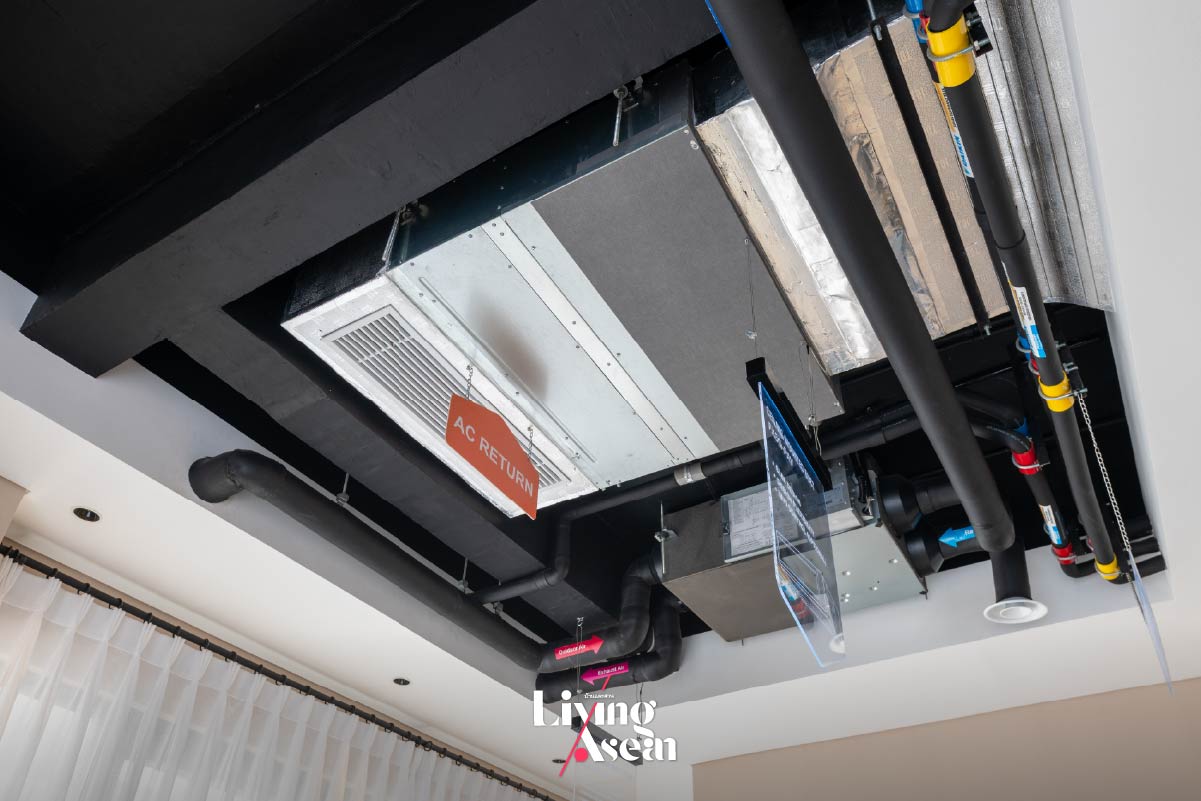
The VRV air conditioning system is a centralized A/C system that incorporates innovative technology. What sets it apart is its ability to be installed in extended ceiling space, making it an ideal fit for open-concept living areas where rooms seamlessly connect with the garden. Everything is arranged in a neat and orderly manner, allowing the system to remain virtually invisible while enhancing the interior’s overall aesthetics. With the unit concealed above the ceiling, the only visible elements are the discreet air grilles through which cooled air is distributed—creating a comfortable atmosphere without any unsightly distractions.
The VRV system features a single condensing unit connected to multiple evaporators, making it ideal for large spaces with high ceilings. It saves space and reduces the complexity typically associated with installing multiple outdoor units. Thoughtfully integrated into the home’s design, the VRV system enhances interior aesthetics while maintaining a balanced and comfortable atmosphere, and it contributes to lower energy costs as well.
DAIKIN PROSHOP INDONESIA, Pioneering Innovation For Tropical Living
The decision to install an advanced air conditioning system, such as the VRV from DAIKIN, in this modern tropical home reflects a desire that goes beyond simply maintaining a cool temperature. It’s about creating a balanced atmosphere: a sense of calm and contentment that enhances well-being throughout the home.
Thanks to its deep understanding of the challenges facing the ASEAN region, DAIKIN is well aware of the problems caused by rising air pollution, increasing temperatures, and high humidity, all of which contribute to discomfort in daily life. This is particularly true in Indonesia, where the impacts of extreme weather are compounded by a lack of consumer awareness when it comes to choosing the right air conditioning product for their needs.
Jimmy, DAIKIN senior sales supervisor for Indonesia’s Central Region, explained that for a long time, Indonesian consumers have been accustomed to just one type of air conditioner: the wall-mounted unit. Many still prefer older installation methods. This is where DAIKIN steps in, turning challenges into opportunities by understanding consumer needs as well as introducing new ideas, products and services to support better living
“This issue is particularly common among a specific segment of consumers—namely, homeowners. It’s especially true for those living in single-detached houses who aren’t necessarily interested in making additional efforts to protect their homes from heat. All they want is for air conditioners to be installed in an easy way and to keep their indoor spaces cool, and that’s enough for them. To start with, DAIKIN Indonesia saw that this market sector had potential to grow. That’s why we focused on delivering high-quality products and services tailored to Indonesian consumers. This commitment led to the launch of DAIKIN PROSHOP in 2016, a one-stop solution shop offering expert consultation and professional installation services,” said Jimmy.
Committed to delivering high-quality products and services, DAIKIN PROSHOP offers home air conditioning systems customized to create pleasant and enjoyable living spaces. Renowned for solutions that improve indoor air quality and for technological innovations tailored to individual needs, DAIKIN PROSHOP functions as a one-stop solution shop providing expert recommendations to identify the best air conditioning options for each home. Designed primarily for mid-level to high-end residential, DAIKIN PROSHOP’s products and services are supported by teams of specialists who collaborate closely with interior designers and architects throughout every stage of a project, from planning to execution. Ultimately, it’s about understanding homeowners’ needs and offering the best possible advice.
DAIKIN PROSHOP: Excellence in Strength and Service
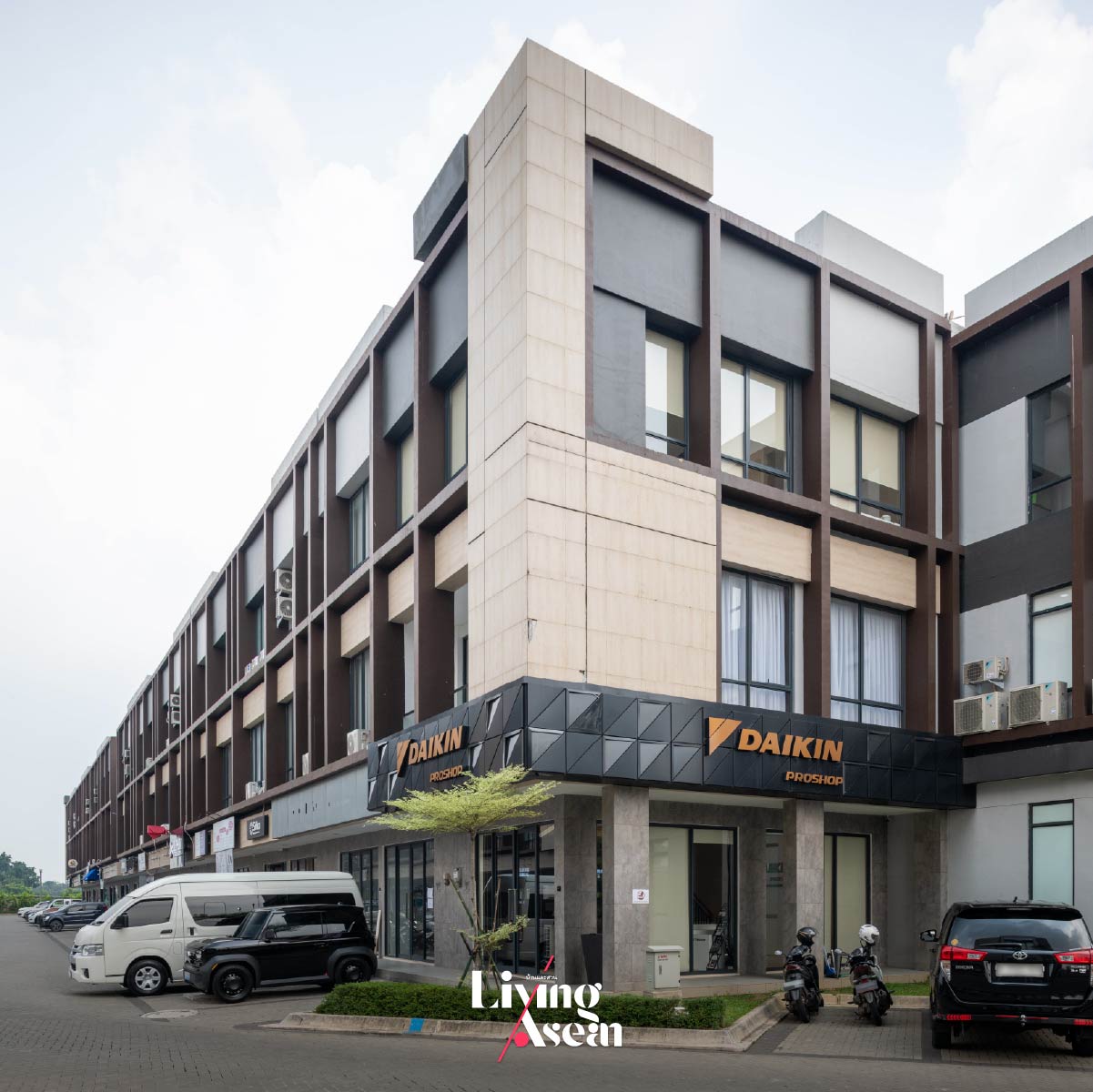
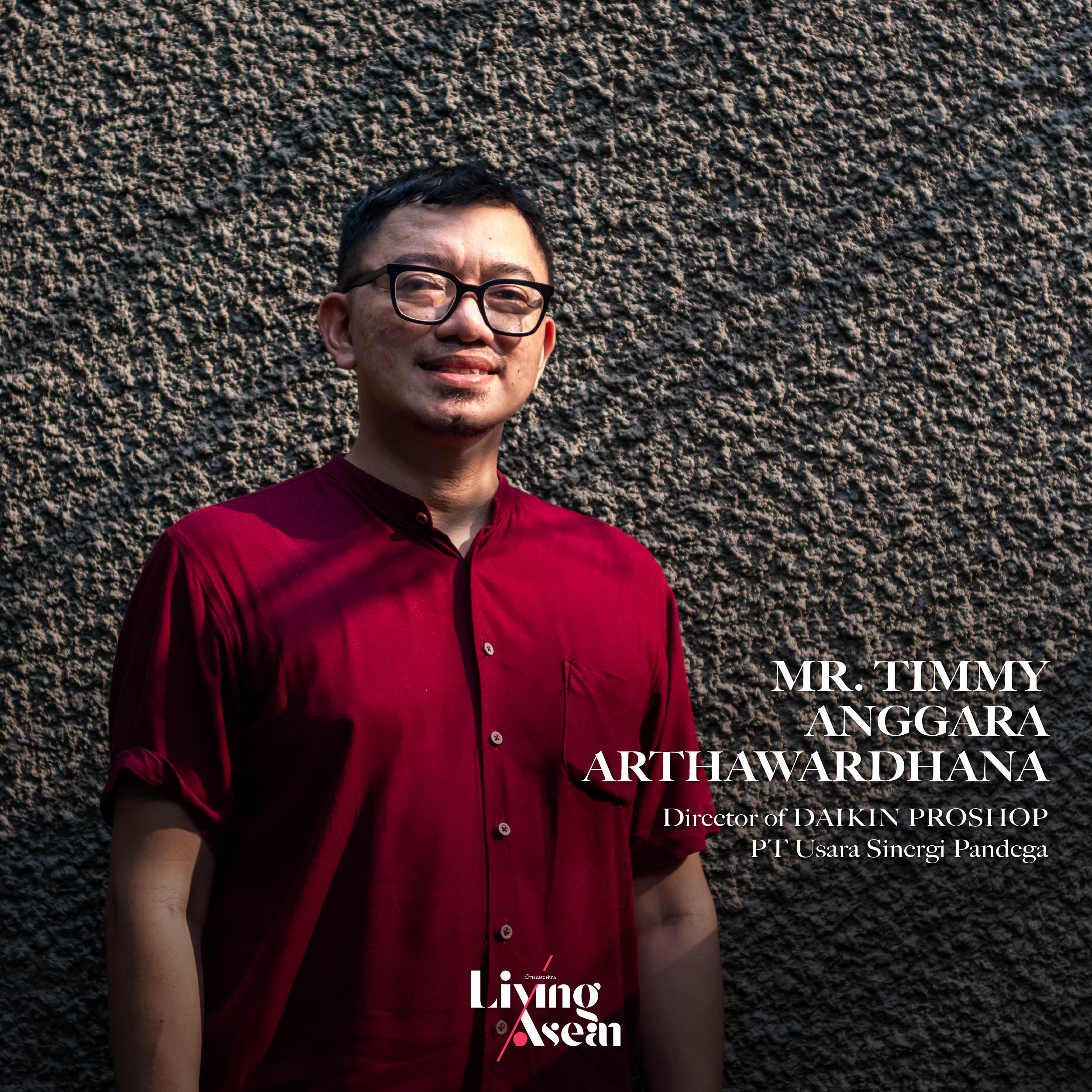
Timmy Anggara Arthawardhana is the director of DAIKIN PROSHOP PT Usara Sinergi Pandega, one of 44 authorized DAIKIN dealerships in Indonesia. Introducing the services of DAIKIN PROSHOP, Timmy emphasized that it is more than just a store selling air conditioning systems. It is also a specialized shop dedicated to providing expert advice and inspiration. Its true strength lies in delivering superior after-sales service.
“We want customers to understand that, while DAIKIN products are of the highest quality, proper installation is essential to ensure maximum efficiency. That’s why we bring in expert teams from DAIKIN PROSHOP to carefully assess and complete each installation thoroughly and professionally. This gives us confidence that our products perform at their best and meet the highest installation standards,” said Timmy.
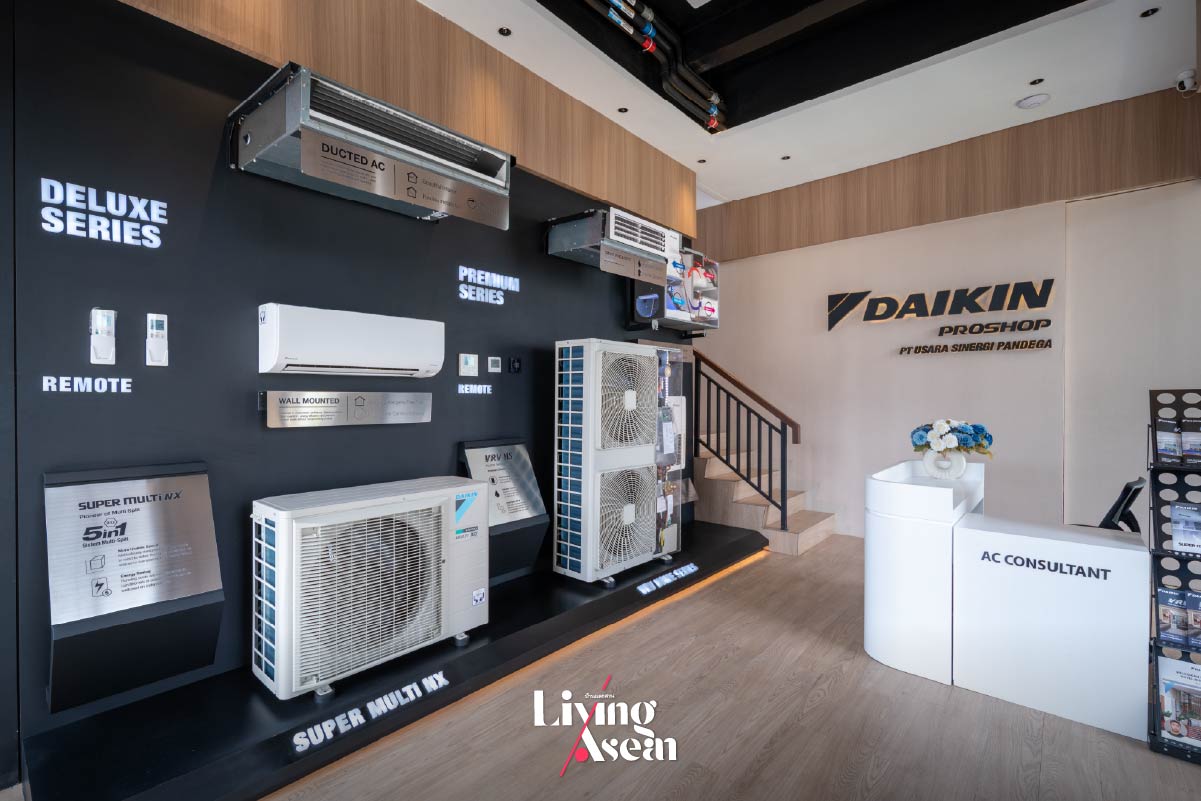
DAIKIN PROSHOP prioritizes a positive customer experience by actively promoting consumer understanding of how its air conditioning systems work. Designed for mid-level to premium homes, DAIKIN products are showcased through regular in-store events that feature product displays and curated items of interest. In this way, customers have a chance to experience the products and services firsthand as well as envision how they would integrate into their own living spaces.
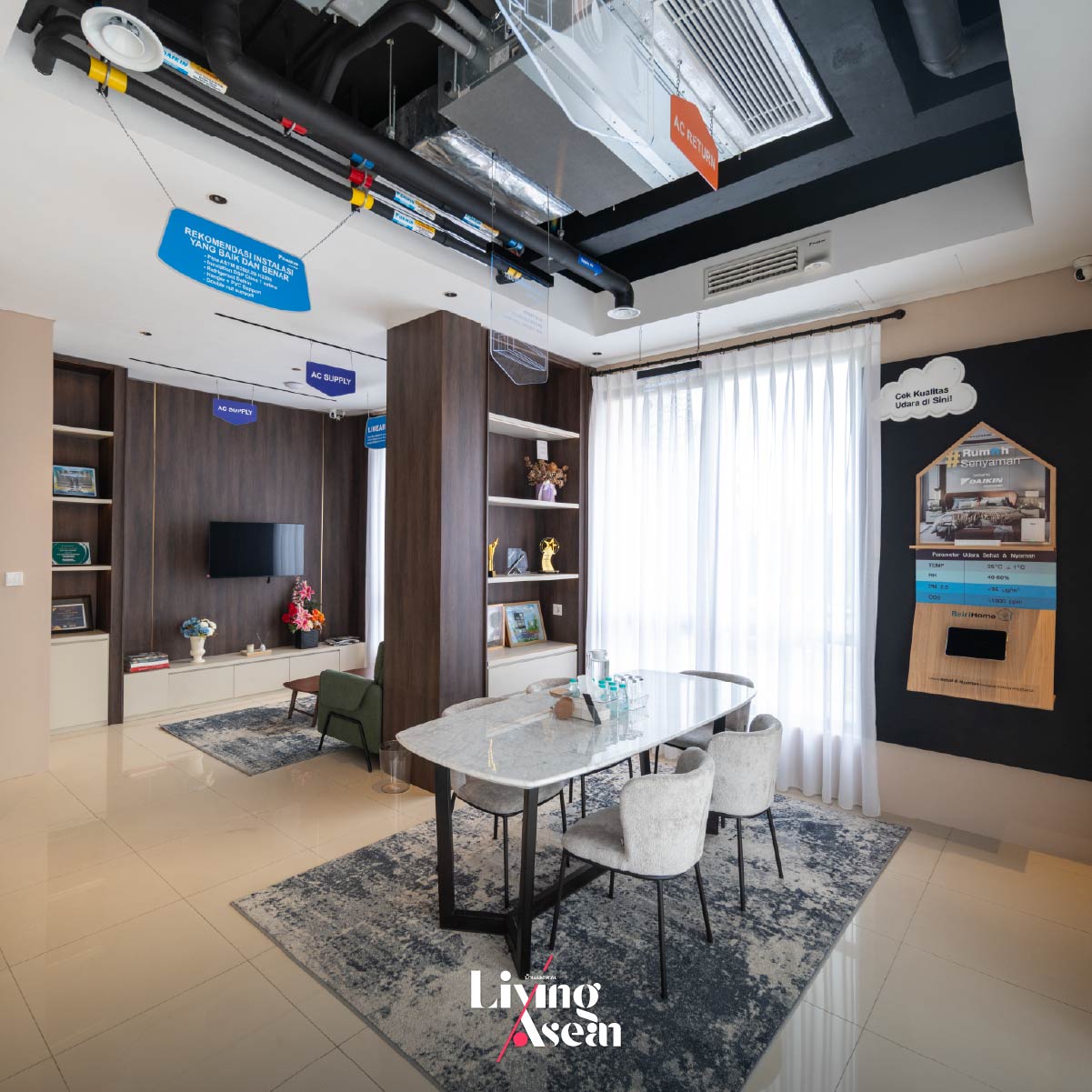
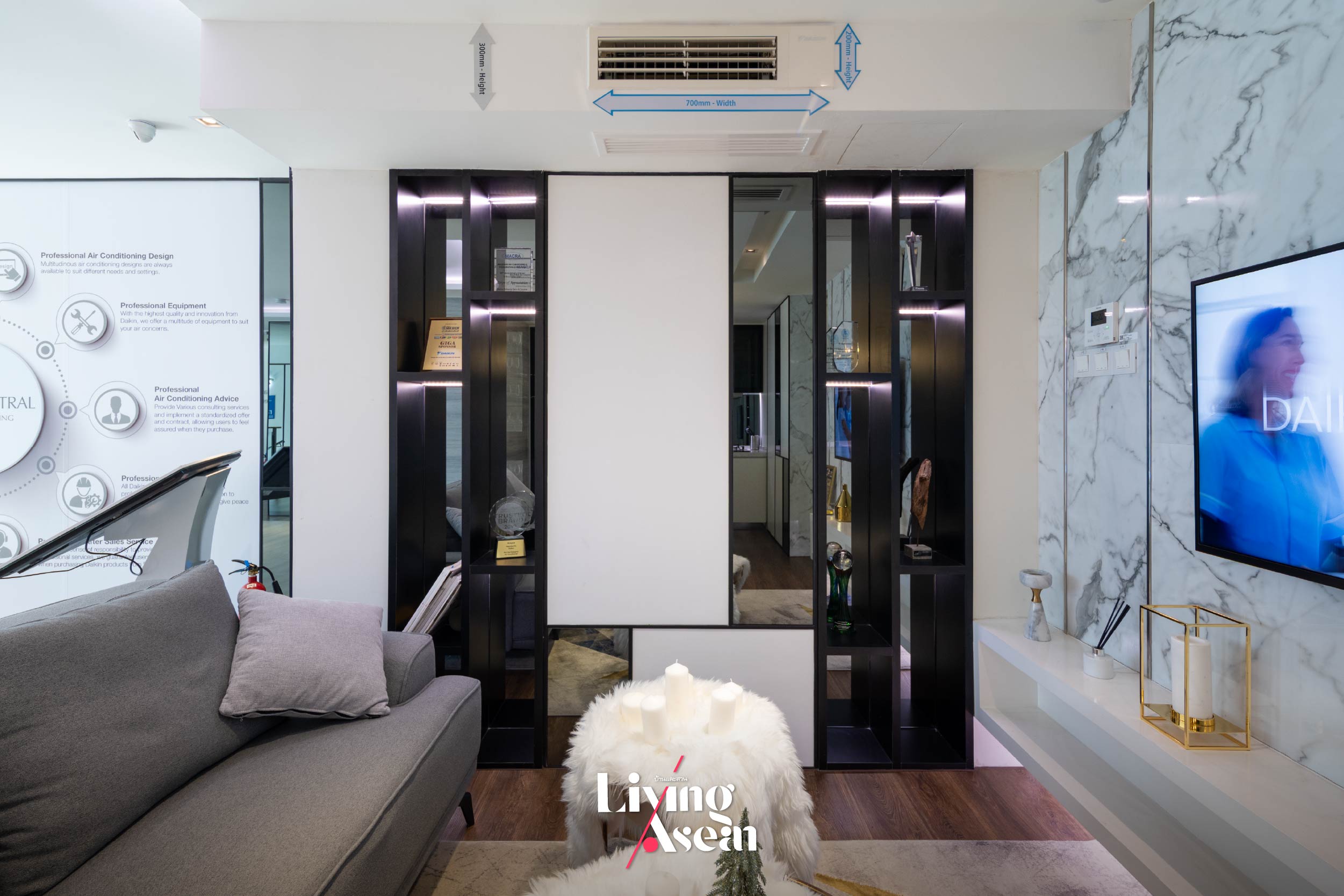
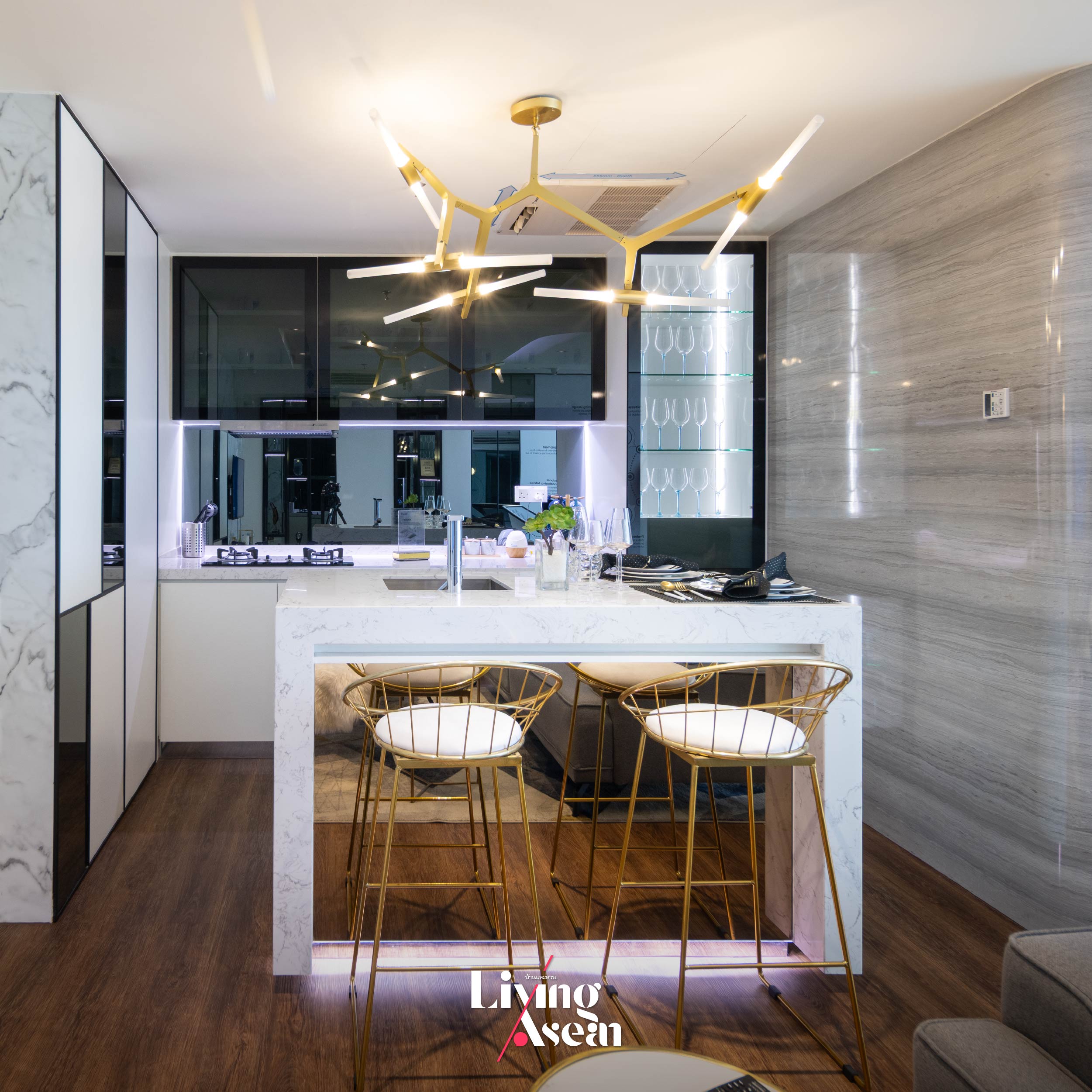
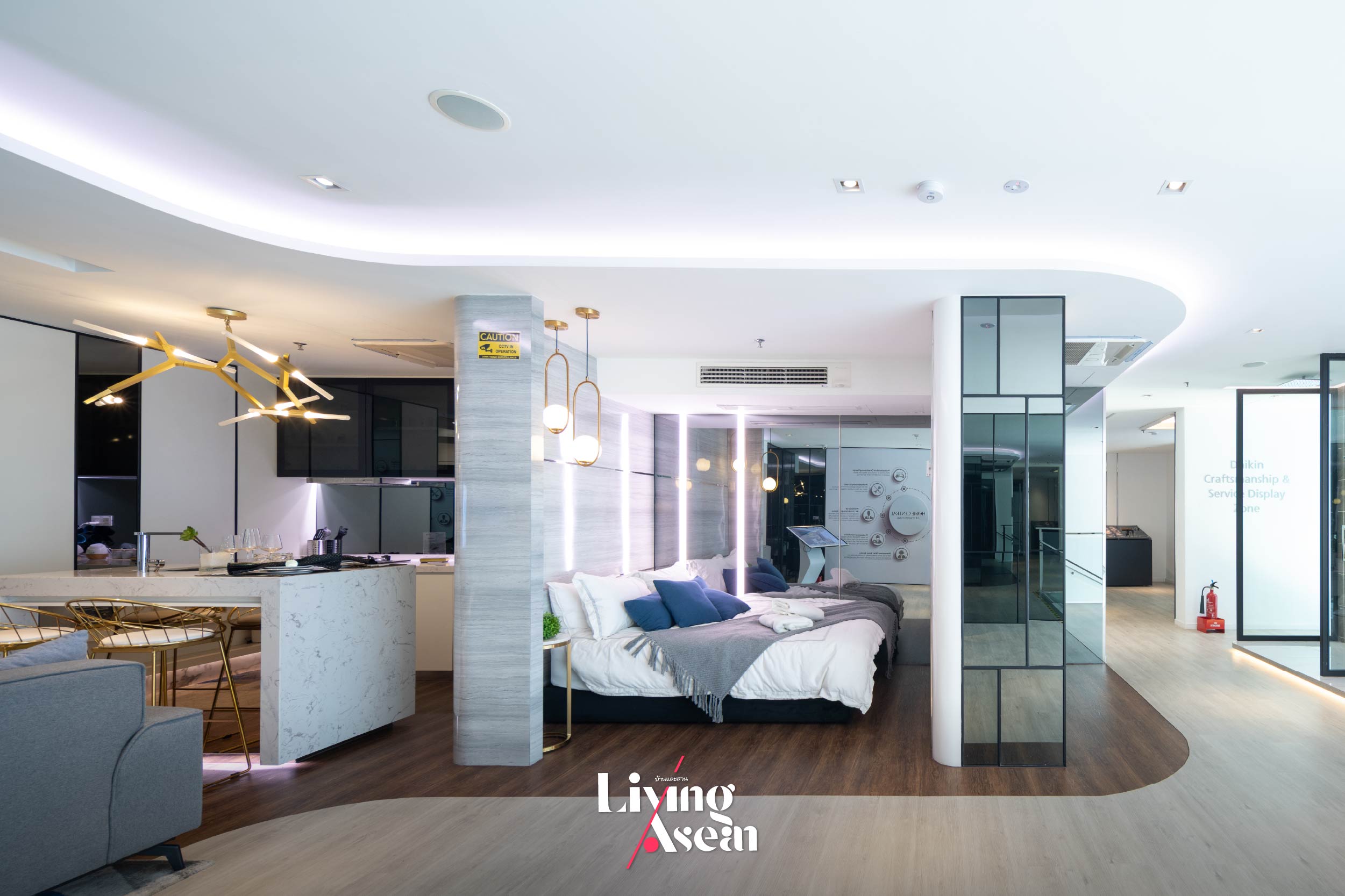
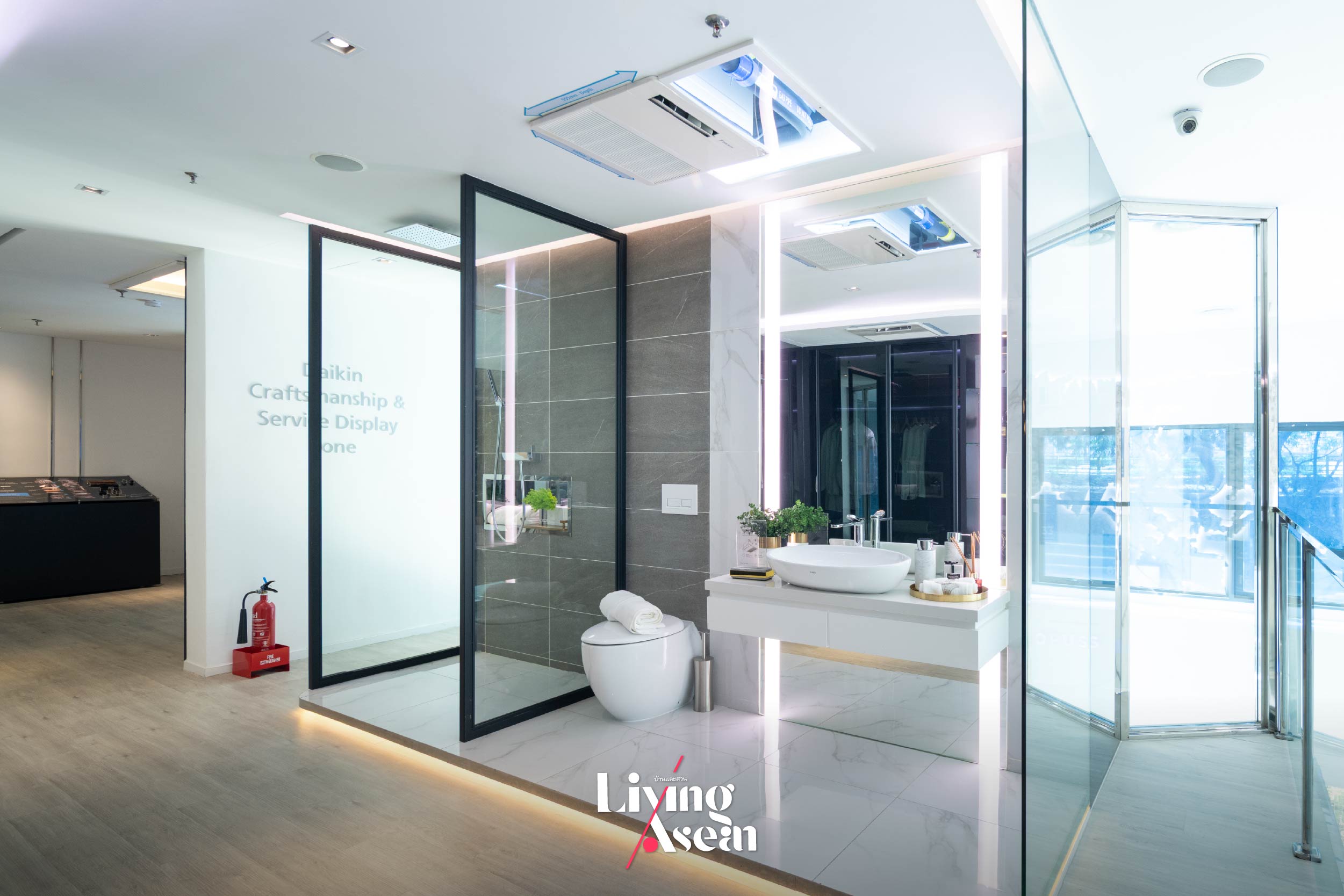
The showroom also includes mock-up rooms equipped with DAIKIN’s air conditioning units. These setups feature open-concept layouts, such as dining areas that flow seamlessly into living spaces, allowing customers to see how each component, from the main air conditioning unit to the air ducts and ceiling grilles works together as a complete system. Also on display are insulation techniques and materials that help shield the home from external heat, which is crucial to maintaining system efficiency and keeping energy costs down.
To meet the needs of homeowners and strike a balance between form and function, DAIKIN PROSHOP works closely with leading architects and interior designers throughout every stage of the project. This collaboration ensures that the selected air conditioning systems not only meet end-user expectations in terms of comfort, health, and wellness, but also align aesthetically with the home environment. With careful planning and discreet design, there’s nothing bulky or visually intrusive to disrupt the beauty of the interior. These thoughtful design elements are what set DAIKIN apart from other brands.
“We consult with both architects and homeowners early in the process, before construction even begins, to provide informed recommendations. Our role includes system design and installation, ensuring the solution fits the size of the home and is visually cohesive. Once approved, we provide cost estimates and manage the full installation. After that, we focus on after-sales service and ongoing customer support to build long-term trust in our products and services.,”Timmy explained.
DAIKIN PROSHOP currently has 44 dealerships and 42 showrooms across Indonesia, strategically located in areas with growing mid-level and high-end property development. To build strong customer relationships, the company actively shares information about the latest innovations in air conditioning technology. By keeping consumers well-informed about its offerings, DAIKIN PROSHOP empowers them to make confident, informed decisions when selecting the air conditioning systems best suited to their needs.
All of this demonstrates that at its core, DAIKIN PROSHOP is more than just a provider of physical products. Rather, it is a purpose-driven company committed to enhancing the quality of living spaces and offering practical solutions to real customer needs. In tropical climates, where high temperatures and humidity are the norm, homeowners require highly efficient air conditioning systems—ideally, ones that integrate seamlessly with interior design to create a sustainable, tranquil living environment.
For more updates on design, stay tuned to the ASEAN Home Tour series, a Baan Lae Suan TV program supported by DAIKIN, on air every Sunday at 10.15 a.m. Amarin TV HD, Channel 34.
In the ASEAN region that’s known for warm temperatures and high precipitation, creative design has made the best possible use of abundant sunshine, seasonal winds and the visual beauty of land to achieve comfort and well-being at home.
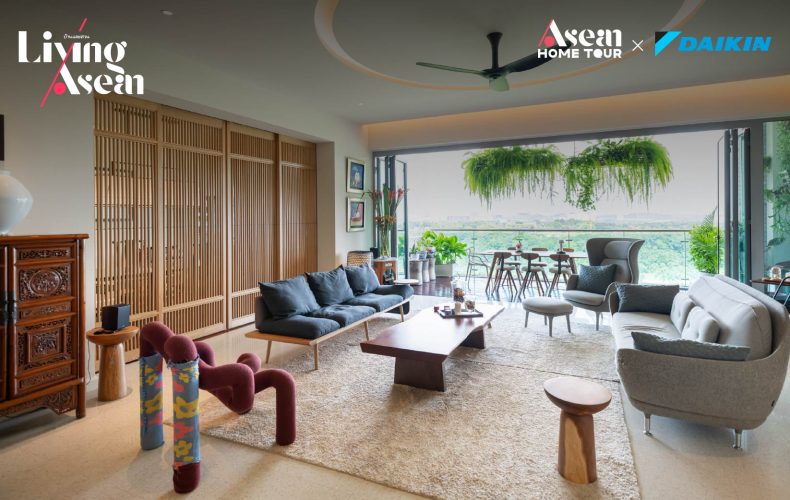
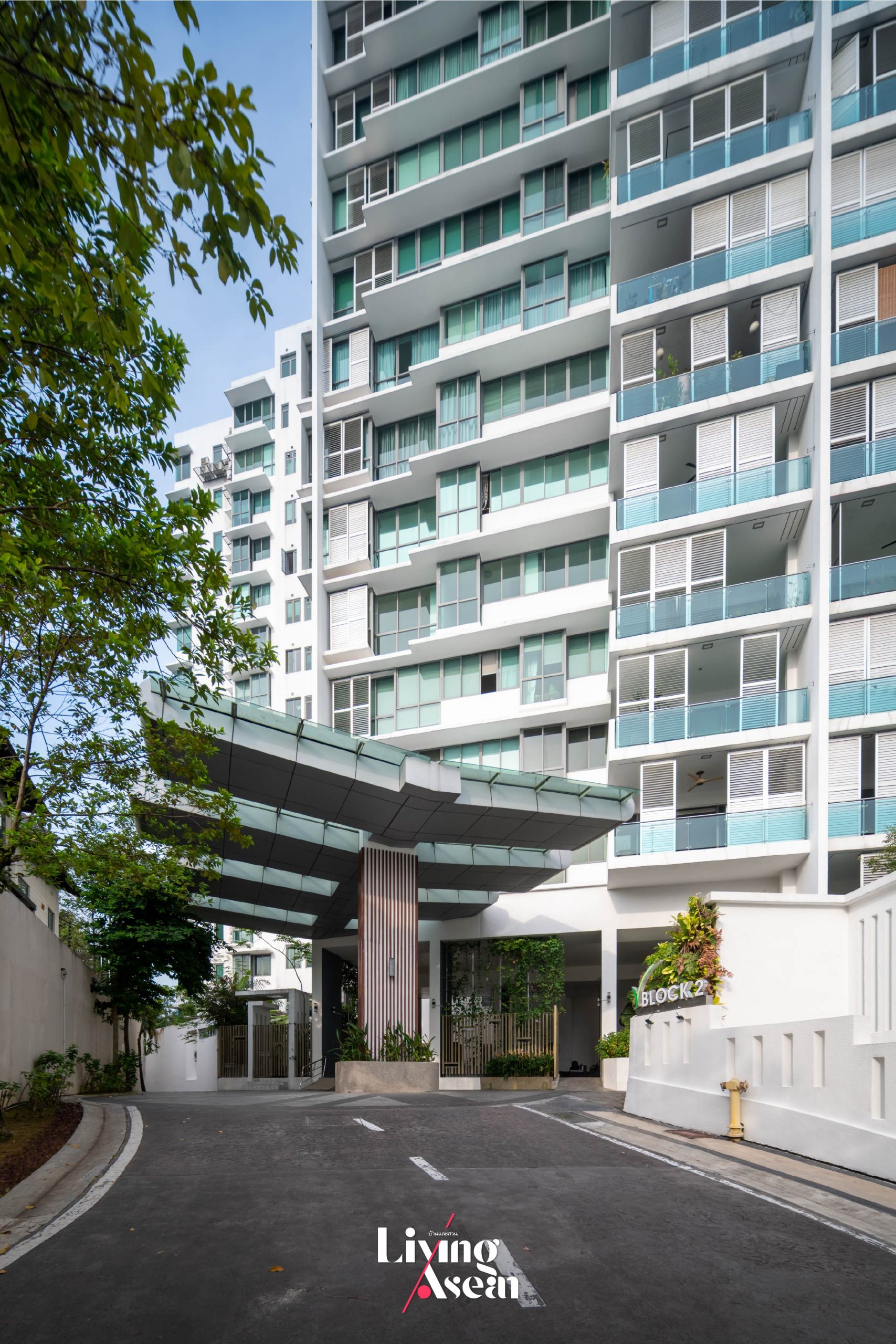
We’d love for you to come check out a newly updated contemporary-style condo unit inside “The View at Serai Saujana”, a residential development located on the outskirts of Malaysia’s capital Kuala Lumpur. The beautifully restored home belongs to Ms. Elaine Chew. It’s the epitome of design integration combining elegance and modern innovations to create physical comfort, emotional well-being and functionality.
Inspired by Hanok, a traditional Korean house, the renovation work is the brainchild of interior designer Effendy Nadzri, who is co-founder and design director at Endo Sdn. Bhd. Meanwhile, take the time out of your busy schedule to explore new technological innovations designed to create clean air at DAIKIN SOLUTION PLAZA in Kuala Lumpur. The show is part of ASEAN HOME TOUR Series, a Baan Lae Suan TV program sponsored by Daikin.
Design Challenges and Inspirations Blessed with a scenic golf course view, the charmingly restored condo unit boasts the spacious appeal of an open-concept floor plan. Because the couple came from different cultural backgrounds, they needed a home that celebrates a sense of history and heritage. The result is a rich tapestry of ideas, customs and understanding between Ms. Elaine Chew who is Malaysian of Chinese descent, and her better half who is a Korean engineer.
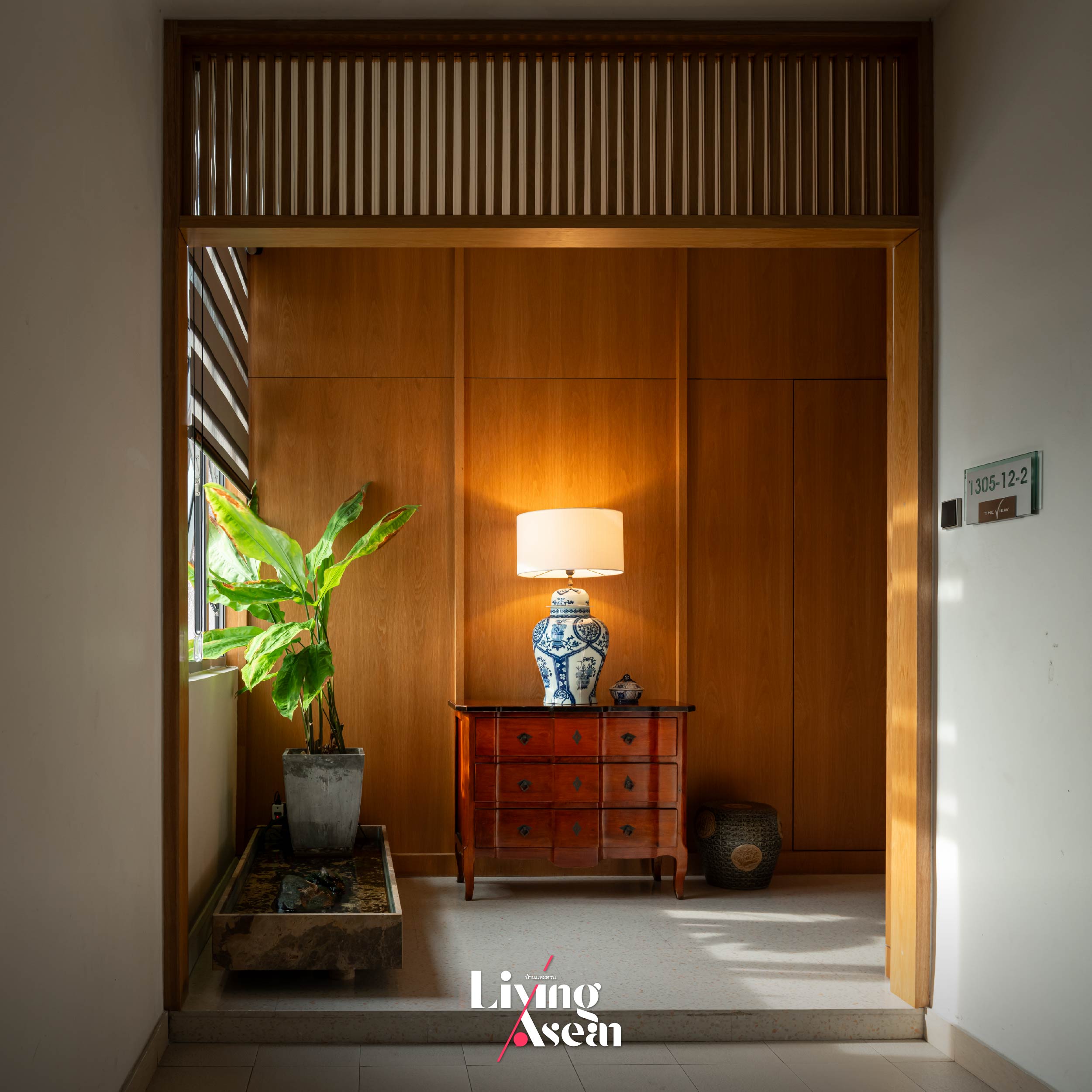
The concept of Hanok or traditional Korean houses provides the designer with valuable inspiration, culminating in a home that blends shared ideals and feeling shaped by Korean culture with characteristics that define a distinct Malaysian identity. The house’s structure consists of the foundational elements traditionally built of wood, stone and earth while the roof is covered in baked clay tiles. Designed for prevailing weather conditions and seasonal extremes in Korea, the Hanok house emphasizes a cookstove heating system, by which hot air is channeled through underfloor passages to keep the interior warm in winter. During the long, hot summer, Hanok’s gaps between floorboards and the building envelope work in tandem to shield the home from the sun’s heat. At the same time, porous materials primarily used for insulation let wind pass through and circulate inside even when doors and windows are closed.
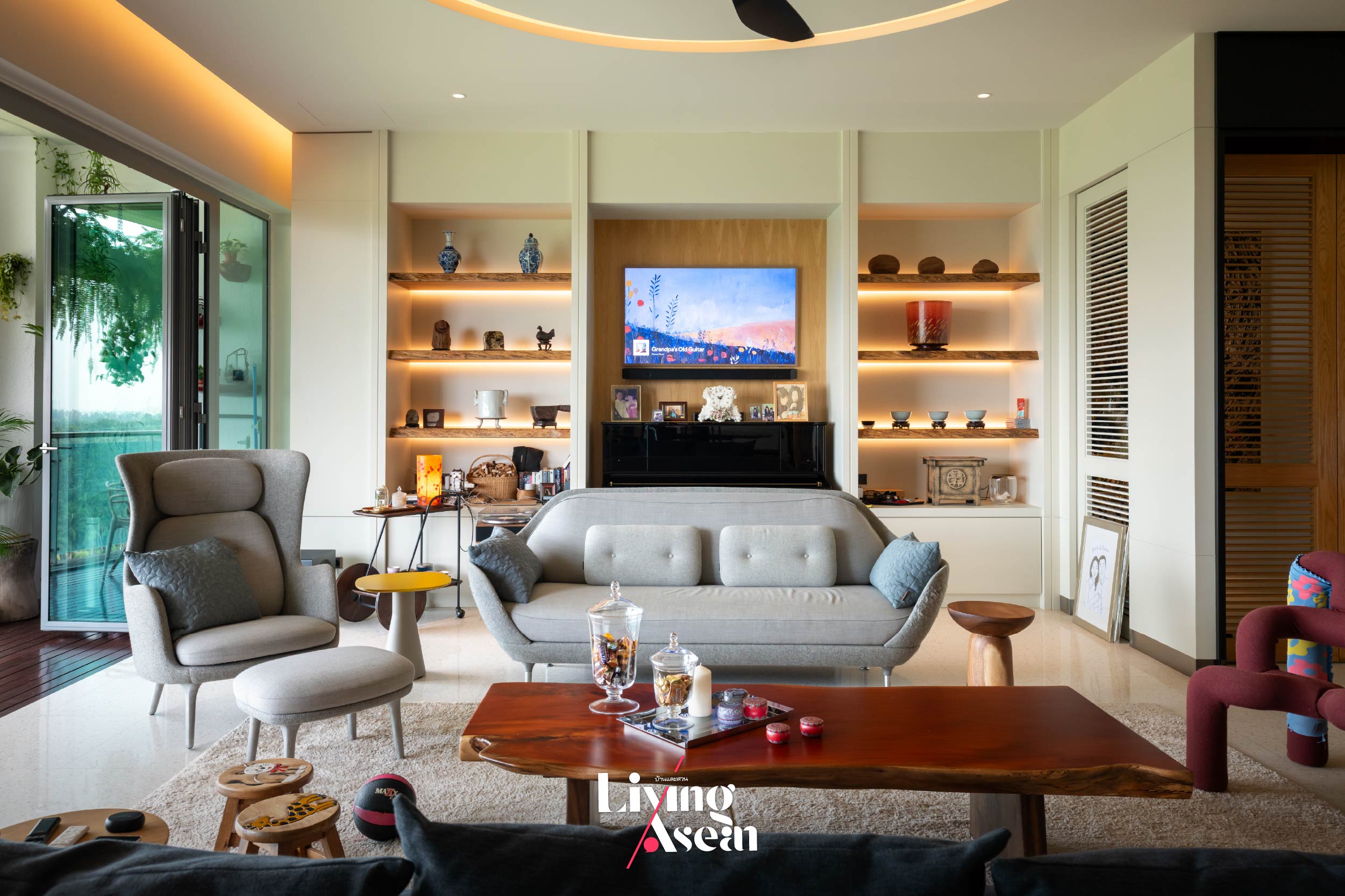
The designer turns homeowner dreams into reality, defining them precisely to create a minimalist house style characterized by simplicity, which in turn, is inspired by Zen Buddhism. Here, collectibles valued and cherished by the couple have pride of place on their wall. Together they create the most outstanding feature in the contemporary-style living room and vividly reveal Southeast Asia’s broader character.
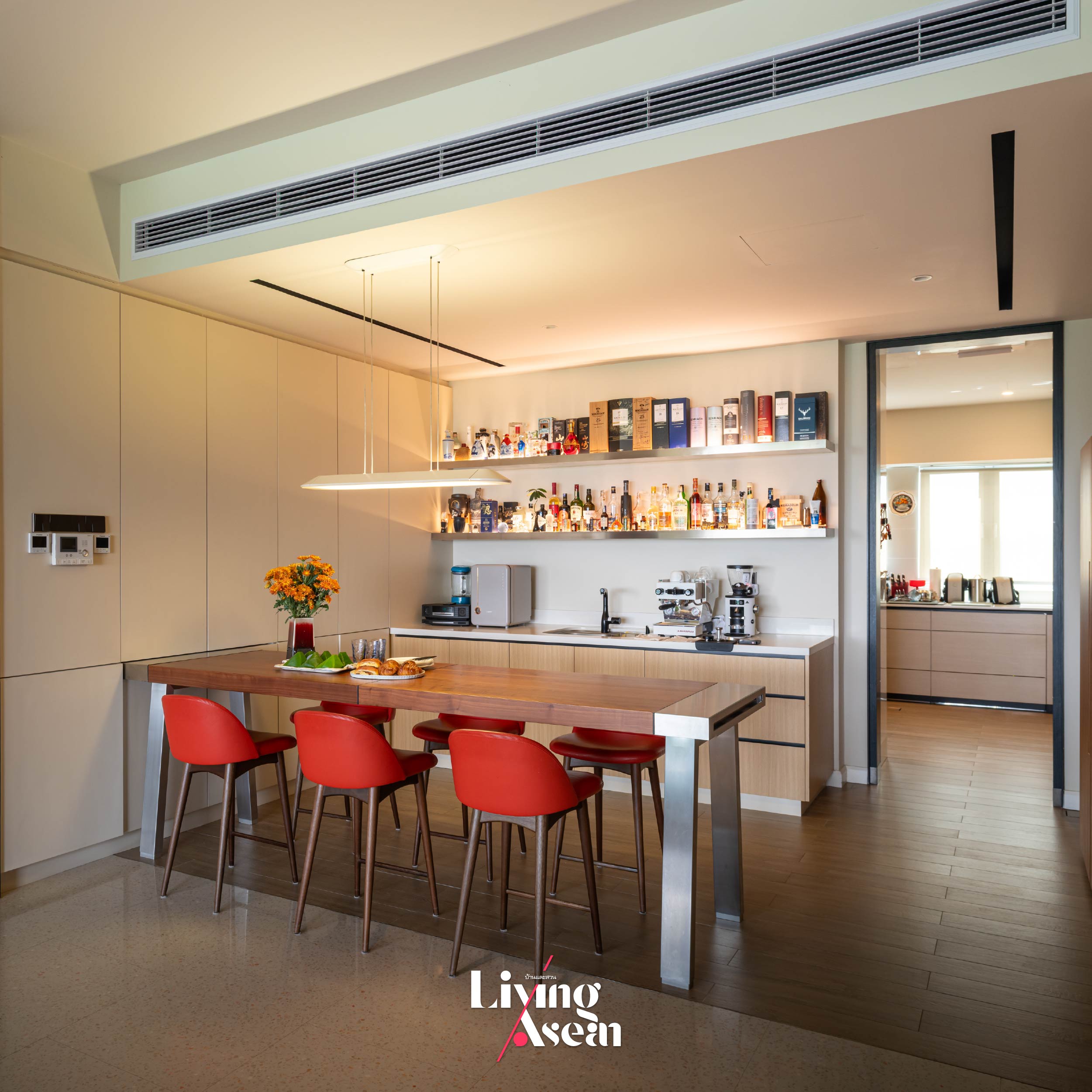
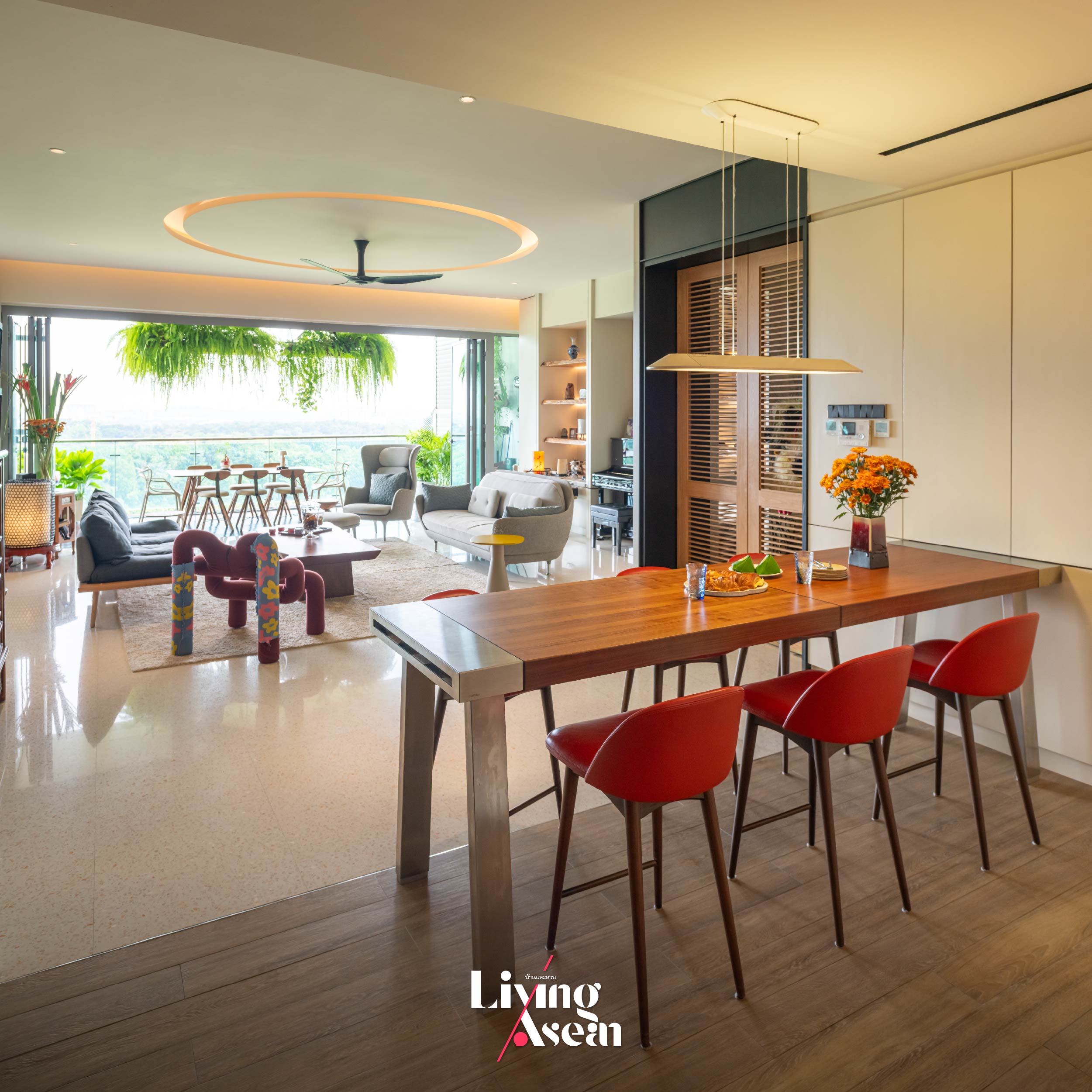
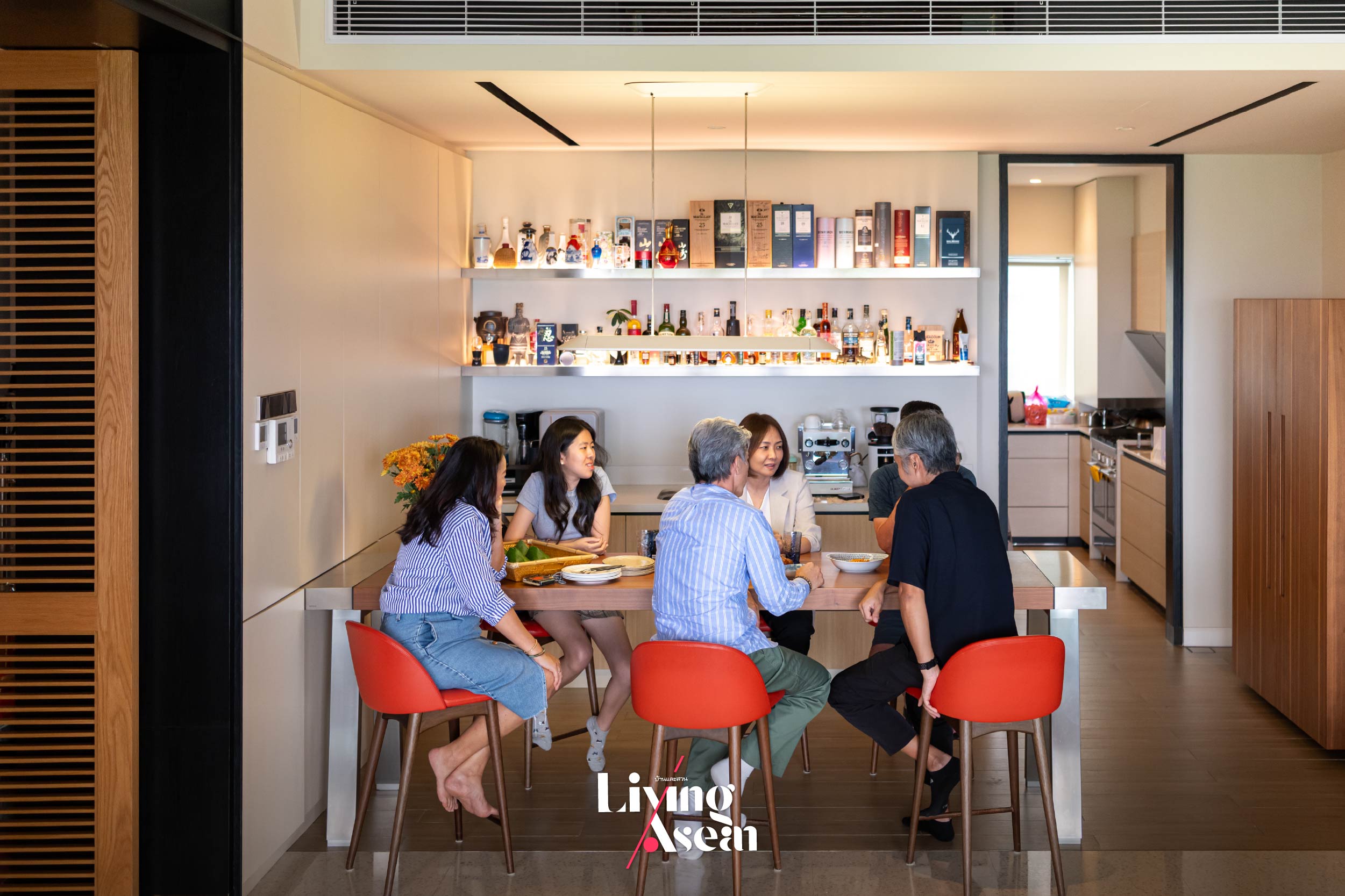
An informal, all-purpose room is used by the family consisting of mom and dad, their two children and a cat. From time to time it serves as a space for receiving and entertaining guests from abroad. The high bar table and chairs create an organized, tranquil environment contributing to a relaxing atmosphere.
Seamless Design Meets Materials that Reflect Identity
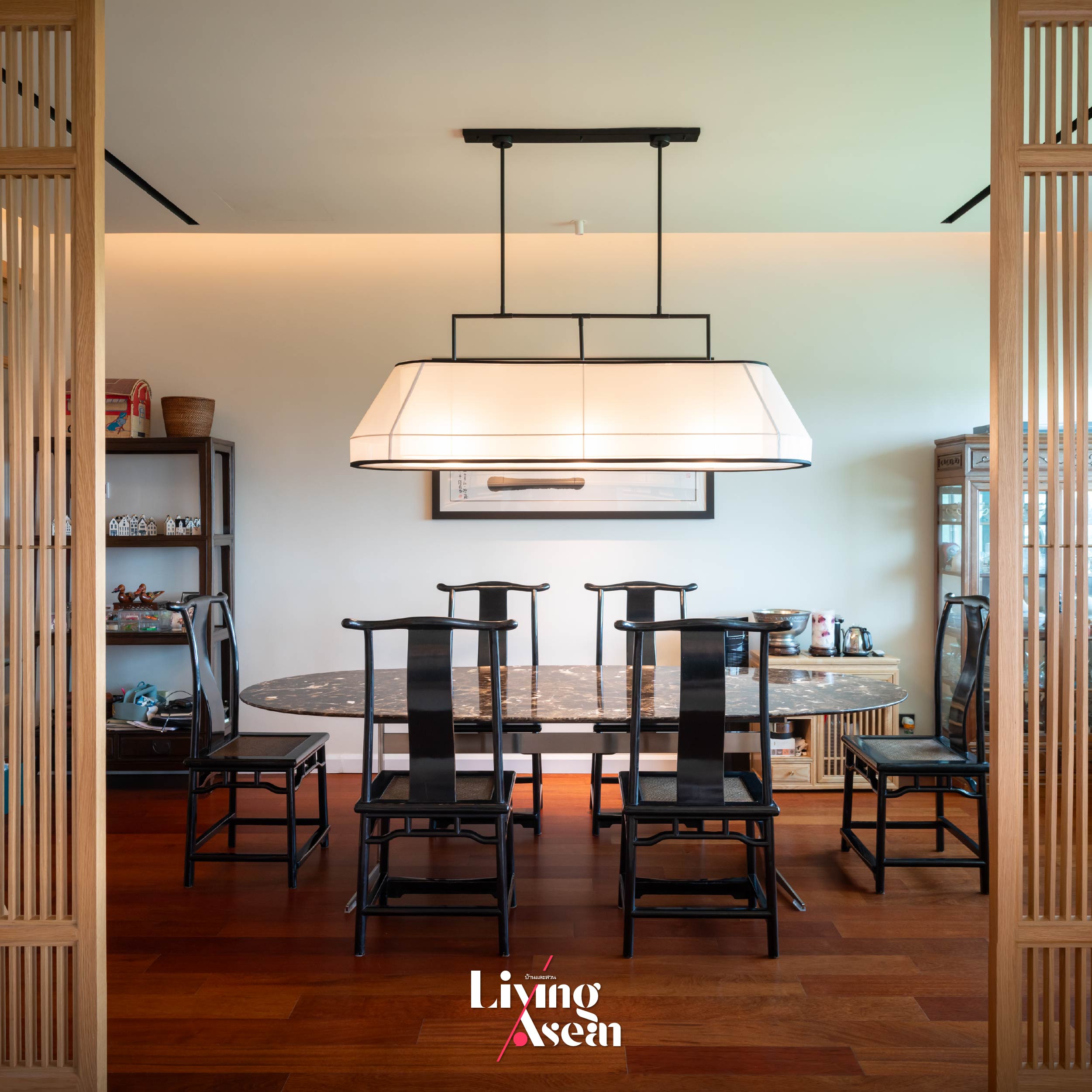
What makes this dining room stand out is the use of locally sourced traditional materials redefined and recontextualized for modern purposes. The outcome is a living space filled with the warmth of vernacular objects that speak volumes for human experience and local culture. Plus, simple clean lines emphasize clarity that’s the hallmark of a contemporary style. Components that combine wood and stone go hand in hand with some of the furniture in the room so the space flows in a consistent style and color scheme. Some of the pieces are designed by the homeowners. They include the hanging light inspired by the traditional Chinese lantern, the marble table top from Italy and wooden chairs in a contemporary Asian style.
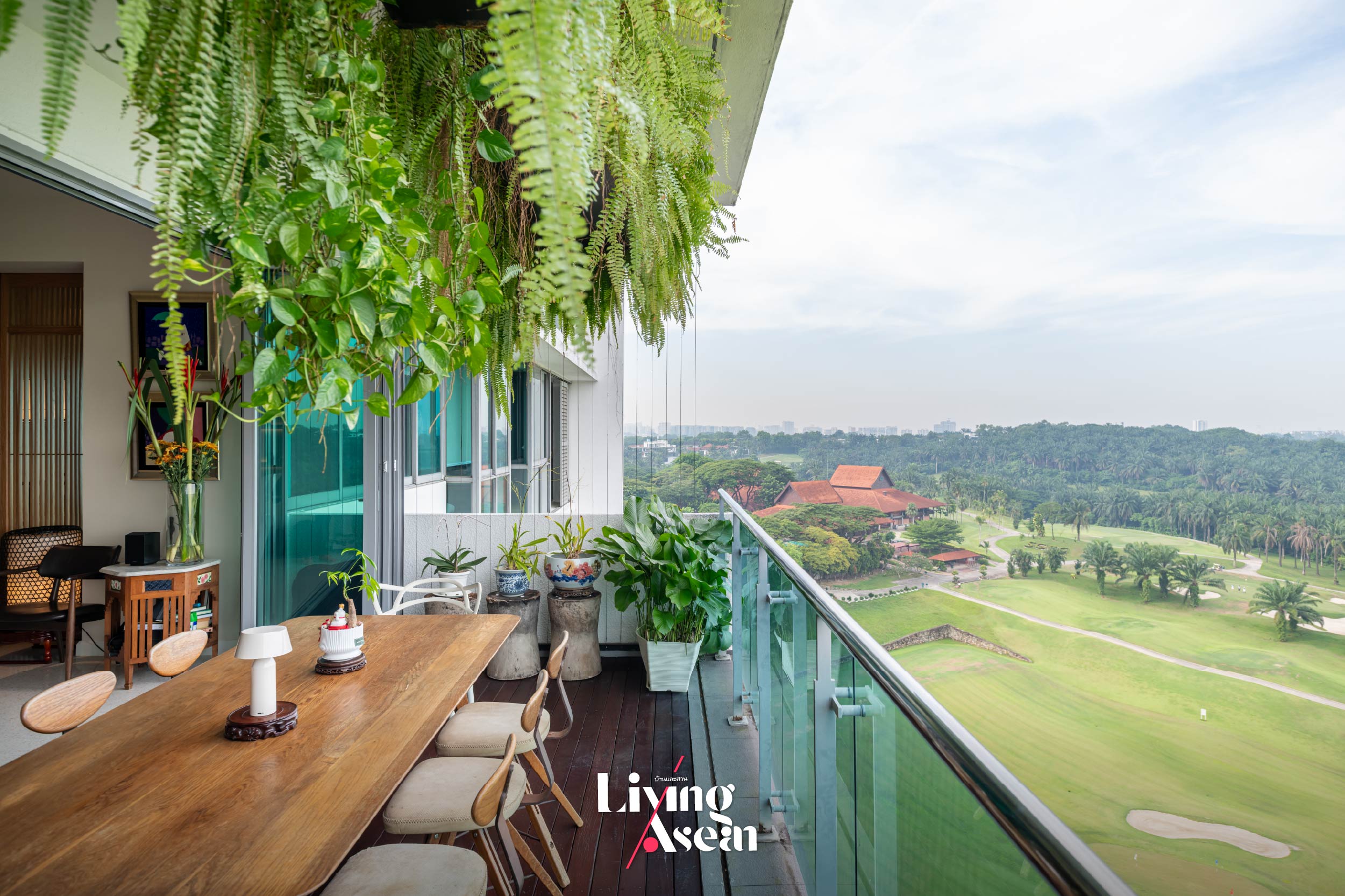
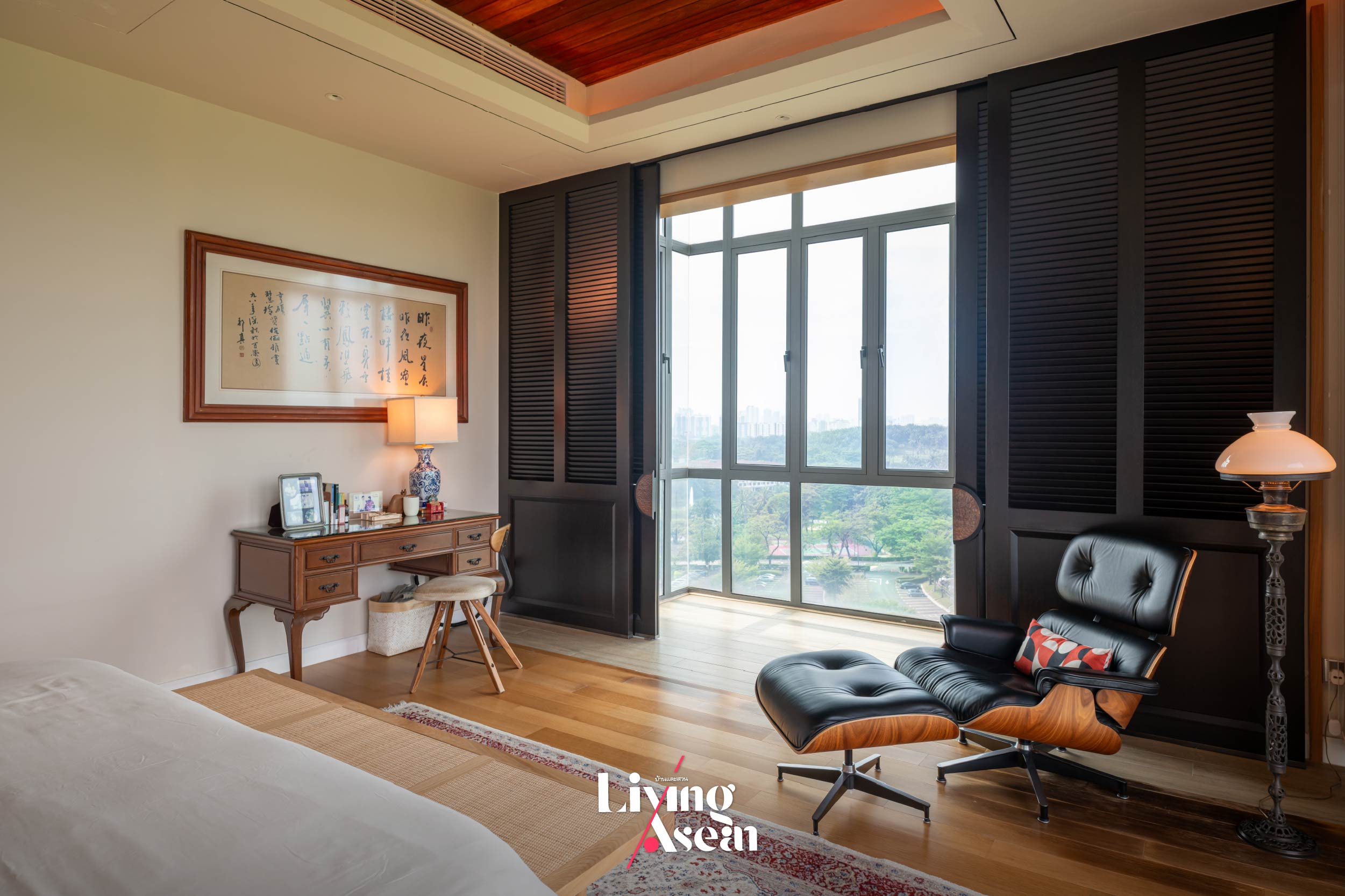
The spacious living room overlooks scenic fairways at the Saujana Golf Club, without doubt a factor that influences the homeowner’s decision. Perched on the 12th floor above a rich and vibrant expanse of greenery, the condo home offers a wonderful panorama stretching as far as the eye can see. The designer takes full advantage of ample natural light and consistent clean air circulation to create a light and airy atmosphere all year round. In this manner, the old doors that open to the balcony were taken out and replaced by an innovative bi-fold door system that opens wide from one end to the other, thereby emphasizing open spaces and a connection to the outdoors.
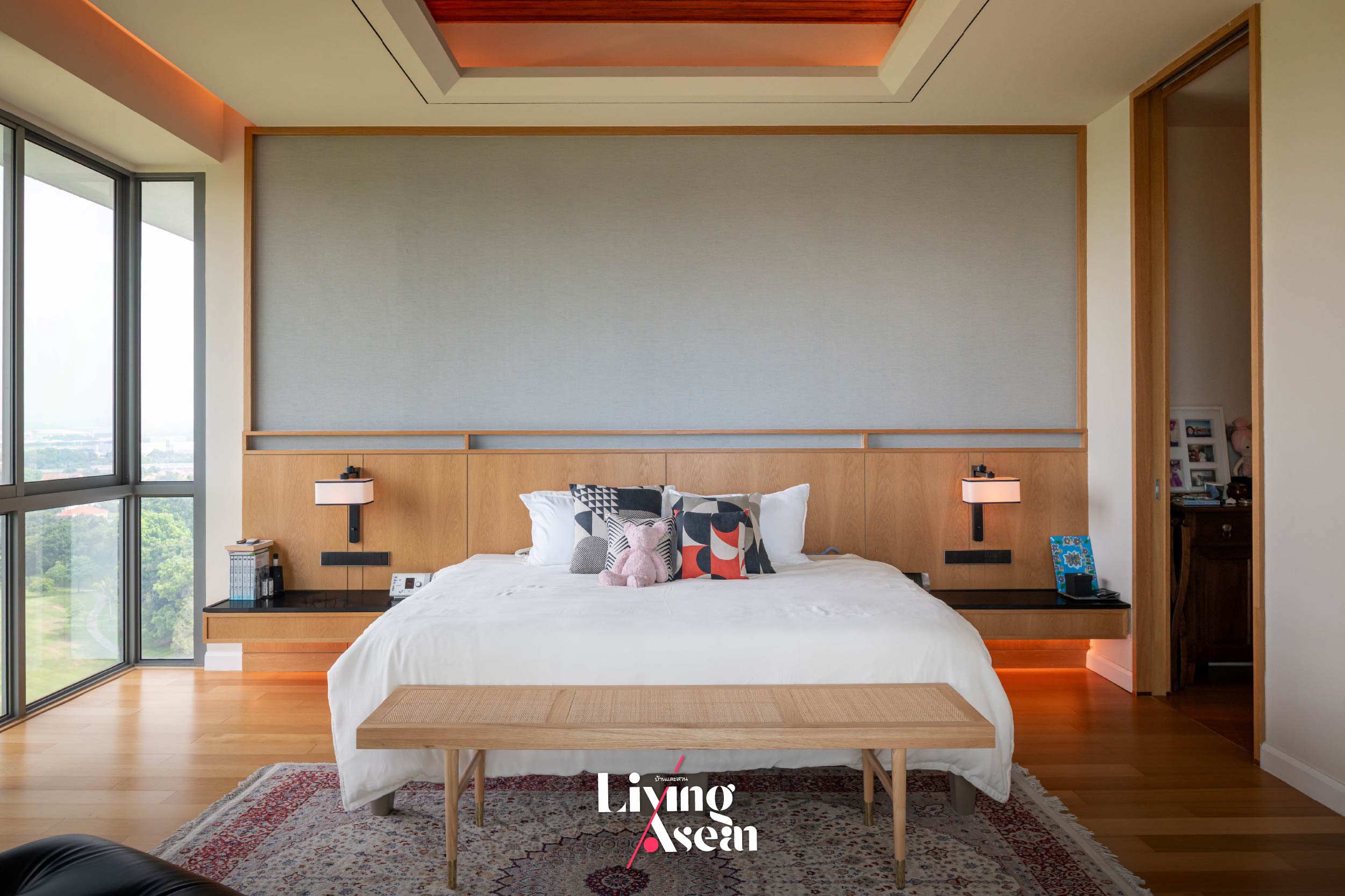
As interior designer Effendy Nadzri explains, the east-facing bedroom consistently receives bright, warm light in the morning. To avoid getting too much sun, plantation shutters for sliding doors are installed. Plantation shutters provide excellent light control while their solid, louvered design protects privacy and enhances home comfort.
In addition to the functionality of spaces and interesting design, it makes perfect sense to pay attention to air movement in the home. Because air circulation directly impacts the health, living conditions and energy efficiency of the home, the designer chooses to install DAIKIN VRV Home Series, a smart central air conditioning system capable of keeping every corner of the home cool and comfortable. Designed to blend seamlessly with the interior through strategic use of color, texture and form, the VRV Home Series has proven reliable and effective in the warm and humid climate of Southeast Asia. The result is a condo home that’s aesthetically pleasing and highly functional.
Well-Being Begins with the Right Air System
As the homeowners put it, a cozy home must have a sufficient and appropriate level of light to provide a sense of comfort, warmth and relaxation. Thermal management is vital to ensuring comfort in the home and modern air conditioning technology comes in handy to do exactly that.
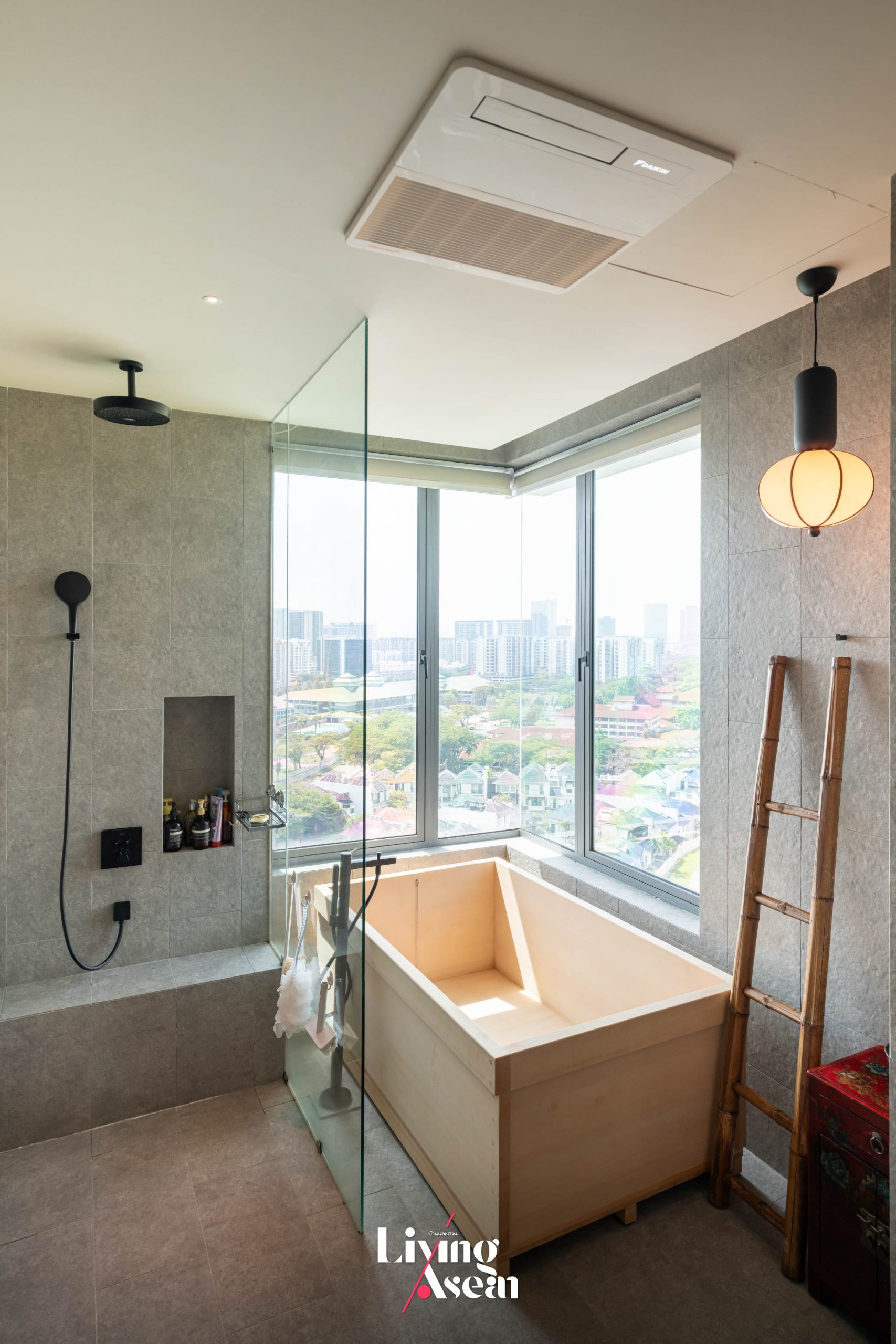
The husband, who is an engineer, is very particular about the efficiency of air conditioning machines. It’s easy to see why managing air movement in the home is vital to maintaining a healthy, comfortable indoor environment. DAIKIN VRV Home Series is chosen for its ability to provide proper airflow. This is especially useful where the bathroom comes complete with a Japanese-style onsen soaking tub. The VRV Home Series has a blow dry function to prevent issues like the buildup of moisture in the interior. It quickly dries the bathroom getting it ready for the next user.
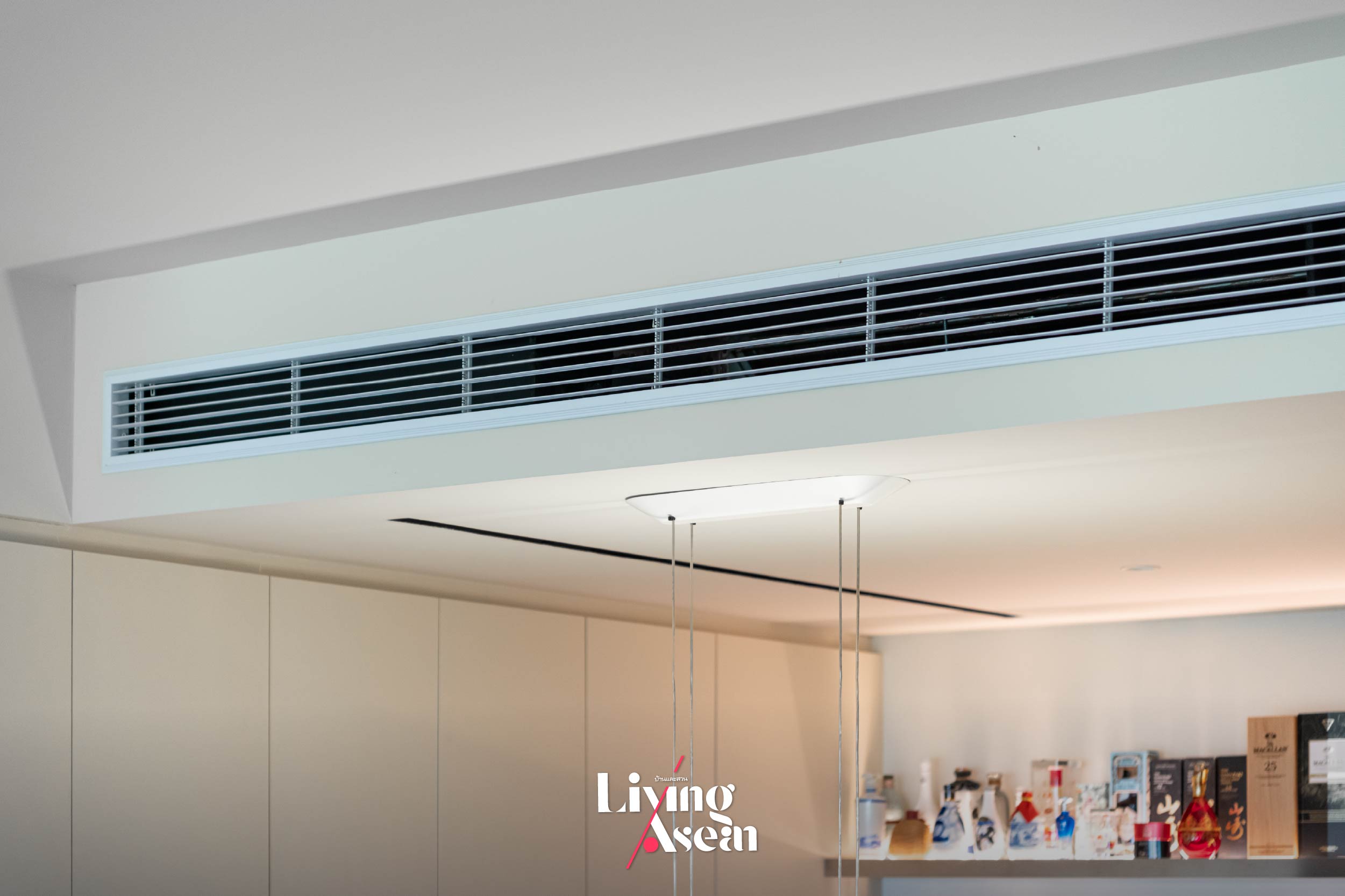
Sharing a slice of paradise with friends, Ms. Elaine Chew said: “The house where we lived previously was cooled by individual air conditioning units. Each one of them functioned on its own. This condo home is powered by DAIKIN VRV Home Series, a smart central A/C system that keeps the home cool, meanwhile, transforming those pesky eyesoars into unique design elements. For a discreet appearance, A/C indoor units are hidden above the ceiling. By design, only sleek and stylish ceiling cassettes are visible in the interior.”
From Elaine’s point of view, living in the tropical climate of the ASEAN region requires a cooling system that works. One simply can’t do without a cooling fan of some kind, or an A/C system that actively chills the air. Proper airflow is important, too. A well-thought-out ventilation system design, coupled with an understanding of light directions, is crucial in making a home comfortable even when outside temperatures are high.
This is especially true here, where advances in DAIKIN’s cooling technology have transformed an ordinary home into a cool, well lighted place, focusing on using modern innovations and space-saving decor. In the fewest possible words, it’s about creating a peaceful home, protecting privacy and enjoying a good life every day.
DAIKIN SOLUTION PLAZA: Pure Air Innovations for Better Living
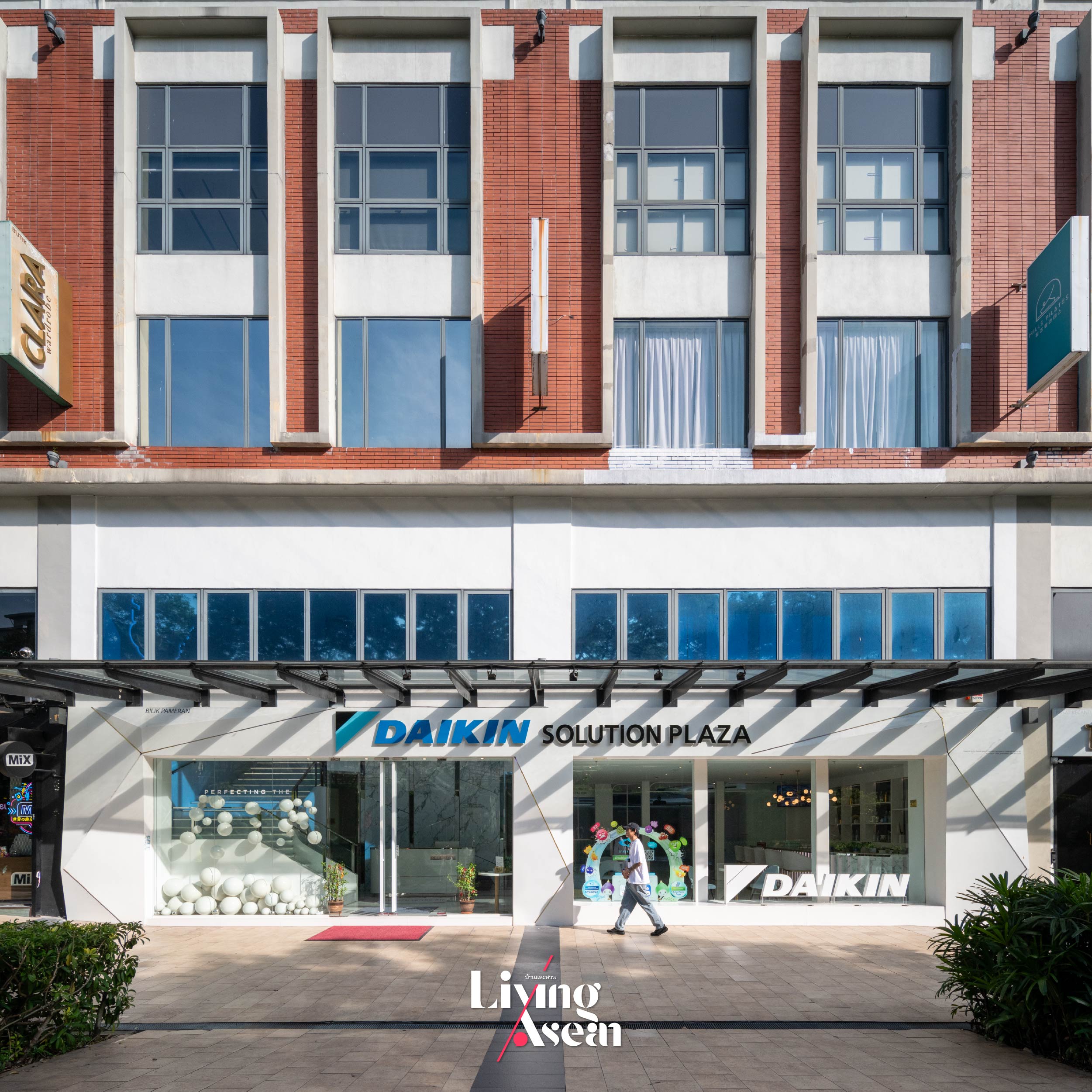
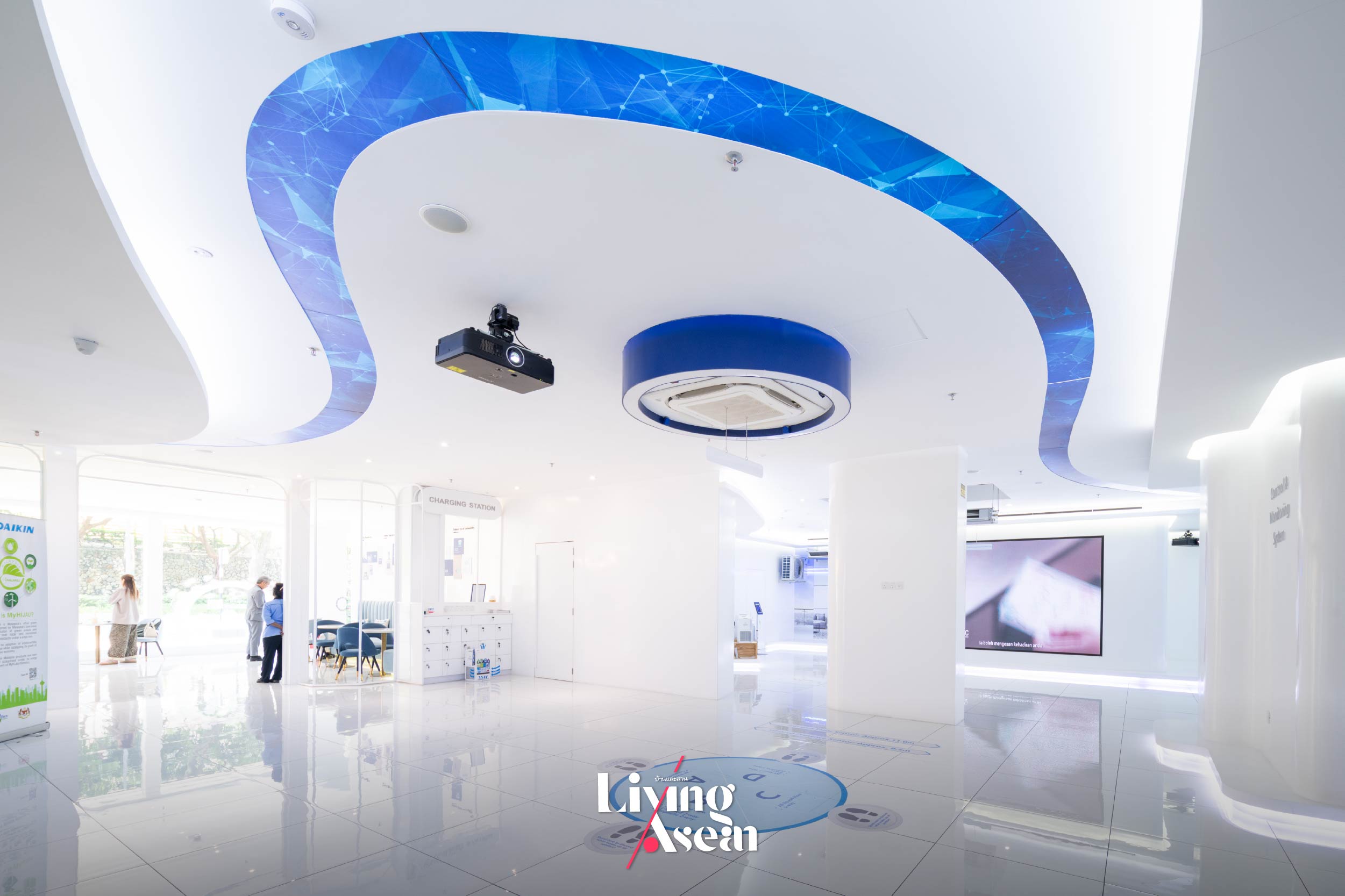
After exploring the essential elements of a comfortable home, let’s find out a little bit more about DAIKIN SOLUTION PLAZA in Kuala Lumpur. It’s a showroom used to display the latest home innovations and smart, integrated systems that improve ventilation and air quality from DAIKIN. Its slogan, “A value that goes beyond technology”, conveys a great deal about the company’s commitment to finding solutions that best answer the lifestyle needs in warm and humid climates.
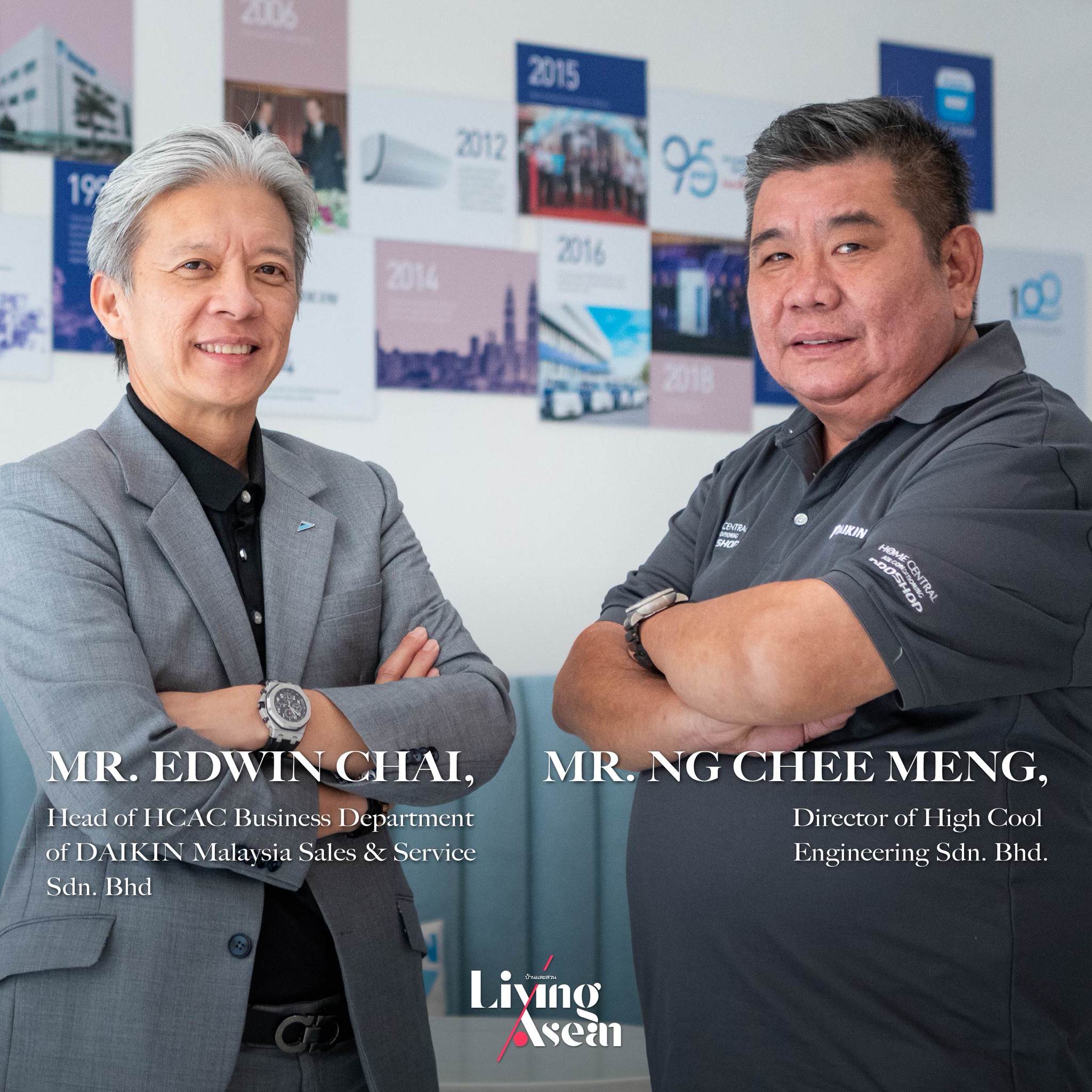
Mr. Edwin Chai, an executive at DAIKIN Malaysia Sales & Service Sdn. Bhd. said: “At the moment, DAIKIN isn’t just an air conditioning machine. It’s advancing all the time and has since elevated to the next level, focusing on creating a value that goes beyond technology. The company has achieved its objective, providing premium quality products to all consumer groups, offering clean air and air circulation system design that performs optimally in the hot and humid climate of the ASEAN region.”
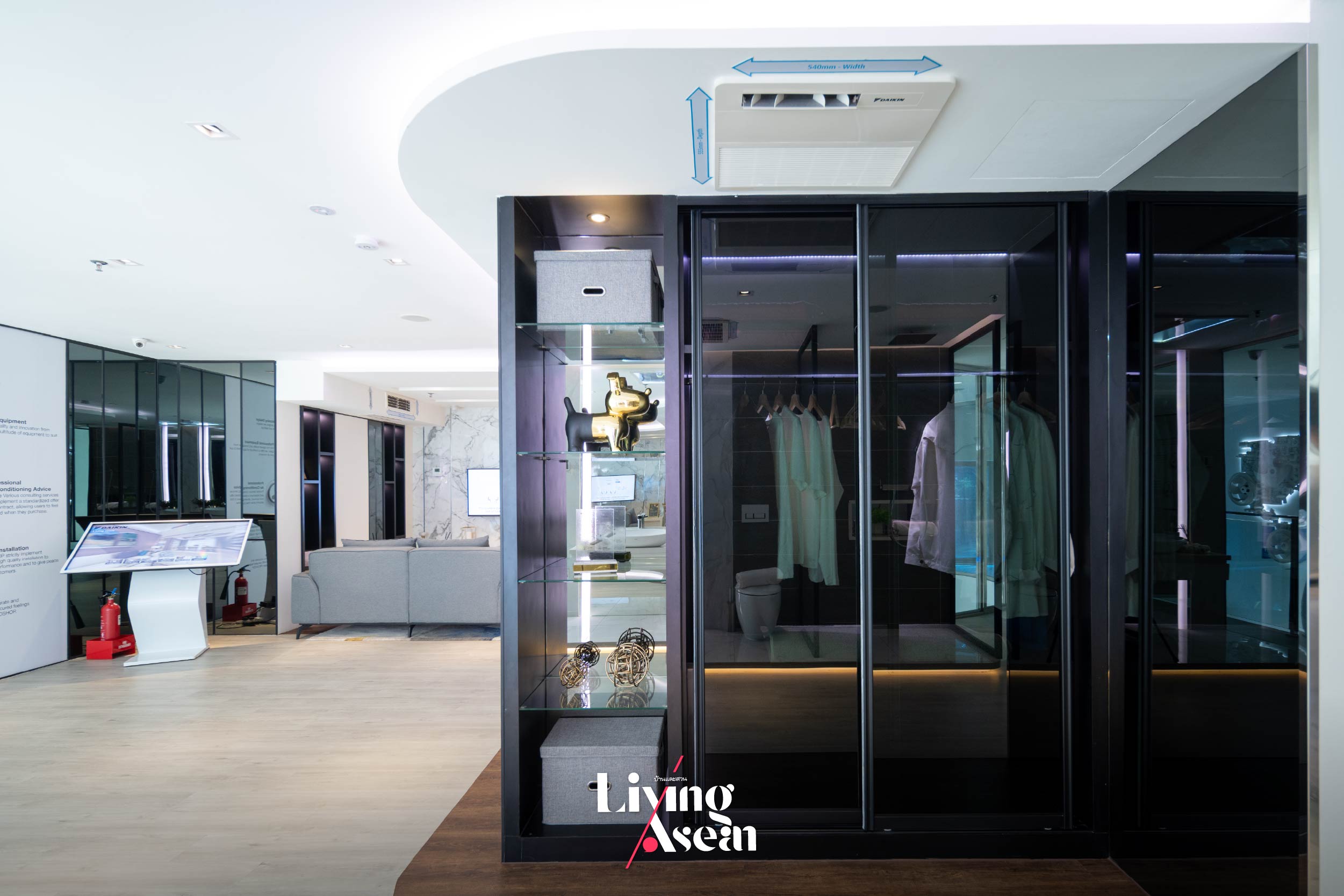
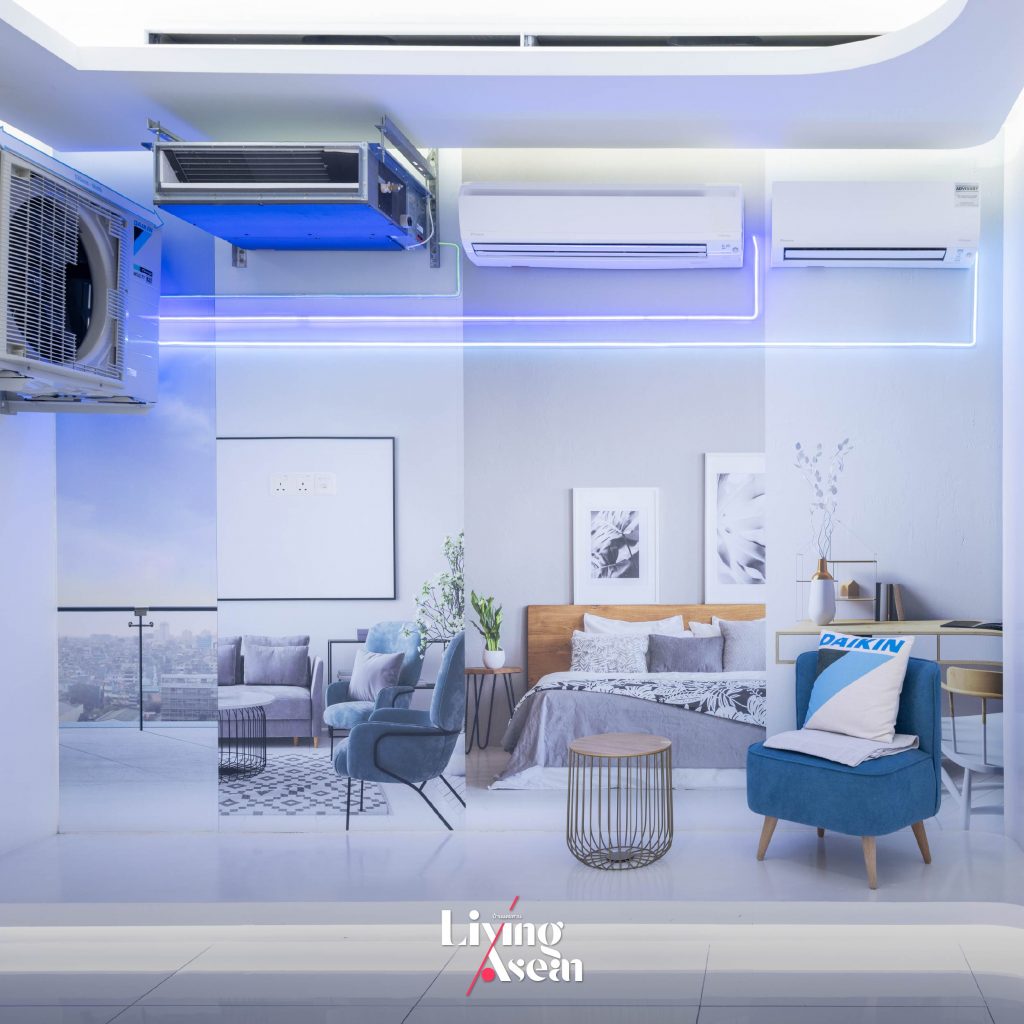
As a leading innovator in air conditioning technology, DAIKIN uses this showroom to display a wide range of products through strategic organization, useful visuals and content. The first floor is dedicated to products for small businesses while the upper floor is exclusively allocated to systems for high-end residential developments. They are designed for visitors to recognize the full worth of each product and how well it meets consumer needs, whether it’s for the guest welcoming area, the living room, the kitchen, the bedroom, the dressing room, or the bathroom.
DAIKIN has introduced new innovations designed to blend aesthetics with functionality, meantime, saving installation space both inside and outside. Named the “VRV Home System”, it’s a central air conditioning technology that makes effective use of a single condensing unit, thereby saving installation space in parts of the house exterior. Plus it’s thoughtfully devised to keep a network of pipes organized and hidden from view. This allows the indoor cooling unit to remain invisible although the effect of crisp cool air can be felt throughout the home. Only air vents in the wall can be seen, resulting in seamless interiors and the pleasing appearance of high ceiling design.
Tailored Solutions for Every Room in the Home
A kitchen without the smell of cooking oil. If you enjoy cooking at home but worry about lingering food odors, DAIKIN has a ventilation system especially designed for use in the kitchen. It’s capable of effectively pulling microscopic oil droplets, smoke and odors from the air.
Cozy bedroom design for better sleep. Experience deep sleep in a bedroom made cozy by three dimensional airflow design. It creates air circulation patterns that go to work both horizontally and vertically, thereby keeping the entire bedroom calm and peaceful. Plus it fits flush with the wall for a neat appearance in the room.
Dry bathroom design to reduce moisture. Bathrooms tend to get wet all the time. Separating wet and dry areas in the bathroom works sometimes but not always. To solve the problem, DAIKIN has introduced VRV technology that incorporates three systems in one. It consists of an air conditioning system, an air suction system, and a blow dry machine that quickly keeps the bathroom dry after a bath, thereby preventing mold and mildew, moisture buildup and stuffy smells.
Keeping clothes and leather goods fresh and clean in storage. DAIKIN home innovations help keep the wardrobe smelling fresh and clean by controlling indoor humidity and ensuring proper ventilation. They prevent fungus in leather goods, such as handbags, belts, shoes, so on and so forth. Among other things, they keep leather goods looking like new and reduce stuffy odors in fabrics by maintaining good airflow in closets and rooms.
Mr. Ng Chee Meng is director of High Cool Engineering Sdn. Bhd. He has authoritative knowledge of DAIKIN home innovations and a good understanding of the cooling needs of consumers in the ASEAN region. DAIKIN recently introduced a new product line designed to reduce humidity in the dressing room, kitchen and bathroom to make the home more livable .
Mr. Edwin Chai is an executive at DAIKIN Malaysia Sales & Service Sdn. Bhd. He said: “Consumers nowadays have higher expectations of the quality of modern home innovations. In response to their needs, DAIKIN has developed new methods, ideas and products that are energy efficient and friendly to the environment. Plus, they provide the optimal solution suitable for the prevailing climate and lifestyles of people in the ASEAN region.”
To put it briefly, there is more to a happy home than just architectural design, the arrangement of functional spaces and creative ideas that go hand in hand with people’s lifestyles. The point is that technology also has a role to play in making the home more livable, providing physical ease and well-being. It’s something we can all design.
Stay tuned for more from ASEAN HOME TOUR Series, a Baan Lae Suan TV program on air every Sunday at 10.15 hours, Amarin TV Channel 34.
Architect: Mr. Effendy Nadzri / Co-Founder and Design Director of Endo Sdn Bhd (https://www.endokl.com/)
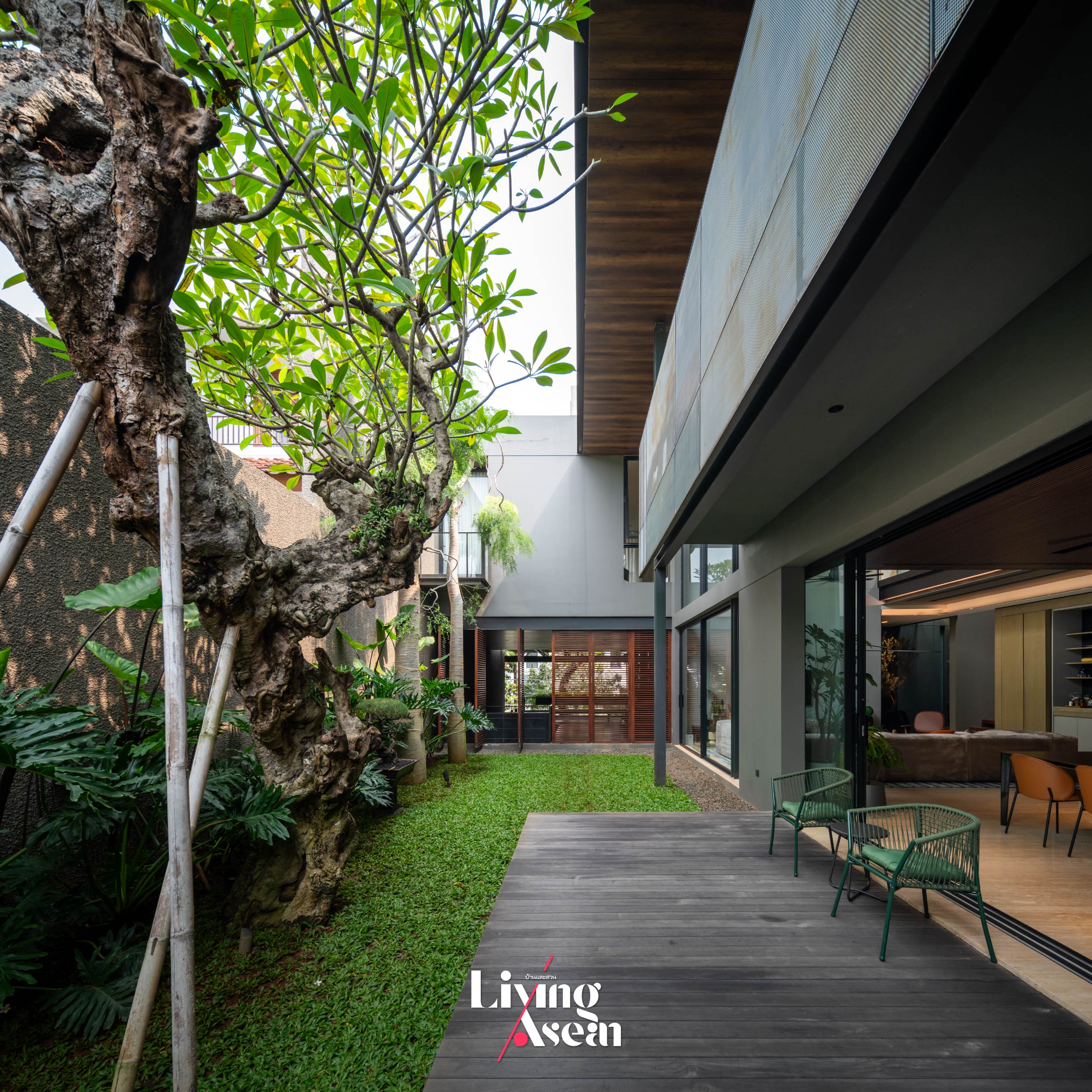
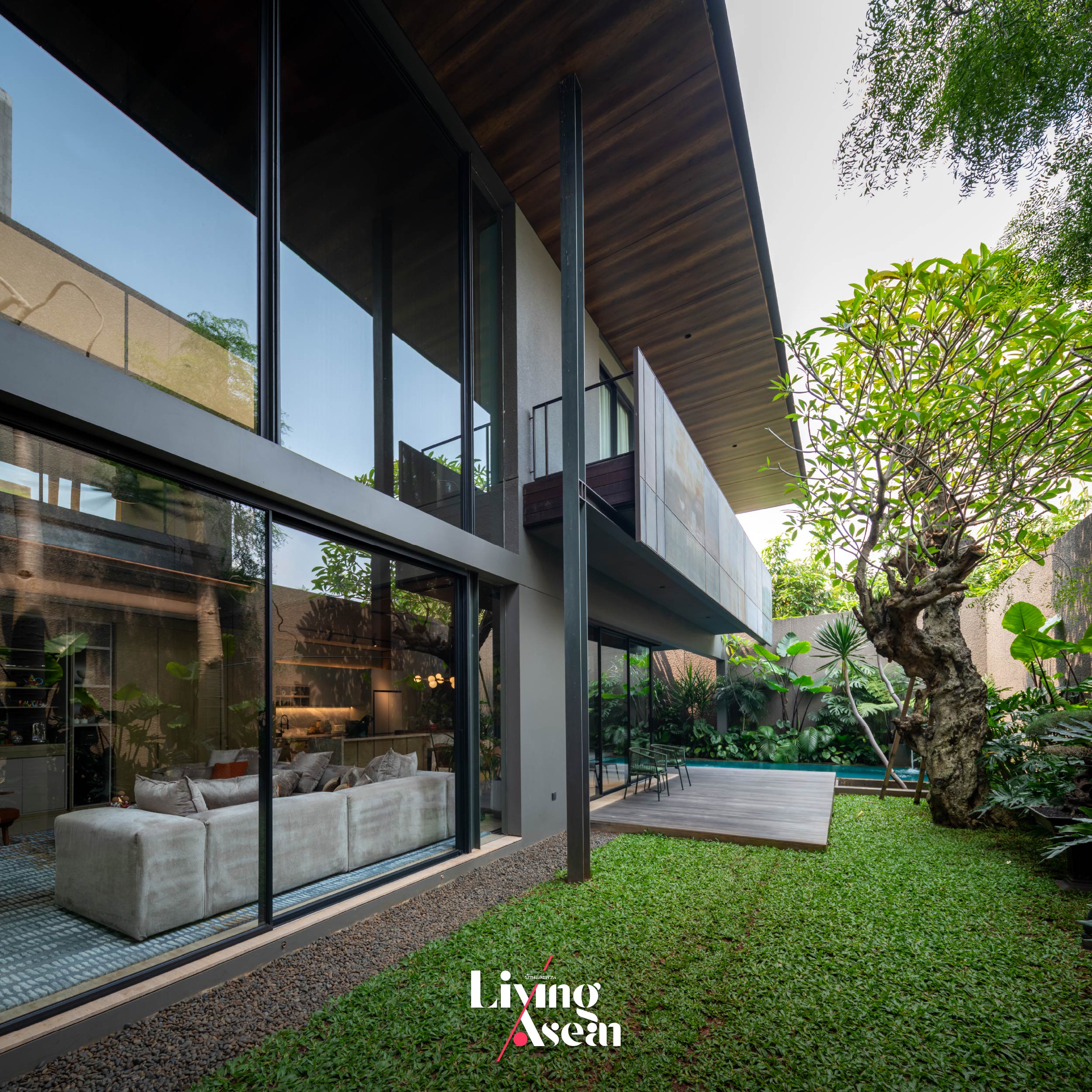
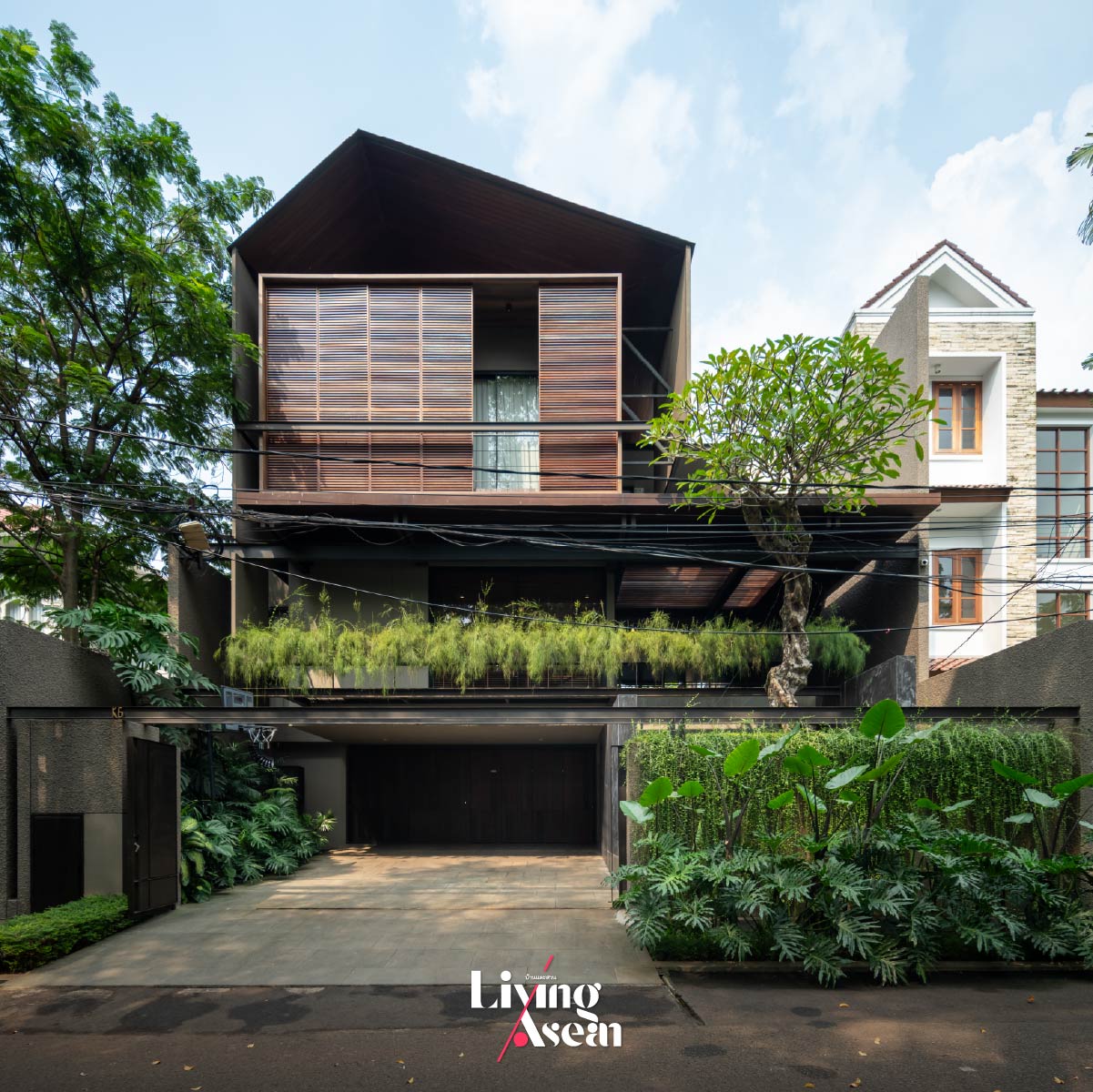
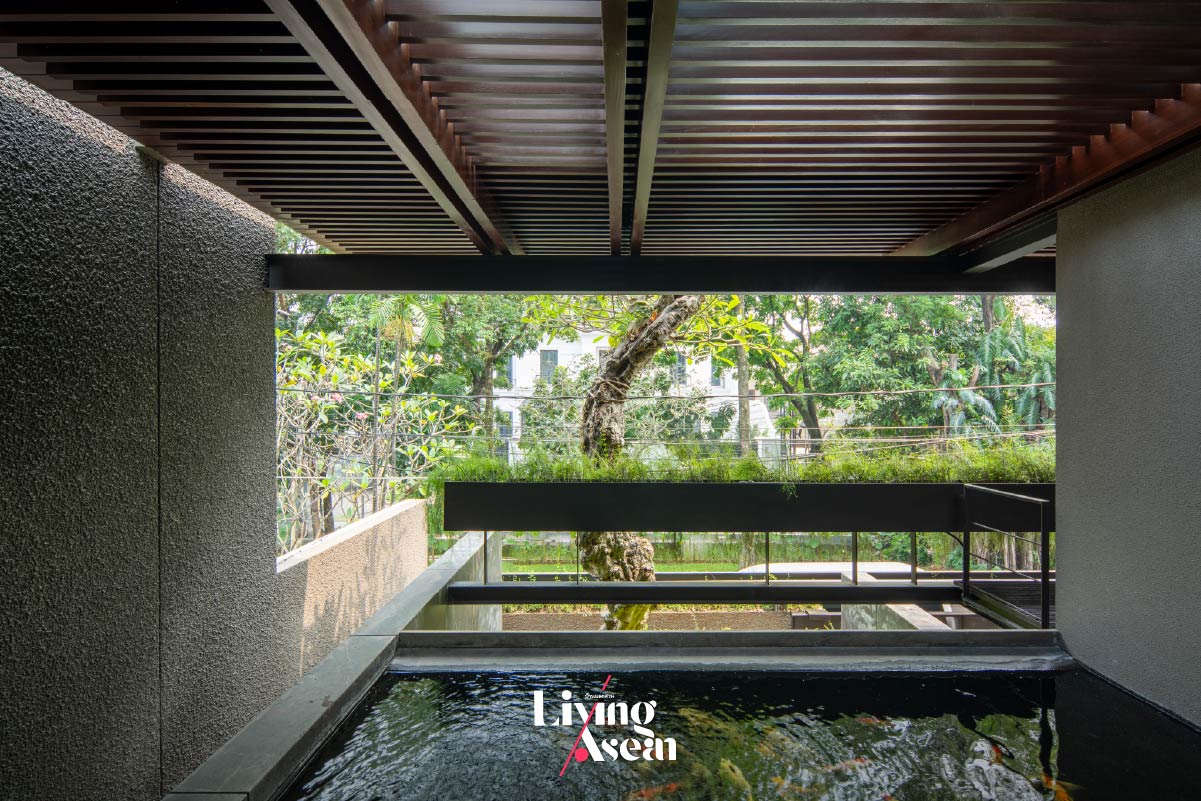
In the middle of a crowded urban neighborhood and slow travels caused by snarled-up downtown traffic, a yearning for the peaceful countryside enters one’s mind. In this particular instance, it gives rise to a desire to create a home office in Petaling Jaya, a city 20 minutes by car to the west of Kuala Lumpur, the capital of Malaysia.
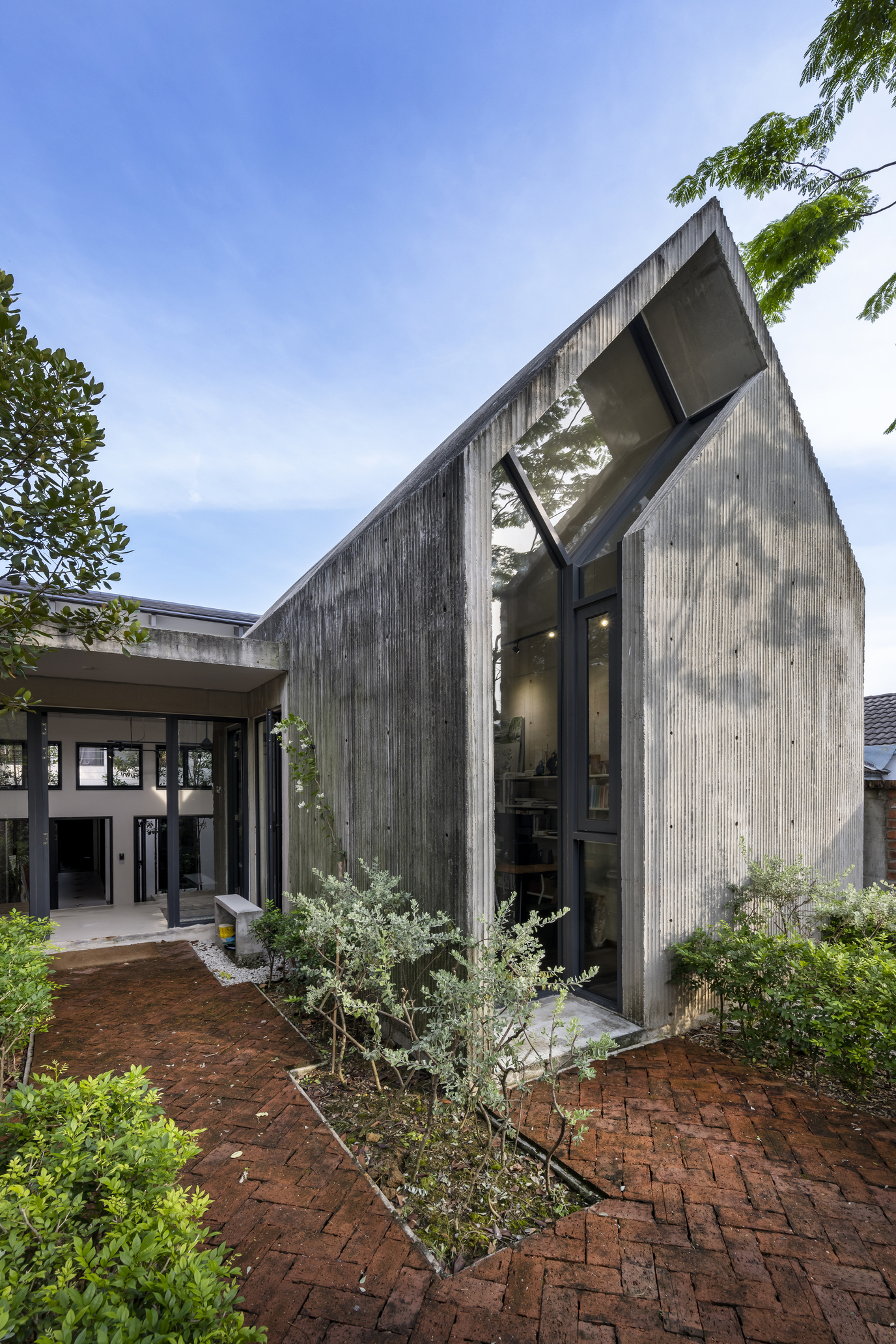
The gable front building boasts the simplicity of bare concrete walls and glass windows strategically placed to let natural daylight stream into the interior workspace.
Beautiful in its austere simplicity, the building represents the coming together of puzzle pieces about the memories of childhood and the unblemished charm of life in the country. For the homeowner, it’s an experience that has prepared him well on a journey to become a designer. It’s a place to enjoy the little things in life, from water droplets on leaves to views of the landscape from the living room window.
Together they tell the story of how the elements of nature can be integrated in design that merges into the visible features of the land. More than anything else, it’s a residence with space designated for business purposes set amid fresh air and lush trees native to the Tropical climate prevailing in Malaysia.
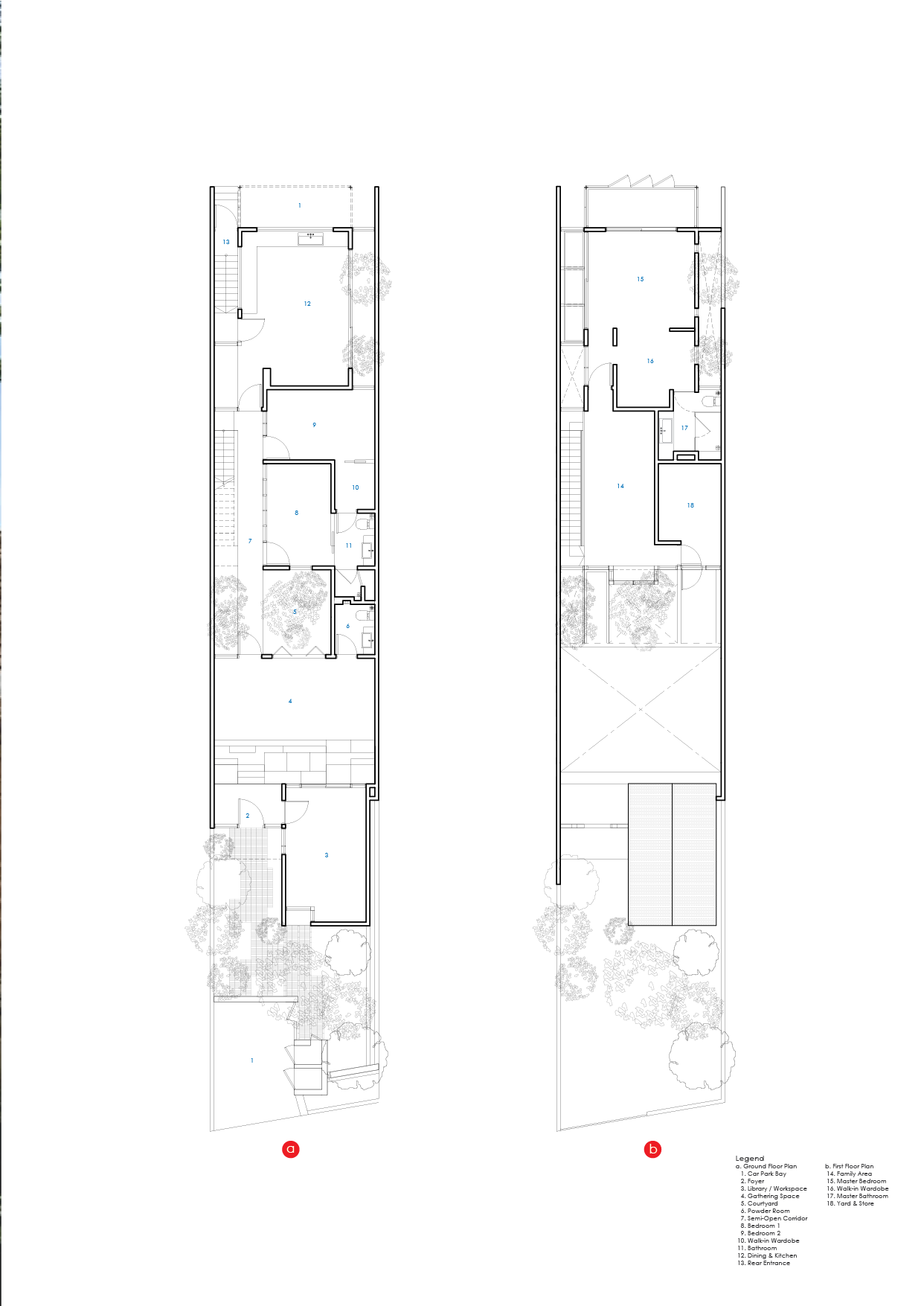
Floor plan / Courtesy of OTCQ Architects
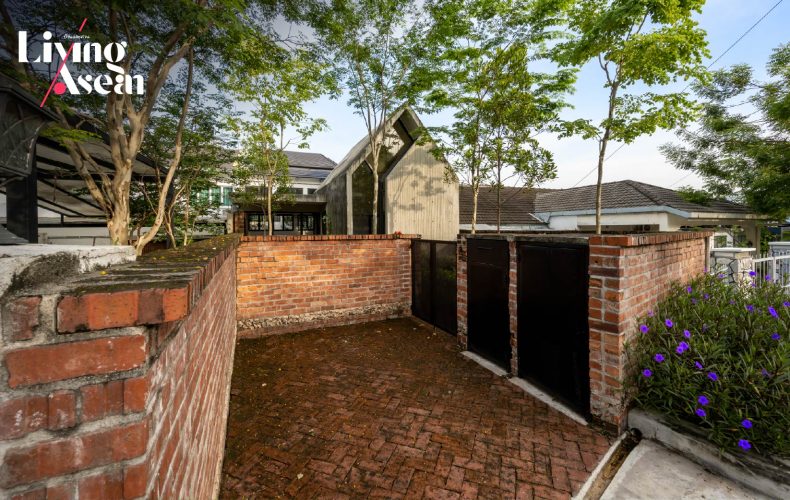
The building stands out from other homes in the neighborhood, thanks to the box-shaped office space under a gable roof made entirely out of concrete. The premises are hemmed in by brown brick walls left exposed to the elements. In the courtyard garden, shade trees grow vigorously providing a calming environment and keeping temperatures cooler. On the walls and courtyard floor, carpets of mosses thrive creating damp habitats resembling the rainforest.
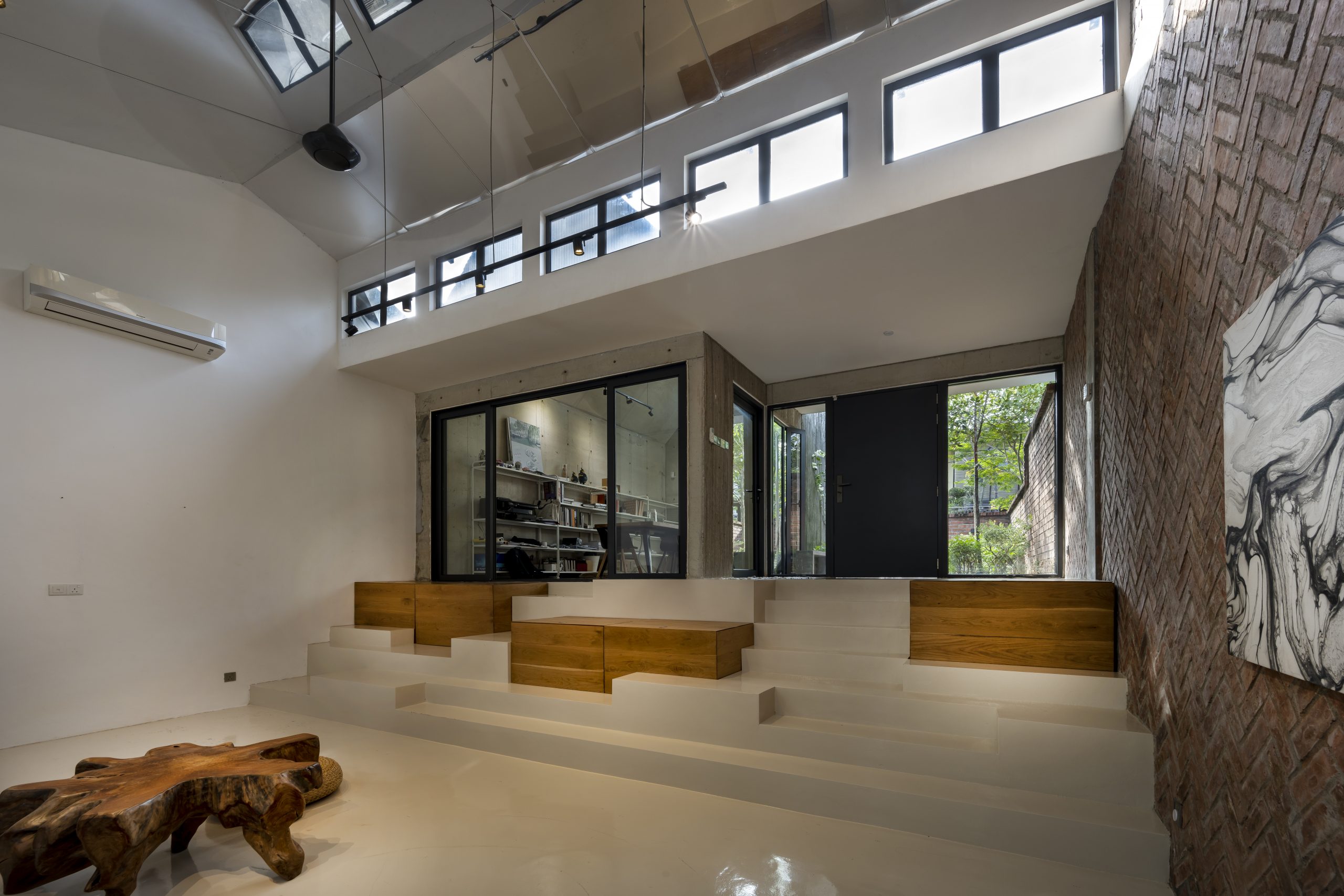
Built on sloped ground, the meeting hall adjacent to the home office has amphitheater style seats extending downward to the center space.
There is plenty of vegetation, yet overhanging tree branches leave enough room for sunlight to stream into the office interior. The building itself lies adjacent to a meeting hall with amphitheater style seating, which is expedient for the structure built on a slope. The overall effect is impressive as a result of high ceiling design and rooftop skylight systems providing natural light and good ventilation.
The meeting hall feels spacious, light and refreshing thanks to high ceiling design.
Next to the home office lies the main residential building accessible via a courtyard covered with decorative beach pebbles in shades of grayish white. It provides a green oasis for plants to thrive, showing the way to the two-story house mostly enclosed by glass walls.
A semi-outdoor walkway runs through a courtyard giving access to the home office and the residential area.
Everything about it serves as a testament to the architect’s attention to detail. No doubt the atmosphere is light and refreshing with tree branches casting shadows on brick walls. Together they bring the rustic style into the home. Inside, a steel staircase painted black for a lightweight look gives access to the second floor with balconies made for connecting with the outdoors and breathing fresh air.
The dining room enclosed with a glass wall affords the view of a side yard filled with green plants.Cocooned in the warmth and texture of bare brick walls, the upstairs living room is well-lit by sunlight shining through glass windows and rooftop skylights.The principal bedroom opens to a gallery that forms part of the house to take in fresh air and views of the landscape.
The most important element of design lies in planning airflow patterns in a way that improves ventilation in and around the home. Limited space and sloped ground notwithstanding, the architect has succeeded in overcoming site constraints by leaving one-meter-wide spaces on both sides of the building. The left holds a staircase built flush against the wall, while the right side contains a green space.
The stairway under rooftop skylights turns upstairs room into a well-lit, well-ventilated living space.
It’s thoughtful spatial design that drives natural air circulation throughout the premises. The result is a home office made for comfortable and simple living in the midst of the hustle and bustle of the big city.
This house appears in the special Baan Lae Suan issue on the theme of “Cozy Living in Urban Homes” is out now. Design lovers, this one is for you. It’s the latest in the ongoing “ASEAN Tropical House Series”.
The exciting new bilingual edition (Thai-English) is a nice little collab between the Baan Lae Suan Press and its English language media arm Living ASEAN. It’s the coming together of ideas for dealing with the problem of limited space, turning site constraints into solutions. Precisely, it looks at problem solving techniques, ultimately creating small urban homes that are right within the context of Southeast Asia. In this issue, ten houses are chosen for their exemplary designs that inspire. It’s meant for architects, designers, and homeowners searching out new ideas for creating a living space that’s cozy and comfortable plus it blends in beautifully with the environment.
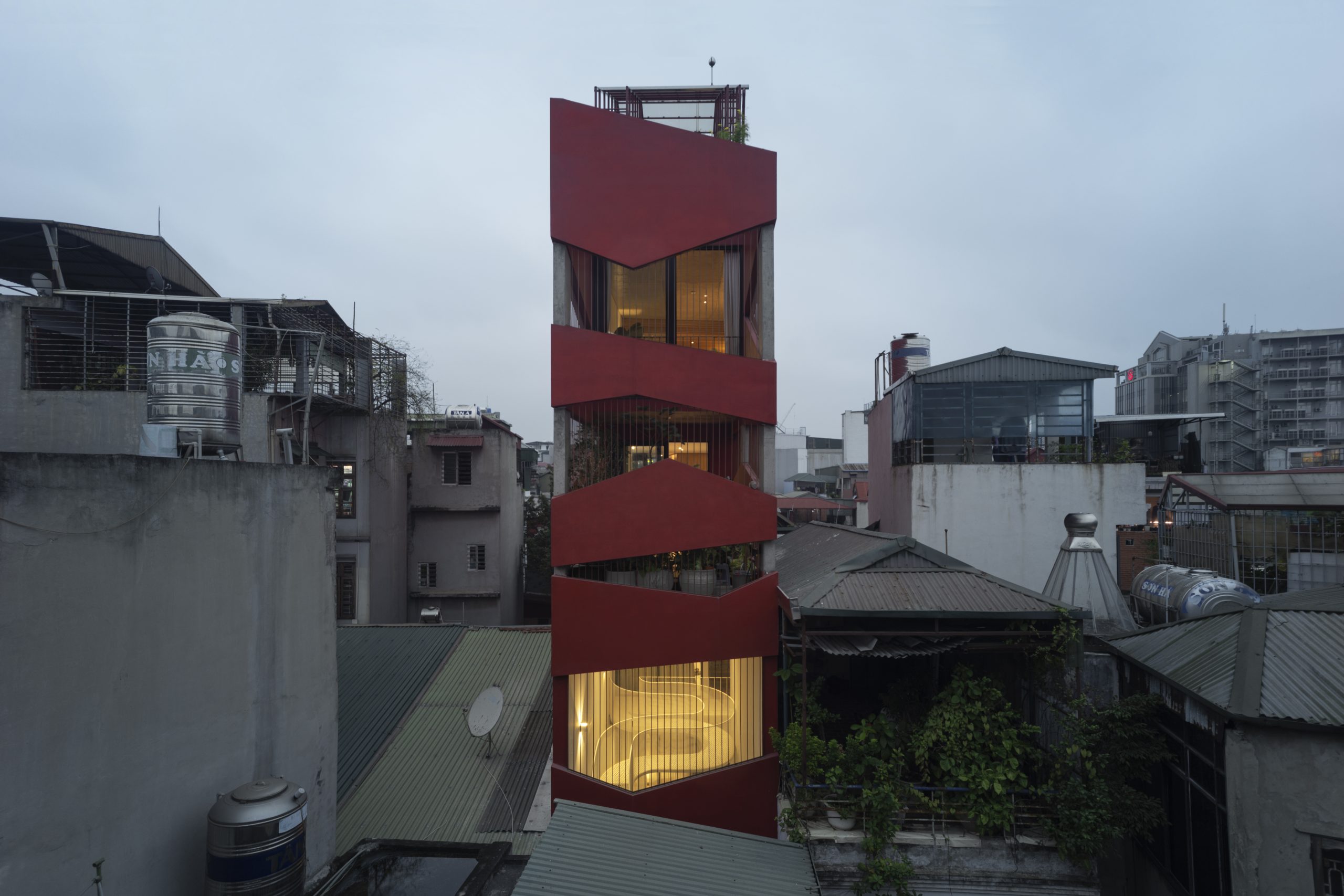
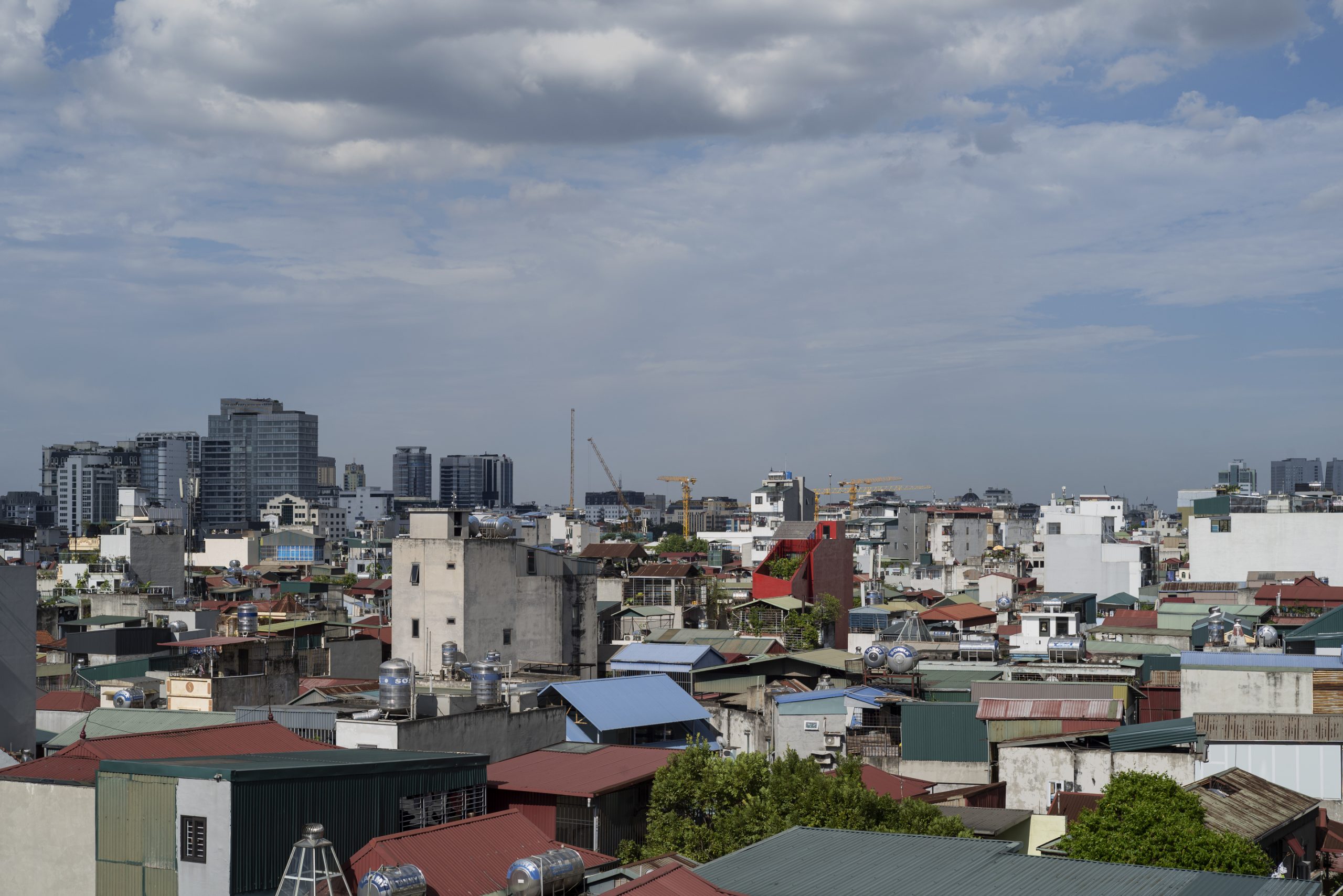
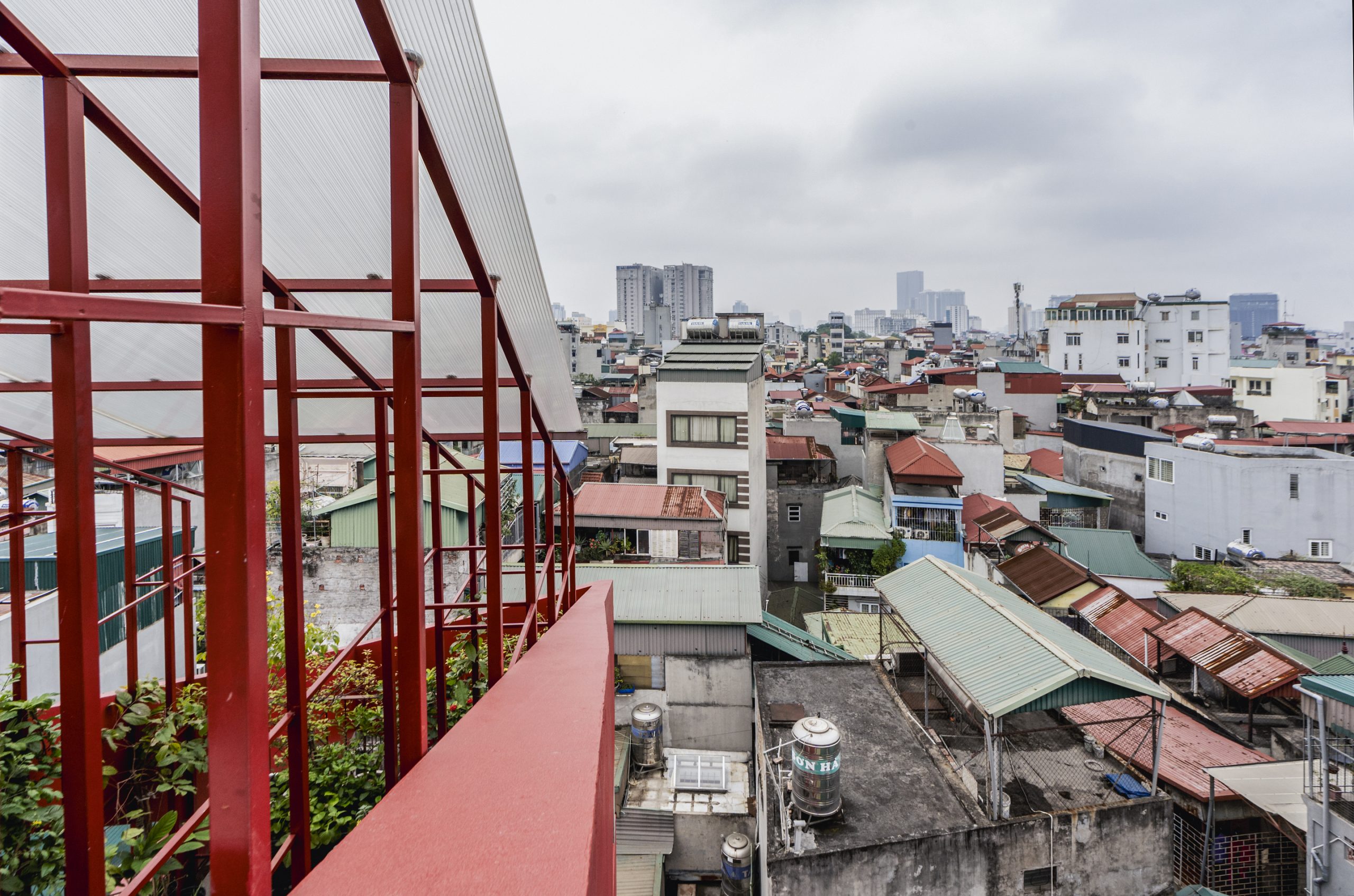
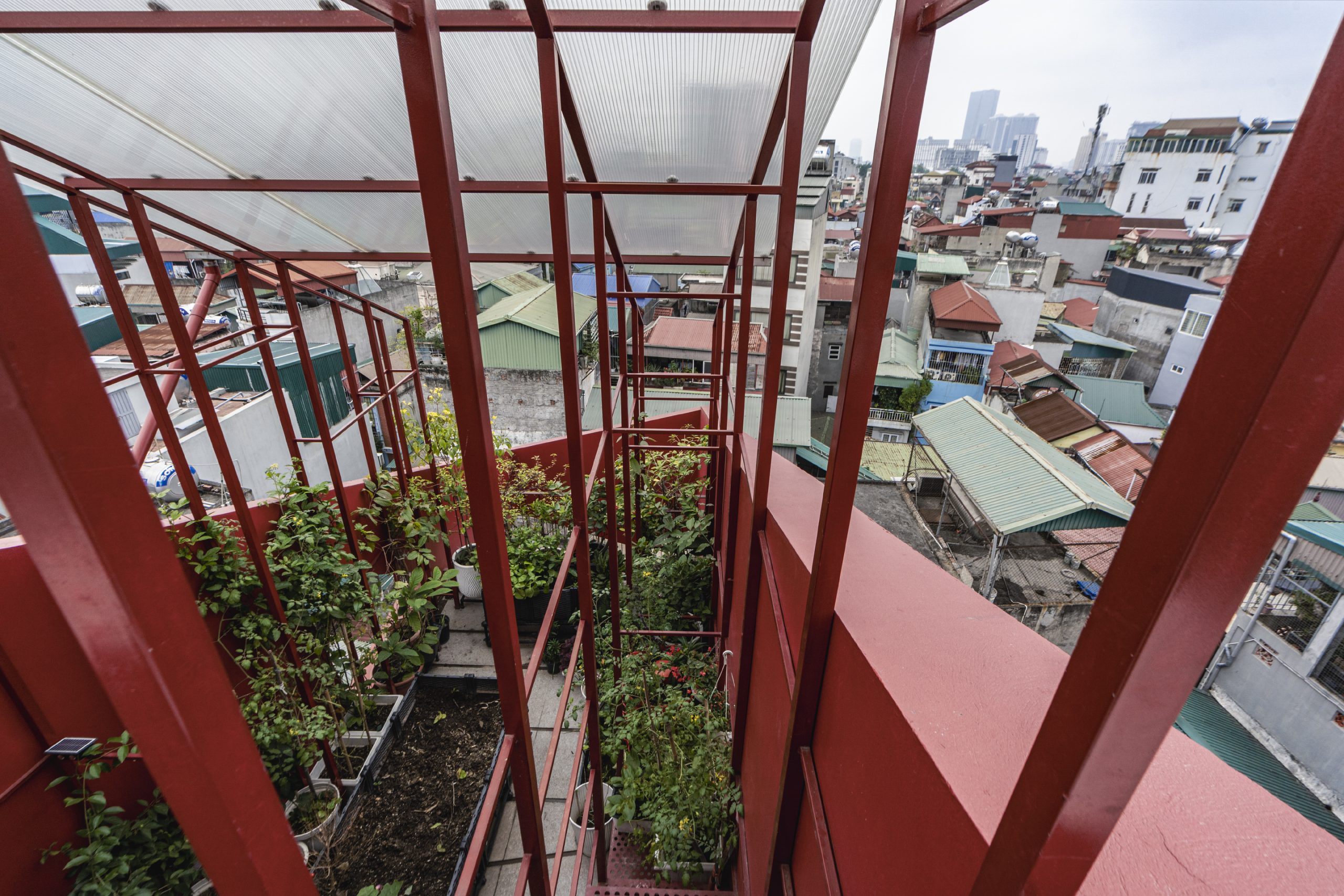
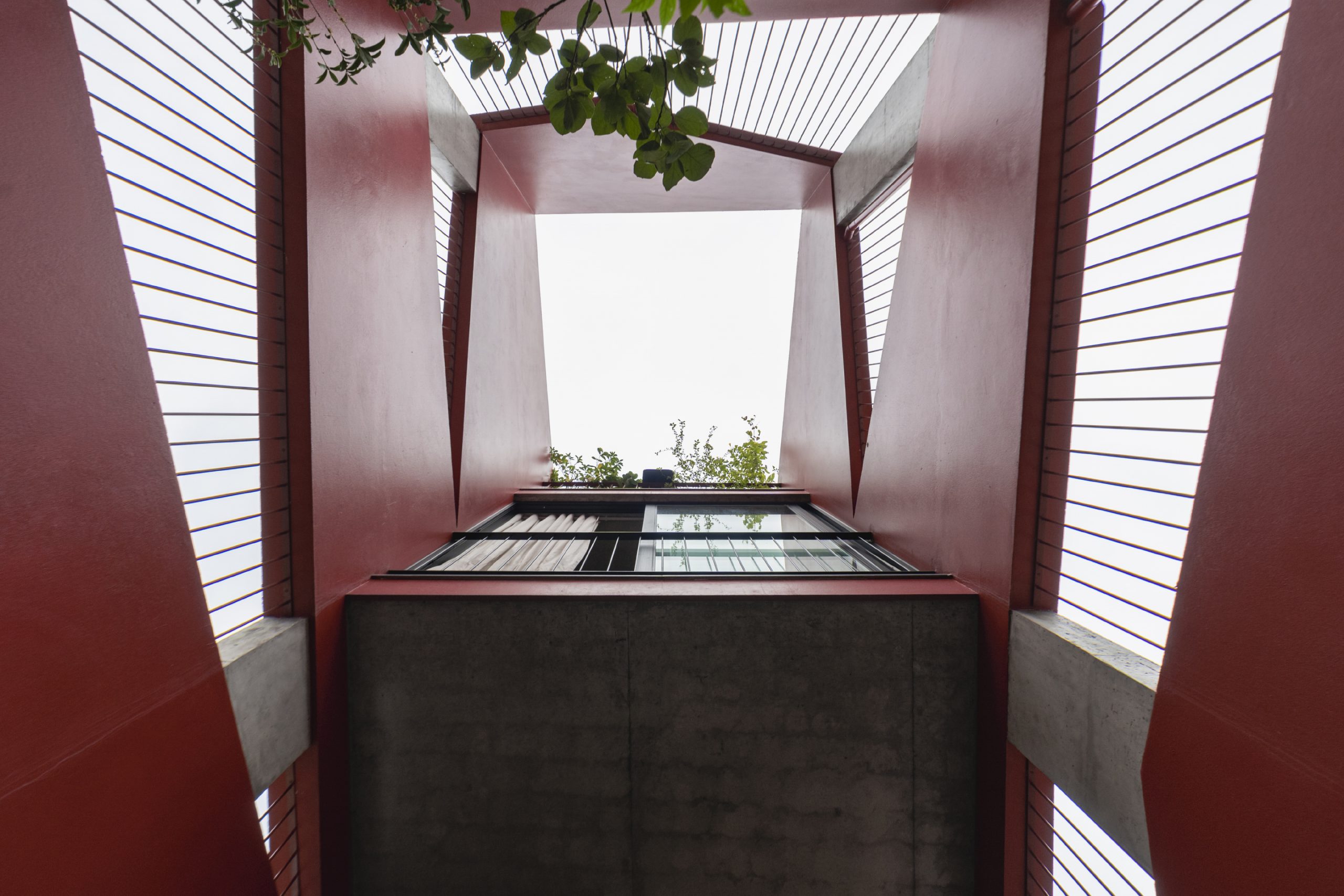
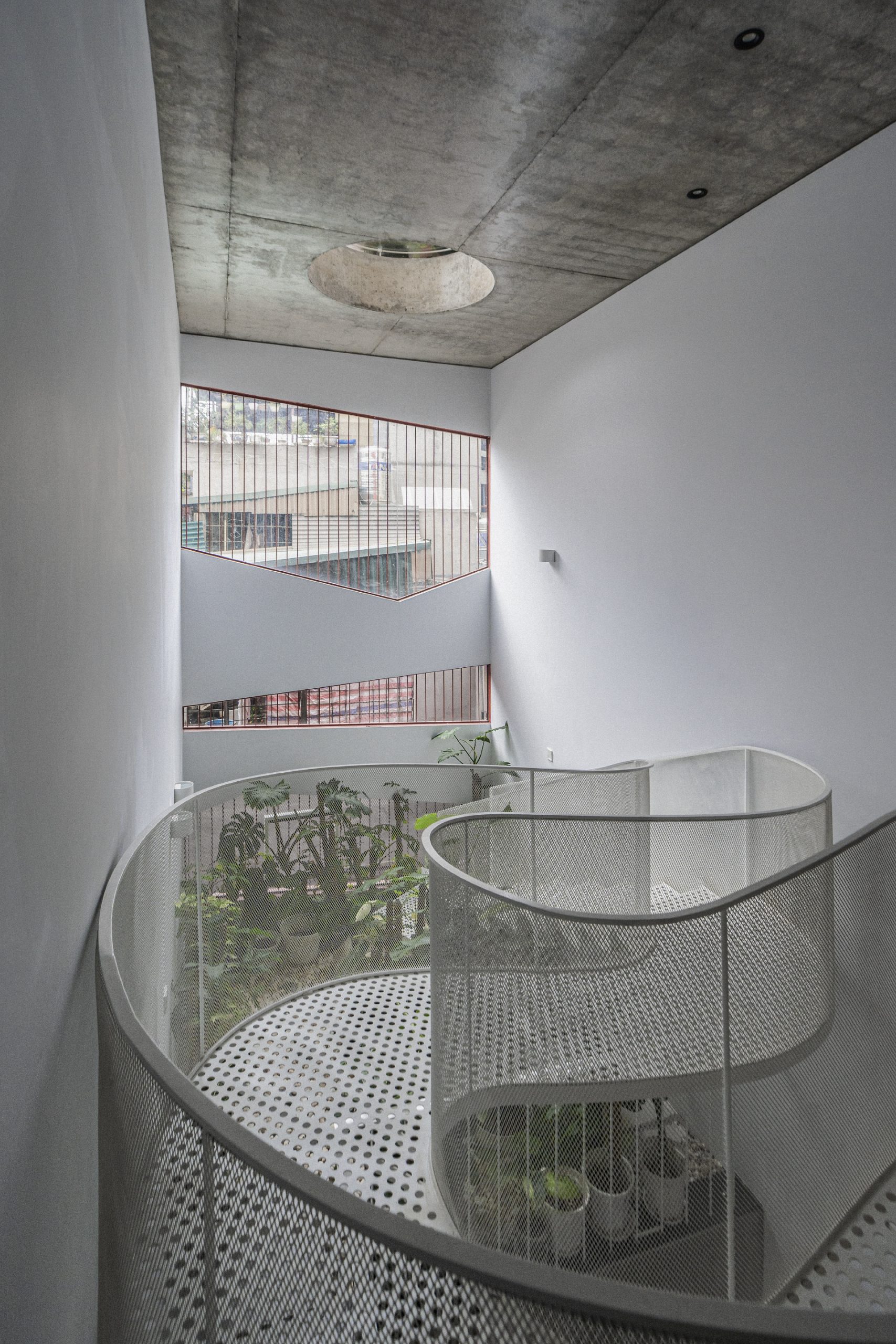
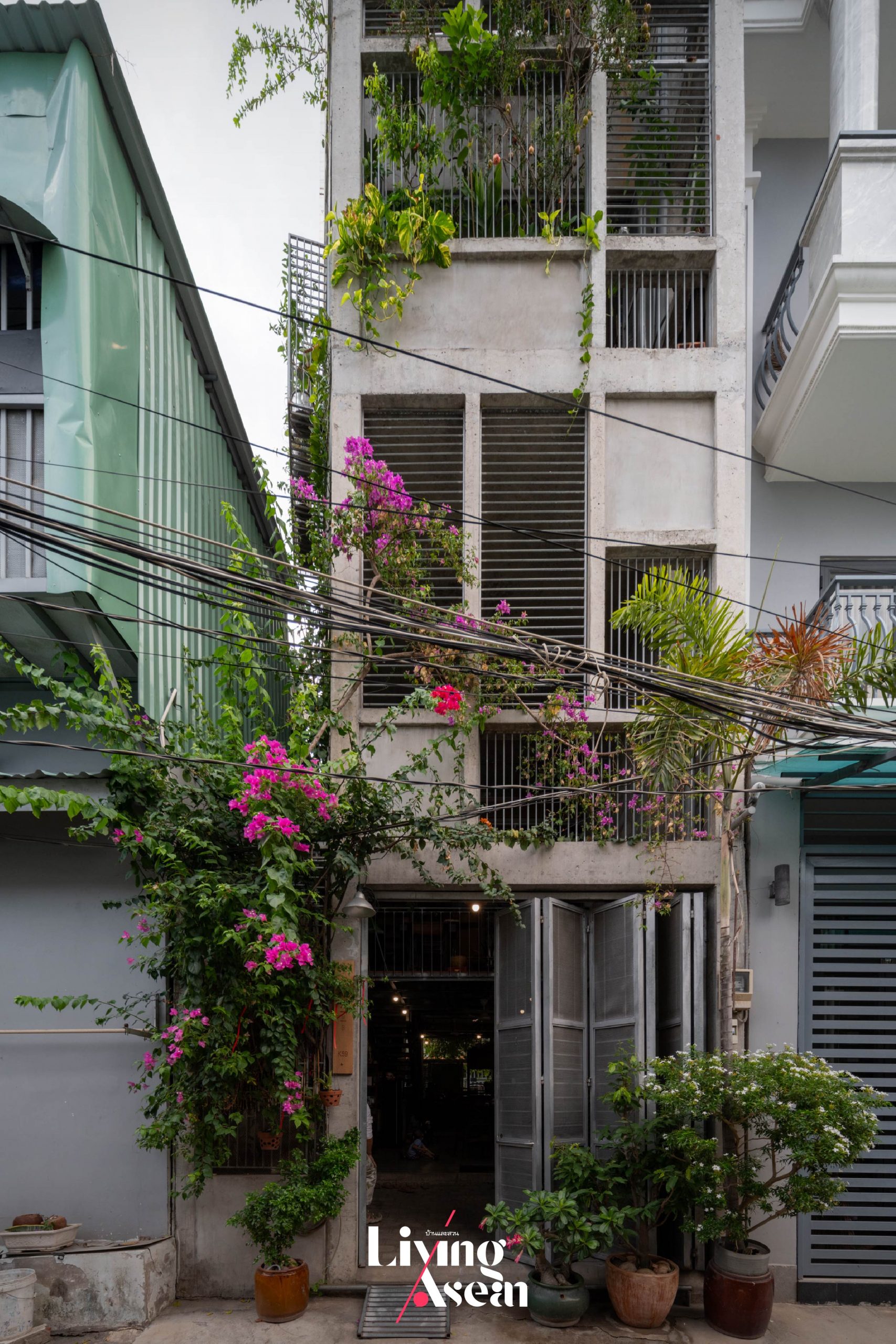
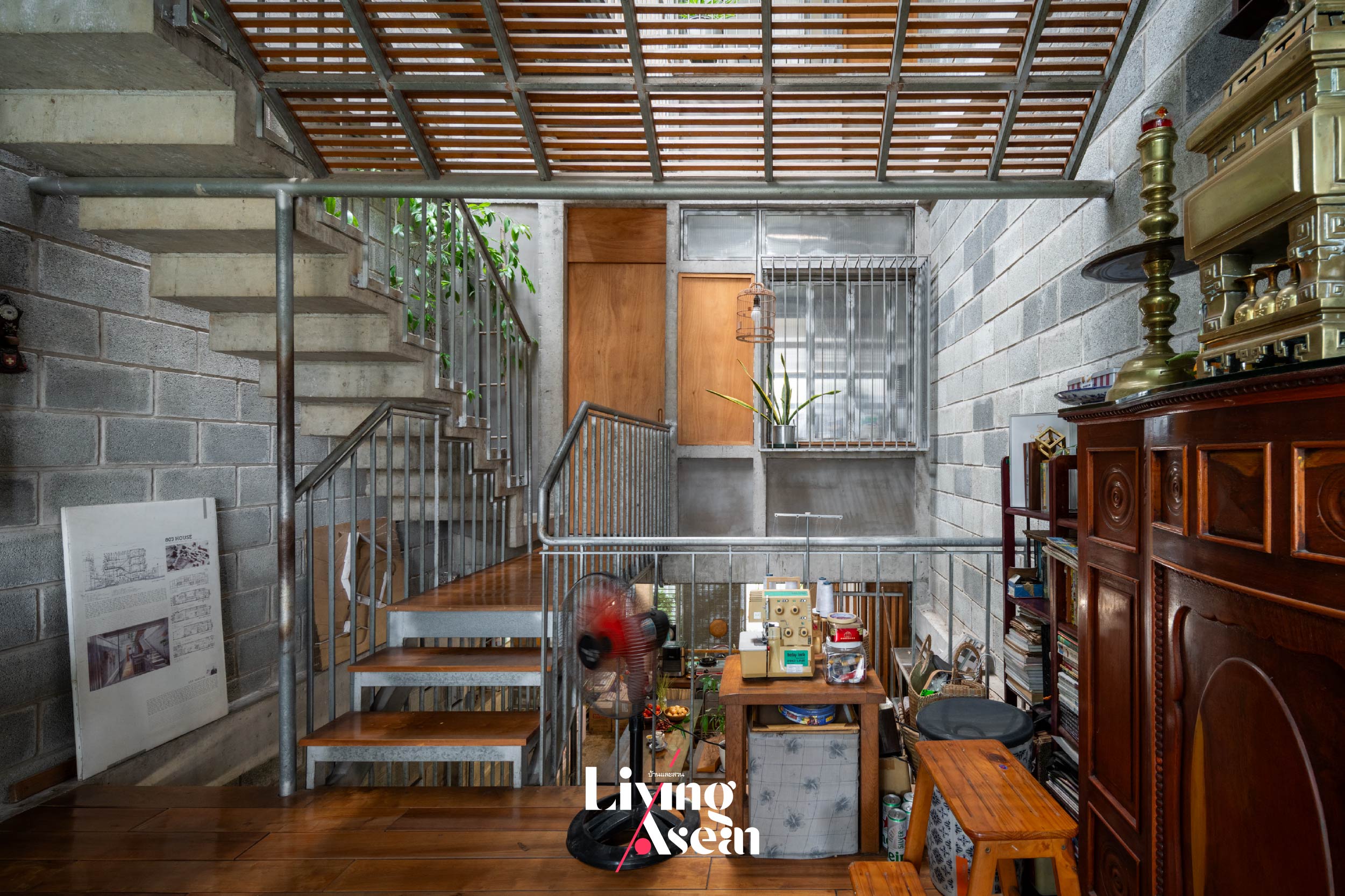
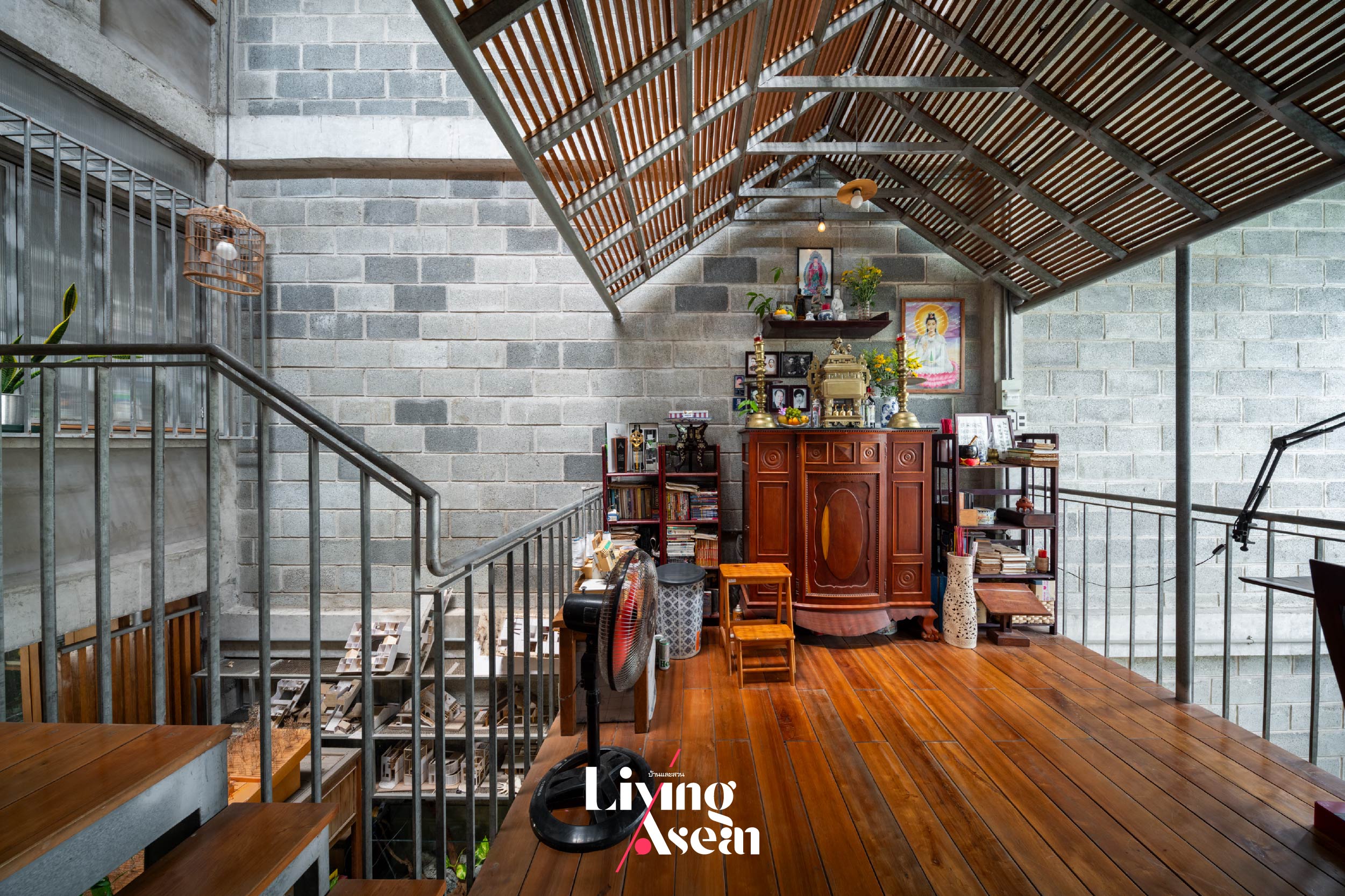
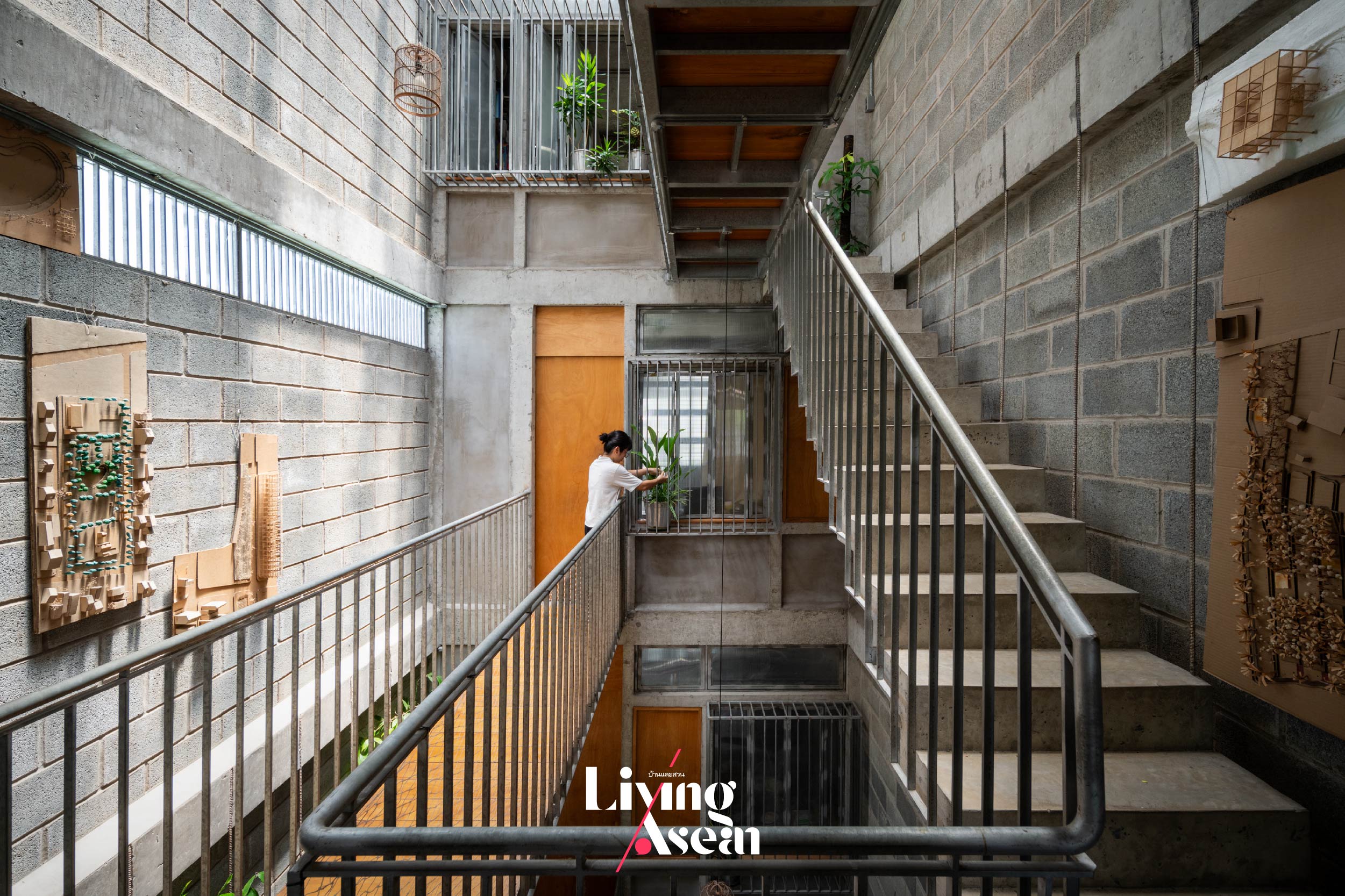
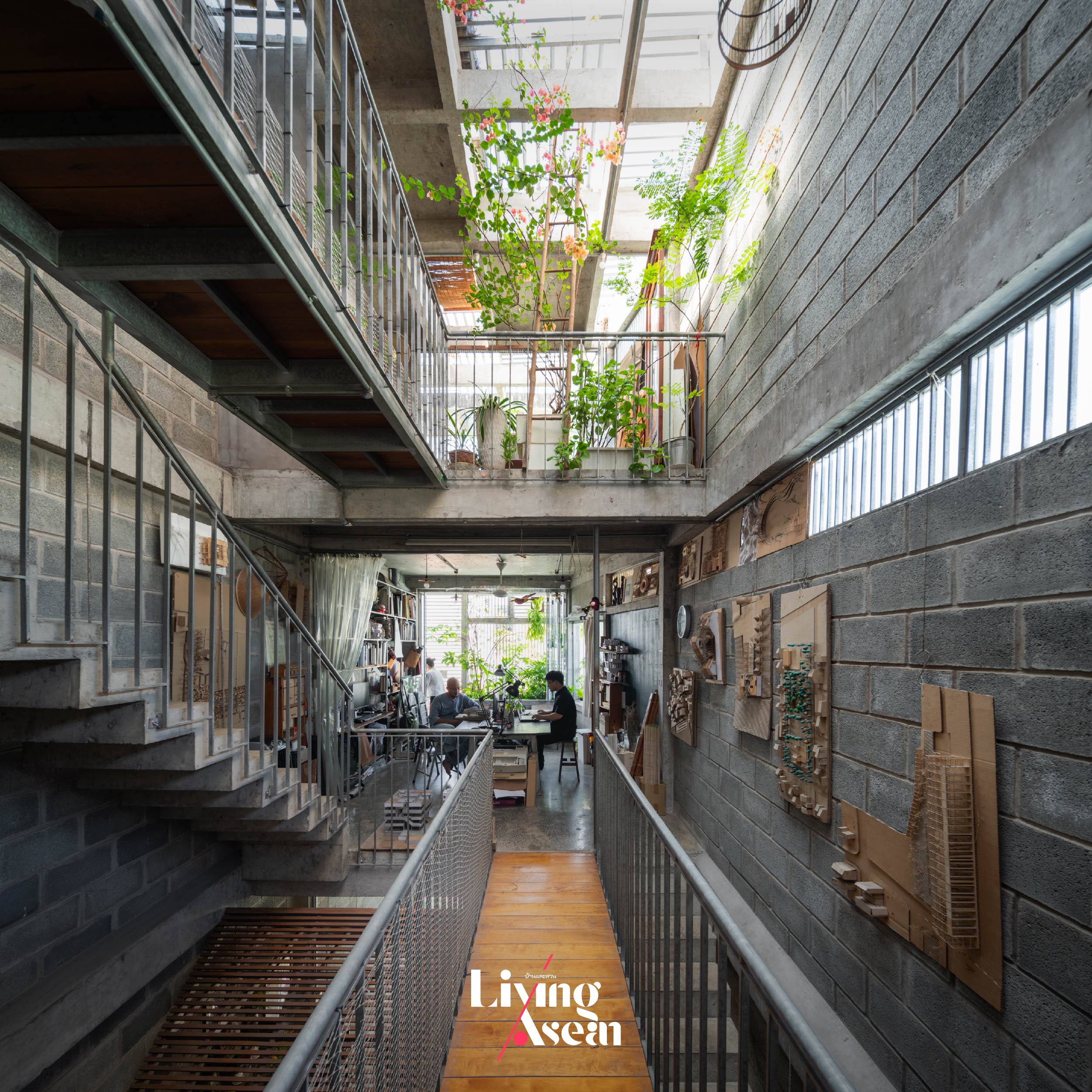
A house facade painted crimson looks unusual in a way. It stands out a mile protecting a tall and slender home from the elements, while robust openings in the exterior keep the rooms comfortable and warm. The seven-story building seems to tower over everyone else in a crowded old town neighborhood of Hanoi, Vietnam’s capital. The design intention is clear. To overcome the challenge of limited space tucked away on a narrow street, the only way to go is up, yet an architect has found a way to make the house blend with the environment. Plus, it’s full of life and energy, snug in the warmth of natural daylight and gentle breezes. On every floor, greenery thriving in semi-outdoor rooms adds restorative effects, turning the narrow-front red-facade house into a breath of fresh air.
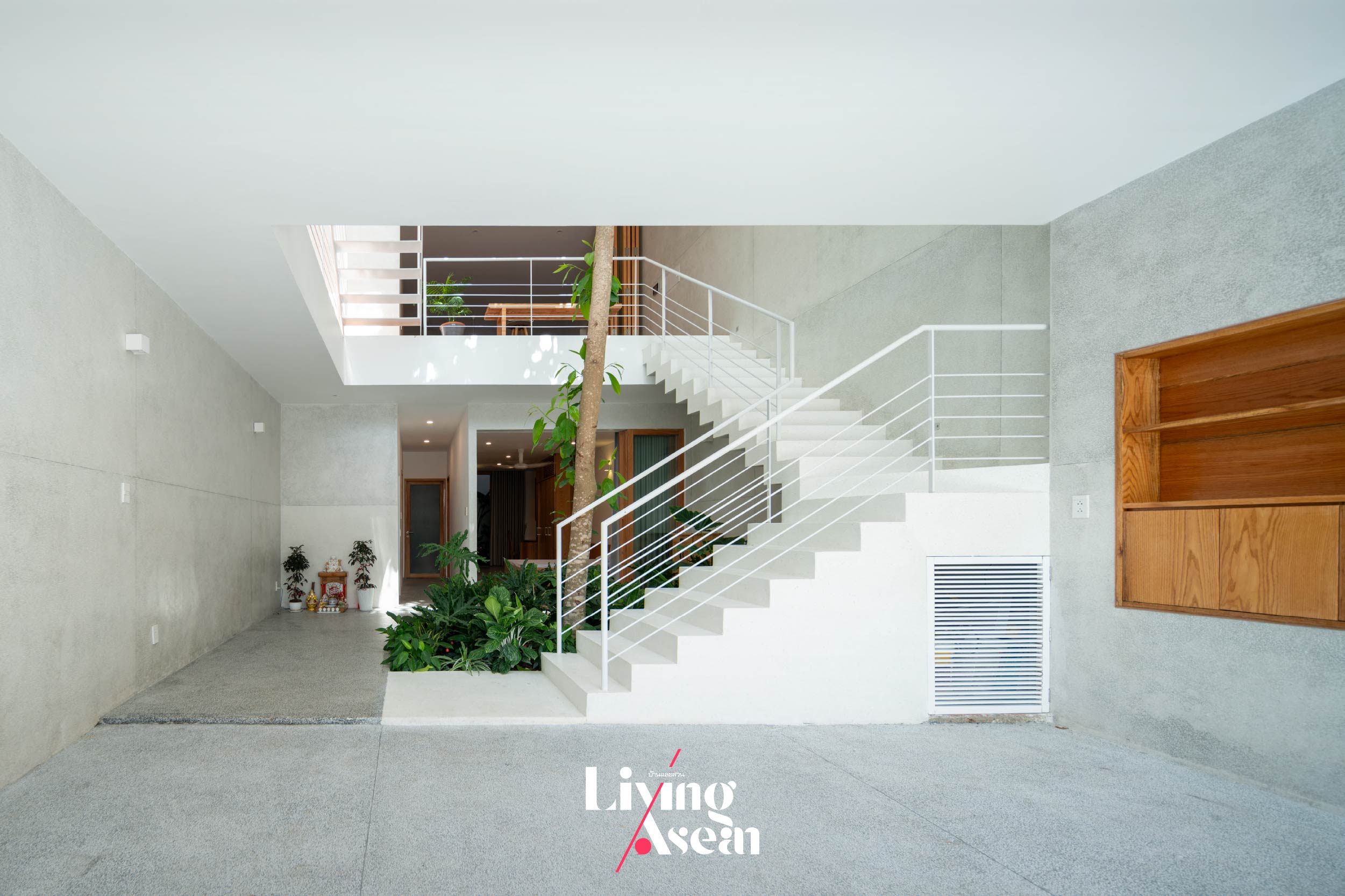
The crimson red façade boasts unique architectural features, making the seven-story home stand out from the crowd.From a distance, the crimson red home stands out from the crowd, silhouetted against the skyline of Hanoi, Vietnam’s capital.
It all starts with the need to add living space as a family gets bigger, in the meantime, creating a calm, relaxing shared space in the home. It’s a circumstance that tasks the architect’s abilities to effectively deal with site constraints.
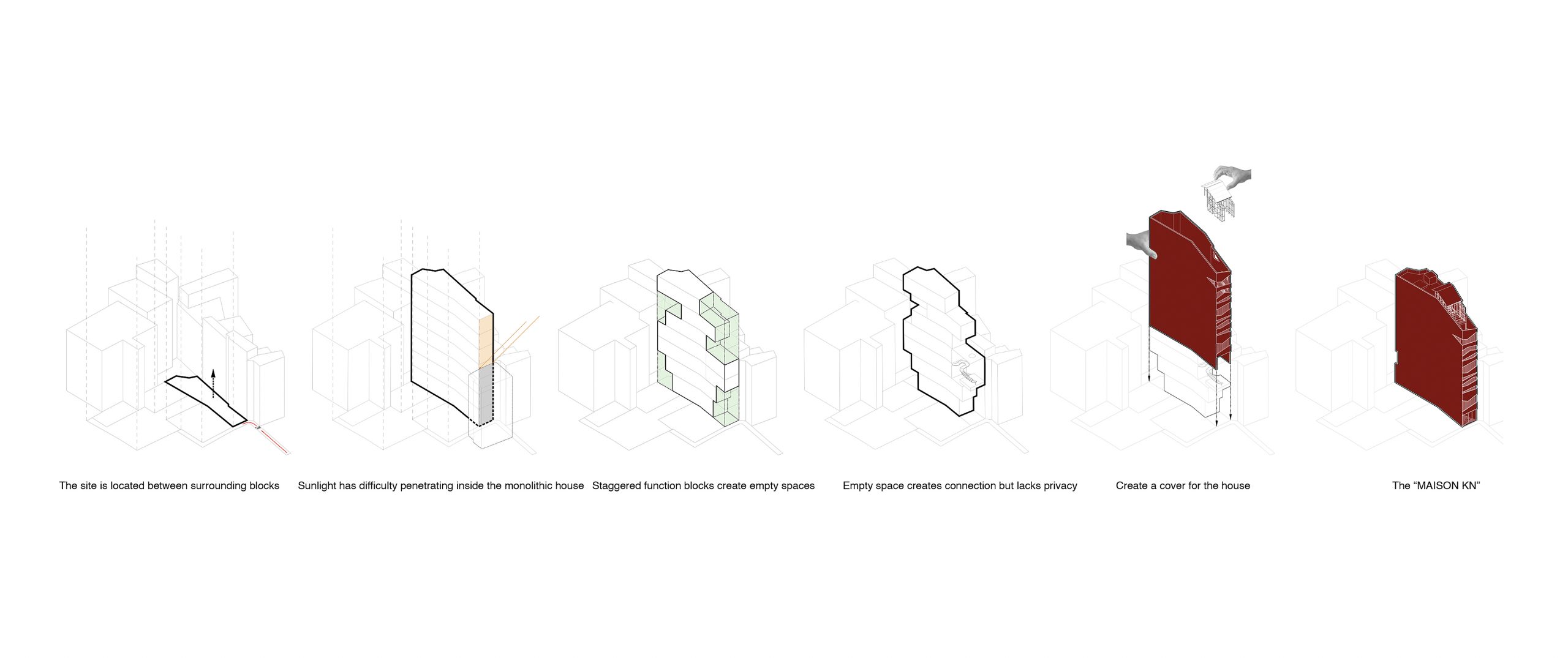
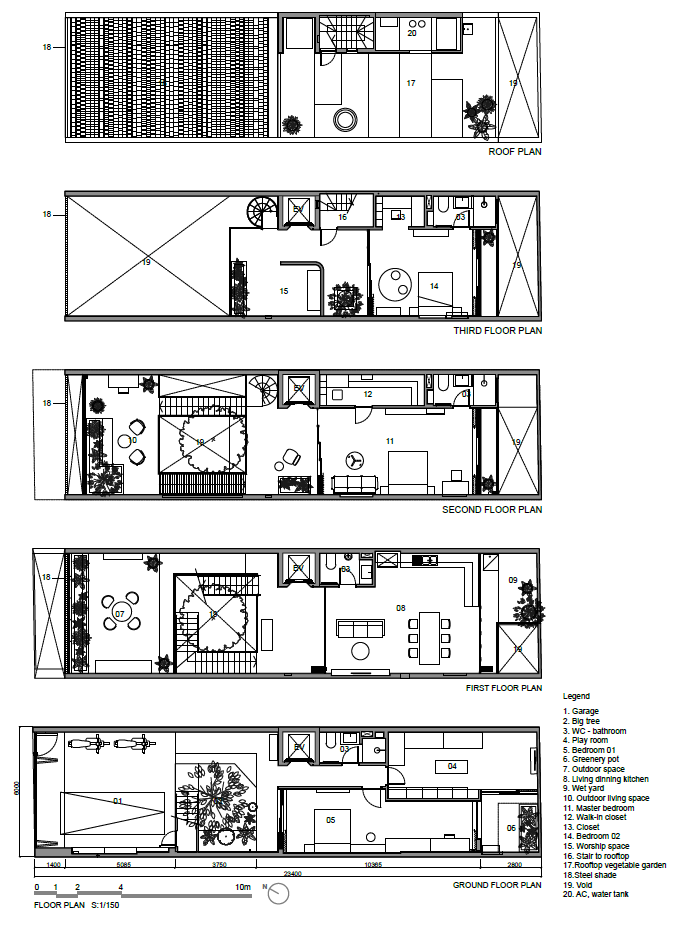
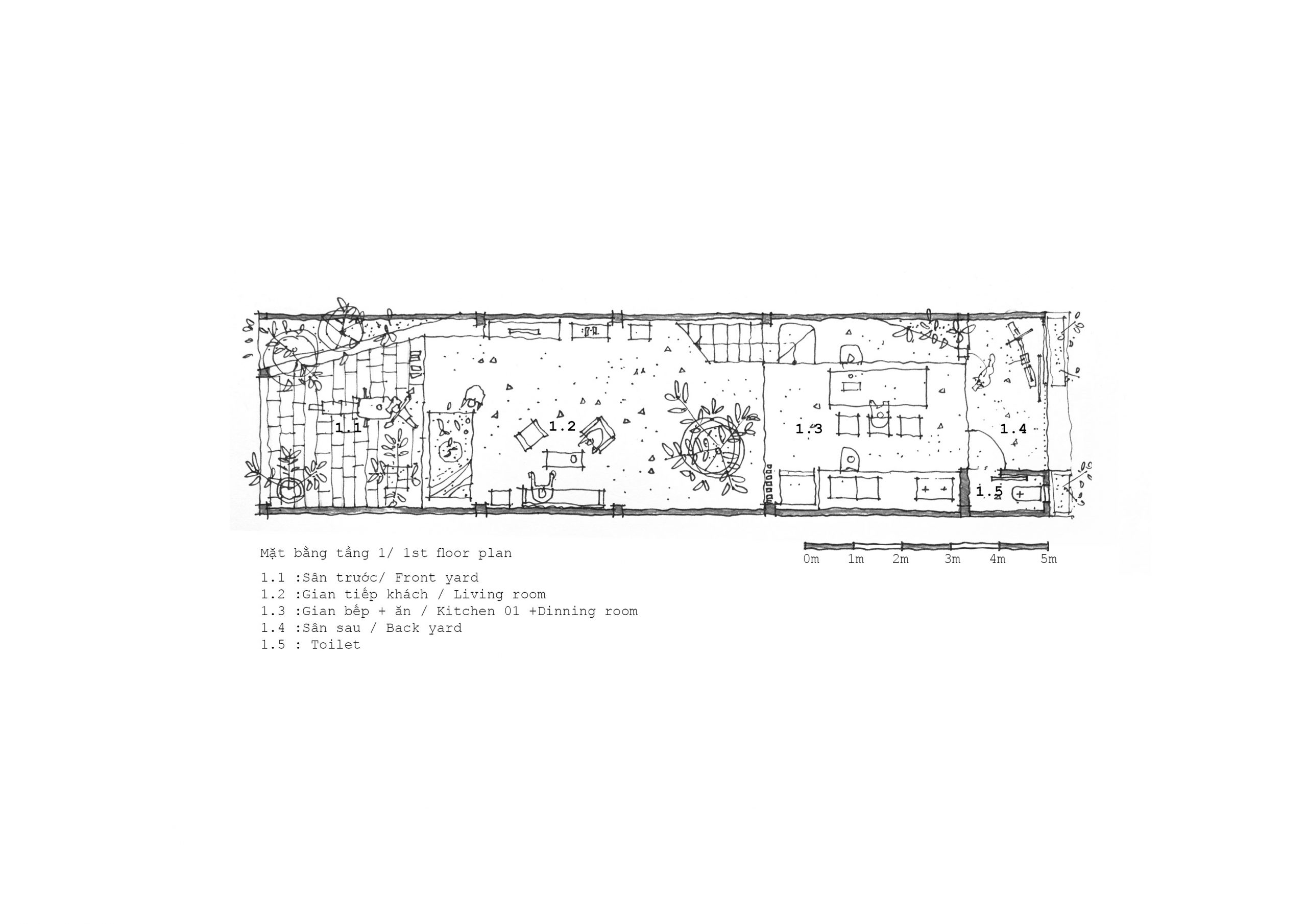
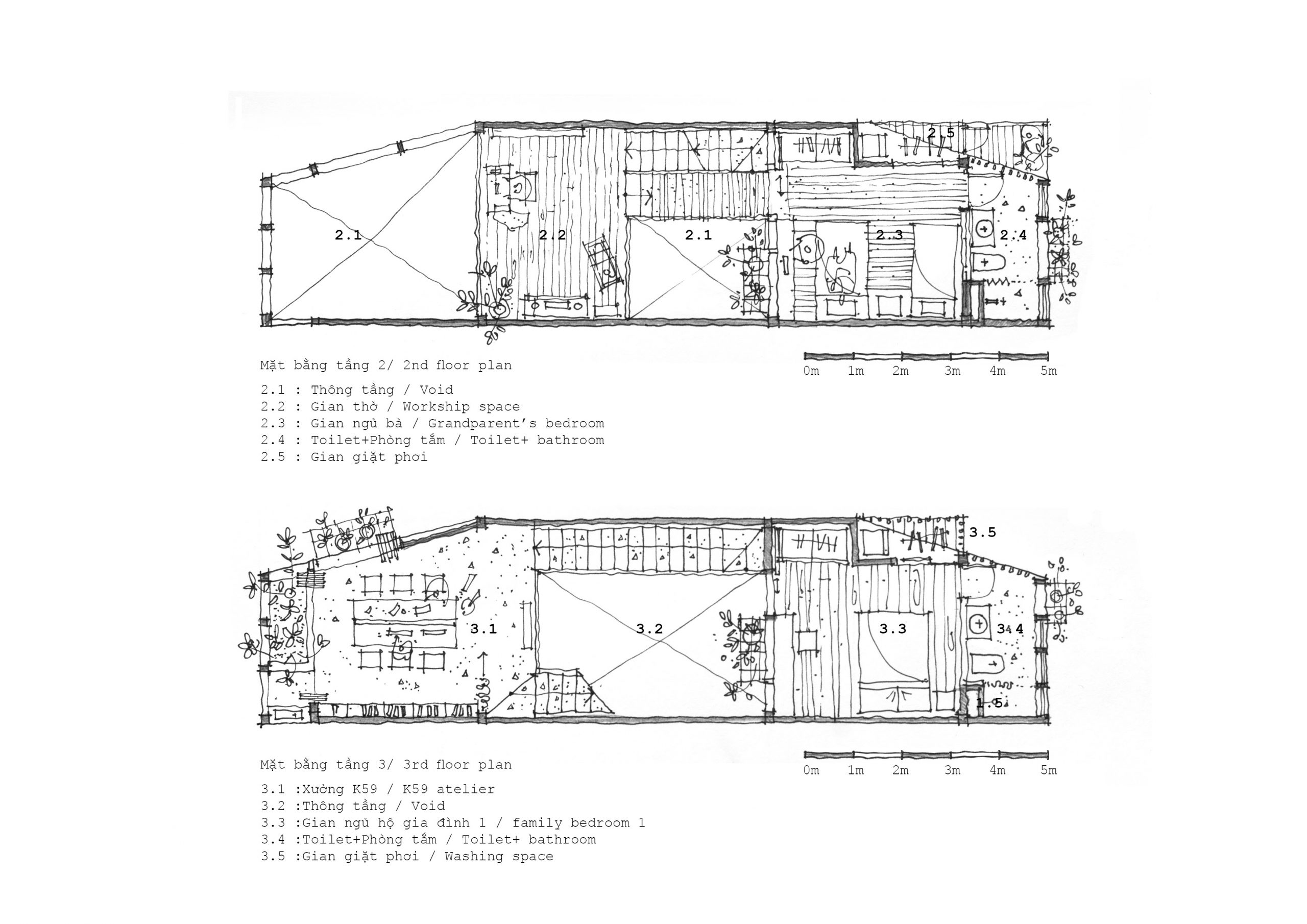
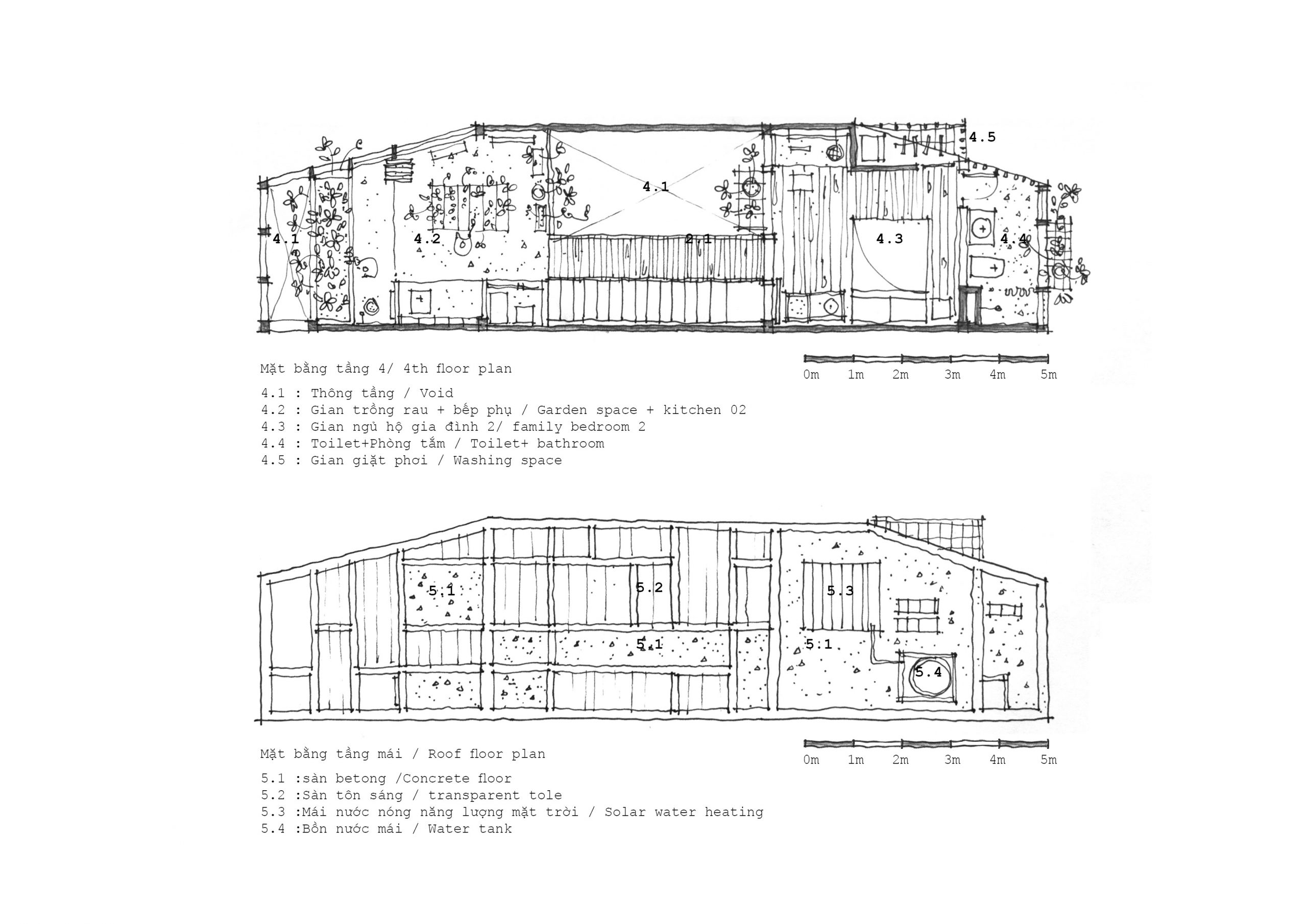
Diagrams illustrate spatial arrangements and the integration of green spaces in the house plan. / Courtesy of Nghia-ArchitectDiagrams illustrate spatial arrangements and the integration of green spaces in the house plan. / Courtesy of Nghia-ArchitectDiagrams illustrate spatial arrangements and the integration of green spaces in the house plan. / Courtesy of Nghia-ArchitectDiagrams illustrate spatial arrangements and the integration of green spaces in the house plan. / Courtesy of Nghia-ArchitectDiagrams illustrate spatial arrangements and the integration of green spaces in the house plan. / Courtesy of Nghia-ArchitectDiagrams illustrate spatial arrangements and the integration of green spaces in the house plan. / Courtesy of Nghia-ArchitectDiagrams illustrate spatial arrangements and the integration of green spaces in the house plan. / Courtesy of Nghia-Architect
The result is a box-shaped home running lengthwise in an elongated rectangle, one that makes the most of limited space and the problem of overcrowding in the area. It strikes a balance between privacy and shared space made beautiful by rooms and functionalities perfectly blending together to become a whole. Meanwhile, the house façade performs an important role for which it is intended: connect with nature.
A drawing shows the process of conceptualization in different phases from start to finish. / Courtesy of Nghia-Architect
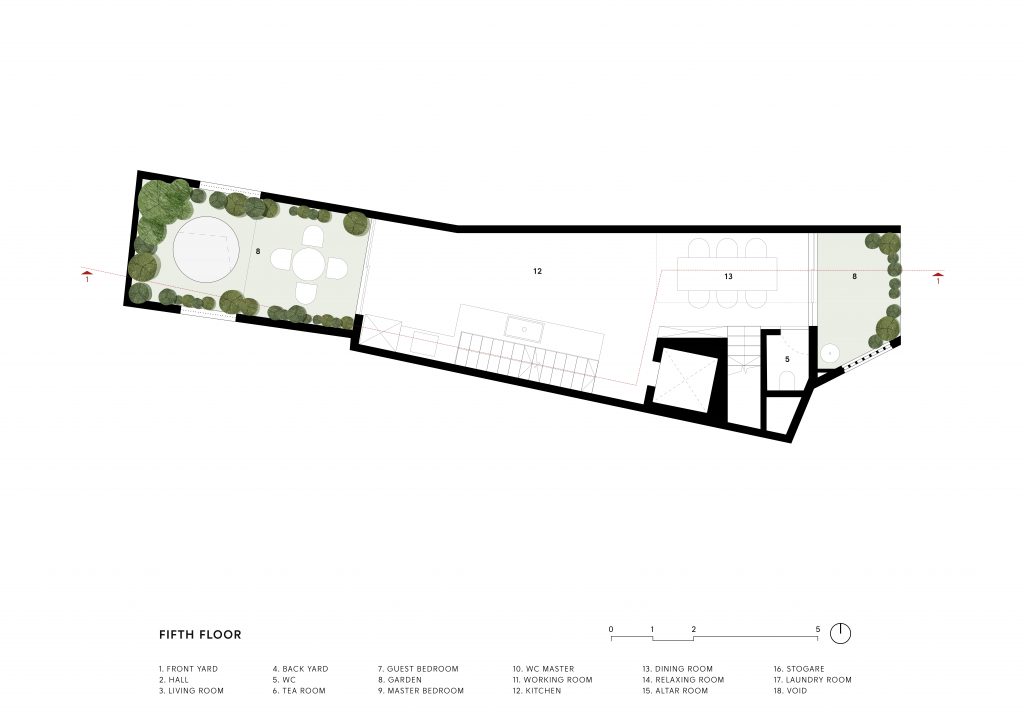
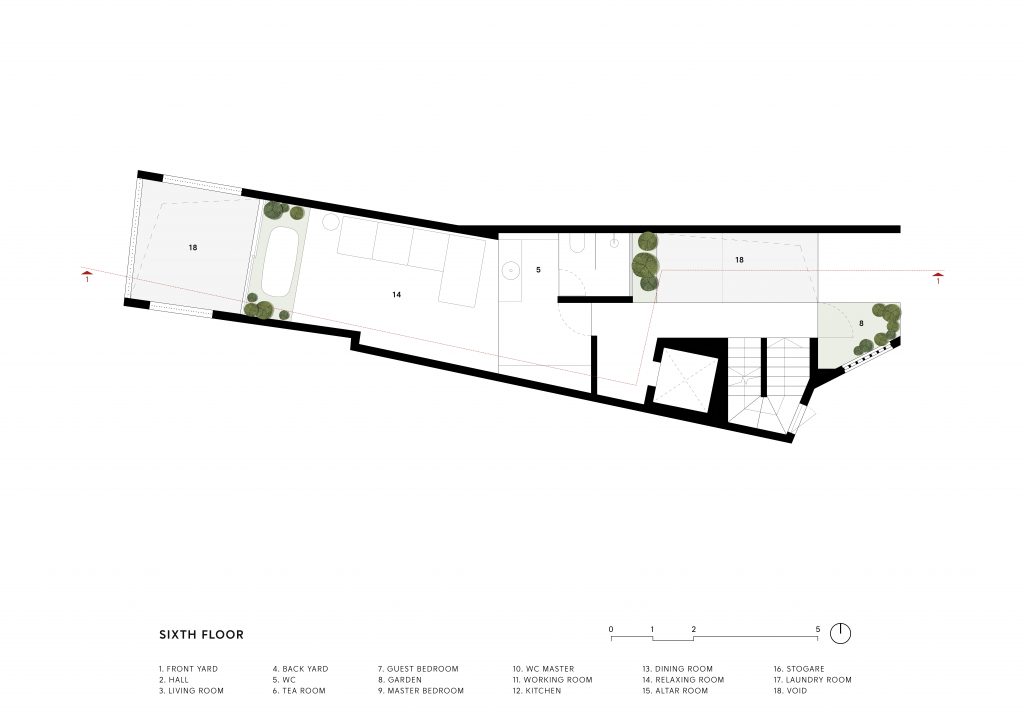
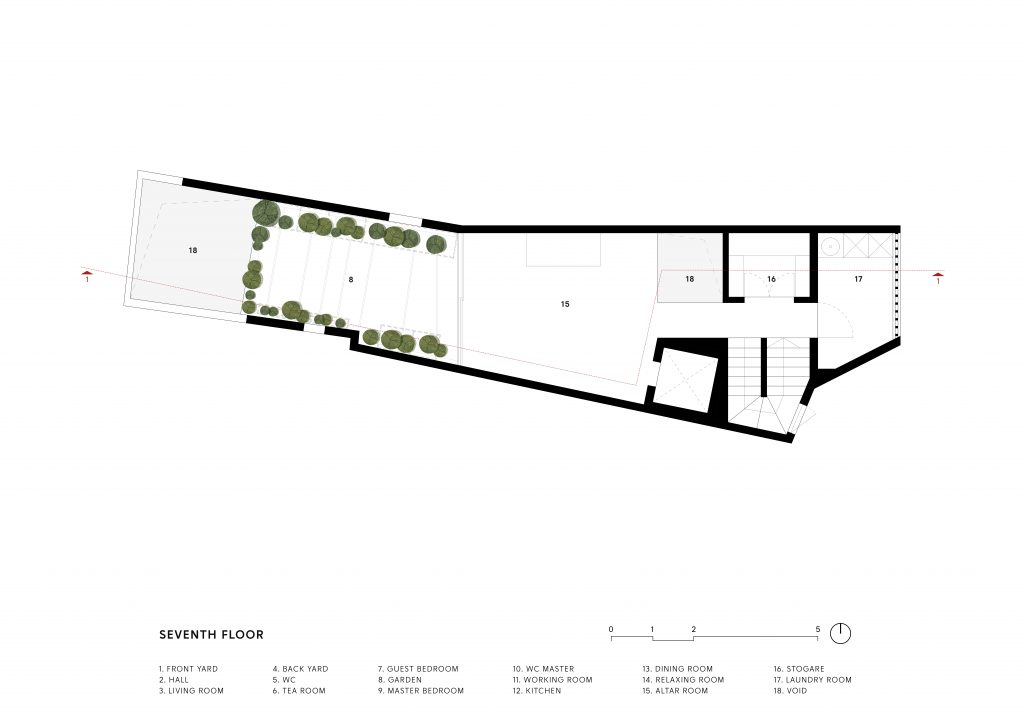
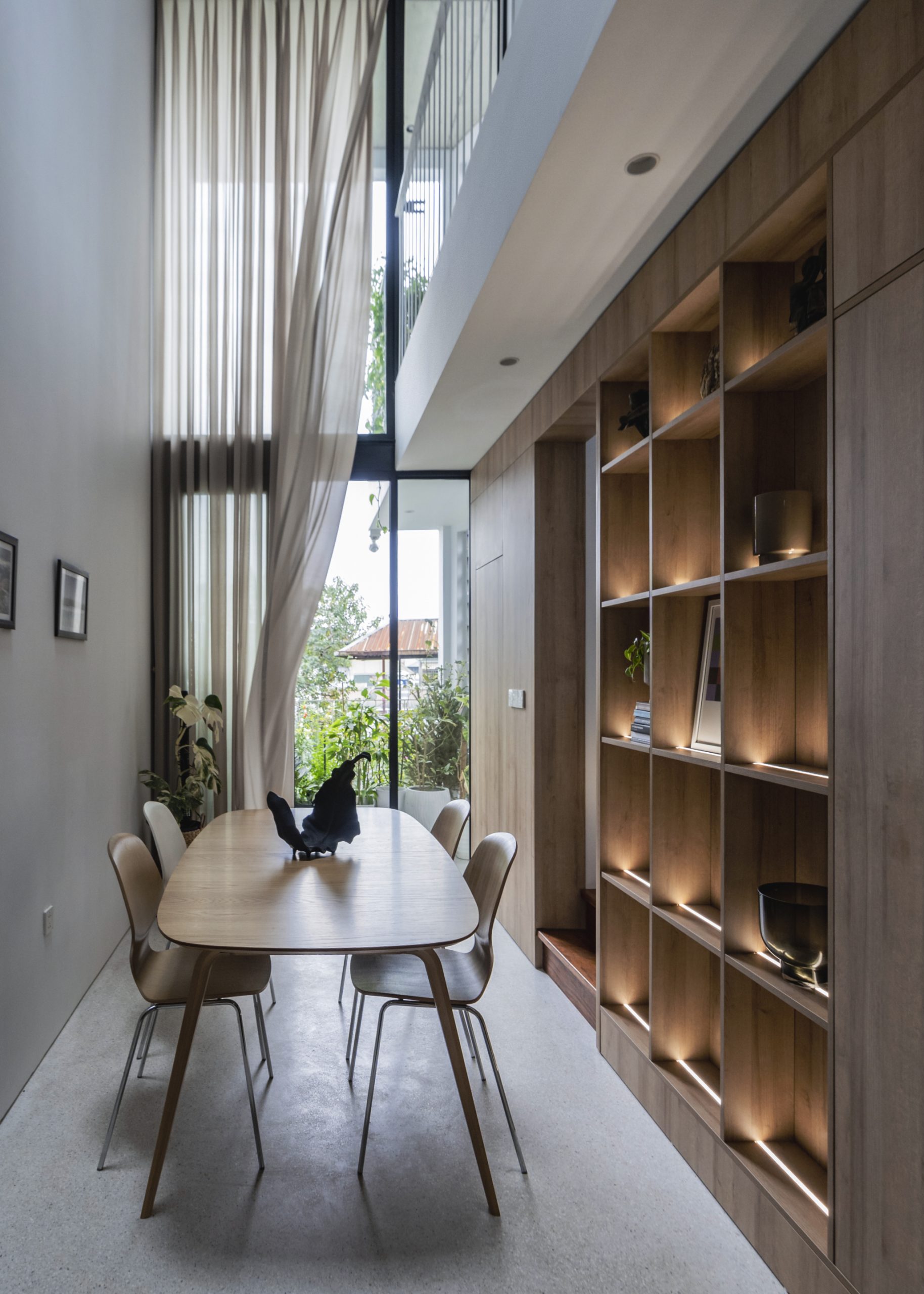
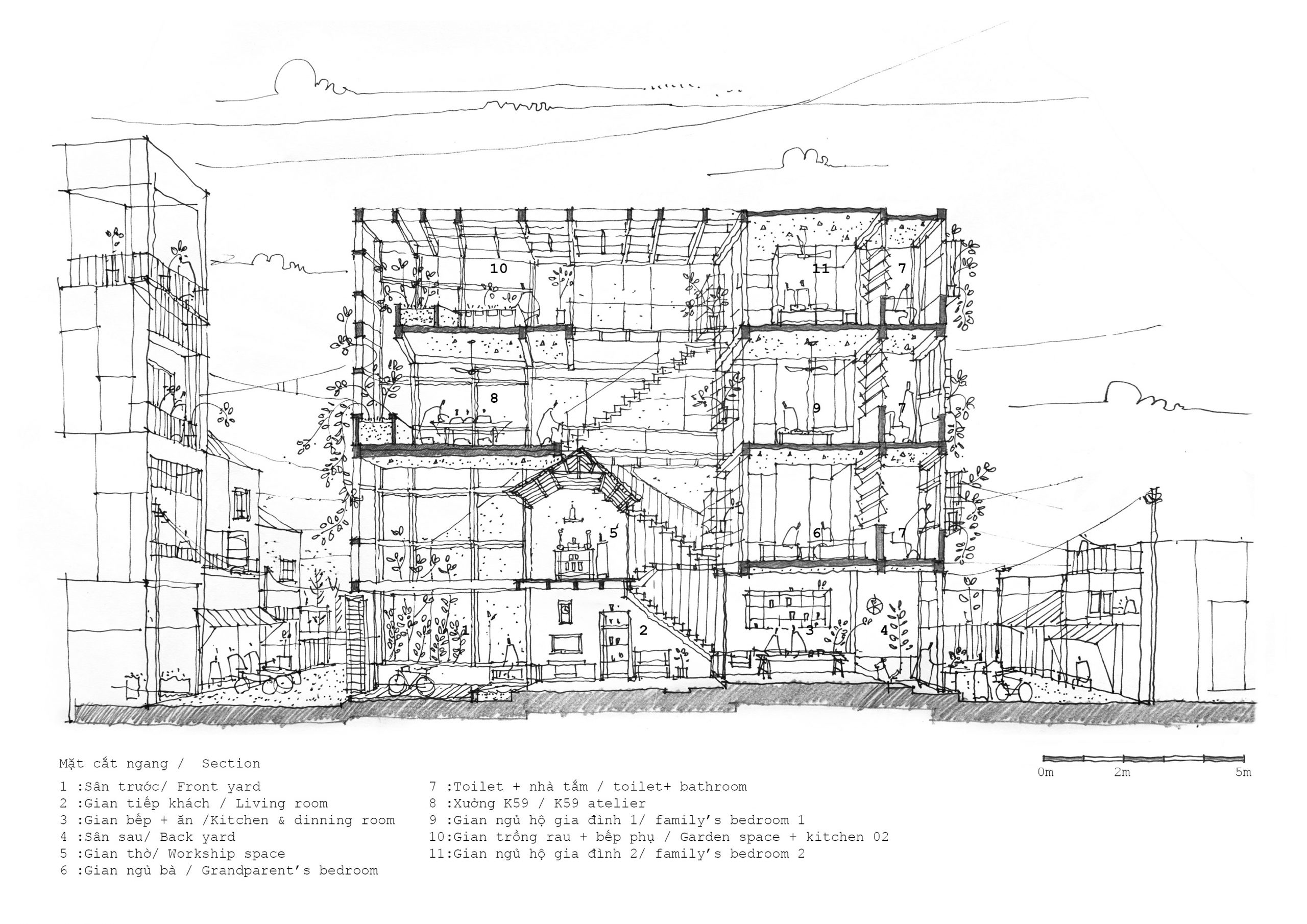
The seven-story home has living rooms on the first and second floors, while private residential areas with bedrooms are put away in quiet places on the third and fourth floors. The communal space that’s the heart of family life is on the fifth floor.
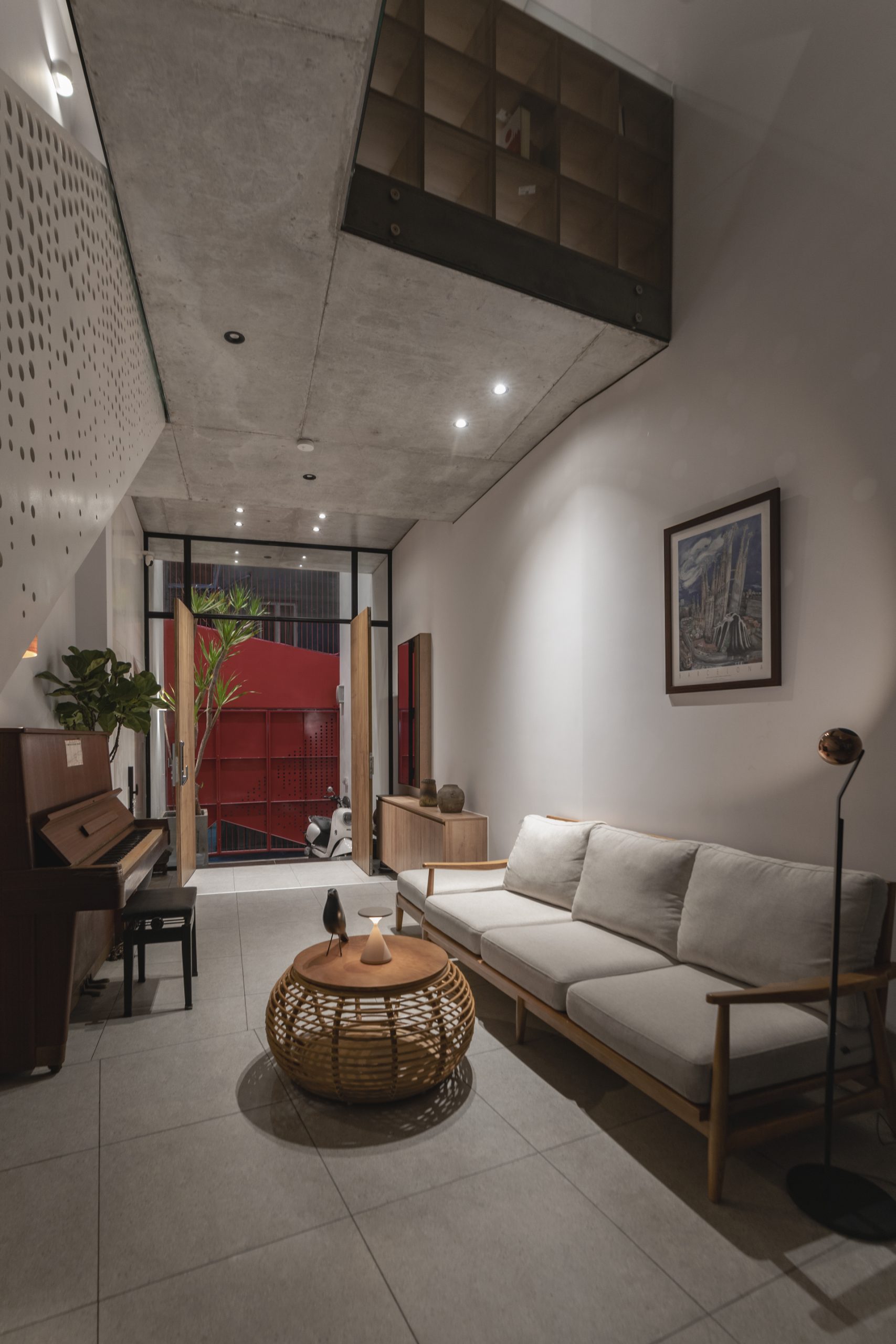
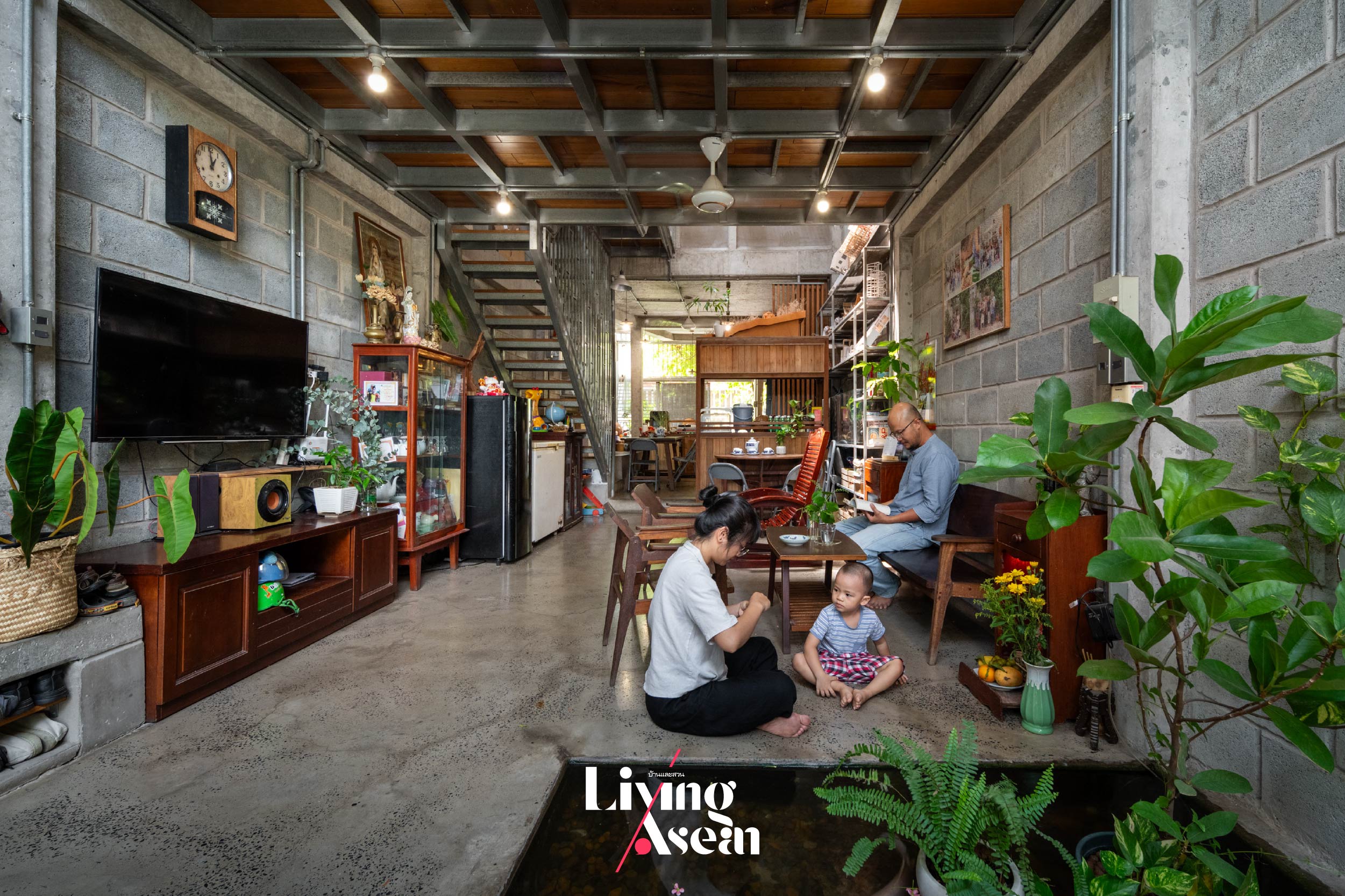
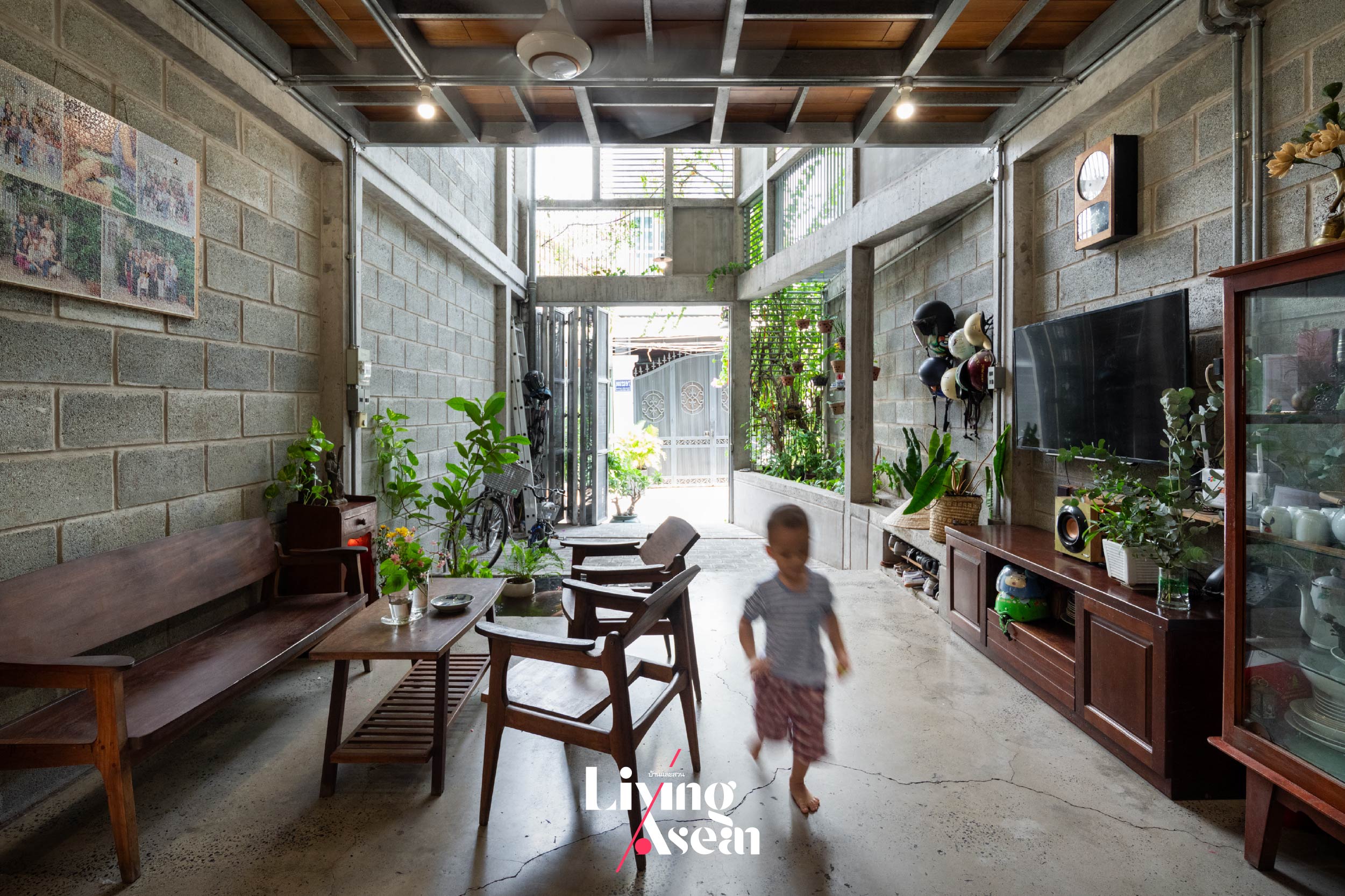
The first floor living room is plain and uncluttered, creating an inviting atmosphere in the home.
It holds a kitchen and dining room conveniently connected to a cool and restful sitting room on the sixth floor. The altar for the traditional veneration of family ancestry is on the seventh floor adorned with a small green oasis, yet it provides enough fresh air to create indoor thermal comfort. Needless to say, the view from high up is calm and peaceful.
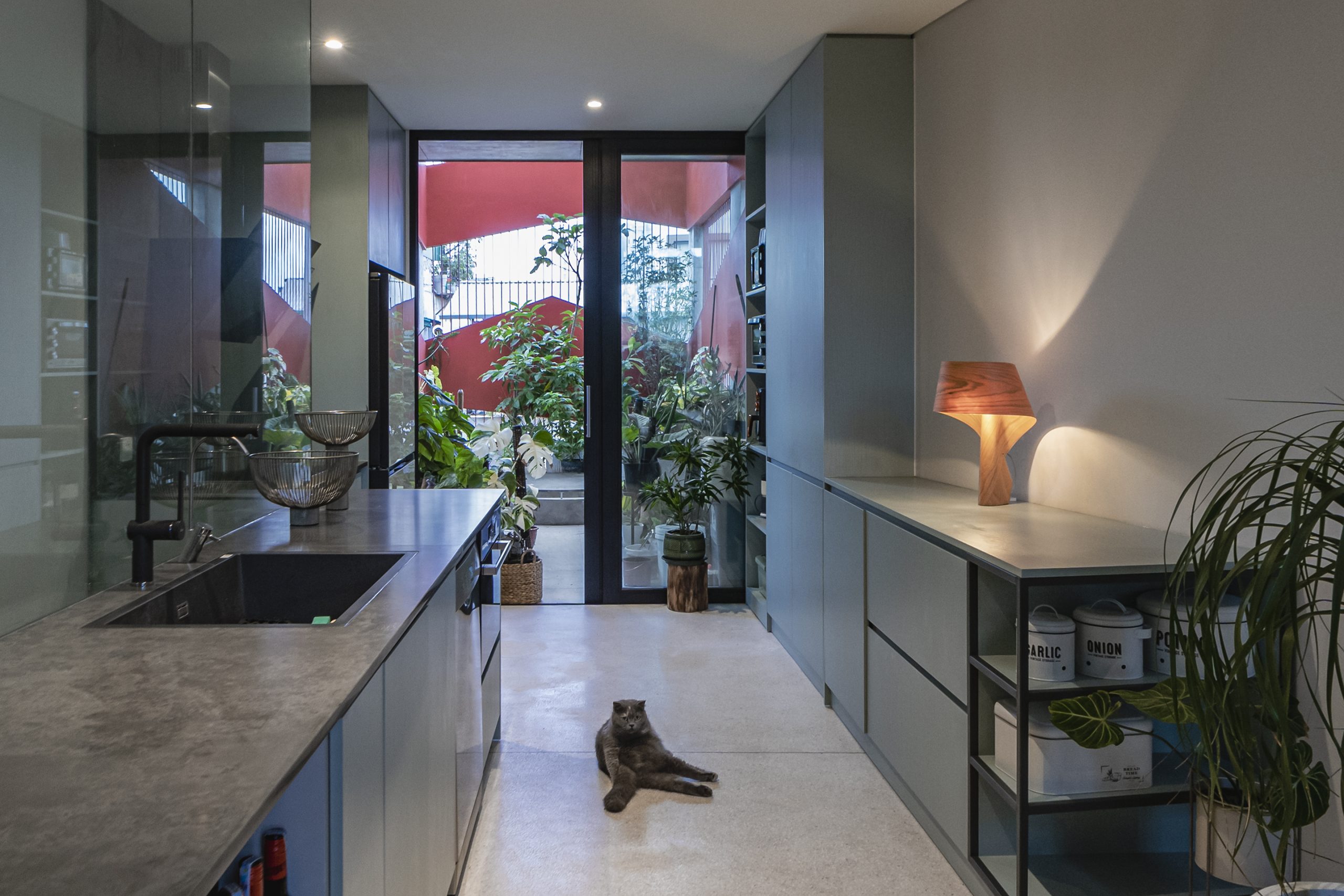
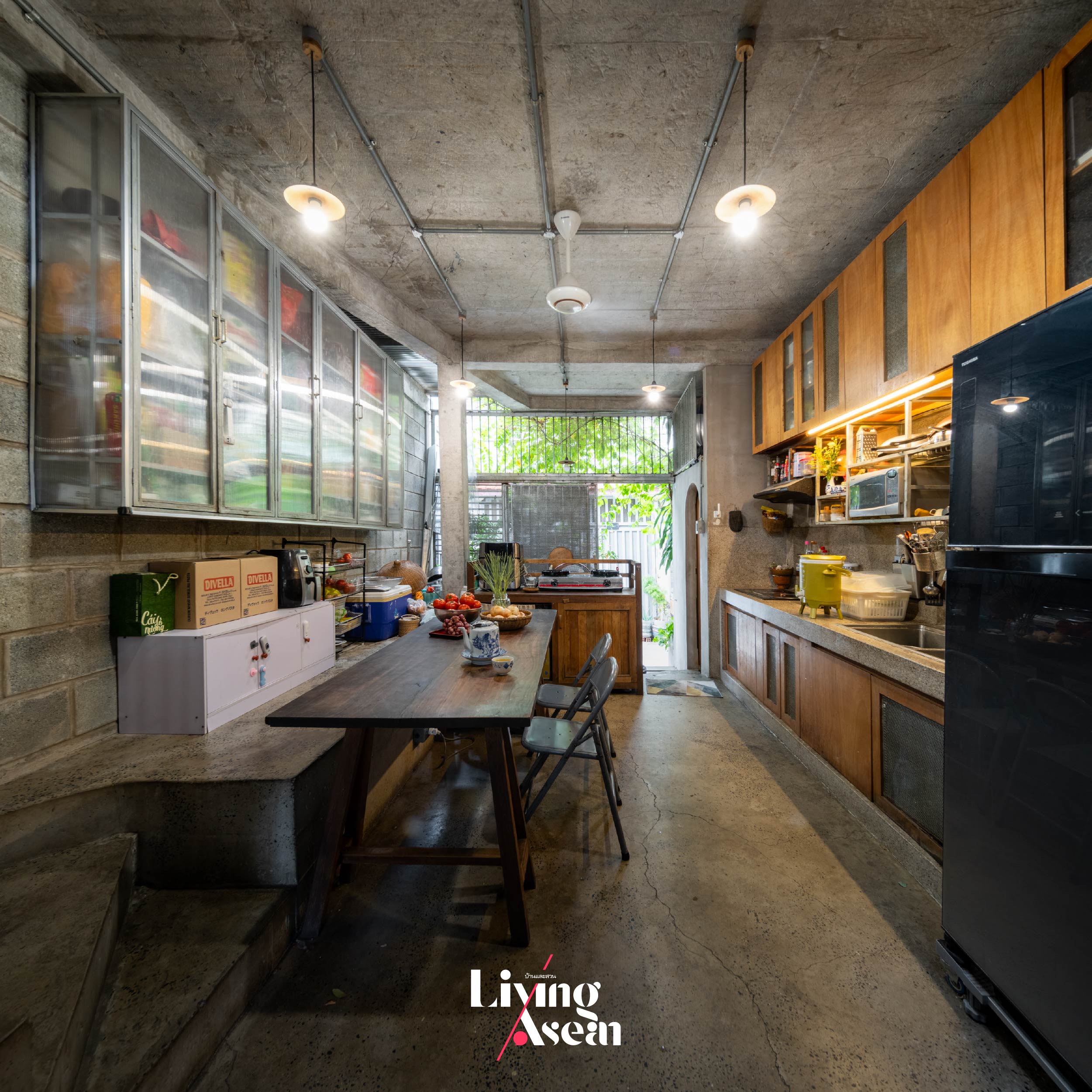
Albeit small, the dining room on the fifth floor is well-lit and well-ventilated.Limited space notwithstanding, the kitchen opens to the fifth floor balcony designed for ventilation and fresh air, a way to get rid of cooking smells fast.
Among the most outstanding ideas is the house façade that works like a display of large picture frames showcasing pleasing views of the surrounding cityscape. Where appropriate, double height ceilings create an expansive and visually striking interior, while the balconies up front are adorned with thriving small gardens.
Greenery thrives in the rooftop garden affording a panorama of the cityscape.
Together they provide the feel and functionality connecting to all the rooms, bringing natural light and fresh air to all seven floors of the building.
A rooftop skylight provides ventilation, meantime, illuminating an herb garden and kitchen directly underneath it.
Apart from that, interior design is unique in every detail. Especially worthy of note is the steel pedestrian bridge painted white that connects the third and fourth floors. Along the way, curved lines add a gentle touch to the house plan, a clever hack to reduce the harshness of color and texture on the façade and exterior walls.
A pedestrian bridge connecting the third and fourth floors has perforated steel flooring with wire mesh infill paneling that allows light to pass from the rooftop all the way to the first floor.
Plus, the interior feels light and well-ventilated, thanks in part to perforated metal paneling that improves airflow and affords views of lush gardens irrigated by harvested rainwater. In a few words, it’s a home abounding with greenery at every turn.
This house appears in the special Baan Lae Suan issue on the theme of “Cozy Living in Urban Homes” is out now. Design lovers, this one is for you. It’s the latest in the ongoing “ASEAN Tropical House Series”.
The exciting new bilingual edition (Thai-English) is a nice little collab between the Baan Lae Suan Press and its English language media arm Living ASEAN. It’s the coming together of ideas for dealing with the problem of limited space, turning site constraints into solutions. Precisely, it looks at problem solving techniques, ultimately creating small urban homes that are right within the context of Southeast Asia. In this issue, ten houses are chosen for their exemplary designs that inspire. It’s meant for architects, designers, and homeowners searching out new ideas for creating a living space that’s cozy and comfortable plus it blends in beautifully with the environment.
/ Story: Kangsadan K. / English version: Bob Pitakwong /
/ Photographs: Apinine Thassanopas /
Greetings from Vung Tau, a coastal city about two hours by car or ferry from Ho Chi Minh City. Like everything else across Vietnam, it’s the very picture of an urban landscape dominated by long and narrow houses uniformly sized as part of a continuous row. They are nicknamed “Tube Houses” for the shape that’s much longer than it is wide. The same is true for this white row house in Vung Tau that has since been renovated, beautifully integrating elements of nature in the house plan. The result is a complete home makeover enchanted by the magic of light and shadow in architecture. Plus, a green garden oasis gives it great aesthetic pleasure.
The fresh white house exterior stands out from the rest.Diagrams illustrate space utilization at every level of the house plan. / Courtesy of SDA (Sanuki Daisuke Architects)
The stunning white row house has five levels including the rooftop deck. It towers above everyone else in the neighborhood. The first floor holds a carport giving access to a room for guest accommodation tucked away at the rear. In the in-between space, a flight of stairs leads to the homeowner’s private residential areas located upstairs. The second floor contains a spacious living room with dining room and kitchen nearby.
The first floor holds a carport up front with a passage giving access to a bedroom for guest accommodation and a hobby room at the rear.A flight of stairs gives access all the rooms and functionalities located upstairs.A bi-fold door system opens from one end to the other, connecting the second floor living room with a nearby courtyard.
The quiet and secluded third and fourth floors hold bedrooms for family members. They are conveniently connected to the fifth floor that’s a rooftop deck filled with terraced vegetable gardens. There are bright interior courtyards adorned with lush foliage and a shade tree thriving in the middle of the floor plan illuminated by rooftop skylights.
The white row house consists of spacious platforms, staircases and passageways enclosed with walls. At the center of the floor plan, a tree rises from the courtyard below filling the void of space all the way to the rooftop.The third floor room with a high ceiling has a view of functional spaces within the home.
Overall, it’s an outstanding design showcasing well-thought-out spatial arrangements. Among others, semi-outdoor living areas up front bear some resemblance to a porch or a patio, only they are nicer and bigger than the average room size in the house.
The bedroom with a courtyard view. Well-thought-out design turns every room into a breath of fresh air.
As the architect intended, they evoke pleasant memories of open public spaces in the city. Sunny and airy with lush leaves at every turn, they take up much of the space between the front façade and the midpoint of the house plan on the second and third floors.
Meanwhile, the breathing façade allows fresh outdoor air to enter and circulate inside. Exceptionally good is the third floor living area that benefits a double height ceiling. It’s an enchanted garden where house plants grow vigorously in full sun shining in through rooftop skylights.
Needless to say, the most important element of design is the perforated metal façade painted a cool-toned white. Built in a uniform style, it starts from the ground up and rises all the way to the uppermost point, ultimately becoming a part of the rooftop. From sunrise to sunset, perforated metal panels cast shadows on the walls and floors directly underneath them.
A living room is filled with greenery thriving in containers, while the perforated façade and rooftop paneling cast shadows on the walls and floors.
Besides letting the fresh air and sunshine stream into the interior, they work in tandem with shade trees and understory plants in the yards, filling the rooms with the magic of a light and shadow show. Like poetry in motion, the show goes on all day as time passes, adding unique and unusual features to a beautiful work of architecture.
This house appears in the special Baan Lae Suan issue on the theme of “Cozy Living in Urban Homes” is out now. Design lovers, this one is for you. It’s the latest in the ongoing “ASEAN Tropical House Series”.
The exciting new bilingual edition (Thai-English) is a nice little collab between the Baan Lae Suan Press and its English language media arm Living ASEAN. It’s the coming together of ideas for dealing with the problem of limited space, turning site constraints into solutions. Precisely, it looks at problem solving techniques, ultimately creating small urban homes that are right within the context of Southeast Asia. In this issue, ten houses are chosen for their exemplary designs that inspire. It’s meant for architects, designers, and homeowners searching out new ideas for creating a living space that’s cozy and comfortable plus it blends in beautifully with the environment.
/ Story: Kangsadan K. / English version: Bob Pitakwong /
/ Photographs: Apinine Thassanopas /
A home in an elongated rectangle performs a dual role as a multigenerational residence and an architectural office in the middle of a densely populated area in Ho Chi Minh City, Vietnam. Needless to say, there were site constraints that limited the design of the building. Some of the challenges were just inevitable, but an architect homeowner has found a way to deal with them, turning the hot and stuffy home into a clean, well-lighted place. The secrets to success lie in reconnecting with nature by integrating green spaces in the plan. Notwithstanding the narrow space, the home is lovingly restored and fully loaded with all functionalities.
A view from the street shows how a narrow lot limits and influences design, making it necessary to build vertically.
As the architect explained it, living in a crowded urban environment doesn’t always mean sacrificing good life or cutting off from the great outdoors. On the contrary, it’s design flexibility and serious attention to detail that’s the key to combining both opaque and see-through structures to form a whole, ultimately creating in a living space that breathes easily.
A charcoal sketch illustrates spatial planning and functionality on the first floor. / Courtesy of k59 atelierCharcoal drawings show spatial planning on the second and third floors. / Courtesy of k59 atelierCharcoal sketches show the positioning of rooms and functionalities on the fourth floor [top], and the rooftop deck [bottom]. / Courtesy of k59 atelierA drawing of the side elevation view in cross section. / Courtesy of k59 atelierThe architect and family enjoy the cozy ambiance of a living room that reflects a multigenerational home.
In other words, it’s a home that’s not so much a solid mass of stonework, and not so much a sealed-off glass enclosure that can never be open. They are inherent parts of the building that reach out to reconnect with nature, people, culture and society at large.
A full-size kitchen lies at the rear of the house with a back door that can open directly onto the road behind it.
Speaking of design, all four levels of the building feature open floor plans that allow natural light and provide fresh air to the interiors. The first floor holds a spacious living room up front and a kitchen at the rear that’s proper in the circumstances of a big family.
A footbridge gives access to a bedroom at the rear of the house.The mezzanine holds an altar showing honor and reverence for family ancestry according to Vietnamese culture. It’s covered with a gable roof consistent with vernacular architecture in the region.
Together, they form the heart of a multigenerational home, with plenty of space for an elderly mother, an aunt, a brother, and the architect’s own family with a little child. The second floor bears some resemblance to a mezzanine with an altar for the veneration of family ancestry characteristic of Vietnamese culture. The third floor is the architect’s private office space, while the fourth holds the principal bedroom with a green garden oasis for complete relaxation.
The third floor has a footbridge providing access to a bedroom at the far end elevated by potted indoor plants.The third floor holding an architectural workspace feels spacious and airy, thanks to an open floor plan.The architect’s office space benefits from natural light and fresh air, passive cooling strategies that saves big on AC costs.
There’s one feature that’s exceptionally good. The elongated rectangle is divided into two more or less distinct sections. The front and rear parts of the house lie separated by a center corridor onto which rooms open.
The top floor holds a private residential space accessed via a footbridge that connects the sitting room up front with the bedroom at the rear.
By design, functional spaces are located up front, with private residential areas tucked away in quiet places at the rear. The bedrooms for family members are scattered on almost every floor. For optimal traffic flow, all the rooms are linked to one another via the corridor and stairway at the center.
The house façade with lush plants thriving in a garden trough brings positive vibes to the home.The facade supports a vertical garden from the third floor to the top. Plant irrigation is well planned to prevent water splashing back into the home.
Apart from the bright and airy center hall, the building façade features pleasing simplicity of appearance. At ground level, a bi-fold fence system is crafted of perforated metal panels for good ventilation.
The sitting area has a small pantry for making breakfast and light meals without having to make a trip downstairs.
Above it, the balcony façade is enclosed by custom iron frames in various sizes and configurations, adorned with lush climbing vines. They thrive in company with small threes growing luxuriantly nearby. In essence, it’s about bringing green into the home, turning it into a healthy and happy place to live for a multigenerational family.
This house appears in the special Baan Lae Suan issue on the theme of “Cozy Living in Urban Homes” is out now. Design lovers, this one is for you. It’s the latest in the ongoing “ASEAN Tropical House Series”.
The exciting new bilingual edition (Thai-English) is a nice little collab between the Baan Lae Suan Press and its English language media arm Living ASEAN. It’s the coming together of ideas for dealing with the problem of limited space, turning site constraints into solutions. Precisely, it looks at problem solving techniques, ultimately creating small urban homes that are right within the context of Southeast Asia. In this issue, ten houses are chosen for their exemplary designs that inspire. It’s meant for architects, designers, and homeowners searching out new ideas for creating a living space that’s cozy and comfortable plus it blends in beautifully with the environment.
Marketing/Advertising Cookies – used to remember and process the relevance to your website visit in order to personalize contents shown including optimization of commercial advertising placements. For instances, we use this type of cookies to display commercial advertisements related to user’s attributes and interests as well as to limit how many times should a user see repeated advertisement in order to optimize and measure marketing activities. อ่านเพิ่มเติม

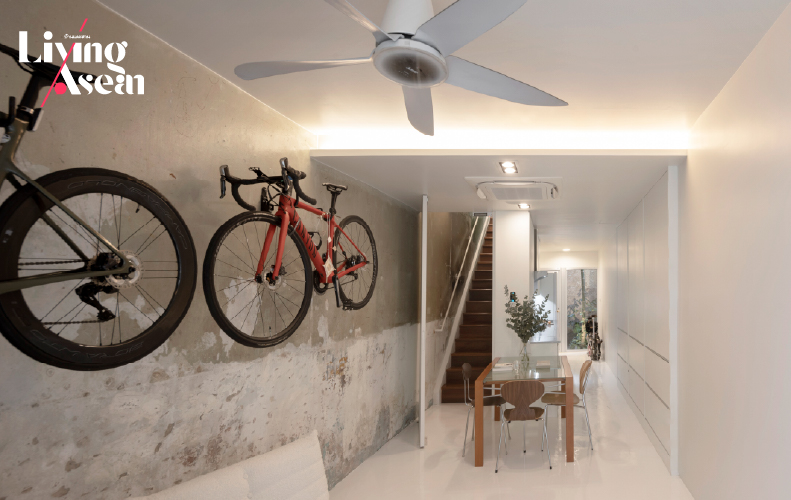

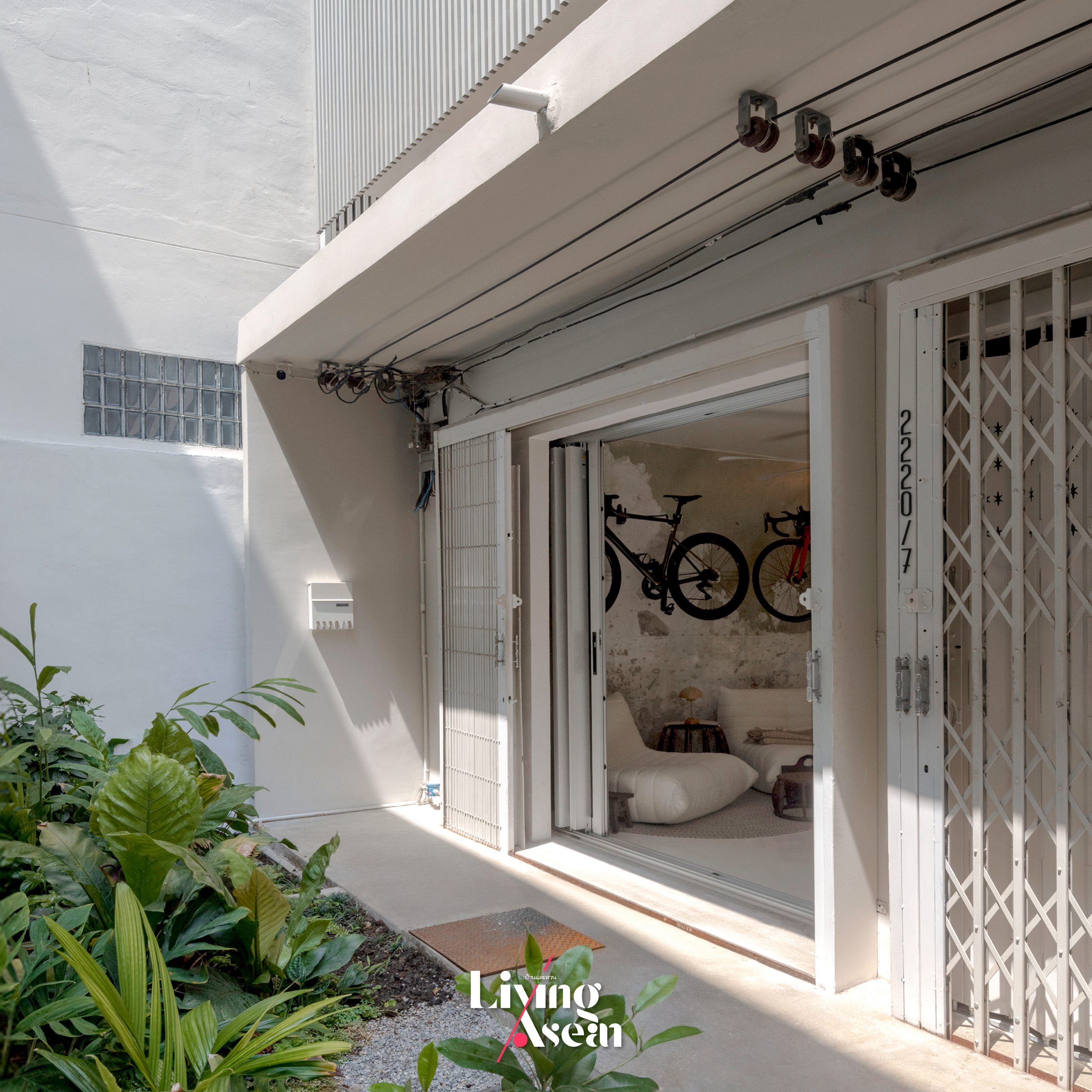
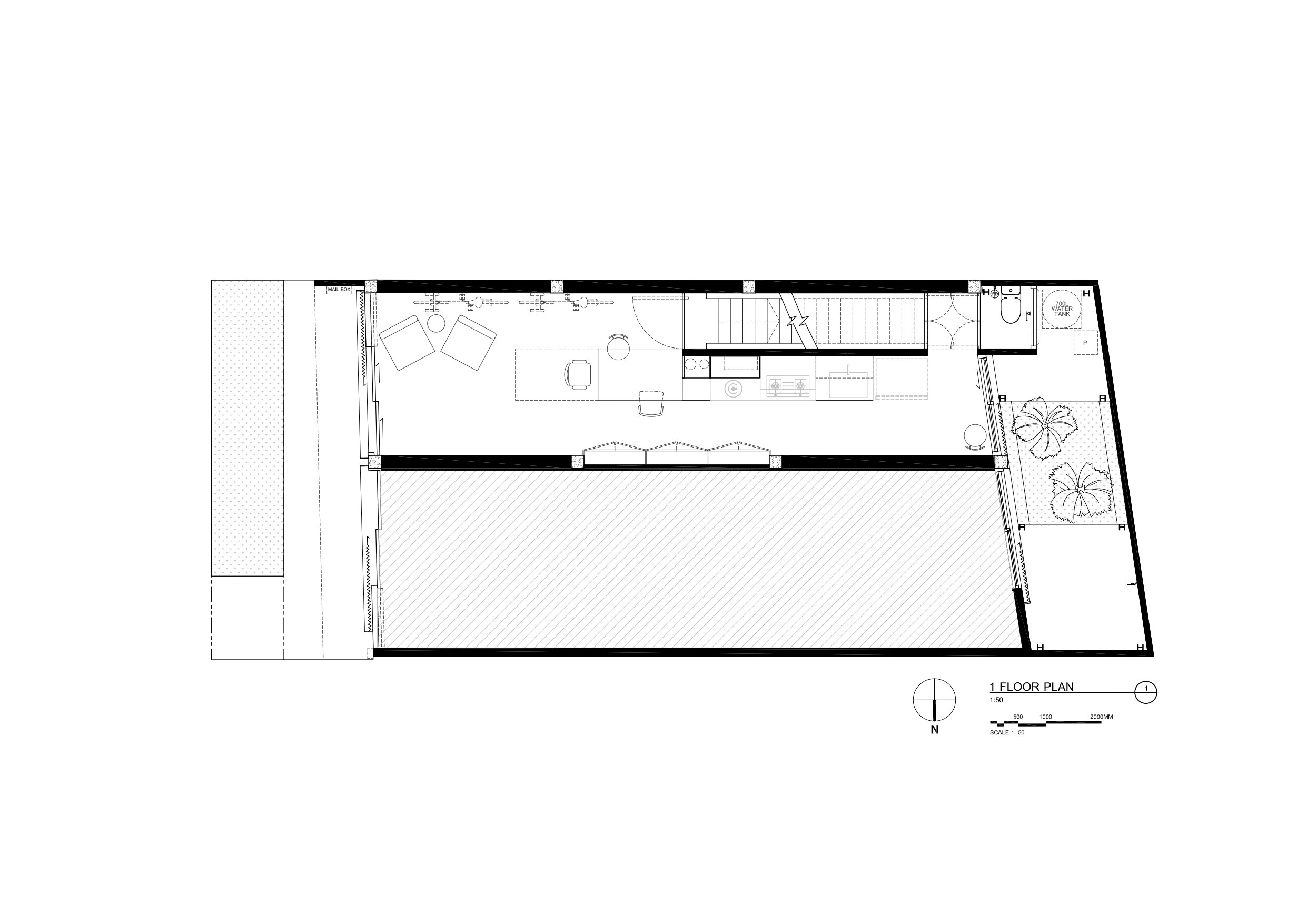
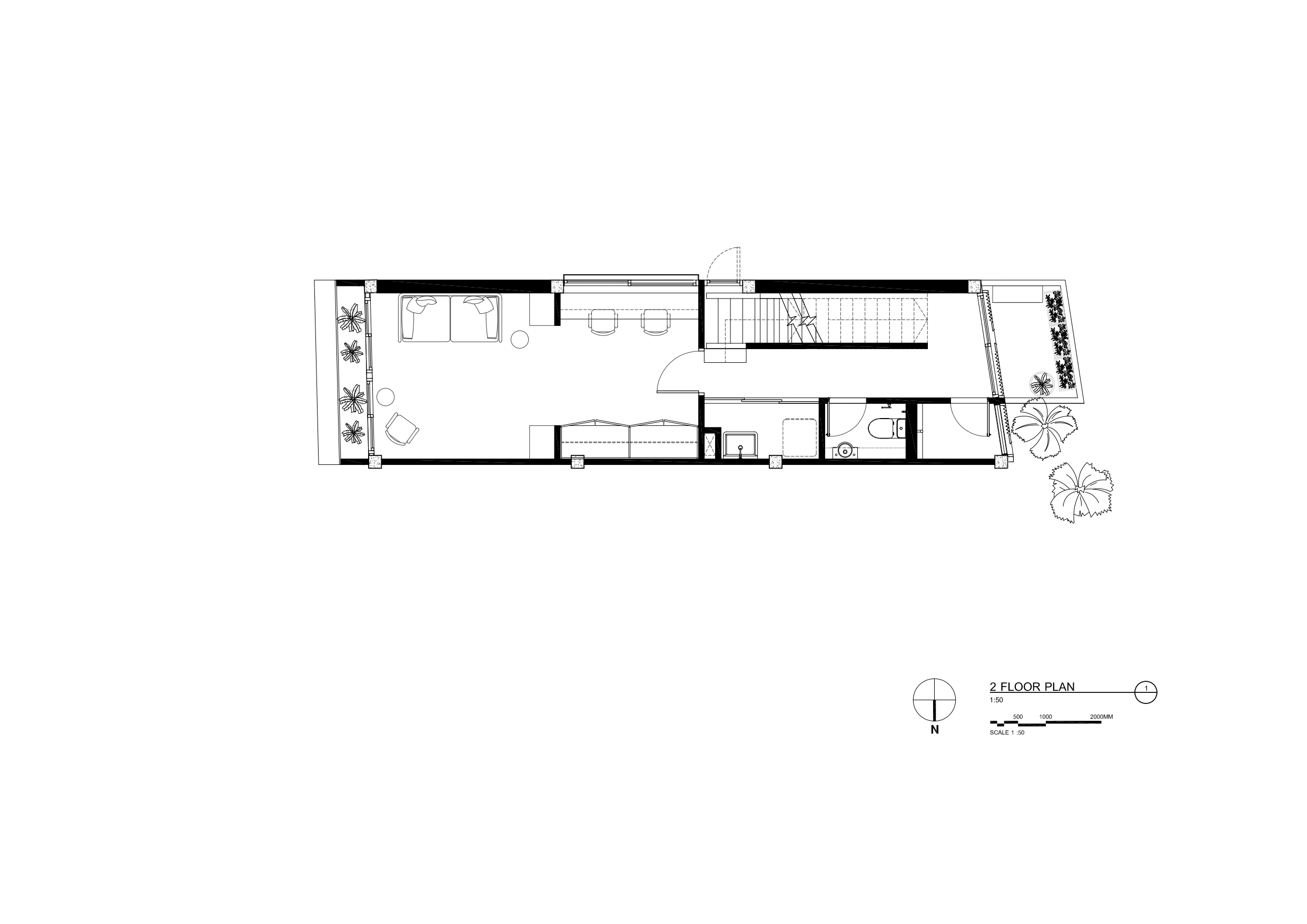
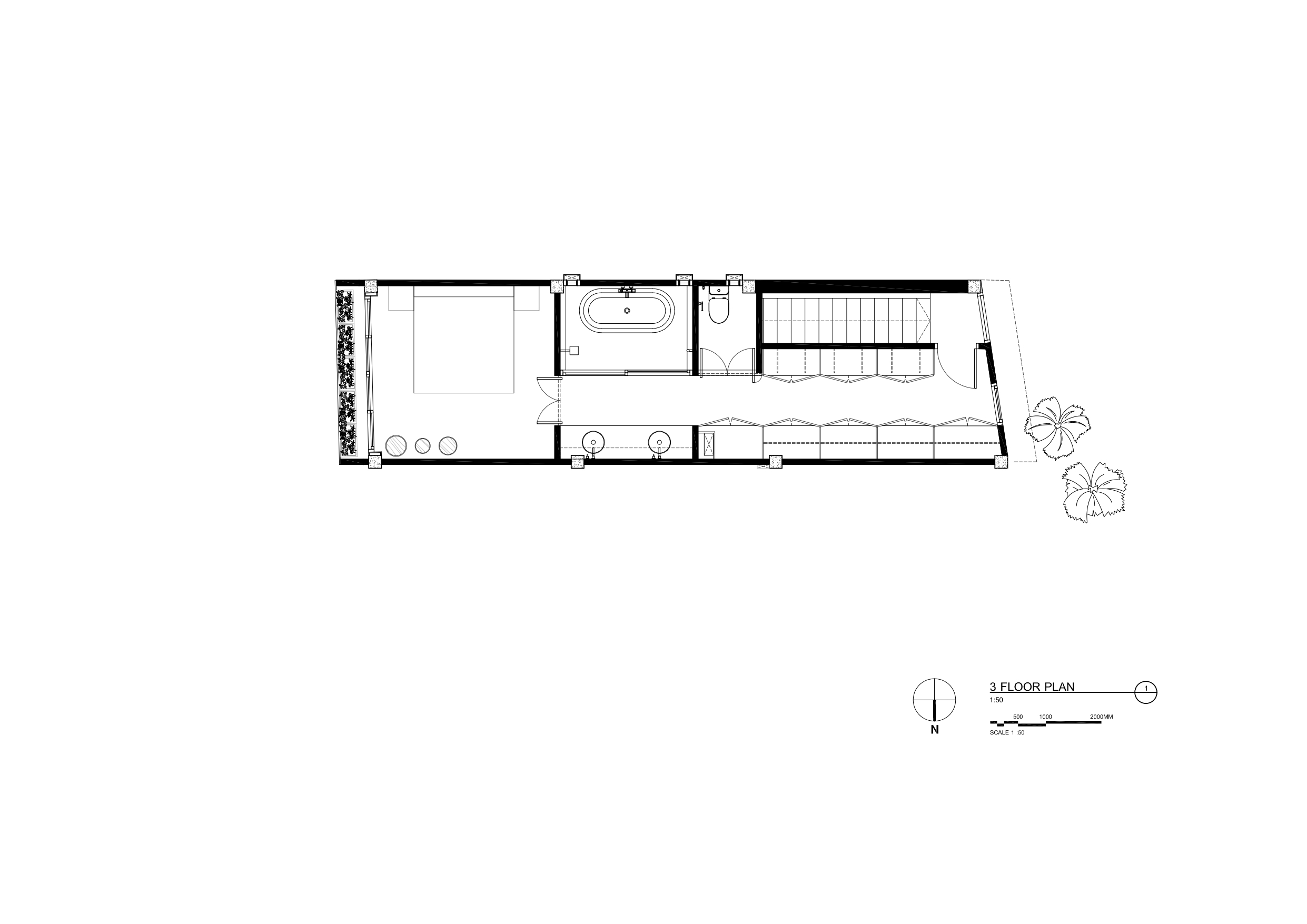
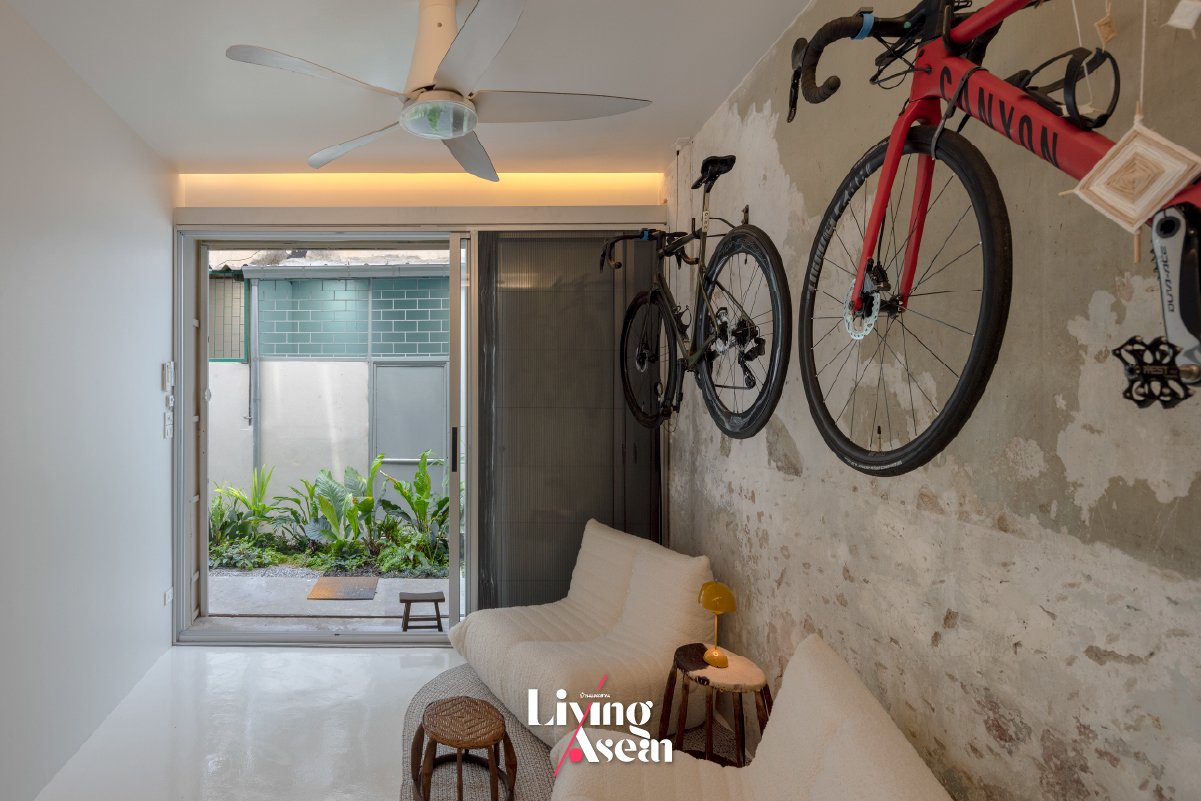
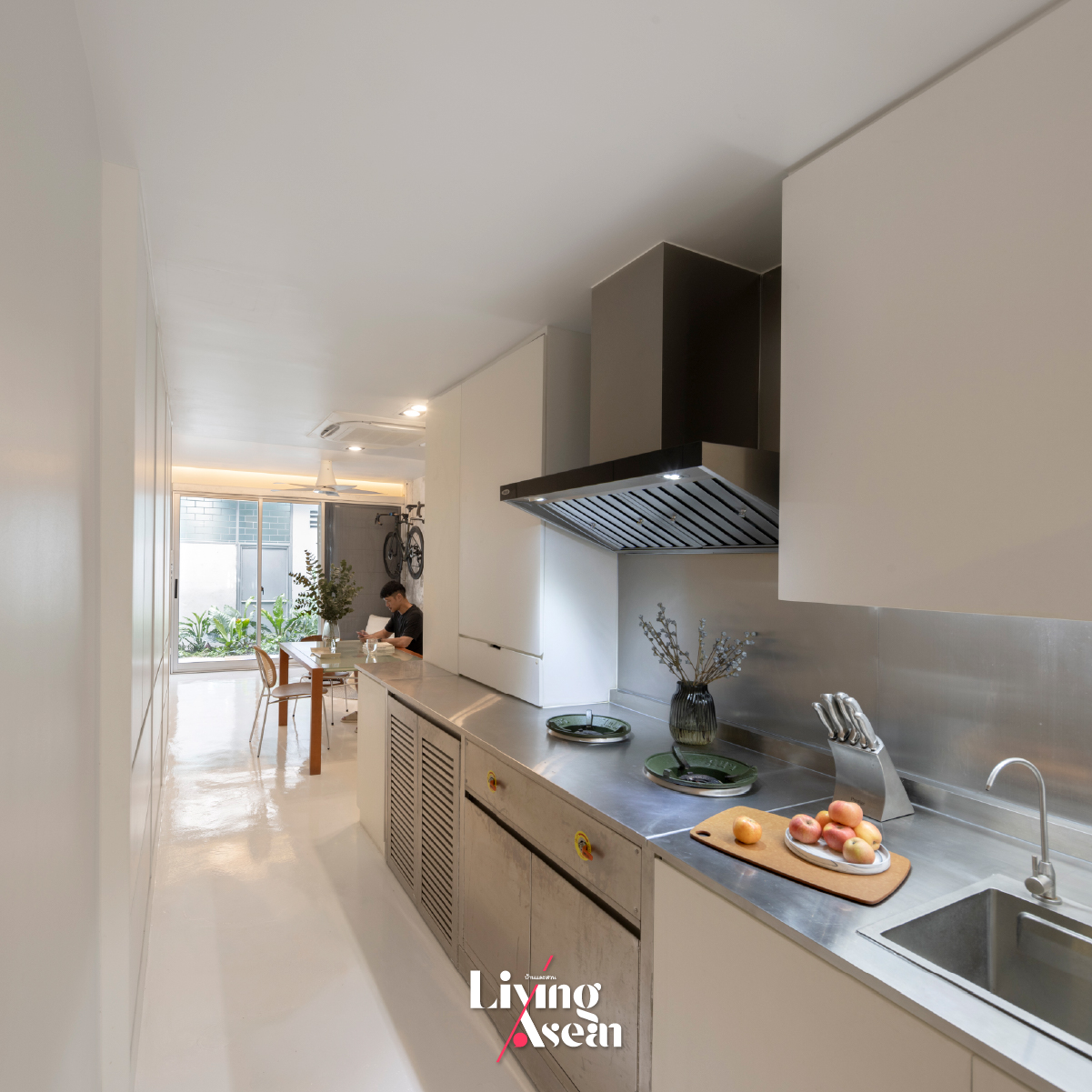
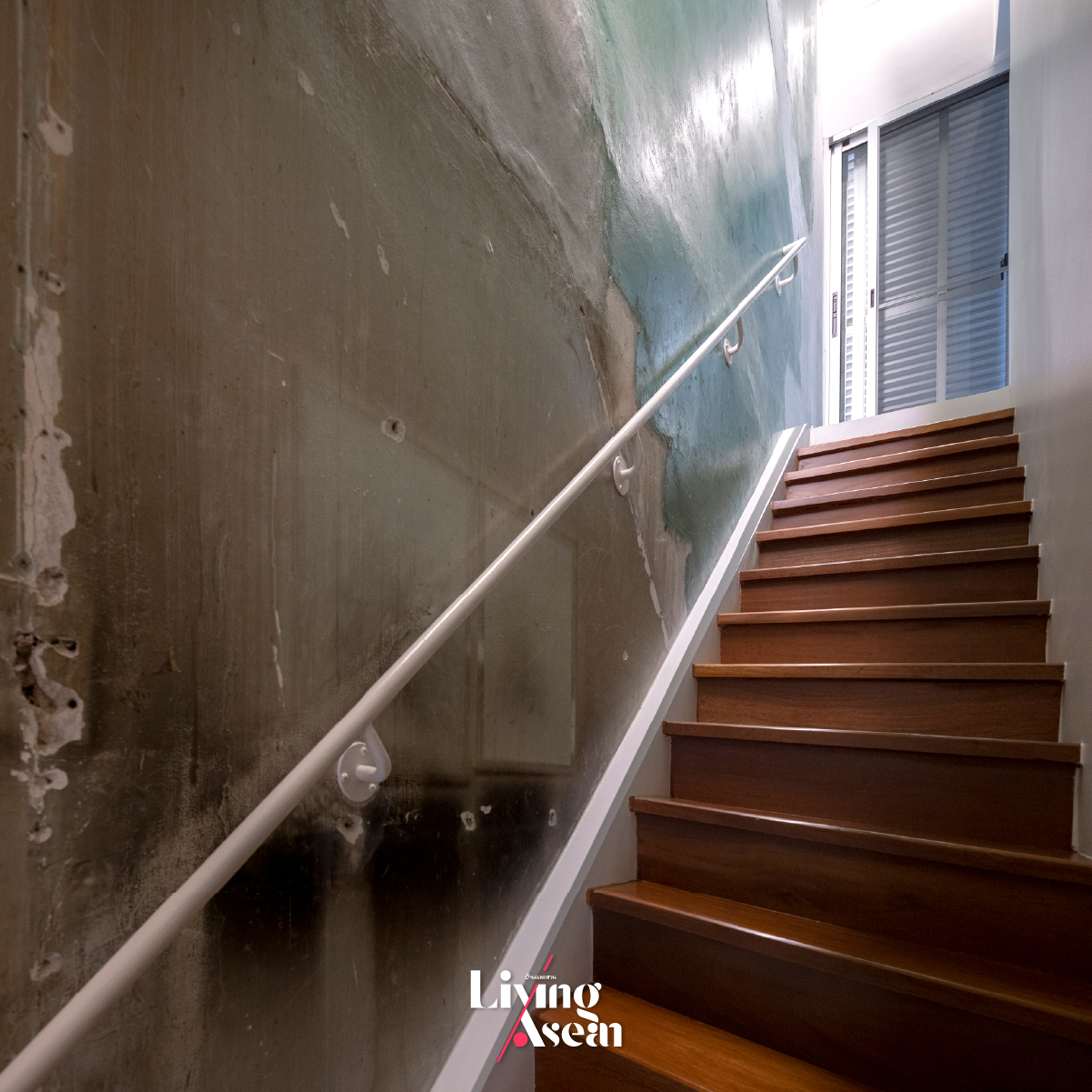
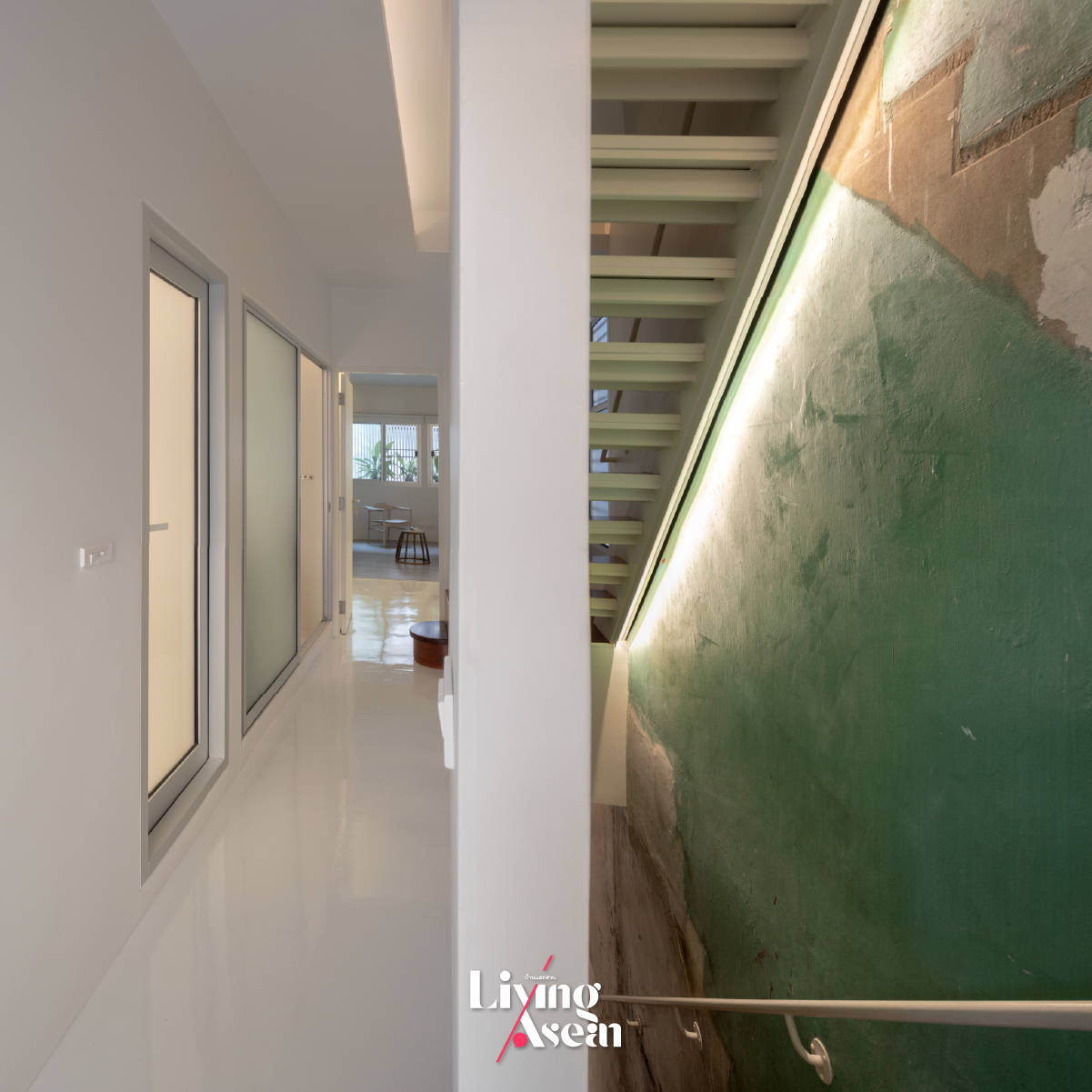
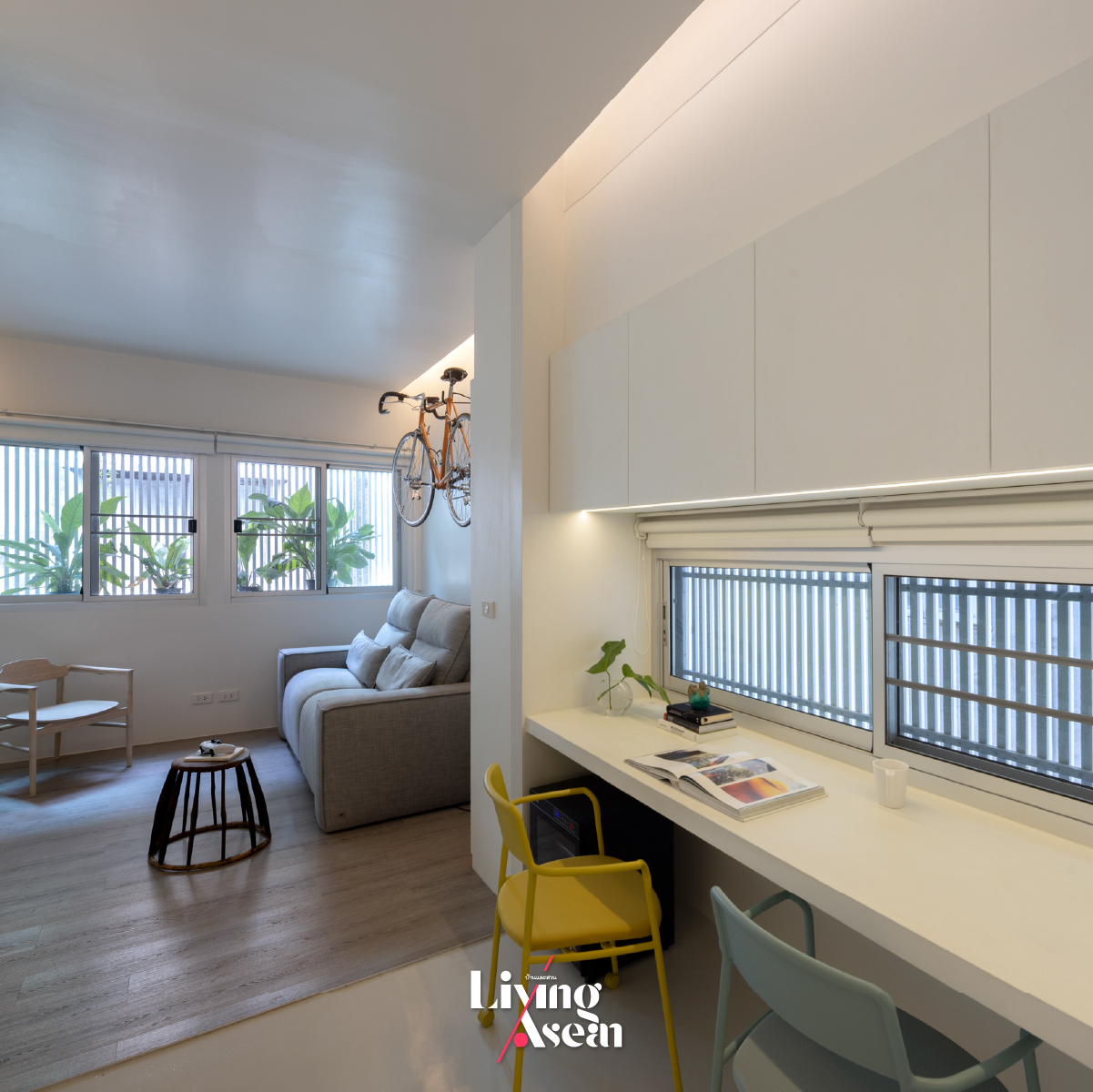
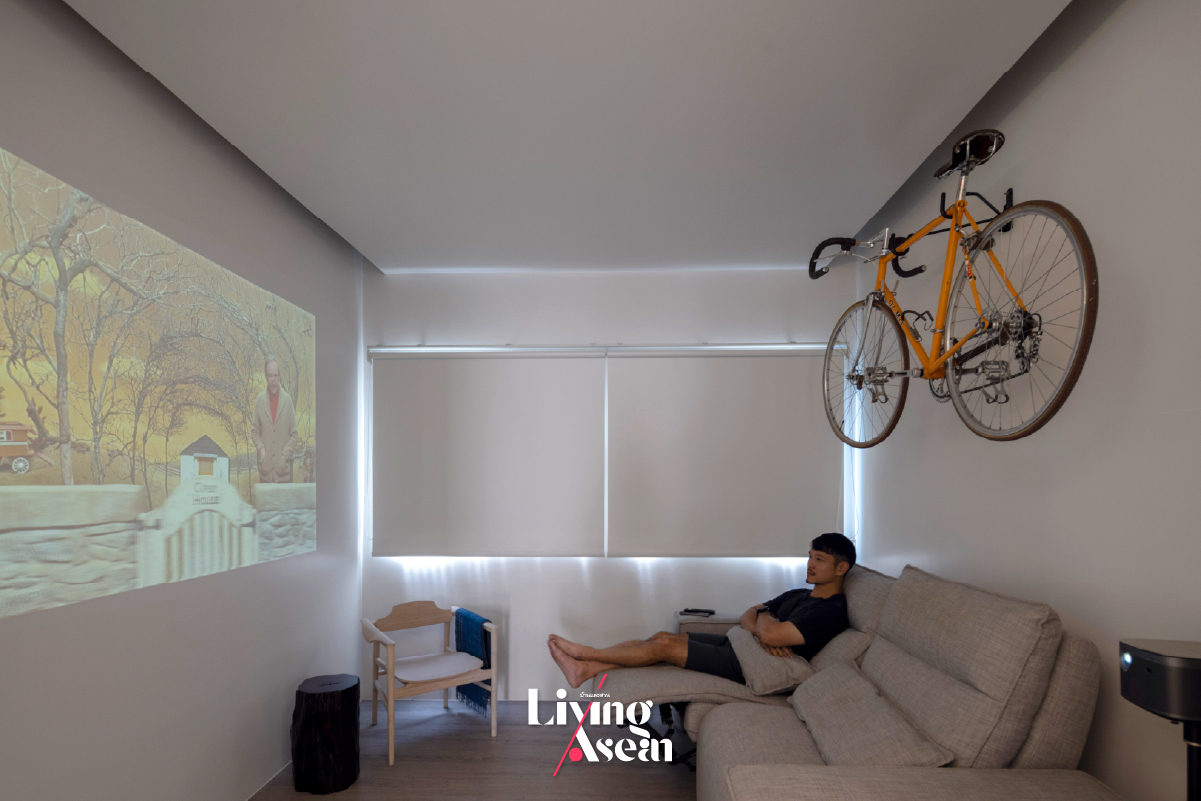
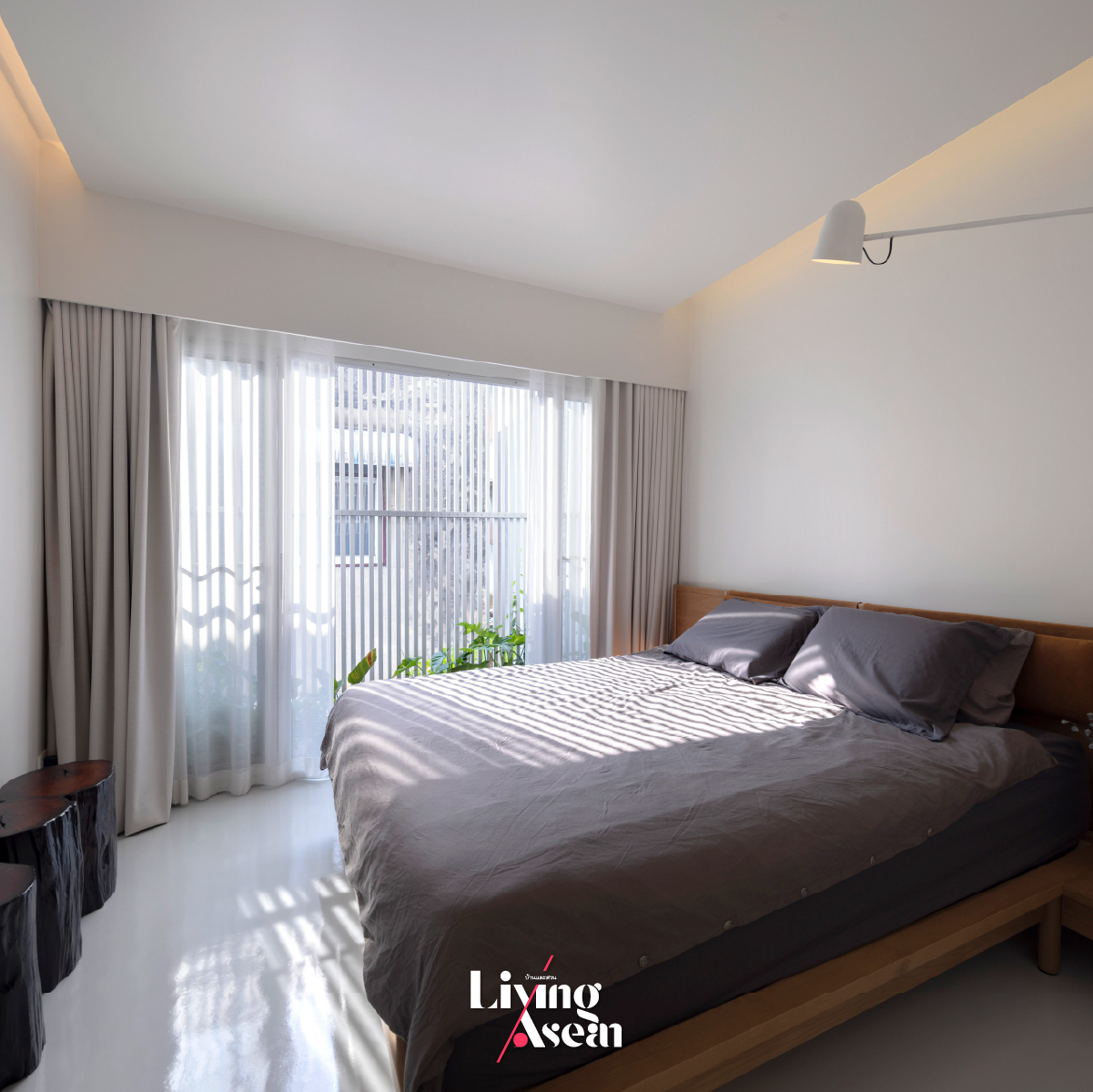
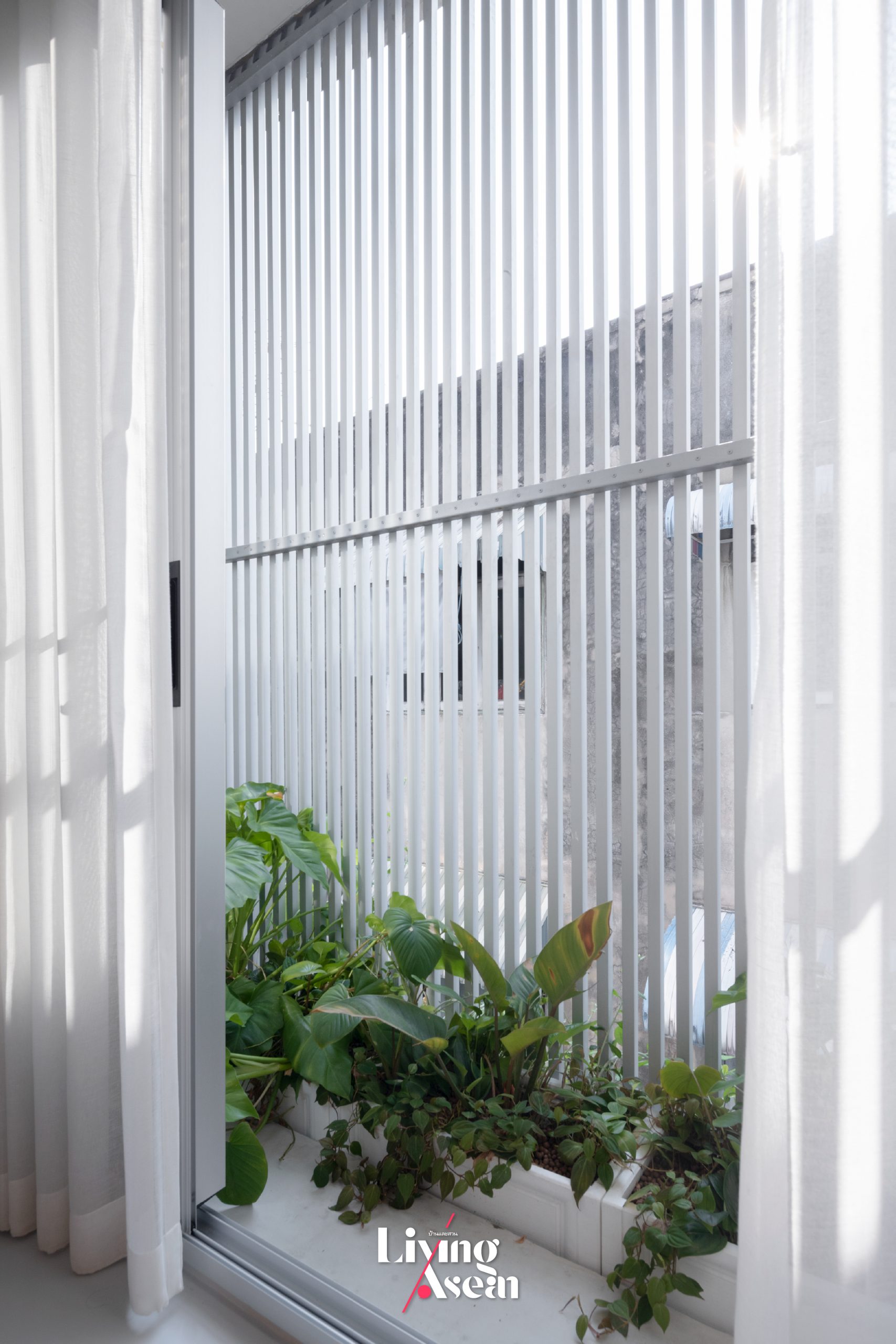
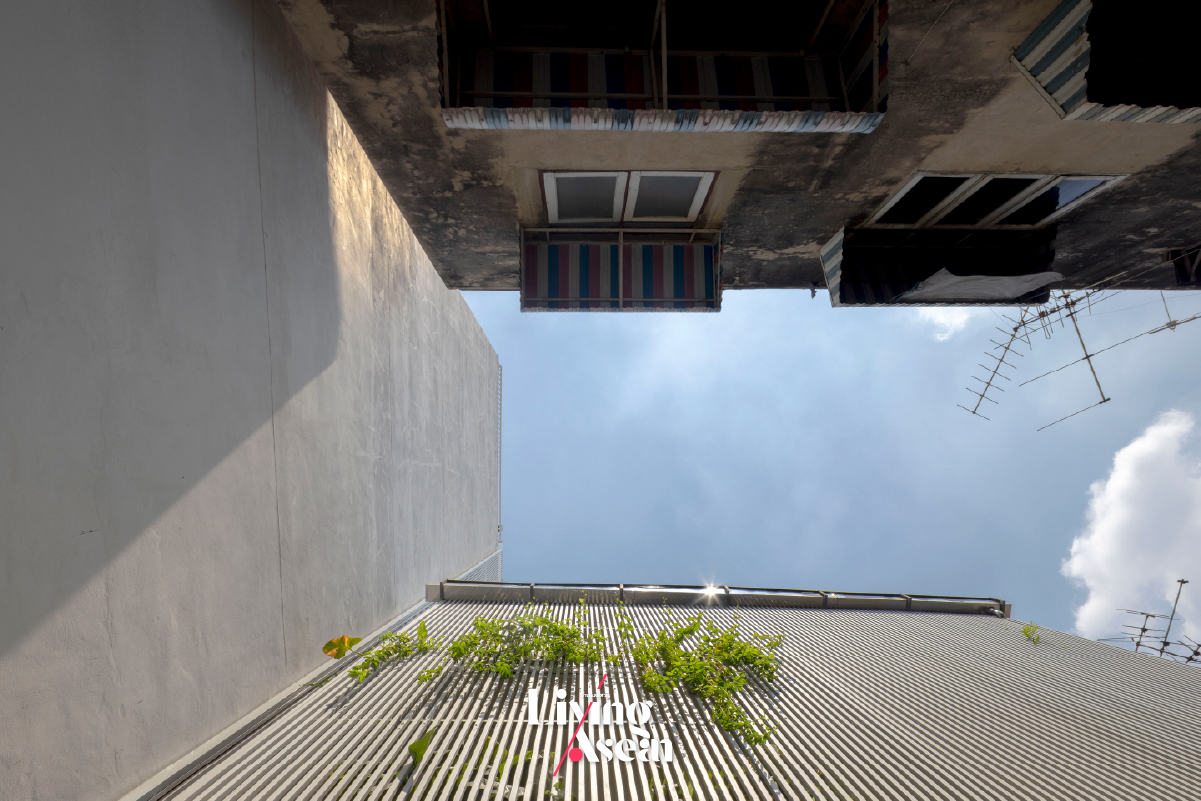
 Tan Phu House: From a Stuffy, Narrow Shophouse to a Multi-Floor Home with Rooftop Garden
 A Colonial Row House Renovated as Home-cum-Restaurant Exuding Vintage Charm