/ Story: Ekkarach Laksanasamrith / English version: Peter Montalbano /
/ Photographs: Soopakorn Srisakul /
There are ways to bring the outdoors in and enjoy the benefits of nature without ever leaving your home. Likewise, a concrete house in Malaysia named Sekeping Tenggiri has embarked on the journey to establish a sanctuary for the mind.
The building has been lovingly restored using steel structures. Leveraging steel technologies offers a fast and convenient alternative in construction.
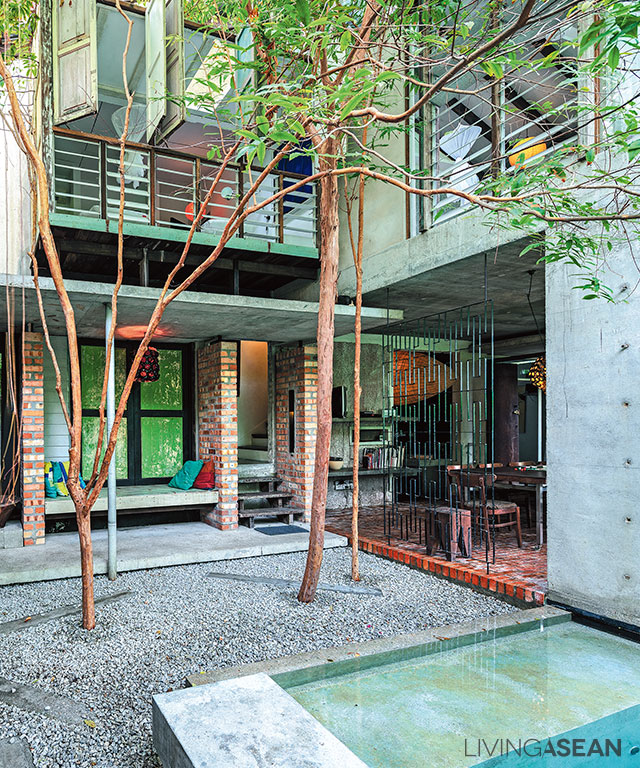
Located in Jalan Tenggiri, a district of Malaysia’s capital Kuala Lumpur, the house graces a modest plot of land. Nonetheless, the homeowner adeptly integrates a plethora of natural features into the design for a look that blends seamlessly with the environment.
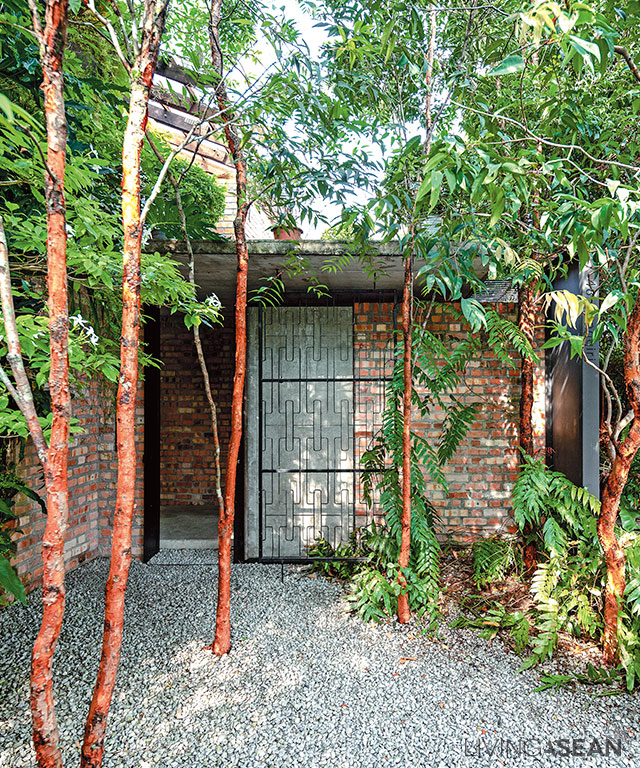
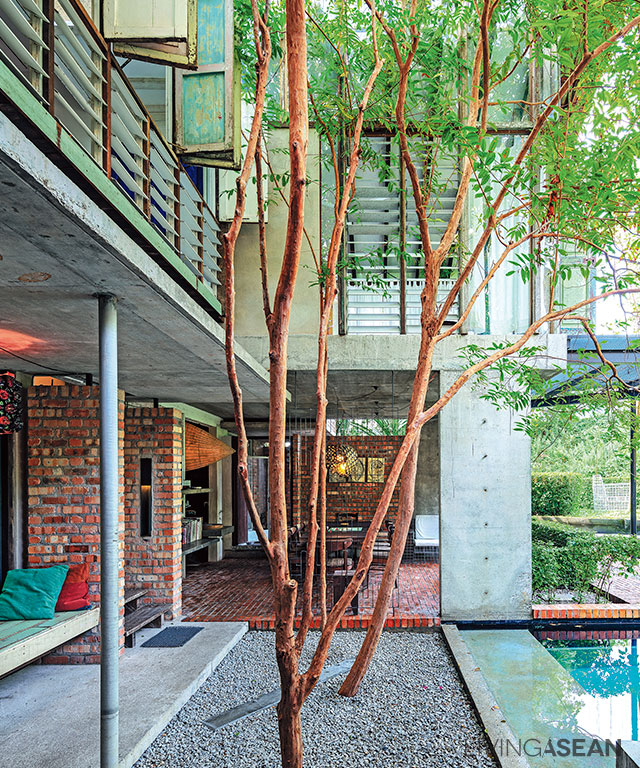
Plants and natural light work harmoniously to soften the stark surfaces of building materials, creating a warm and well-lit ambiance.
The house belongs to Ng Sek San, who is the founder of Seksan Design, a landscaping and architecture firm in Kuala Lumpur. He told us that the house was a renovation of two adjacent homes skillfully transformed with a clean sweep.
Ng is also an art collector, which is evident in one side of the house dedicated to an enviable art collection that’s open to the public with no admission charge.
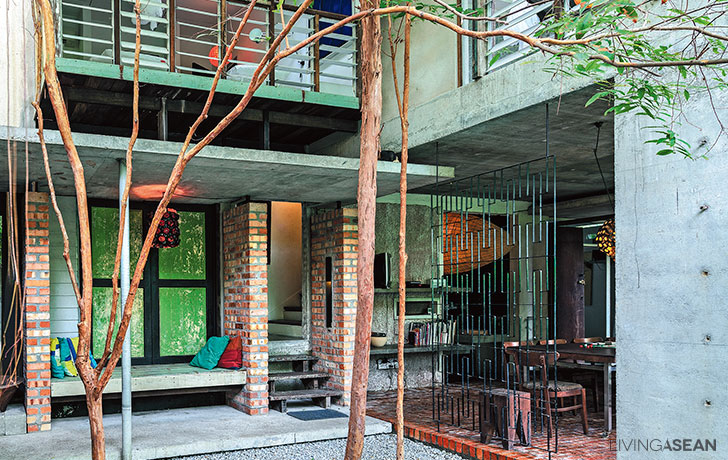
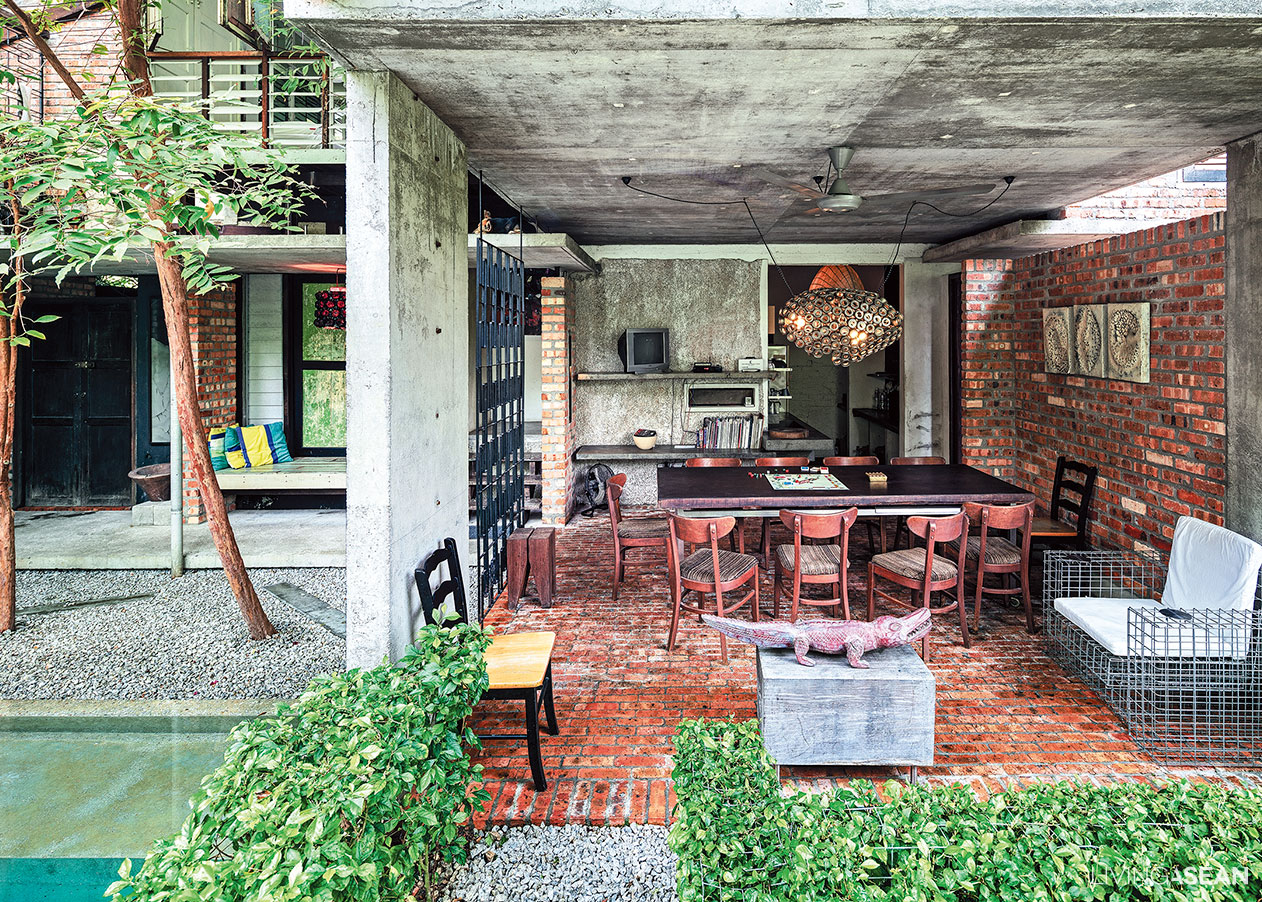
For visual continuity, the architect makes use of the same building materials on both the exteriors and interiors.
The two-story home boasts a comprehensive range of functional spaces, including an ample sitting room, dining room and kitchen, complemented by a refreshing swimming pool and seven bedrooms.
An experienced landscape architect, Ng started out with a modest garden while working on this house. Over time, he progressed to larger projects, smoothly integrating exterior and interior spaces so that they become a whole. To him, a garden is a room, and his exterior design spaces resemble extensions of the interiors.
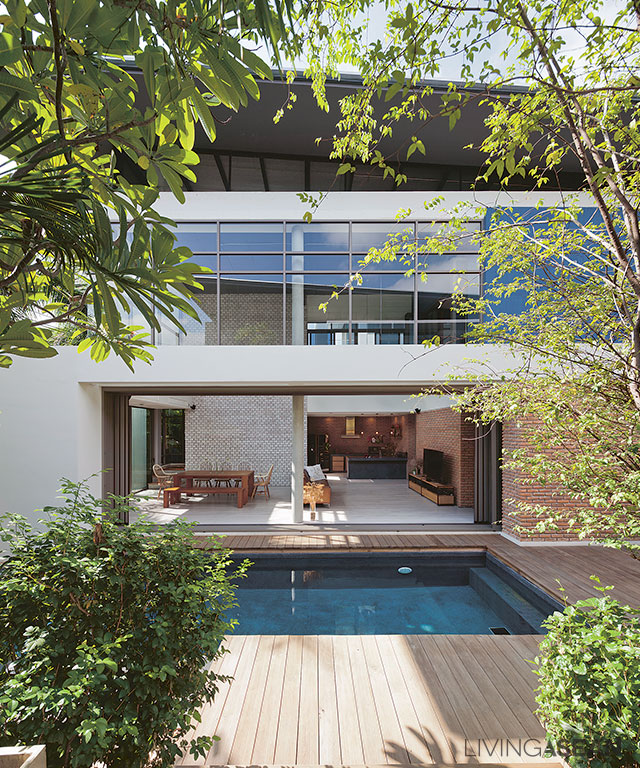
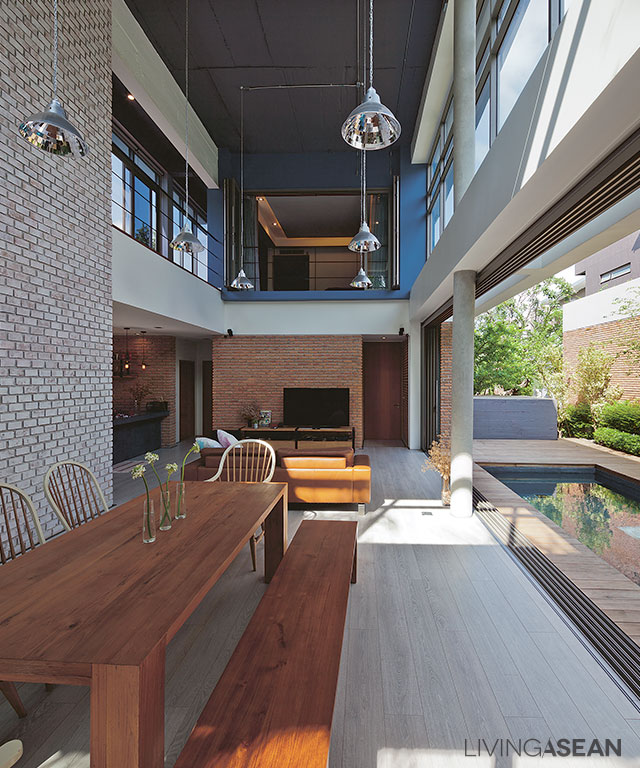
The ground floor showcases a dining room seamlessly connecting to the swimming pool and the garden at the far end. The canopy of tall trees ensures a constant flow of cool breezes throughout the day.Both the floorboards and concrete roofs maintain a thickness of 10 centimeters in general. Where appropriate, they are reduced to 7 centimeters. Meanwhile, strategic gaps ranging from 5 to 10 centimeters exist between the ceiling and the top edge of the wall to facilitate effective ventilation.
An exemplary illustration of Modern Tropical style, Sekeping Tenggiri is designed to mitigate heat and prevent moisture-related issues. Long overhangs and awnings provide protection against scorching sunlight, while exposed roof sections and plain floors contribute to a clean and simple aesthetic.
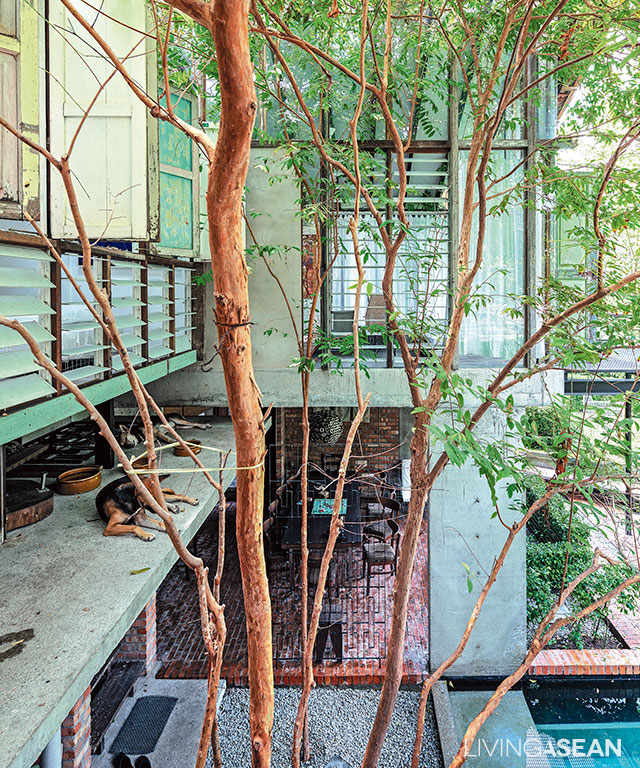
Materials such as concrete masonry, bricks, wood, and steel were utilized, with the main structure being steel-reinforced concrete. The thoughtful incorporation of nature into the living space is evident in details like raising the floorboards 40 centimeters from the concrete floors, promoting air circulation that naturally cools the upstairs bedrooms.
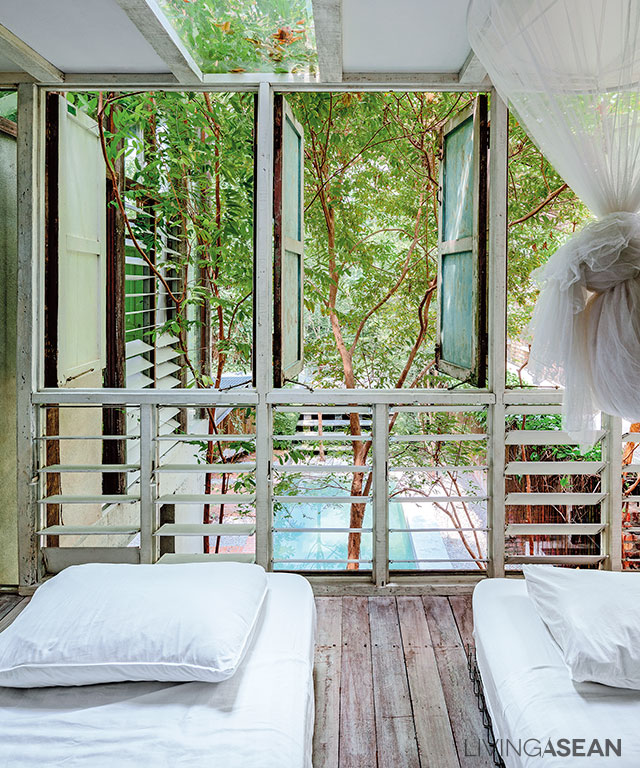
Opaque walls are replaced by glass louvre windows that usher in light, creating airy interiors. Transparent materials in parts of the roof facilitate ample sunlight, particularly over the swimming pool.
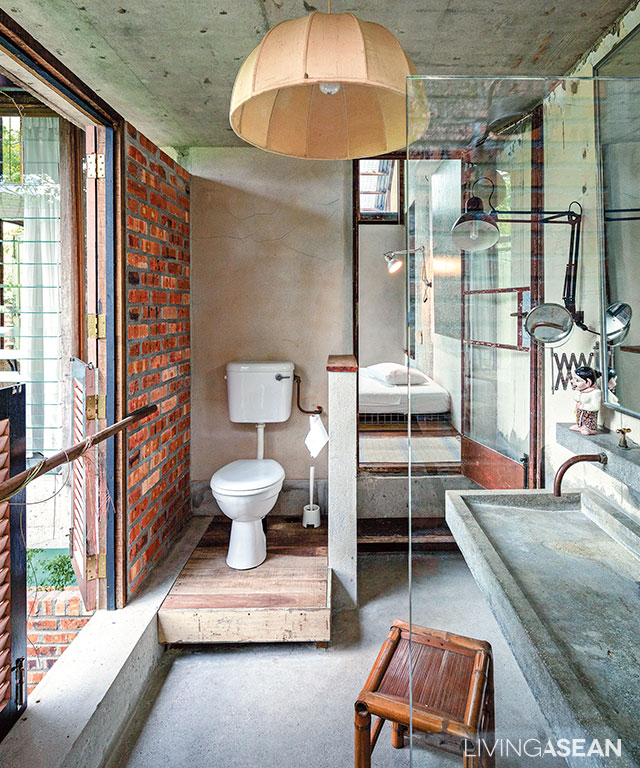
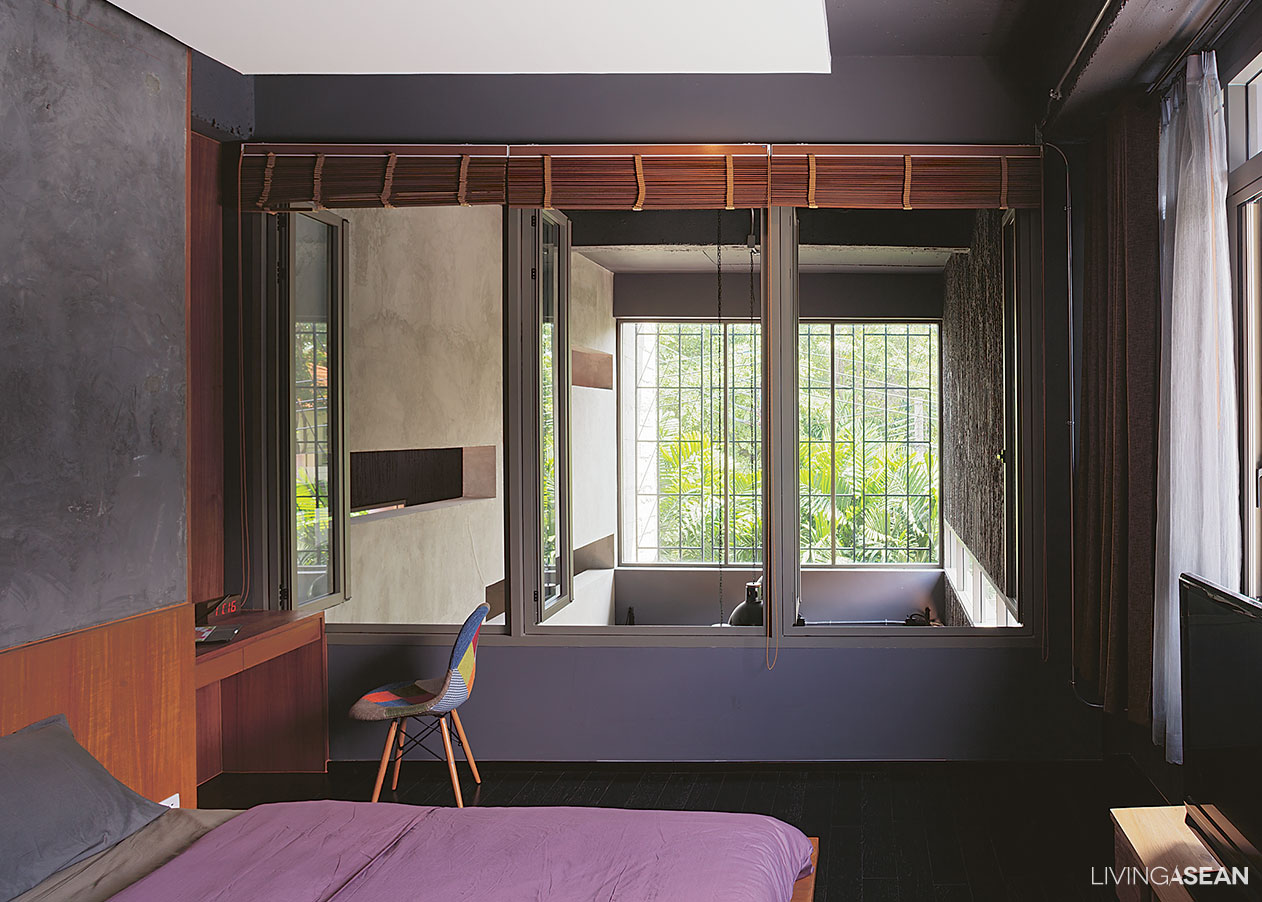
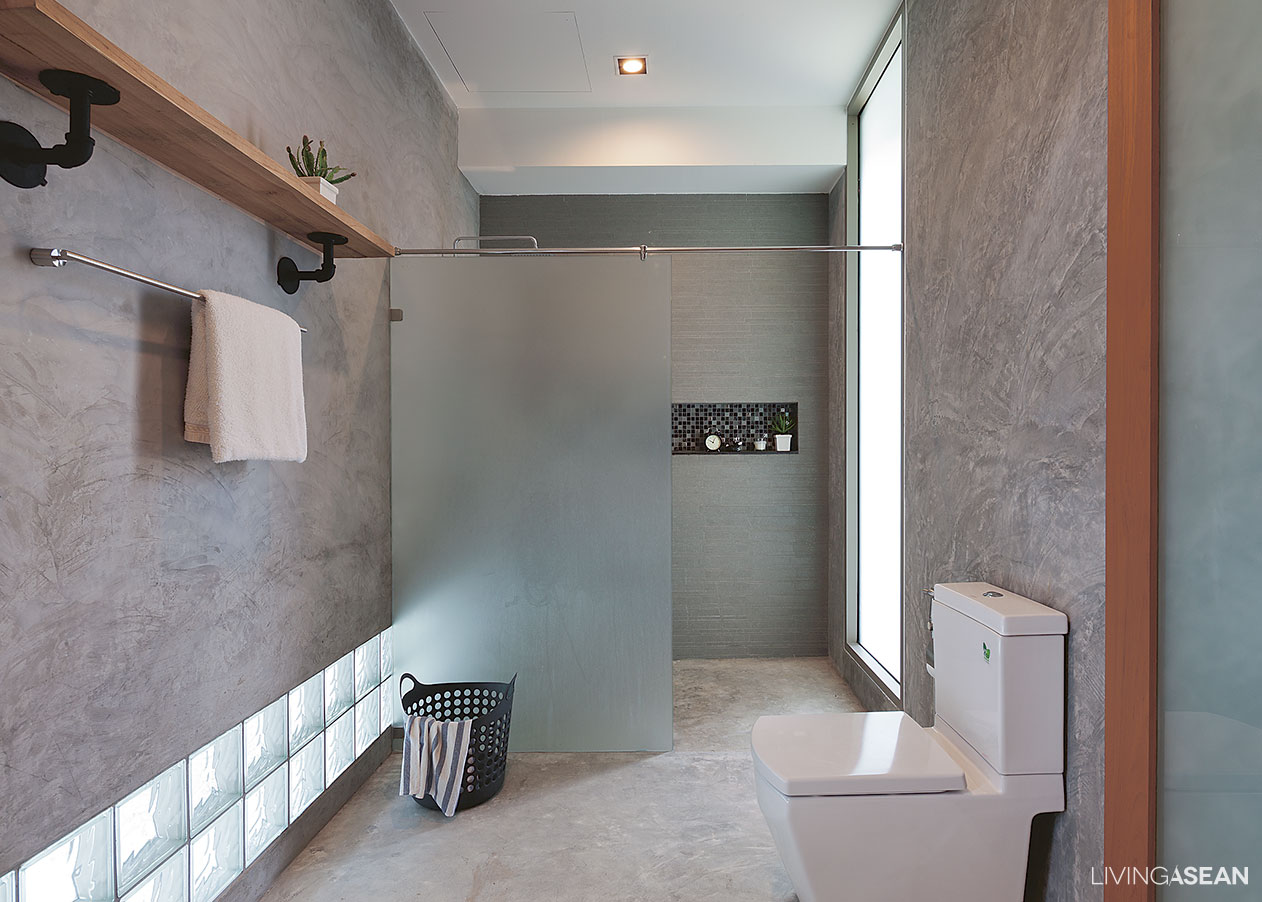
The master bedroom on the second floor exudes simplicity and raw elegance. Exposed brick walls, unrefined concrete floors, and expansive windows spanning from one corner to the other seamlessly integrate with the natural surroundings, ensuring visual continuity.Who says the space underneath the window must be an opaque wall? That’s not the case here. Louvre windows are utilized to improve air circulation.A raised floorboard accommodates new plumbing in the bathroom. The dry section showcases a diverse range of materials, while the wet section opts for easy-care products like tiles—a smart choice for practicality.
As has been demonstrated, Sekeping Tenggiri features numerous passageways that facilitate air movement. They include the spaces between wooden floorboards and along the corridors, plus openings in exterior walls. These design elements not only enhance ventilation, but also contribute to the house’s uncluttered and incredibly relaxed appearance.
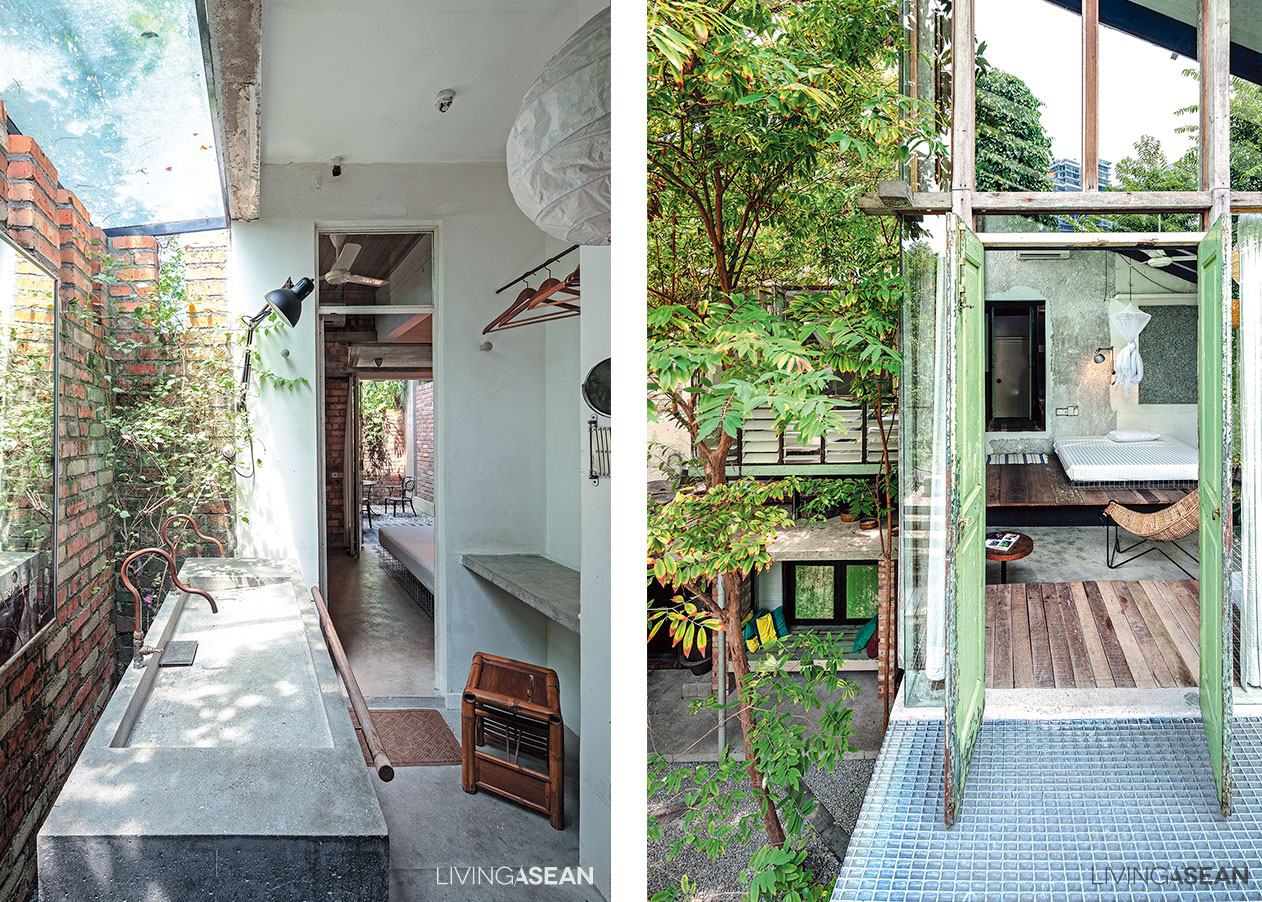
[Left] Skylights above the bathroom foster the flourishing of indoor plants. / [Right] The integration of the house with the surrounding vegetation creates a harmonious blend. Undoubtedly, the use of natural building materials contributes to comfortable living conditions.
“It’s a co-housing arrangement.Mine is more of a dynamic, full-of-life home. The house next door is my brother’s. It appears to be more private in the midst of a tranquil setting.“
Between the different spaces, natural radiance is all in the eclectic details. Despite its modern edge, the open seating area rekindles a fresh interest in terrace design of a Thai style home.
The homeowner, Suthiphong Pongpawasuit said I was kind of speechless for a bit when I heard him express his feelings about the co-housing house. It could be that I was expecting the most beautiful replies like always. No offense intended. It was the most honest and unpretentious of feelings.
“I could feel a warm and friendly atmosphere, and appreciate the meaning of “home” as he defined it. I have come to one that reflected the true personality of its owners.” The two houses are surrounded by pleasant grounds made the two brothers happy in their own way.
The two buildings brought out differences in their lifestyles and their preferences.
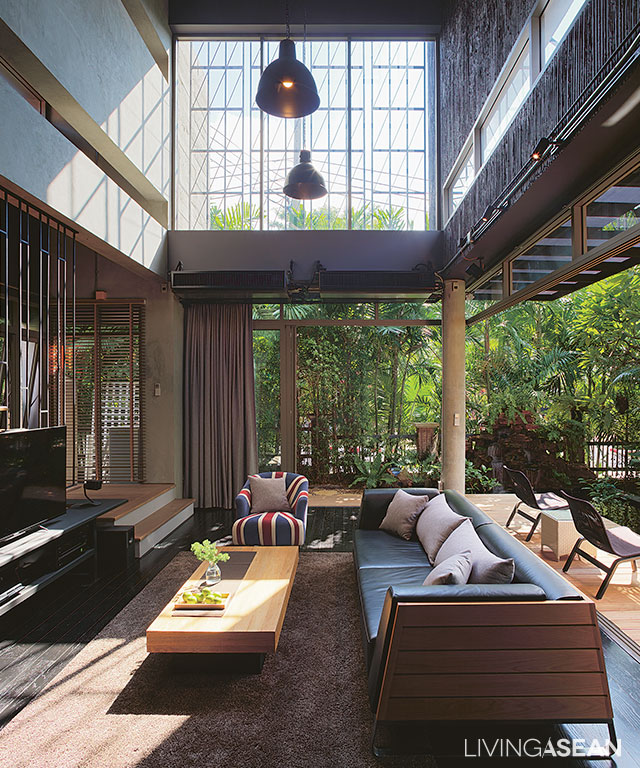
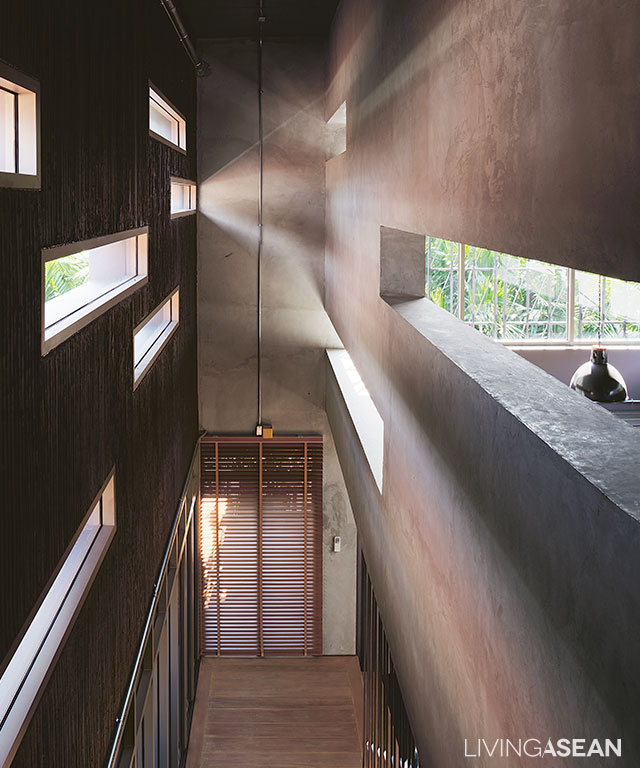
An array of overhead windows let a healthy dose of morning sunshine into the cozy seating area. Wrought iron detailing in the multiple-paned windows creates an interesting light and textural display on the surfaces below.
The first building
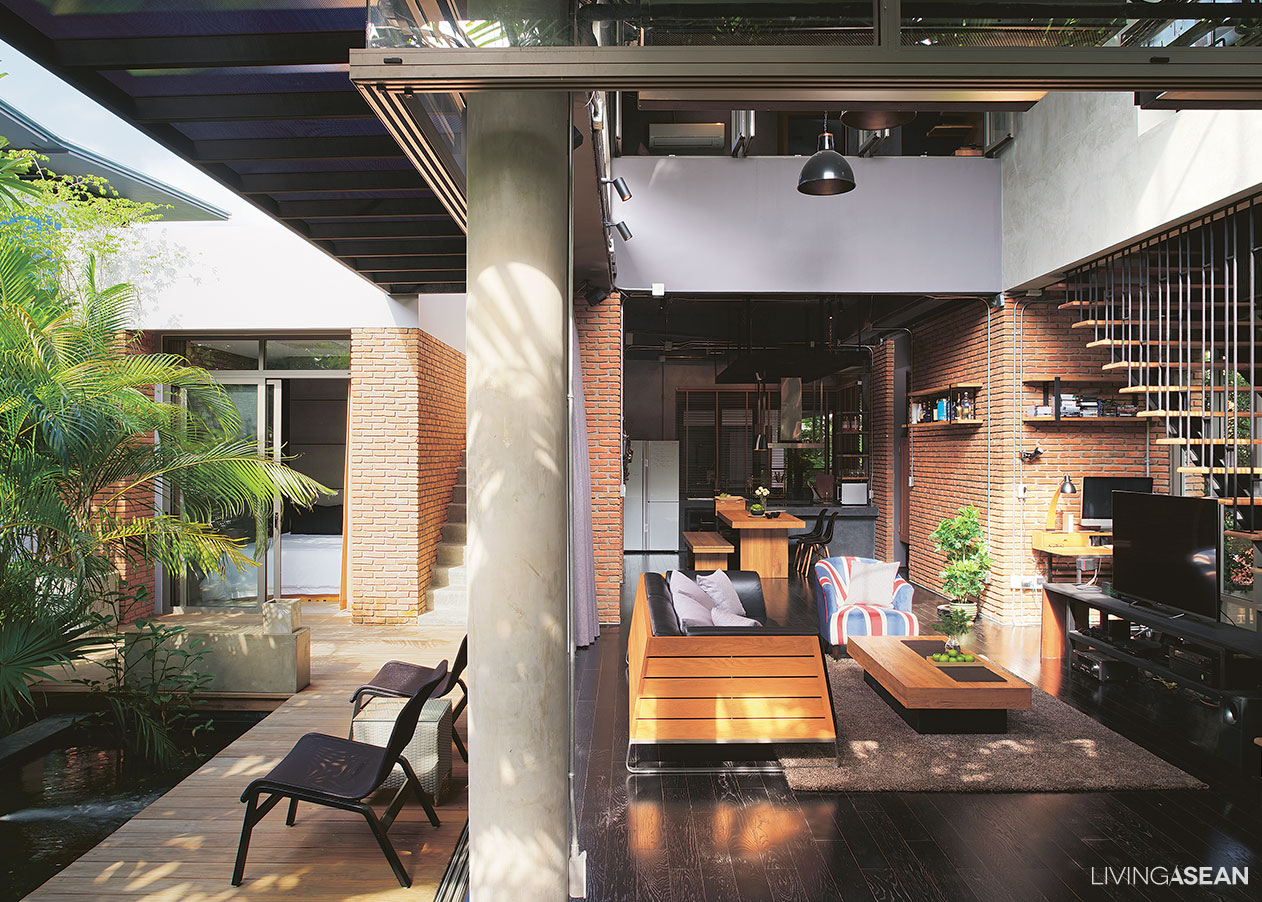
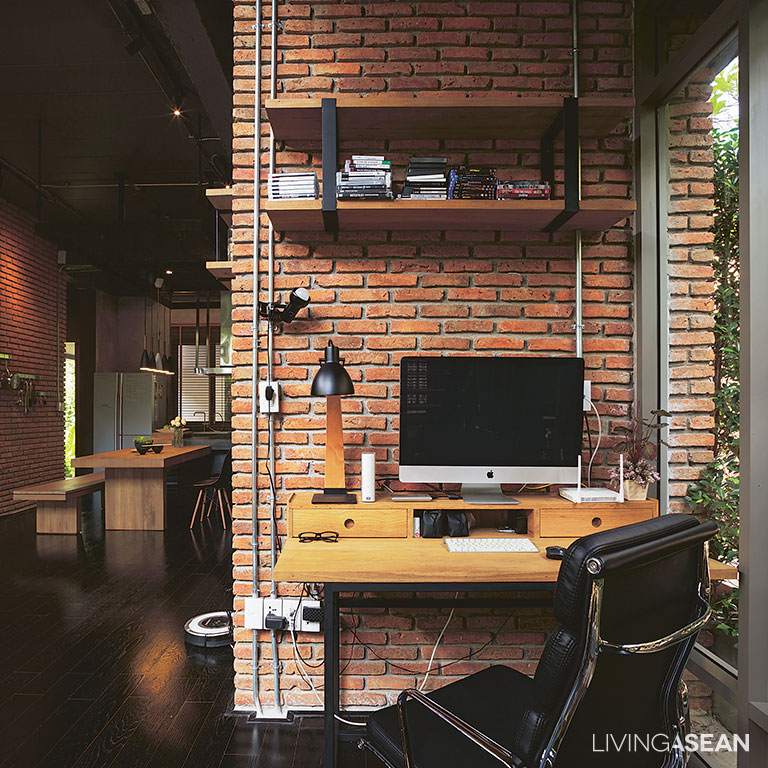
The first building belongs to Suthiphong. It is concrete chic based on a straightforward design. The walls are fabricated of unornamented concrete finishes and an interesting mix of textures and materials. Floating systems of electrical conduits conjure up images of an urban industrial loft apartment.
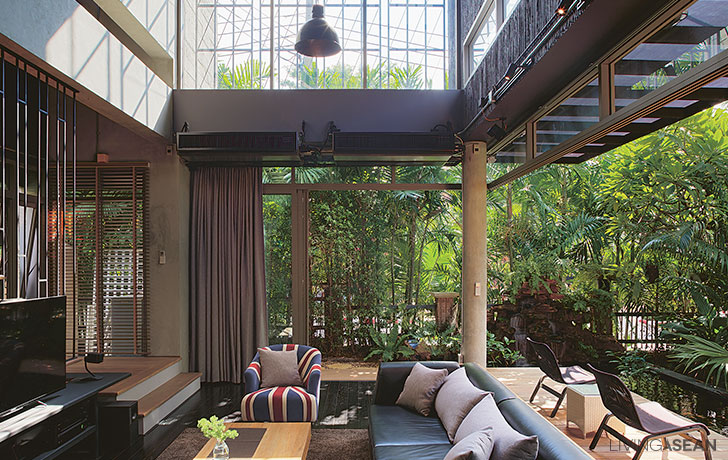
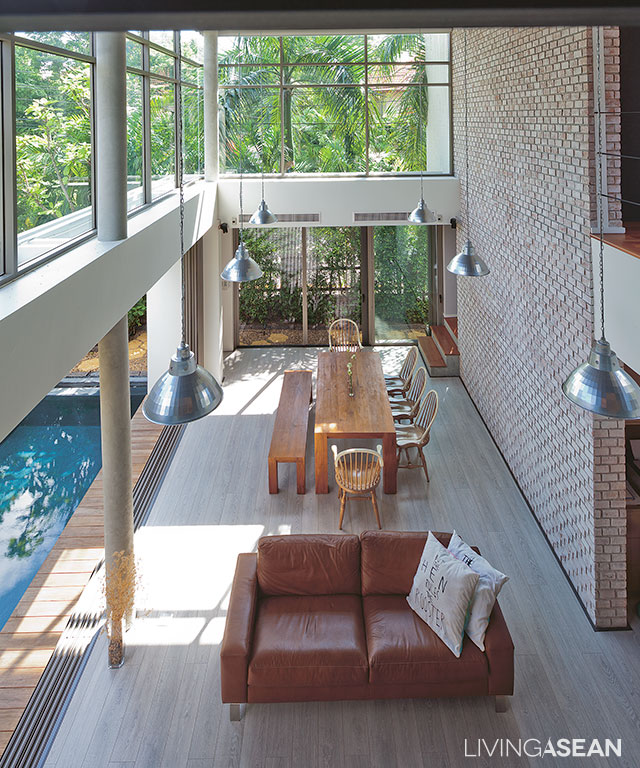
The interior features gorgeous living spaces. During the day, natural light shines through large overhead windows with wrought iron detailing, creating an amazing shadow play. There is a sense of visual continuity that connects seamlessly with the exterior as soon as the large door slides open.
On the outside, peaceful lush landscaping under a tree canopy can be seen in full view. On the inside, different furniture styles add a hint of interest in a subtle way.
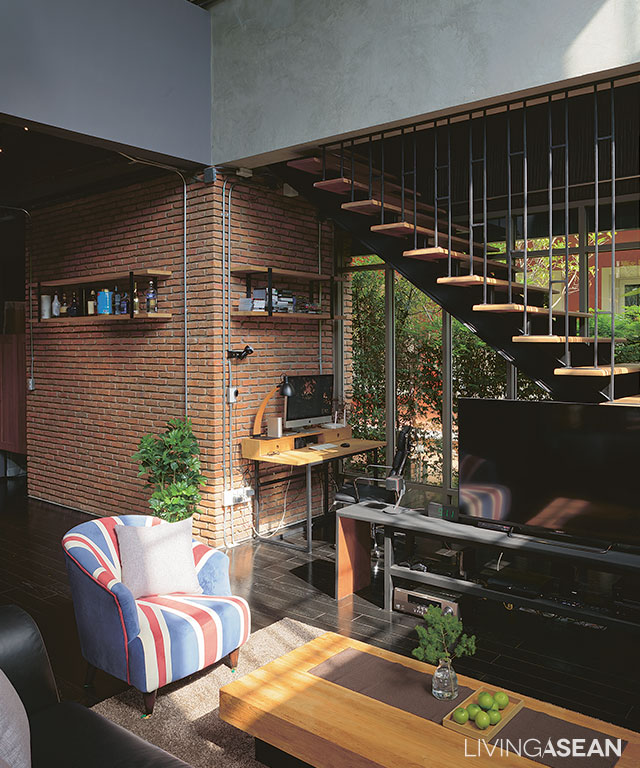
Awesome overhead opening lets natural light into the relaxed living room and nearby stairway. Well thought-out design makes the area playful and inviting. The layout epitomizes a relationship of mutual benefit between the two brothers. What goes on in one house can be seen from the other.
Obviously, the co-housing house is designed for the local climate. Oftentimes we complain of too much sun, winds, and rain. But since we call this country home, why not make the most of the extreme weather conditions?
They are the natural appeal of this Region. That is why we see all natural elements being incorporated into the design scheme. Here, the sun, the winds, and rain are all taken into account in framing the house within a beautiful botanical border. That makes living in a co-housing house a life fulfilling experience.
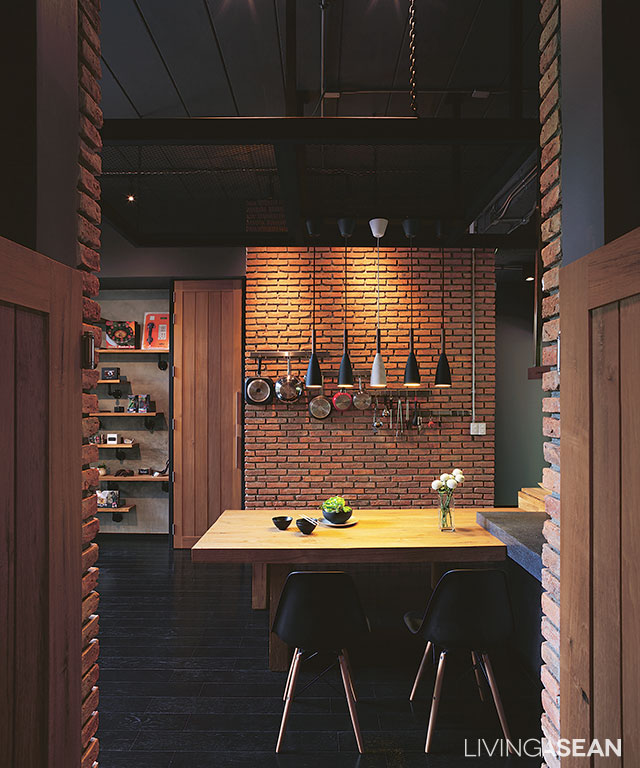
The working area and nearby kitchen are neatly incorporated into the total living space. The interlinking design takes into consideration personal preferences and lifestyle.
The bedroom, which is supposed to be private and personal, is not exactly cut off from other living spaces. The awesome opening allows the guest area below to be seen in full view from the bedroom.
The second building
The second building belongs to Suthiphong’s brother, Kittiwat Pongpawasuit. Unlike the first house, it comes in a mix of white, cream, and gray tones, which together give it to a strikingly handsome appearance.
The design is light and airy and emphasizes a warm and peaceful atmosphere. Brick walls are painted white to minimize any alteration of natural light and color reflecting on the surfaces. The home, especially its living spaces, is all about enhancing a seamless indoor-outdoor relationship.
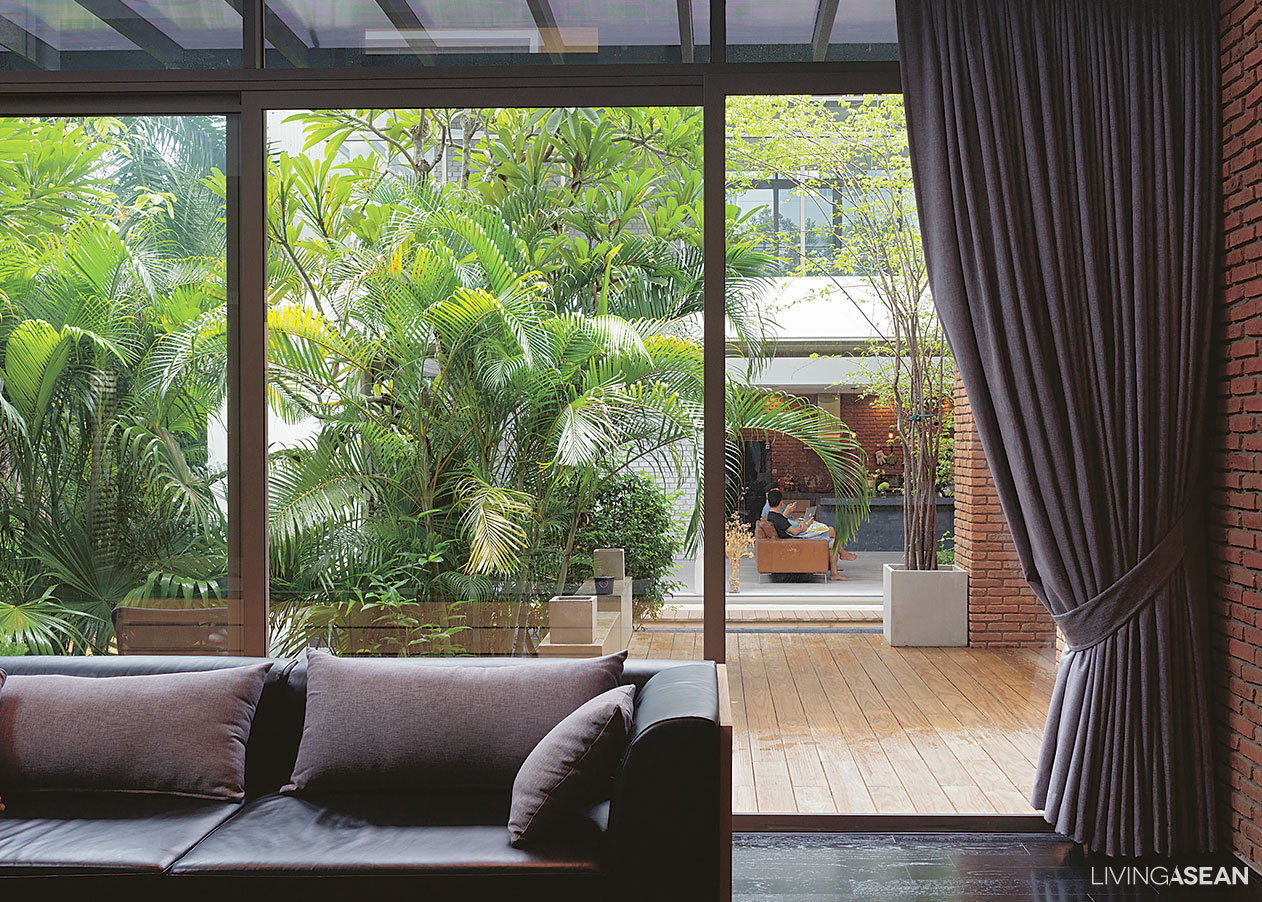
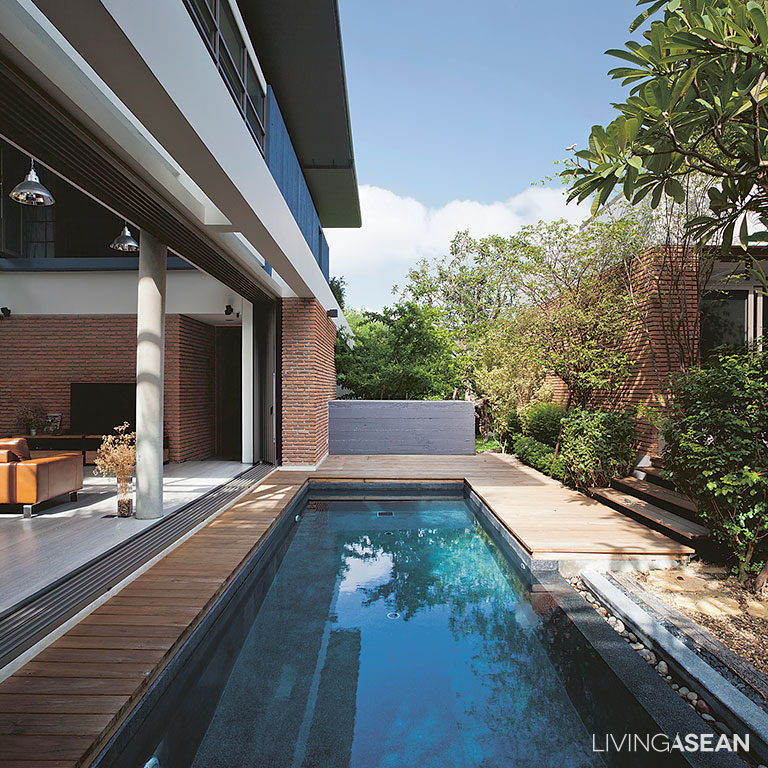
Crisp, clean landscaping can be seen all the way to the swimming pool, thanks to large single-paned glass doors that slide open and neatly disappear into the walls. The living room gets nice cool breezes from the swimming pool and is set facing north to avoid the harshest of the afternoon sun.
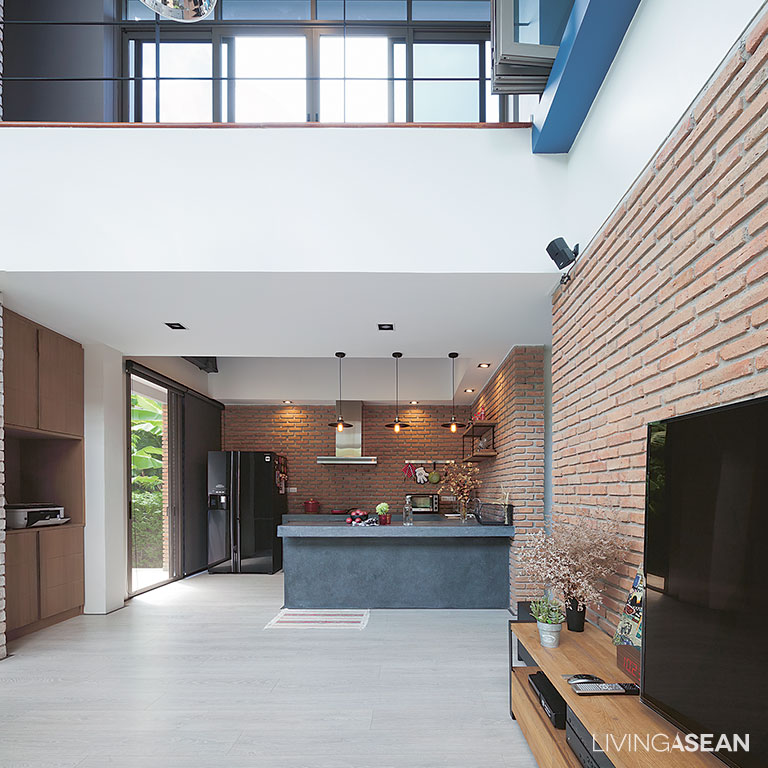
Exterior walls on the north side are open to natural light all day. Downstairs the seating space is made comfortable by nice cool breezes blowing in over the swimming pool.The swimming pool is literally a few steps from seating areas on the terrace. There is an unobstructed, gradual descent from the veranda to the garden.The easy-to-maintain kitchen design features a countertop crafted of unadorned concrete finishes. A red brick wall subtly separates it from the adjacent guest area. The bathroom is inspired by industrial loft design. Details are reduced to just clean, straight lines within the modest style.
Design relationship
The two designs may contrast in personality, but architect Kraipol Jayanetra of Alkhemist Architects found a relationship between them by opting for like materials, textures, and mutual décor ideas.
By this was meant the use of naked, unornamented concrete finishes, industrial-style electrical conduits, wood furniture, and a plenty of accent pieces.
The guest area of one of the houses lies fully open to bring in the outdoor atmosphere.
“I started out with something small but interesting, and worked my way up until I arrived at a complete unit,” said Kraipol.
That being said, every part of the co-housing buildings, be it vertical or horizontal spaces performs the functions it is intended. Overall, a great mix of patterns and textures makes the two houses appear in perfect harmony with each other. The difference is in the details.
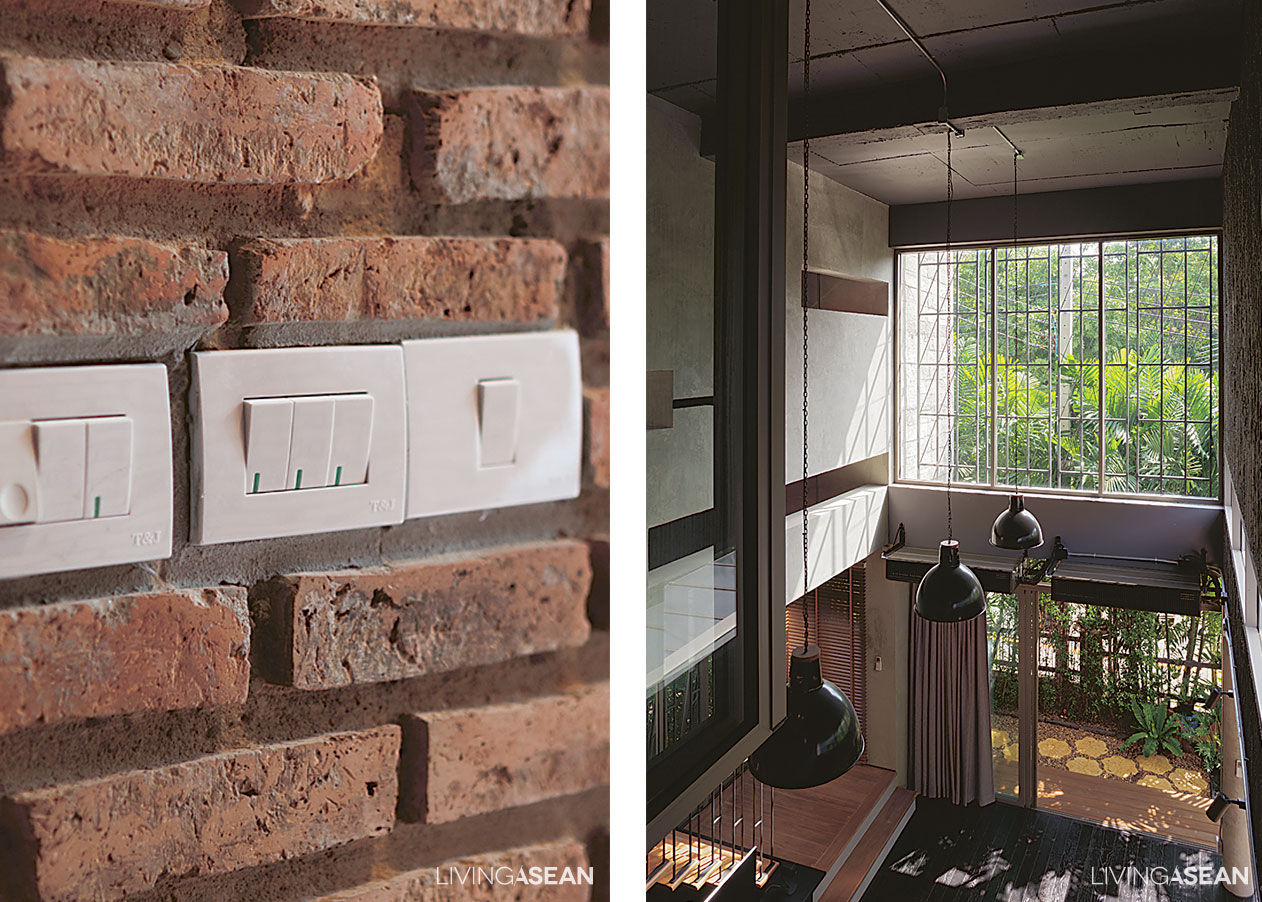
[left] Playing with patterns light switches are installed in a way that they playfully mimic the appearance of a naked brick wall. [right] Shadow play wrought iron detailing create beautiful works of art at no cost by casting light and shadow patterns on the interior spaces.
This has been a story of two youthful homes in a co-housing house that coexist to complement each other. One is overflowing with life. The other is tranquil and handsome in its own way. They enhance and improve each other’s curb appeal, and set the stage for a simple fulfilling lifestyle.
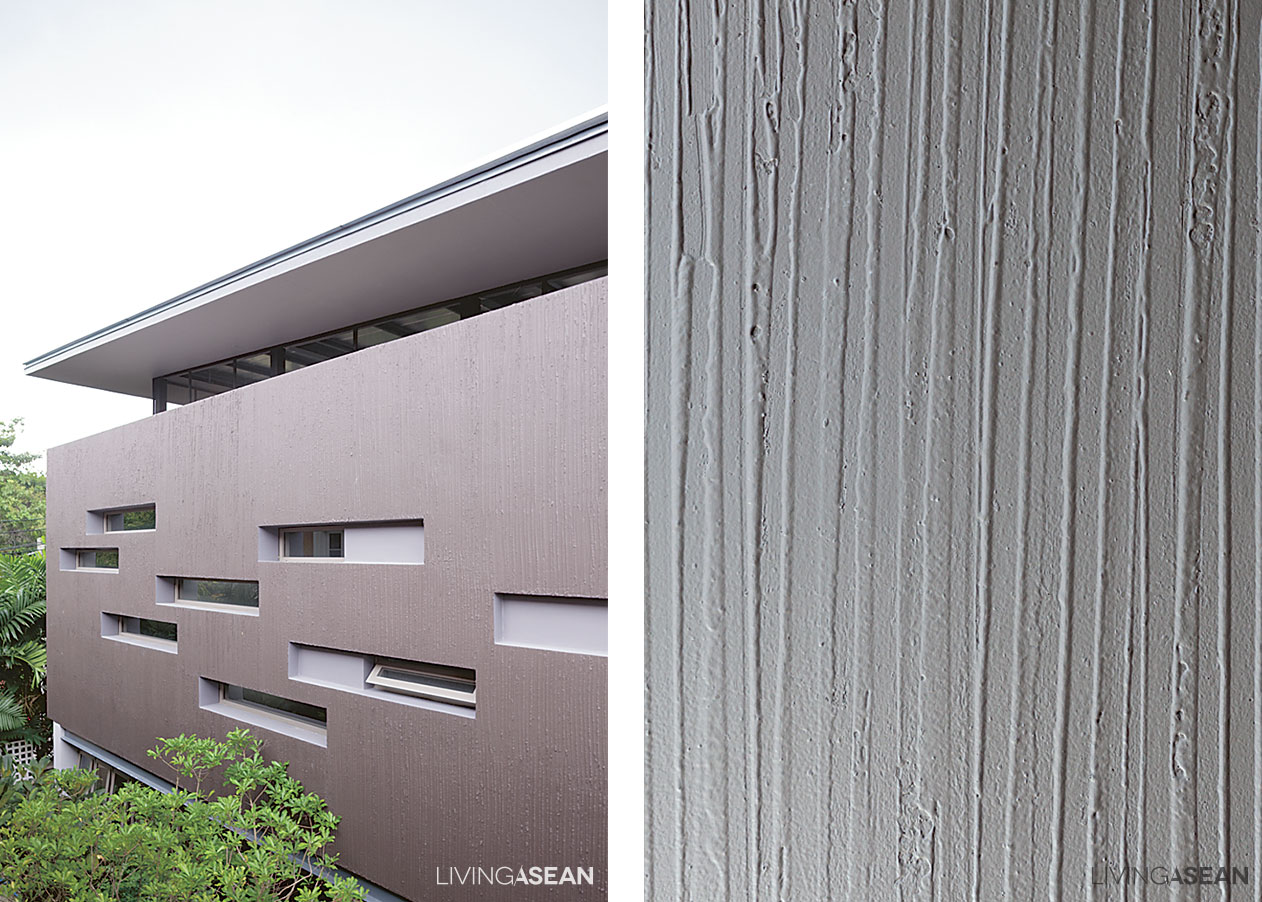
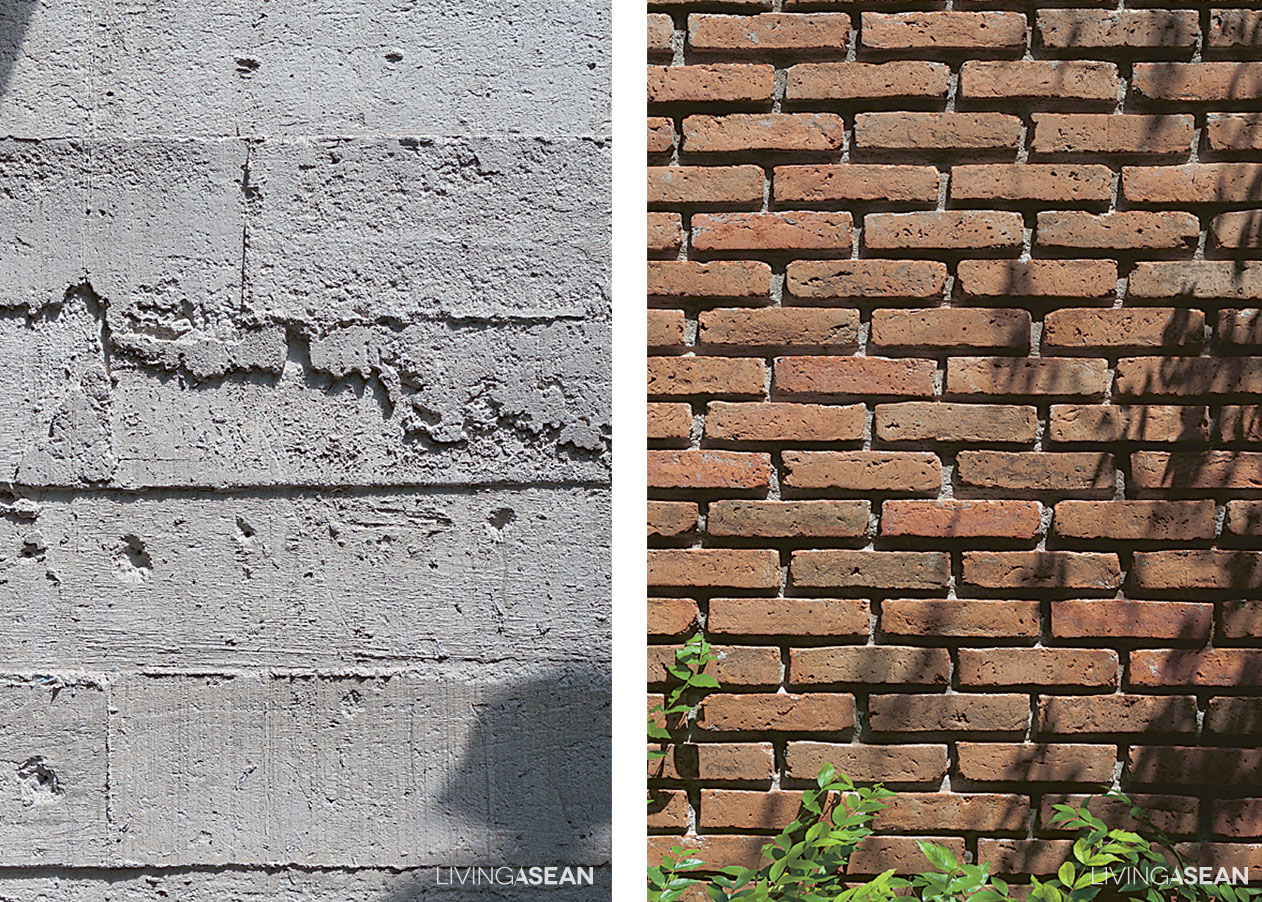
To protect against the intense heat of the sun particularly in Thailand, perhaps it is wise to opt for double-layer roof design. It keeps homes cool by reducing the amount of radiation from reaching the interior living spaces. The vents between each layer allow increased air circulation and keep the heat out.There are so many ways to texture your walls and ceilings. If smooth, fine-grained designs are not your style, you might want to go for coarse-textured, more natural looking surfaces. One alternative is the naked, unornamented concrete that rough to the touch. The design is playful and full of life. Any rough surface, whether concrete or brick.
Marketing/Advertising Cookies – used to remember and process the relevance to your website visit in order to personalize contents shown including optimization of commercial advertising placements. For instances, we use this type of cookies to display commercial advertisements related to user’s attributes and interests as well as to limit how many times should a user see repeated advertisement in order to optimize and measure marketing activities. อ่านเพิ่มเติม